Ku-ring-gai Chase National Park (January 20, 2026)
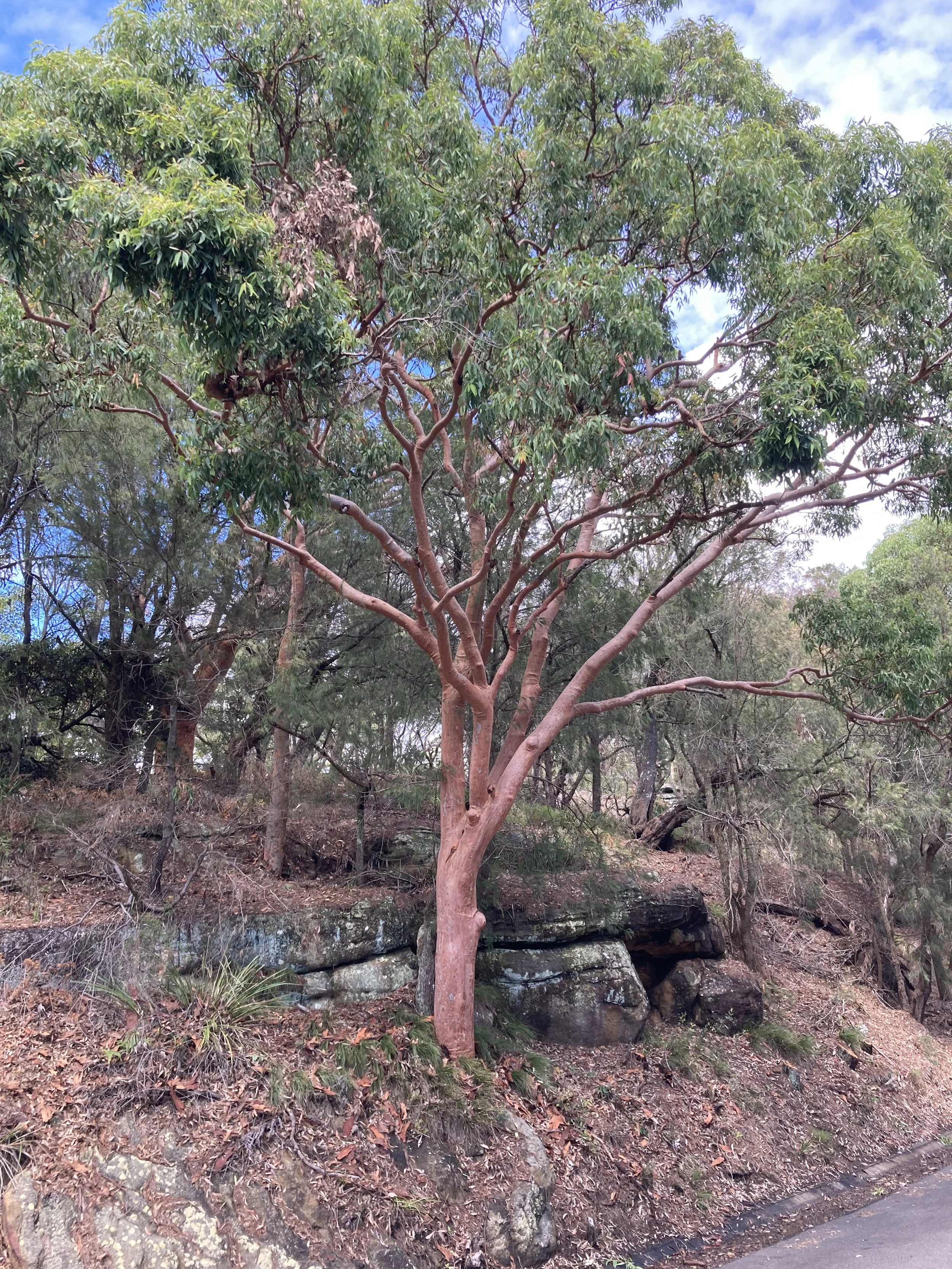
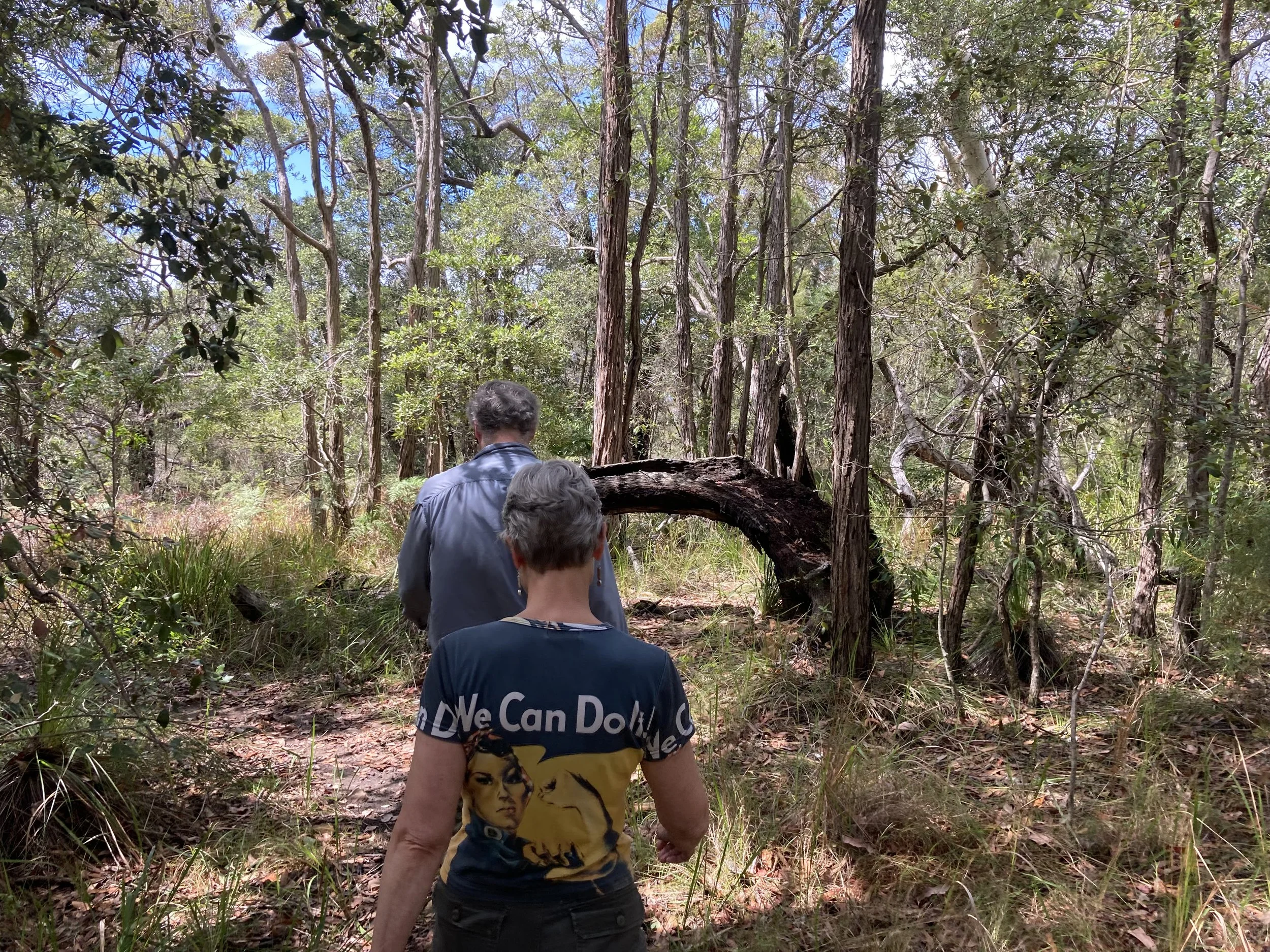
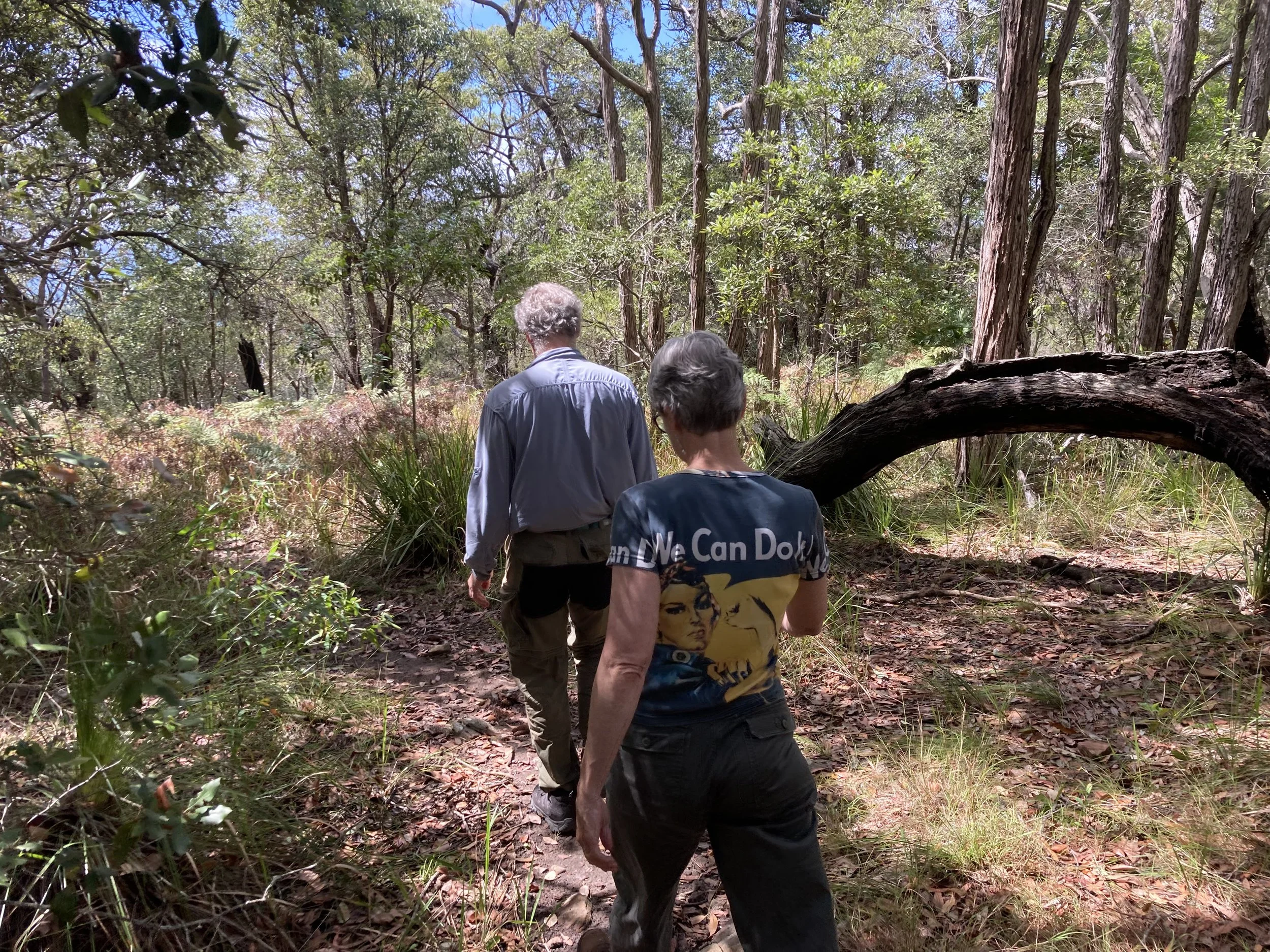
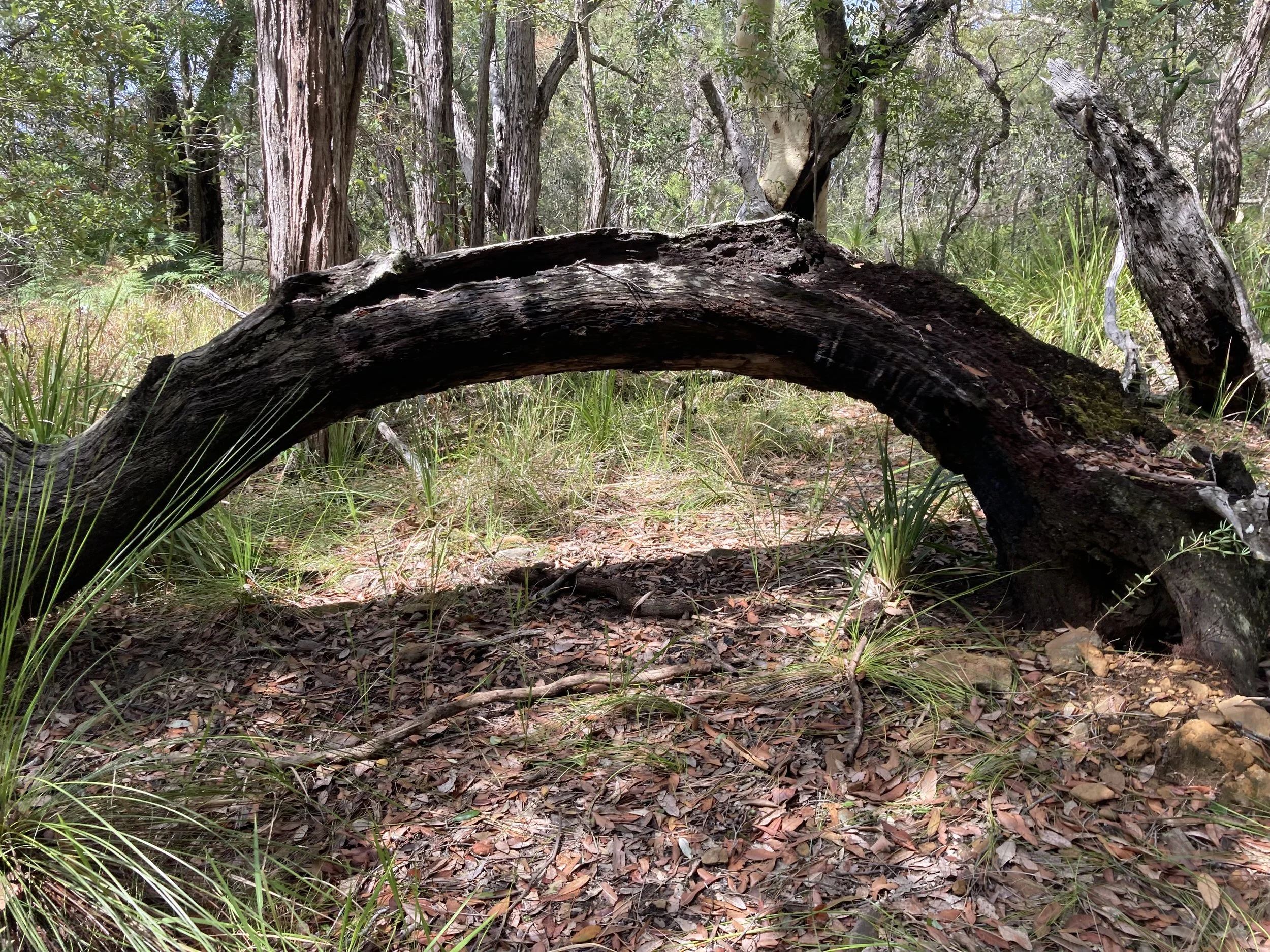
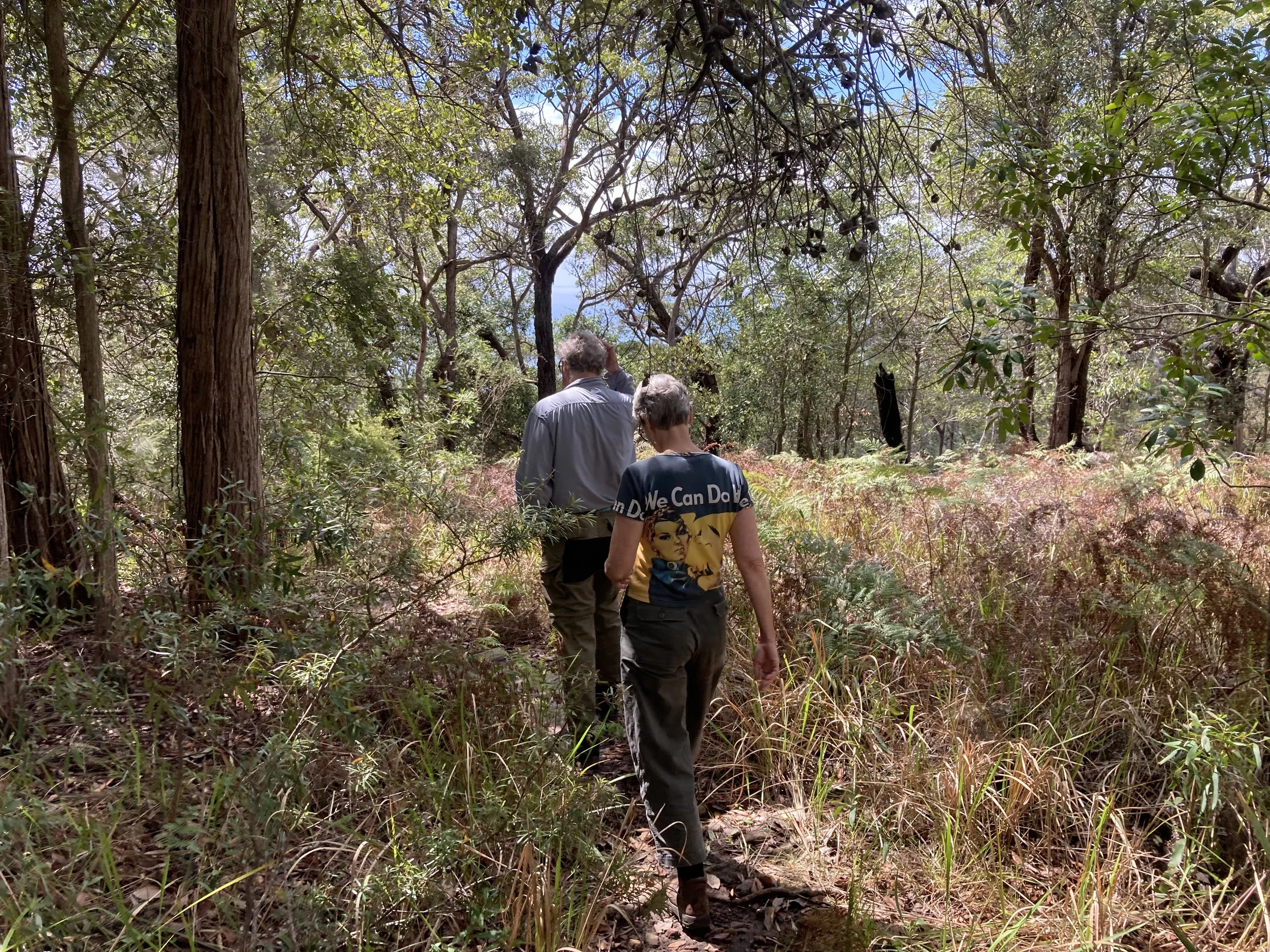
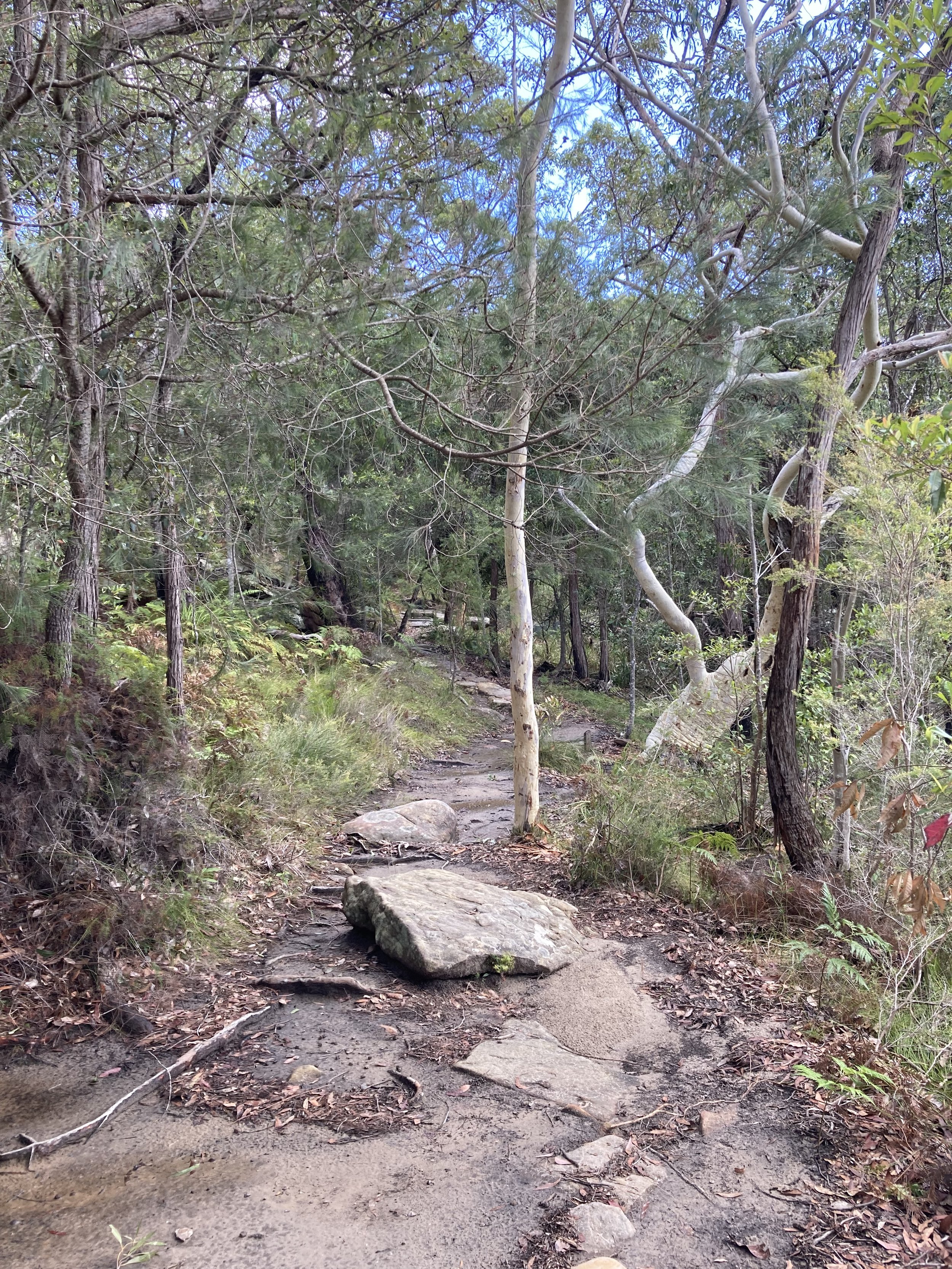
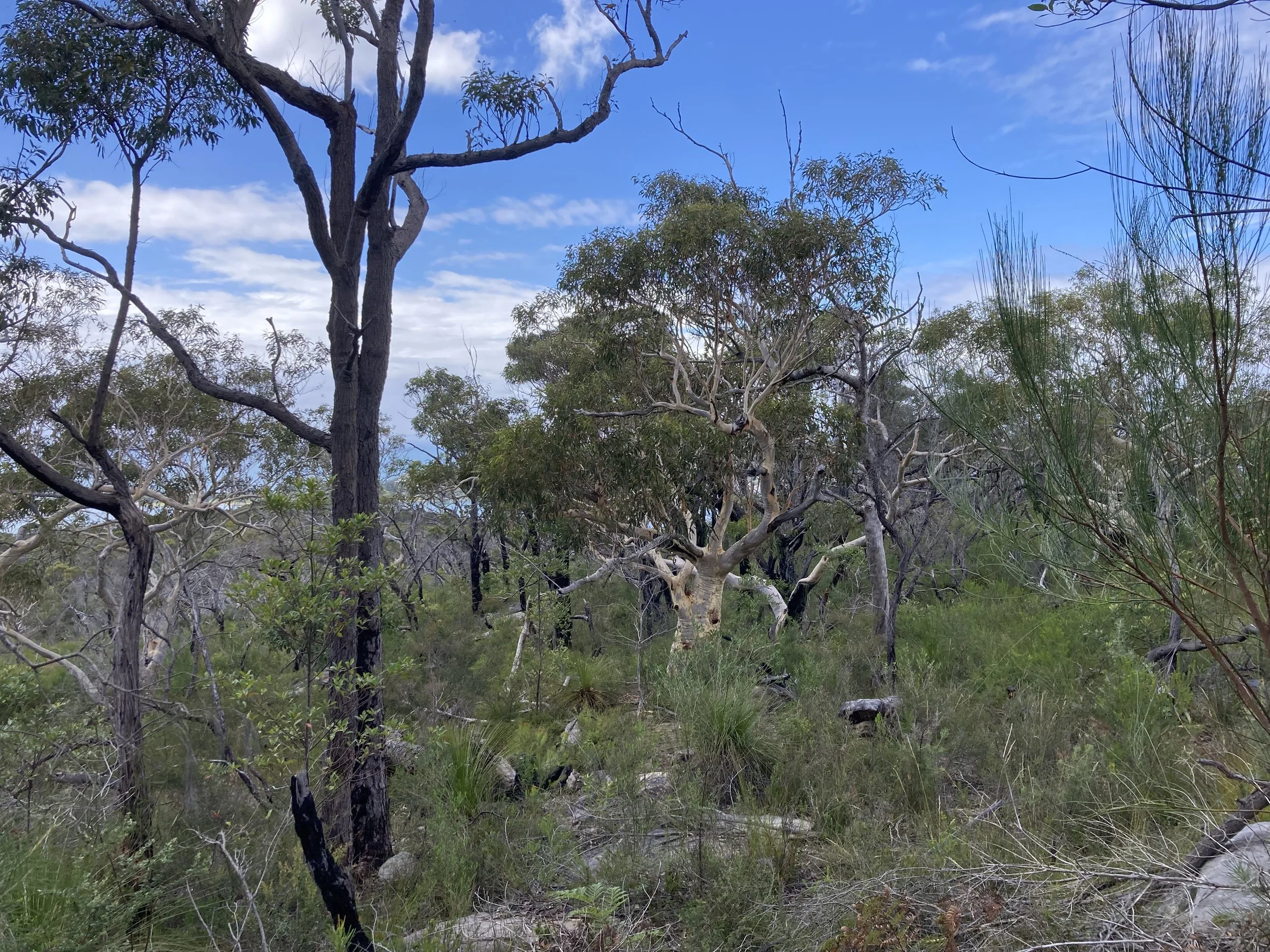
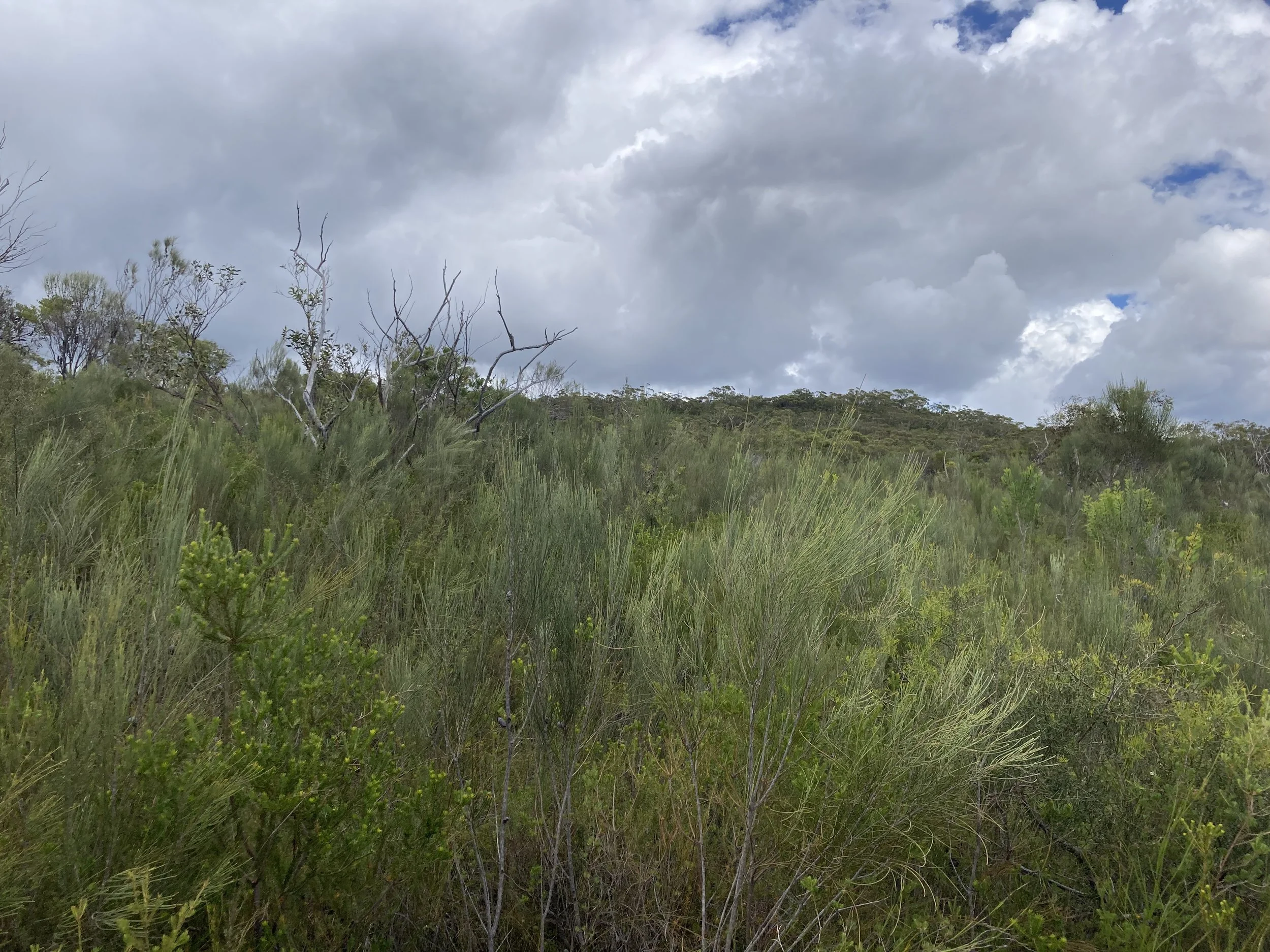
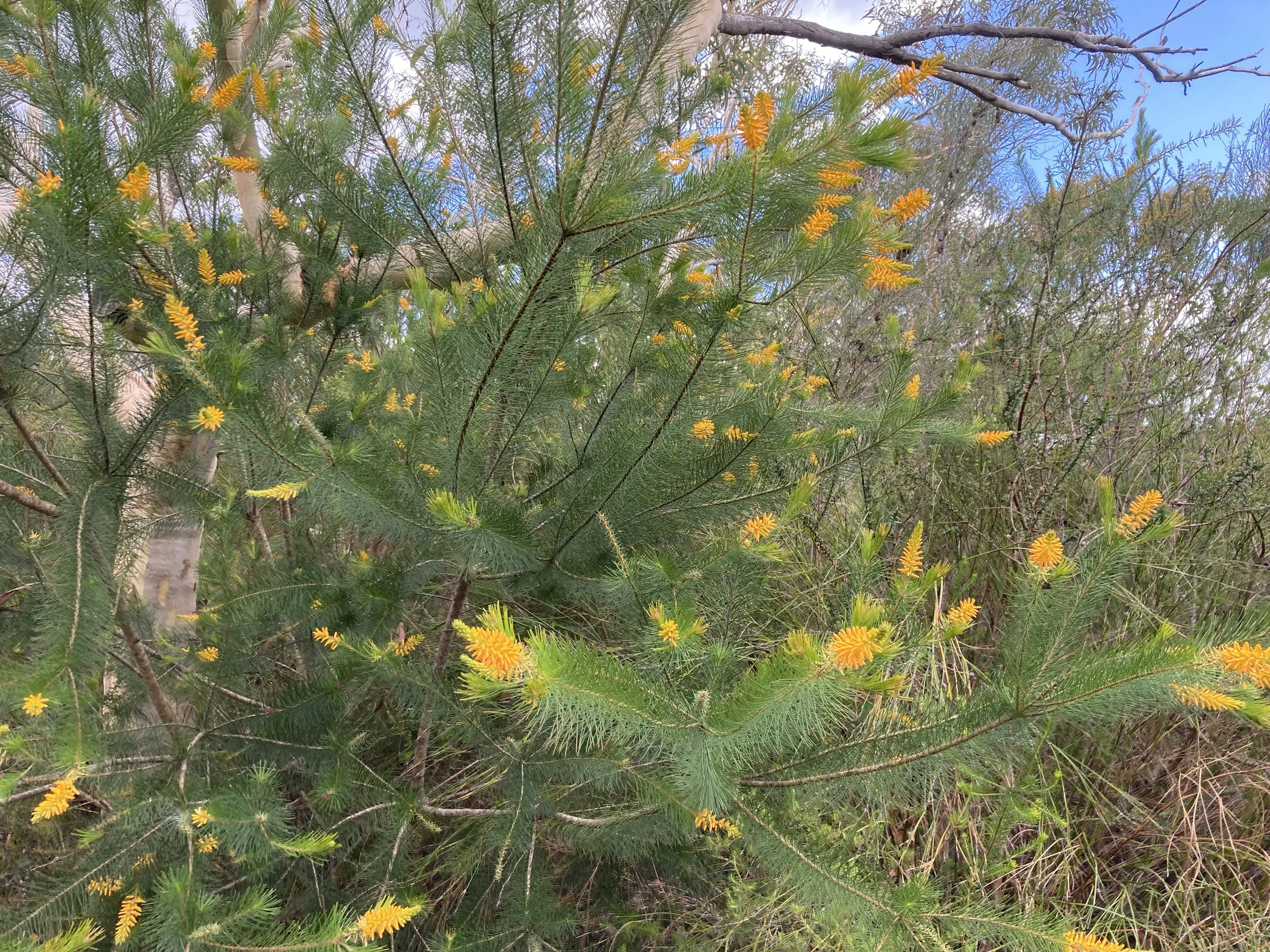
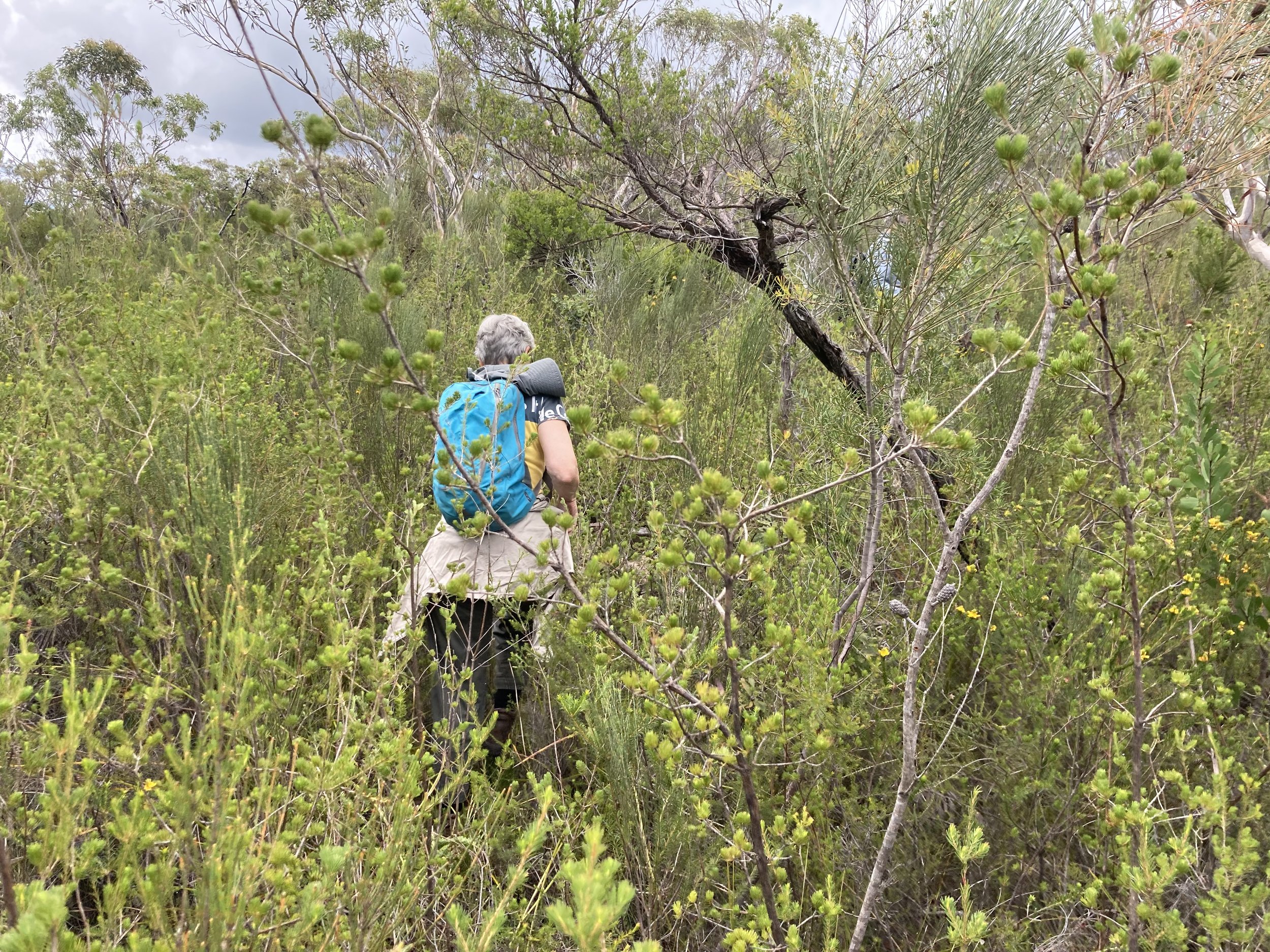
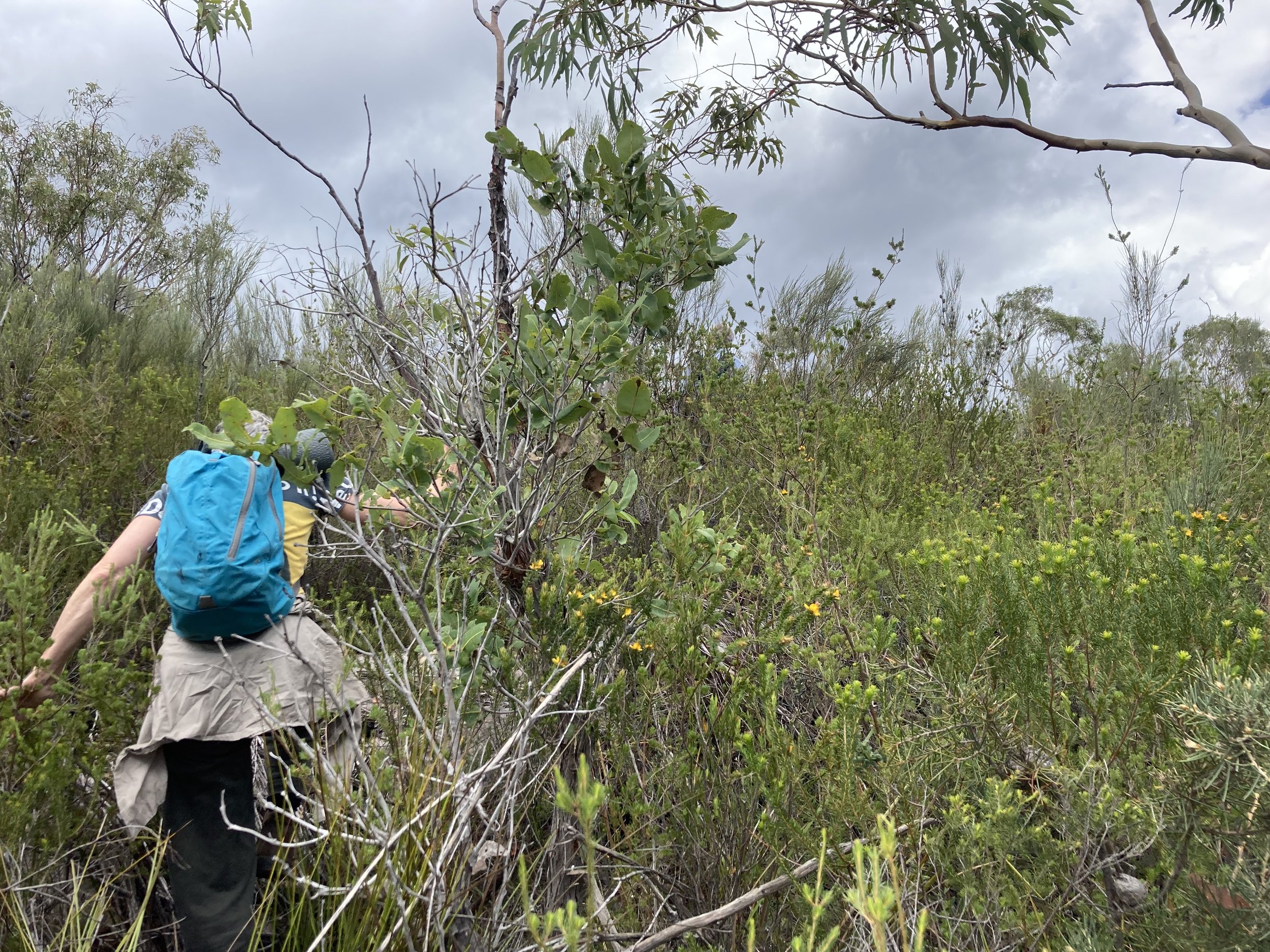
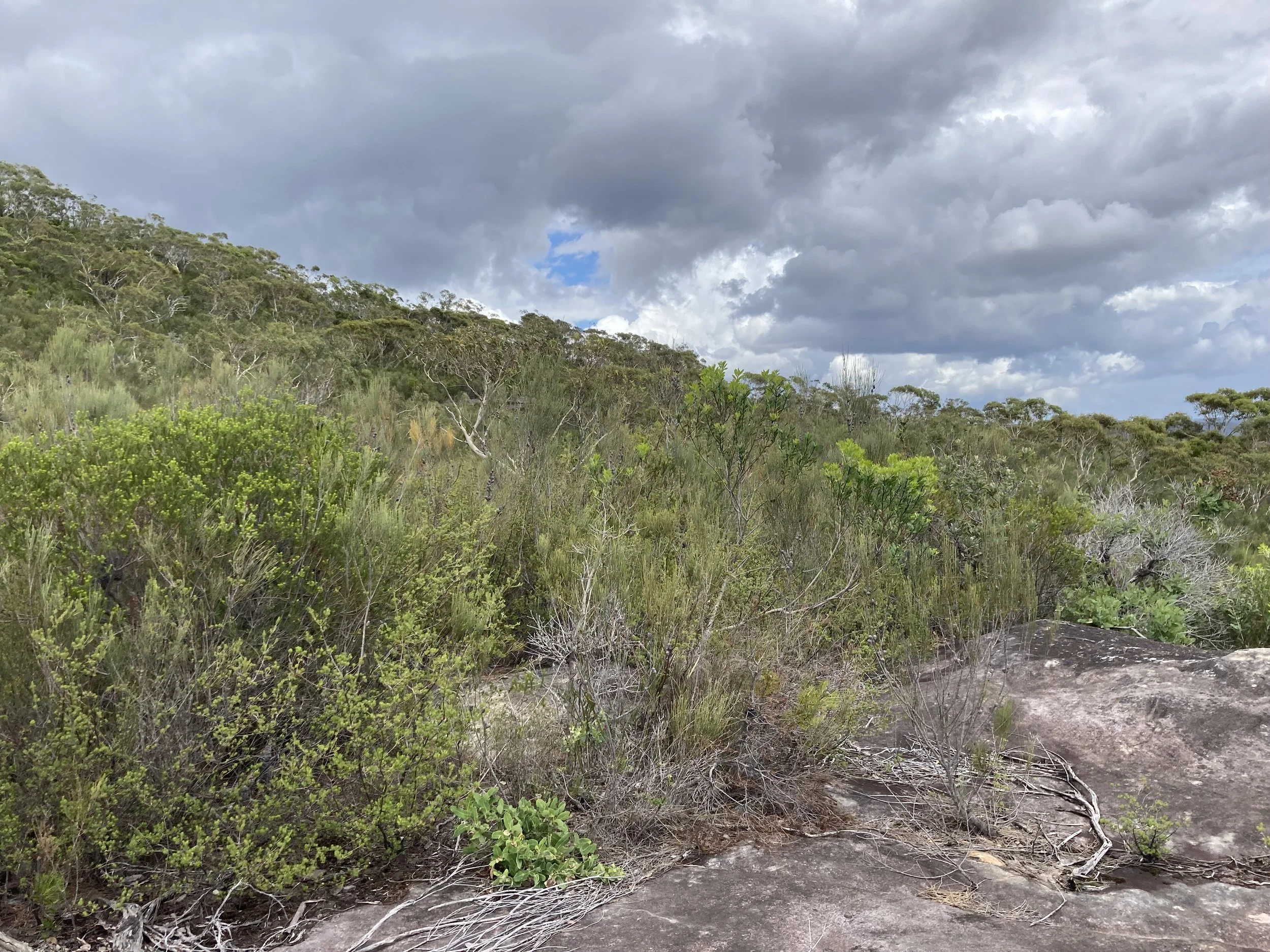
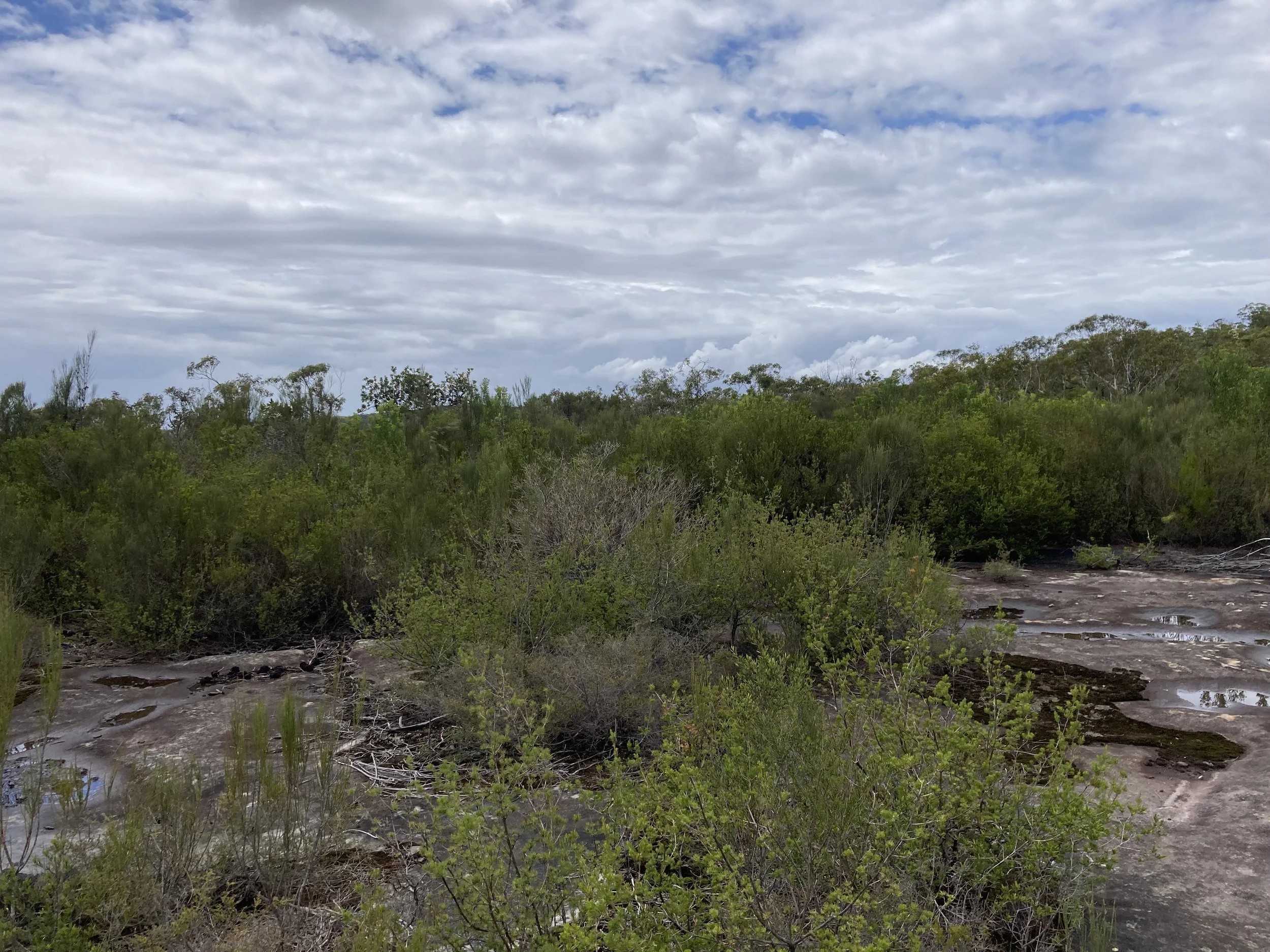
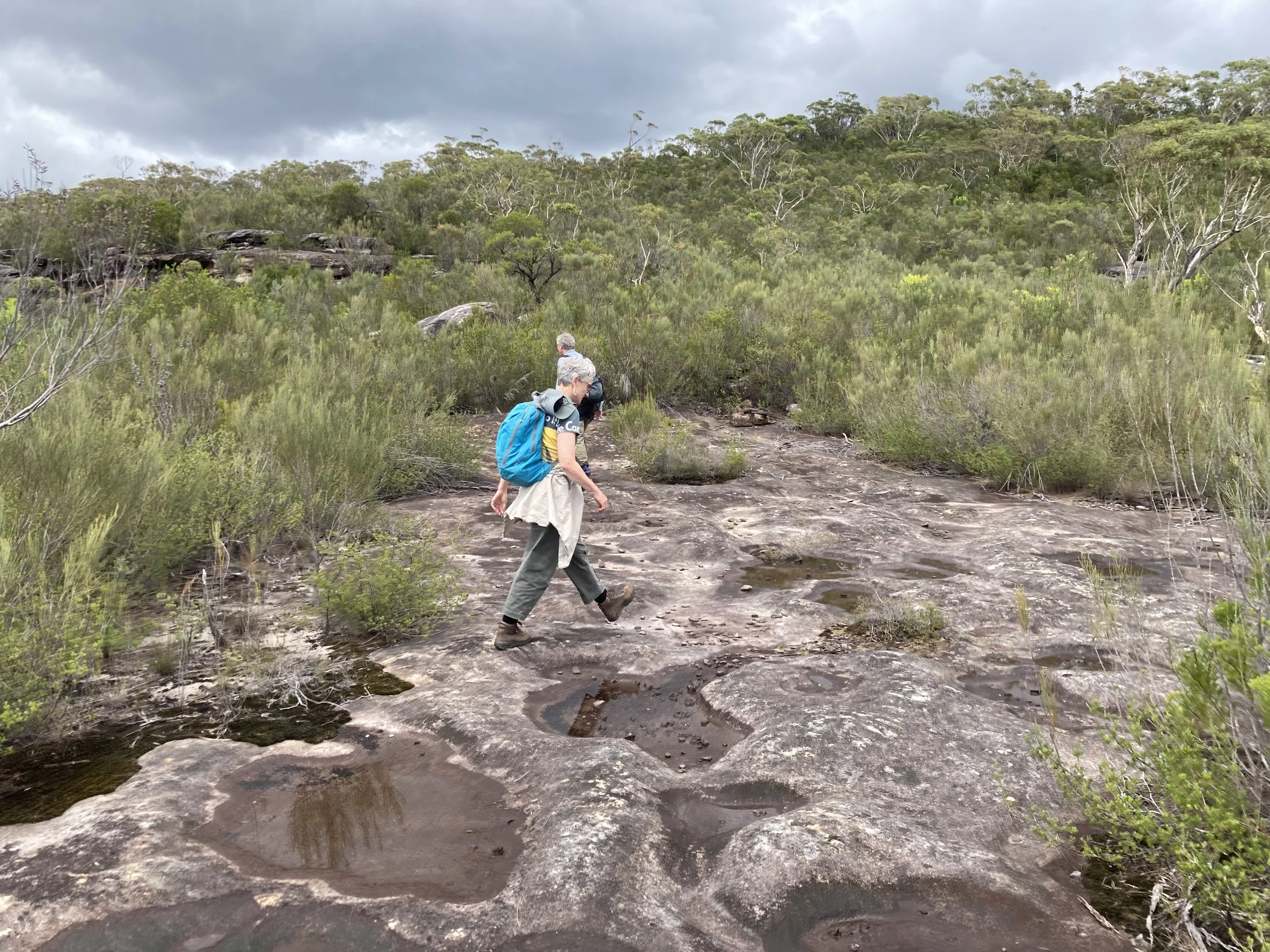
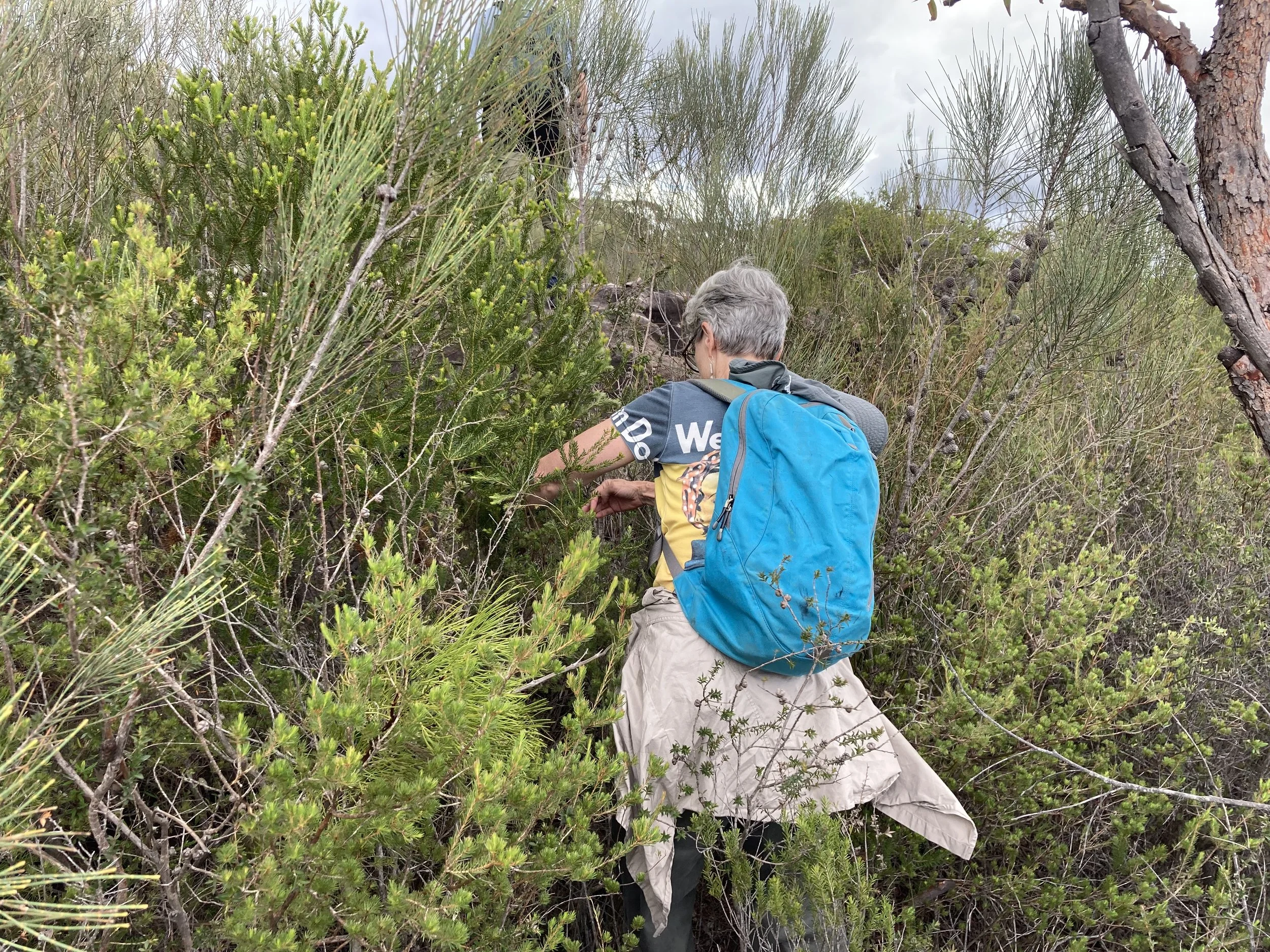
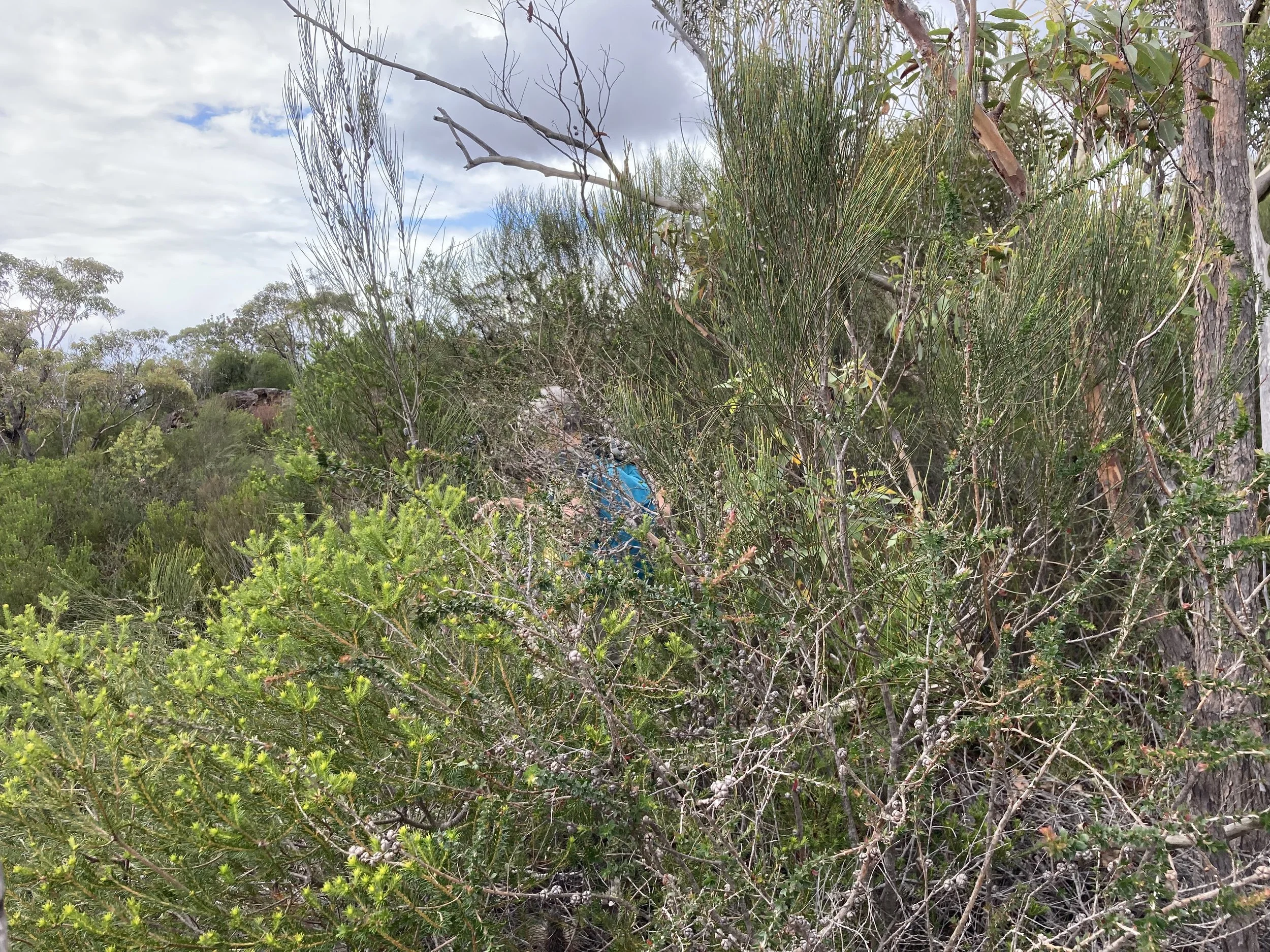
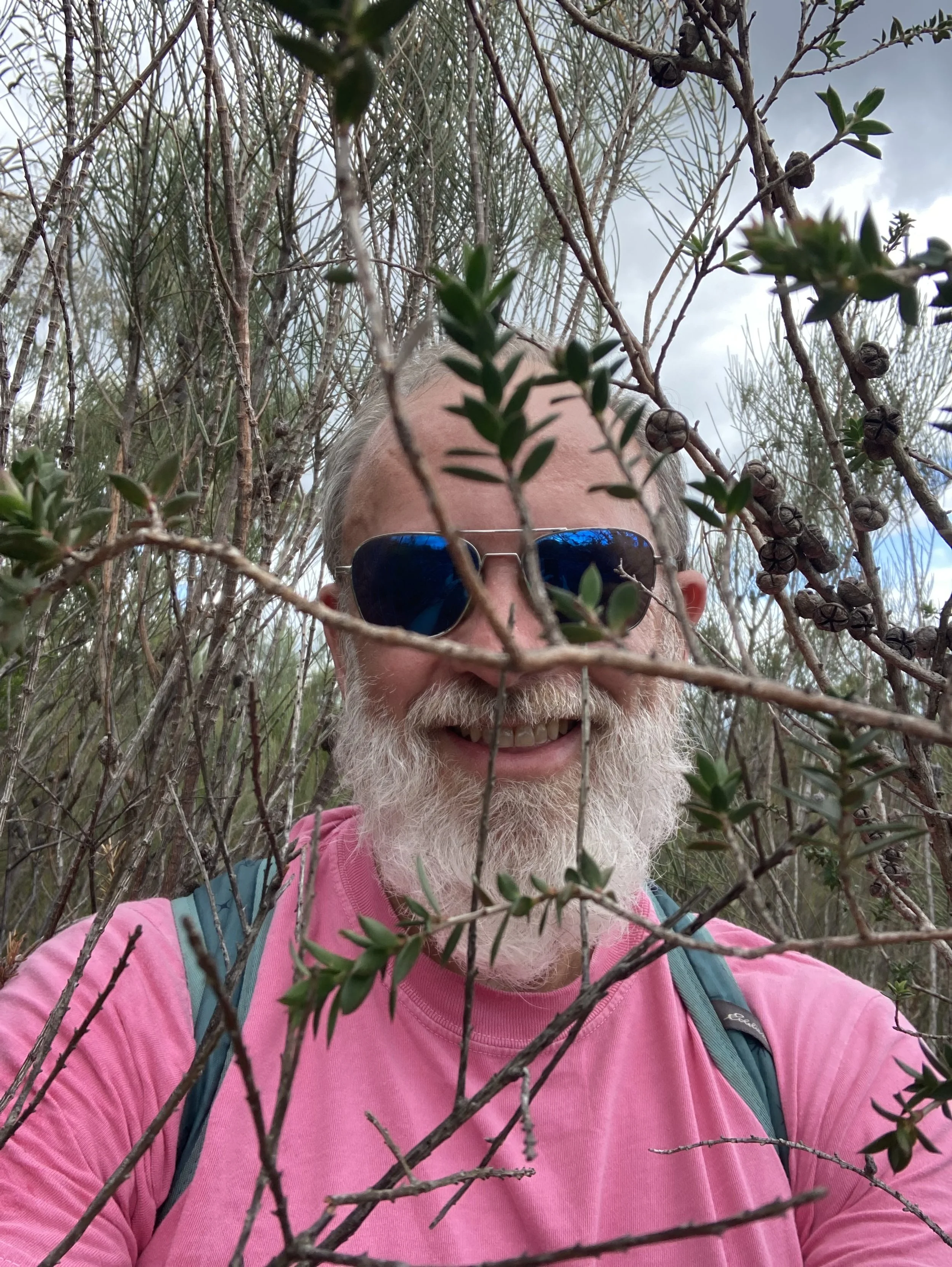
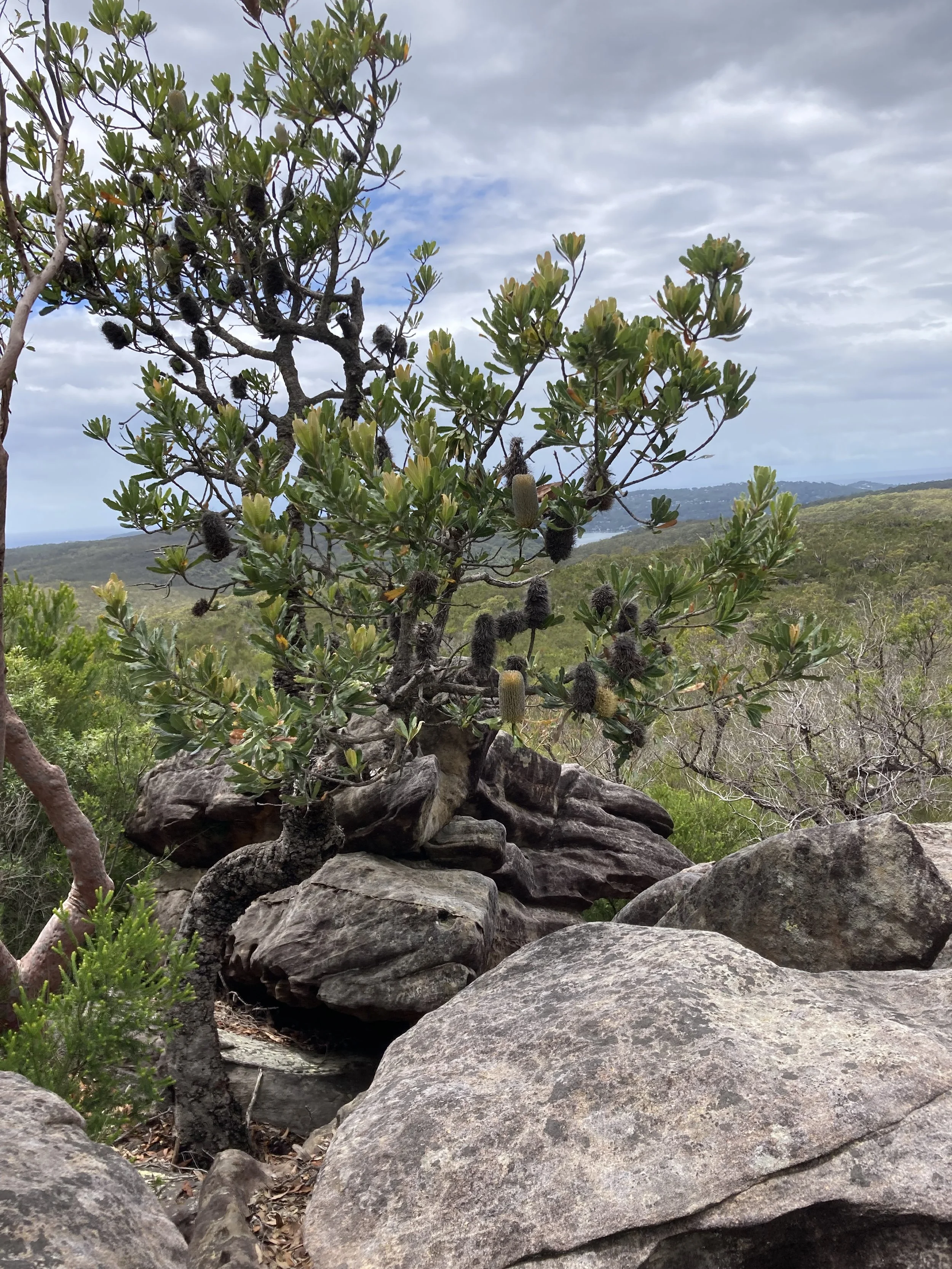
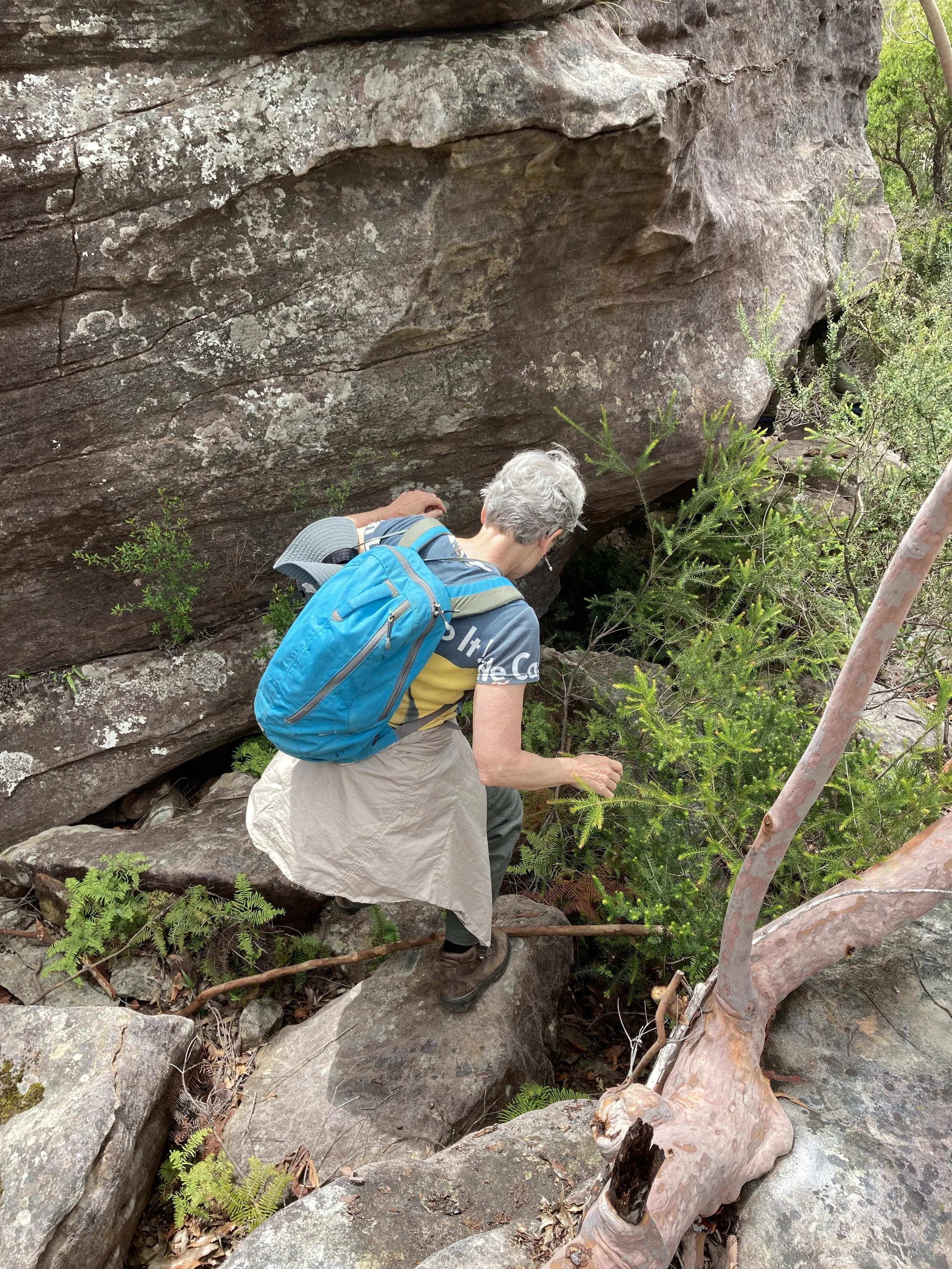
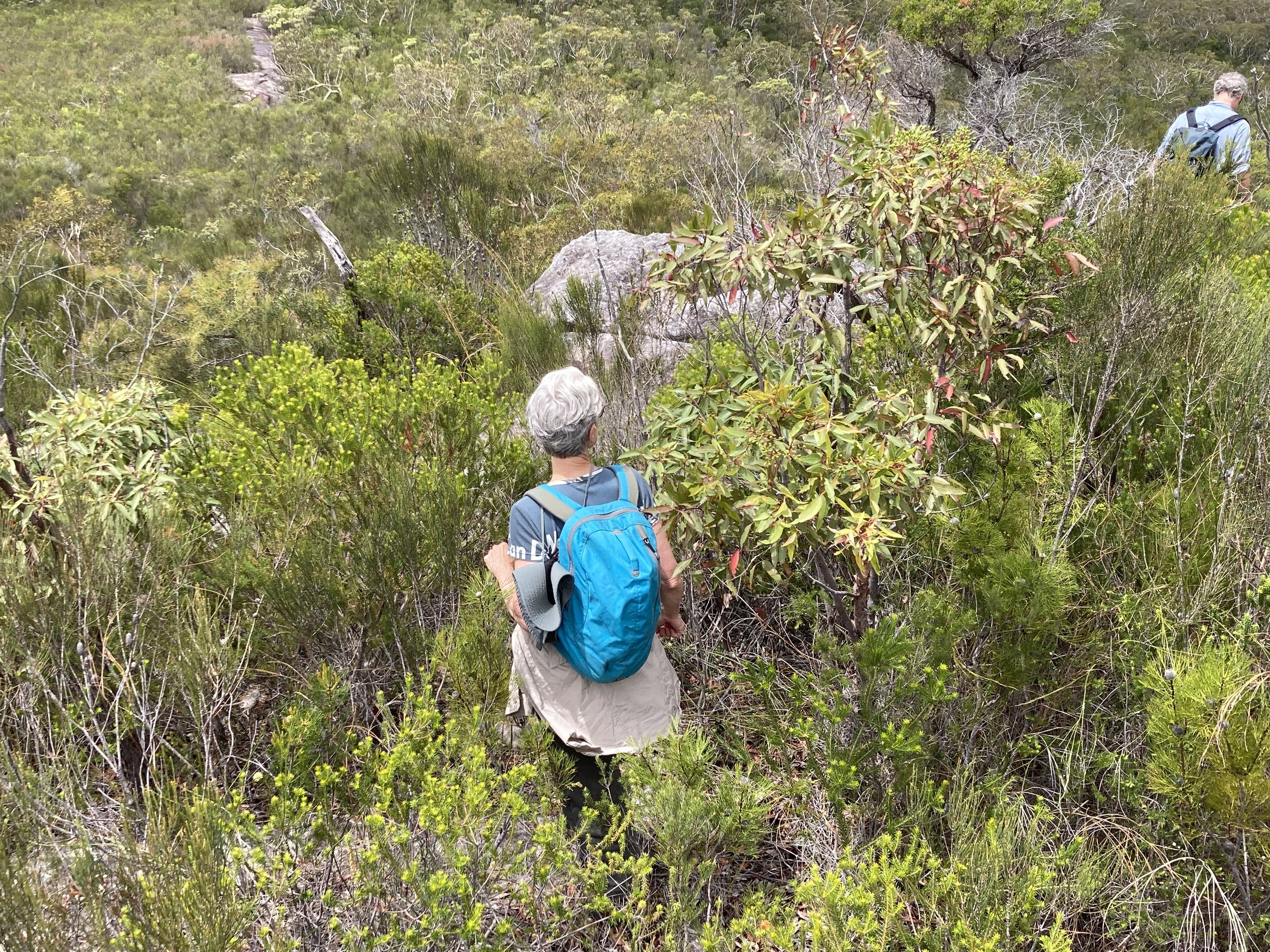
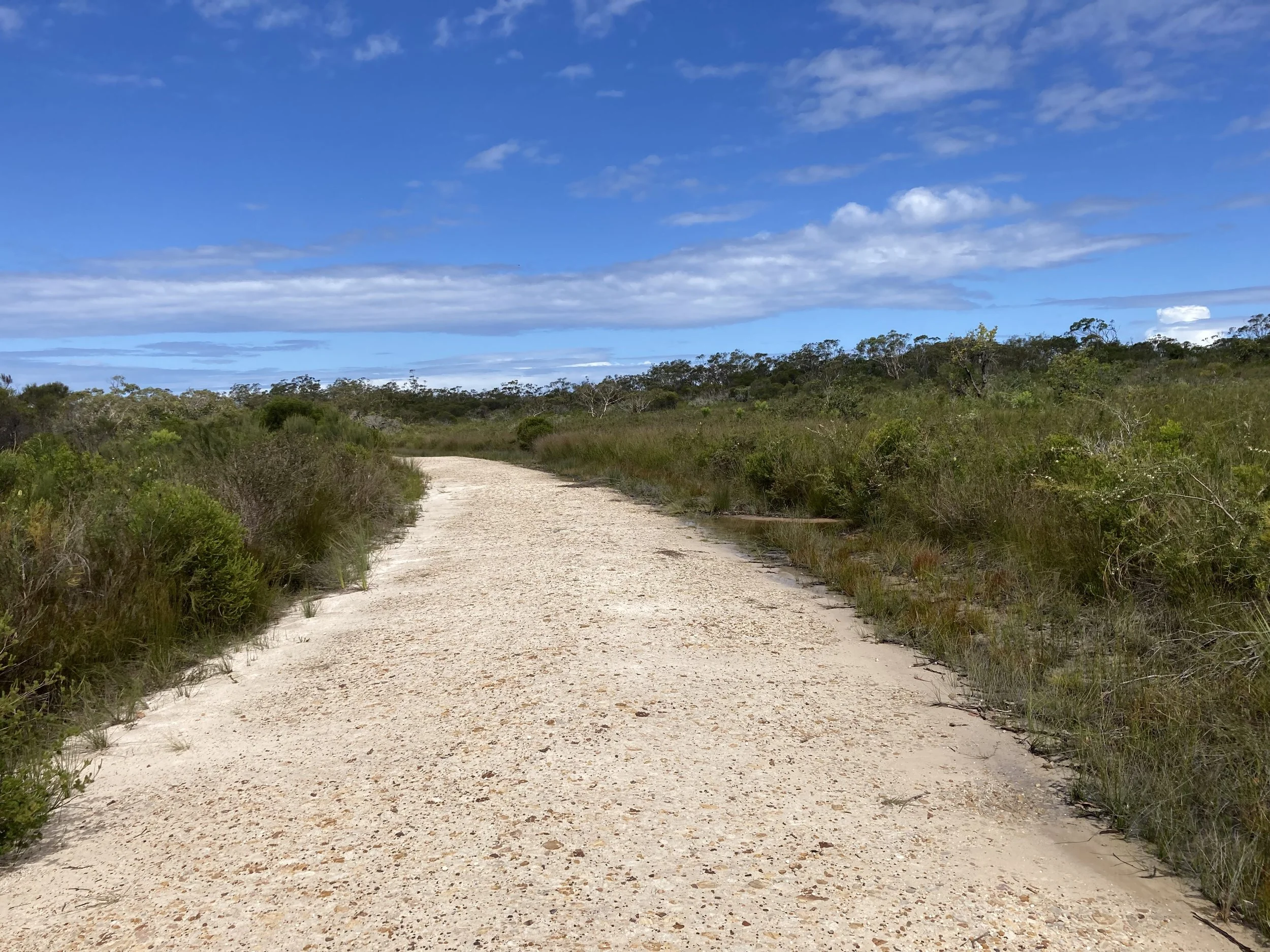
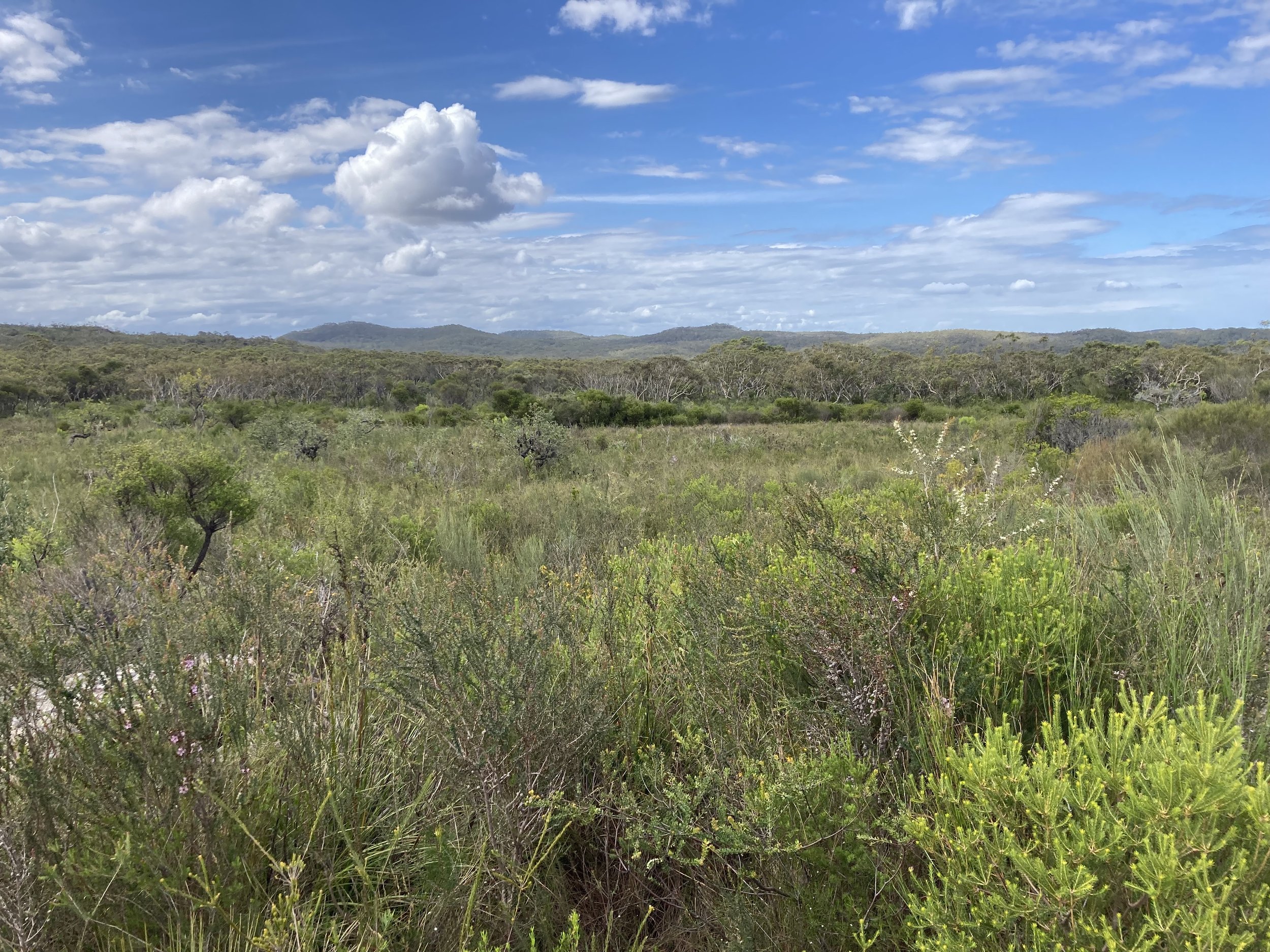
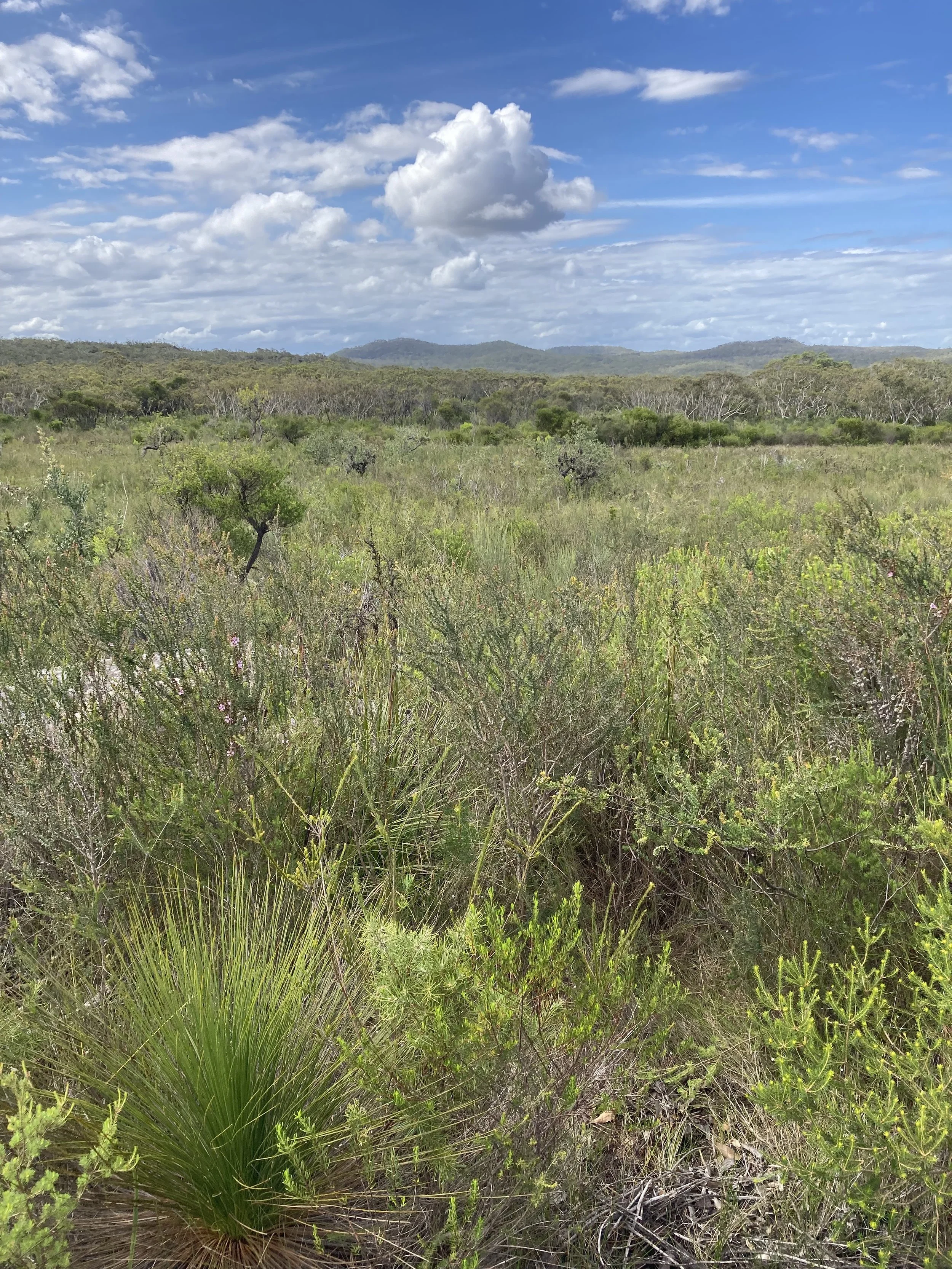
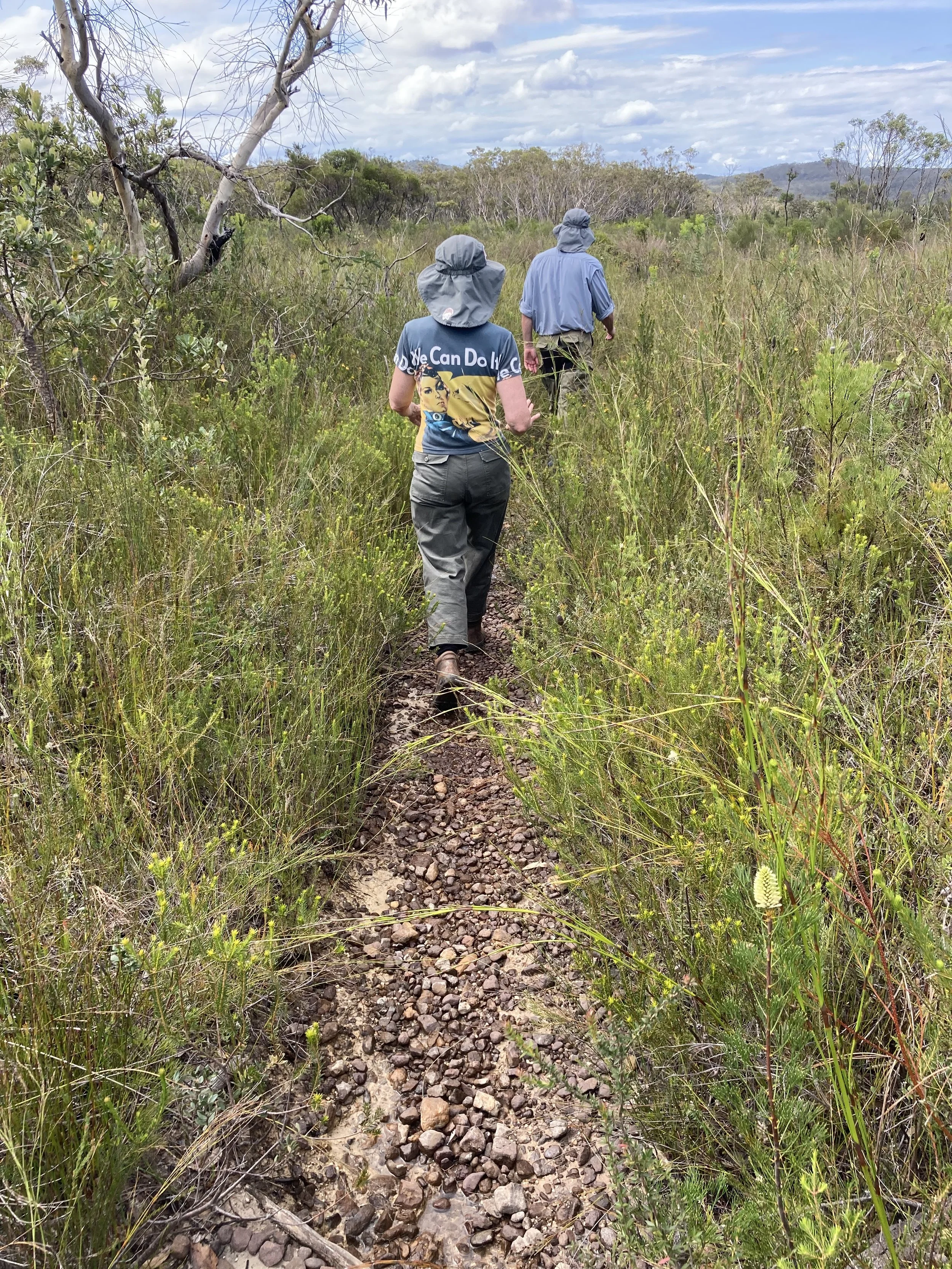
People talk about going into the Australian bush, but you’d know if you have actually done it by the lack of trails and amount of scratches on your arms and legs (especially if, like me, you were foolish enough to wear shorts instead of long pants). To be clear, I’m not complaining. I had an incredible adventure with my coach friend, Swantje Lorrimer and her husband Patrick.
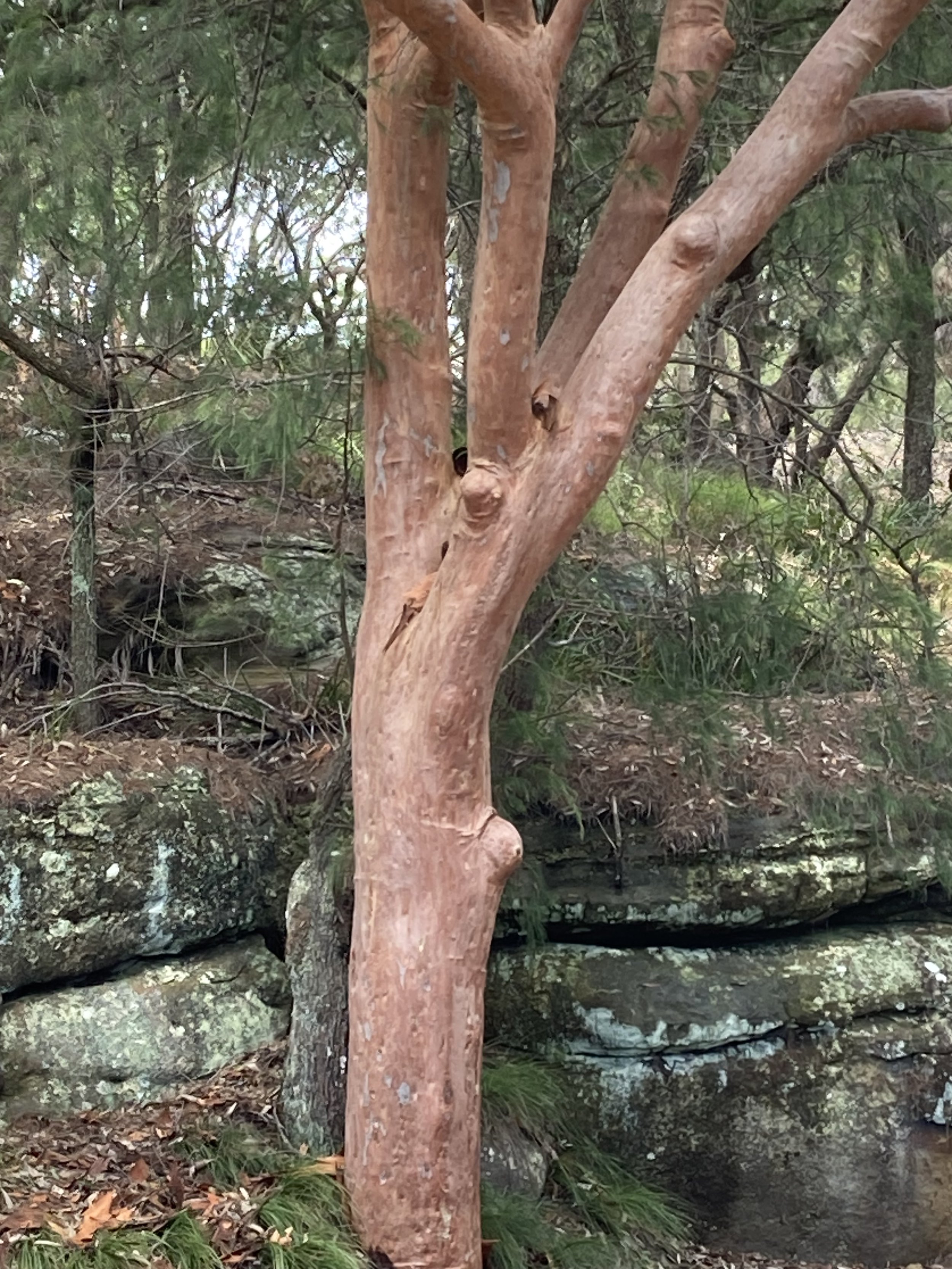
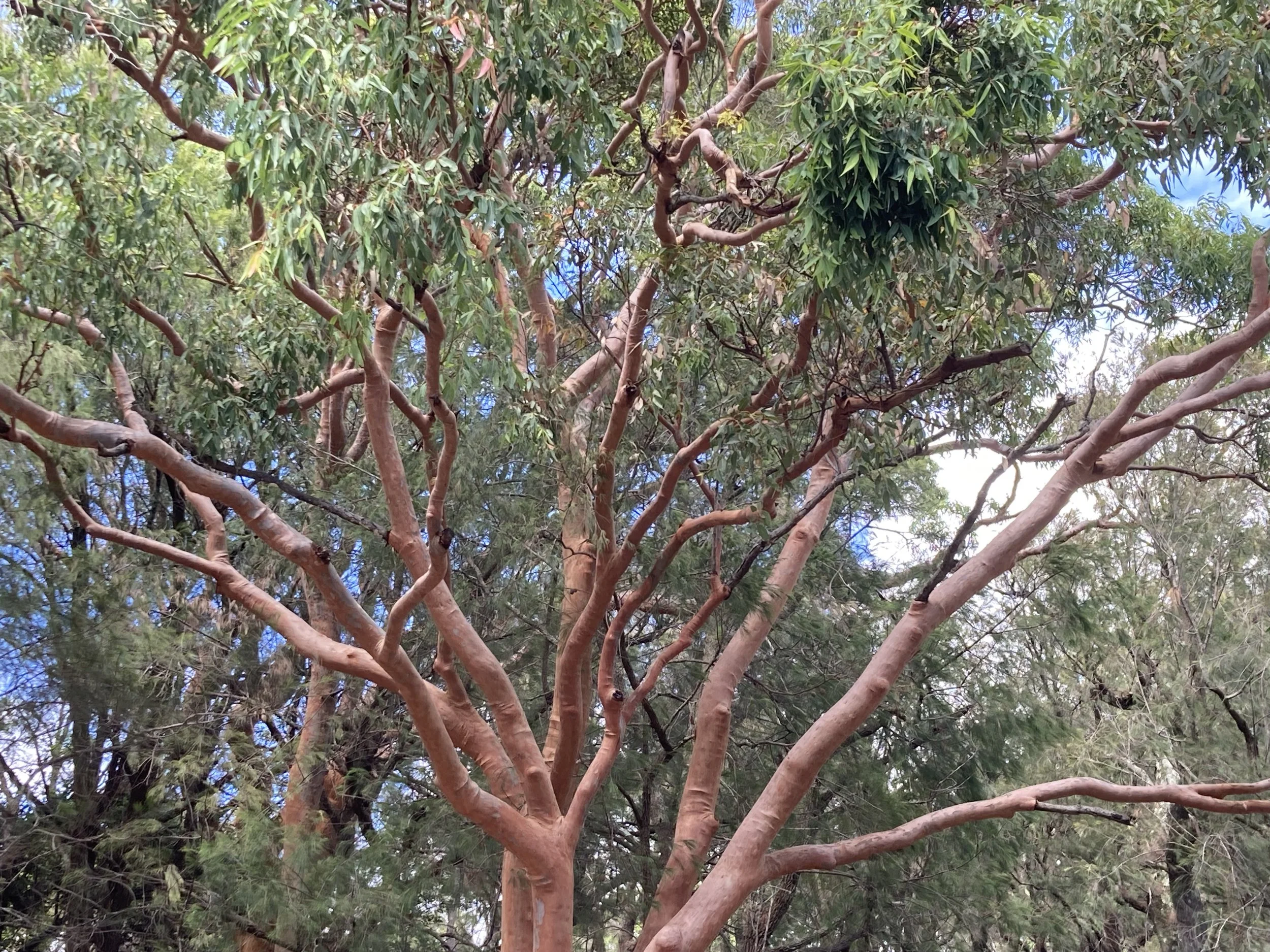
Our original plan was to explore the Blue Mountains together. The name “Blue Mountains” comes from the eucalyptus trees and plants because when the sun hits their oils, they look blue from a distance. I loved that plan and yet, it poured buckets of rain before I landed in Sydney making the roads nearly impassable and the trails that could could access covered in mud — not an ideal way to trek.
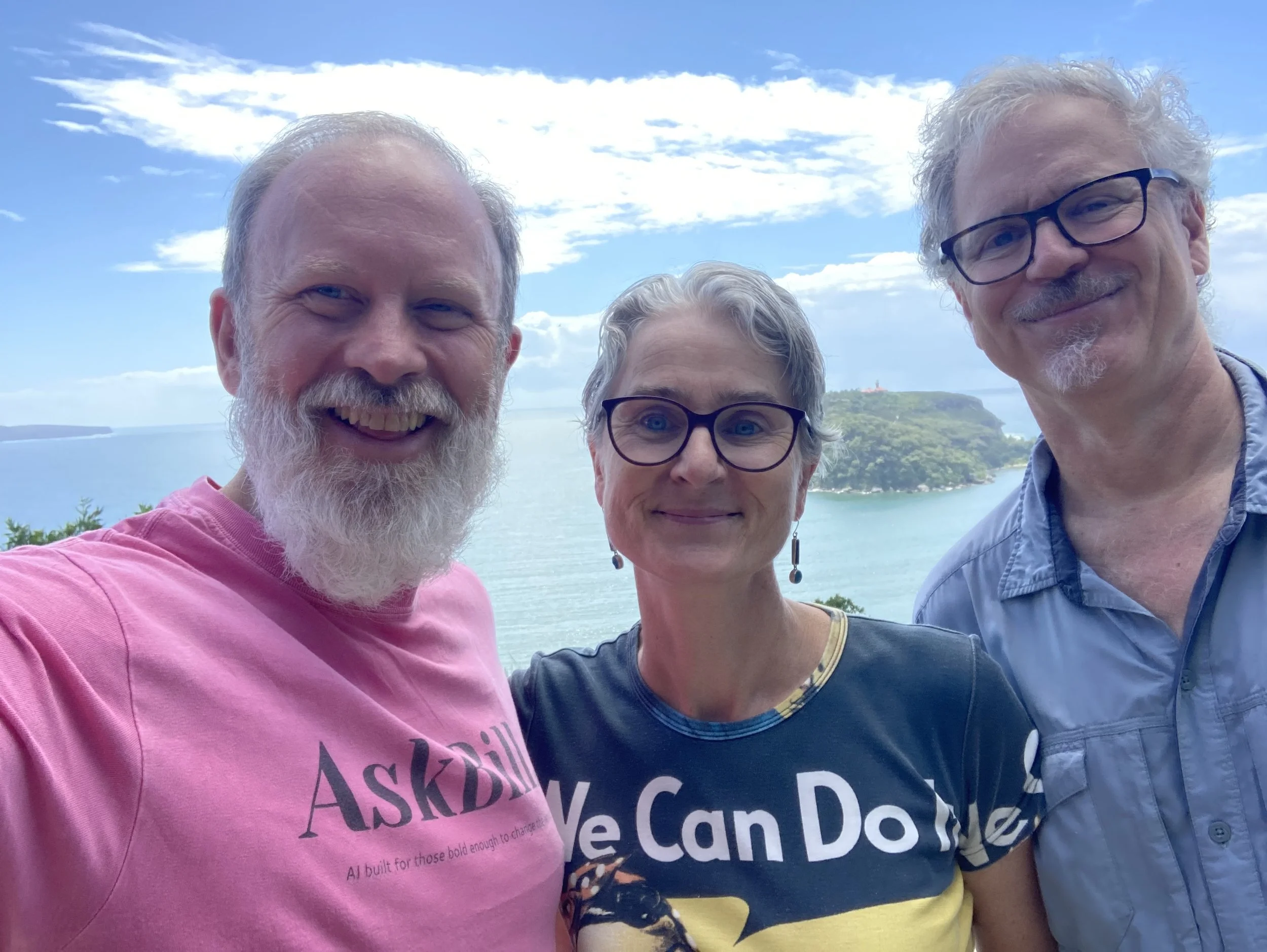
Swantje Lorrimer and husband Patrick as we begin our adventure
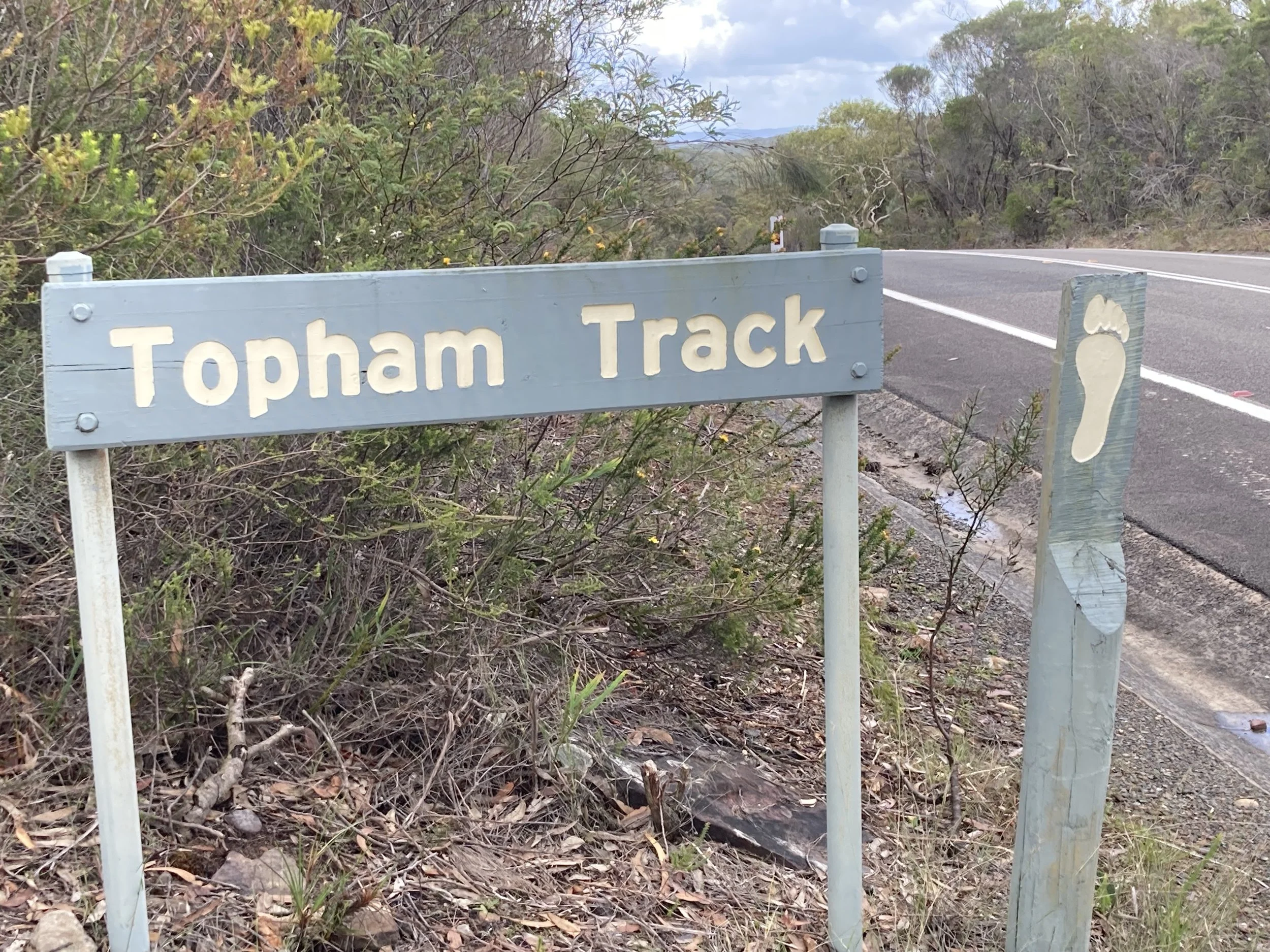
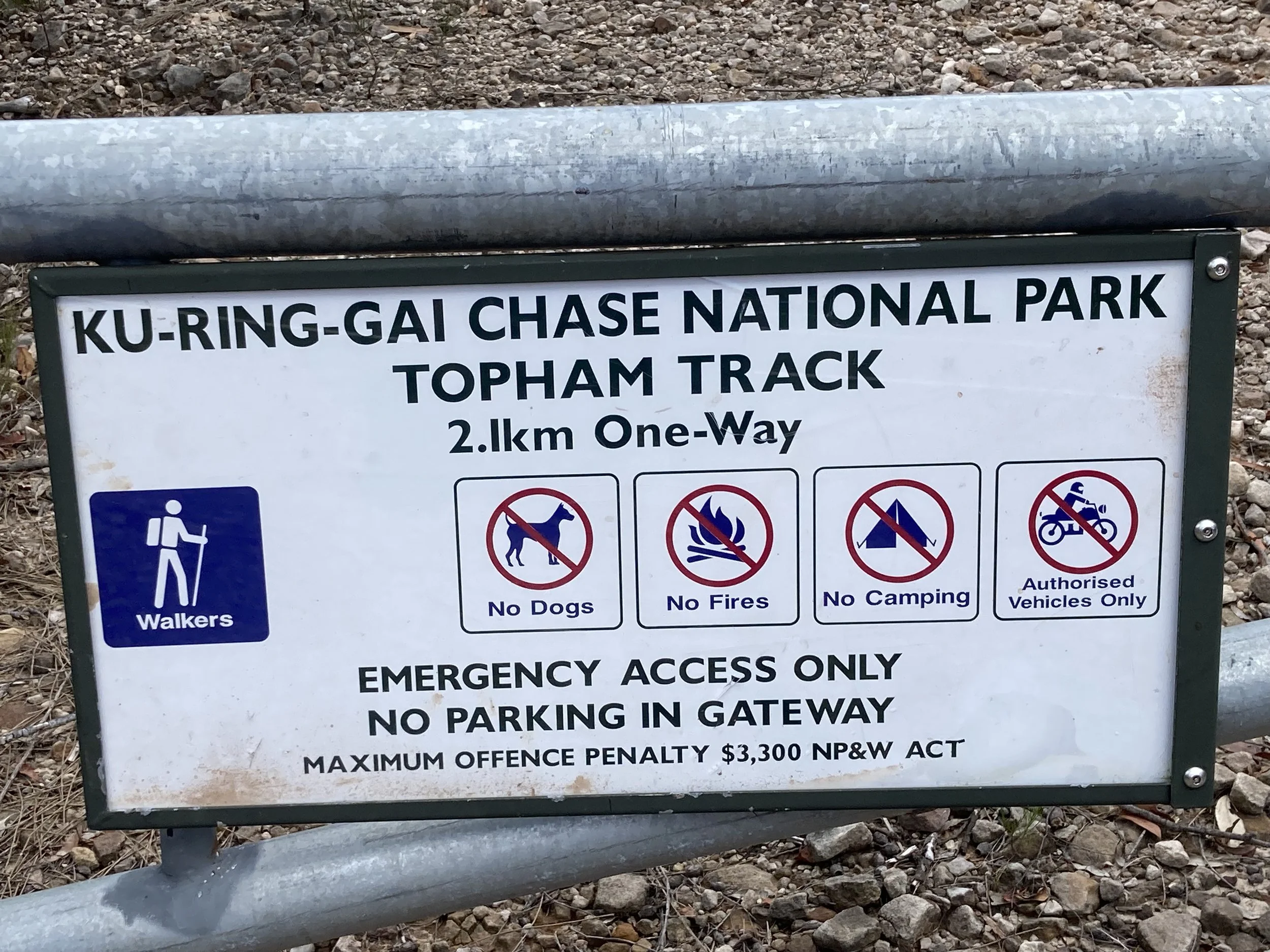
Ku-ring-gai Chase National Park
So, instead of the Blue Mountains, we opted to go to Ku-ring-gai Chase National Park. It was a bit of a surprise in that Patrick loves to explore Aboriginal art including rock carvings from 3,000 to 30,000 years ago. These carvings generally fade unless the local Aboriginal people protect them and keep them in tact through the centuries. And, the Aboriginal people are not actively living in Ku-ring-gai Chase National Park holding their ceremonies to upkeep the artwork. Eventually, it will fade away (and probably in the next 10 years or so). So this truly is an incredibly unique opportunity.
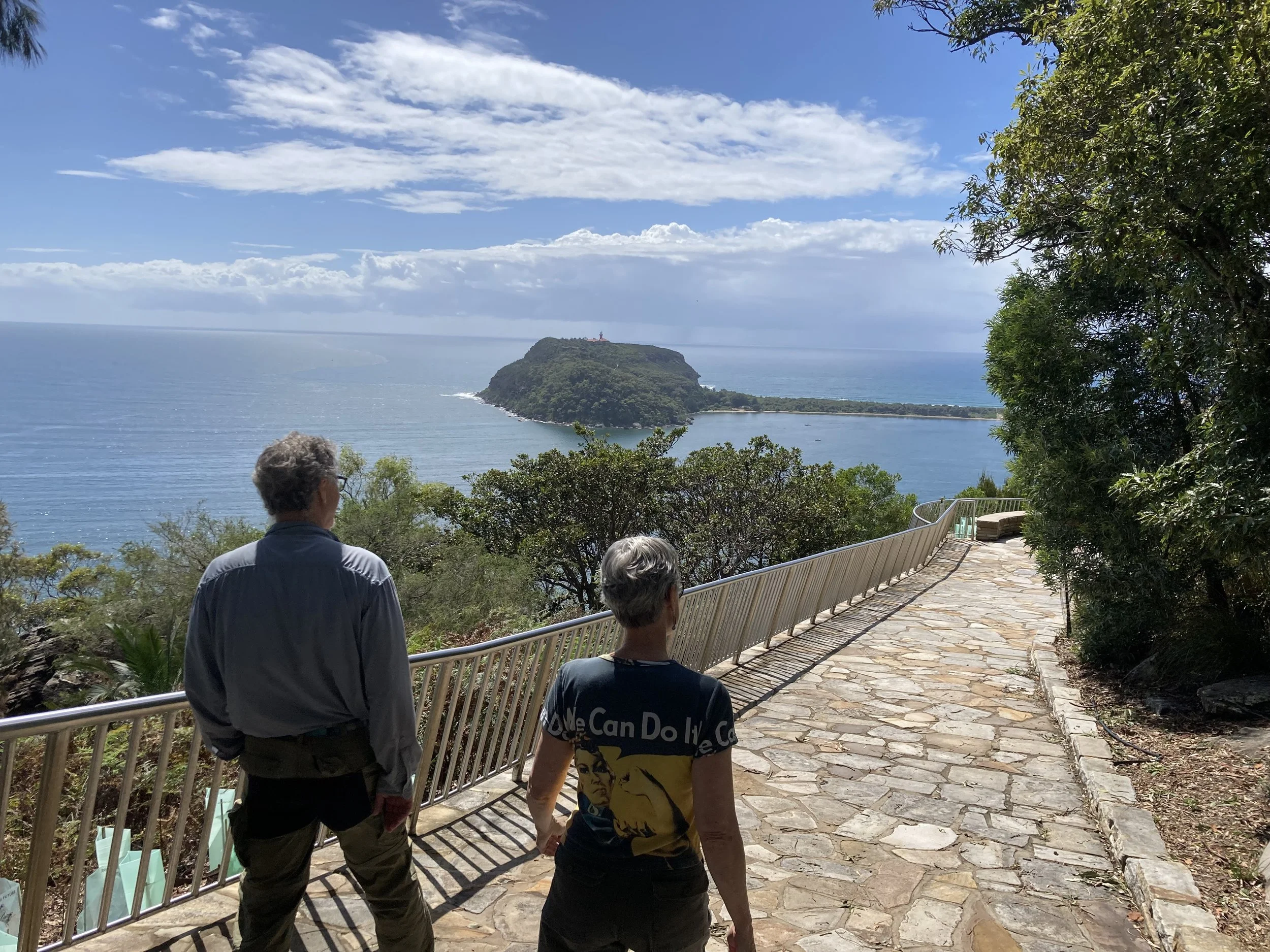
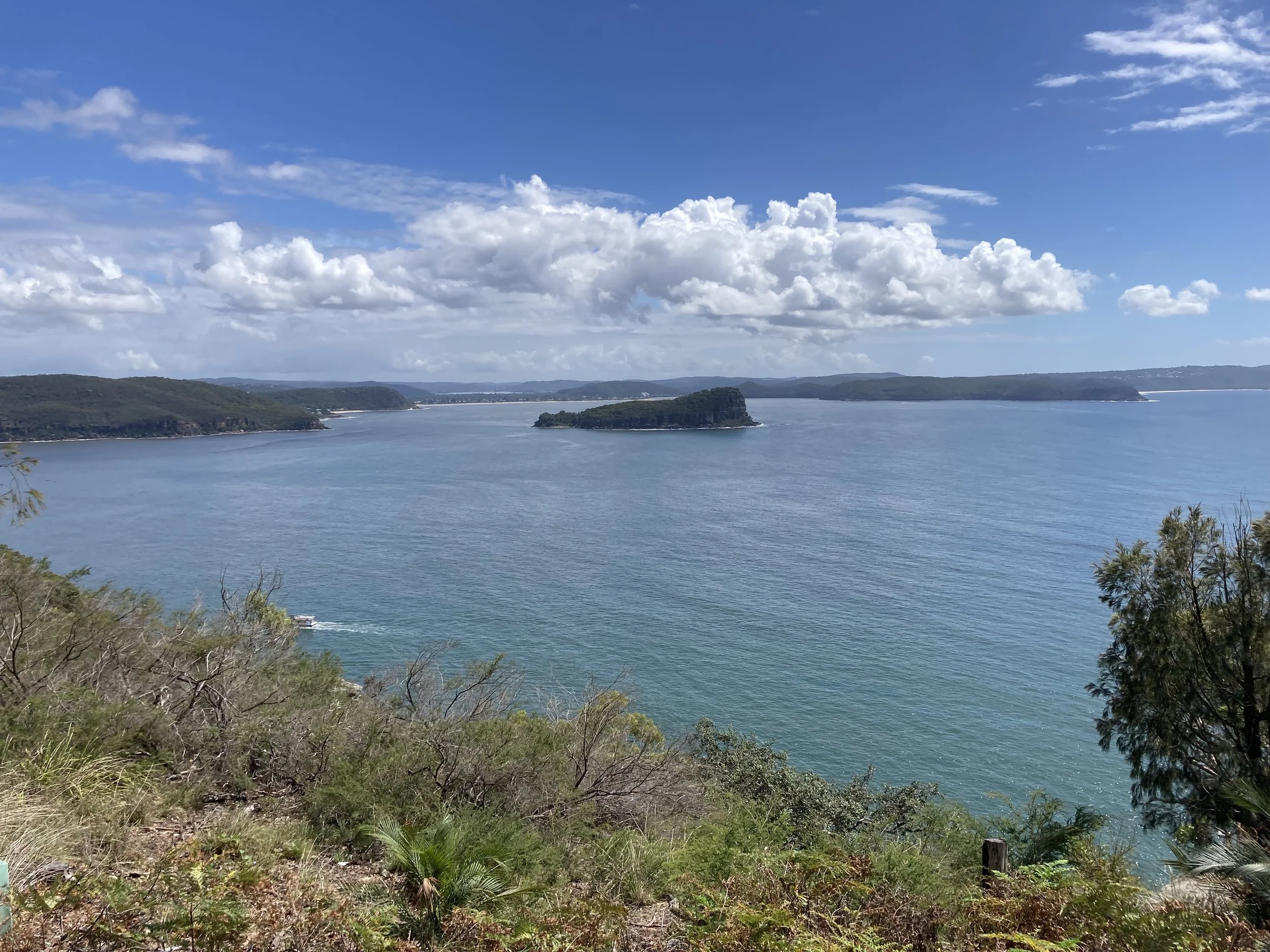
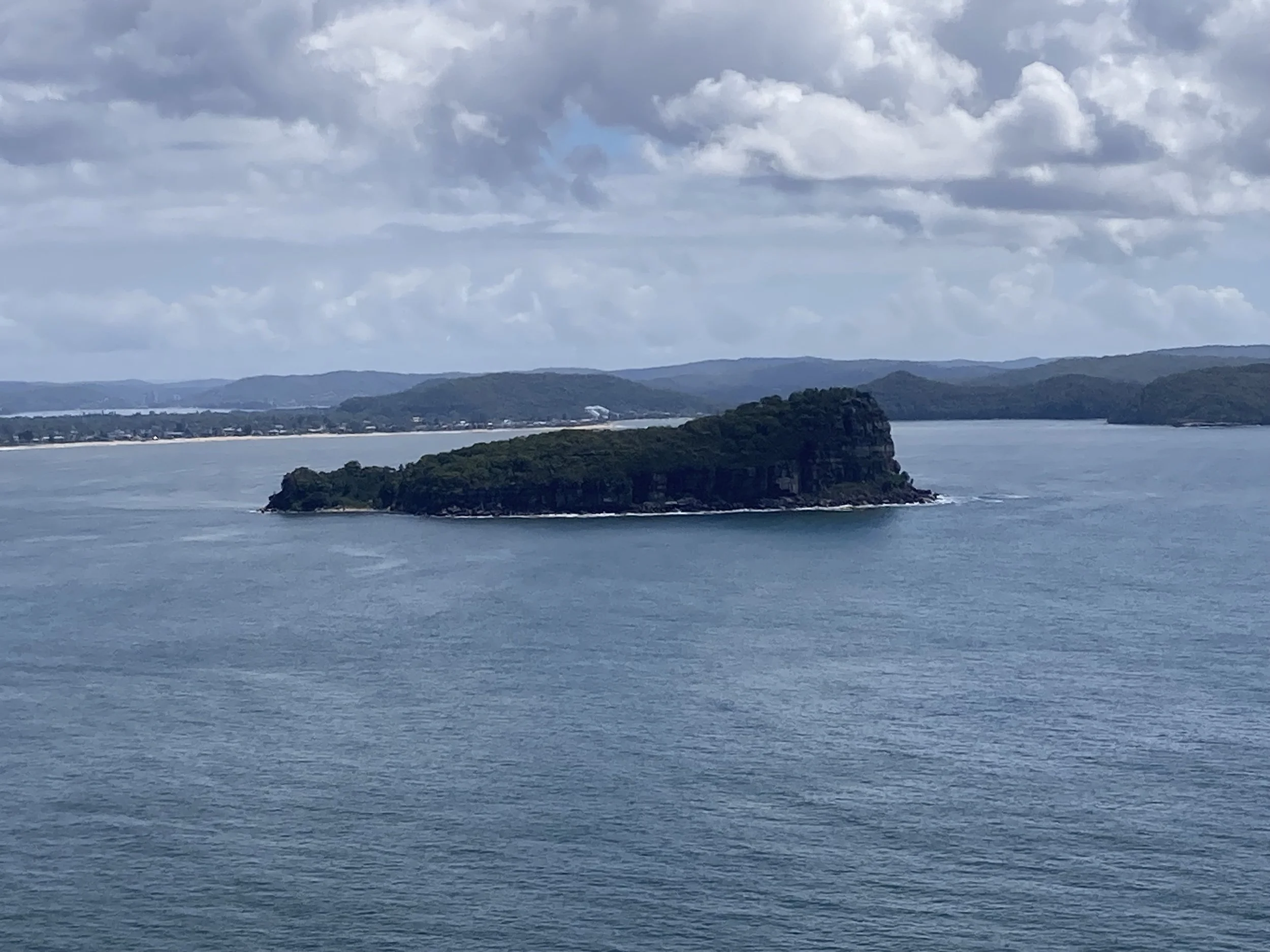
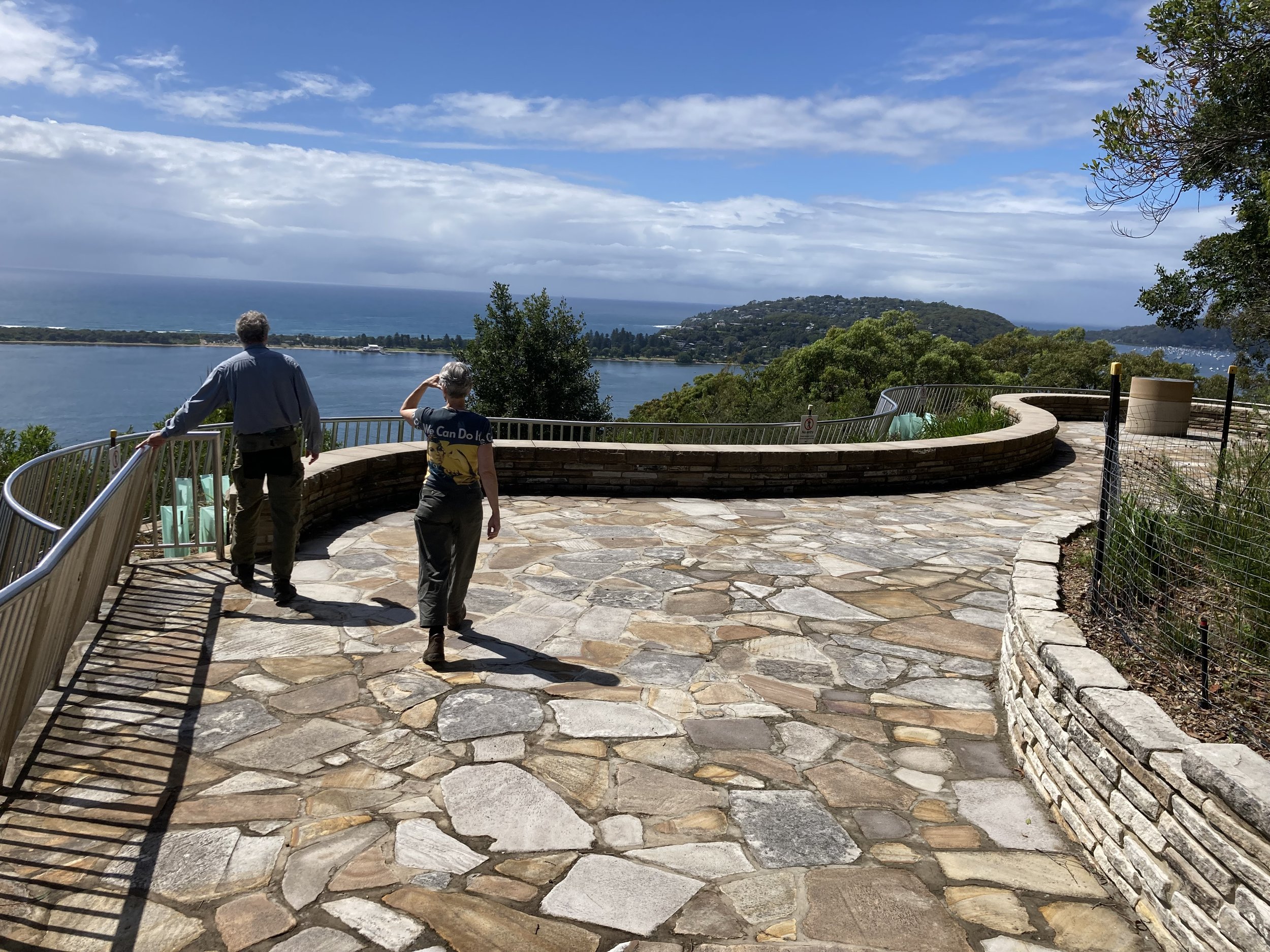
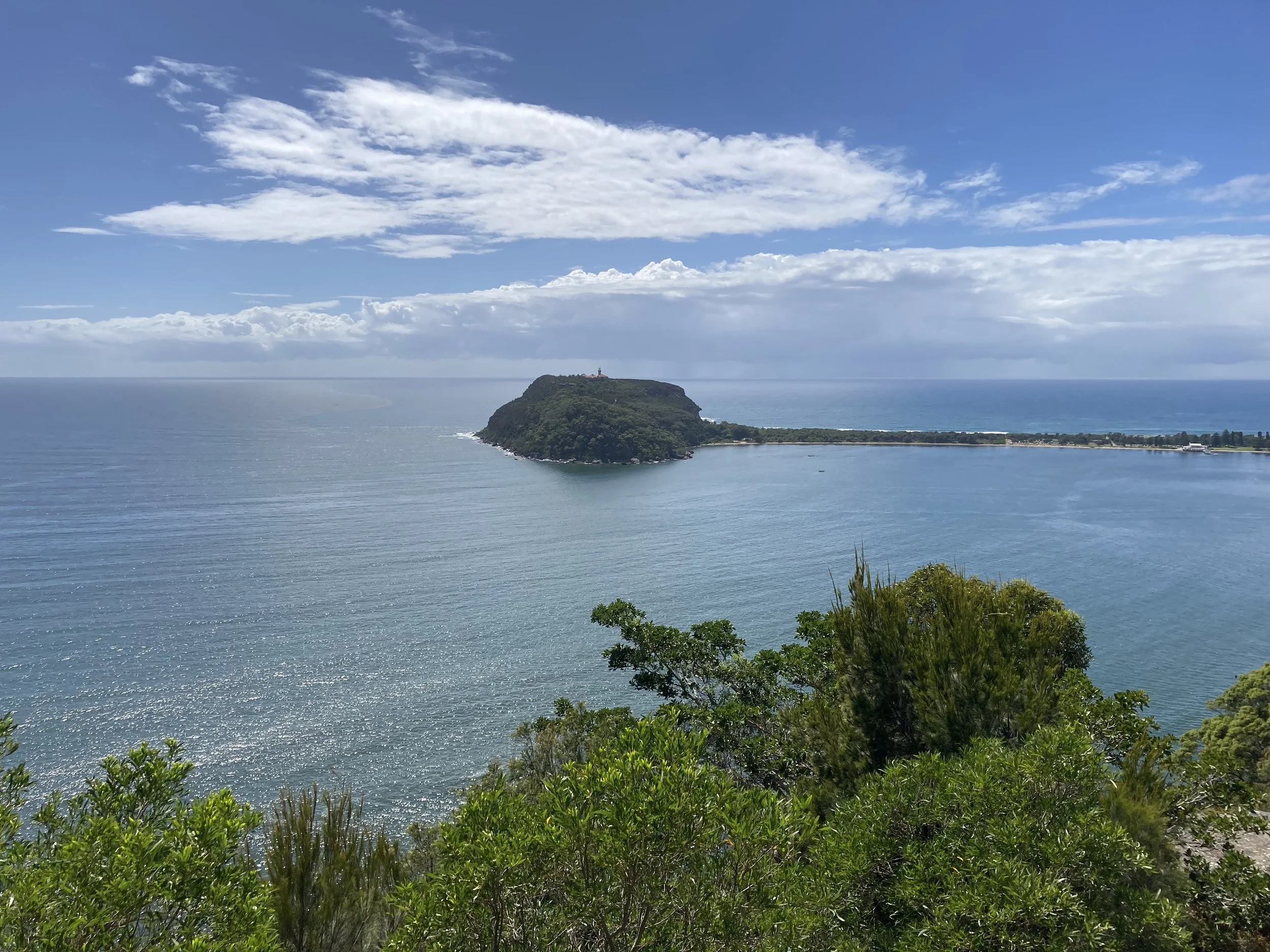
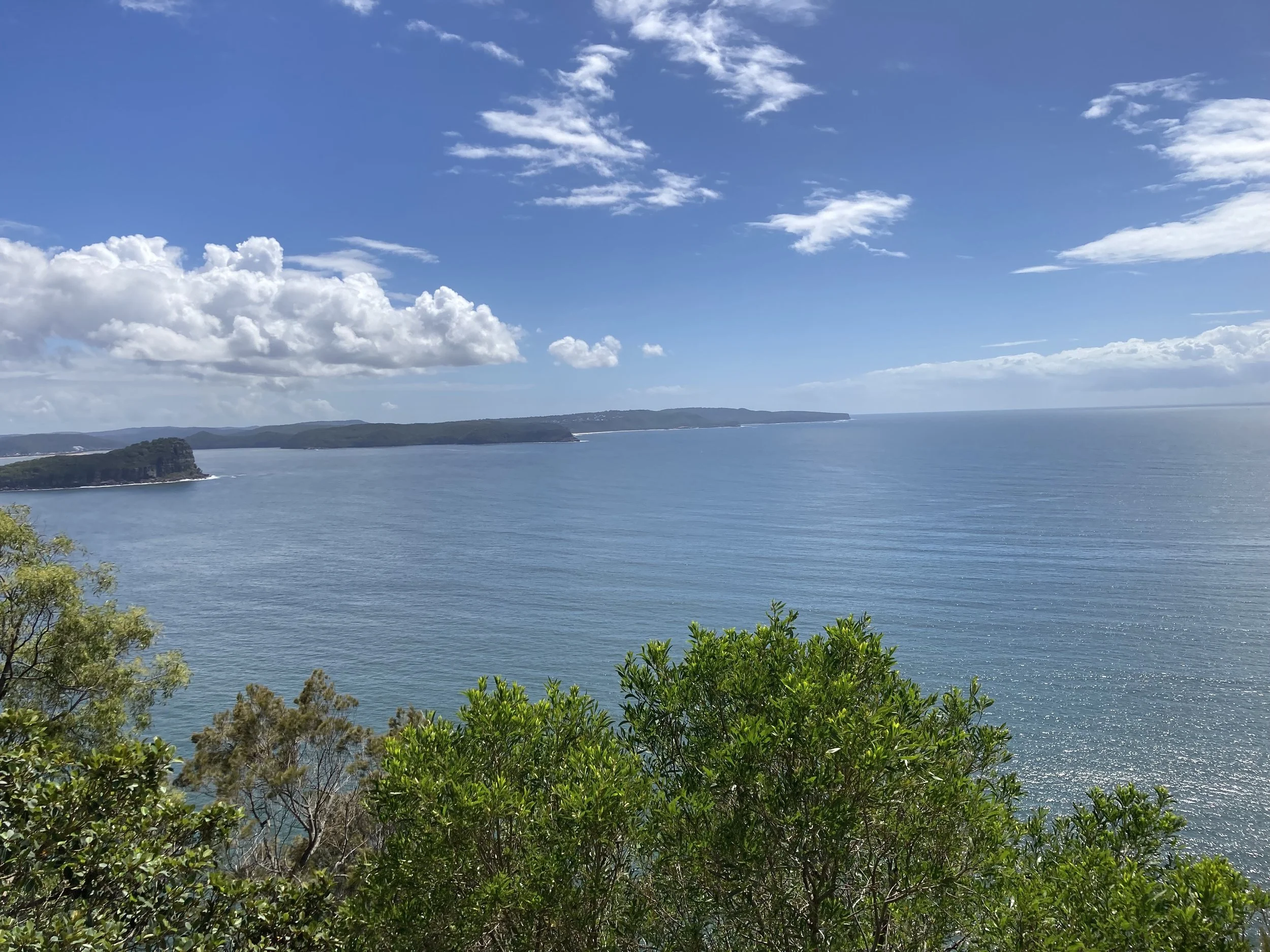


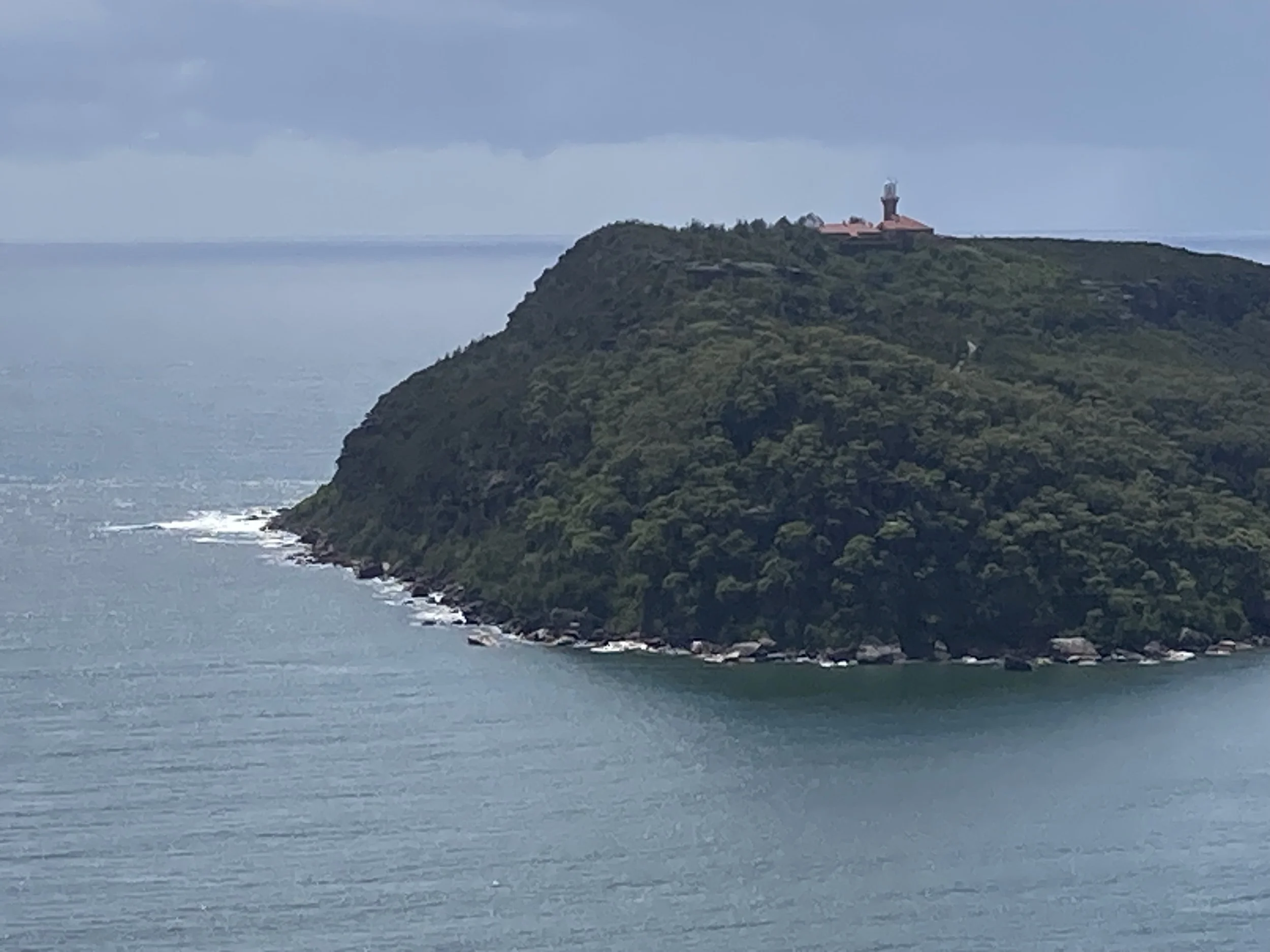
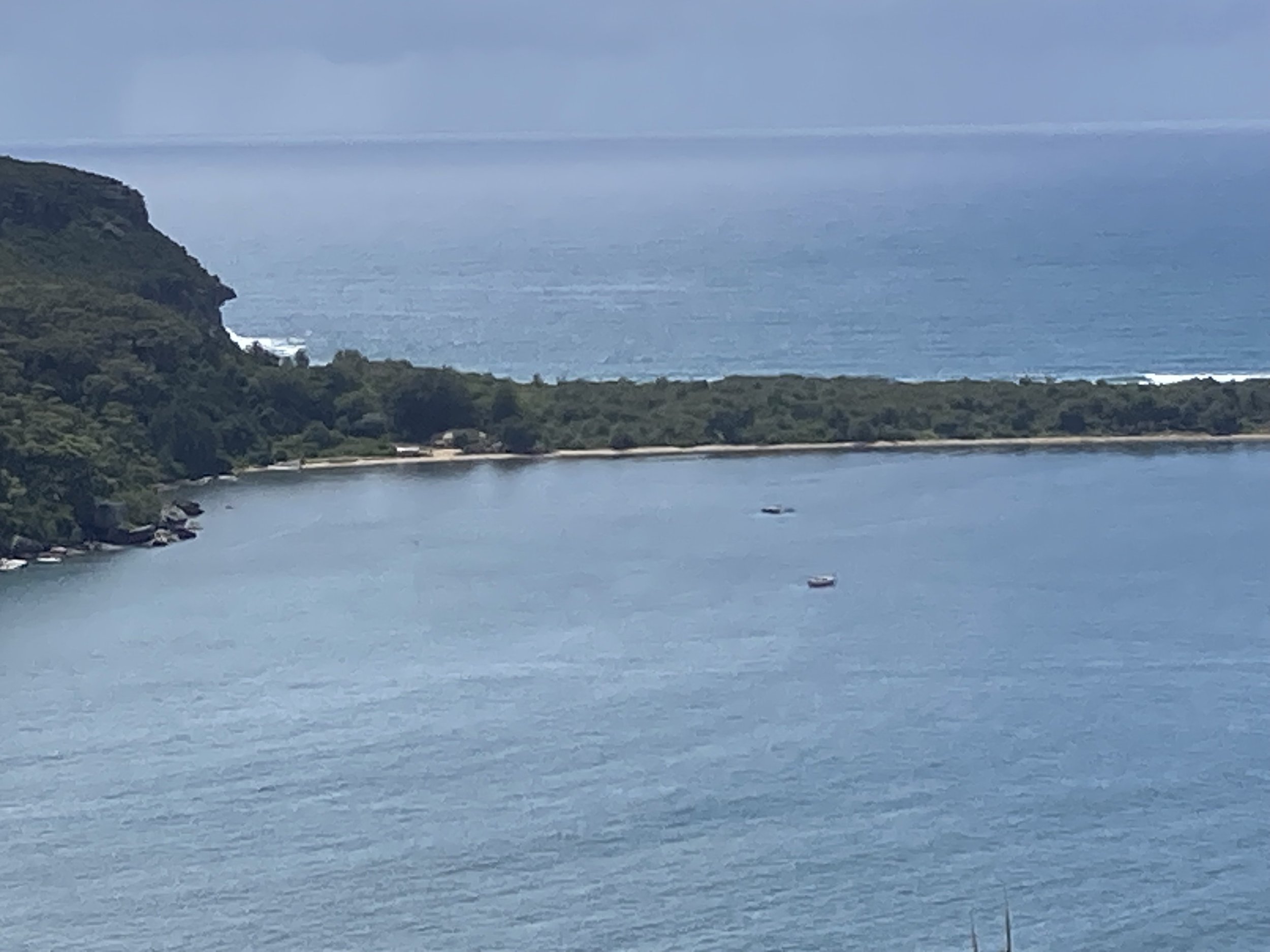
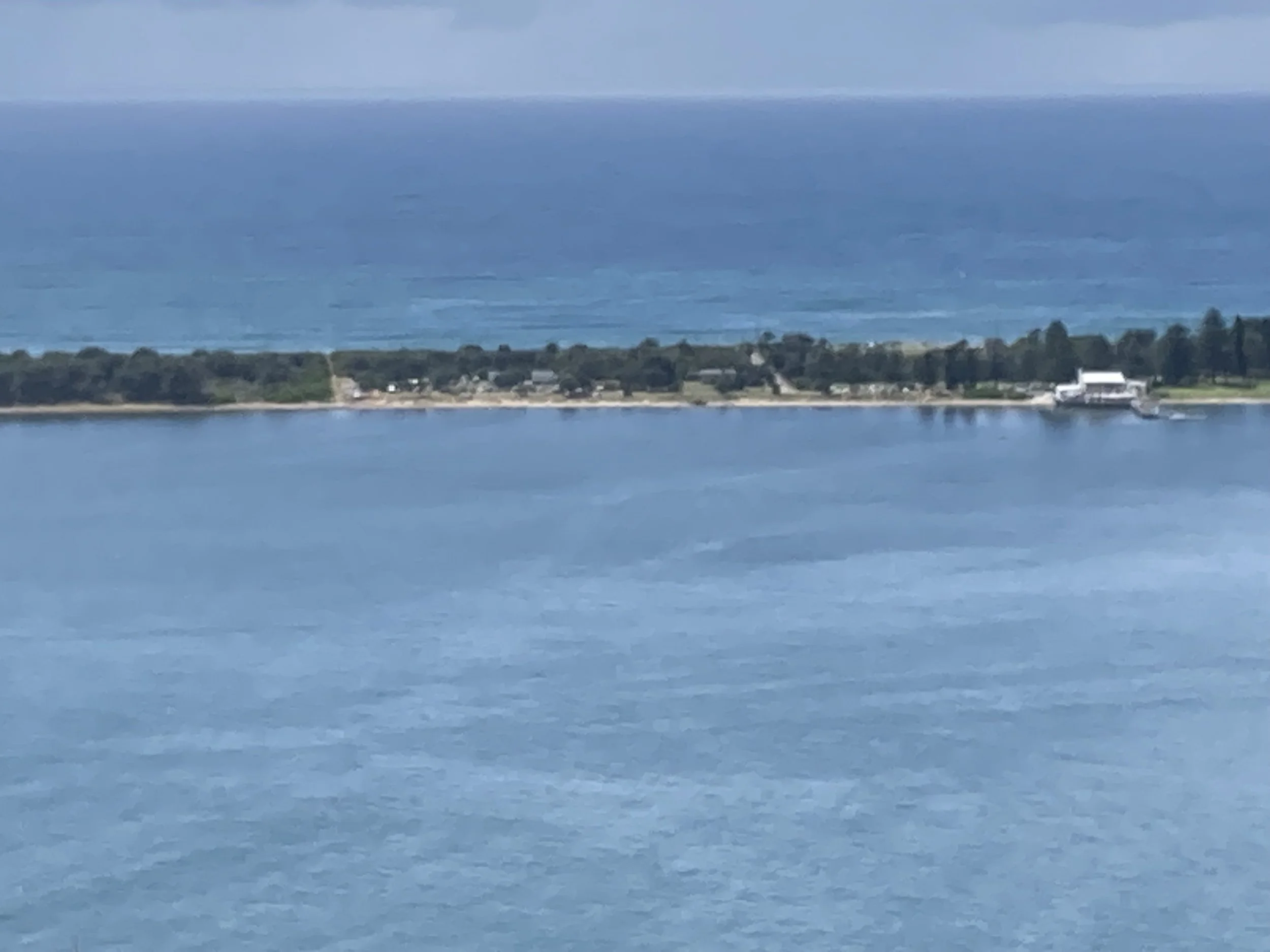
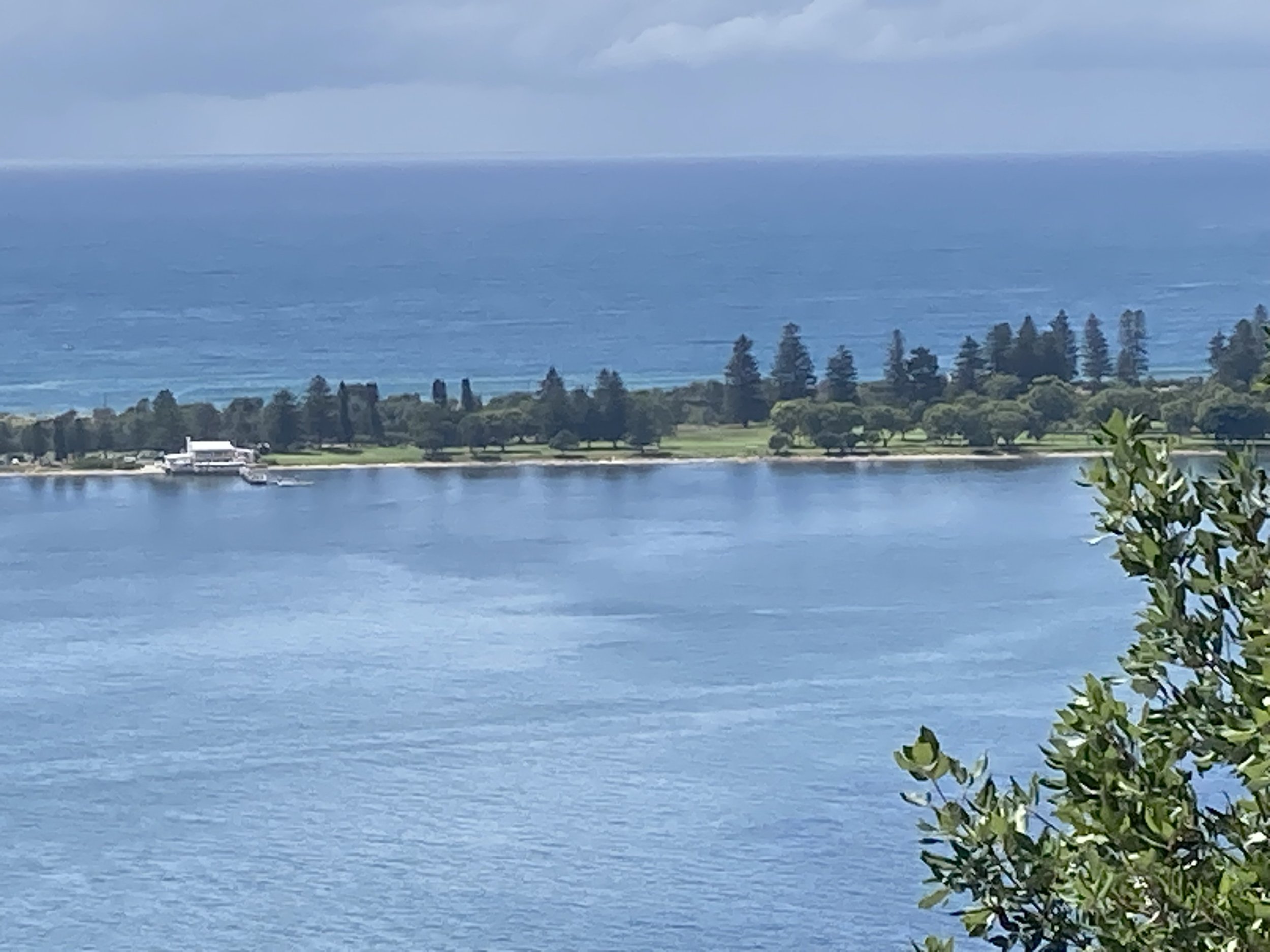
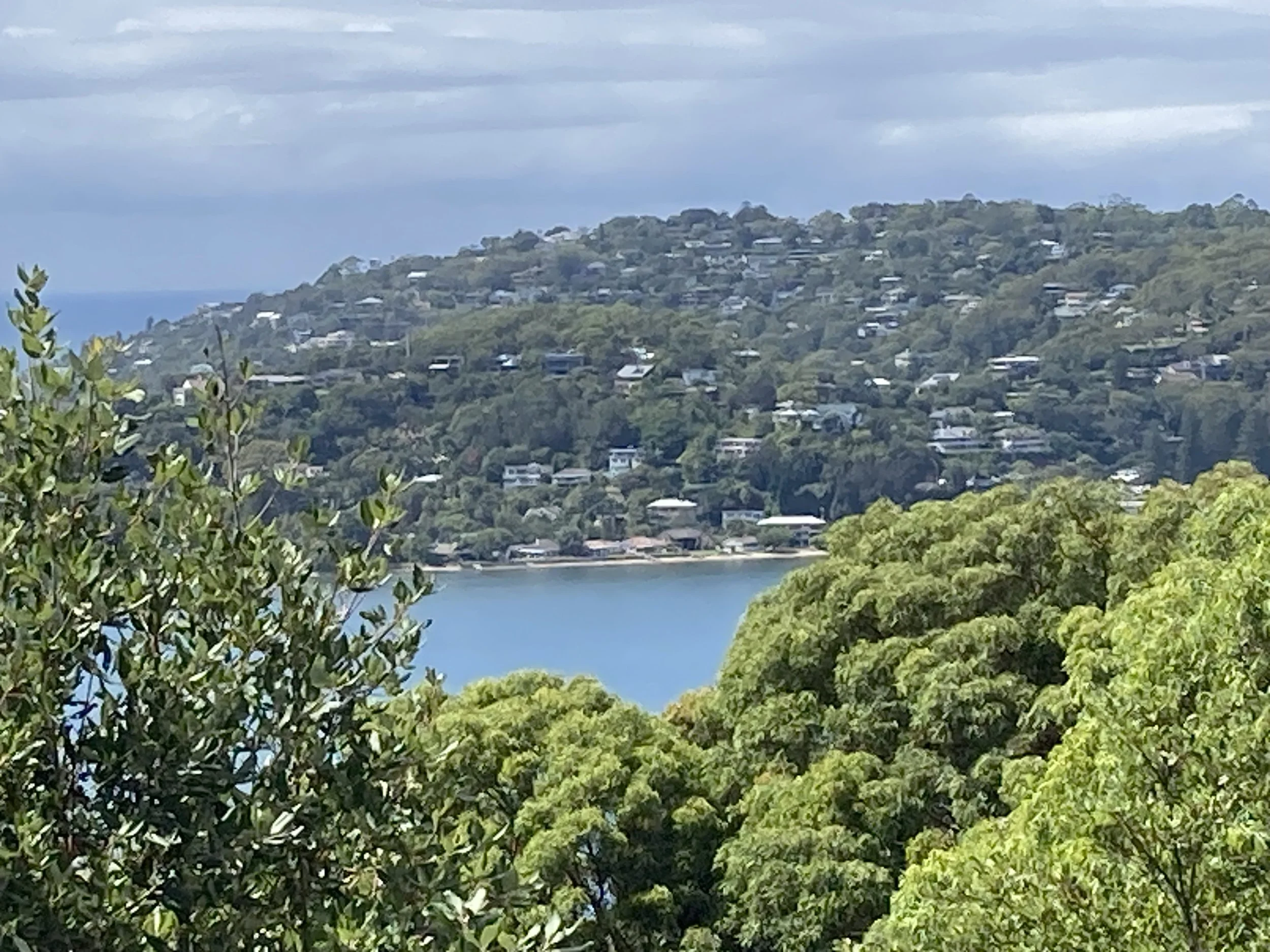
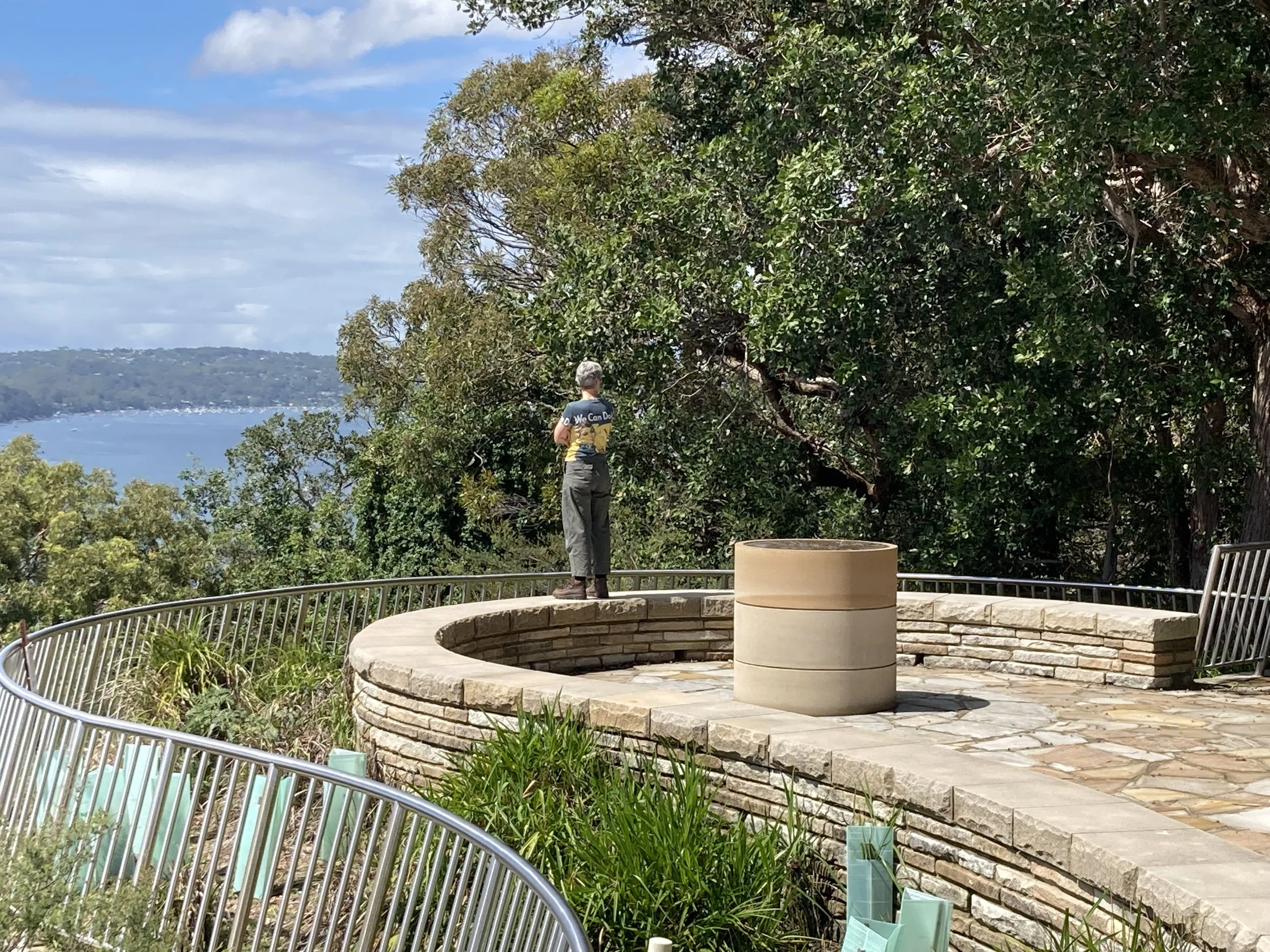
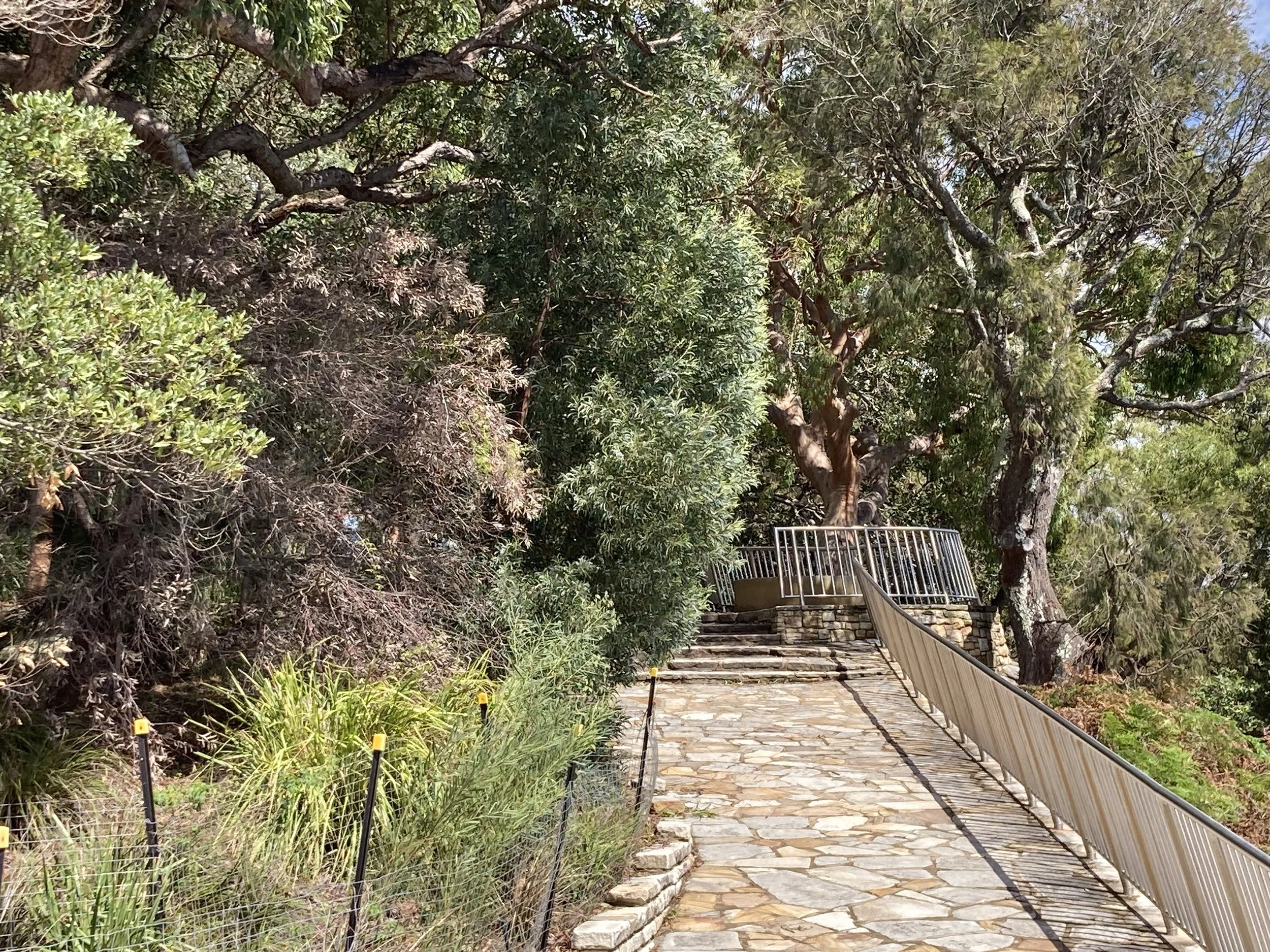
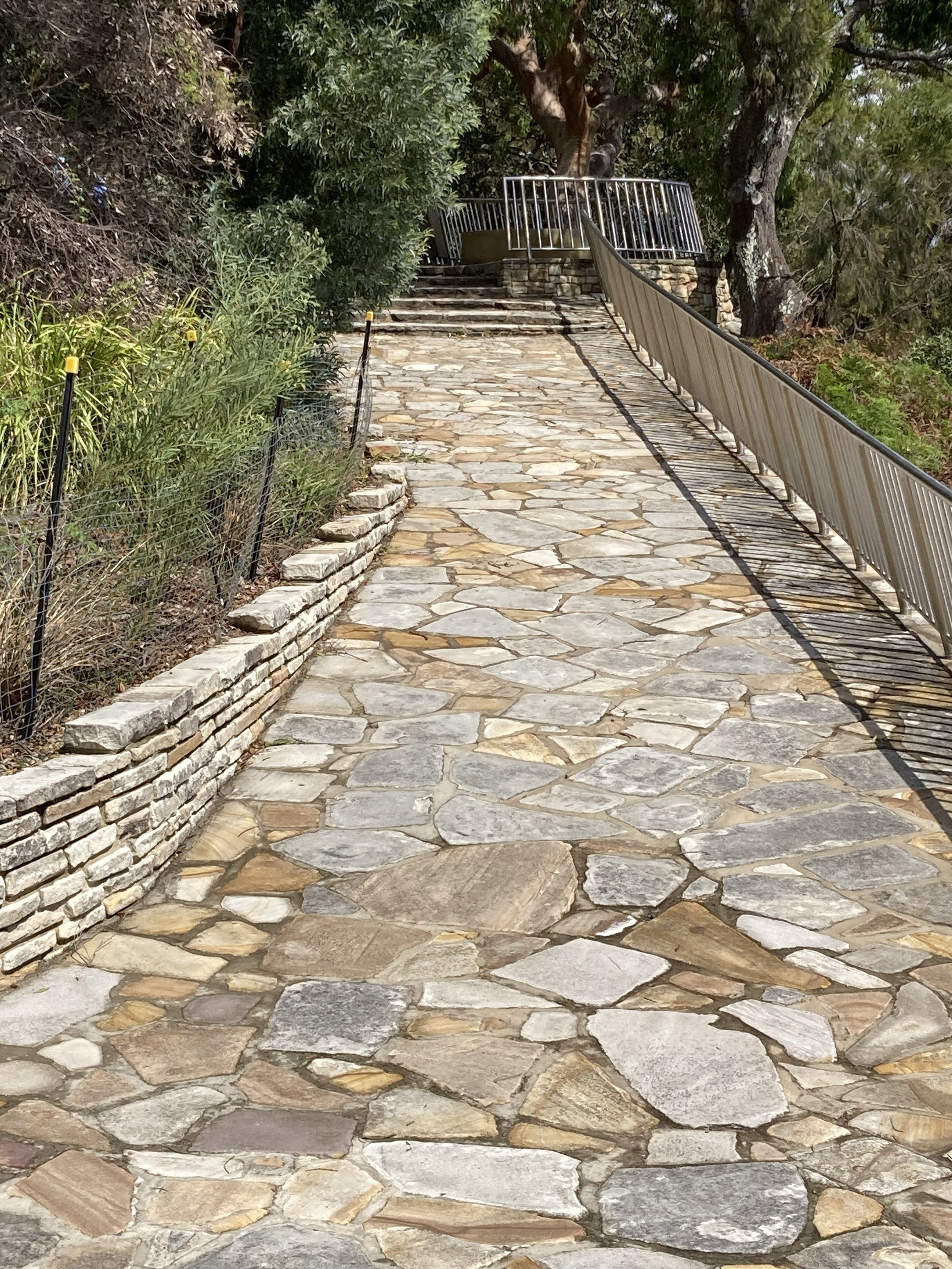
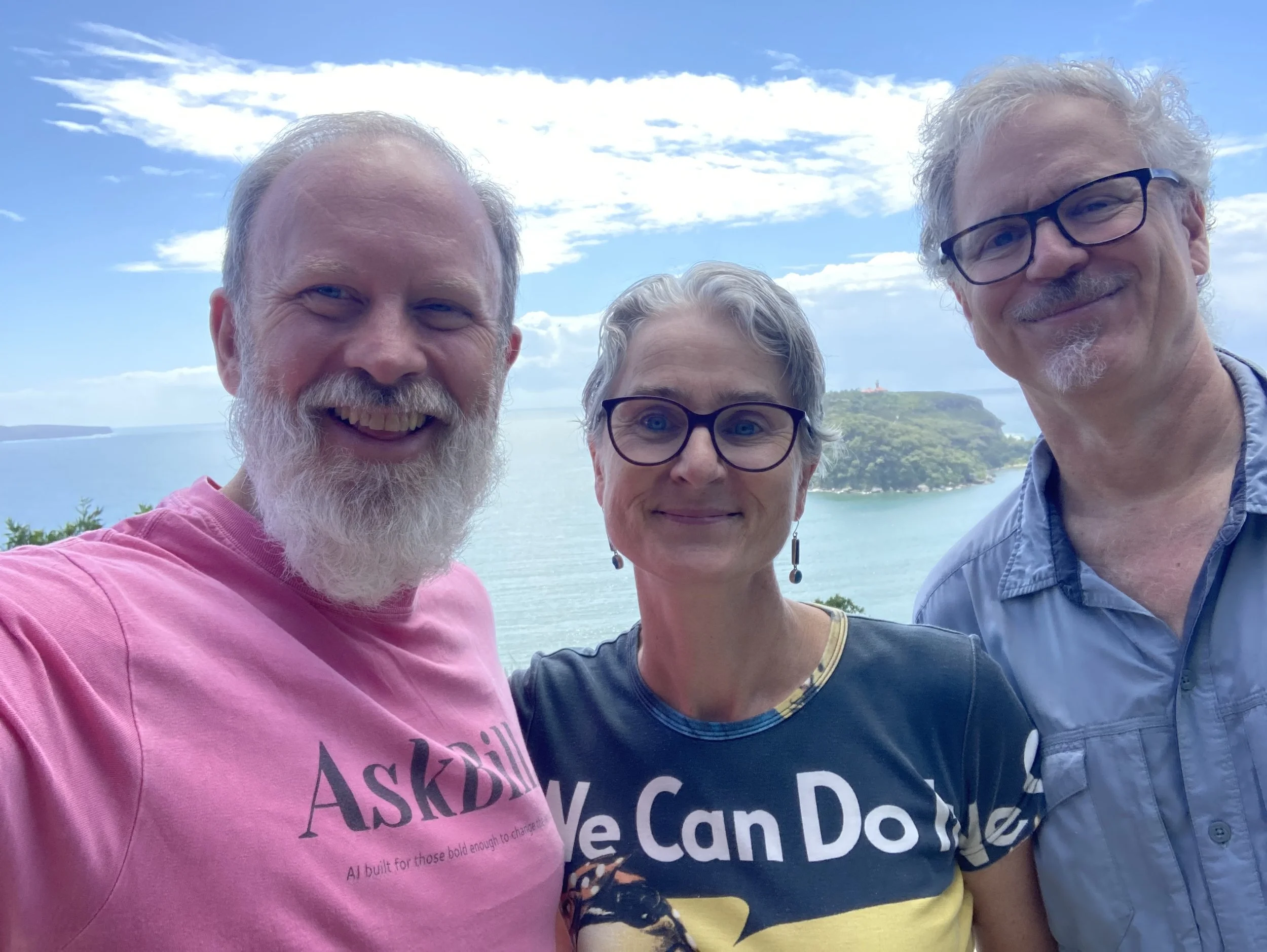
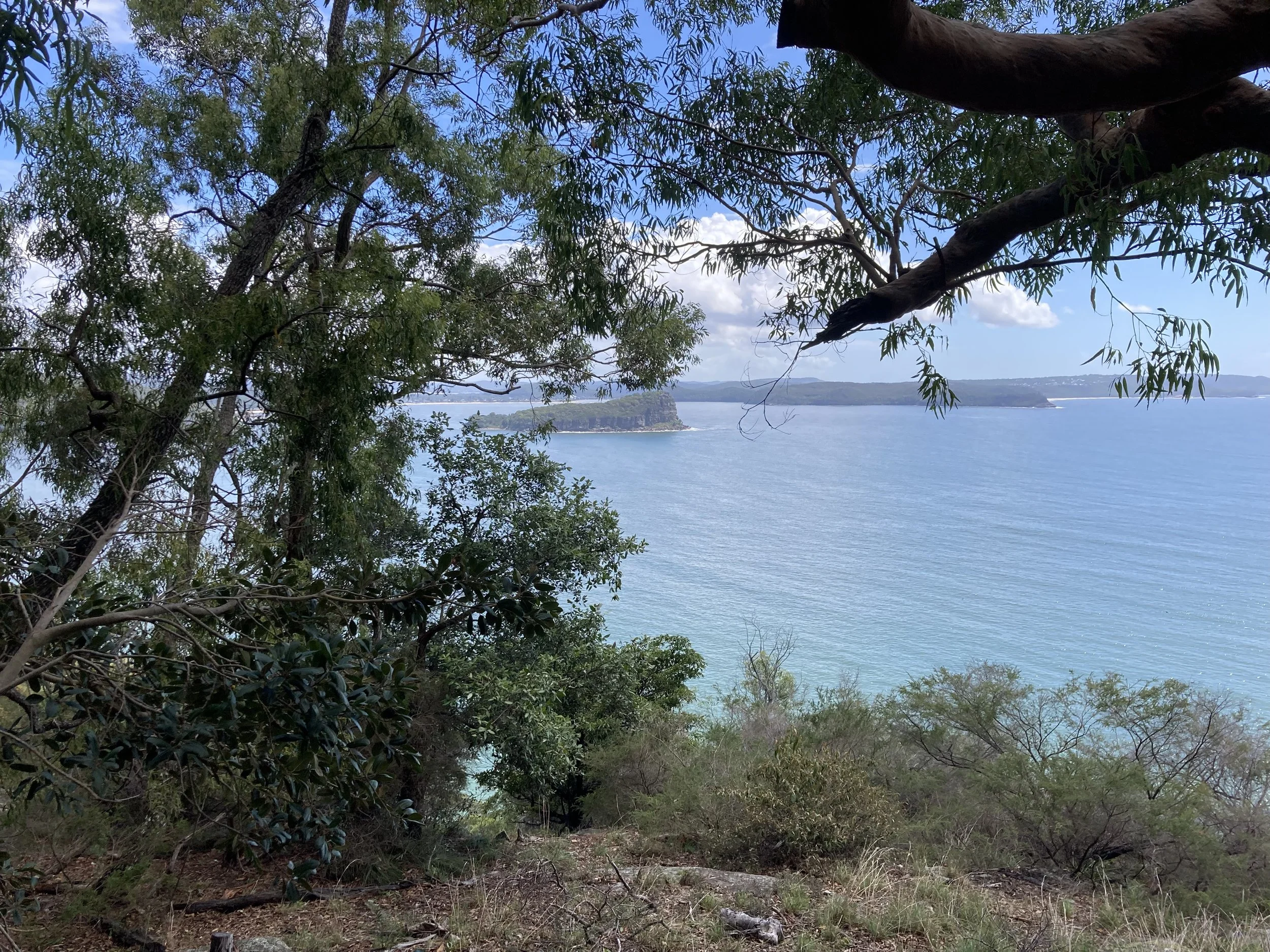
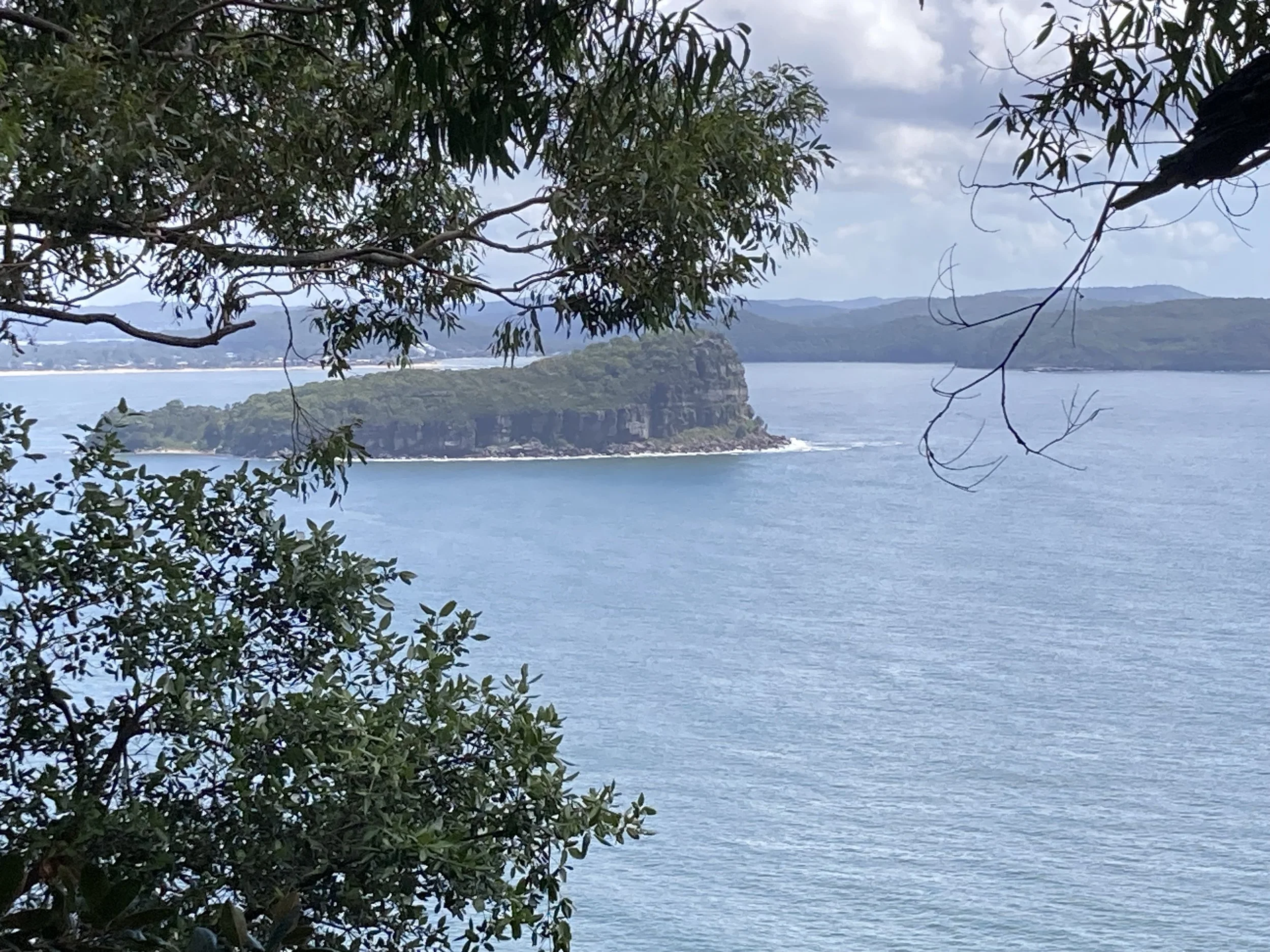
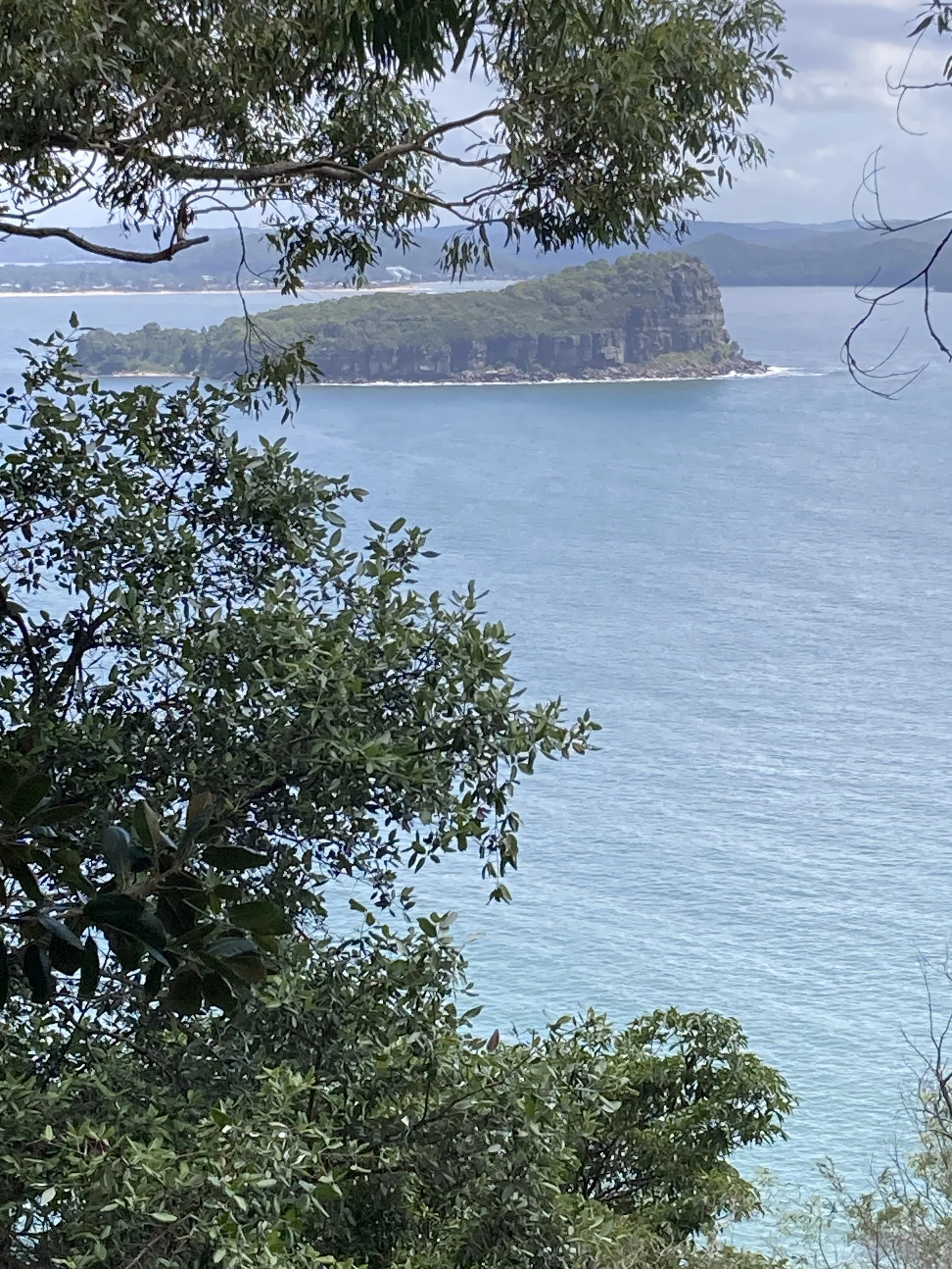
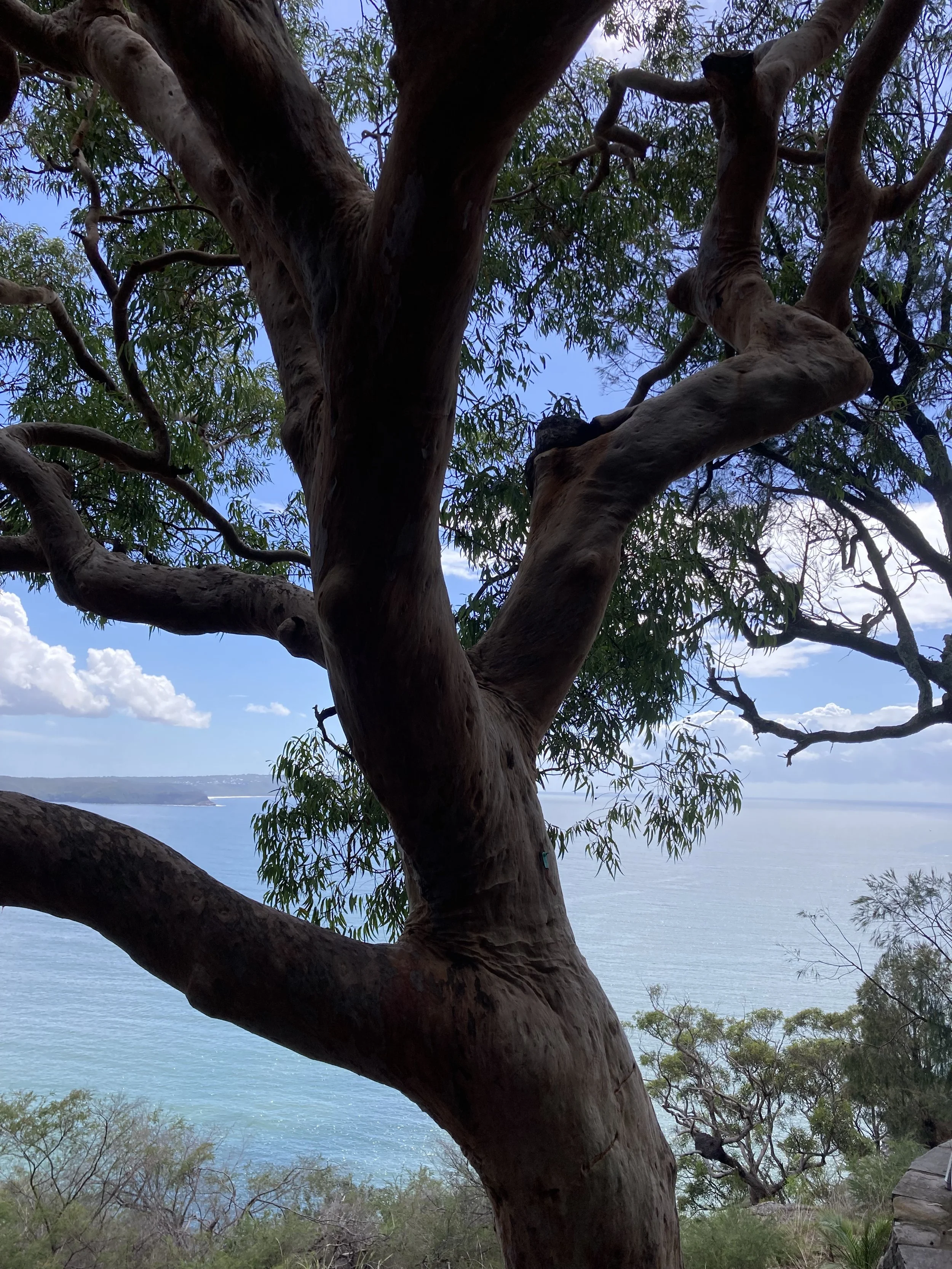
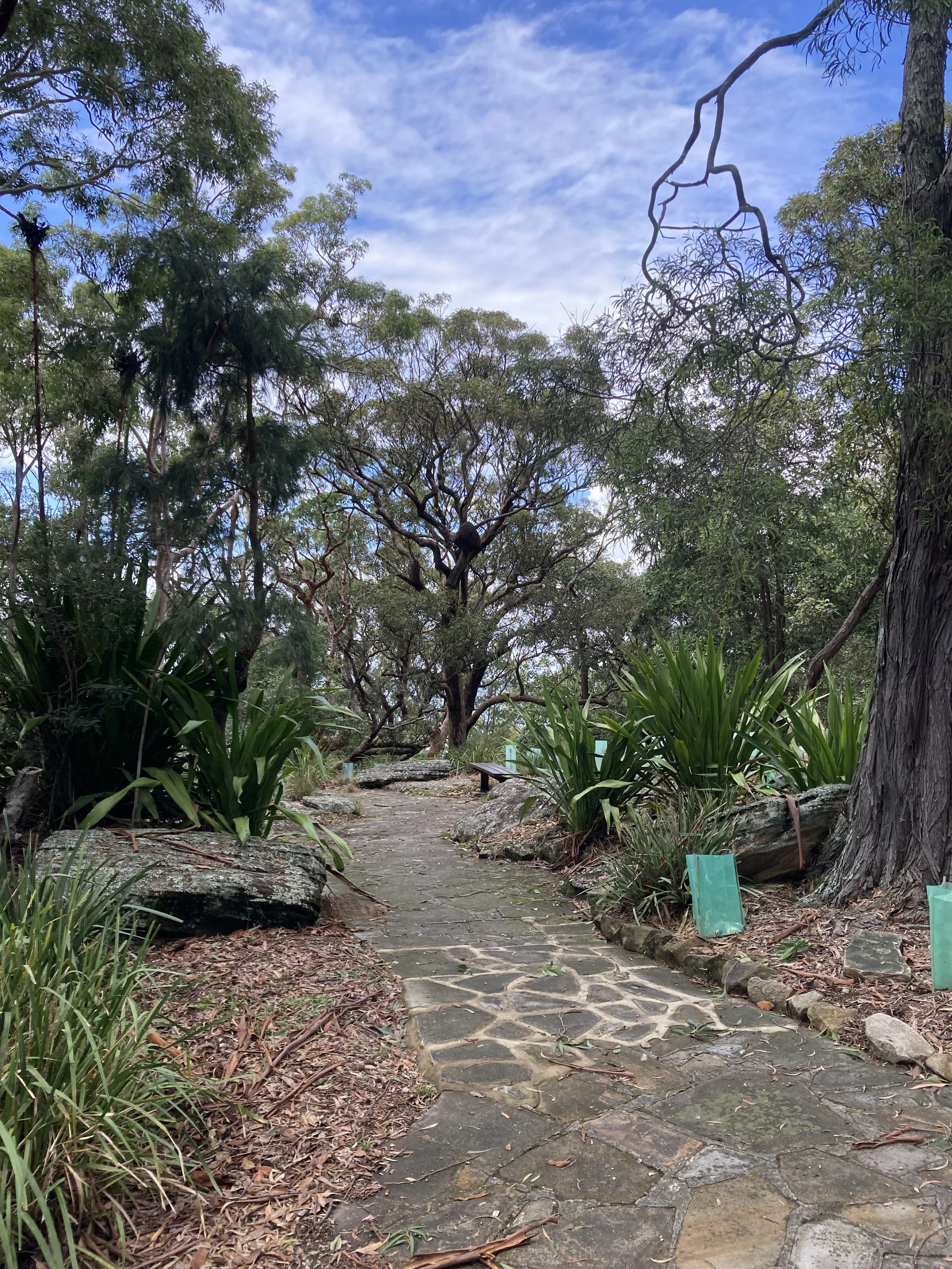
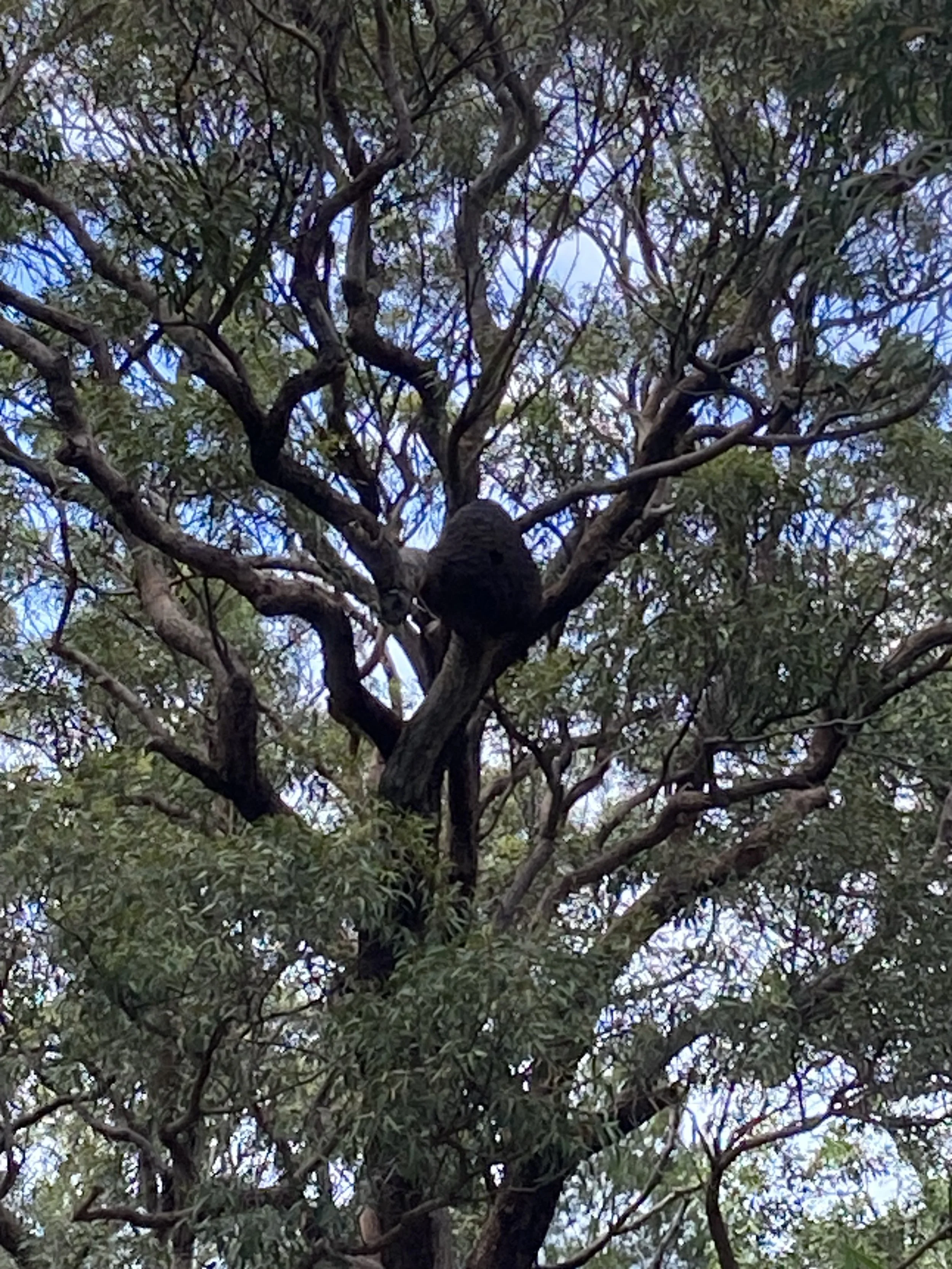
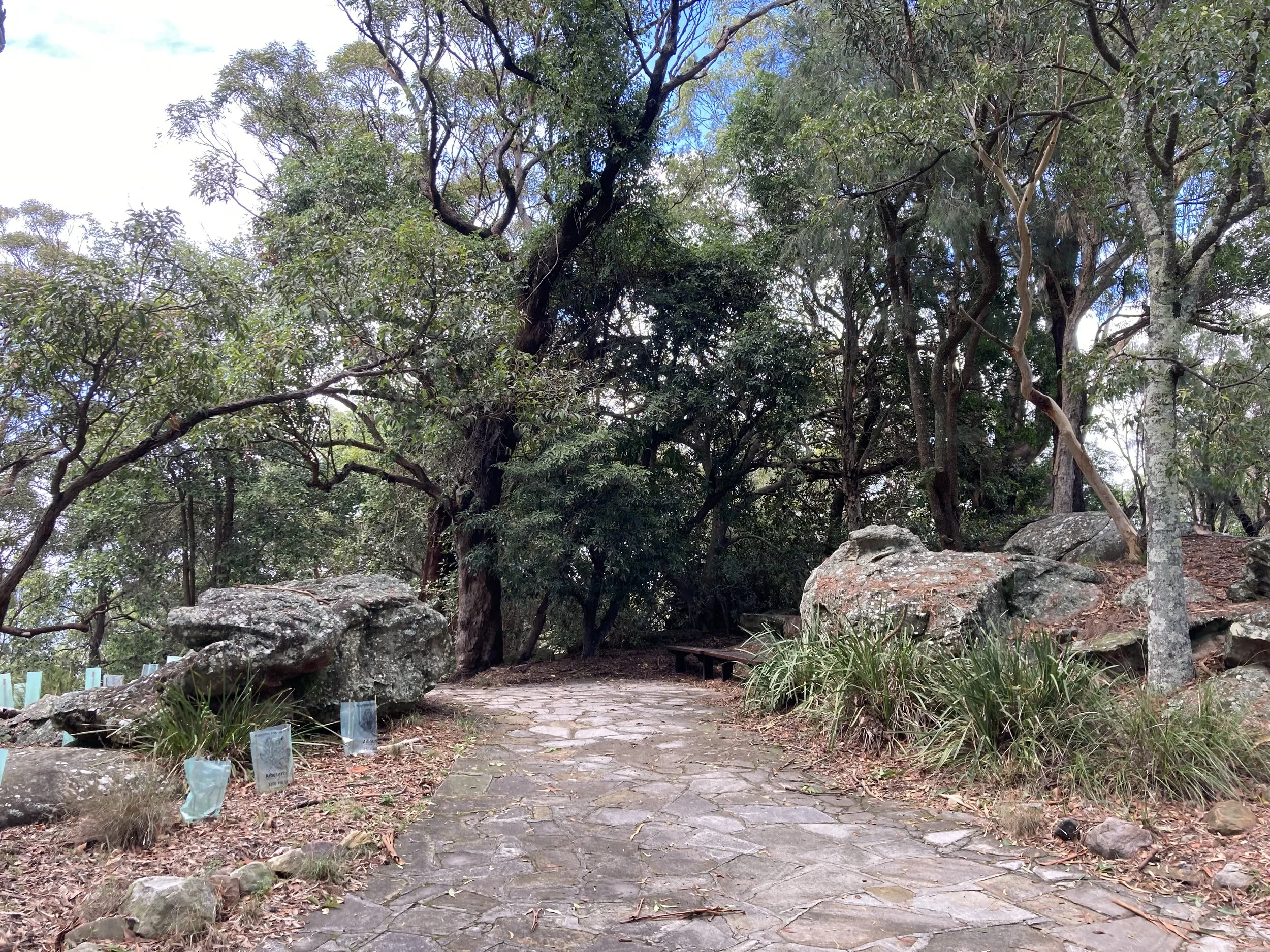
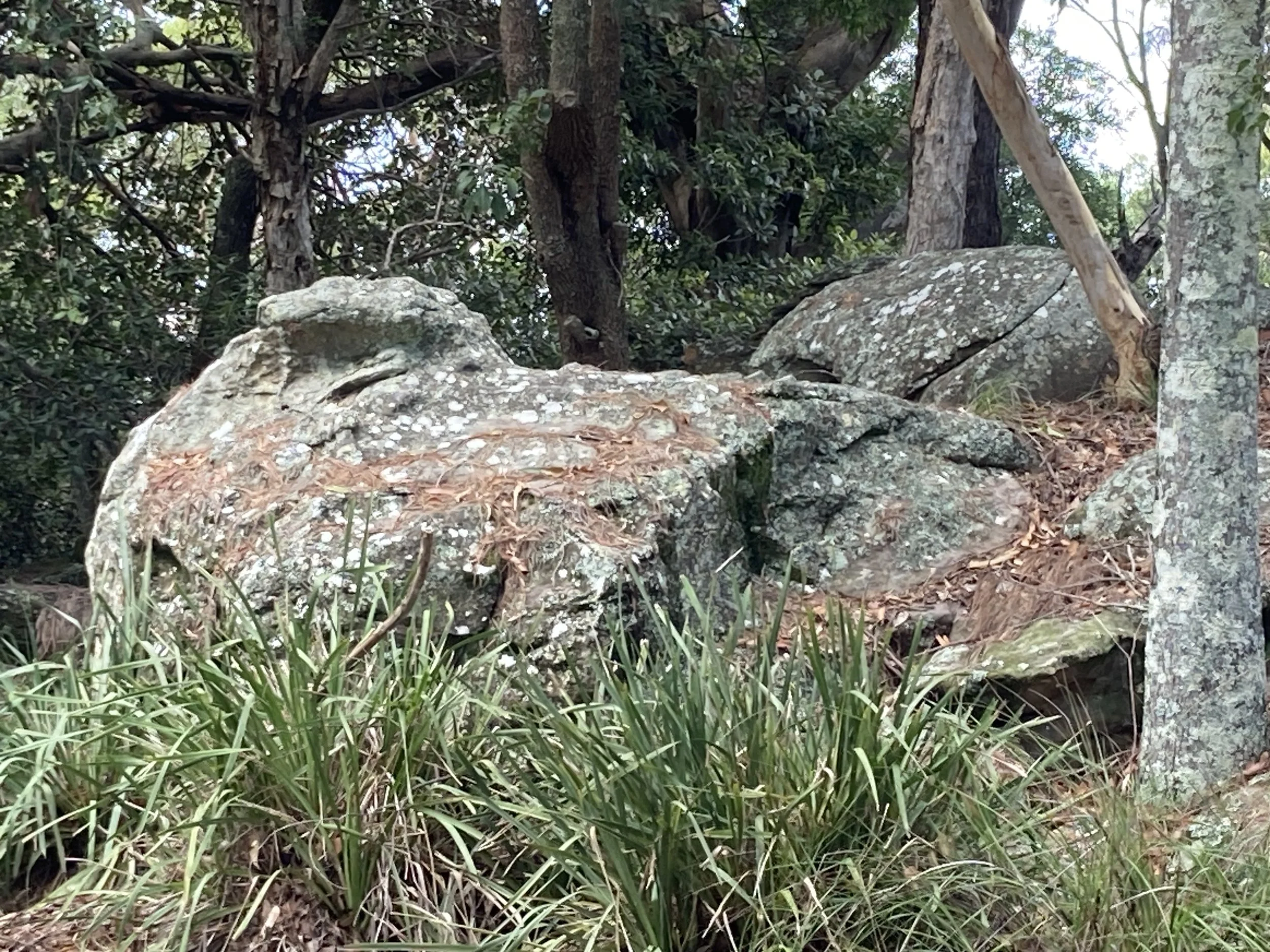
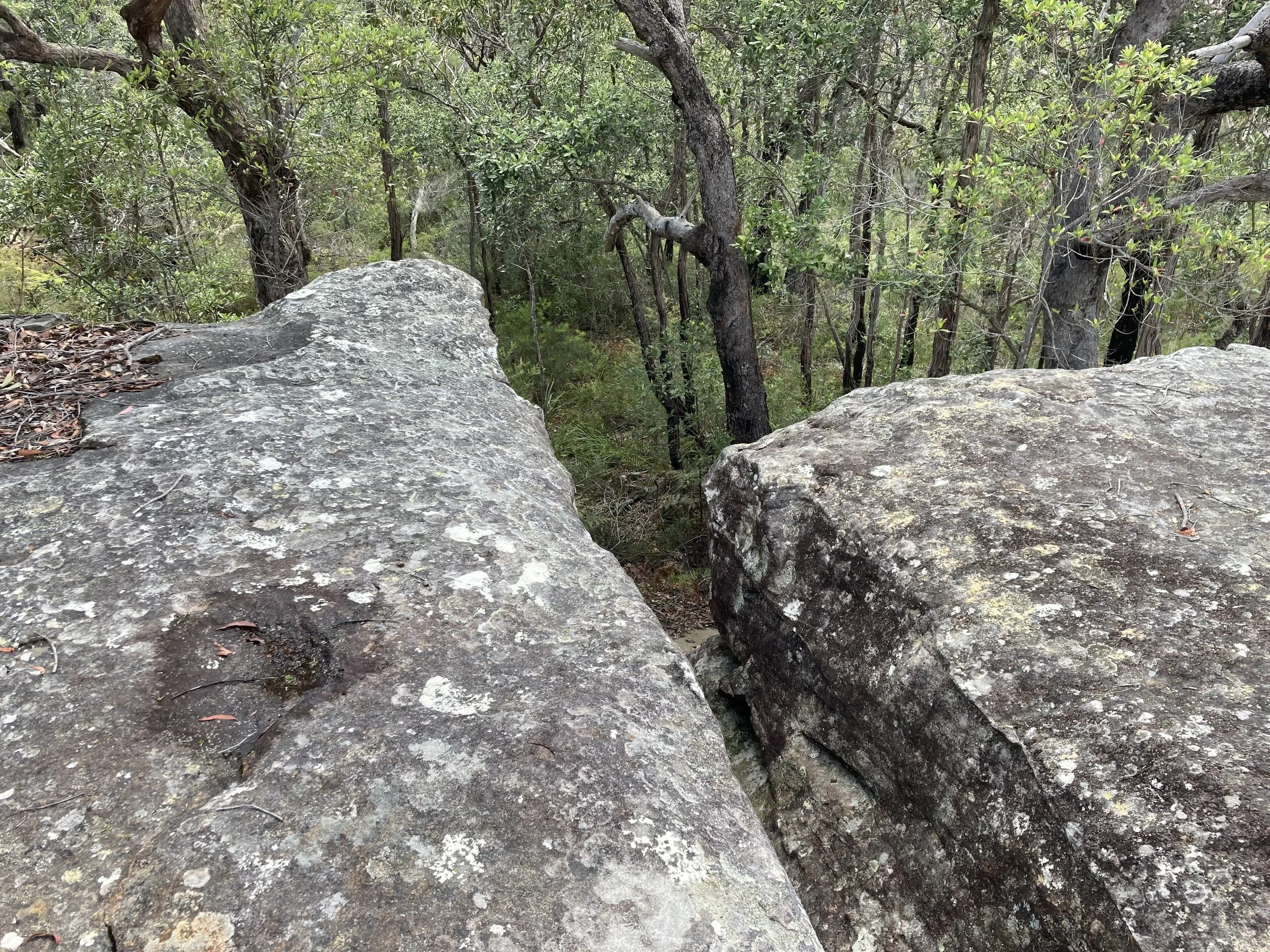
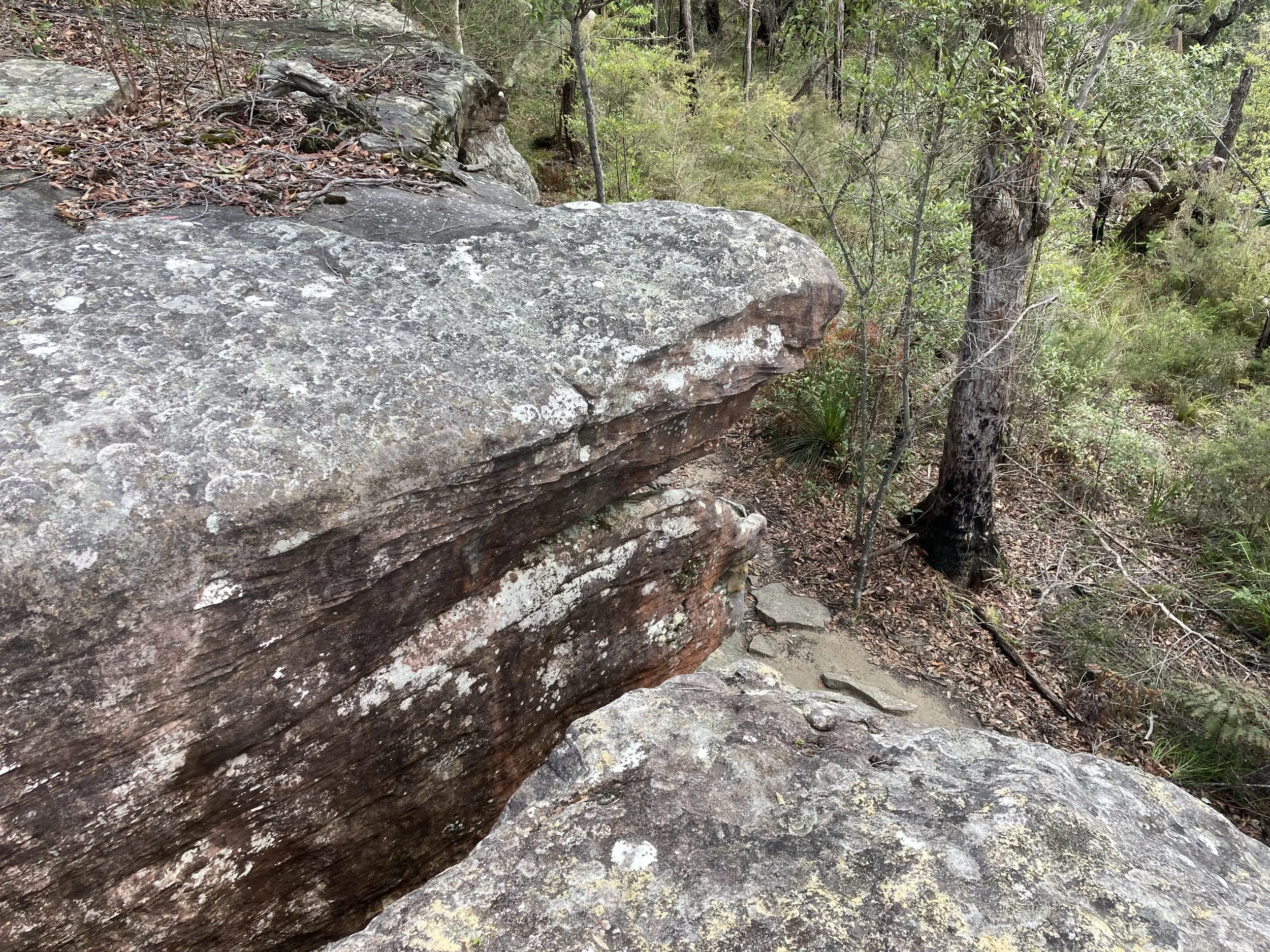
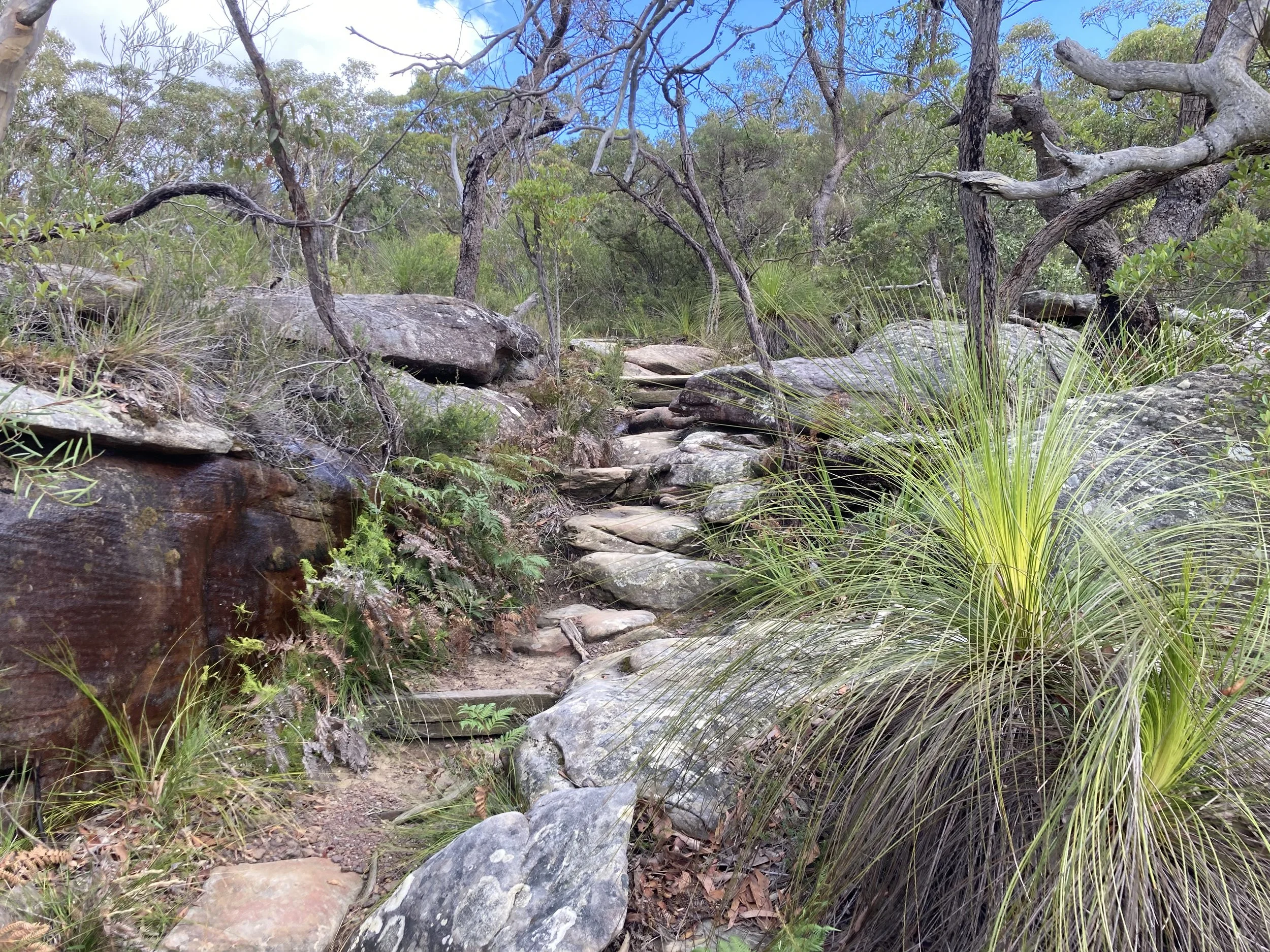
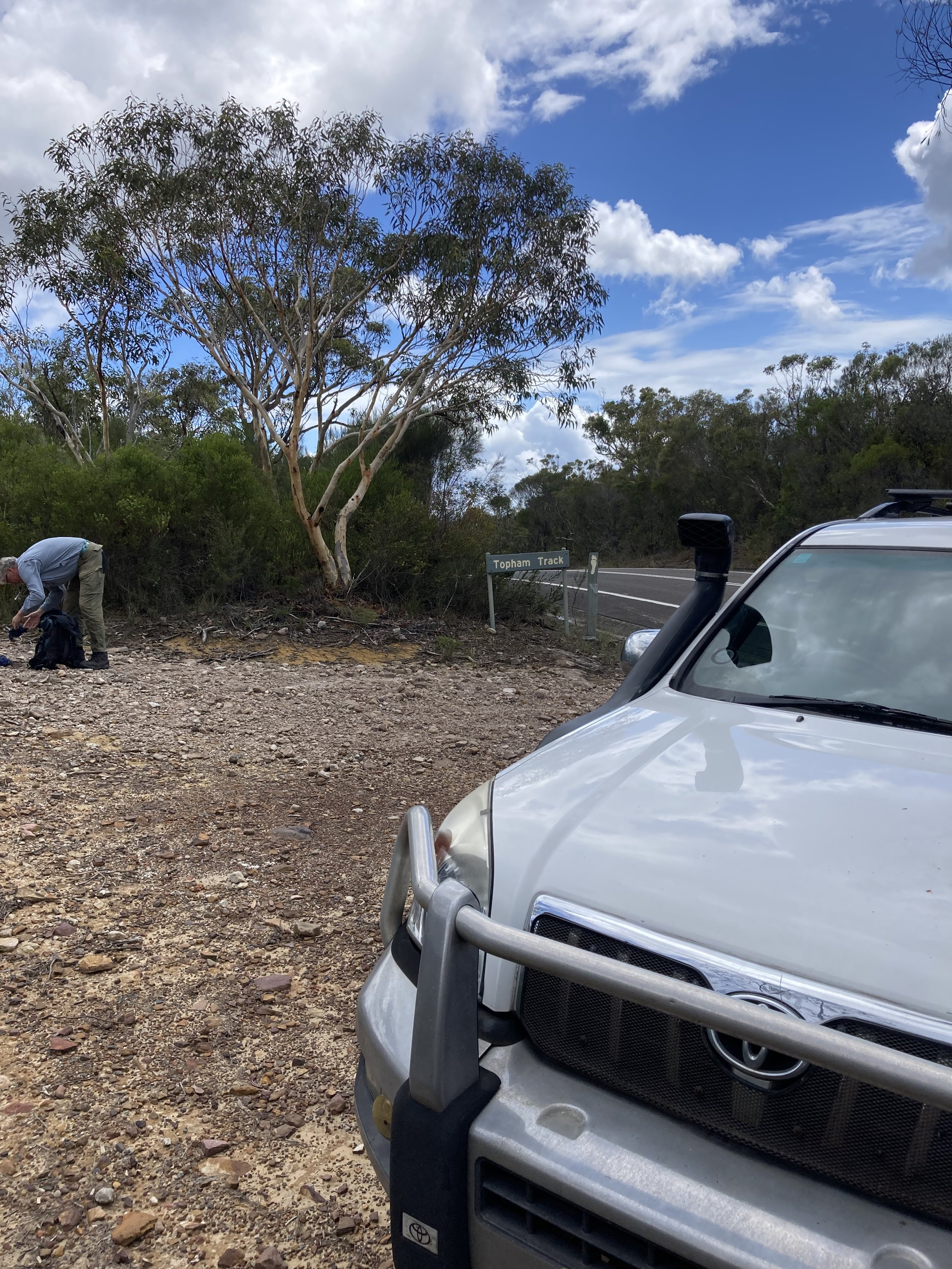
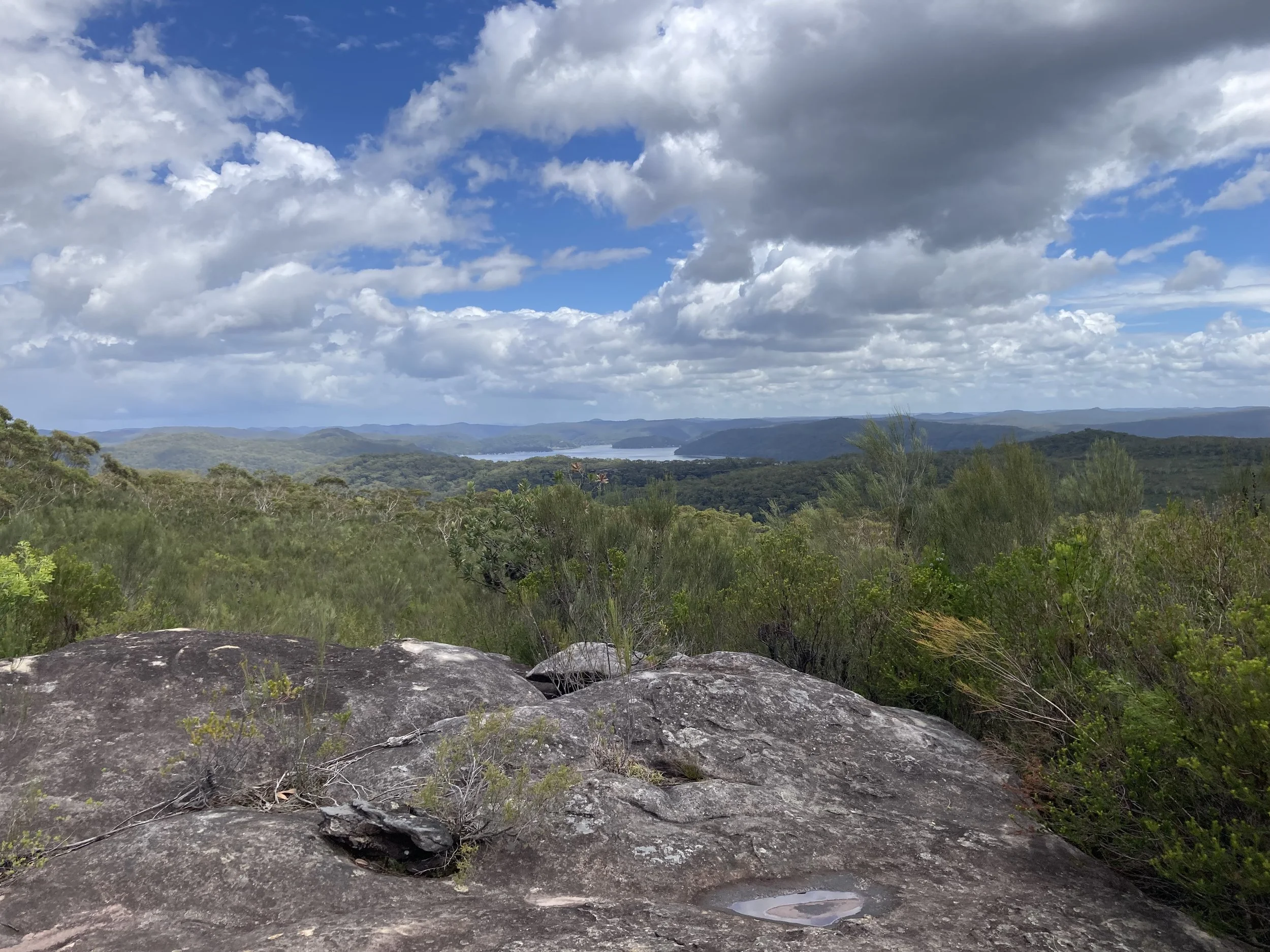
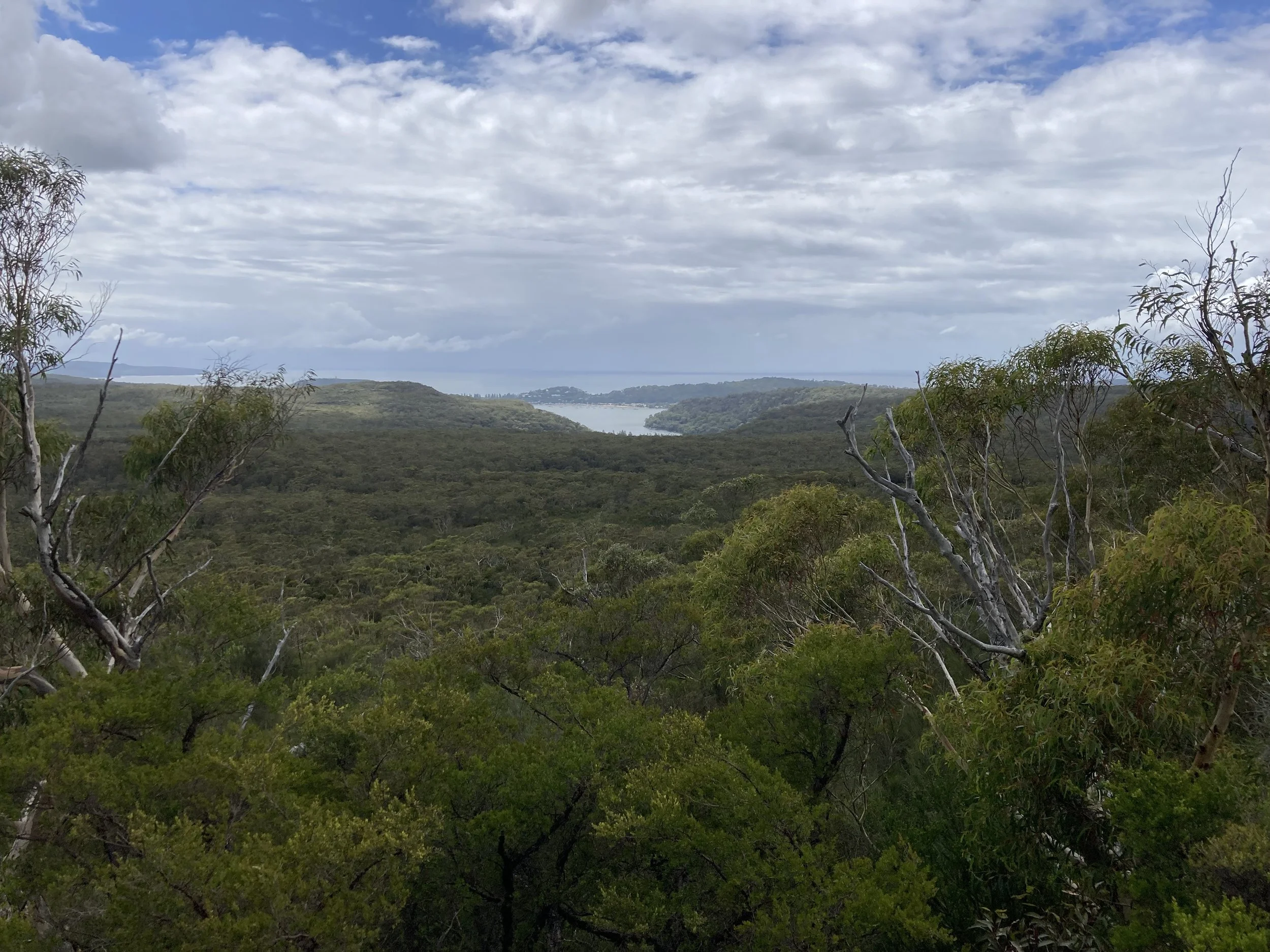
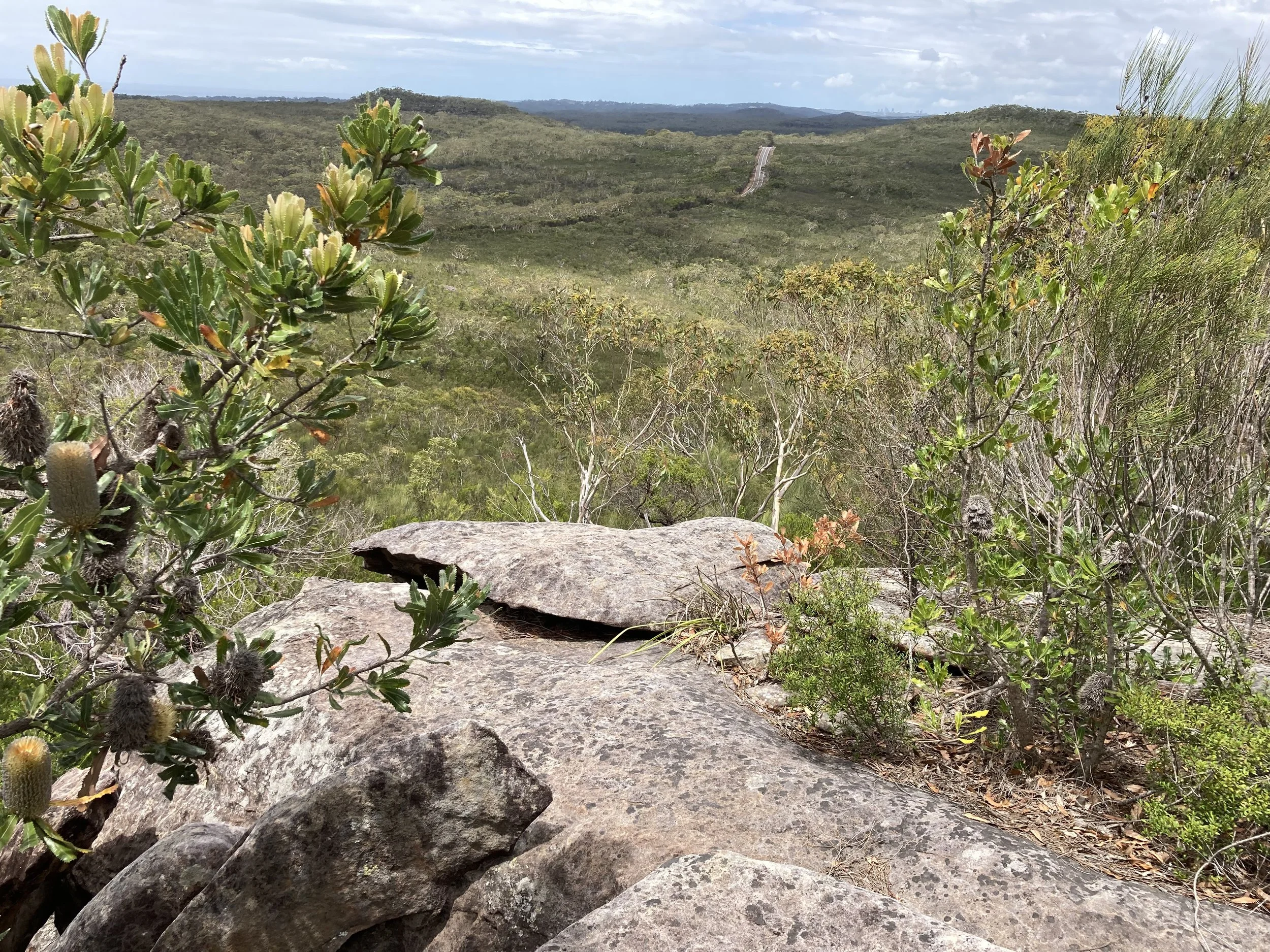
We started out at a lookout point which is epically beautiful. You can see a protected island where penguins hang out. Unfortunately, we’re so far away, no penguins could be spotted. But tourists take boats and binoculars to catch a glimpse as no one is allowed on the island in order to preserve their habitat. As we stood at the lookout, we could see shoreline for miles. During World War II, Patrick told me that this is where the Australian Navy practiced firing their torpedoes because it was such a long stretch of ocean and they could tell how accurate their shots were. It was also a stronghold in case of naval attacks.
But this was not “the bush.” Rather, this was a great place to begin our journey together and get a glimpse of what we were going to seek out together. Where we were headed was relatively undiscovered Aboriginal rock carvings with minimal tourists — mostly because of the “path-ish” way we’d go to get there.

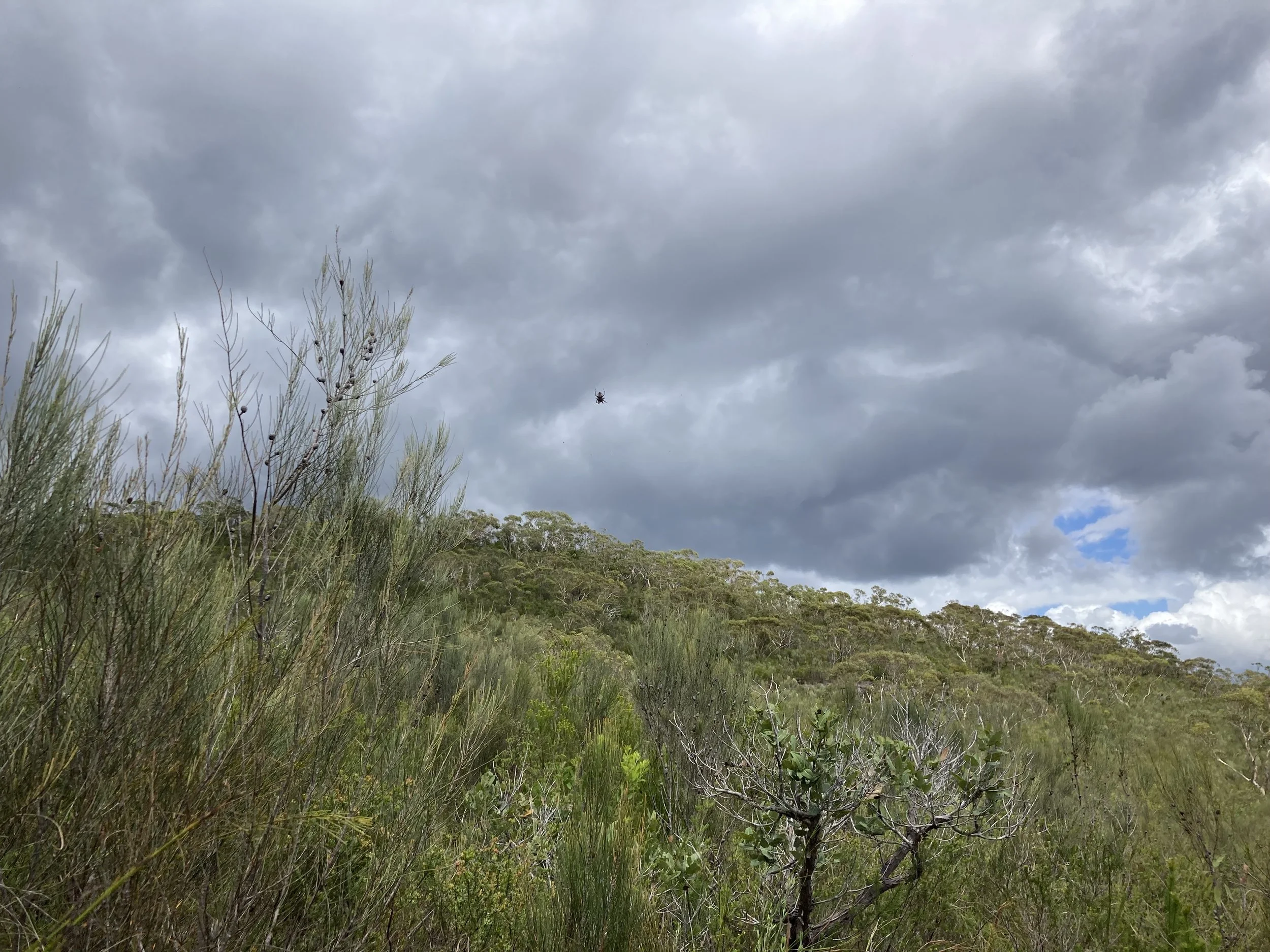
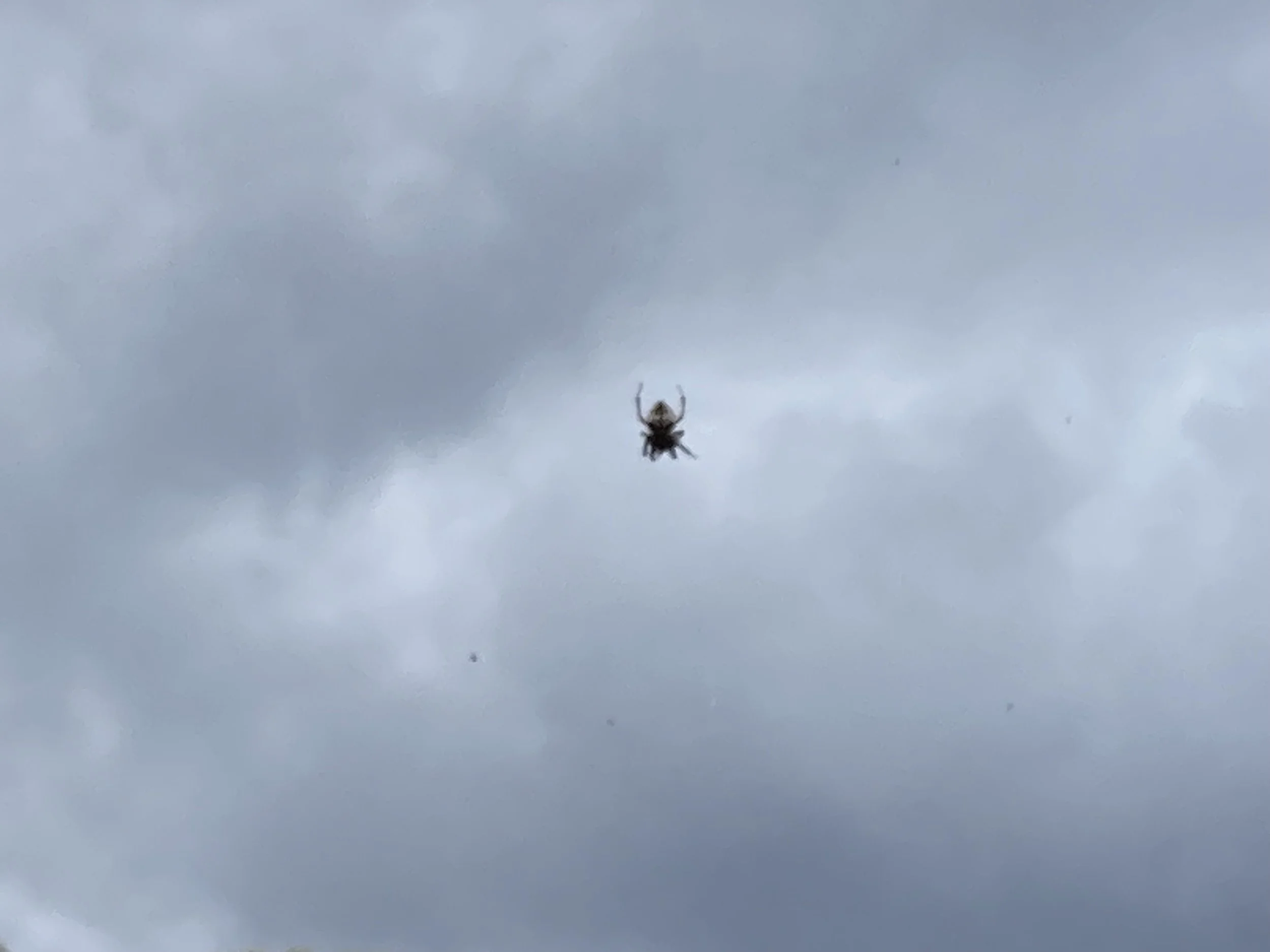
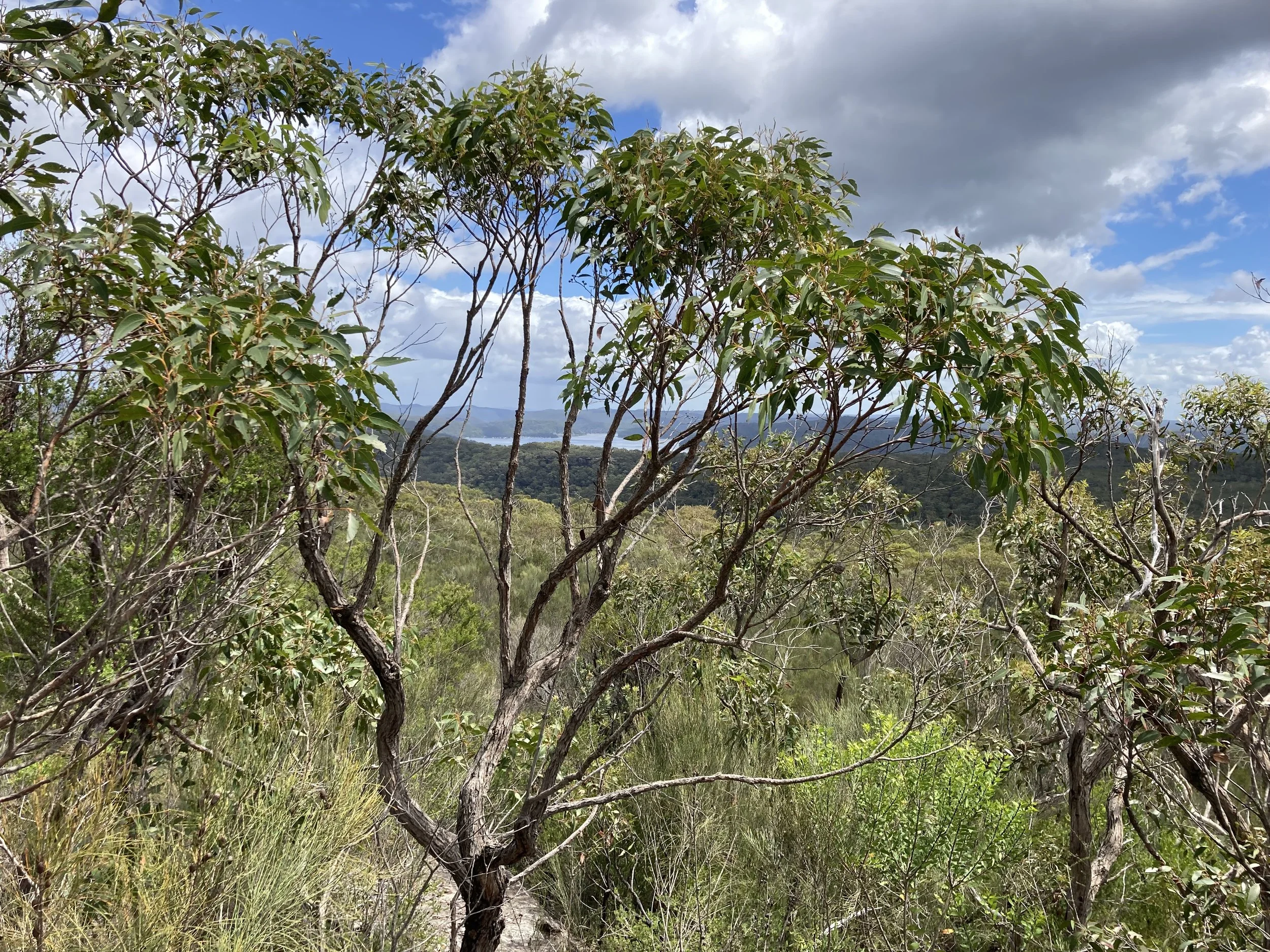
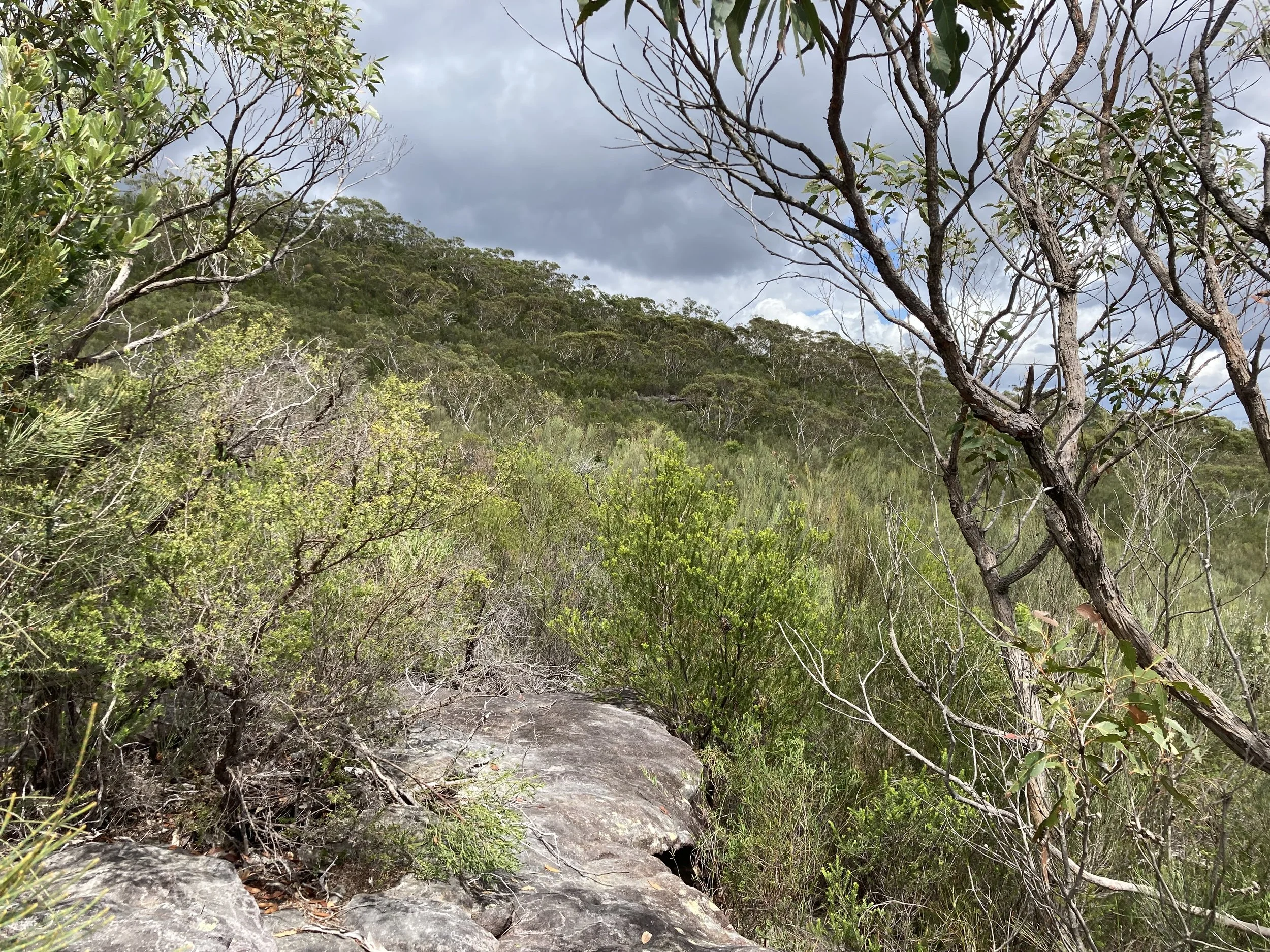
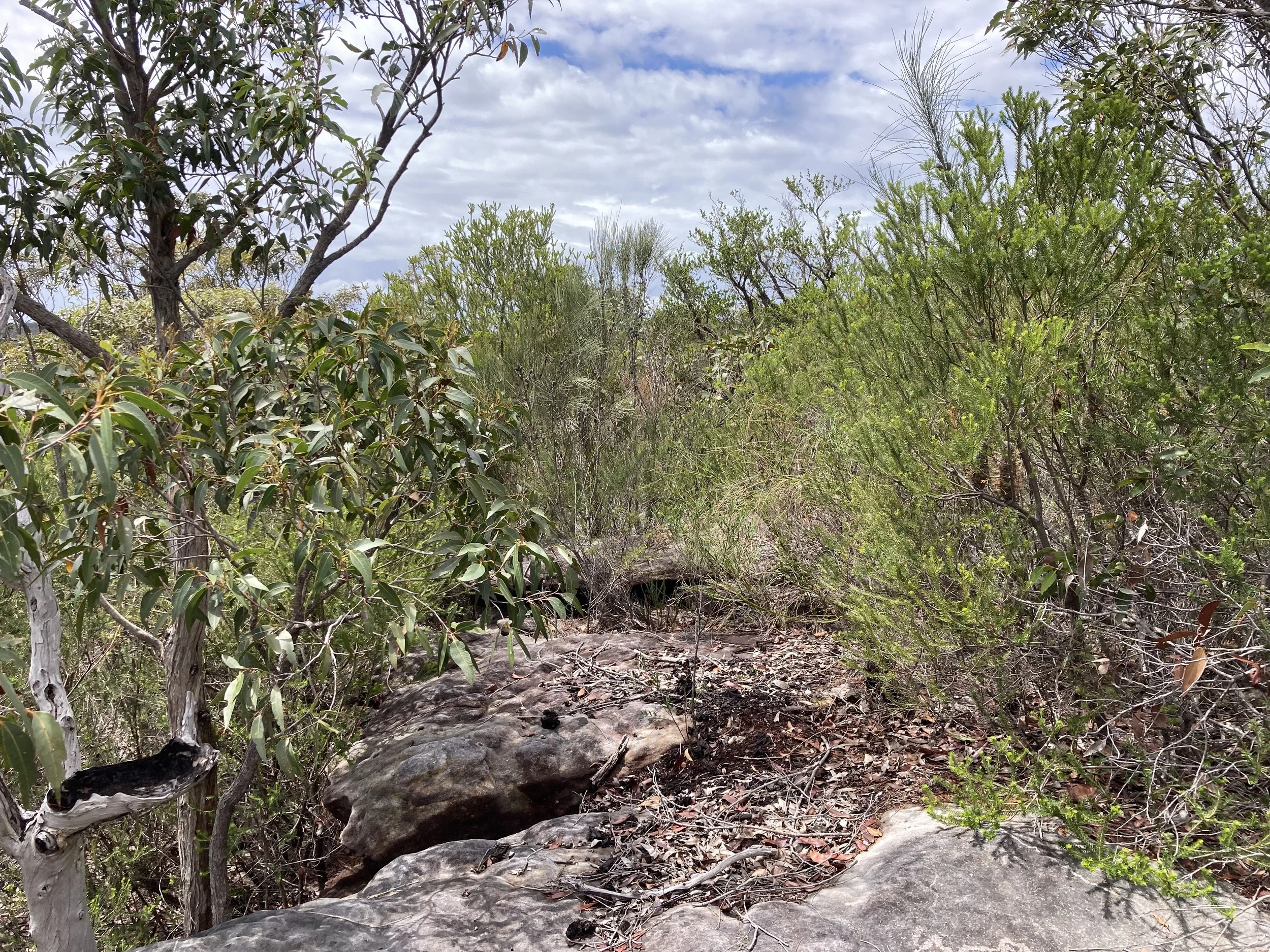
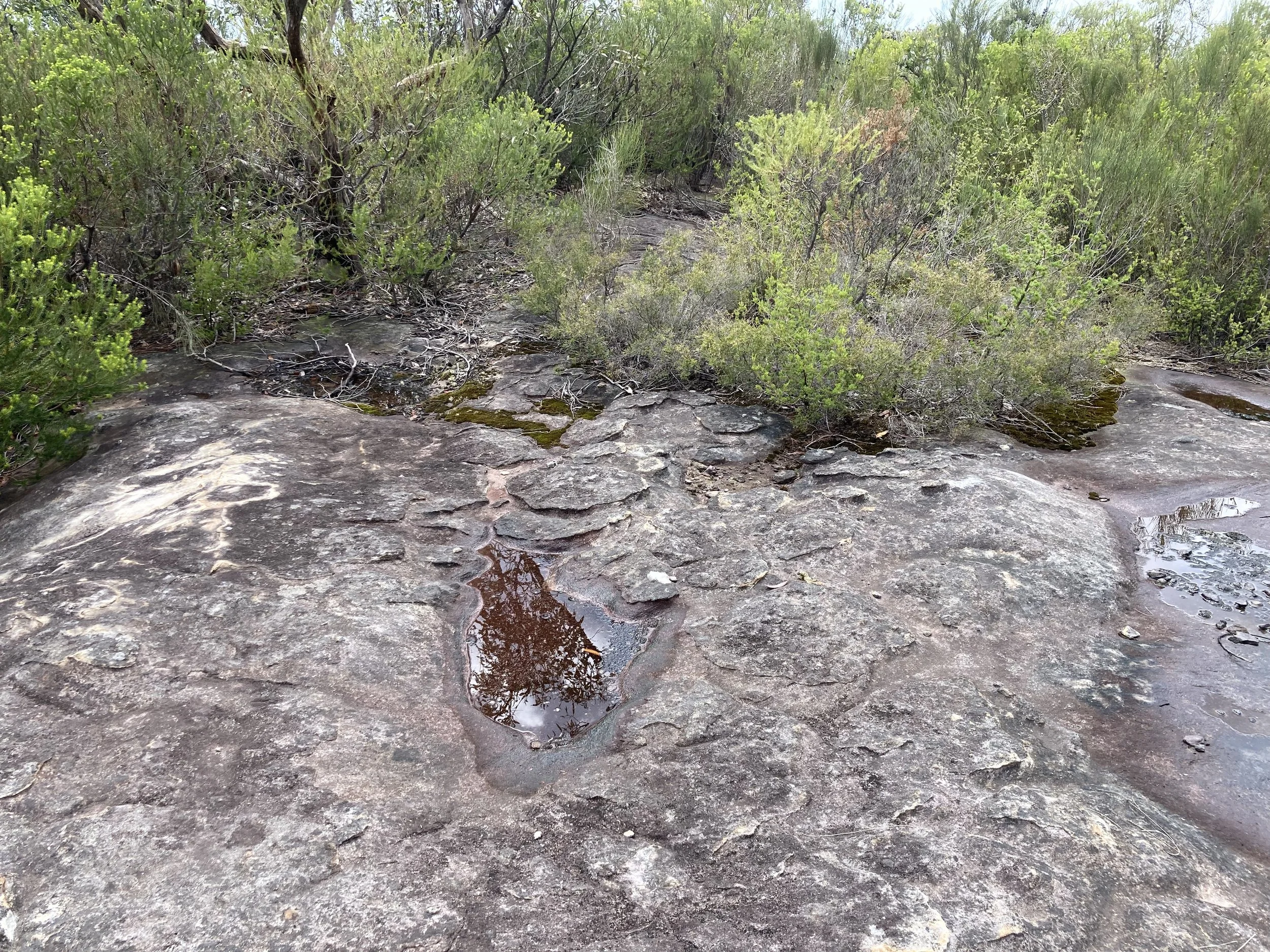
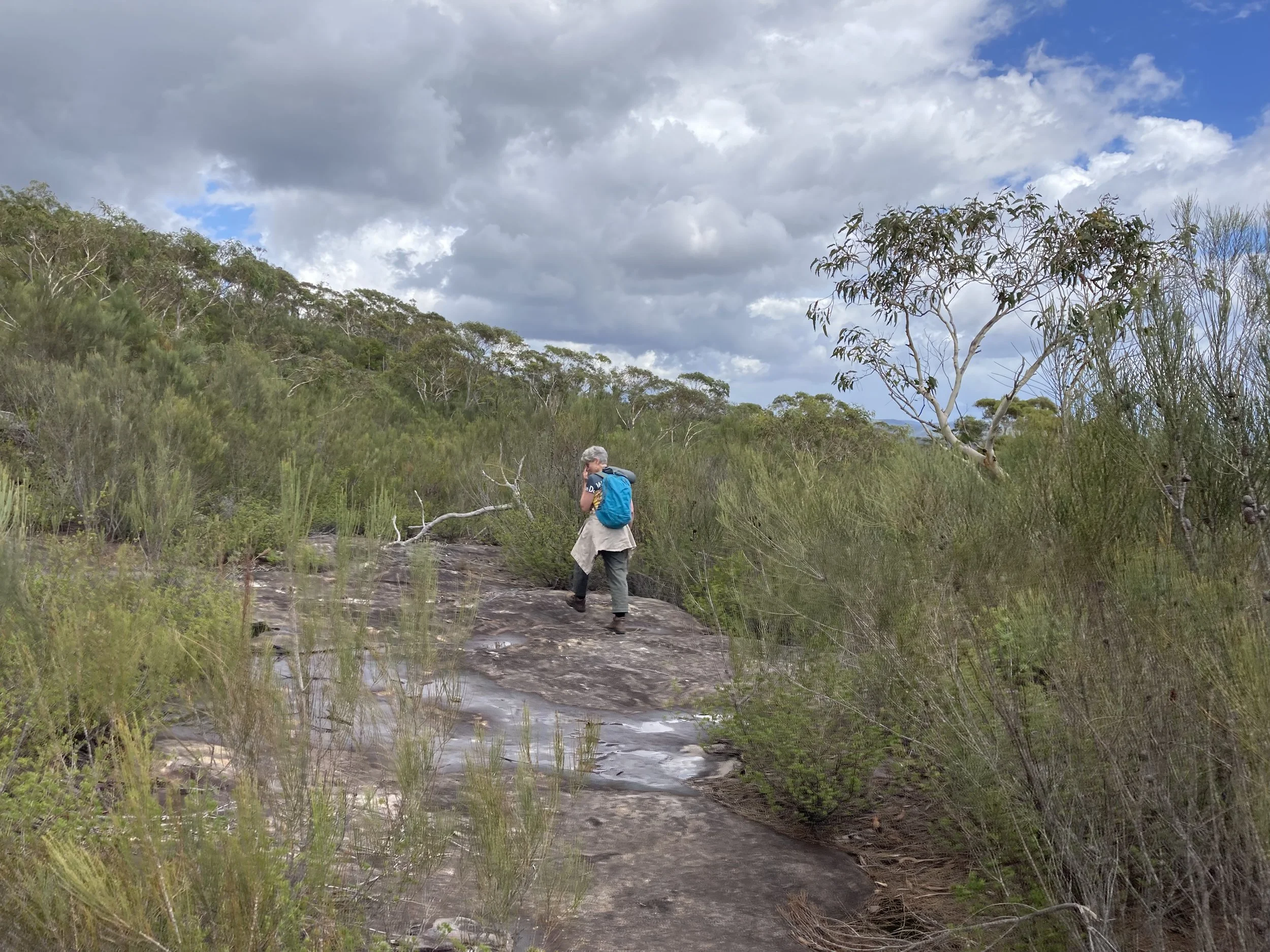
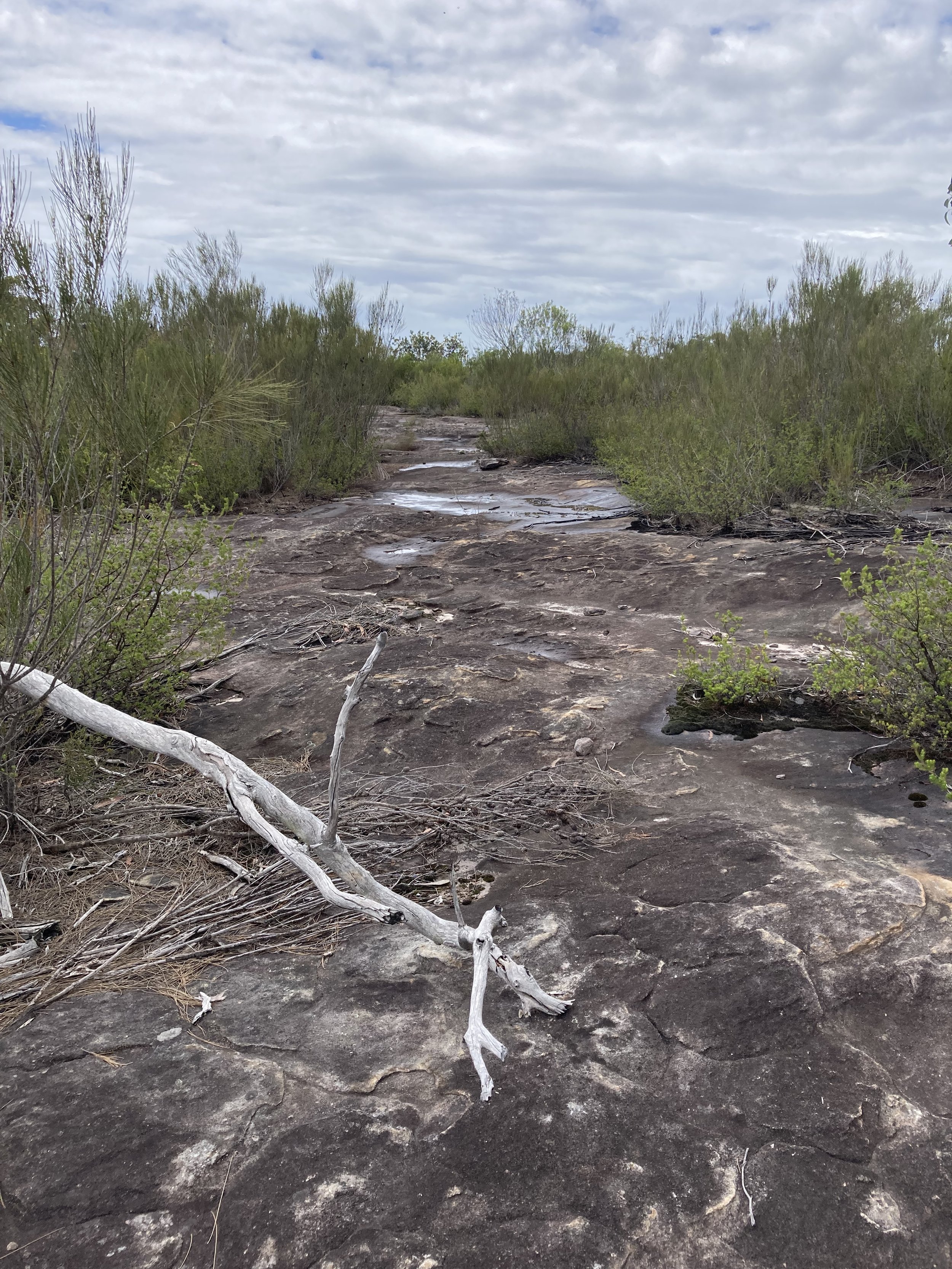
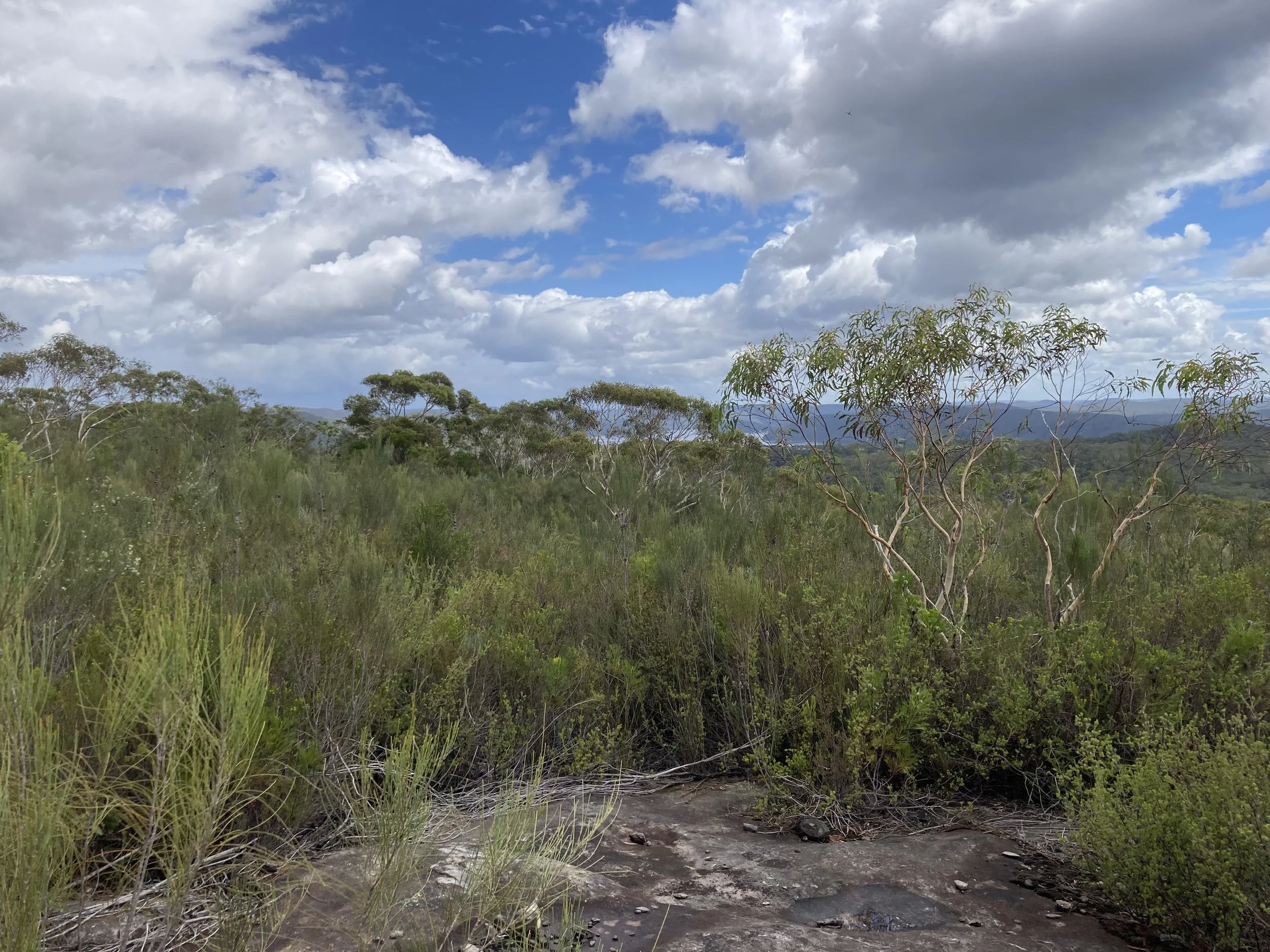
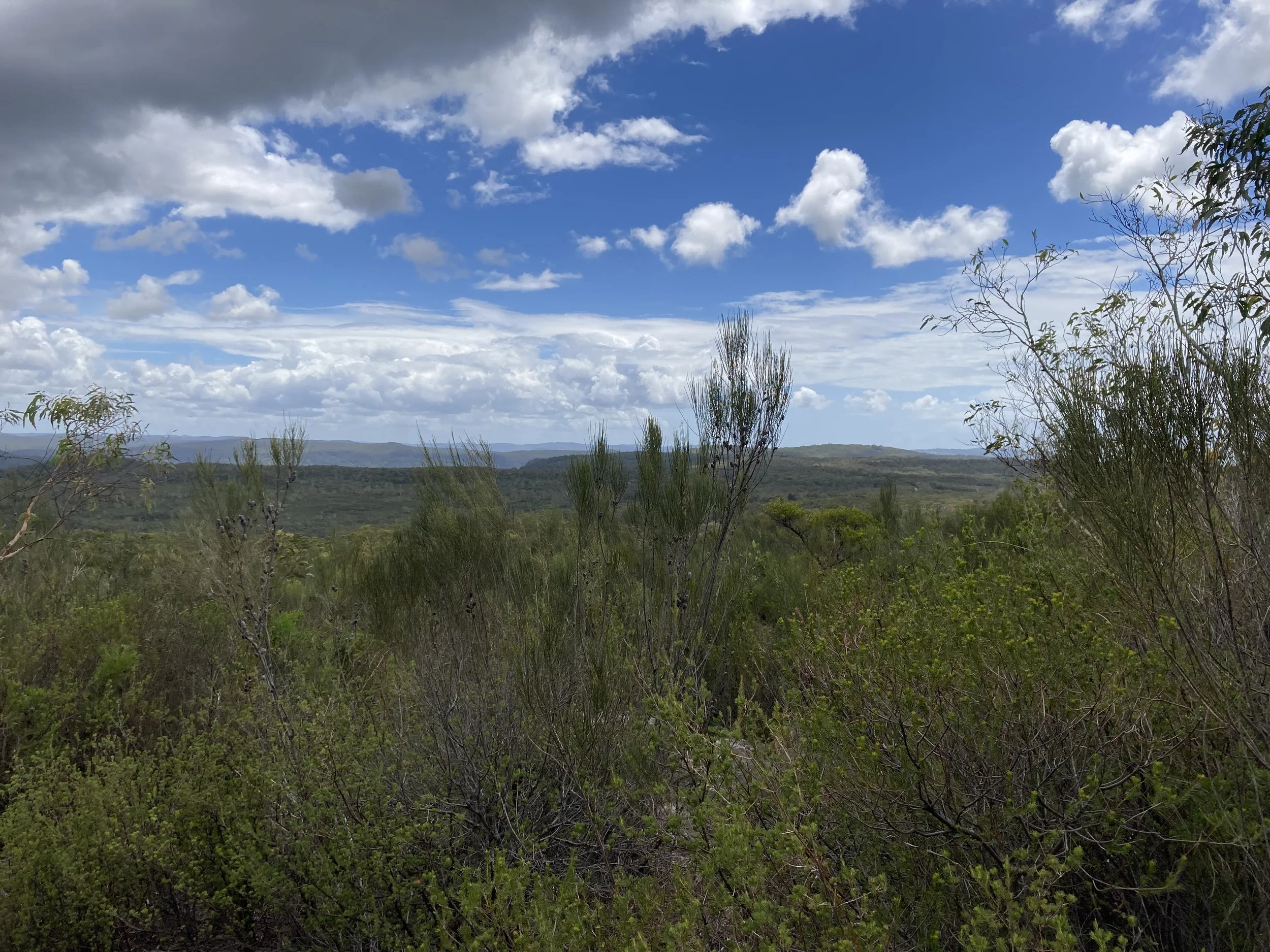
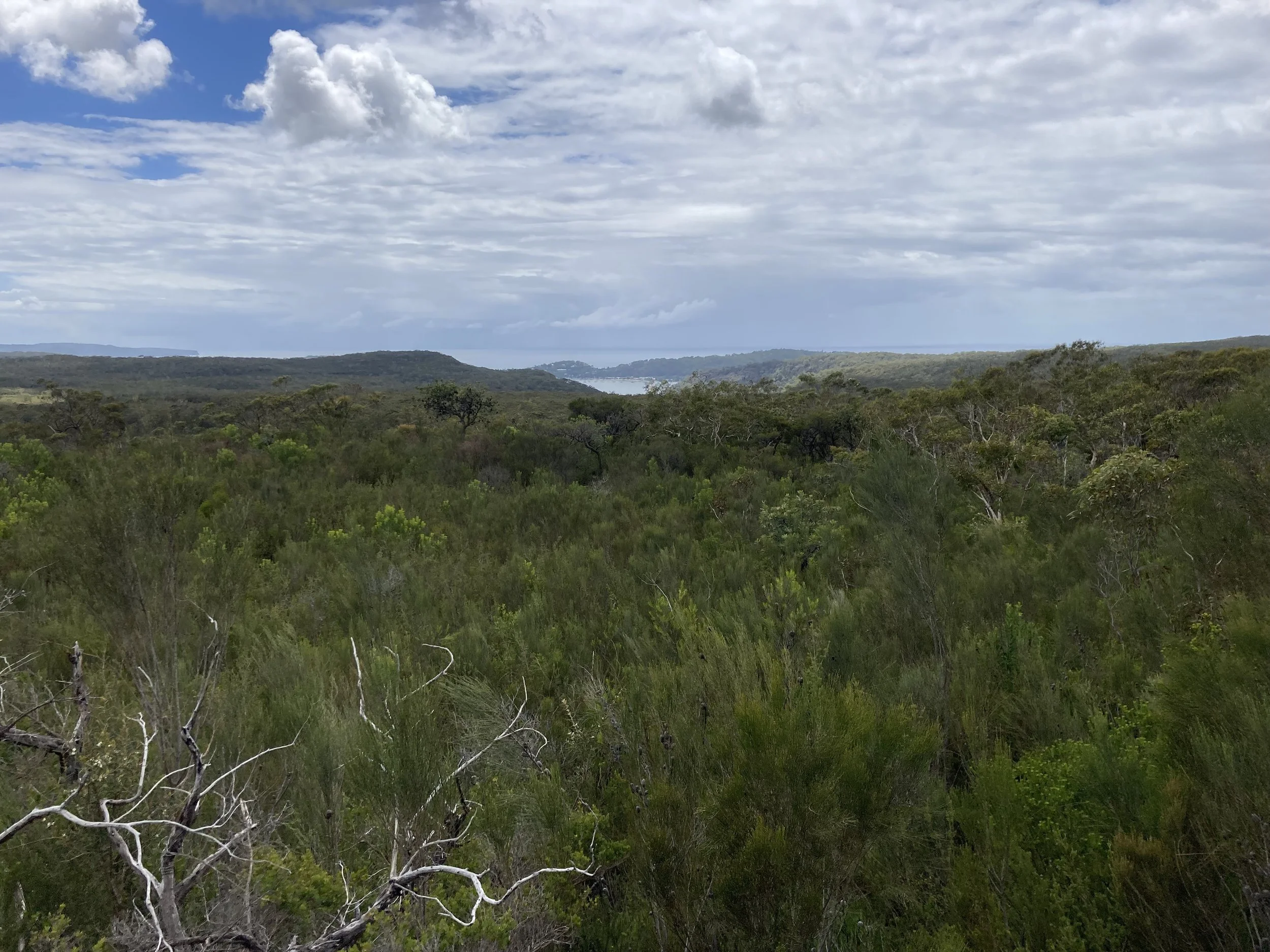
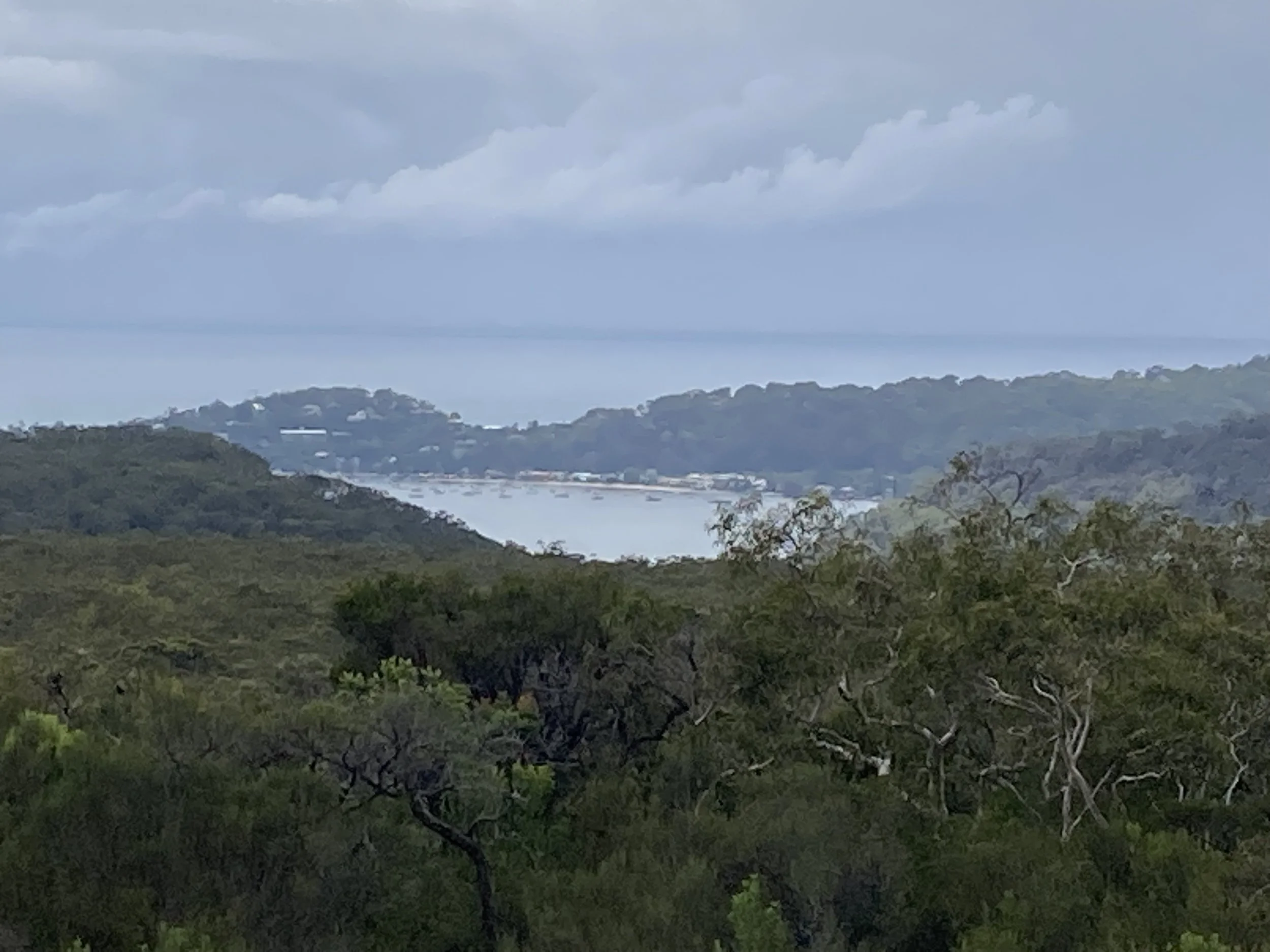
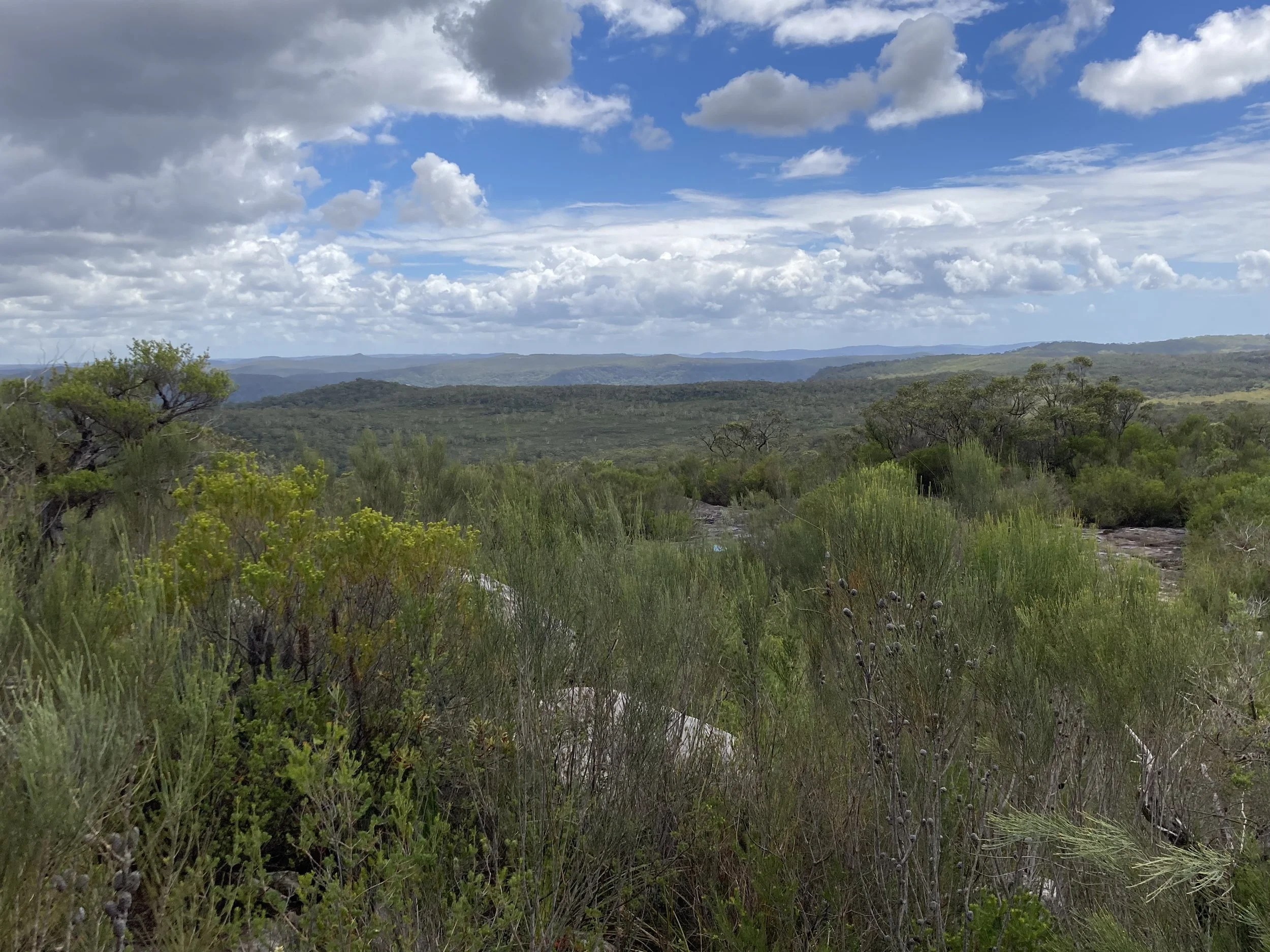
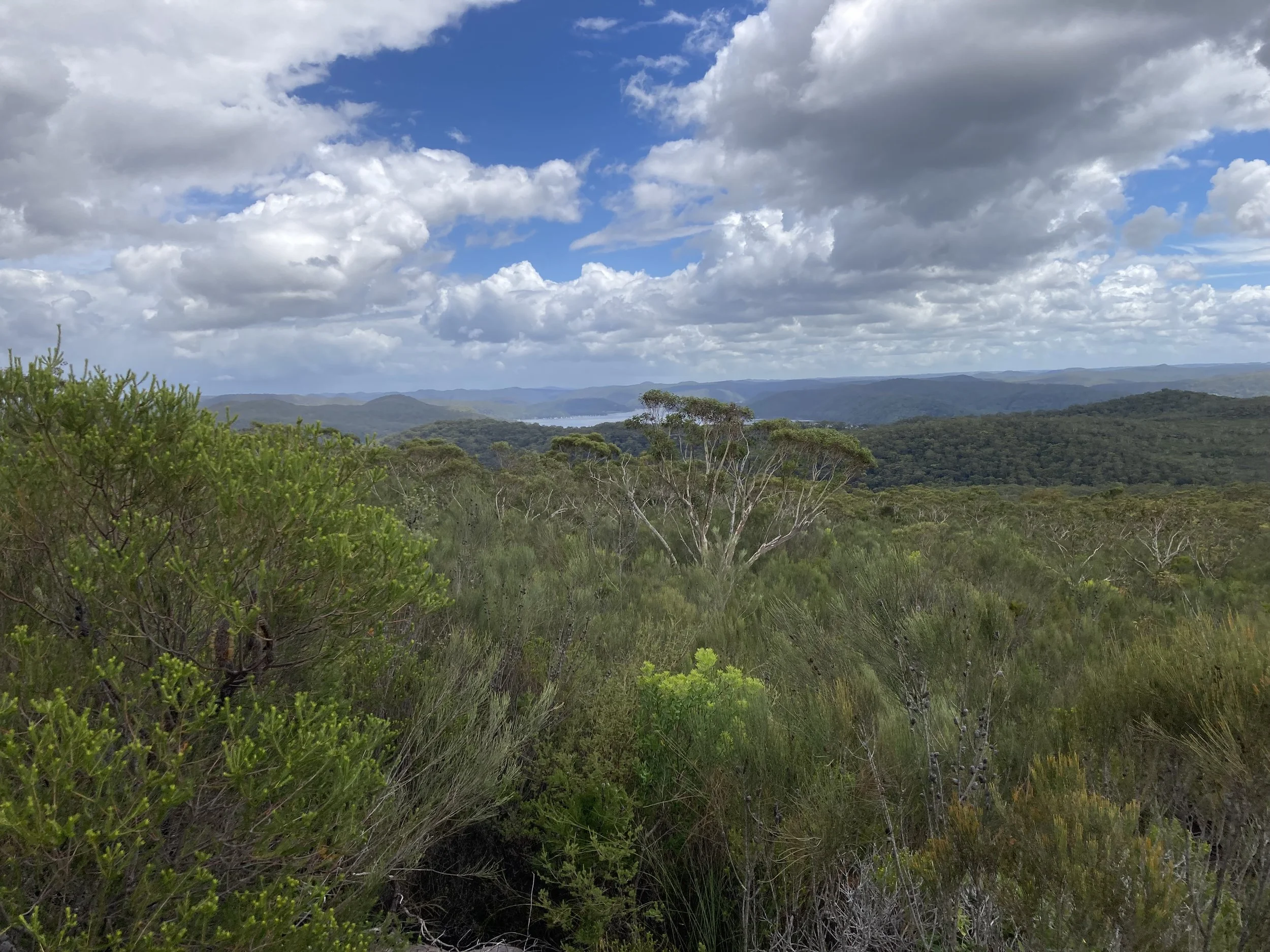
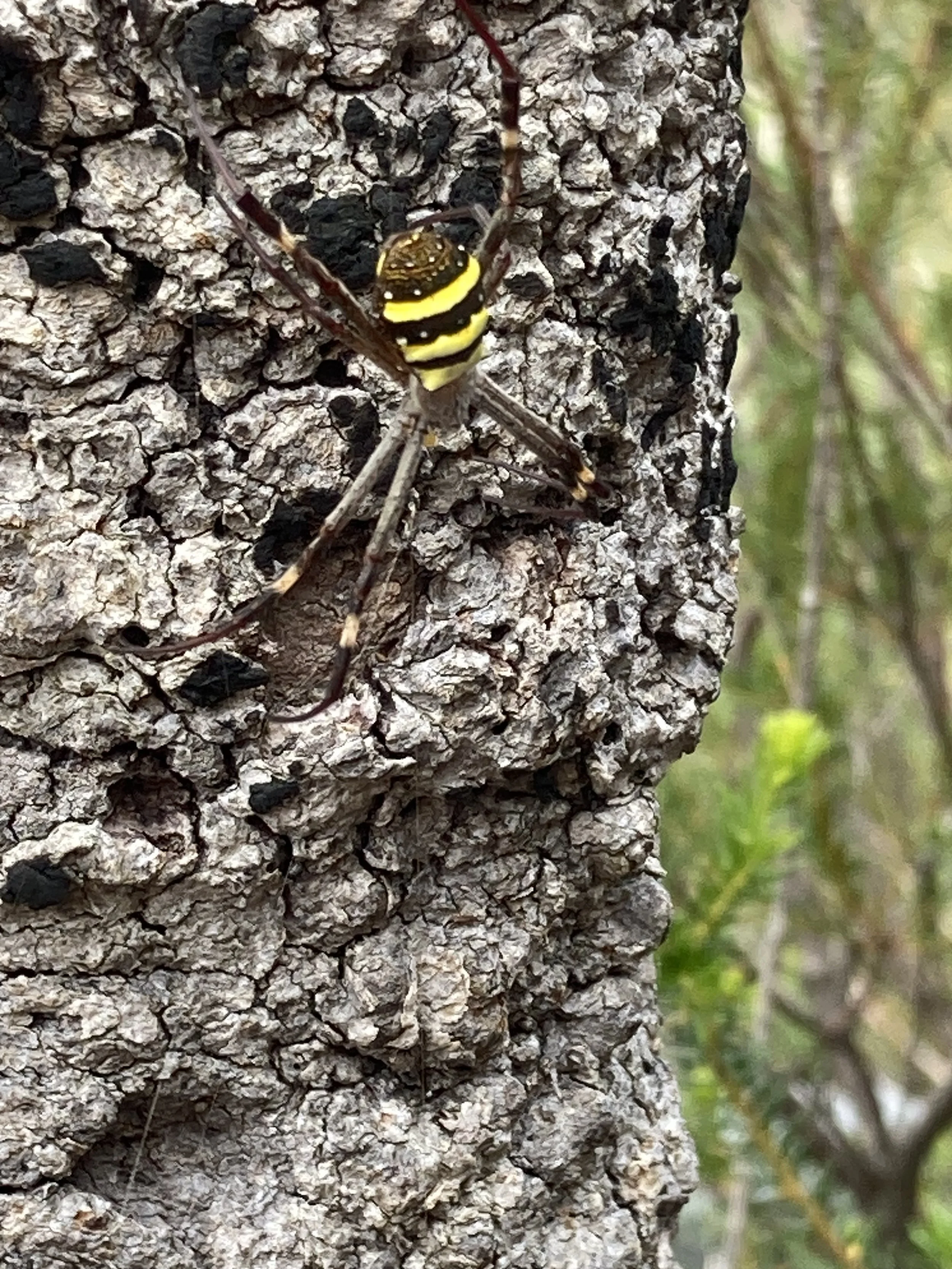
The only wildlife I saw were some relatively large spiders. I asked Patrick if they were venomous and he said, “In Australia, generally speaking, if you can see them assume they are venomous.” Great advice. It wasn’t like I wanted to play with the spiders, it’s just when I come face-to-face with them in the bush, I back away slowly.
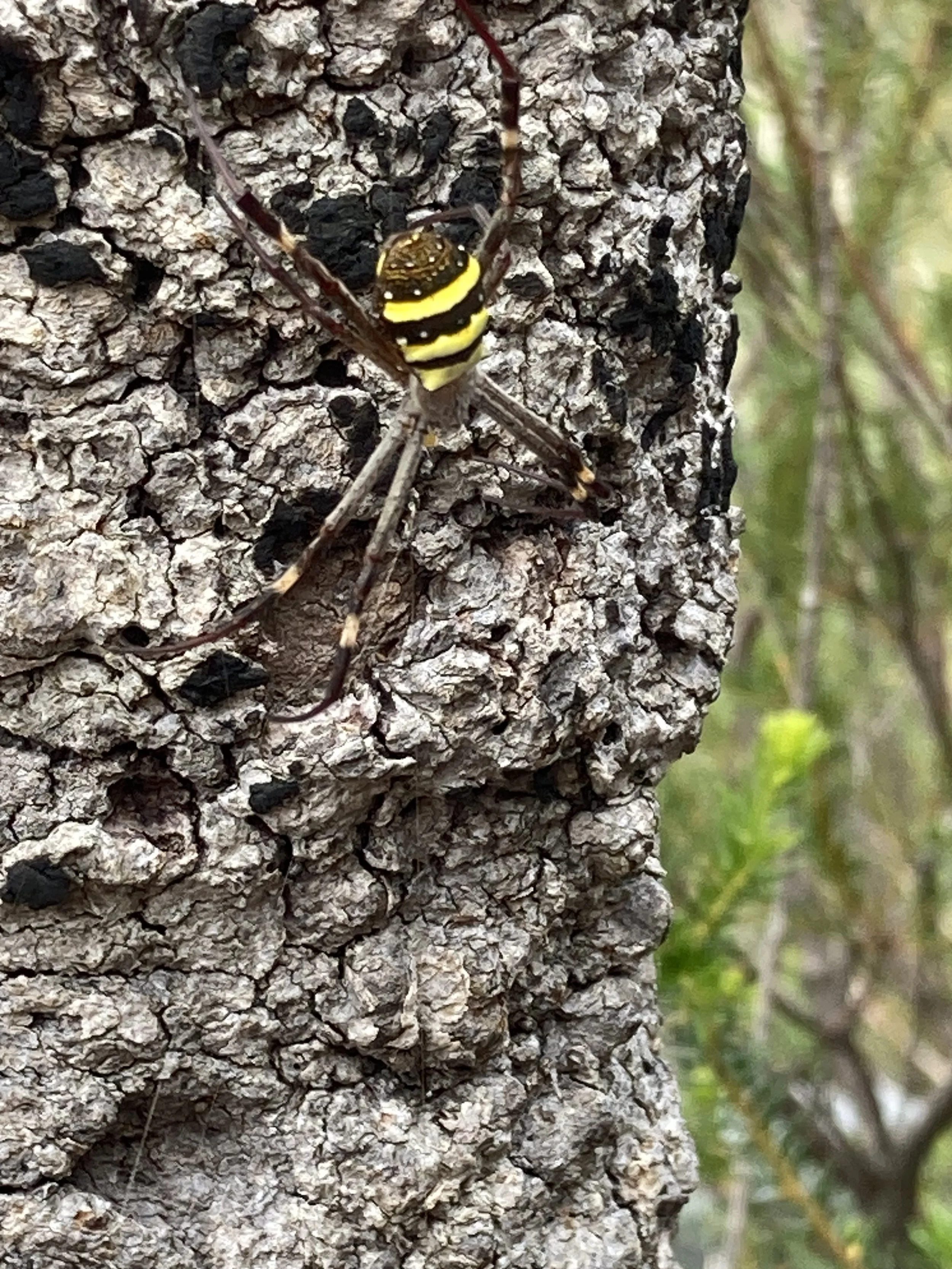
Close up of one of the many “large-ish” spiders I came accross
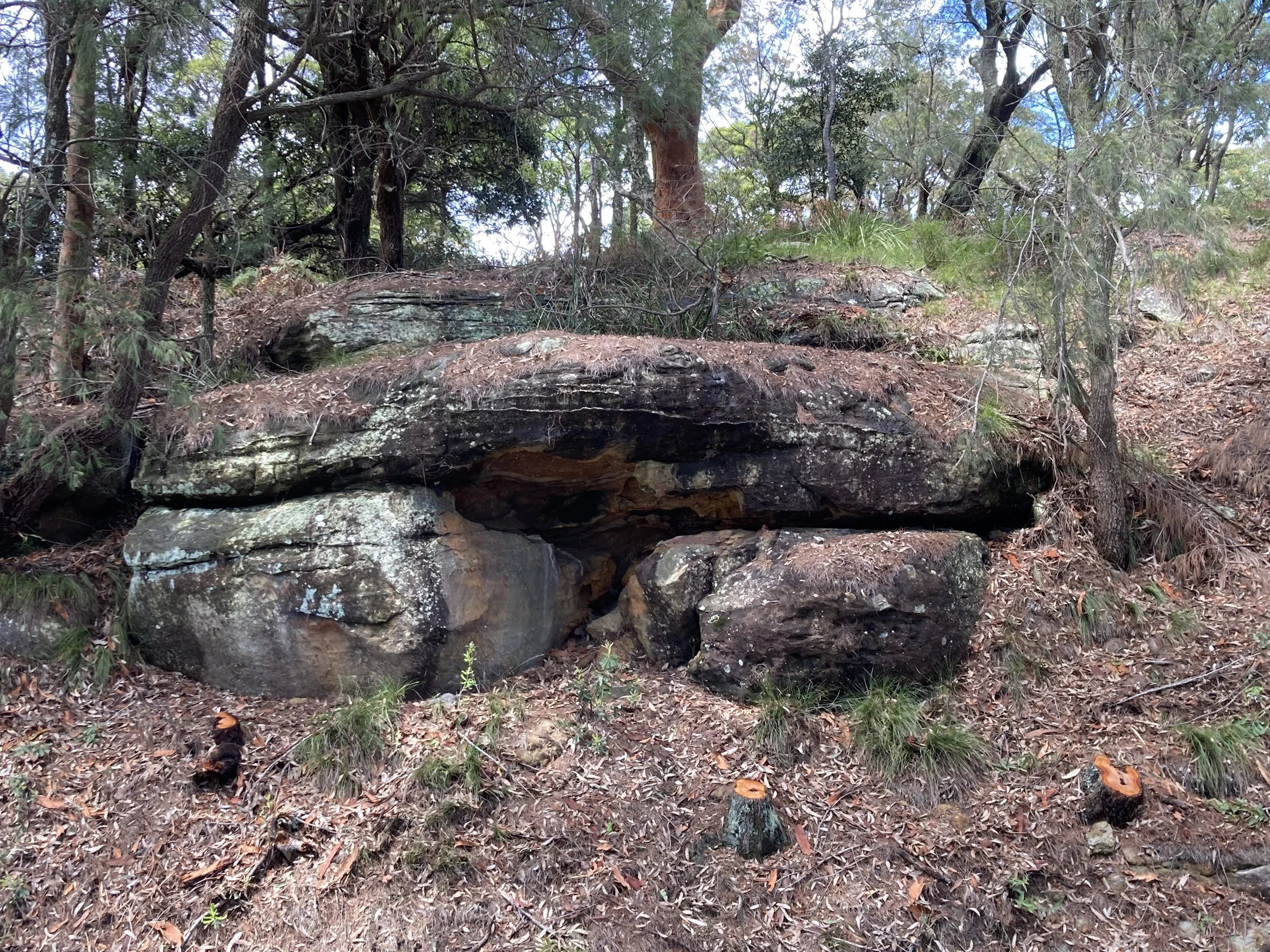
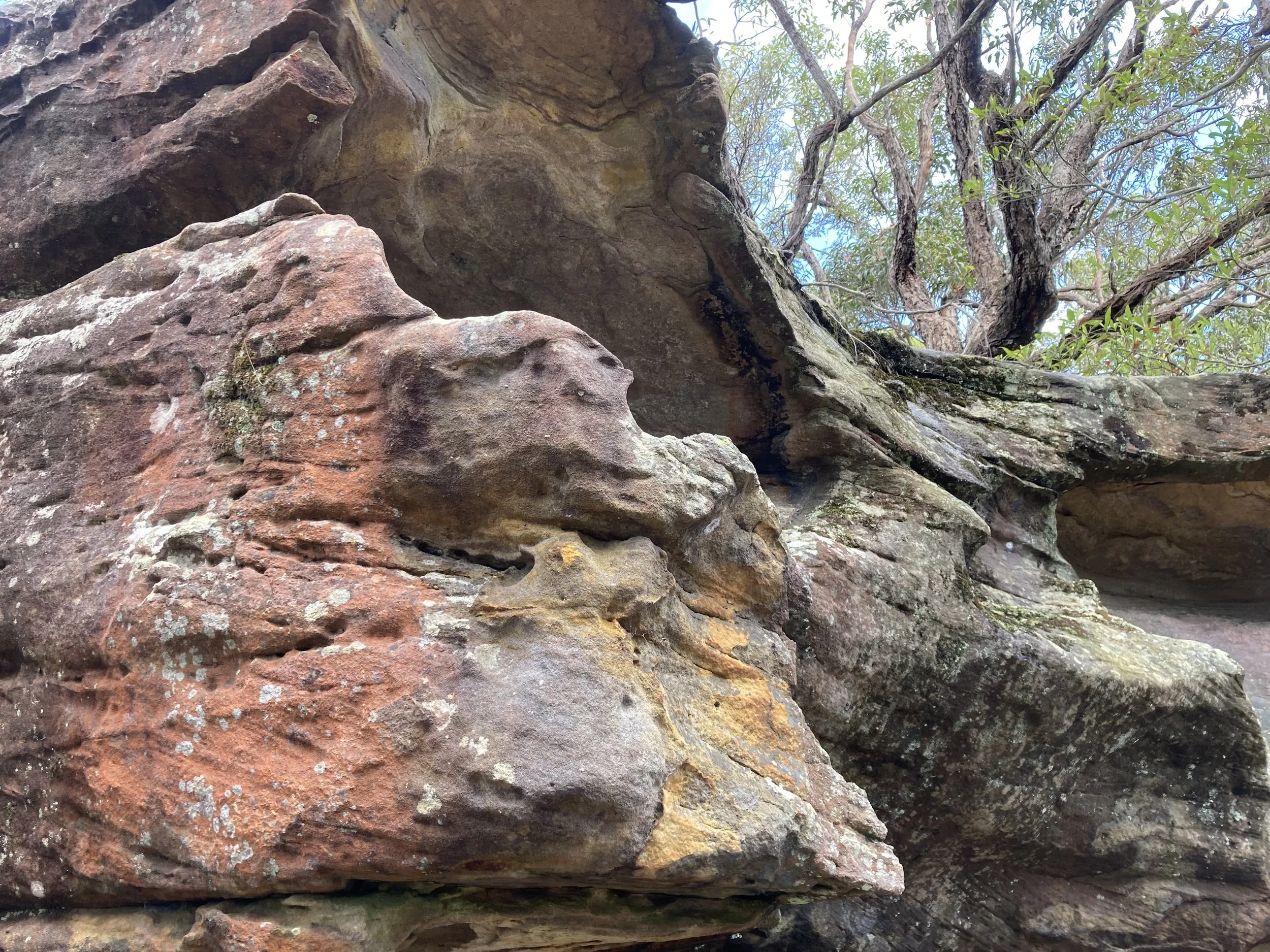
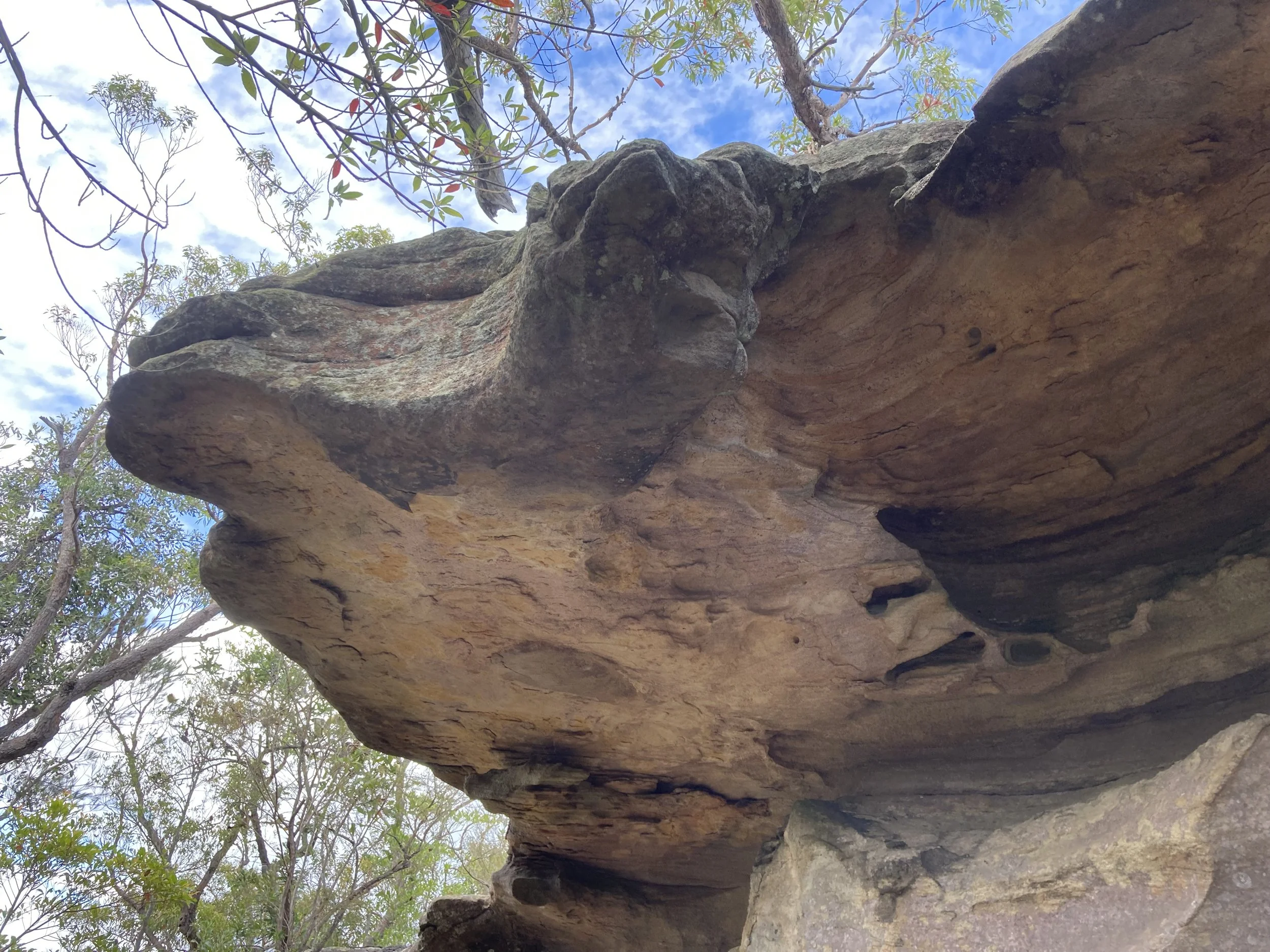
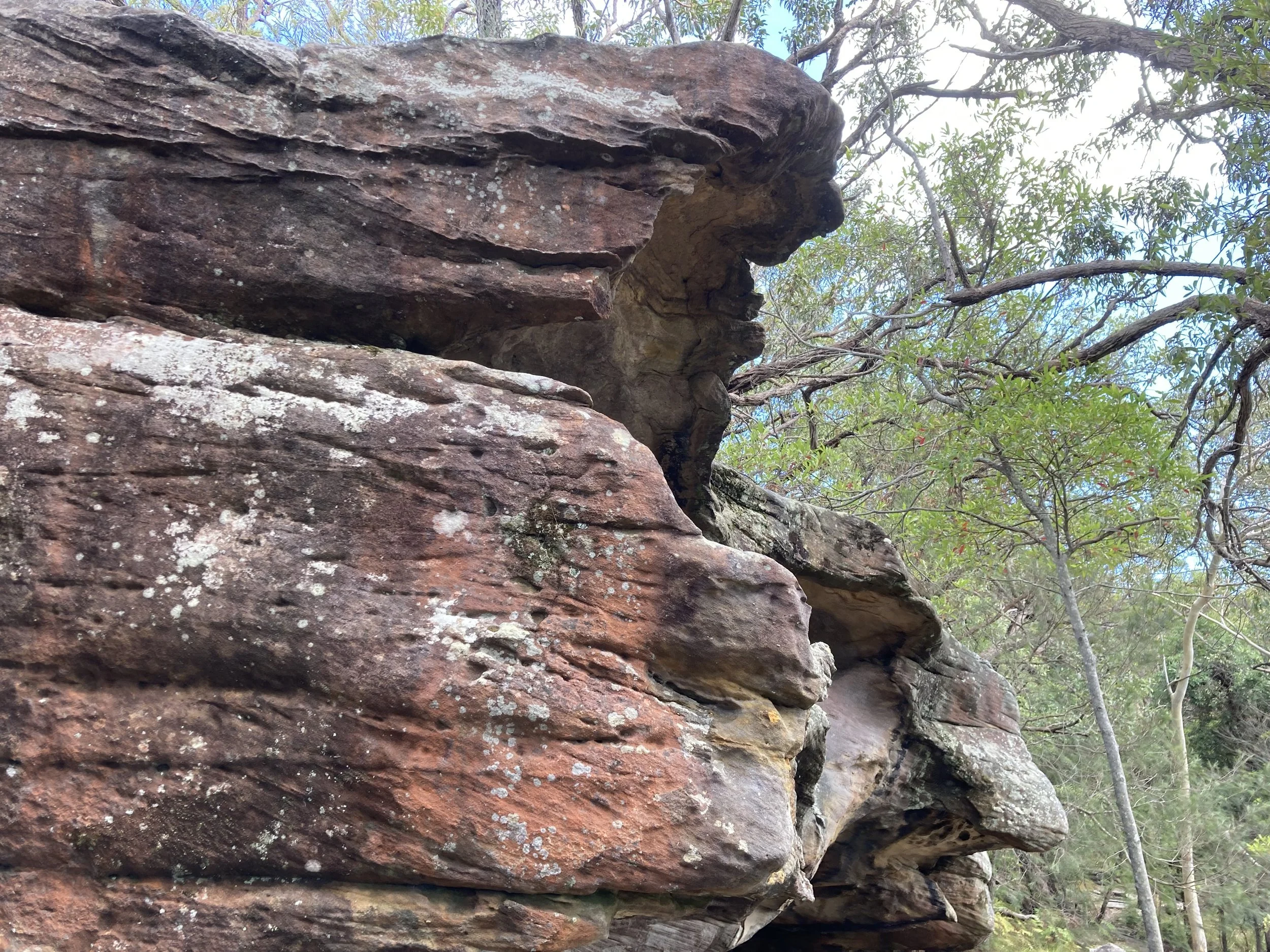
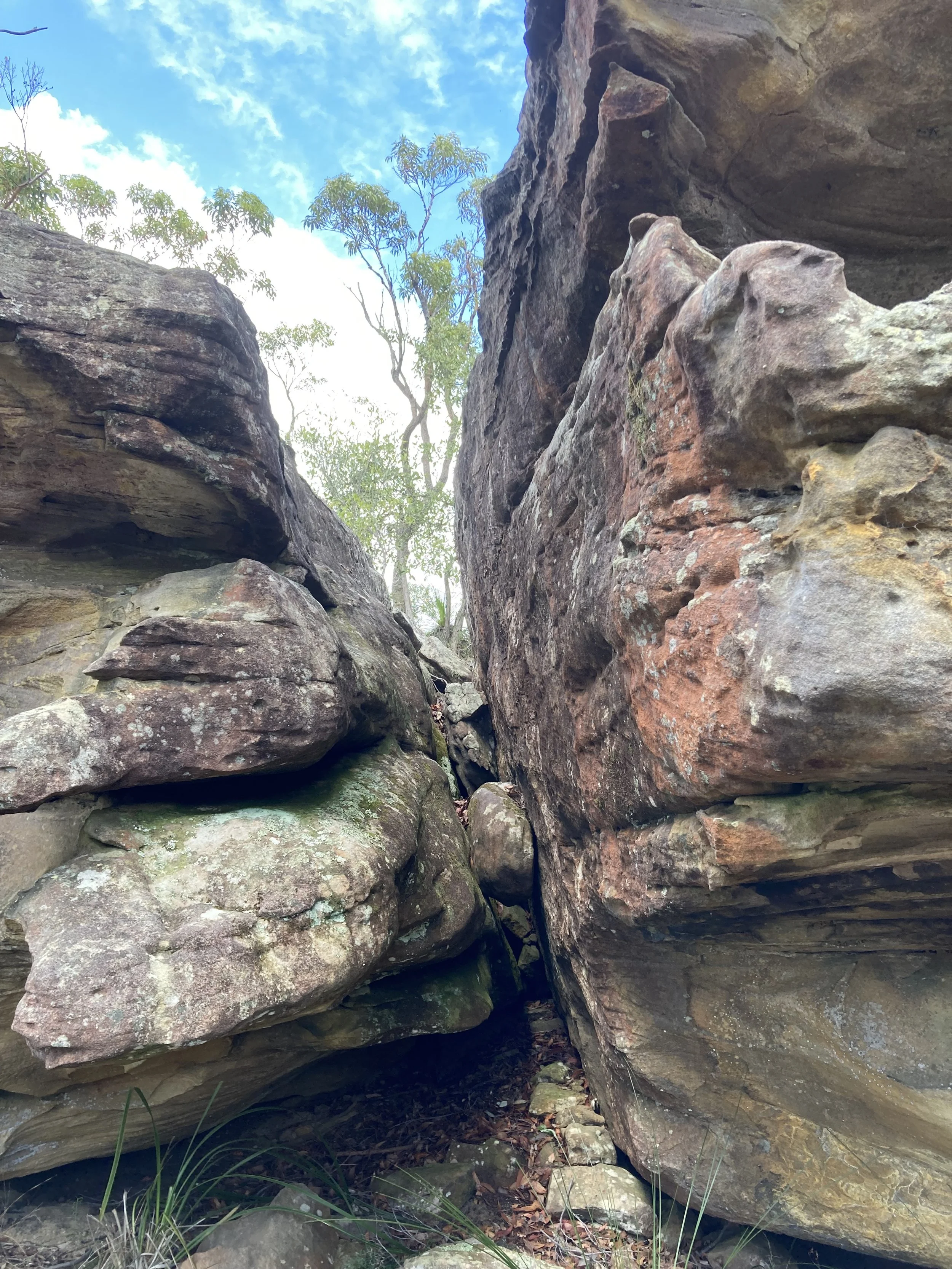
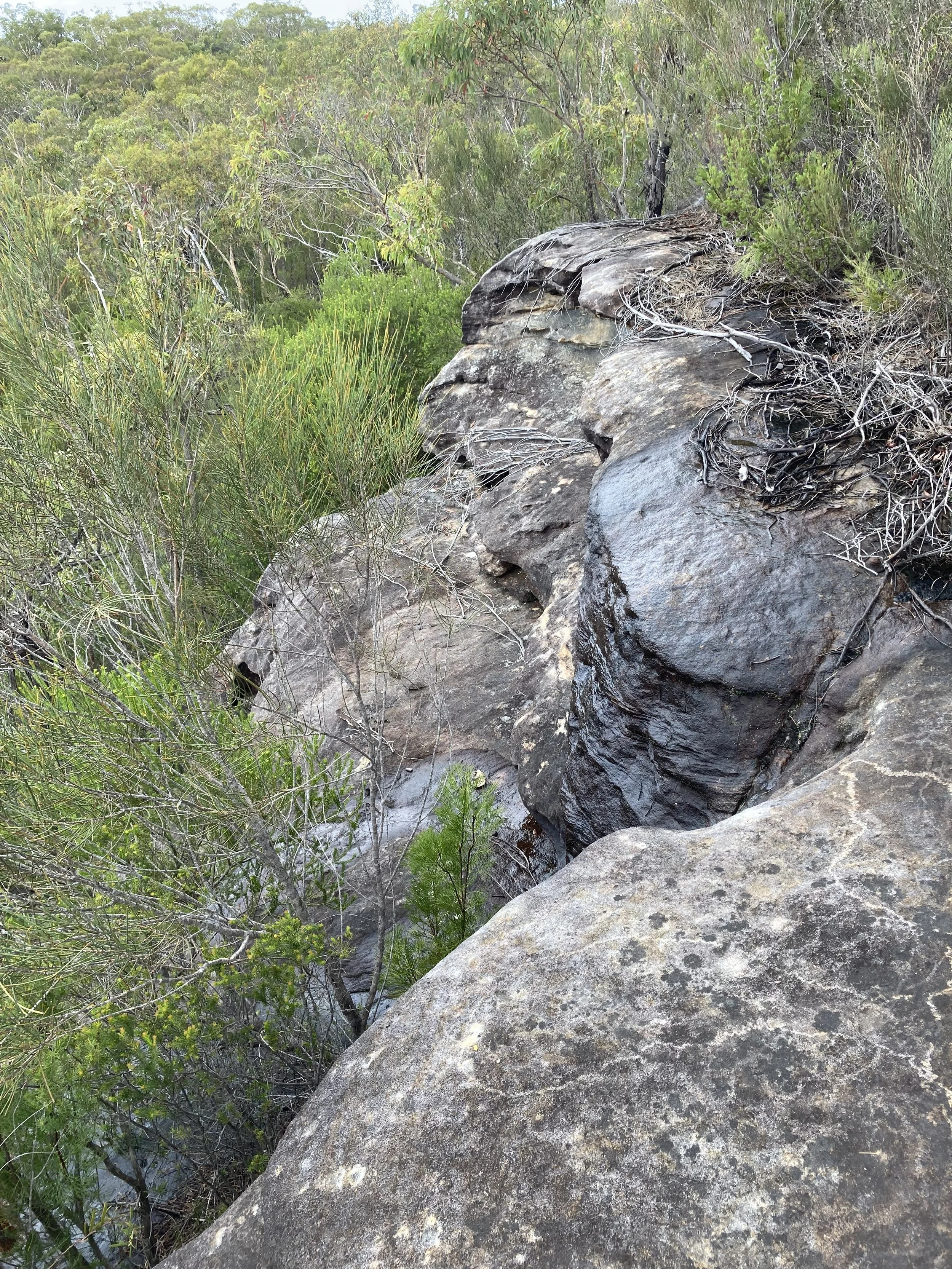
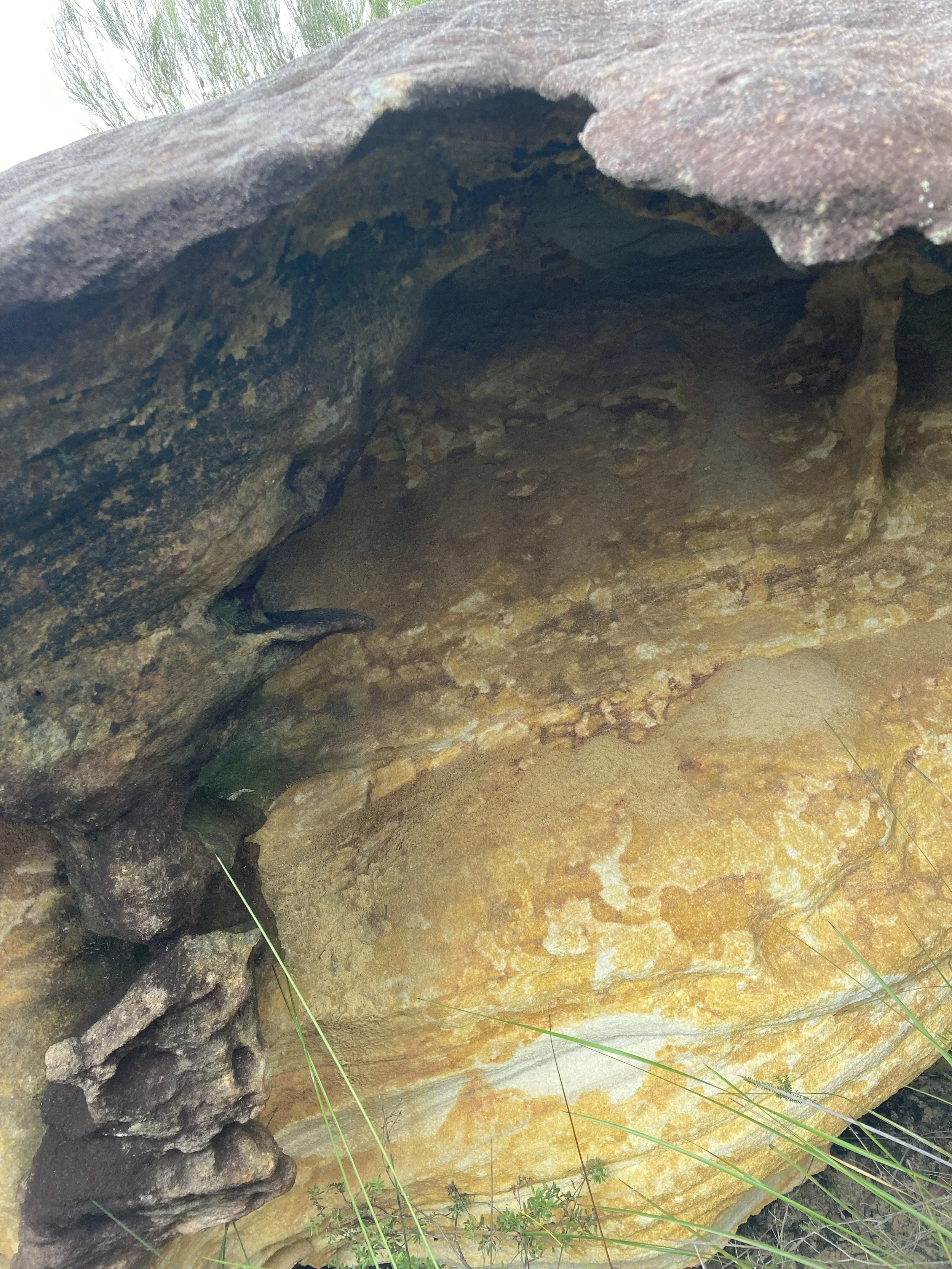
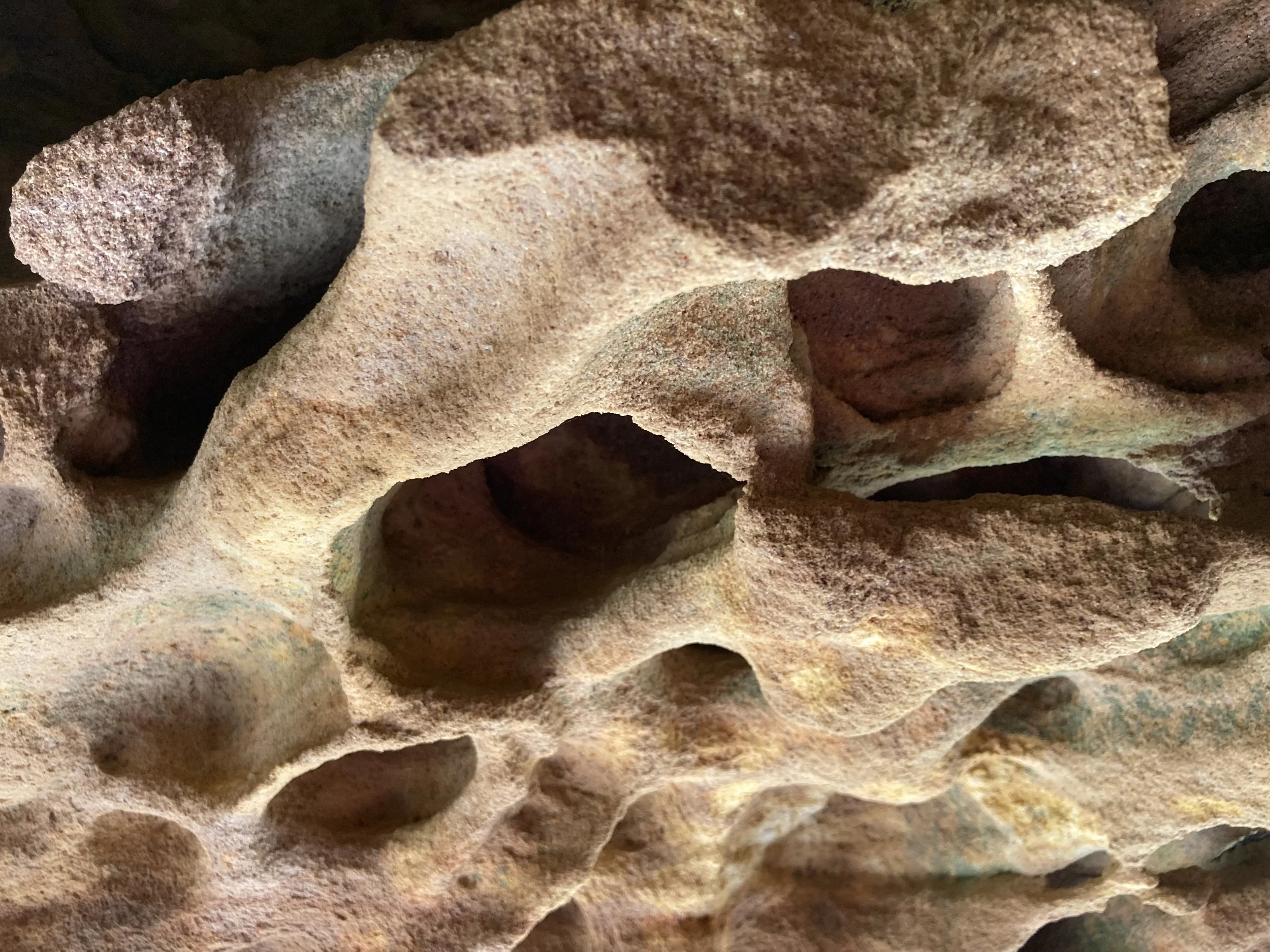
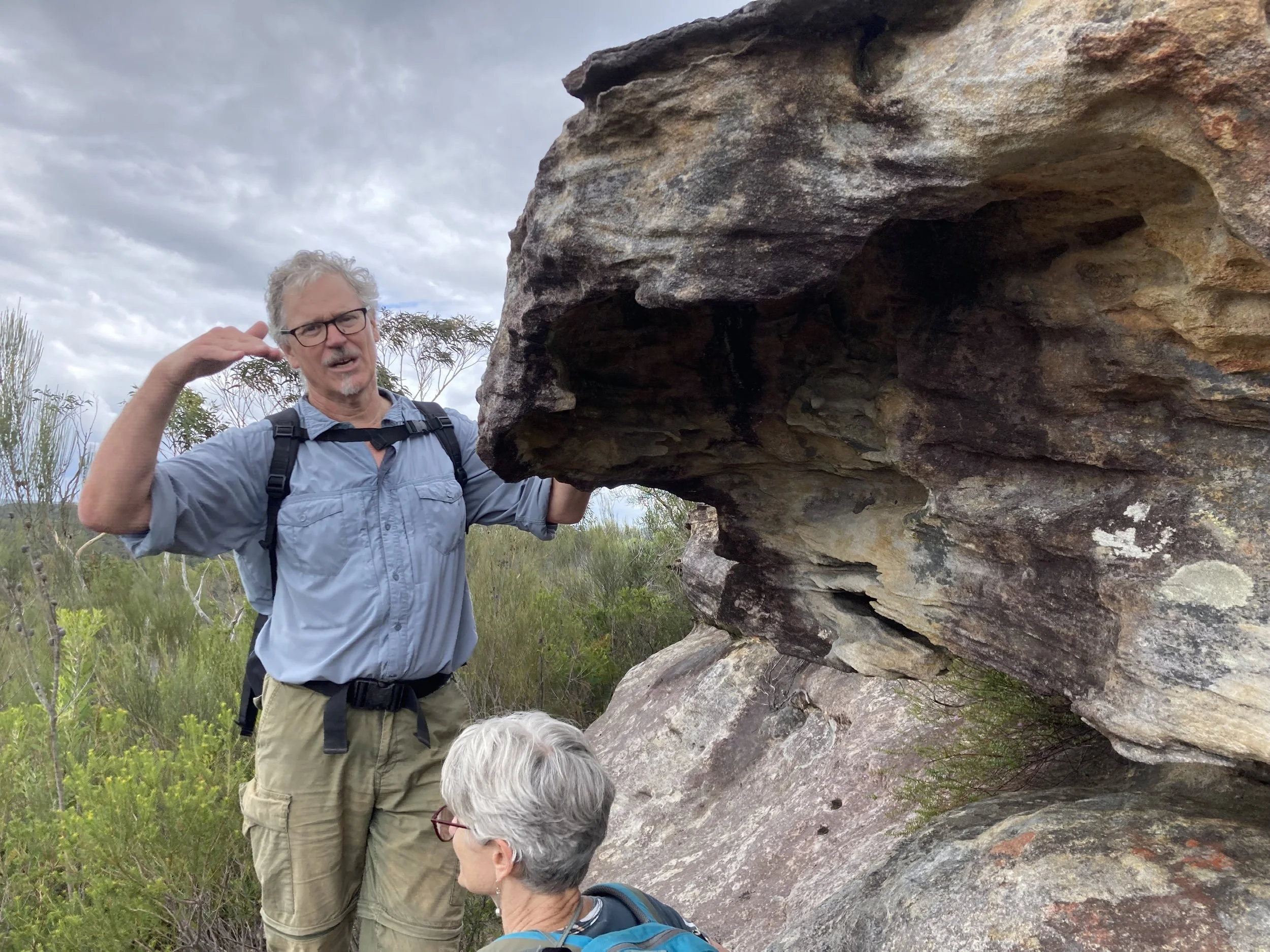
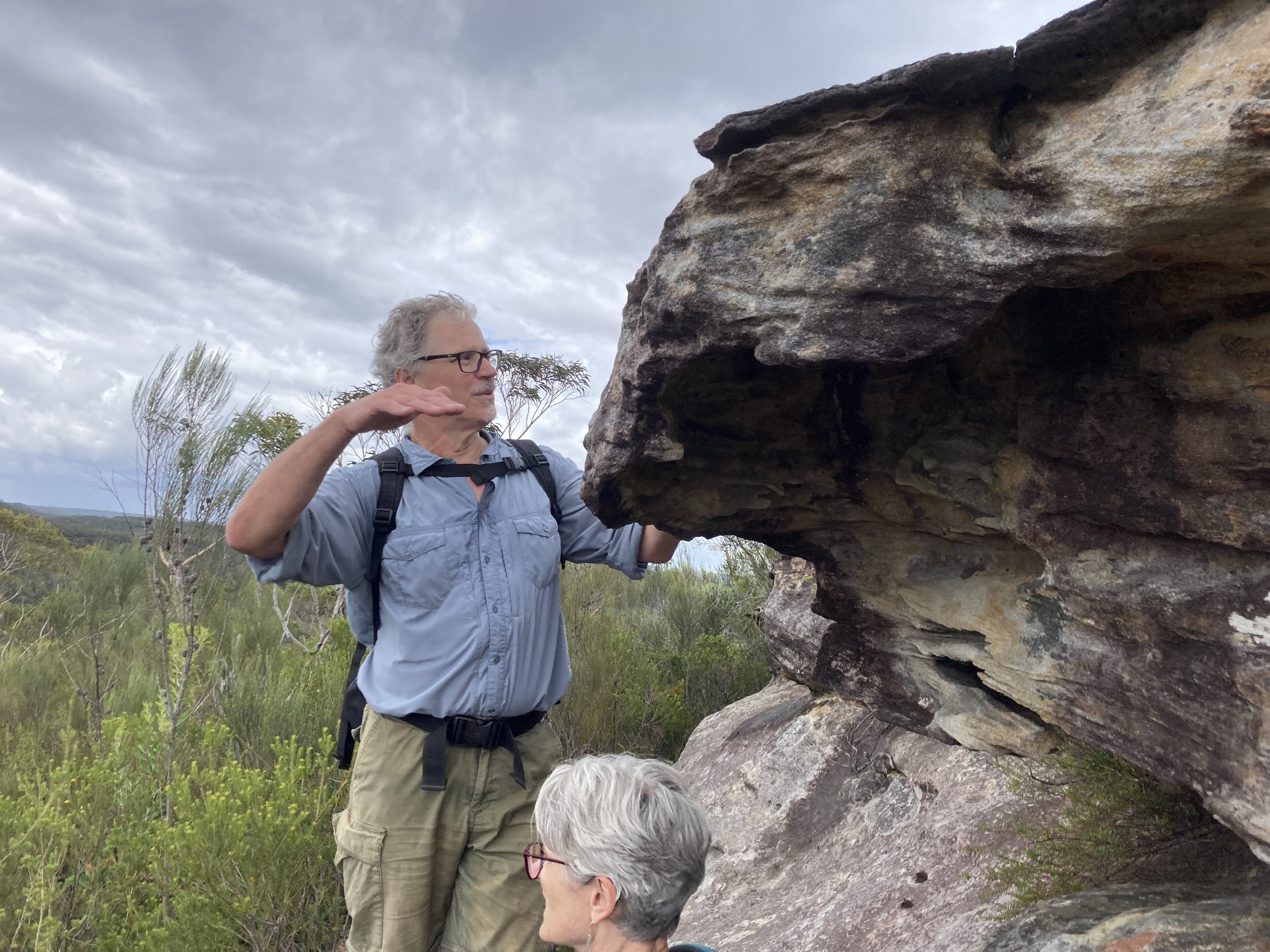
There were some really cool caves integrated into our walks. Some were likely used as shelter and some had intricate designs from the wind erosion.
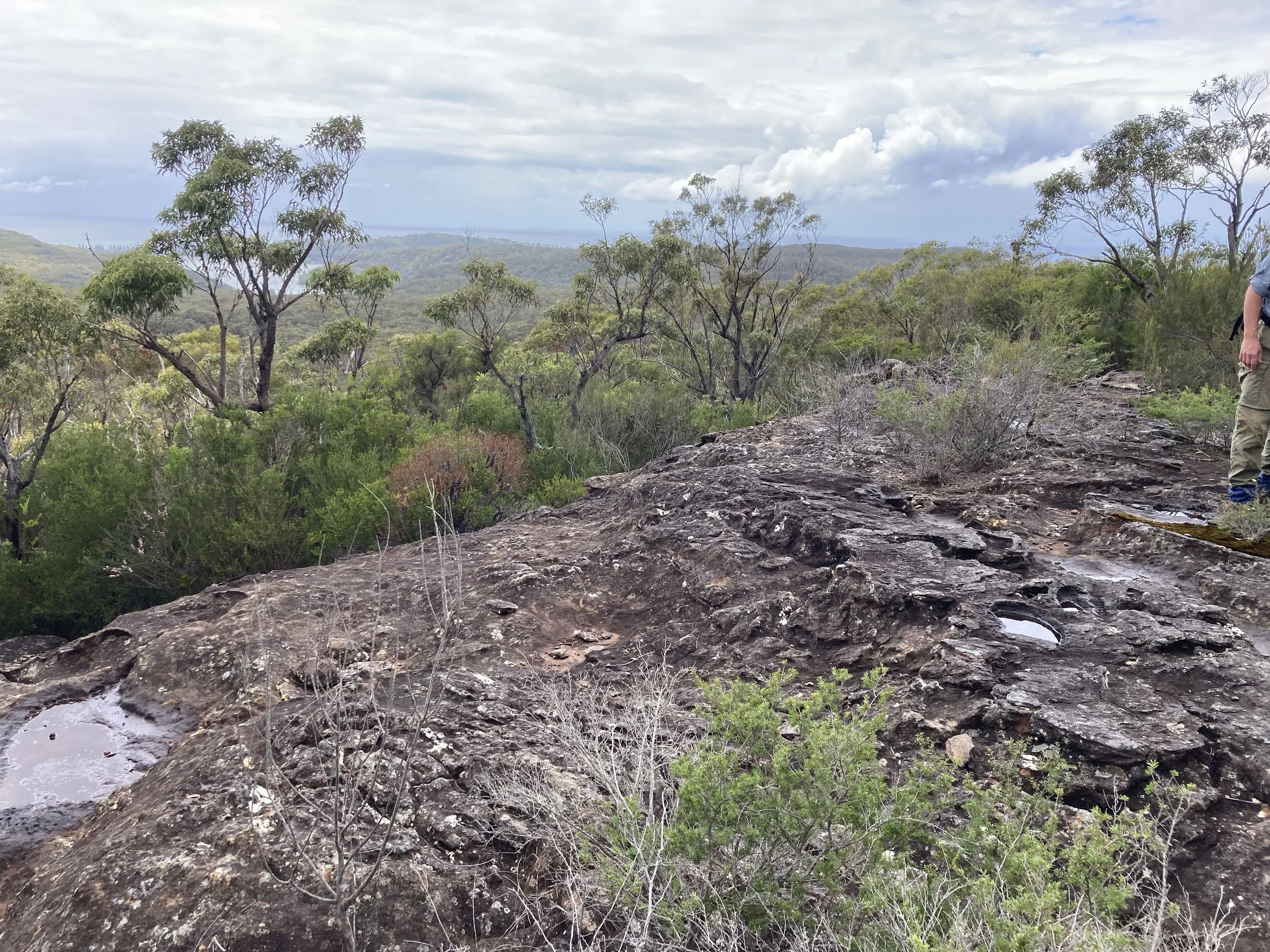
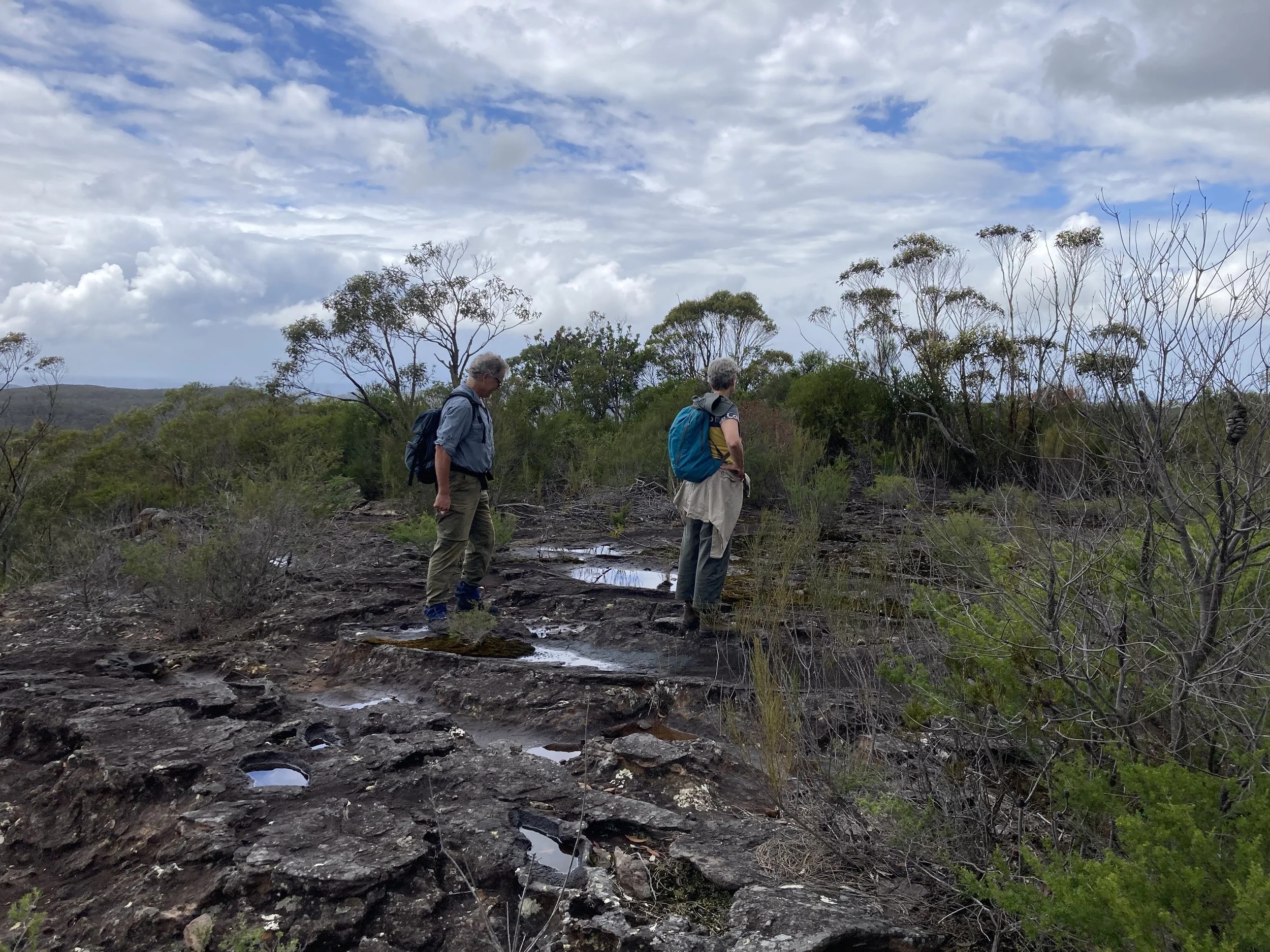
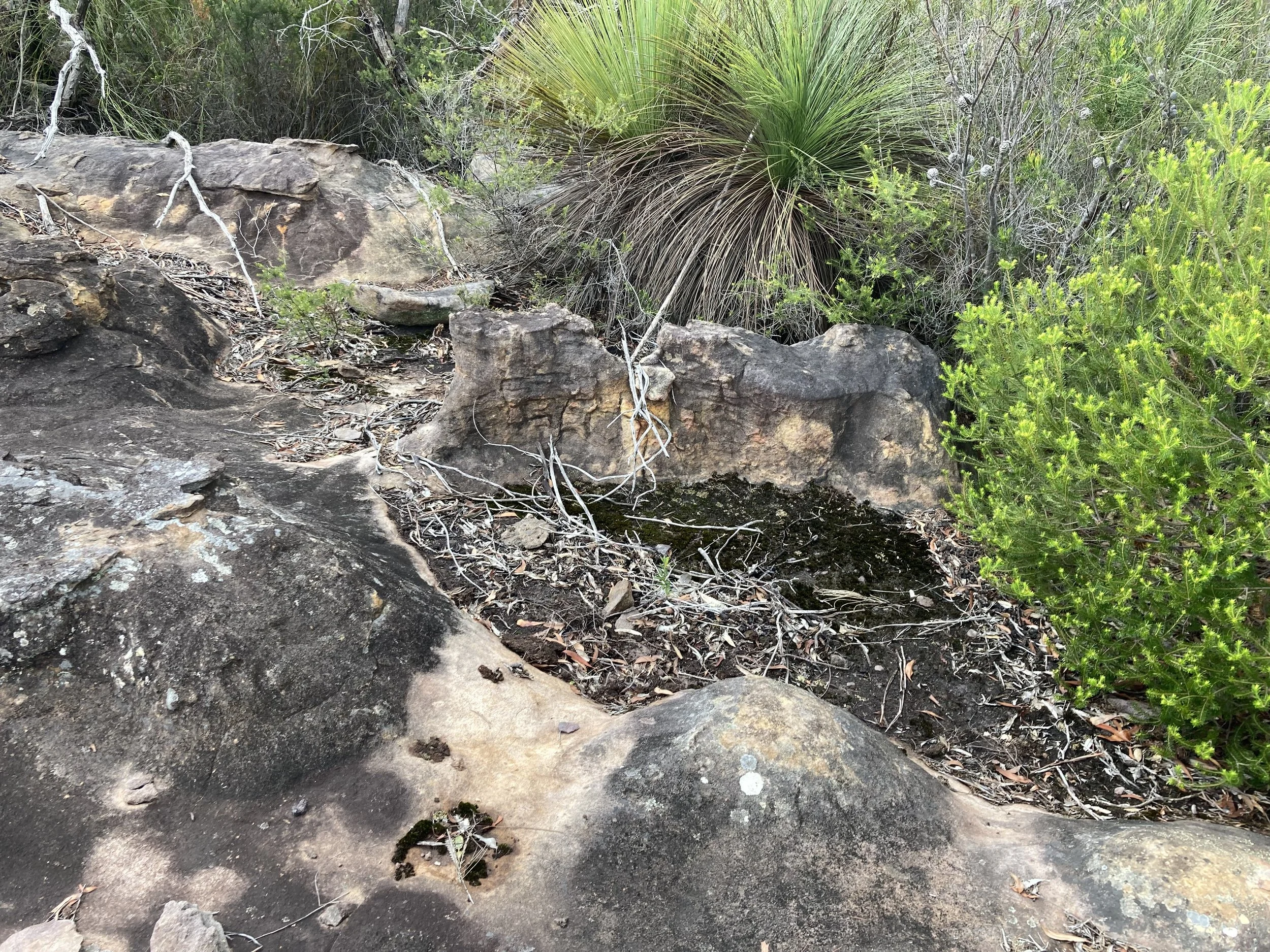
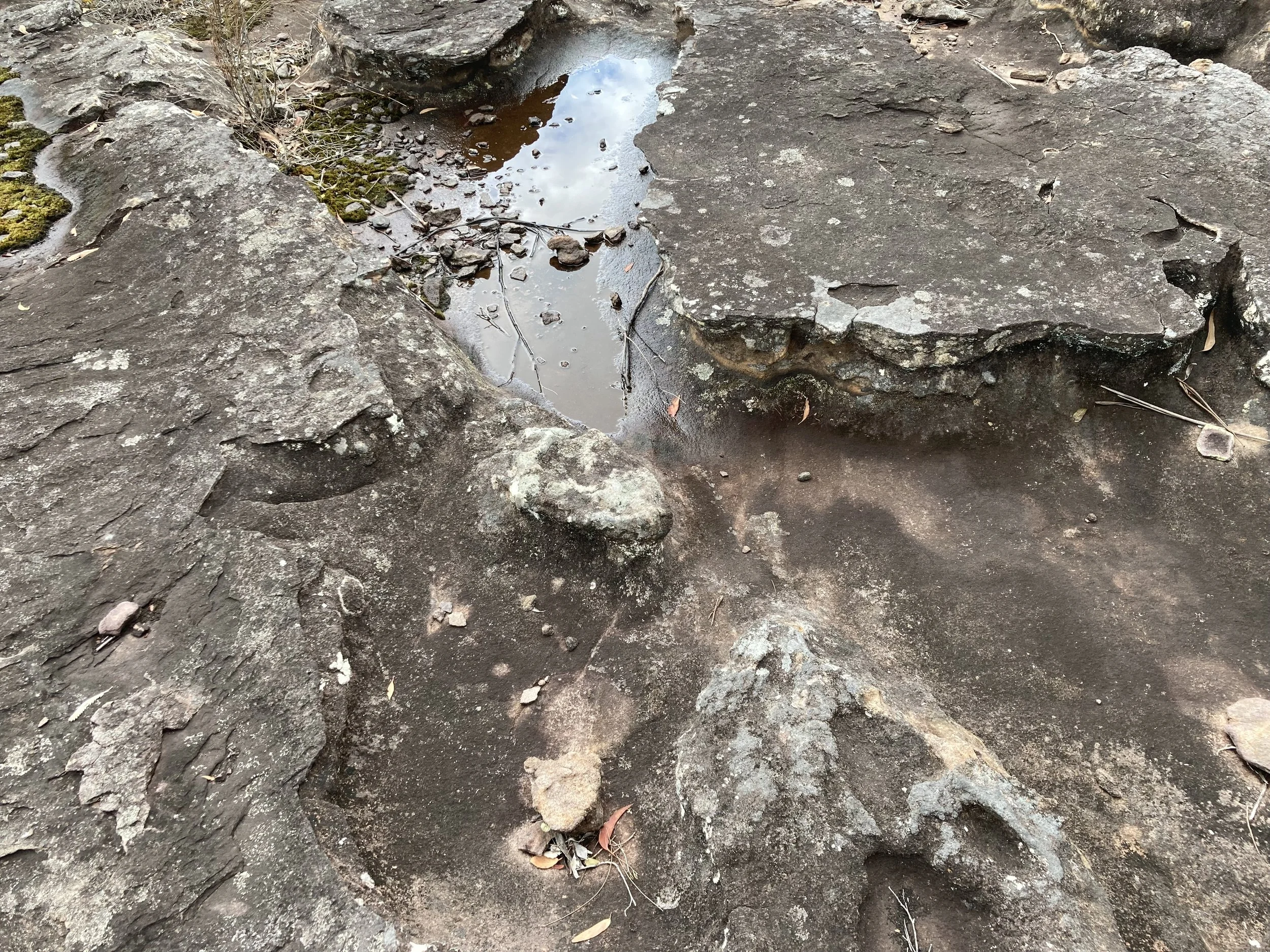
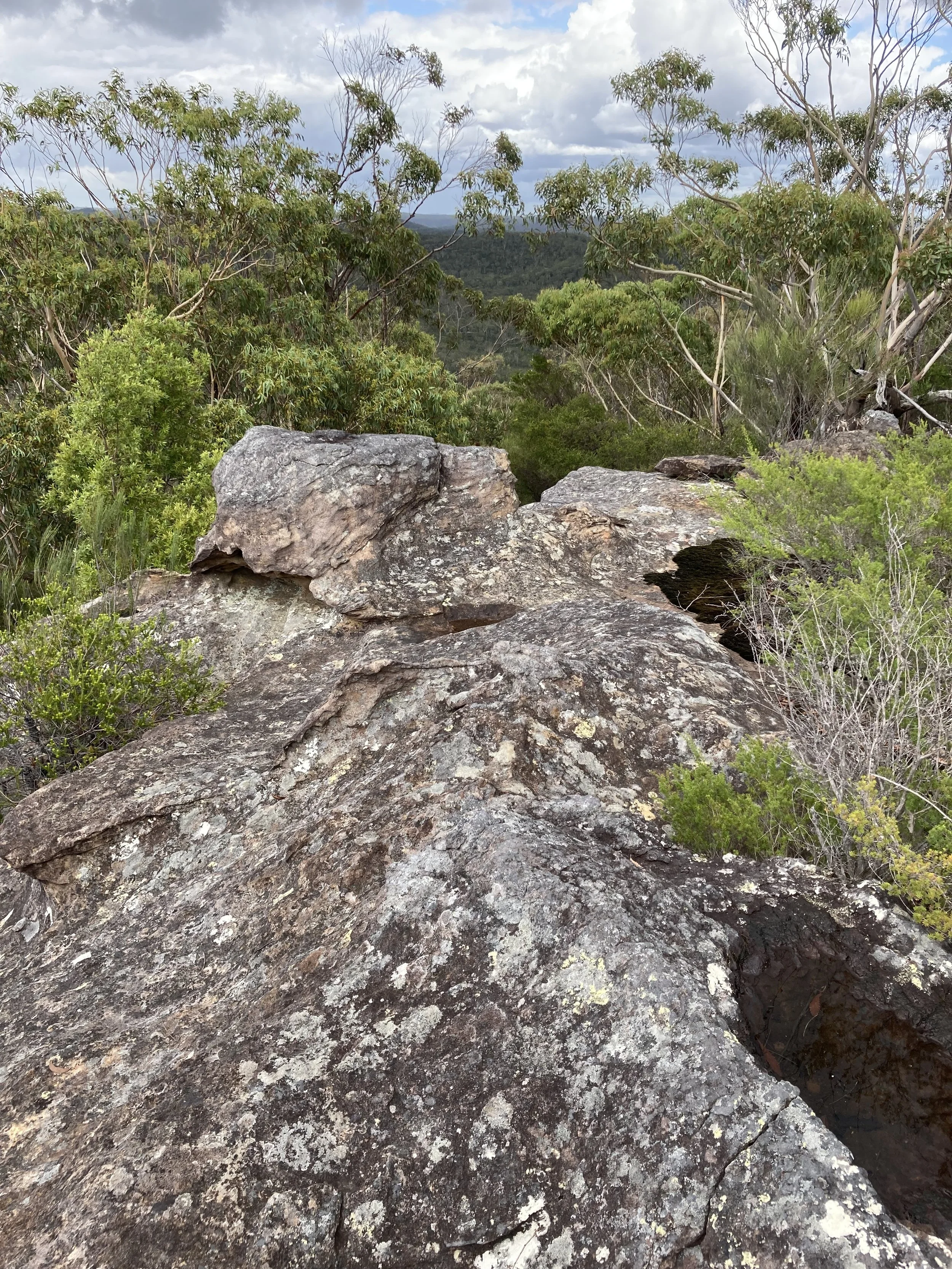
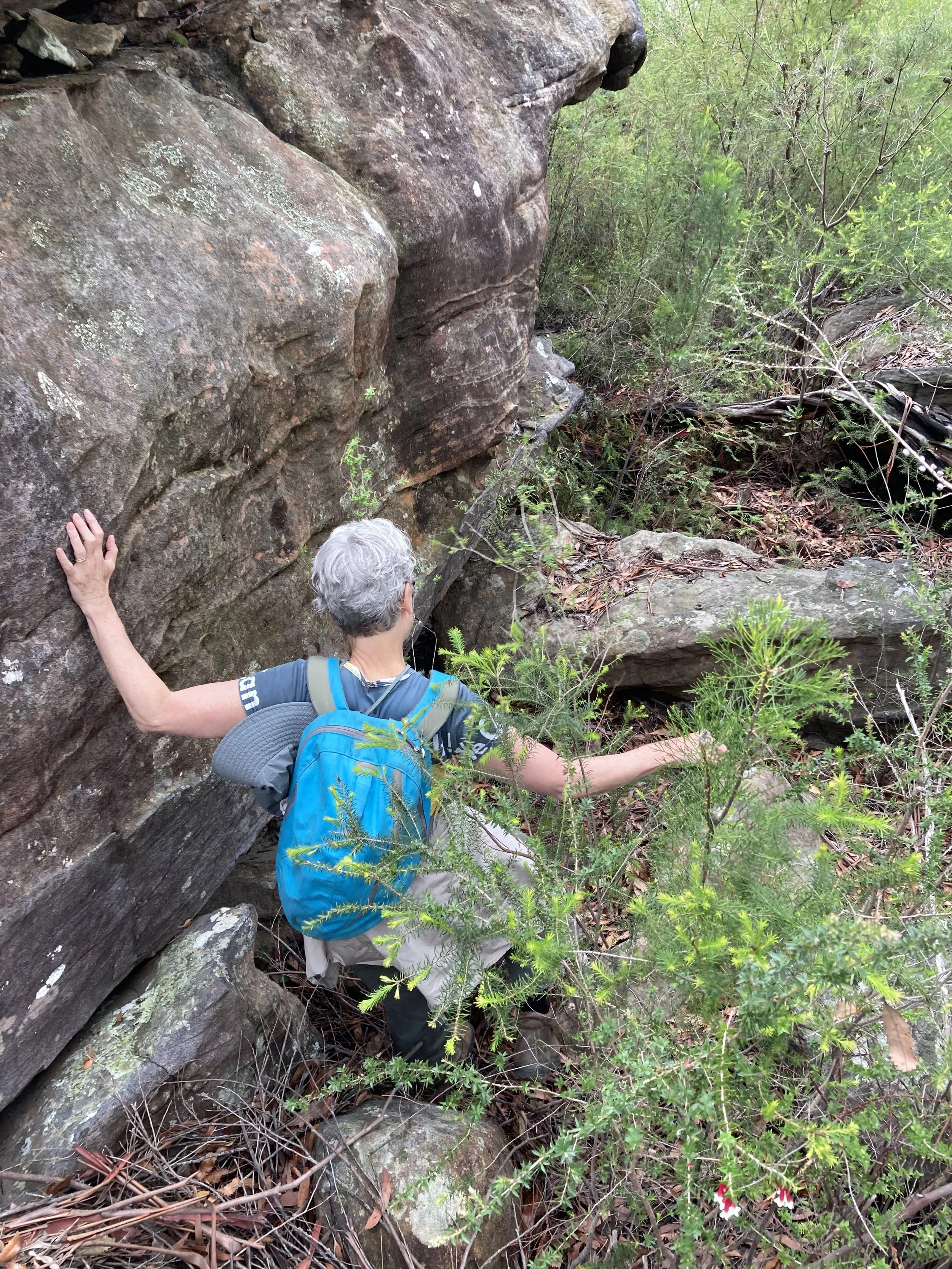
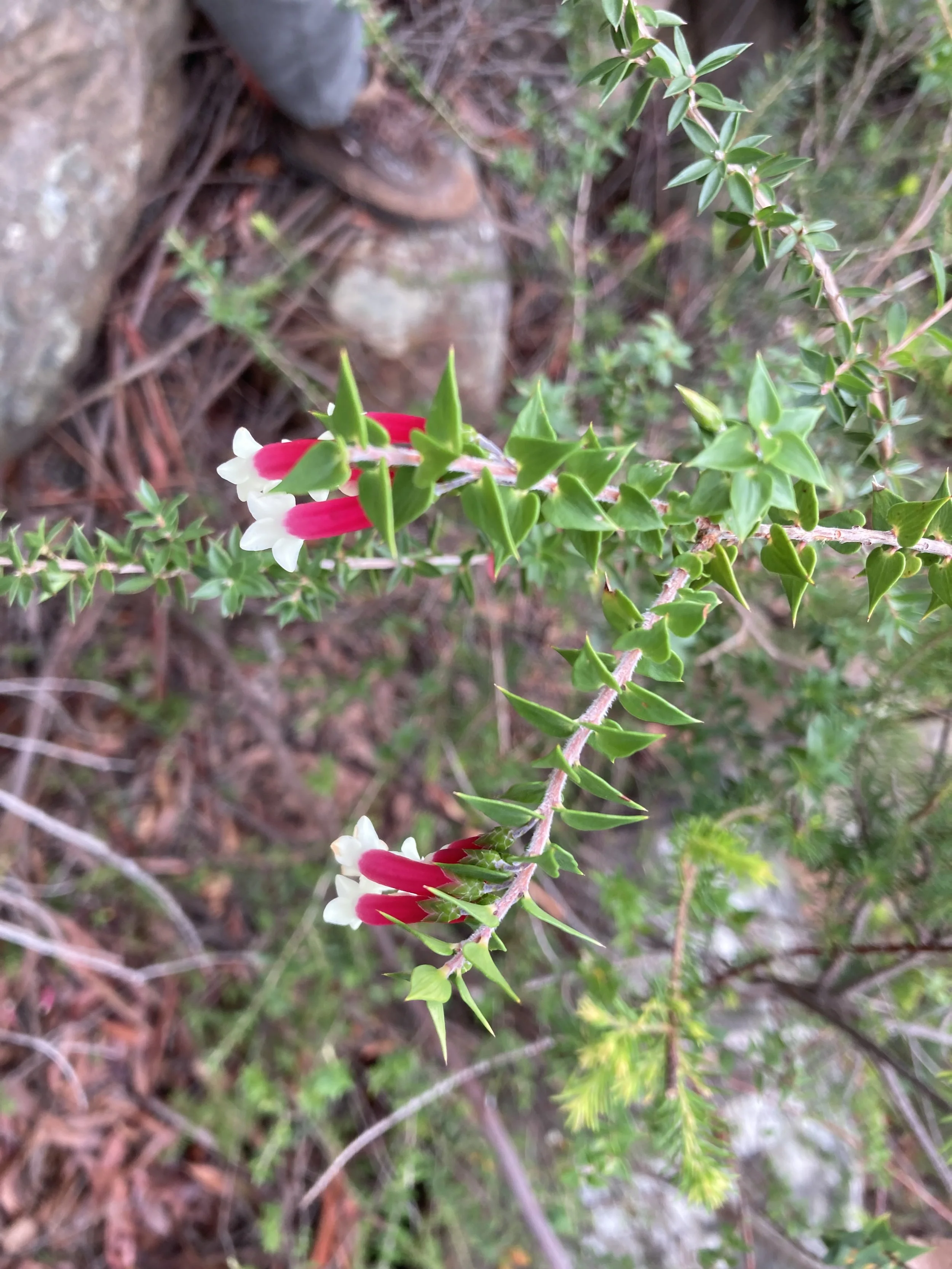

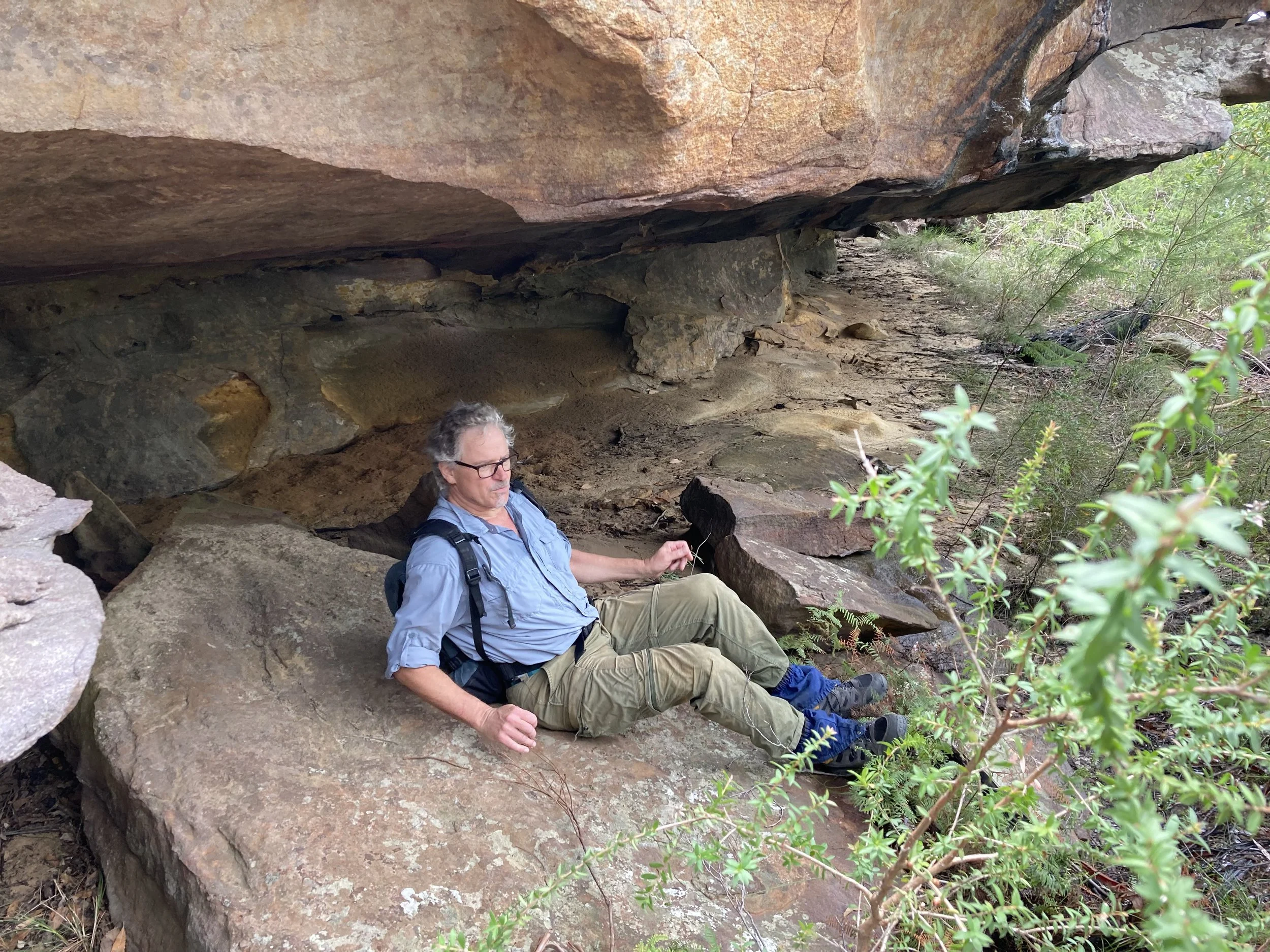

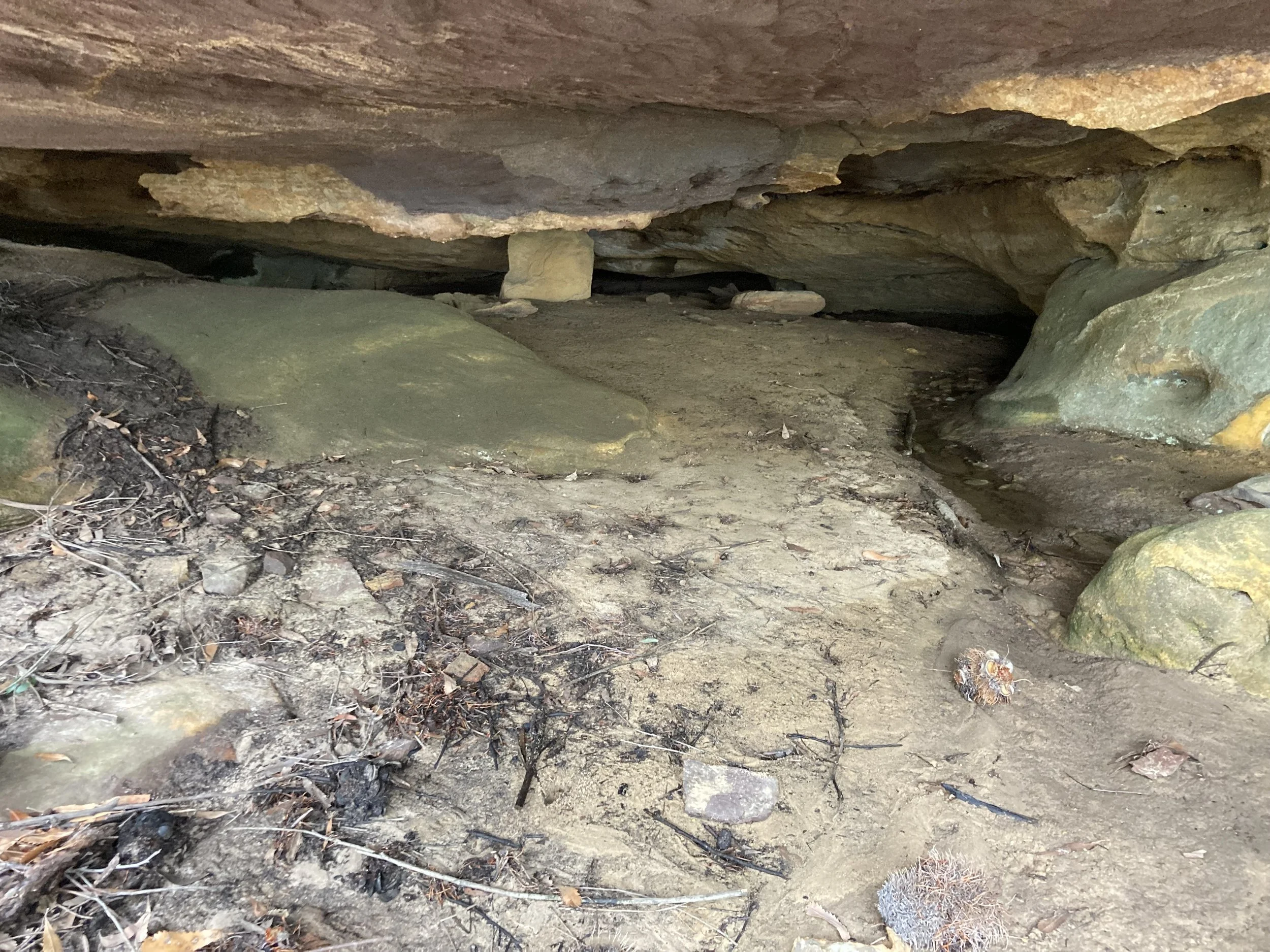
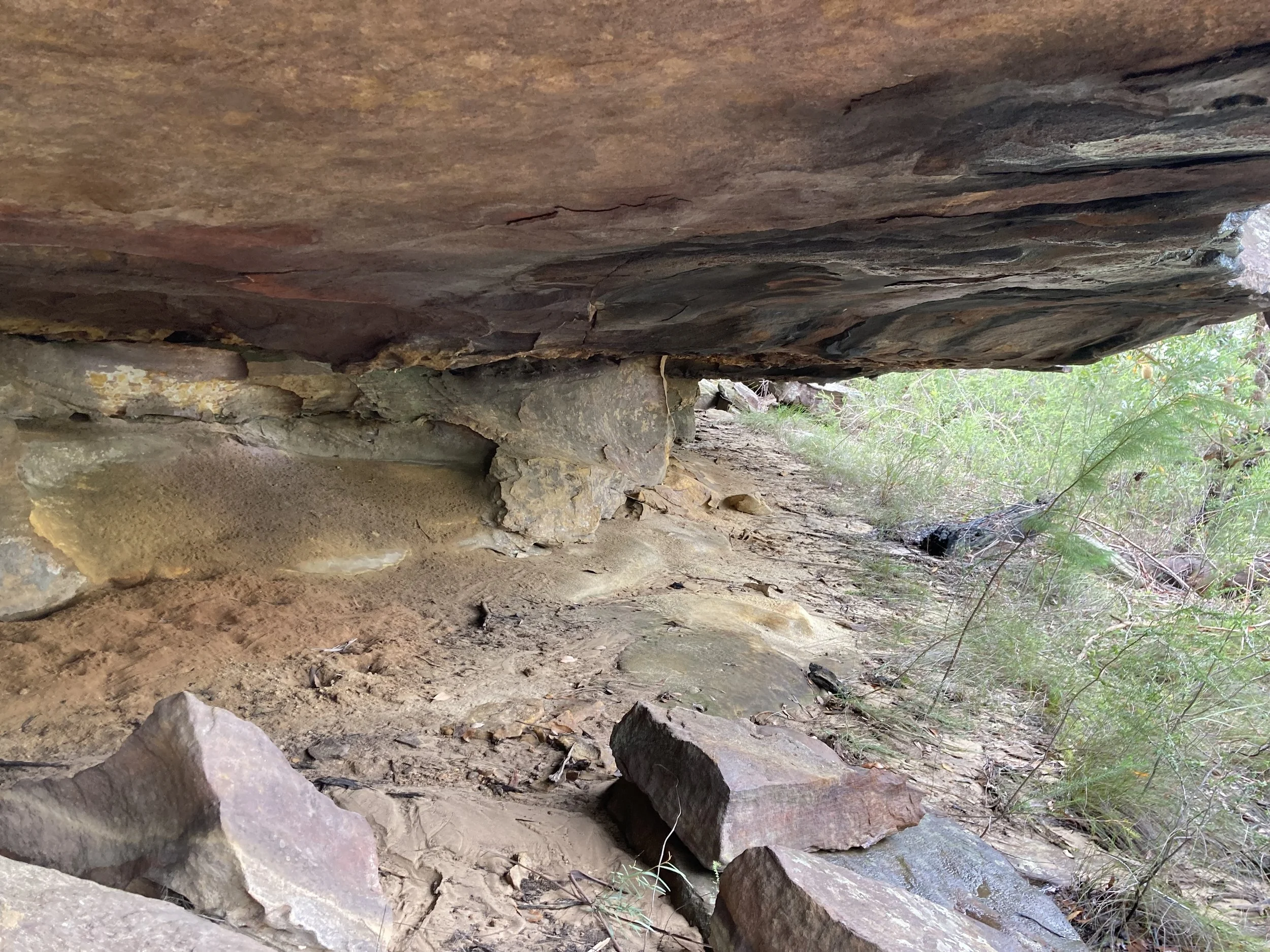
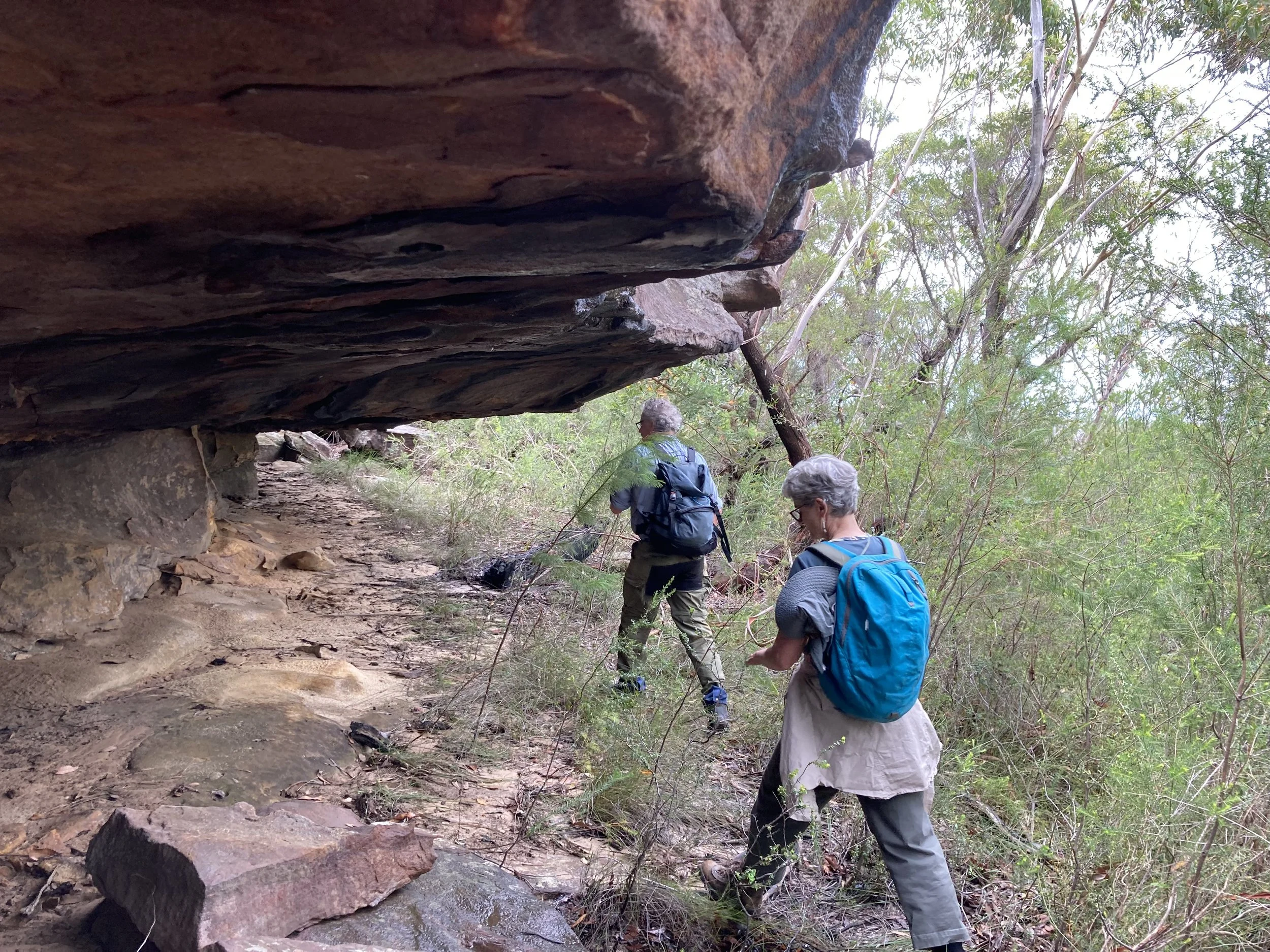
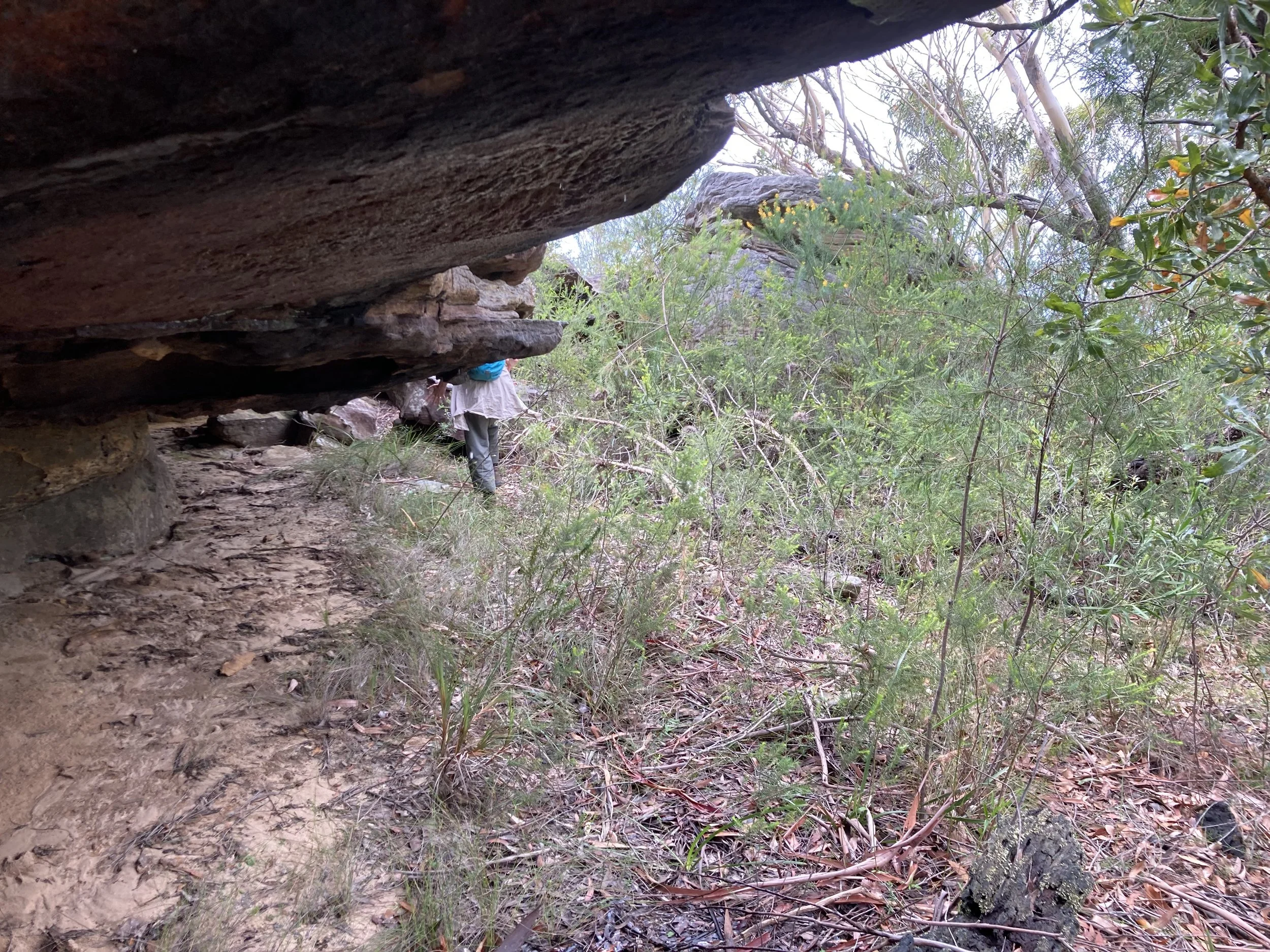

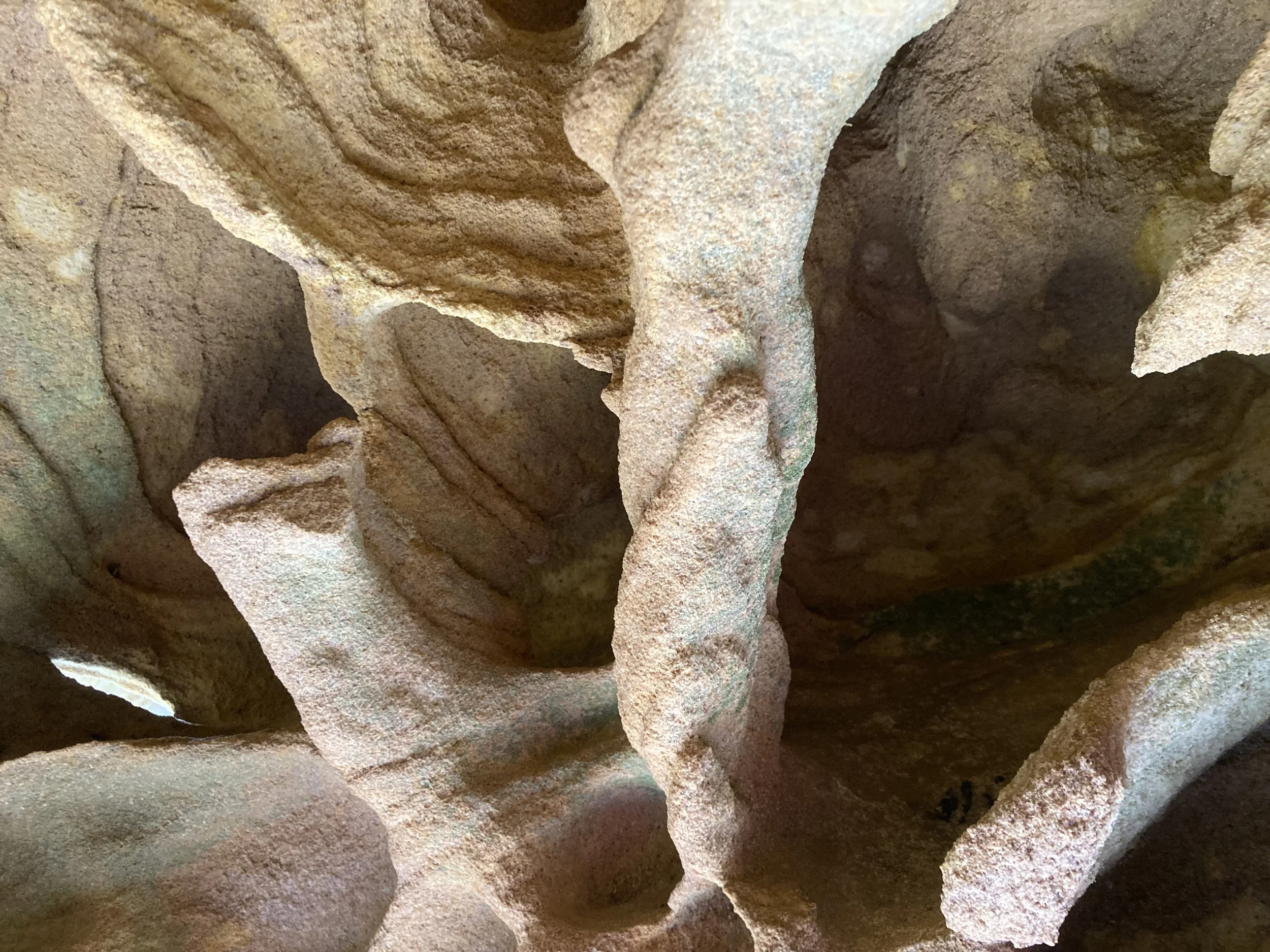
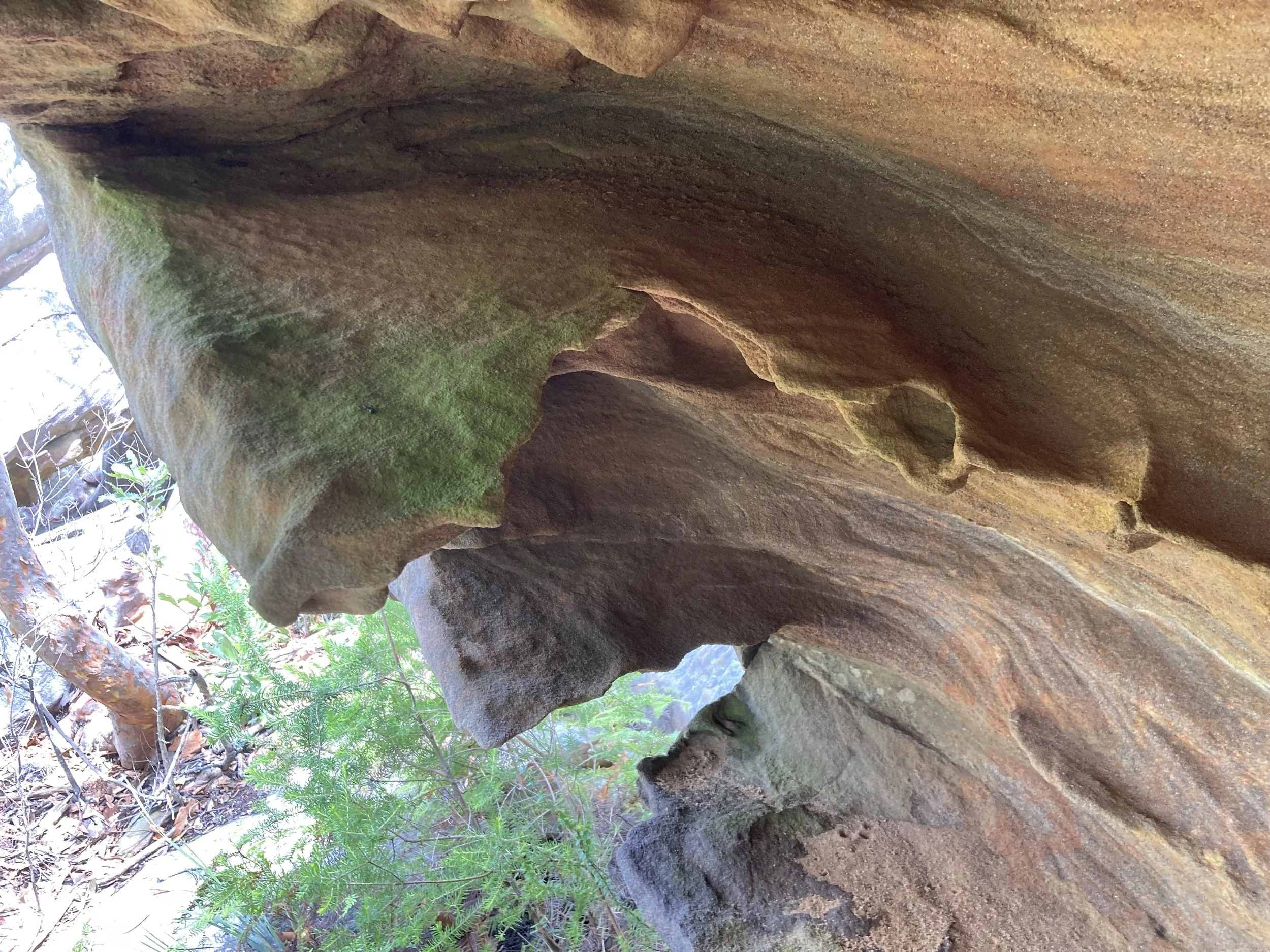
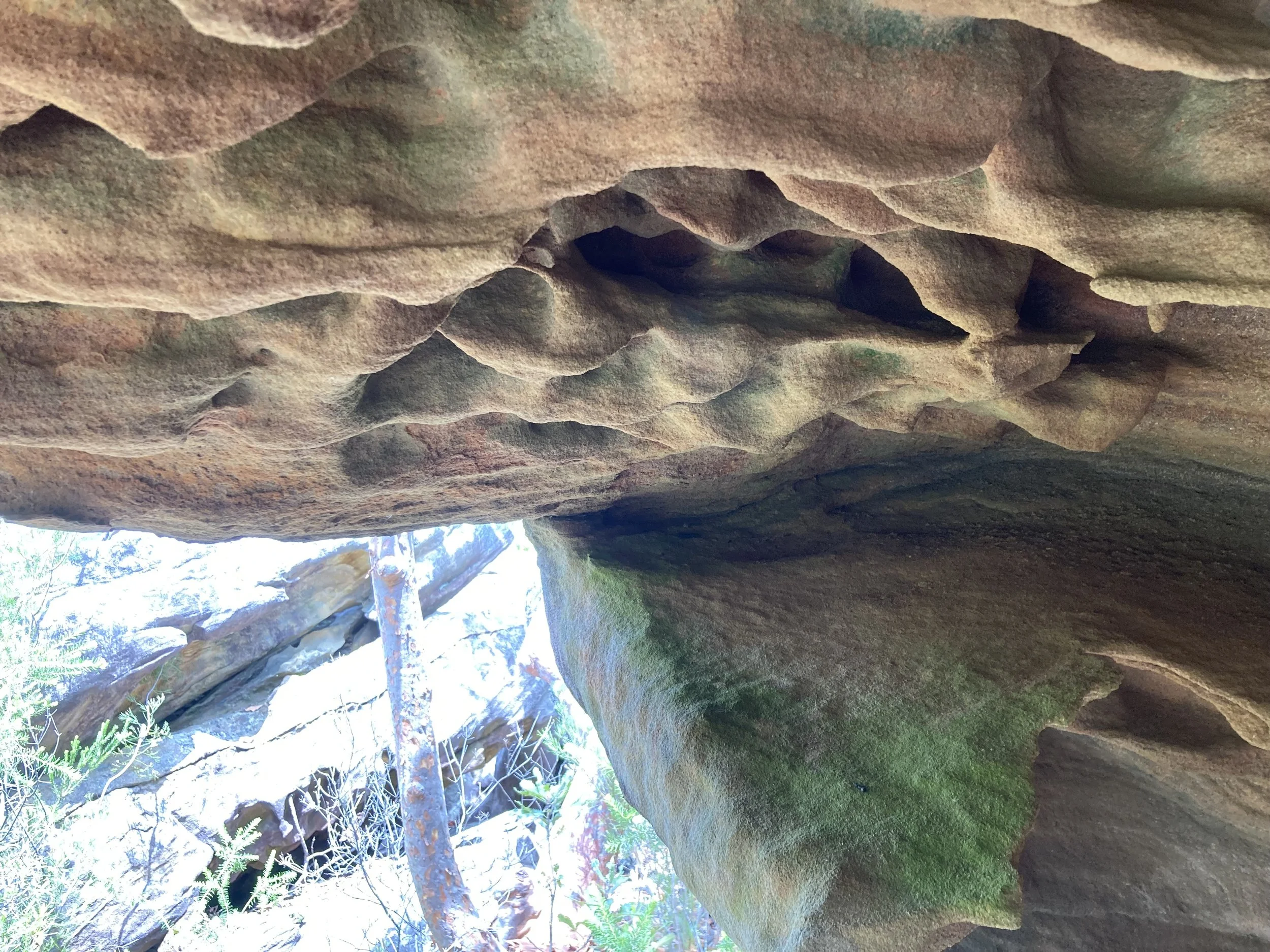
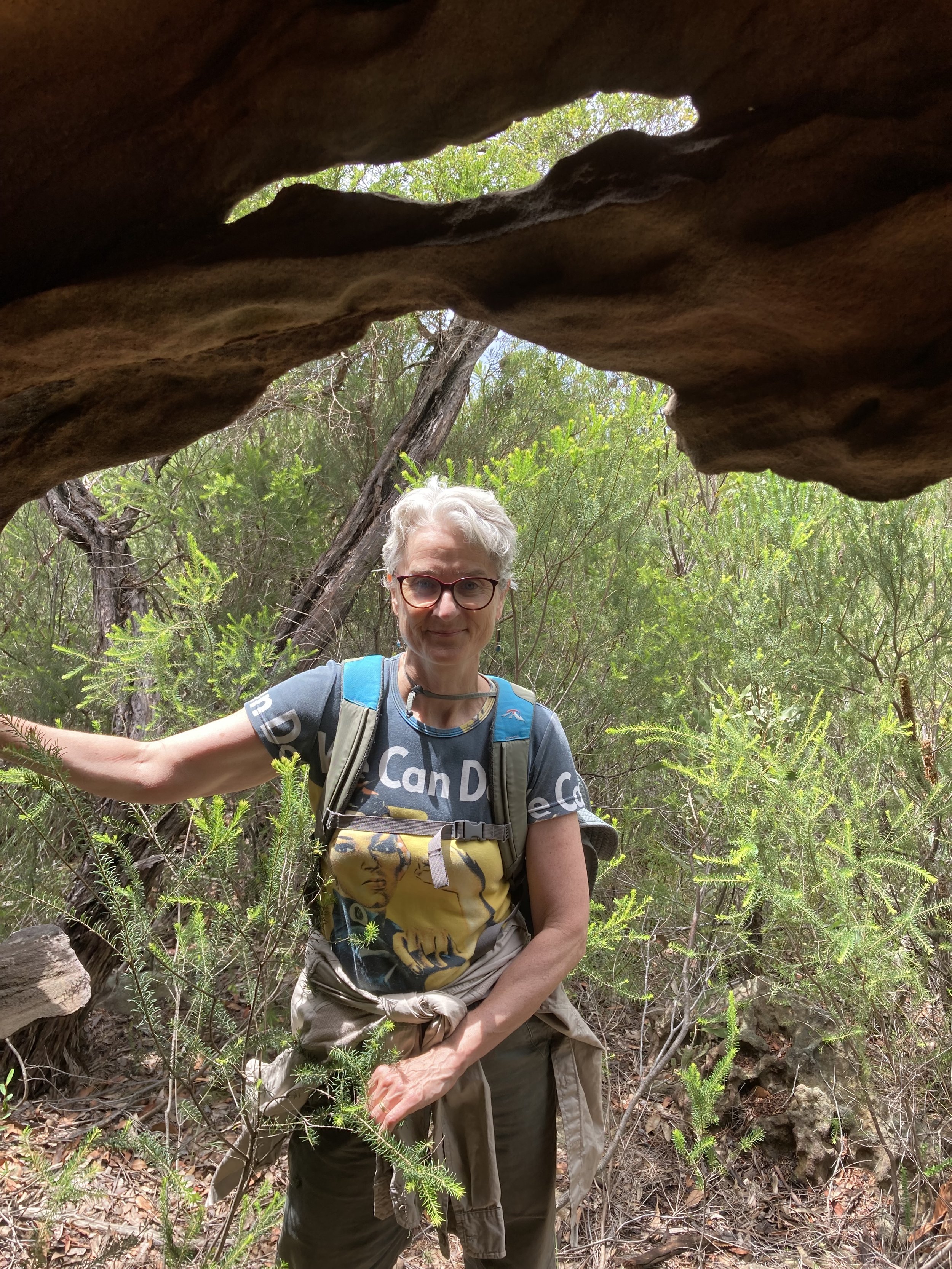
We also came across the highest point marked by Australia’s Central Mapping Authority (i.e. the precursor to Geoscience Australia). This was an old survey point where the Central Mapping Authority could measure distances and survey the land from some of the highest peaks in the area.
Interesting enough, before these “official” structures, they would mark specific survey points with a big pile of rocks that would be hard to miss (assuming you knew what you were looking for). The pile of rocks were found right next to the official post marking the spot.
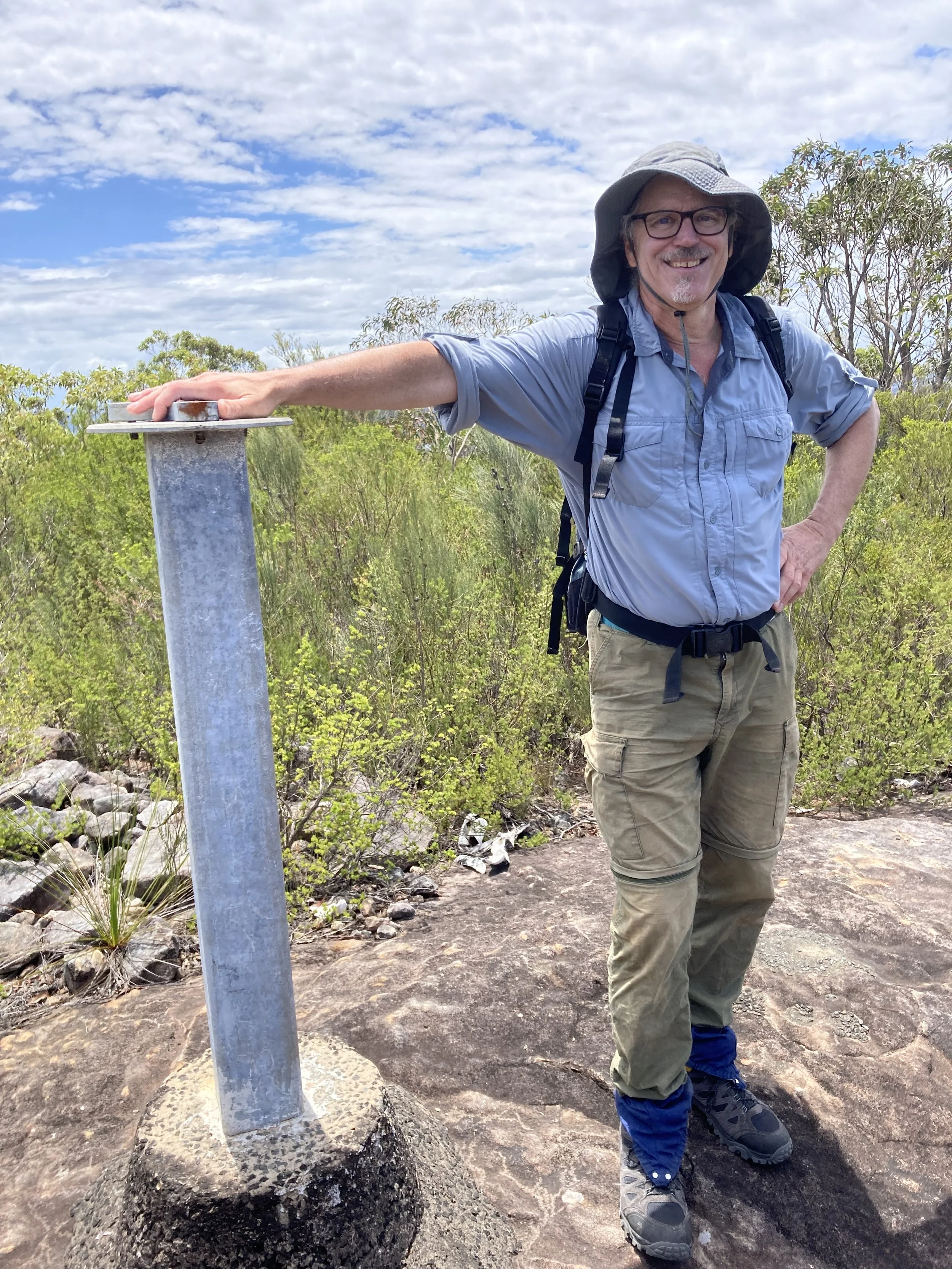
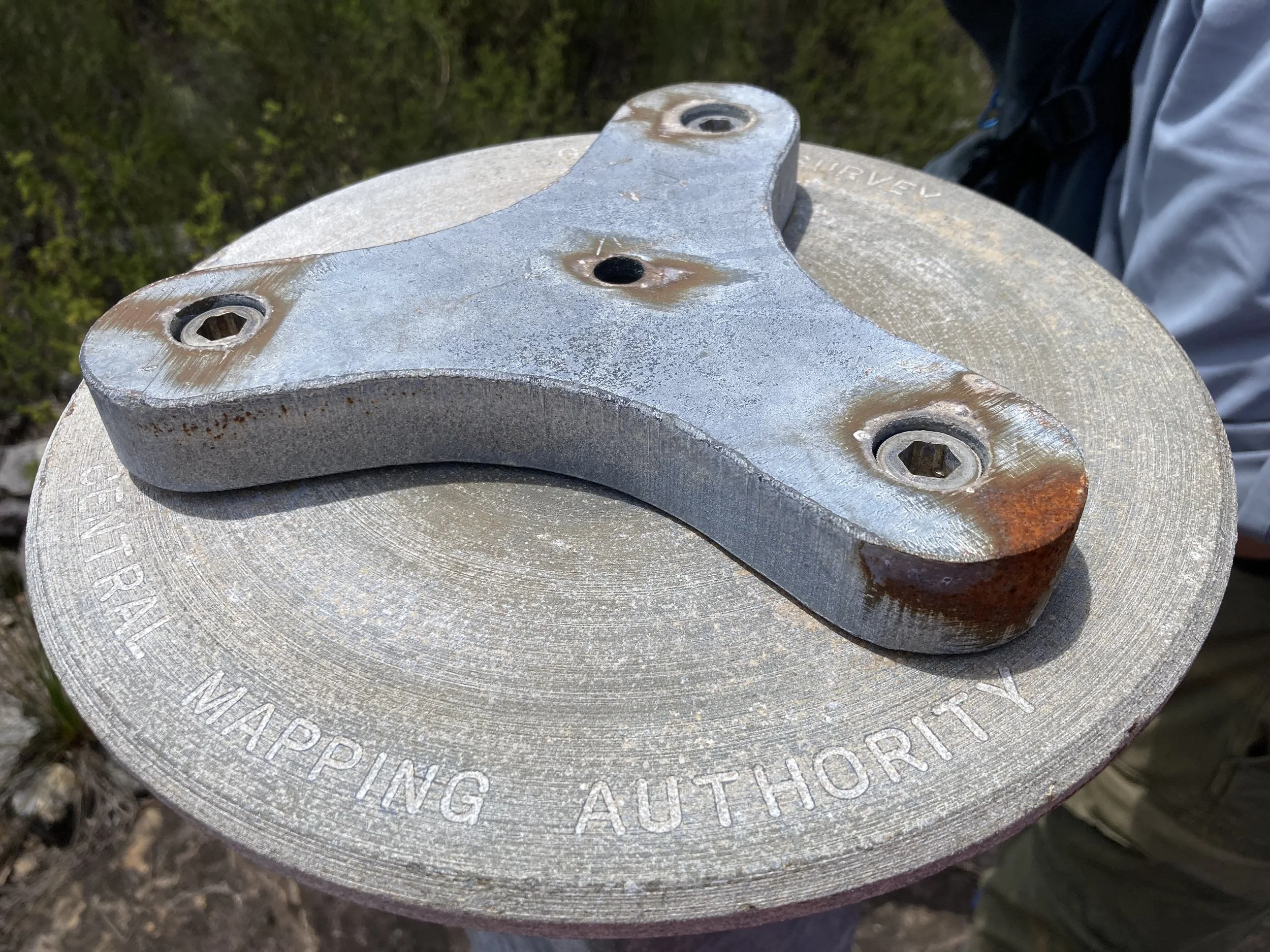
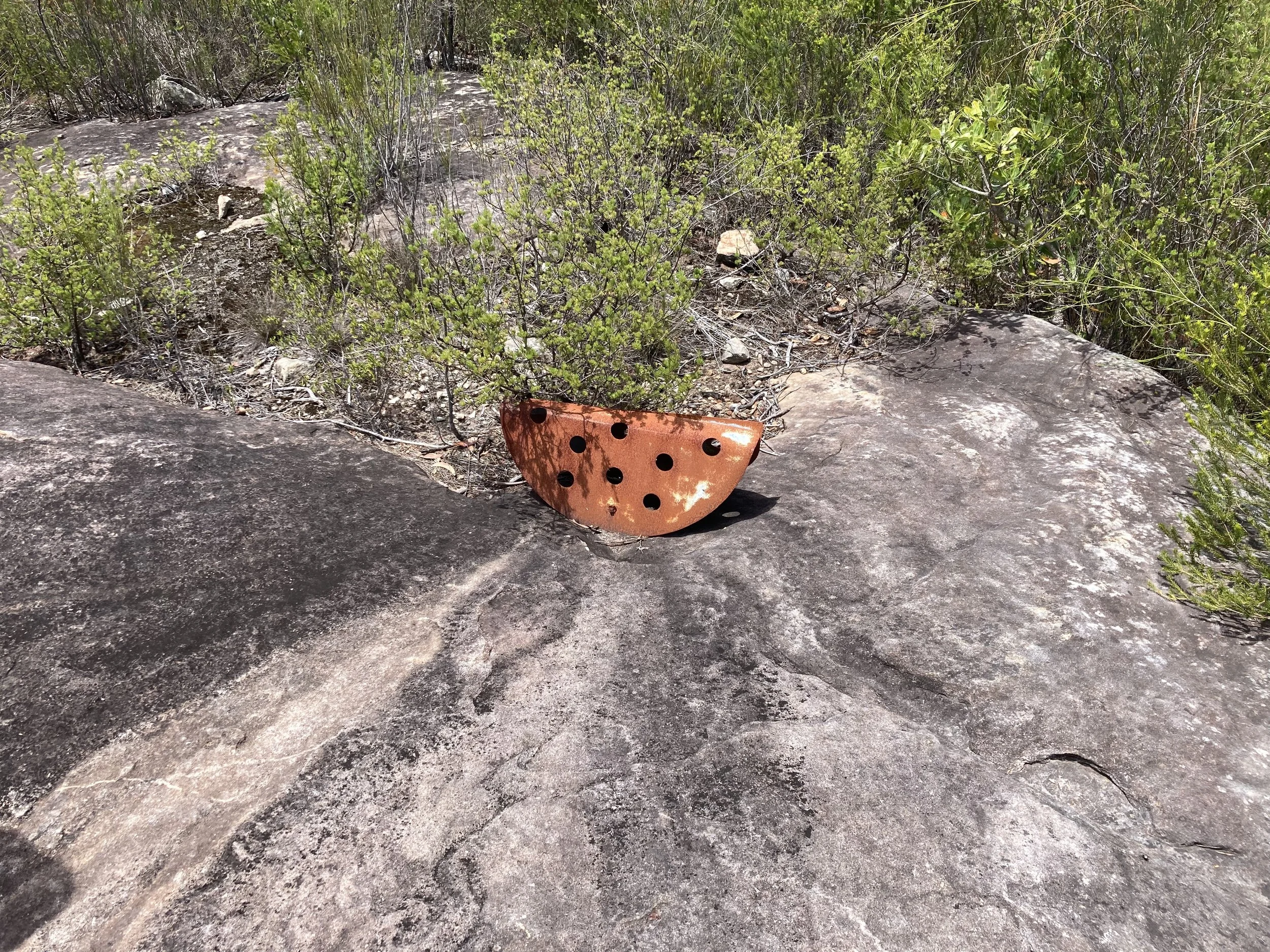
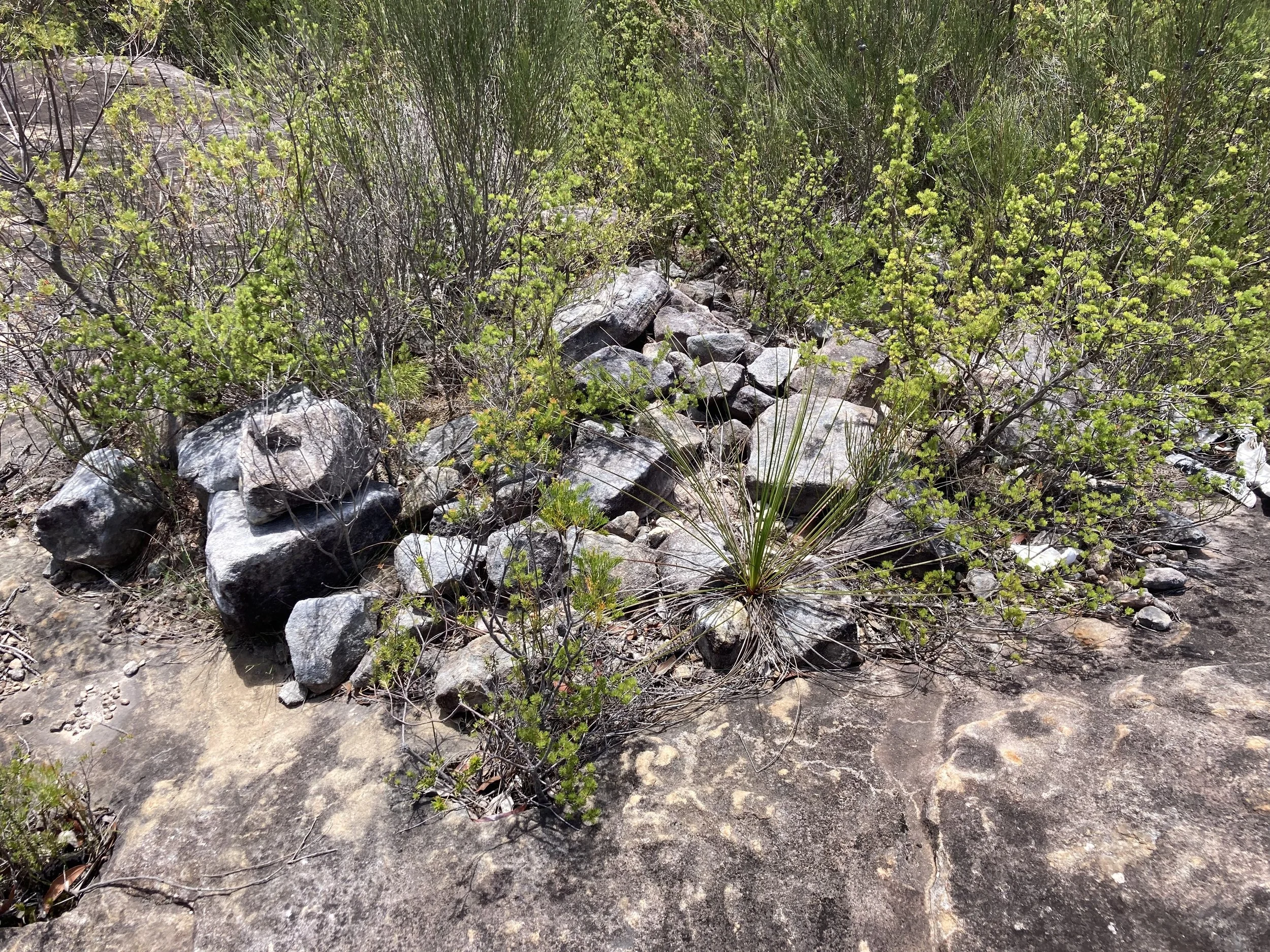
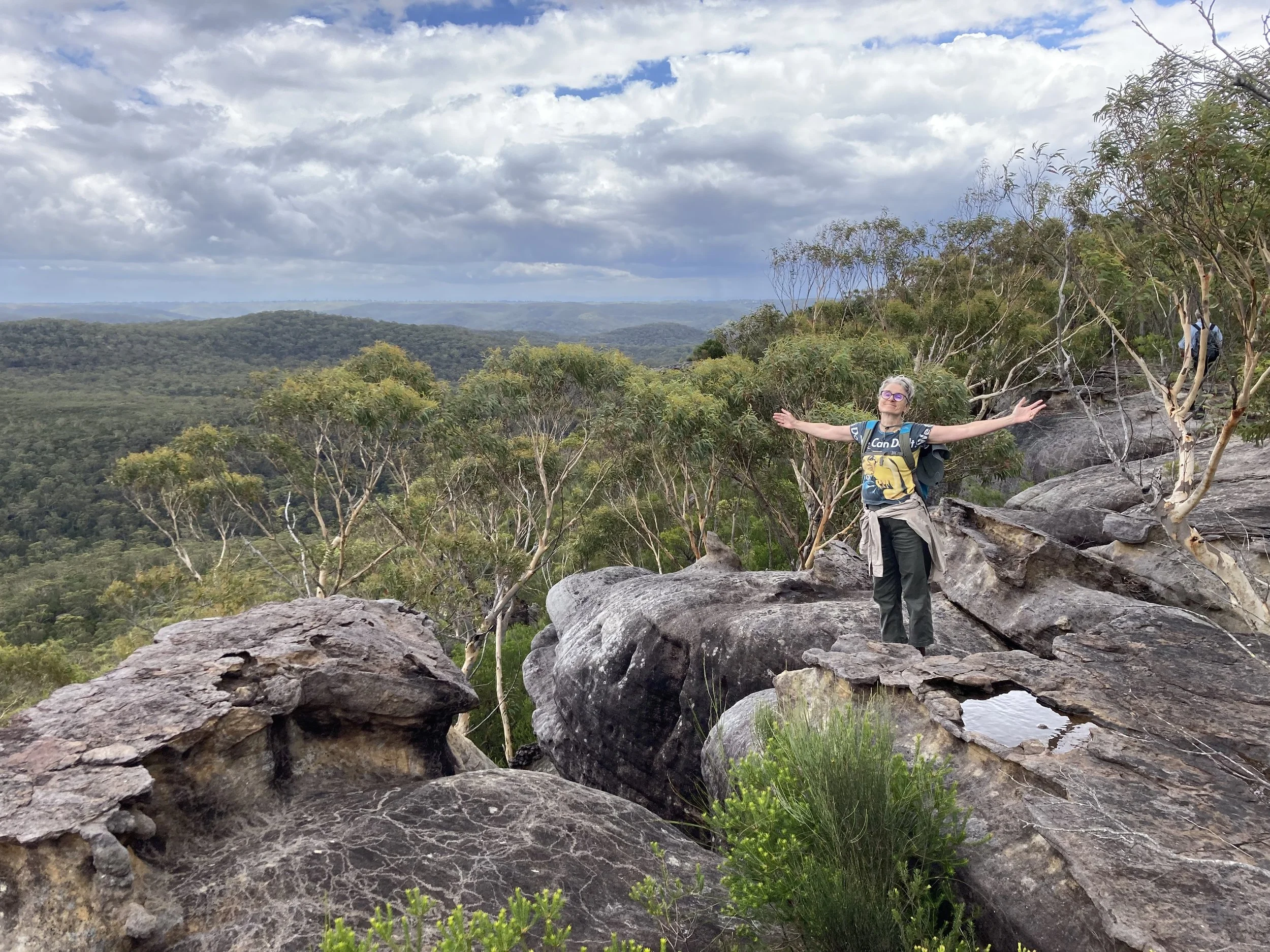
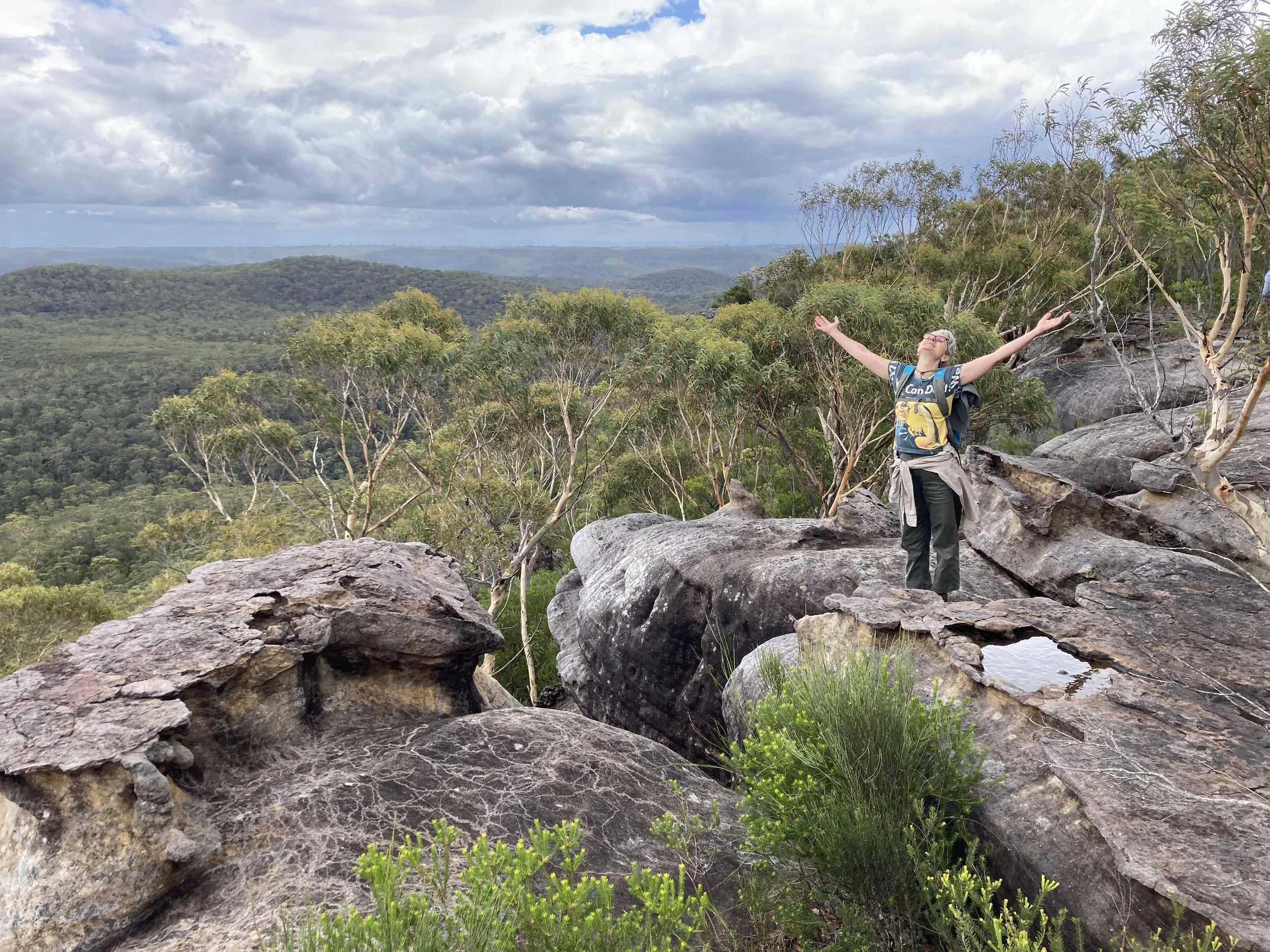
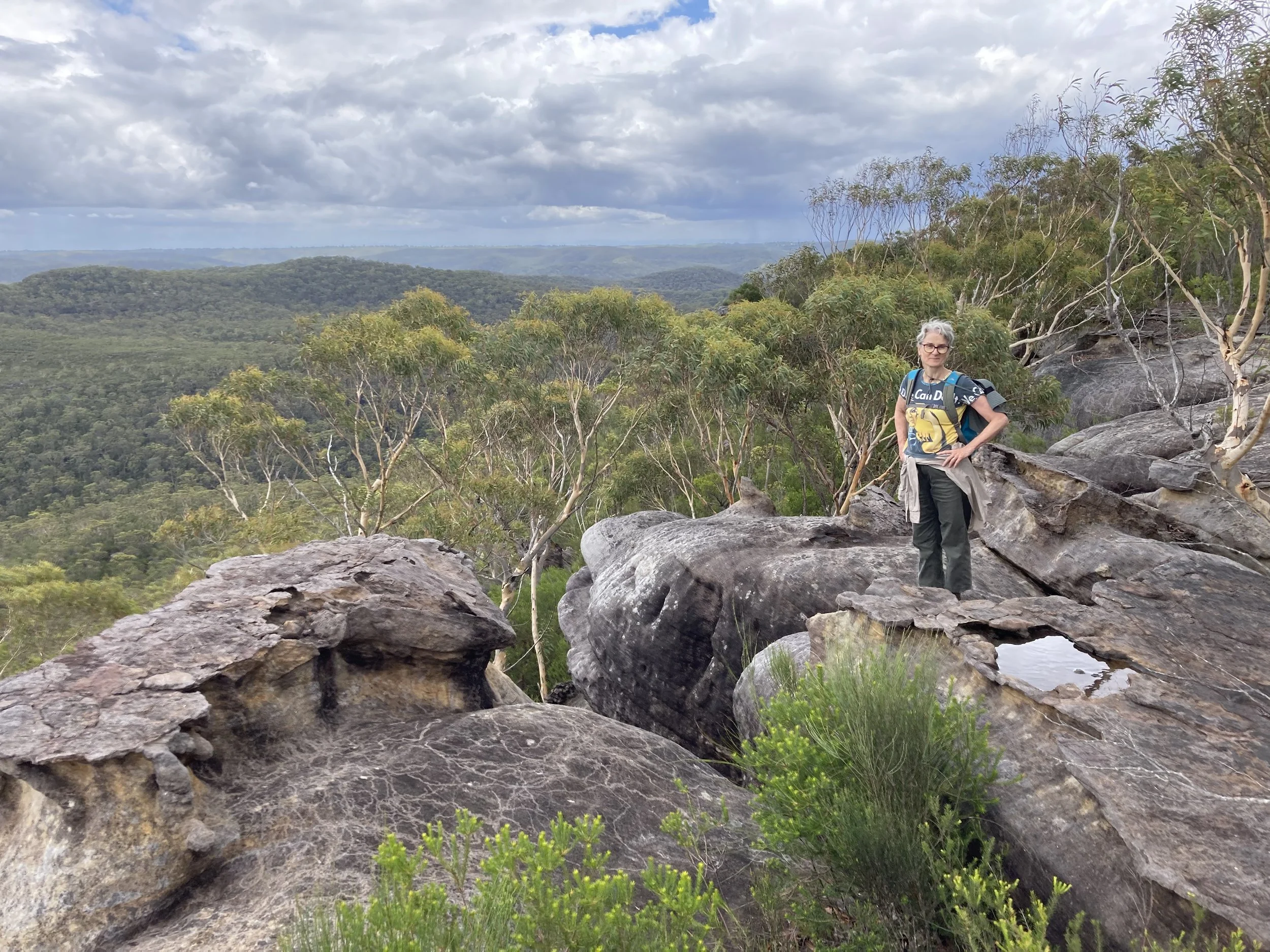
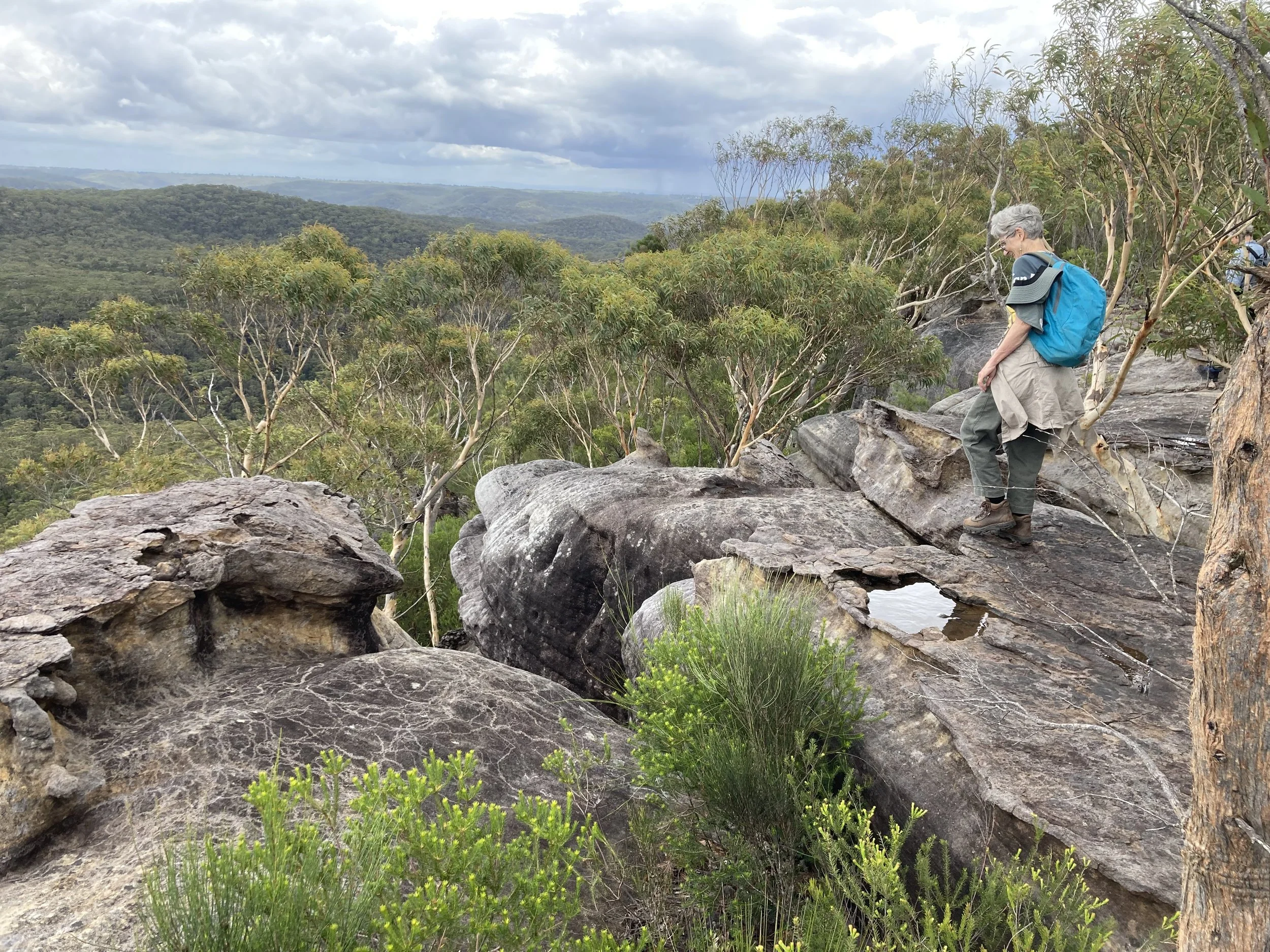
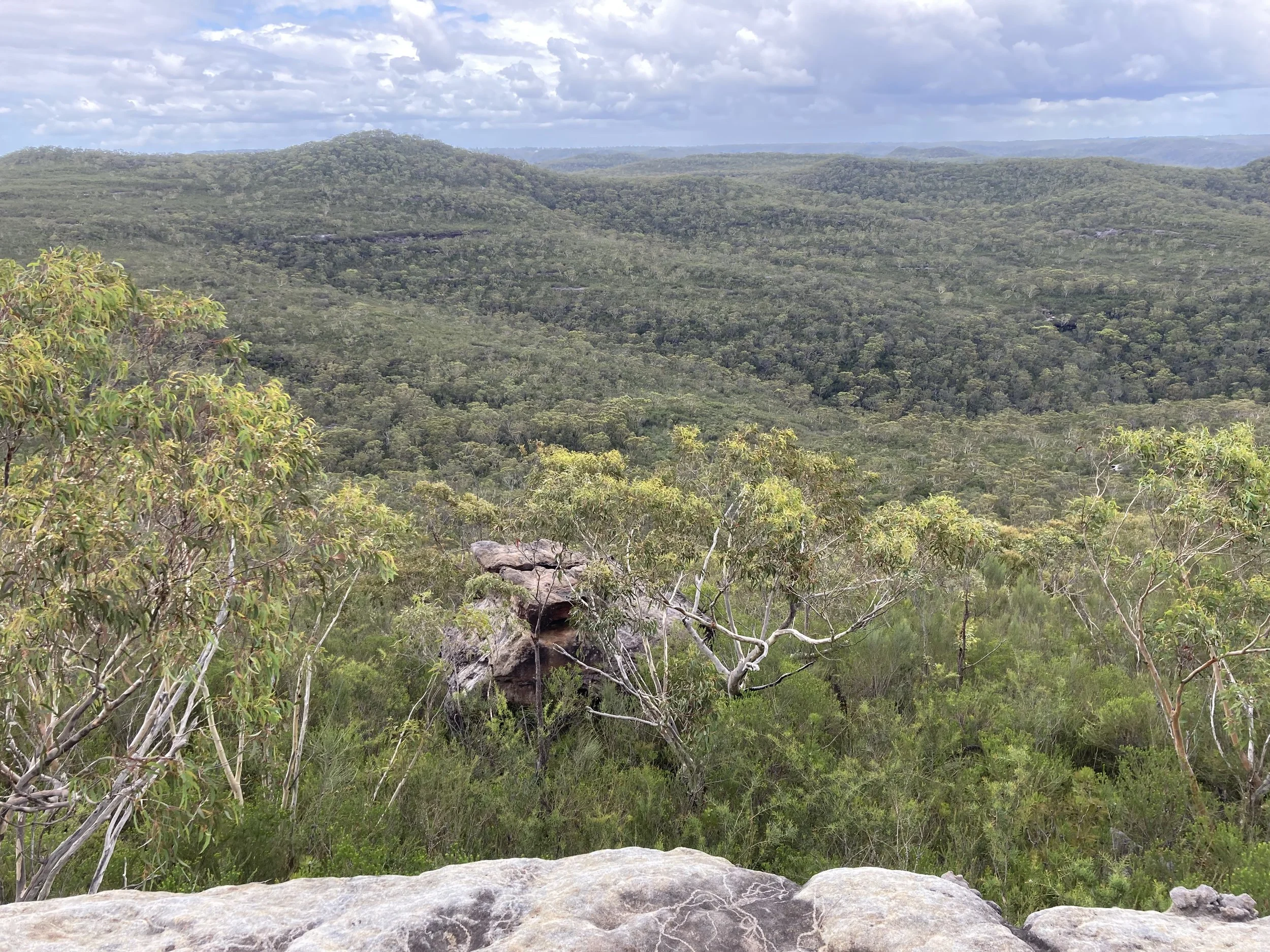
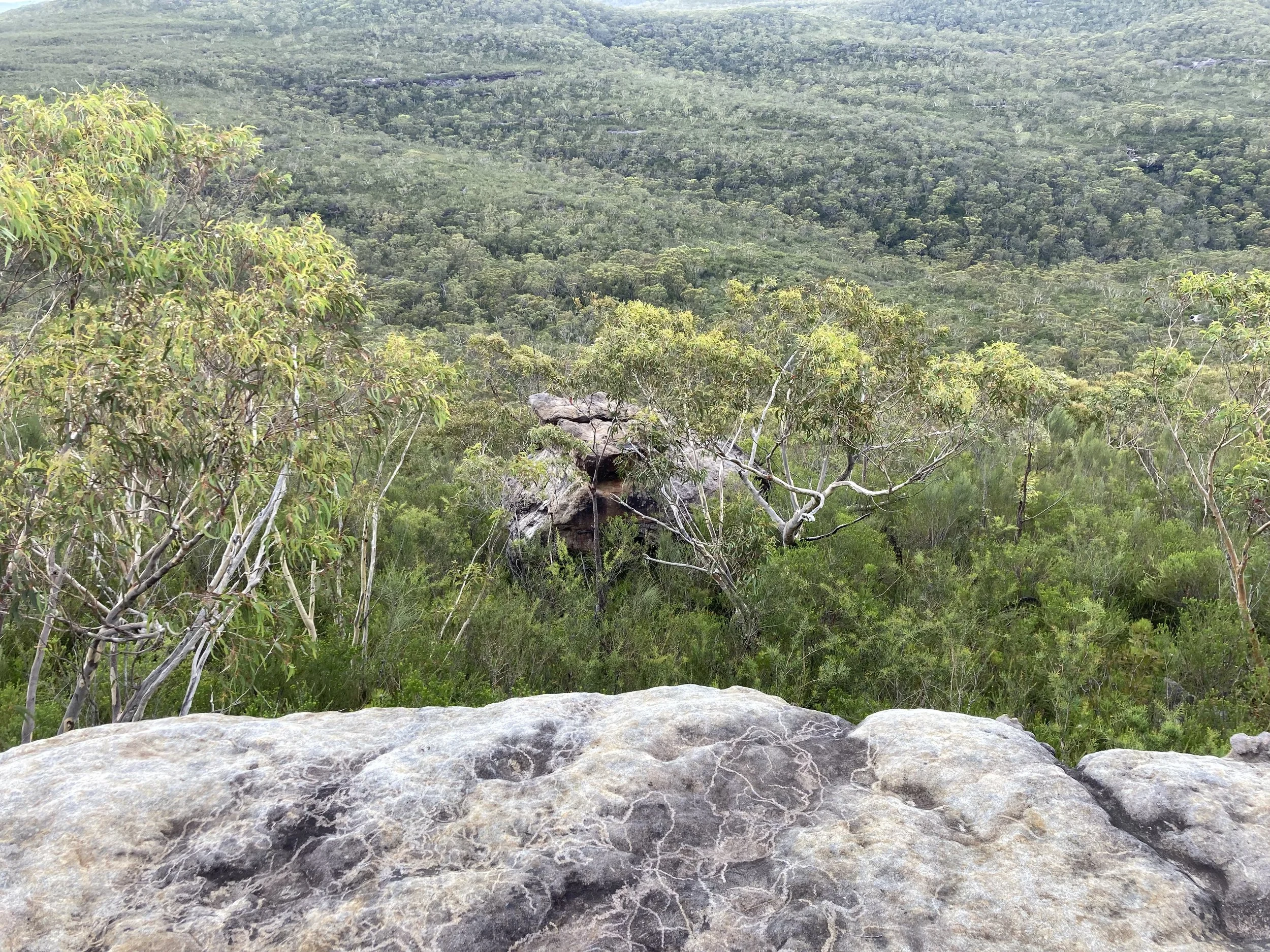
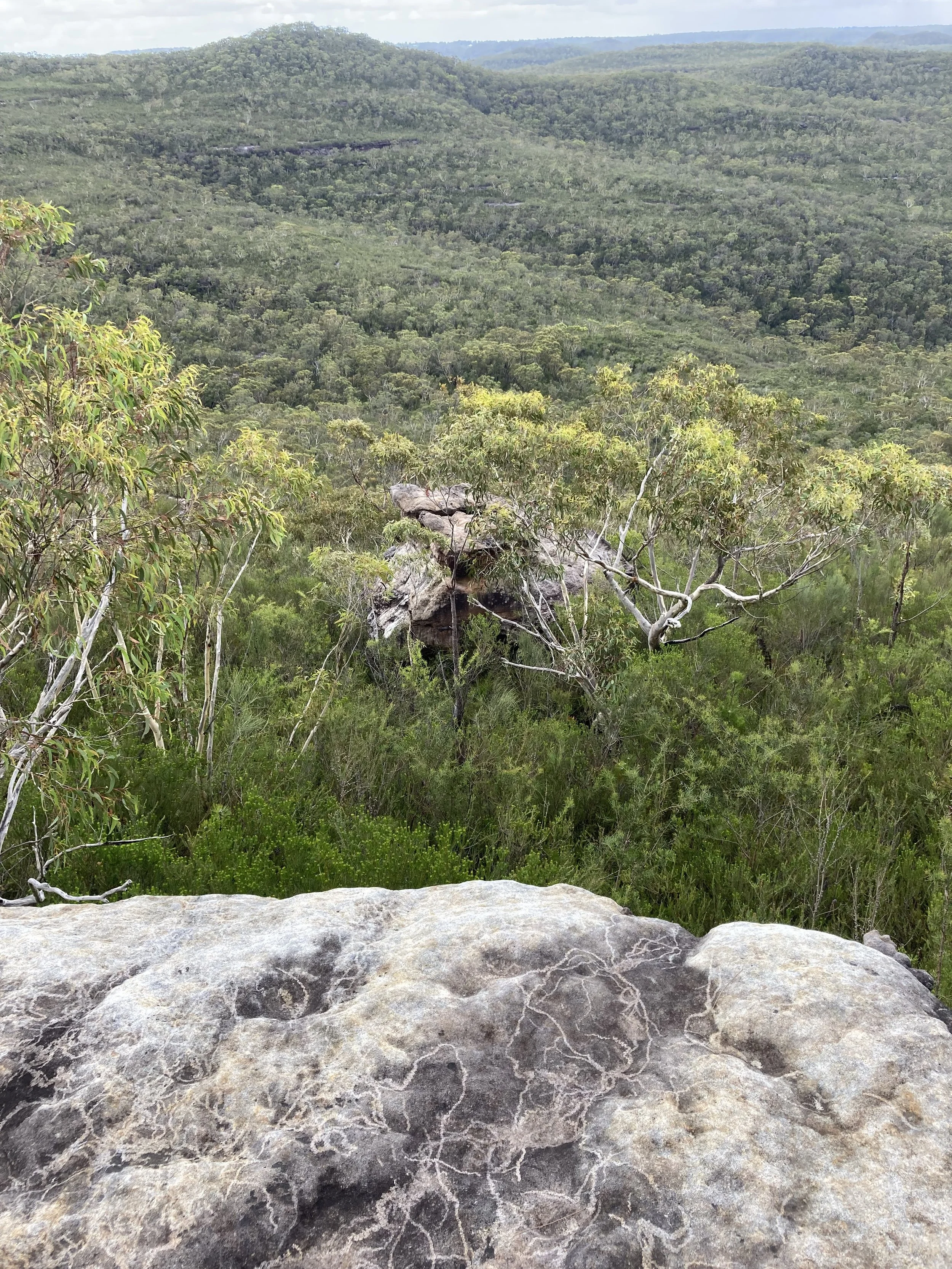
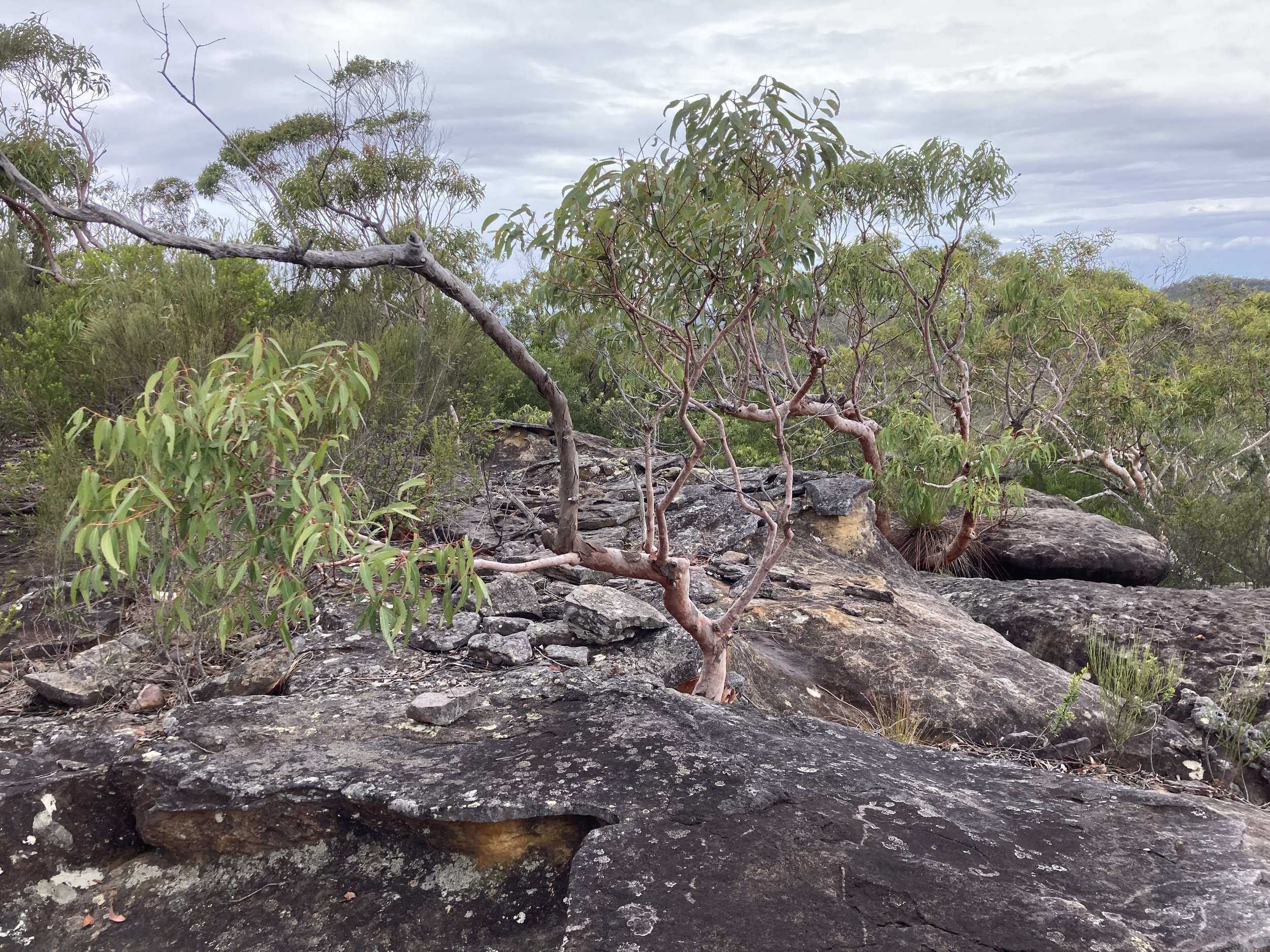

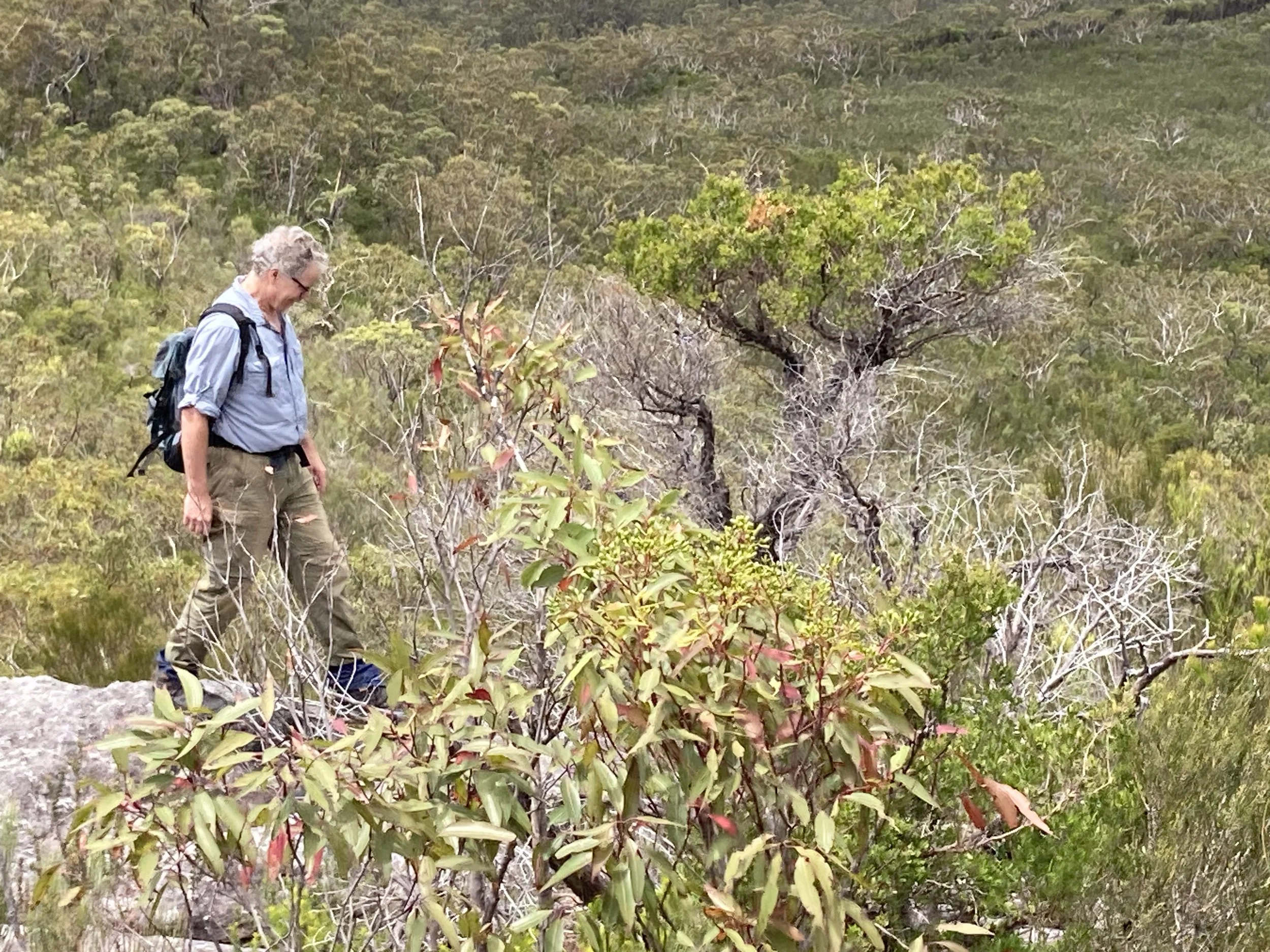
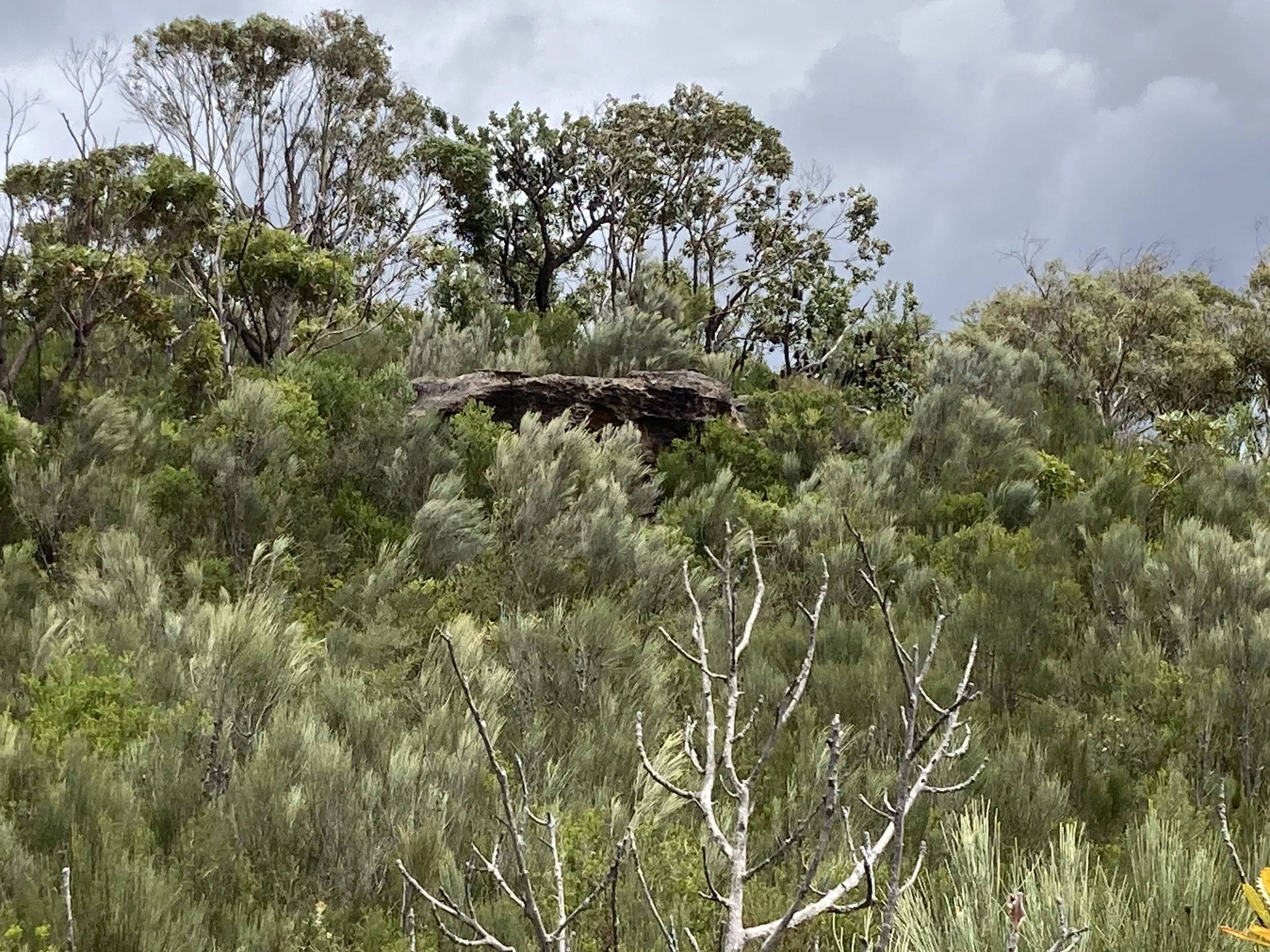
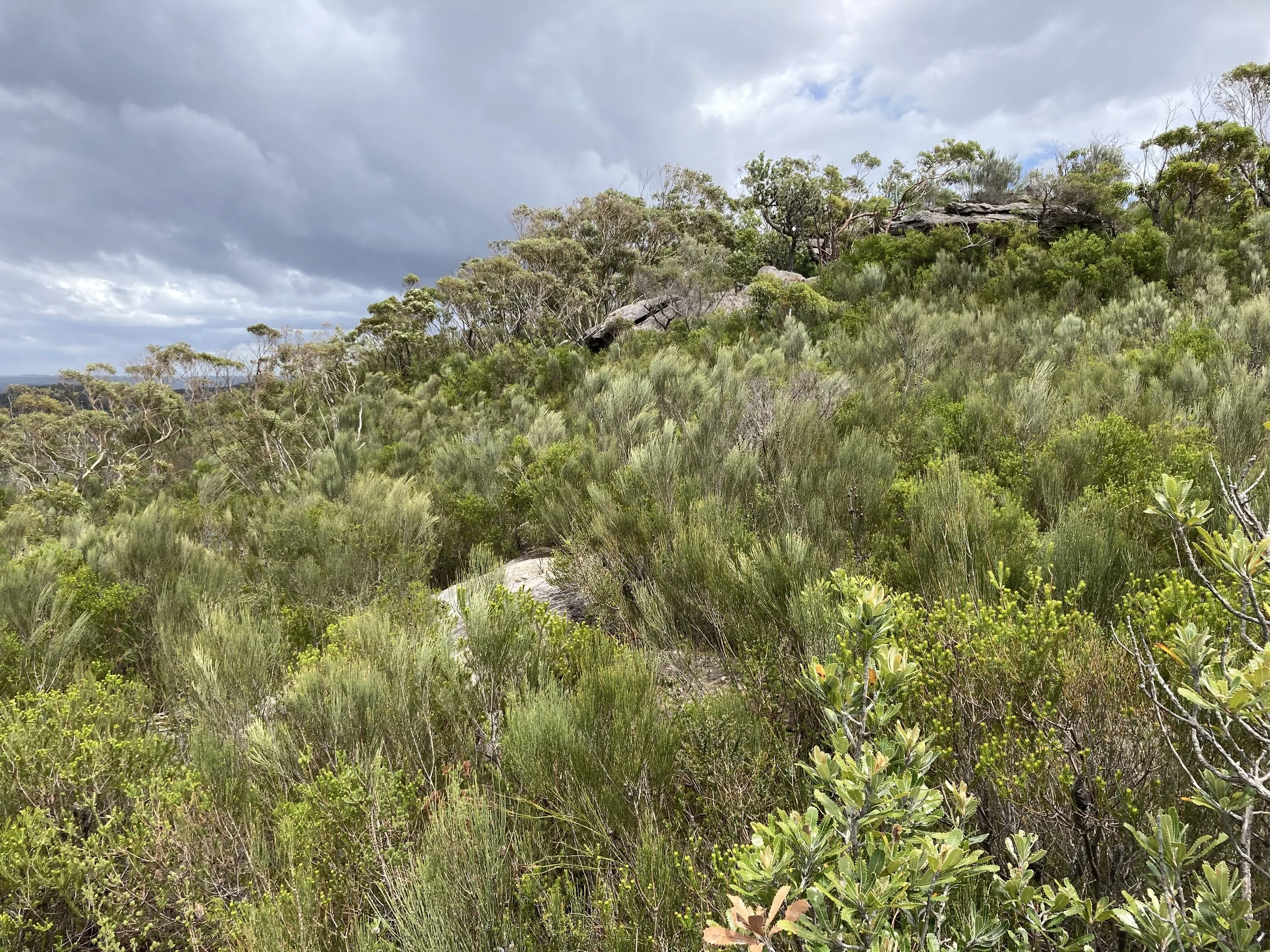
So far, no 3,000+ year old carvings or artwork. But as I told Patrick, it’s not about if we discover them or not (for me at least). The adventure is in the seeking, not the finding. Then Patrick shared an idea that I had to stop and write down.
He said, “Every act of creation is an act of destruction.” And then he went on to give examples. To build a building, we must first cut down all the trees, or cut through mountains to mine the metals to make a steel structure. To make paint, we must destroy the plants or other elements used to make paint. That really had me thinking about the balance of destruction and creation – the eternal yin yang of humanity.
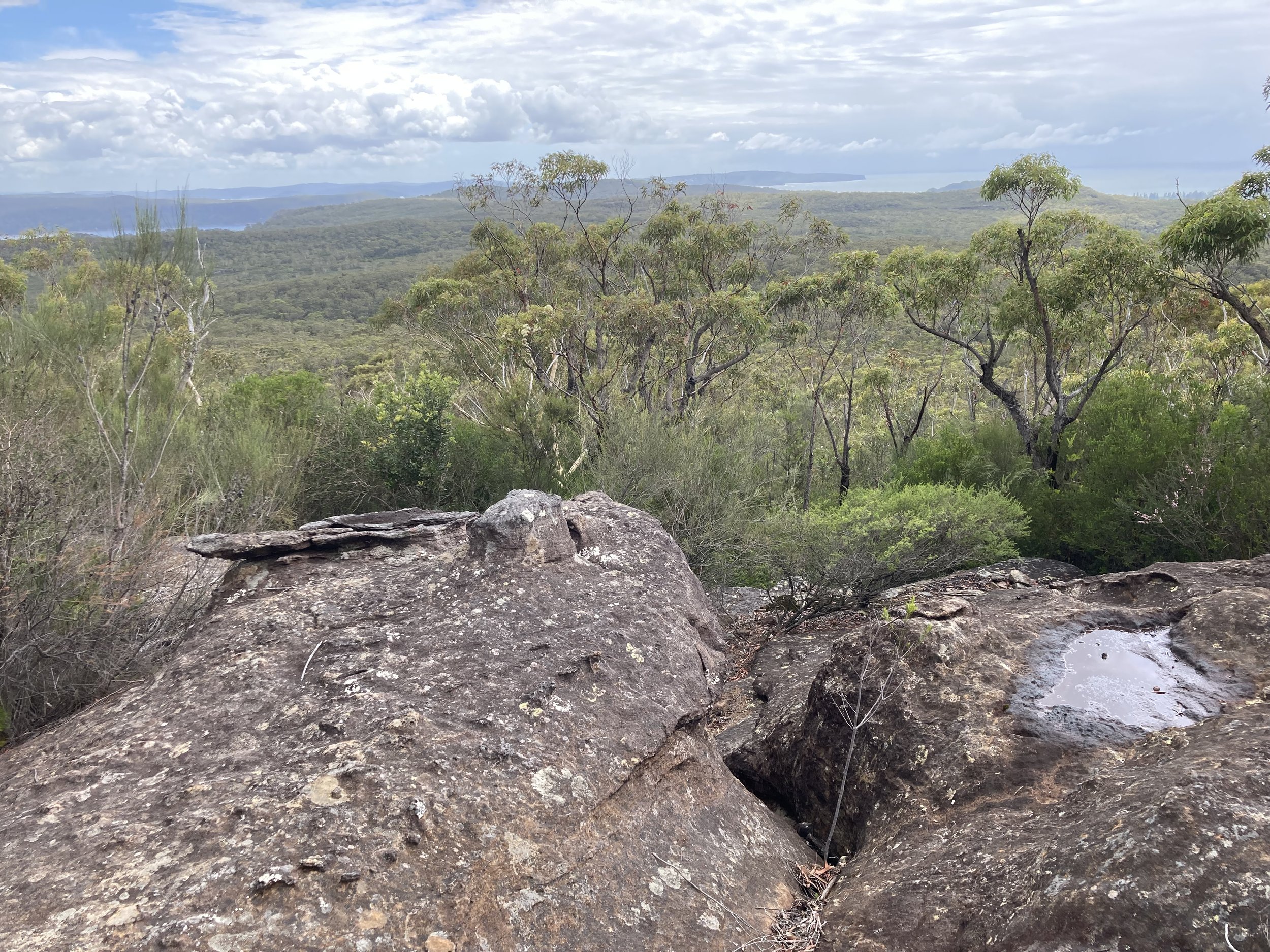
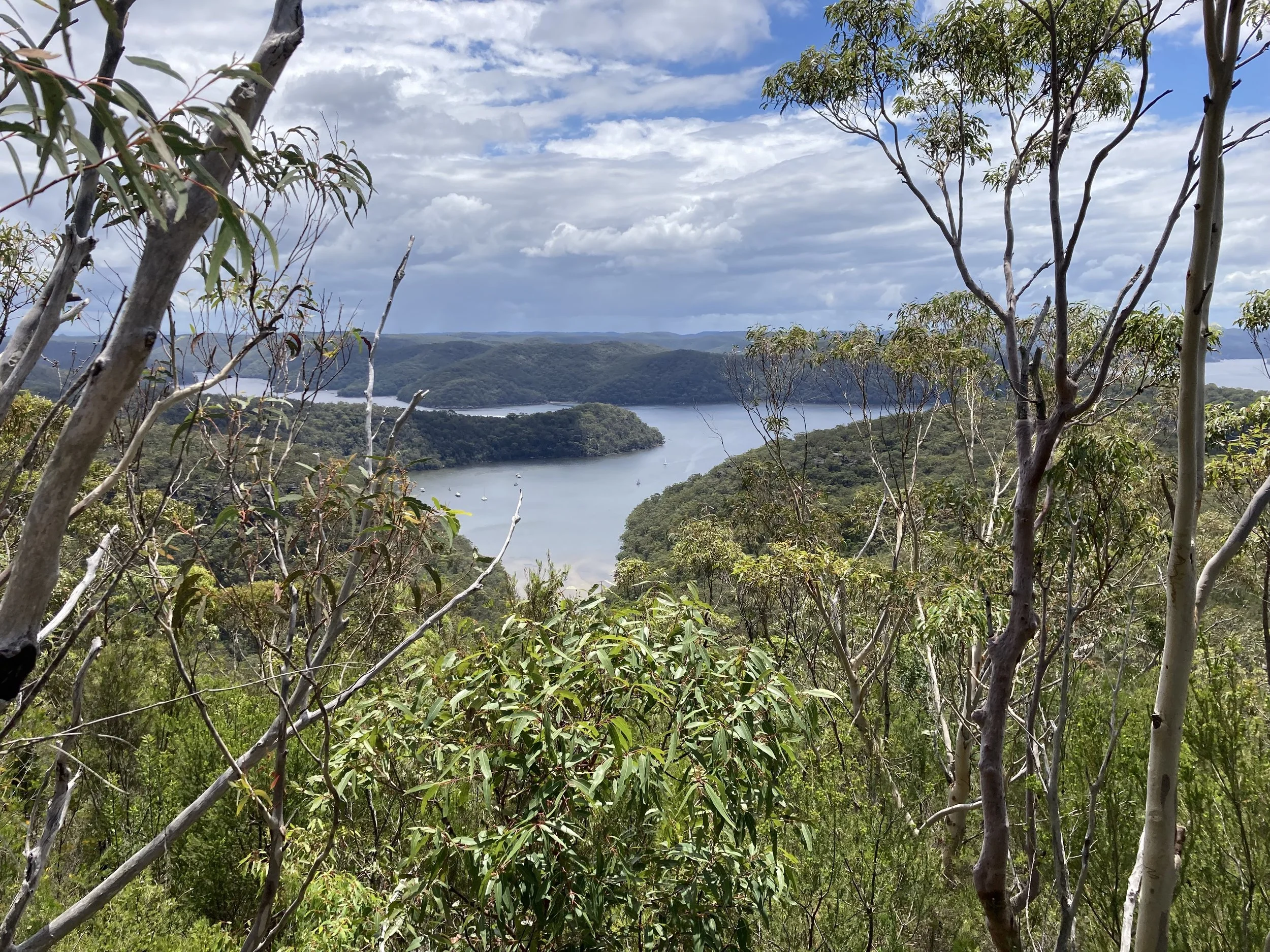
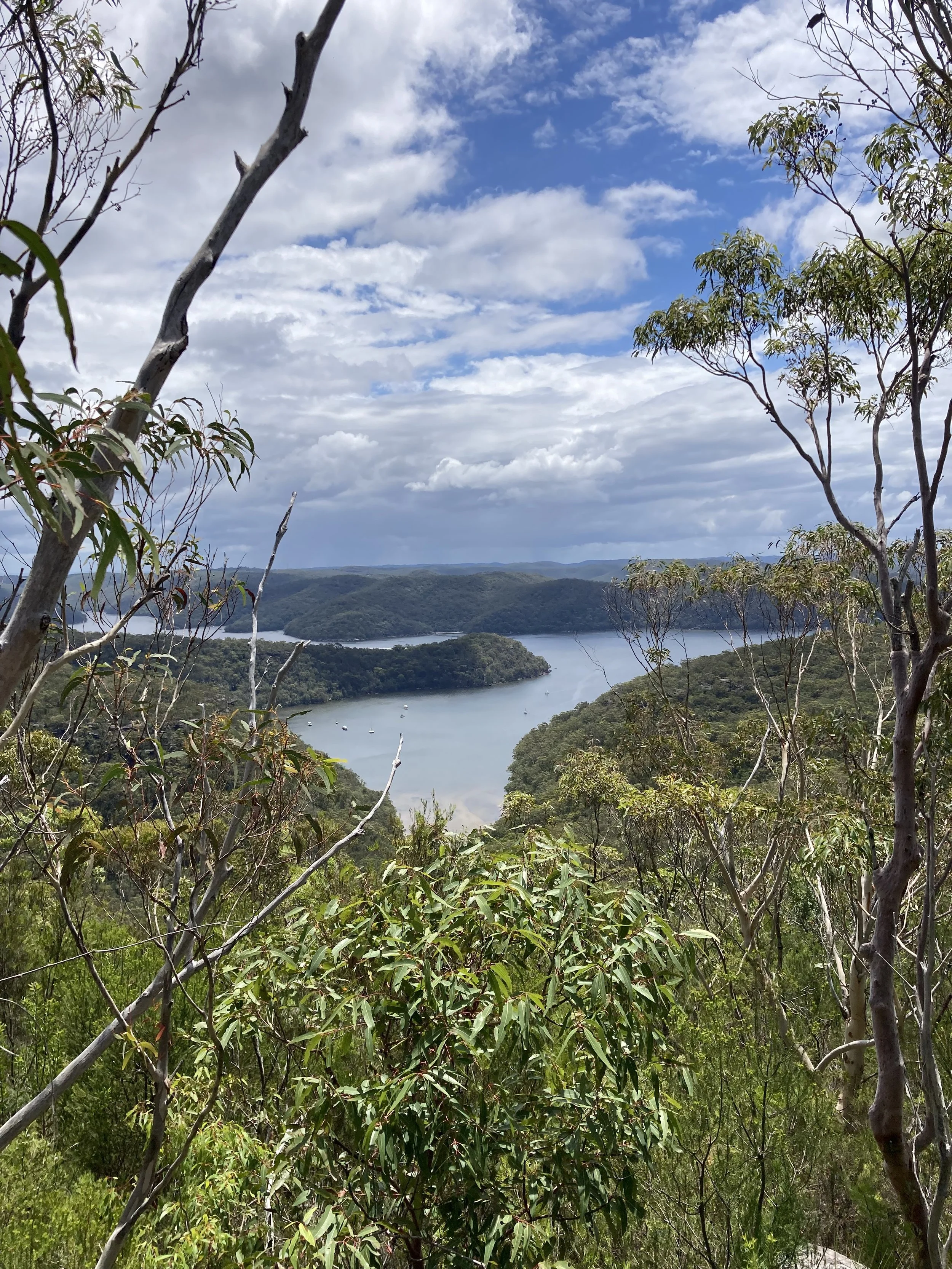
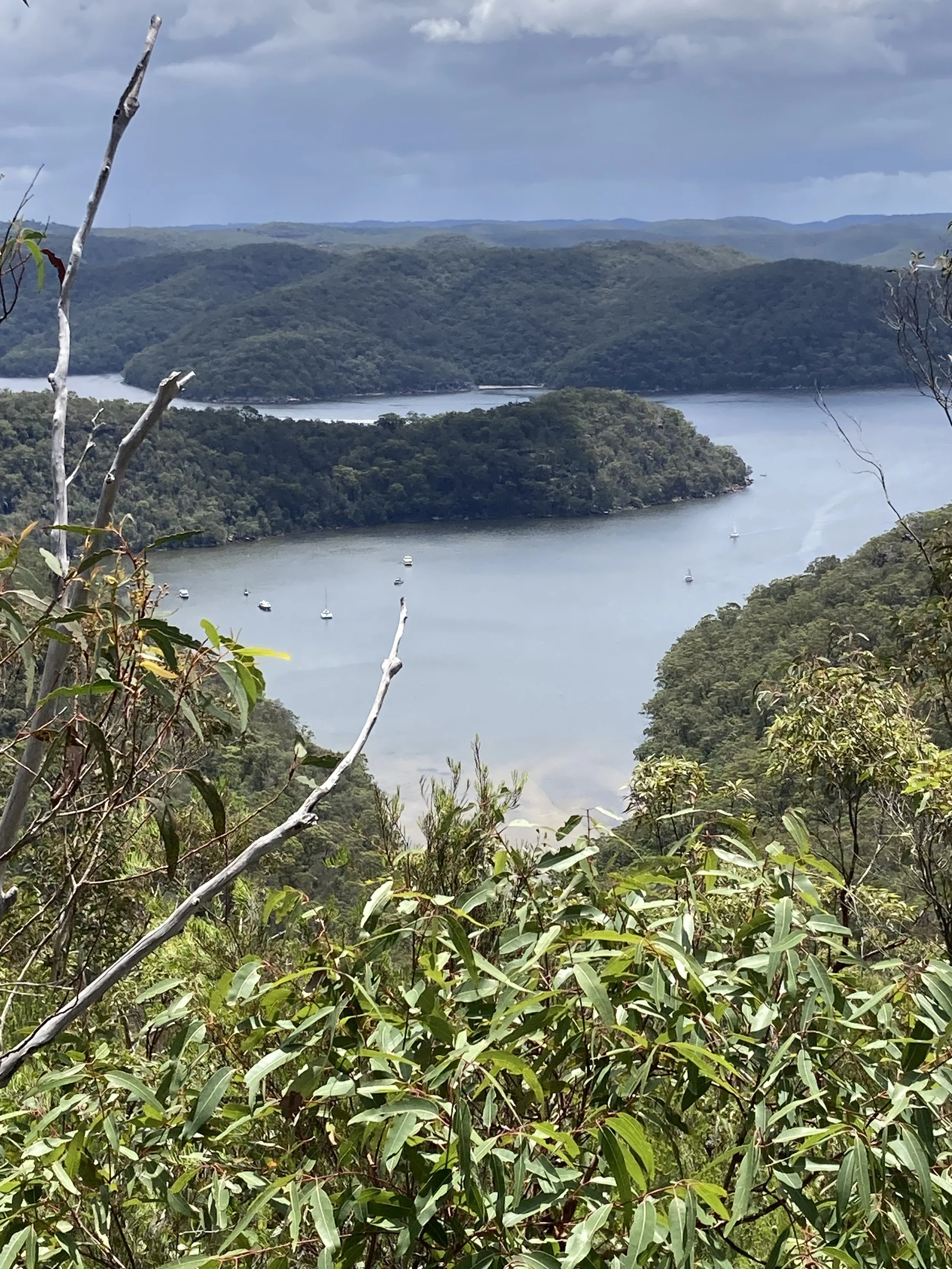
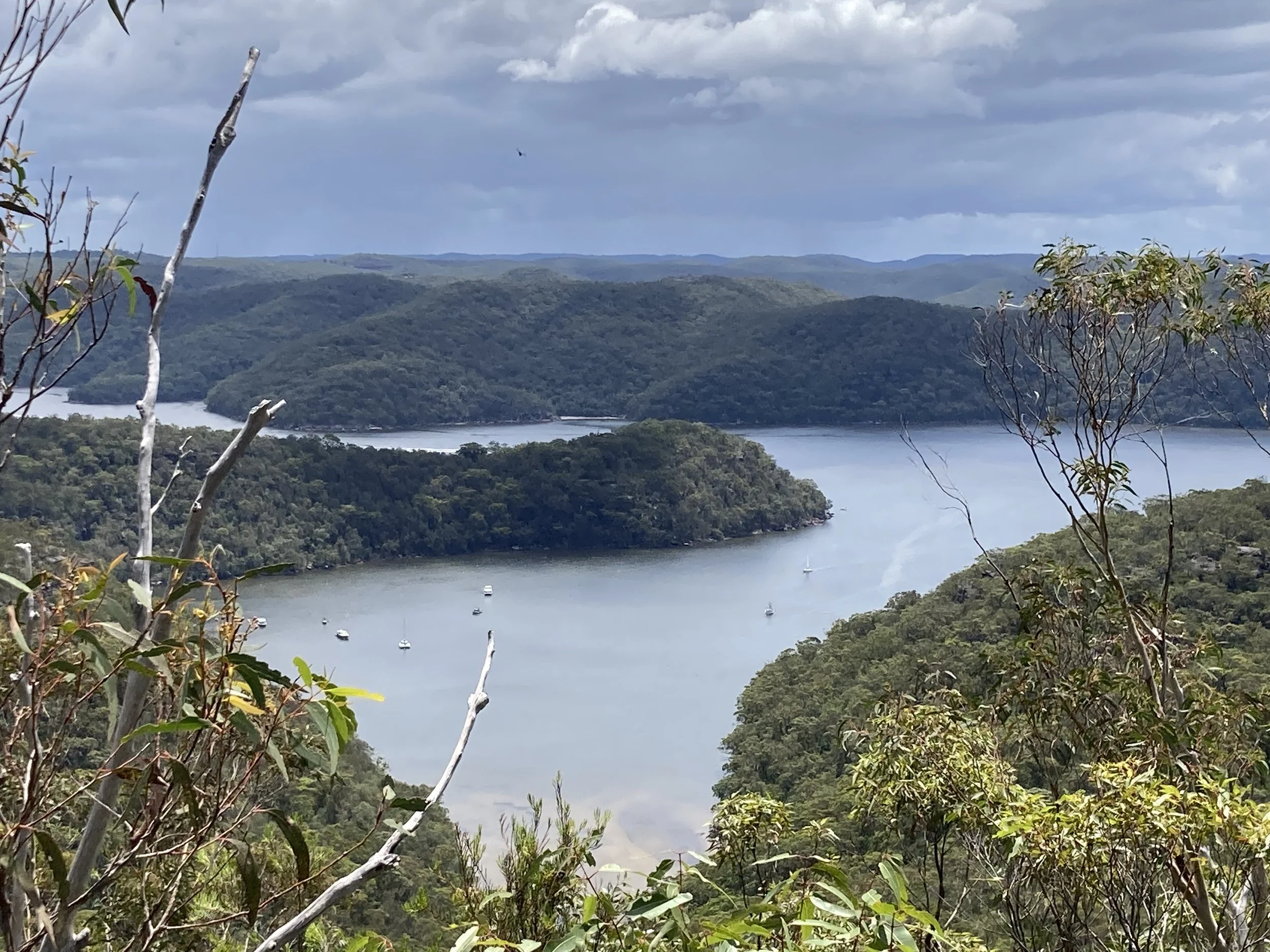
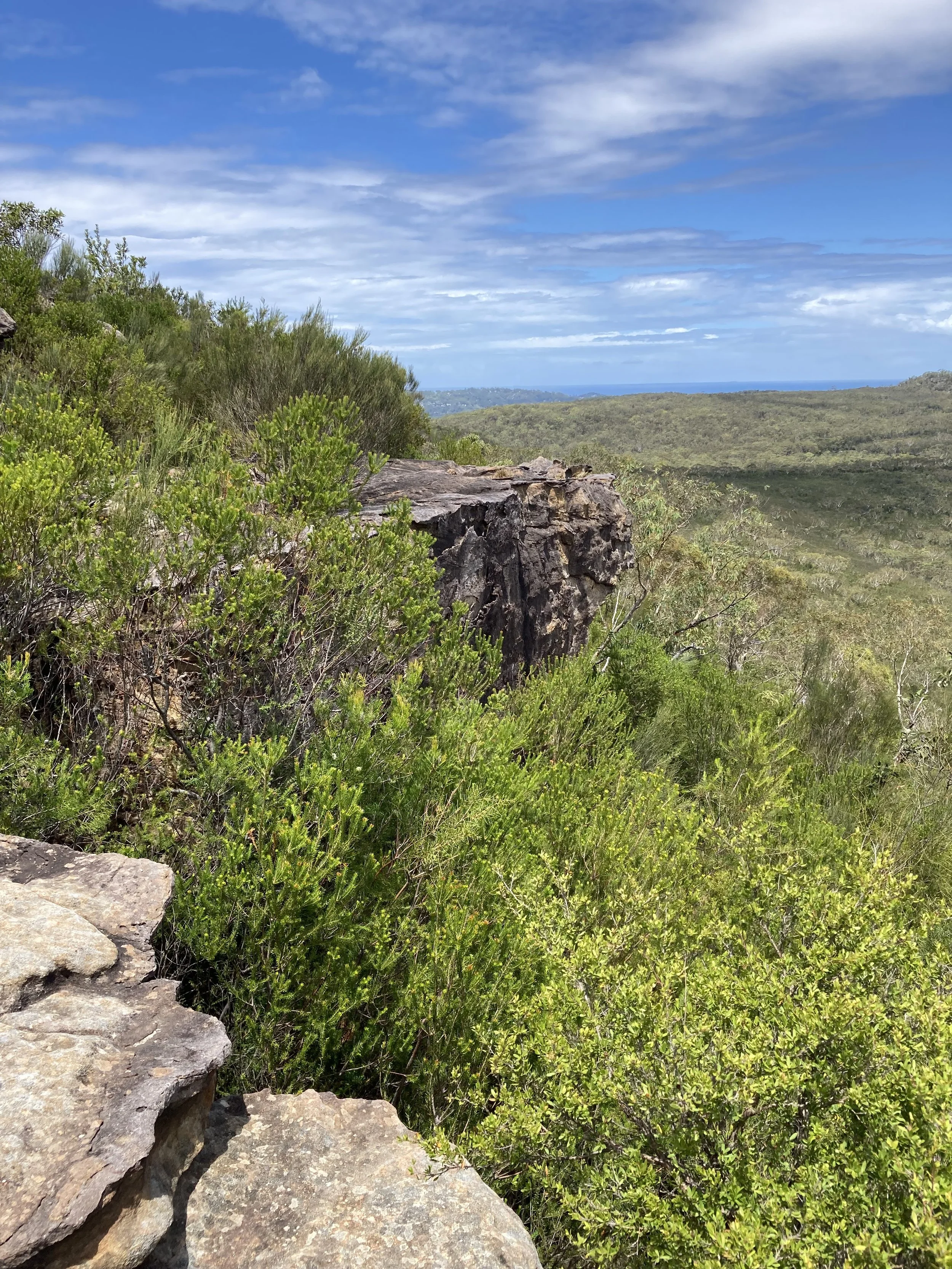
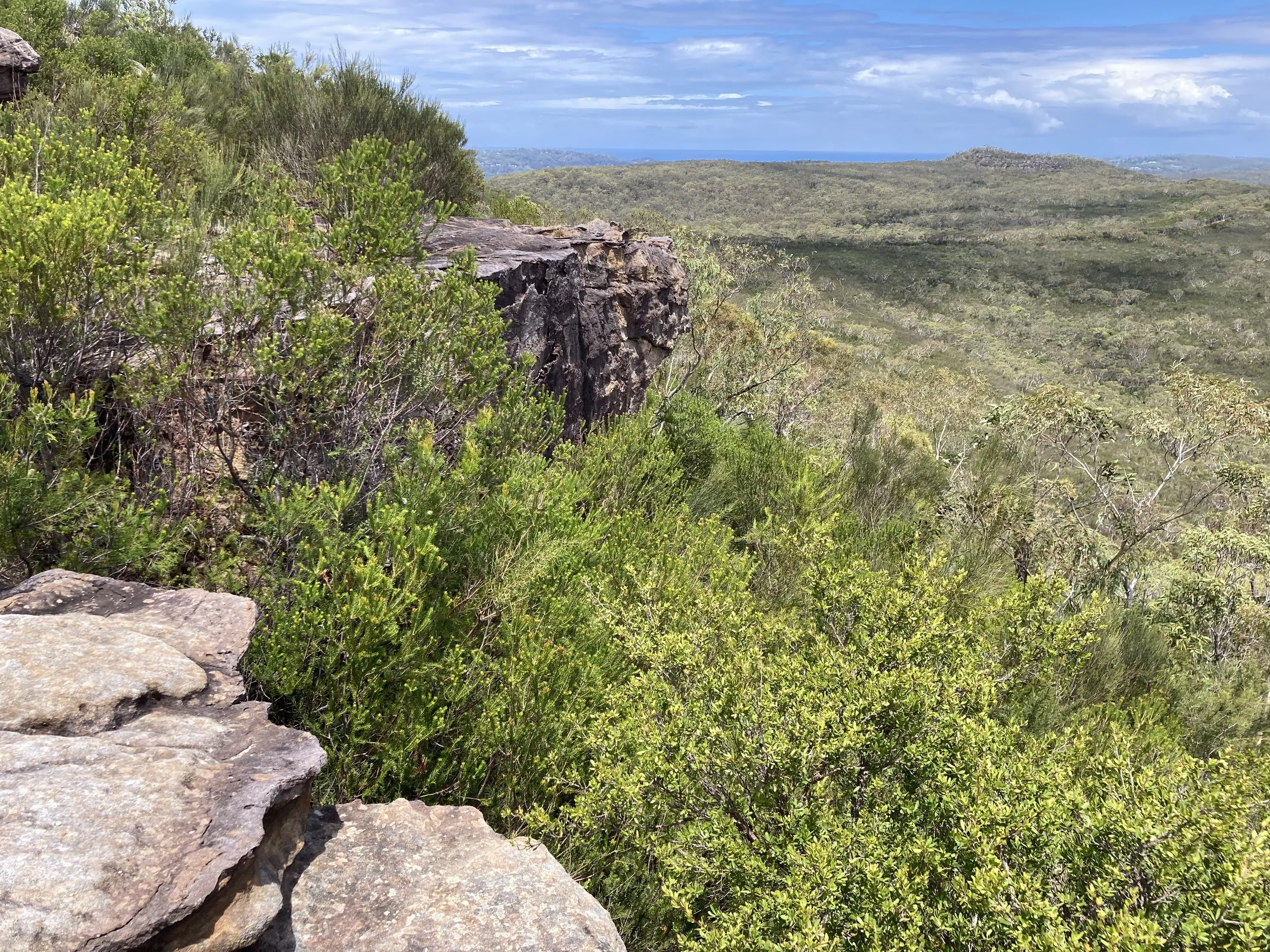
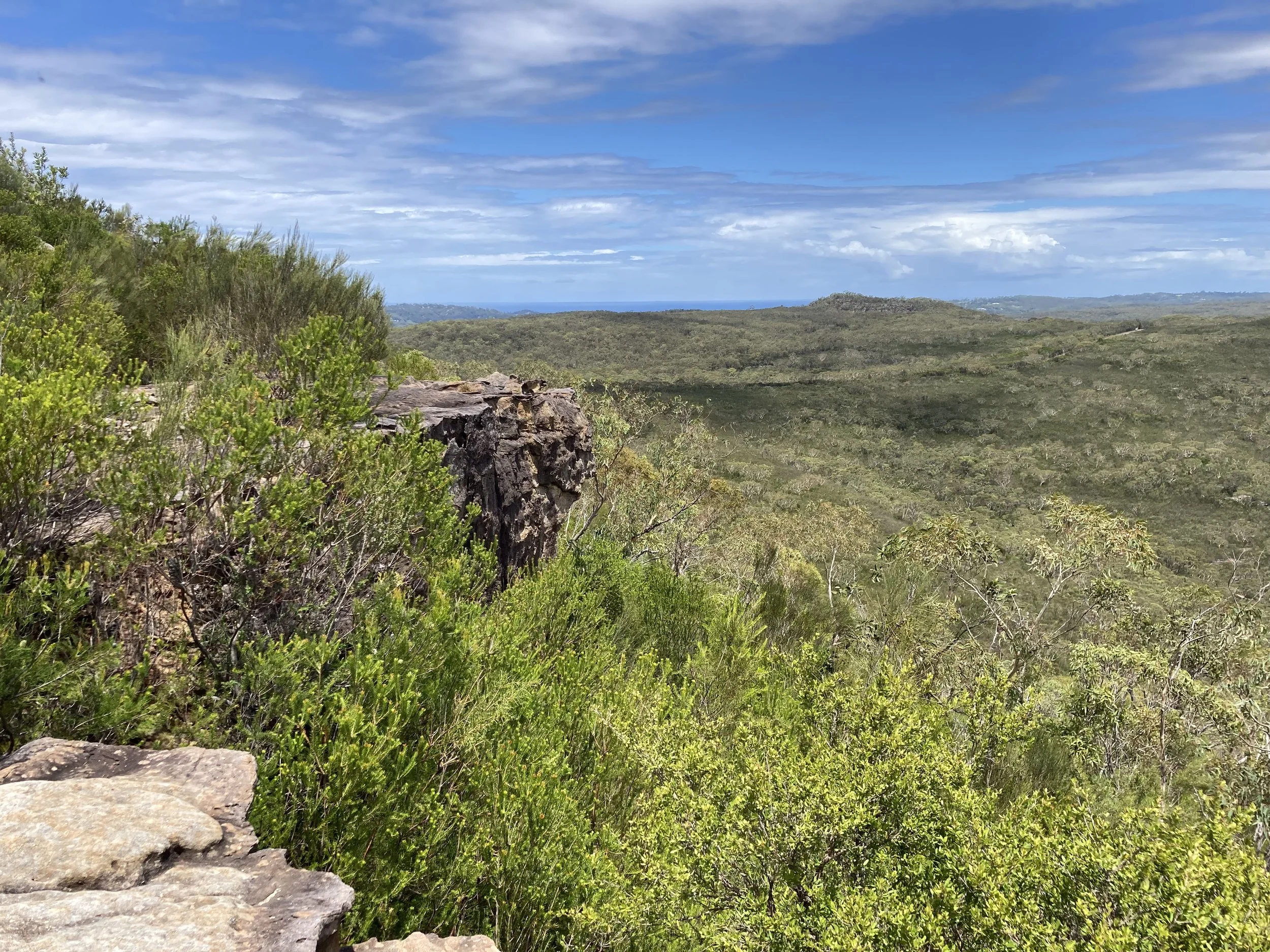
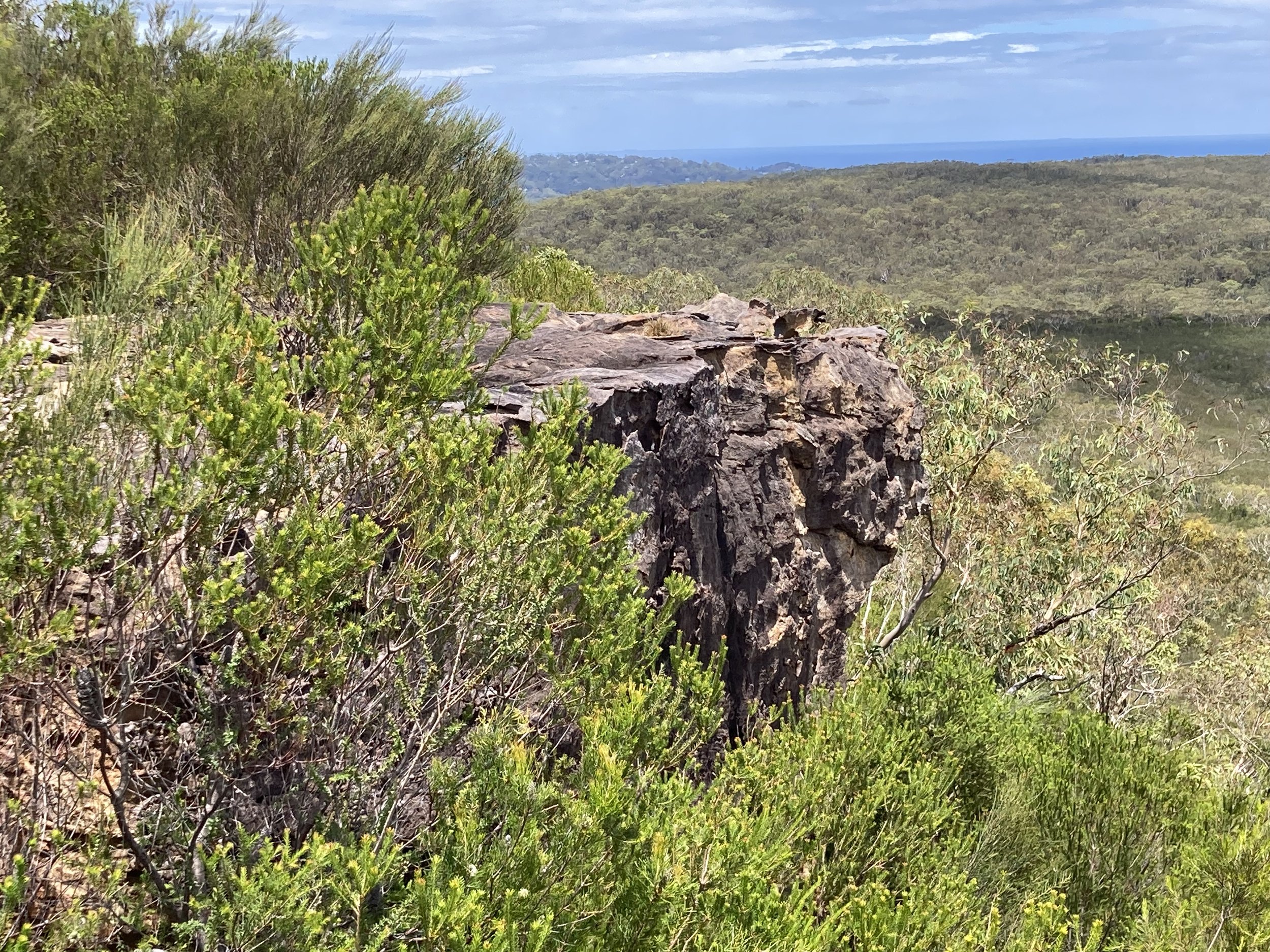
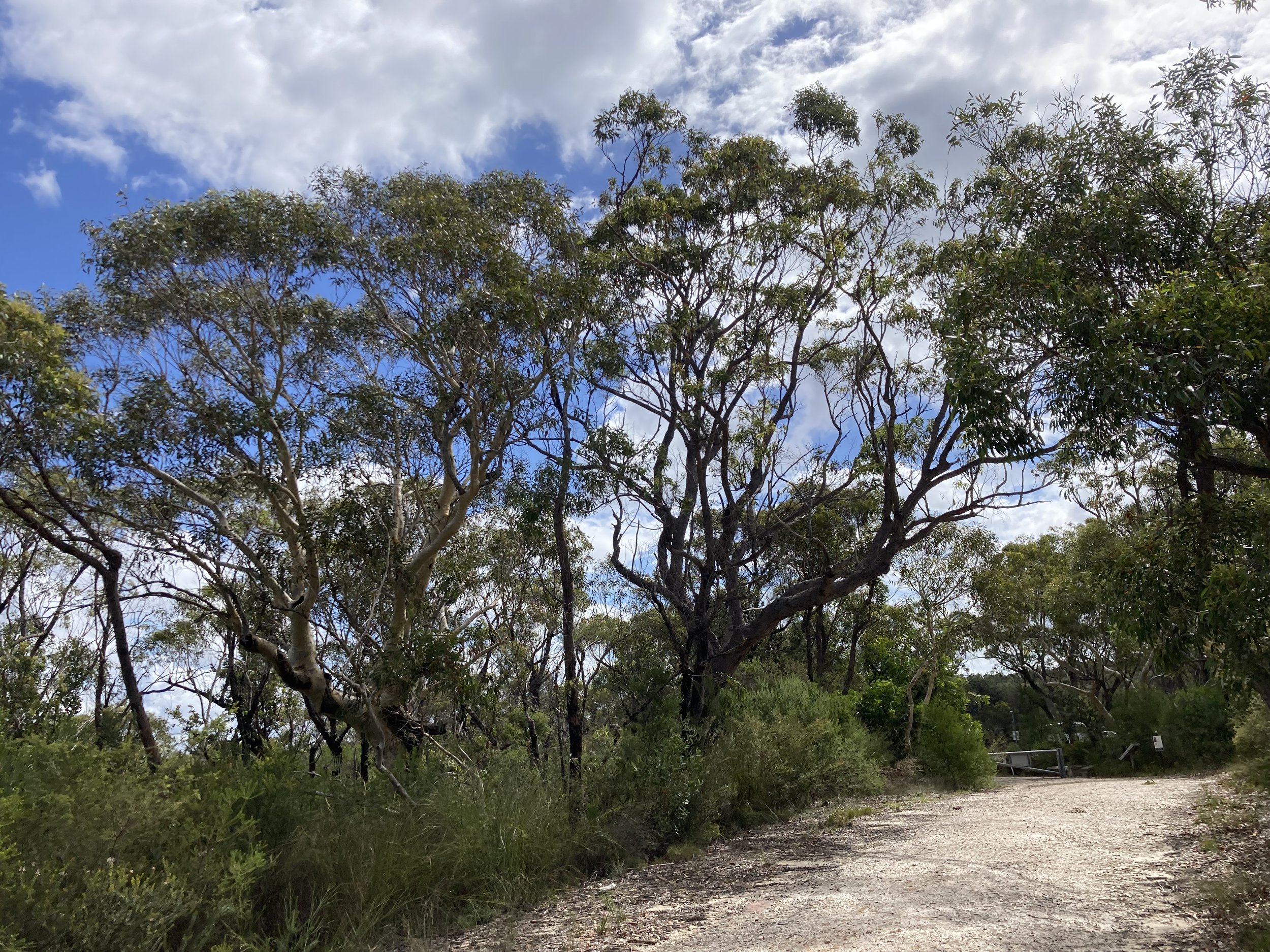
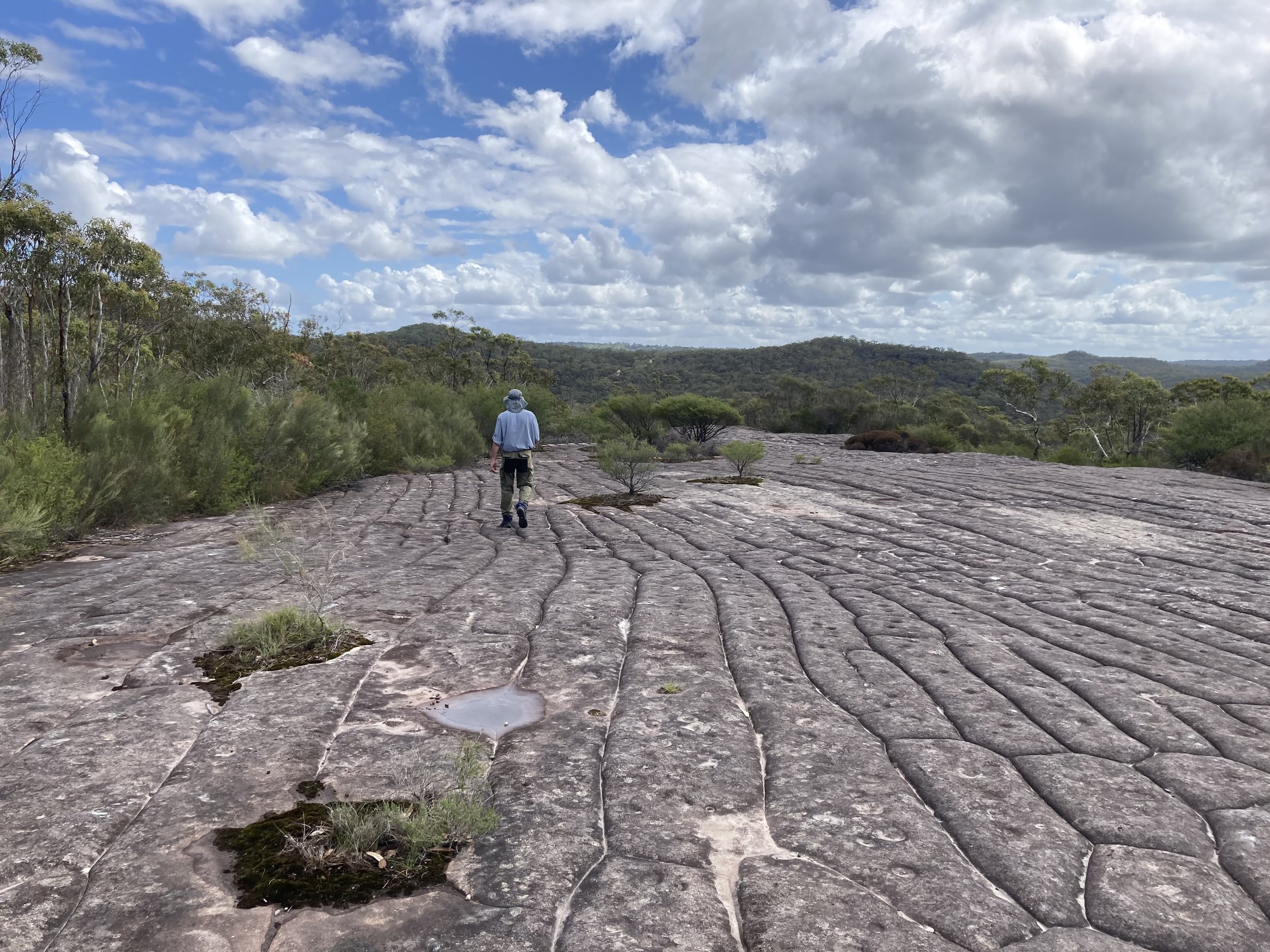
So then we stopped for lunch with a beautiful lookout to the ocean. Here again, I love the deep, rich green contrasting with the dark grey of the rocky mountain and again with the white clouds and blue sky. All of it feels like rich beautiful painting; nature’s artwork just for us to admire. So while we didn’t come across any ancient Aboriginal art in this particular area, there was plenty of beauty to admire everywhere we looked. There was also plenty to ponder. Like why were there uniform rippled on the stand stone boulders?
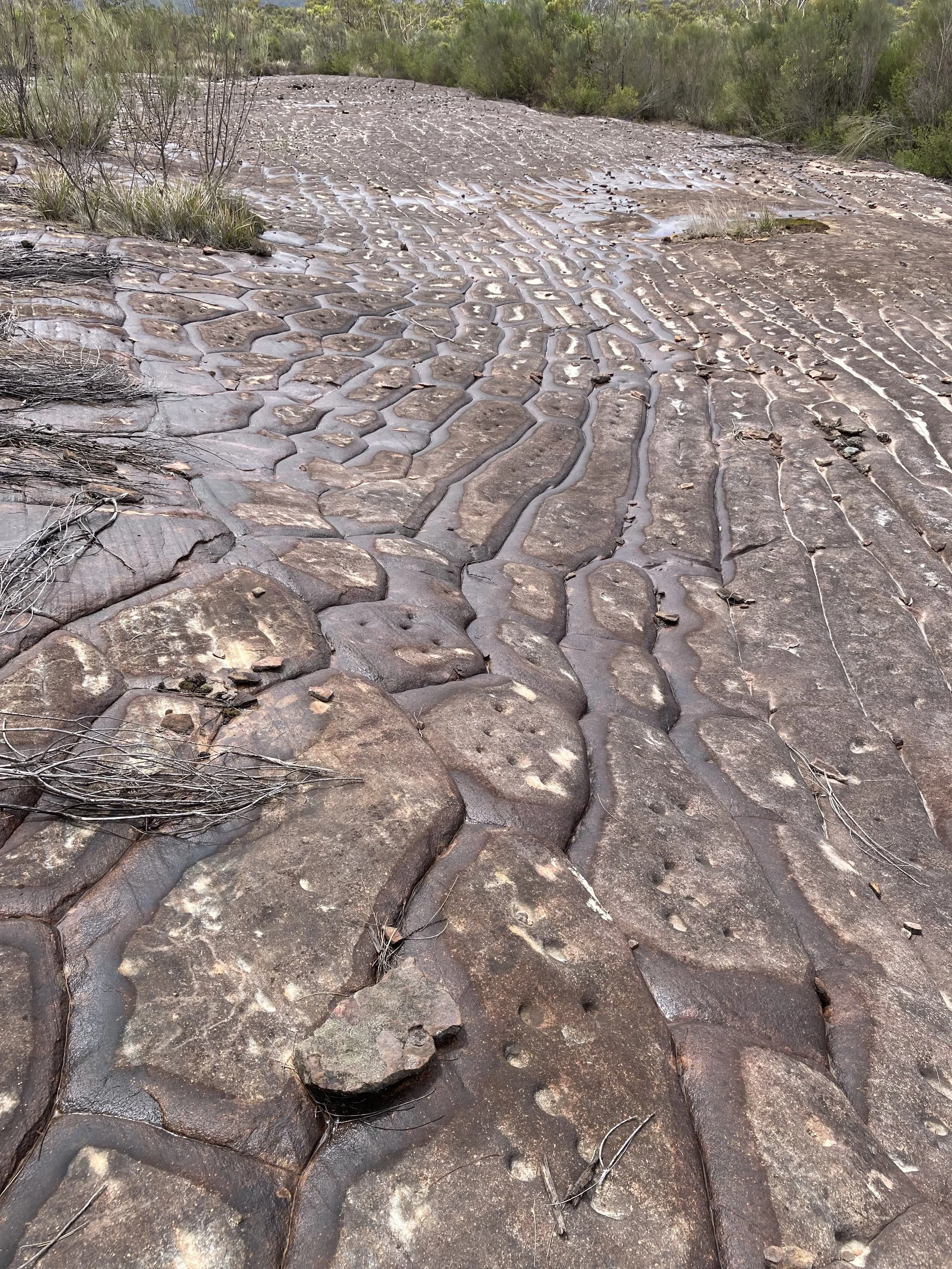
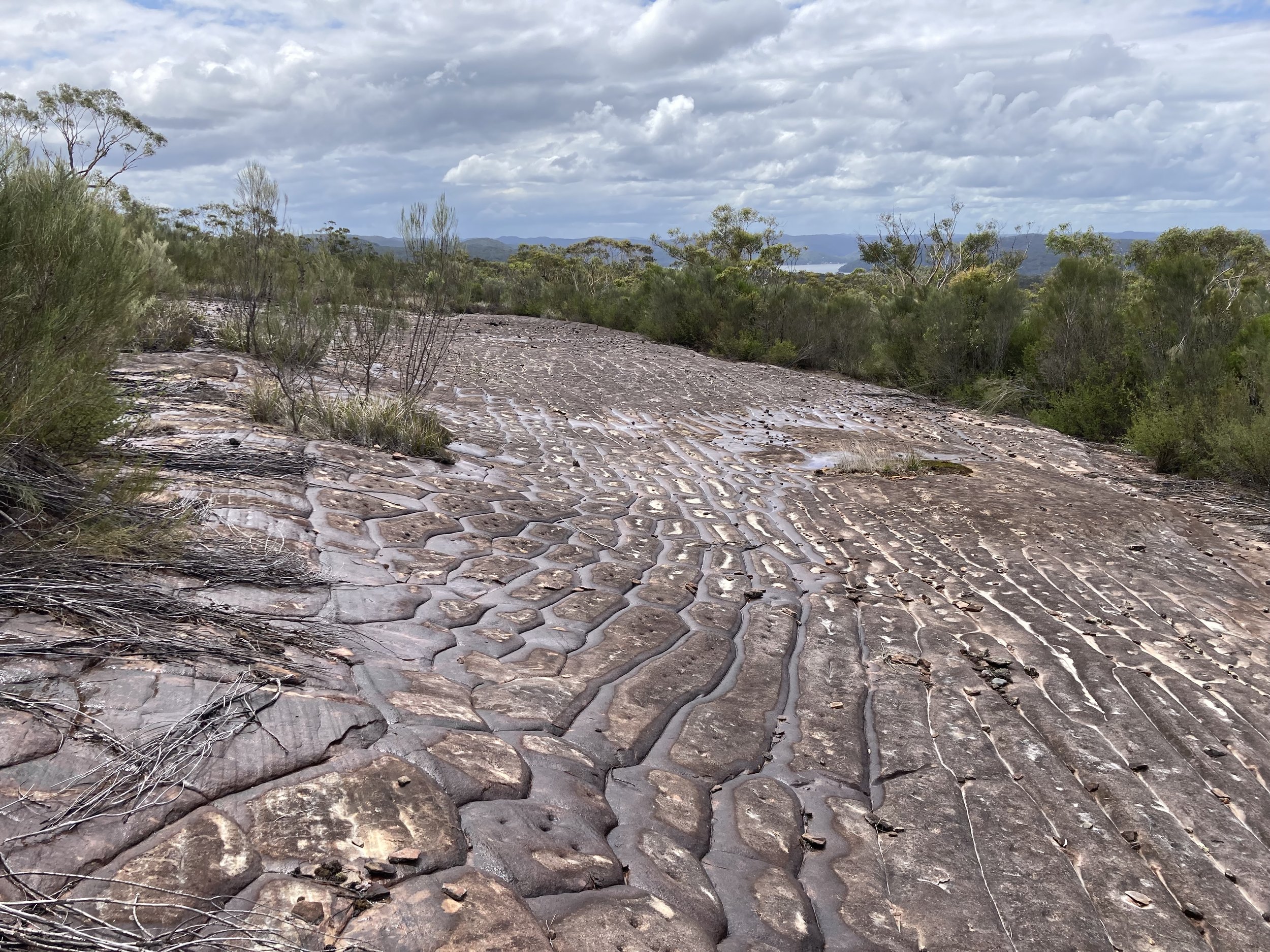
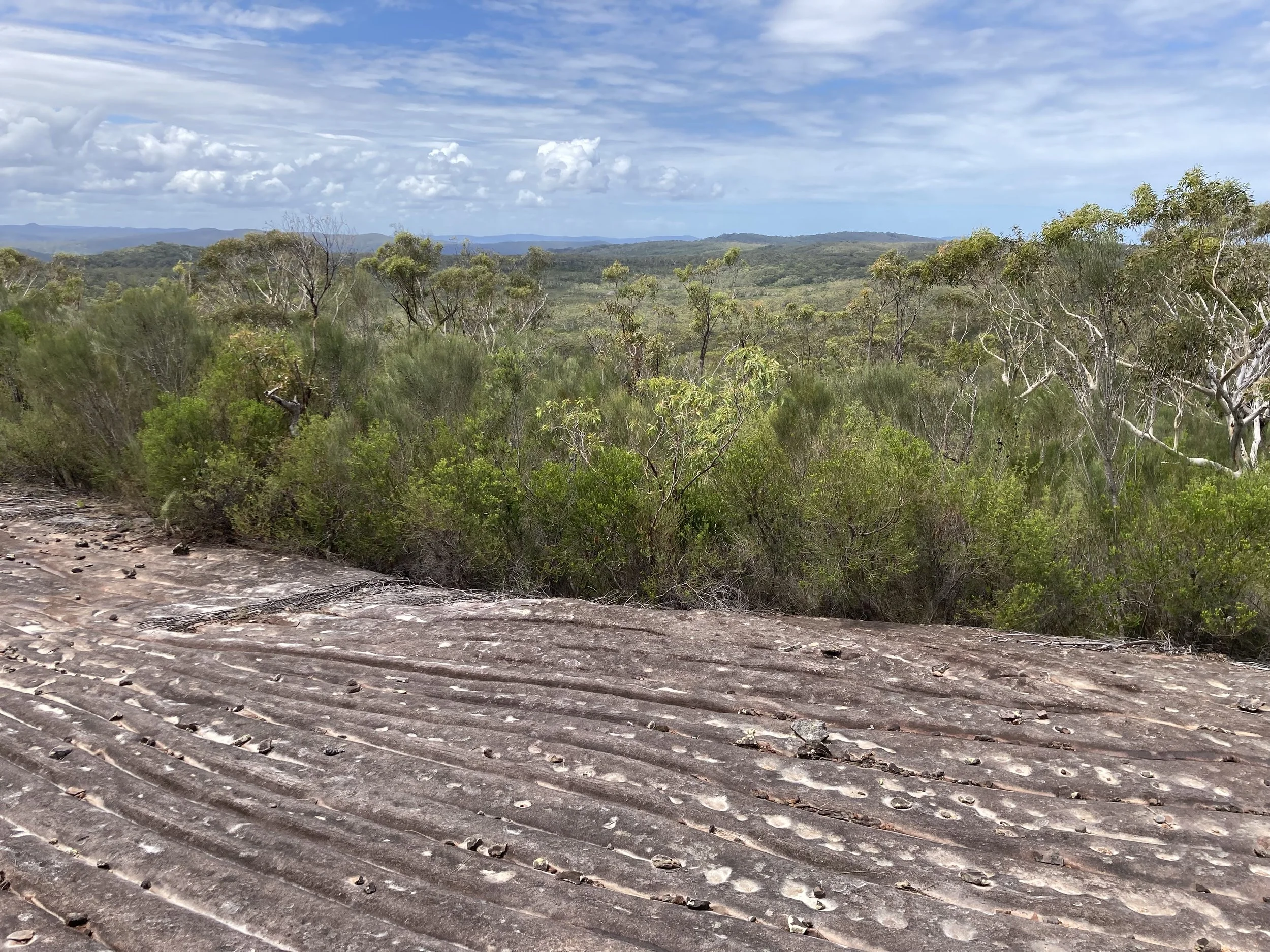
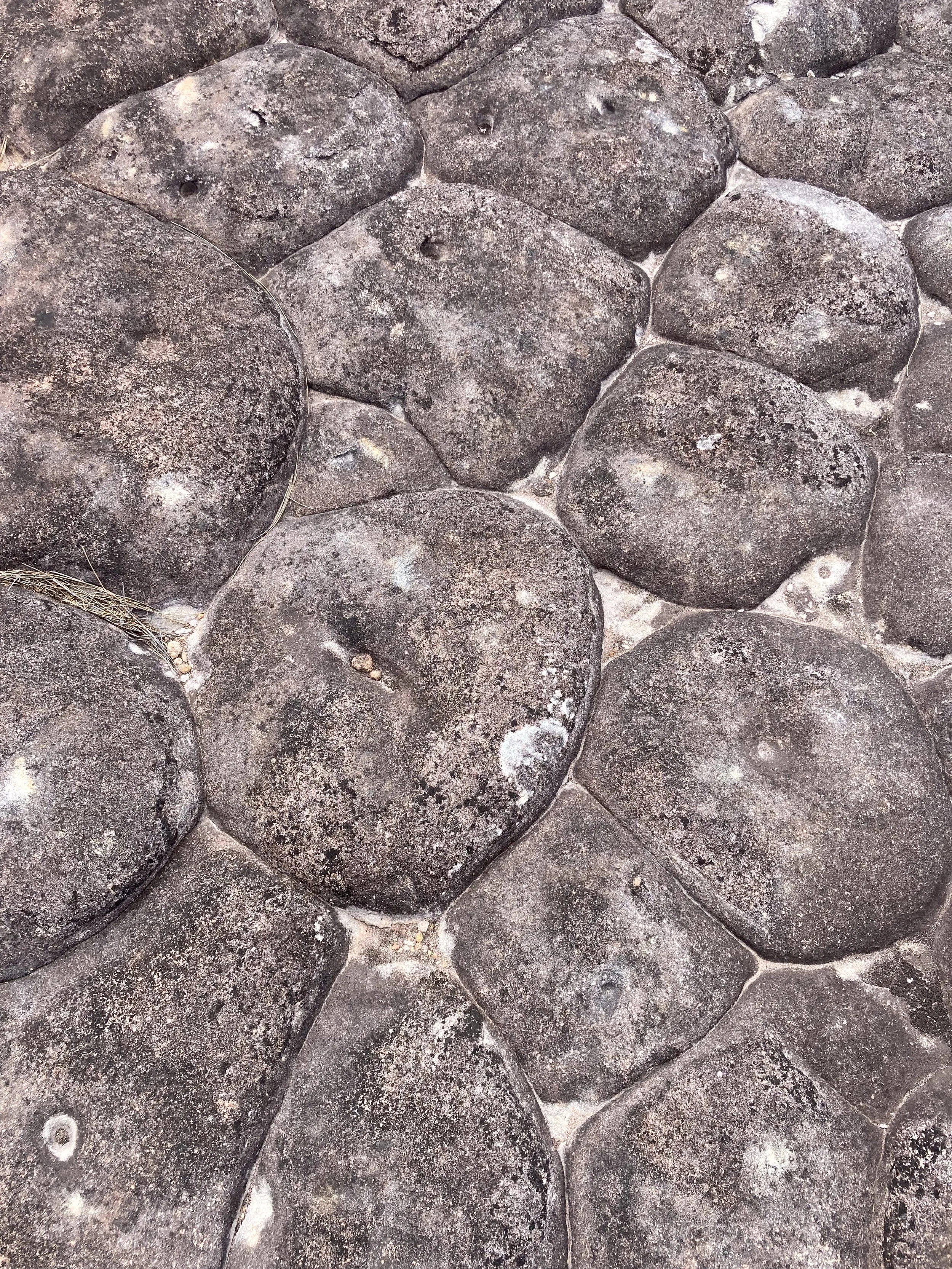
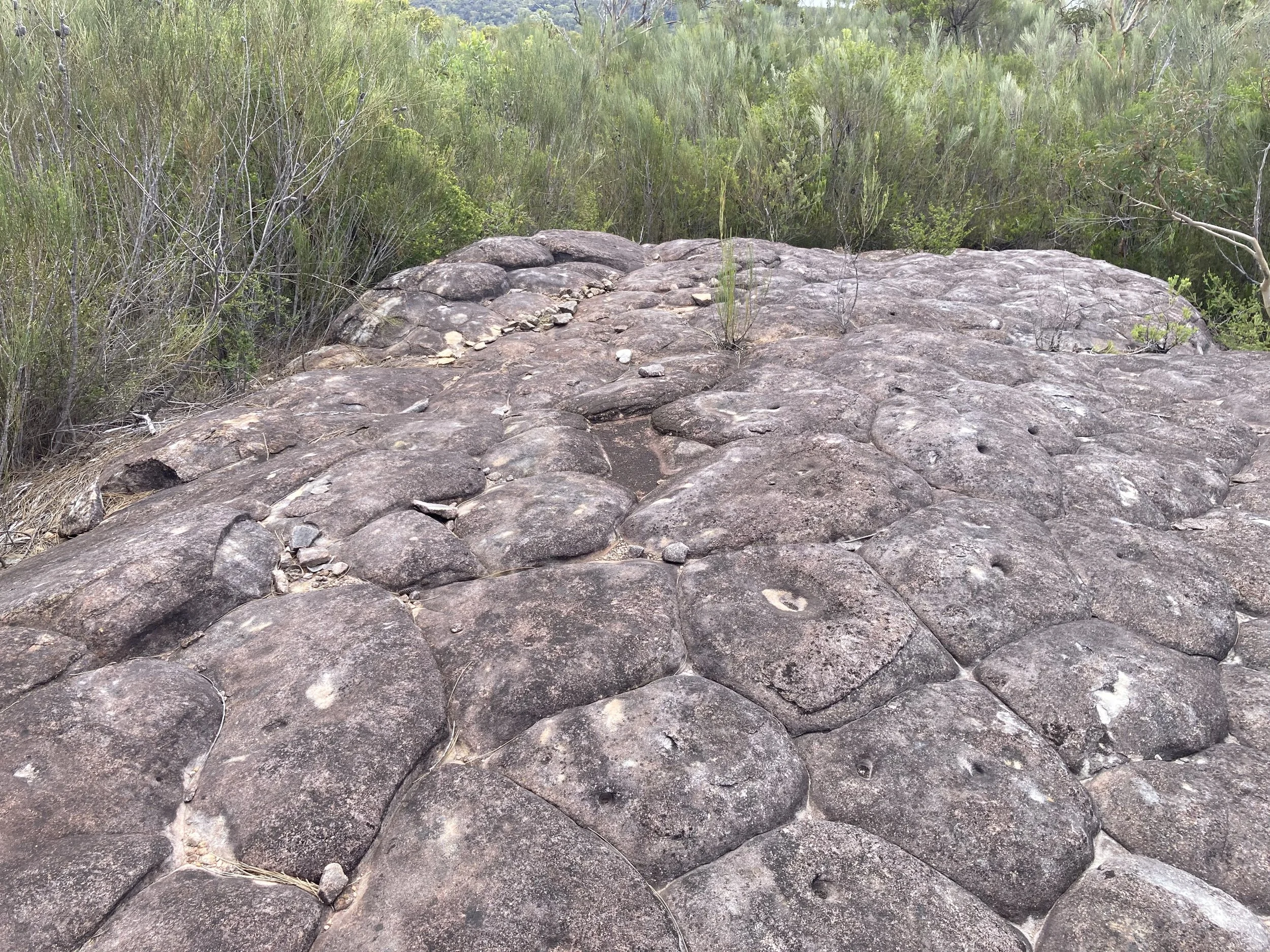
According to Uncle, Google:
The uniform ripples found on sandstone boulders are fossilized ripple marks—ancient signatures of water or wind currents that moved across sand millions of years ago. These patterns were created when the rock was still loose sand on a riverbed, tidal flat, or desert dune, and were subsequently buried, cemented, and lithified into rock.
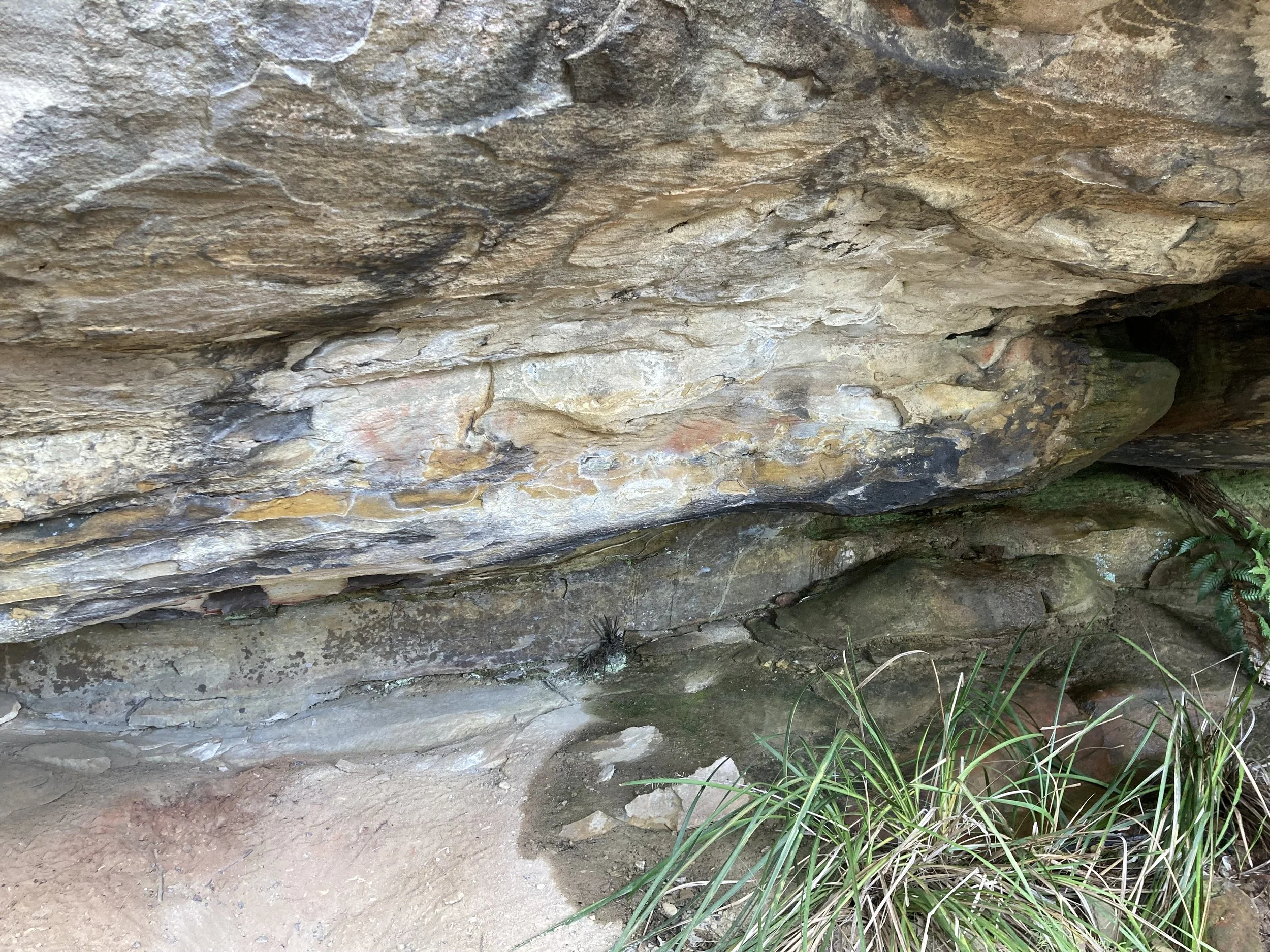
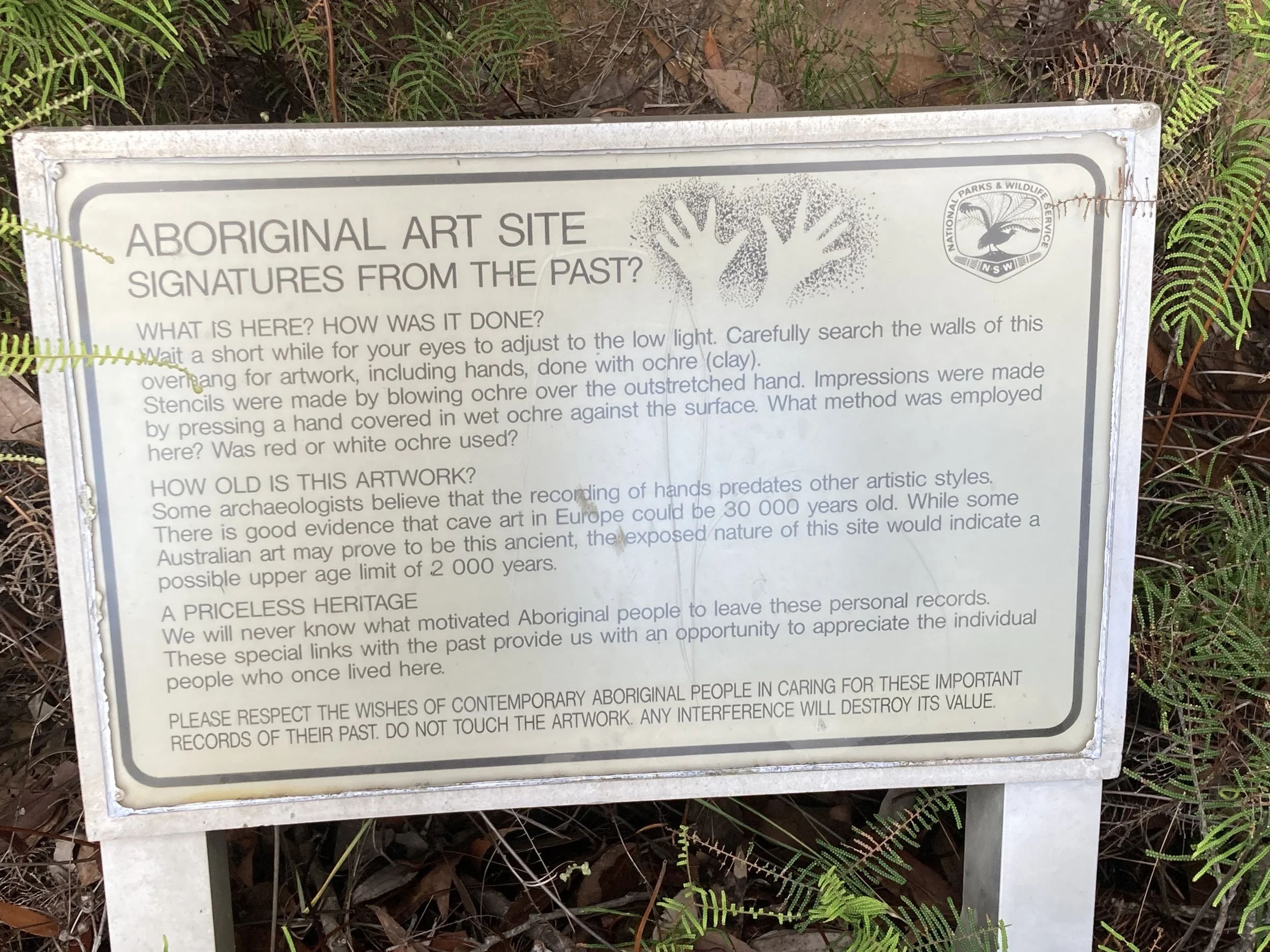
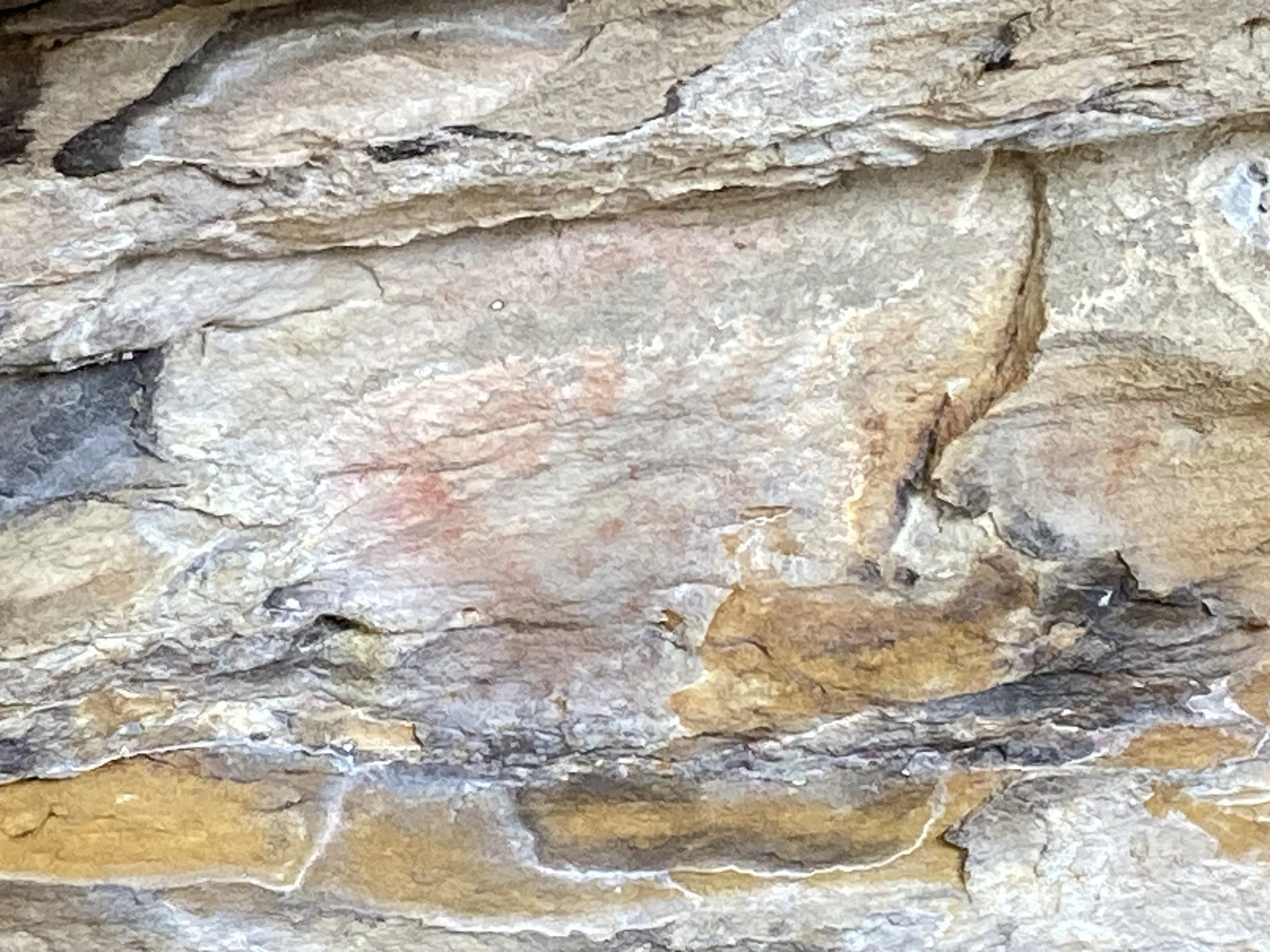
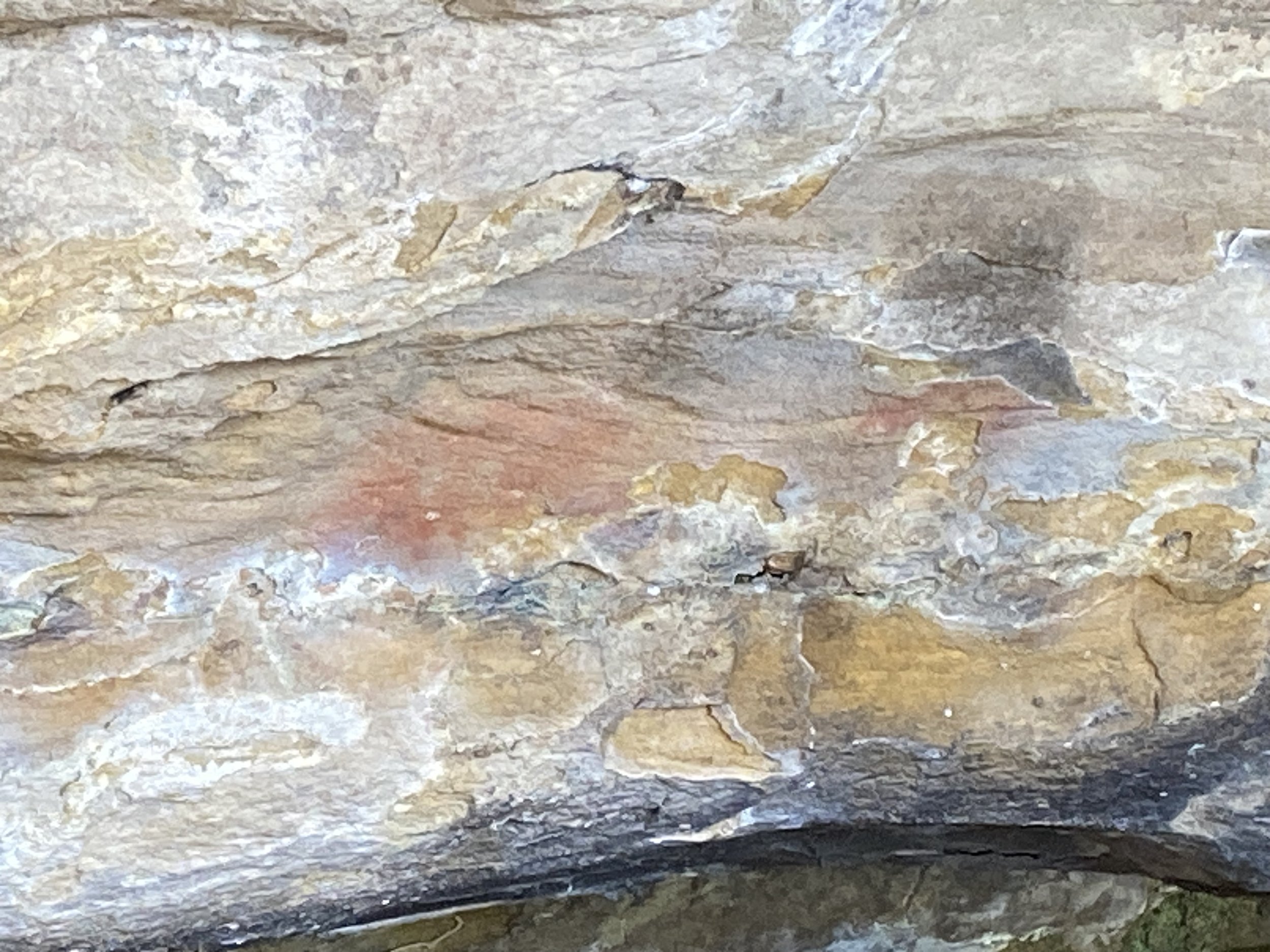
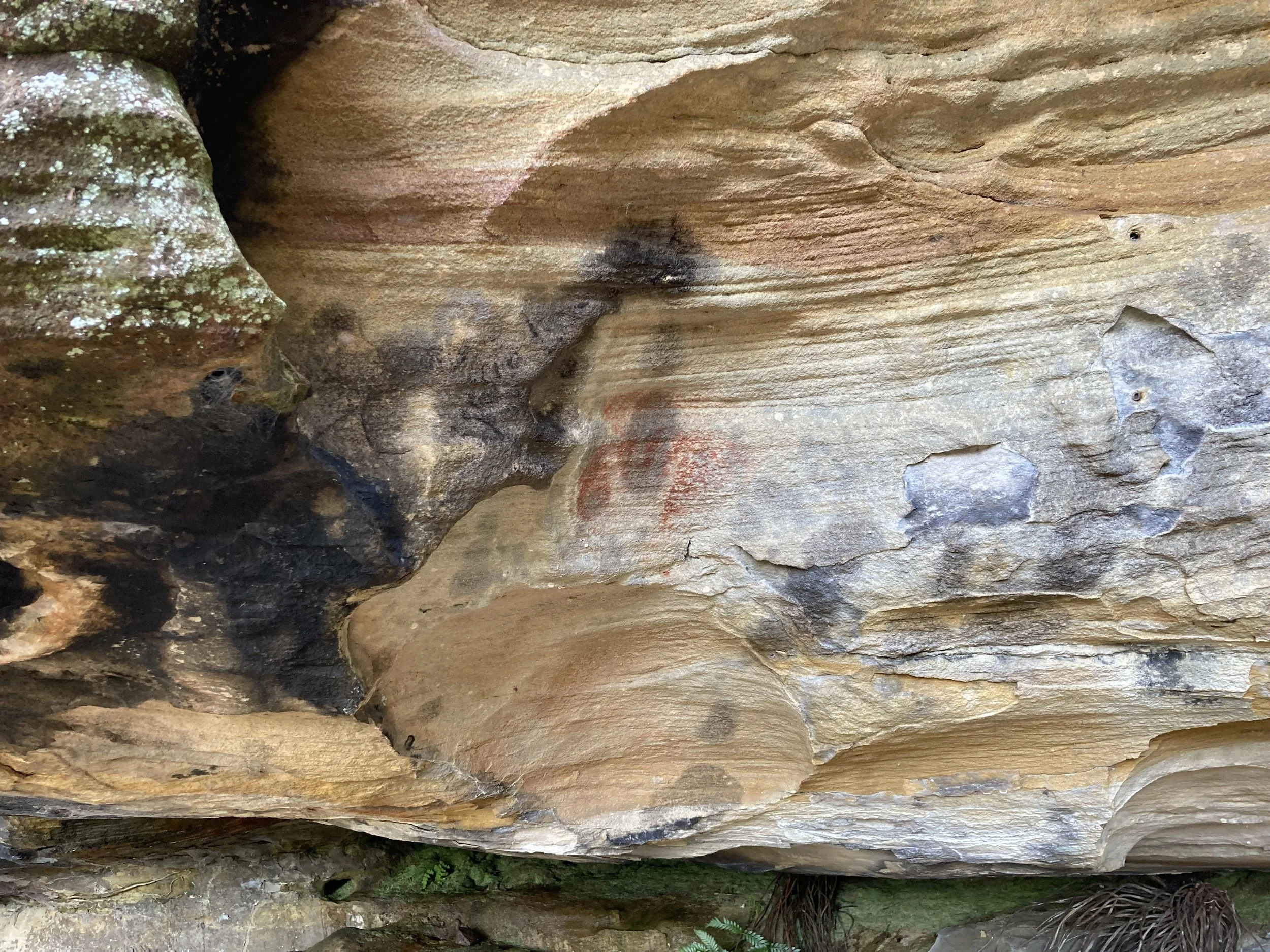
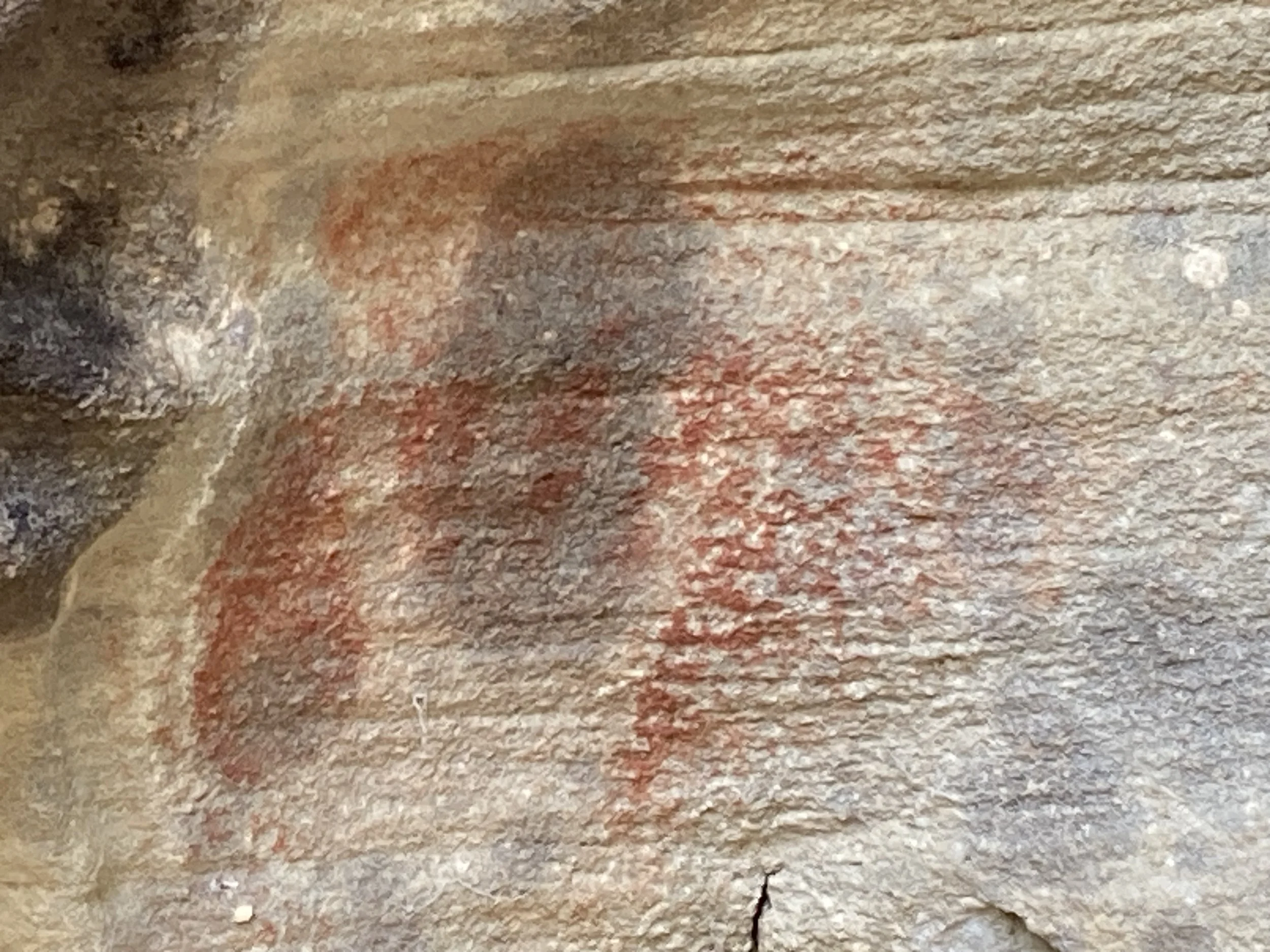
After this, Patrick took us to one last spot where he knew where the Aboriginal art existed. This is a place he’s come to several times before and it didn’t require going through more thorn bushes to get there. Here there were carvings of kangaroo and sea animals as well as two shields. All of it is estimated to be at least 3,000 years old.
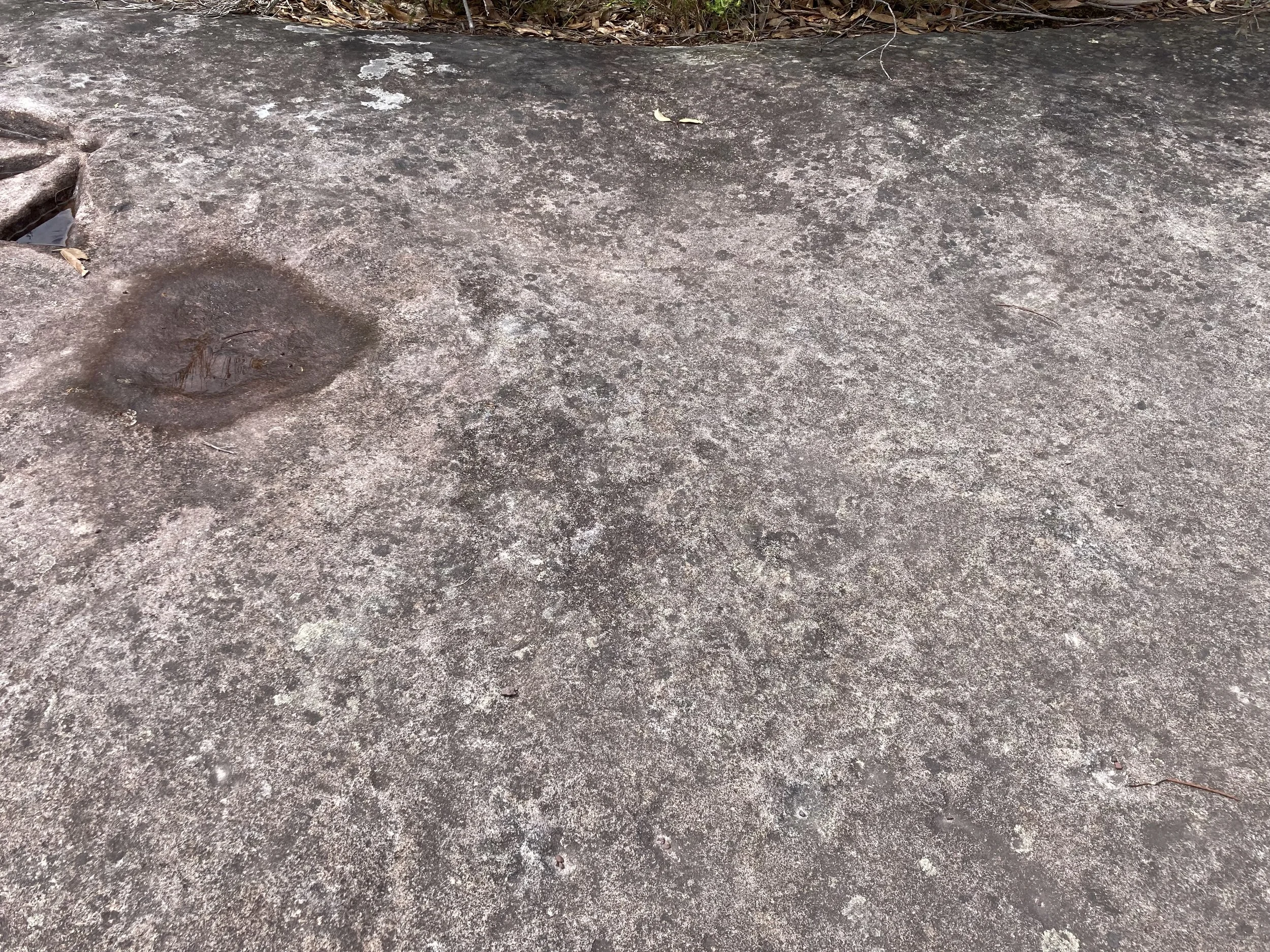
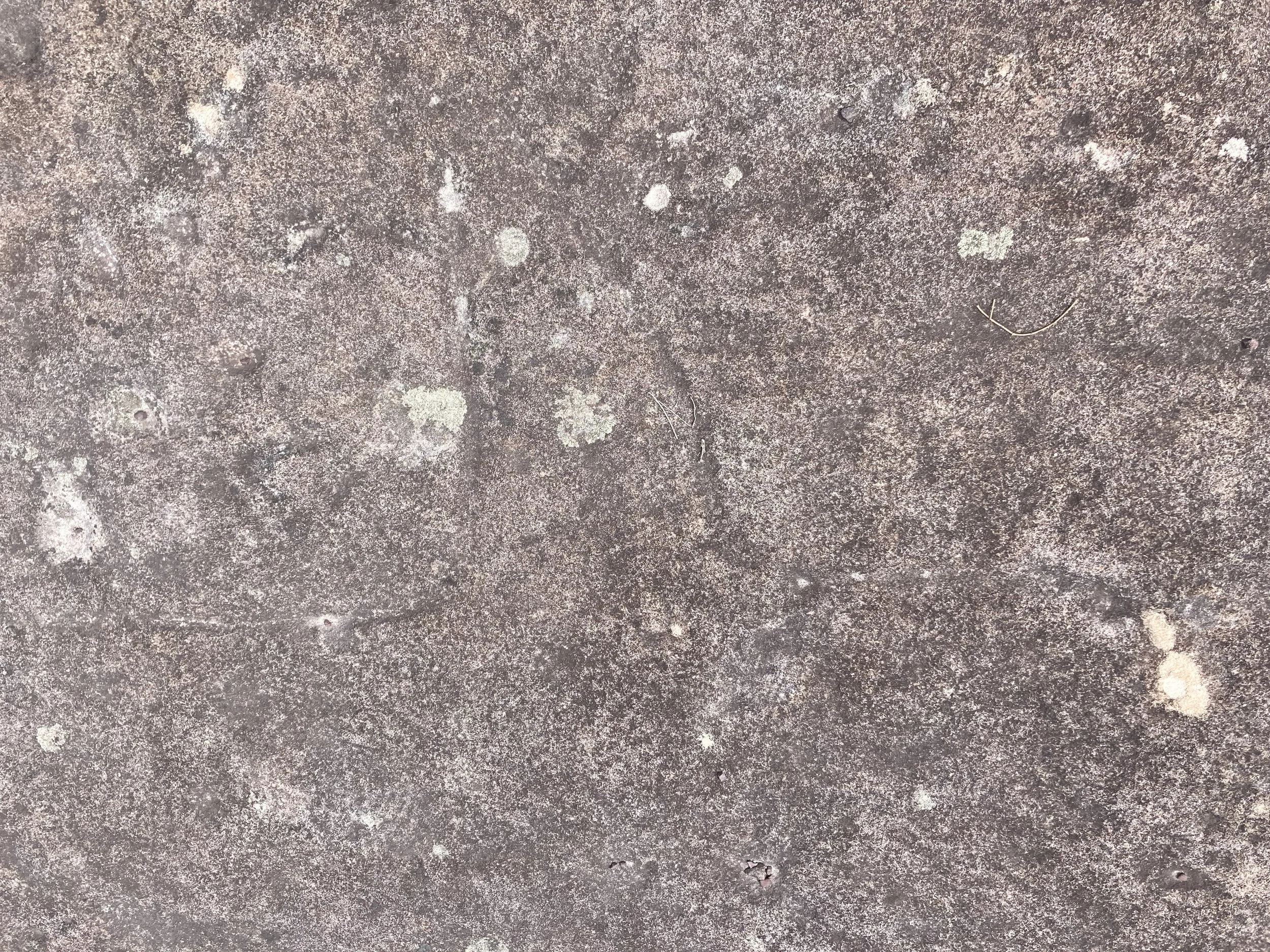
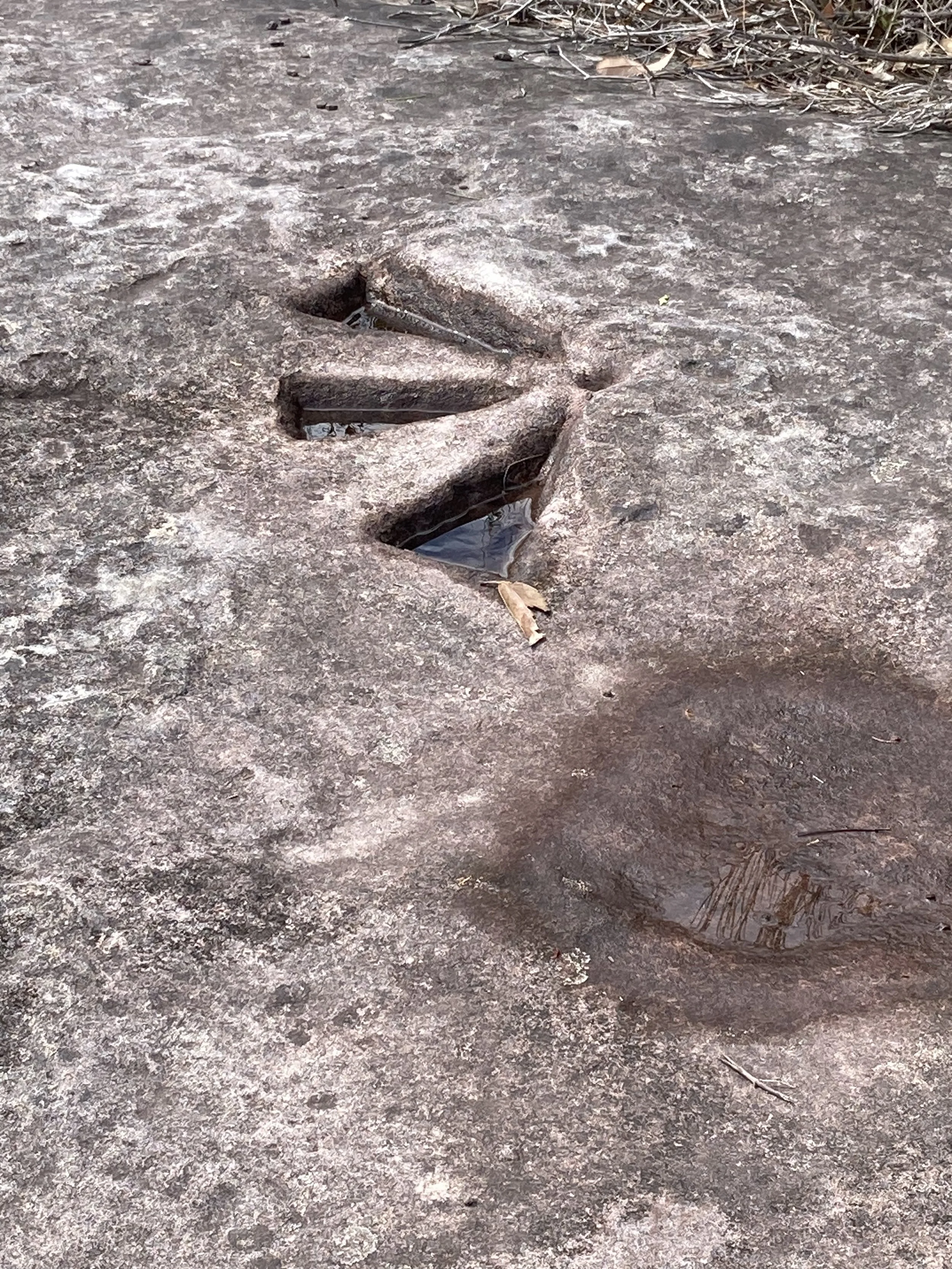
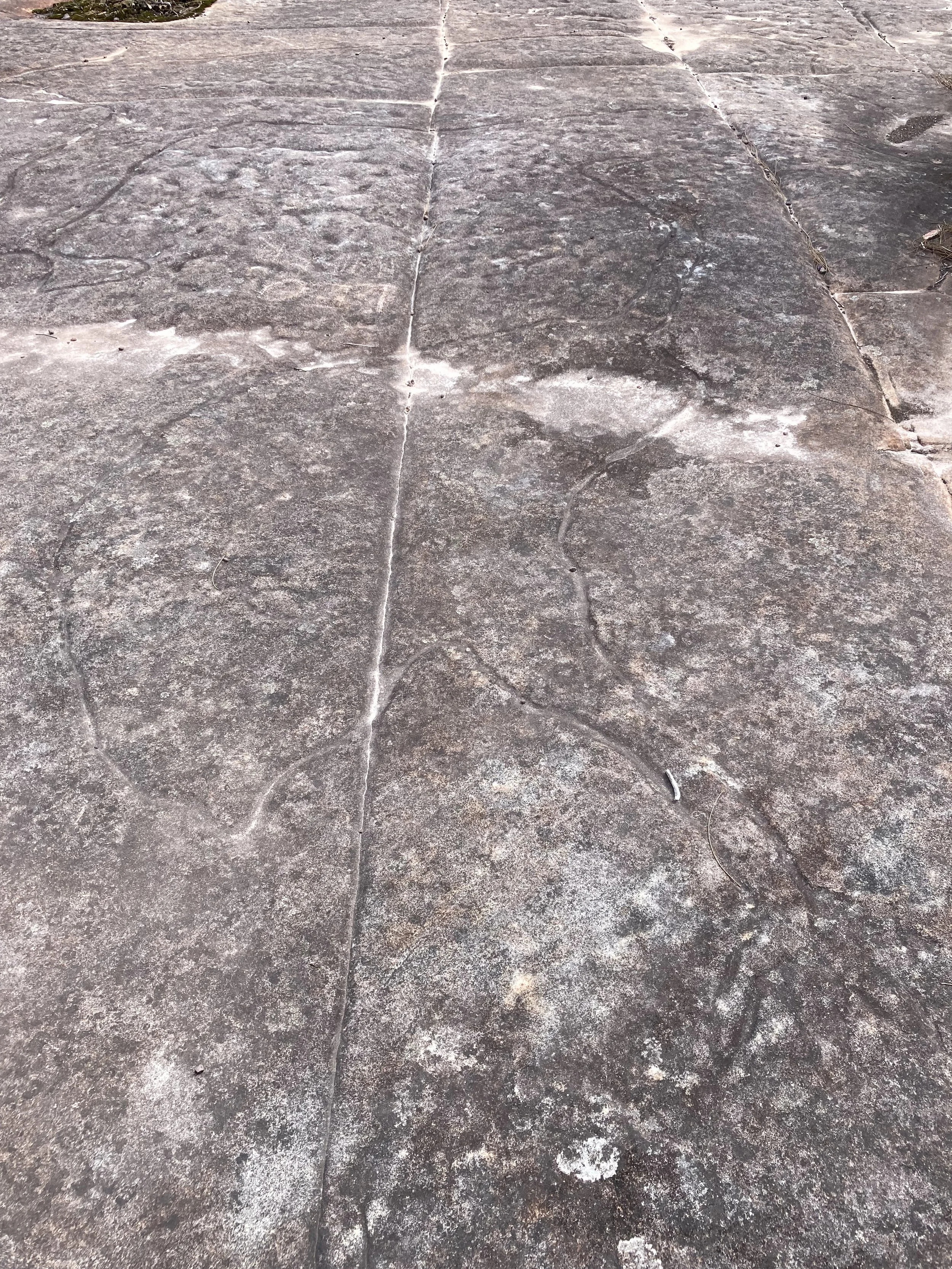
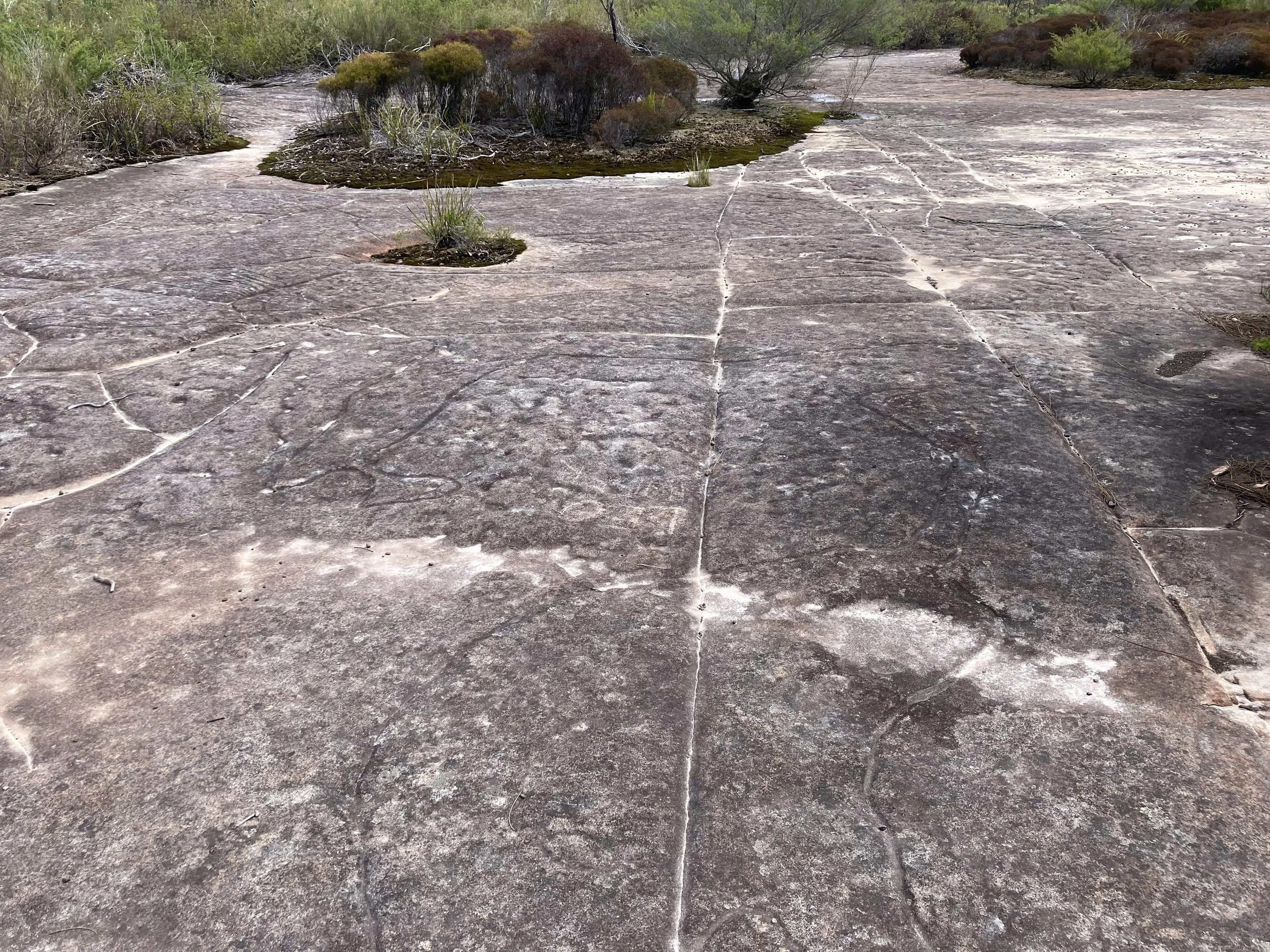
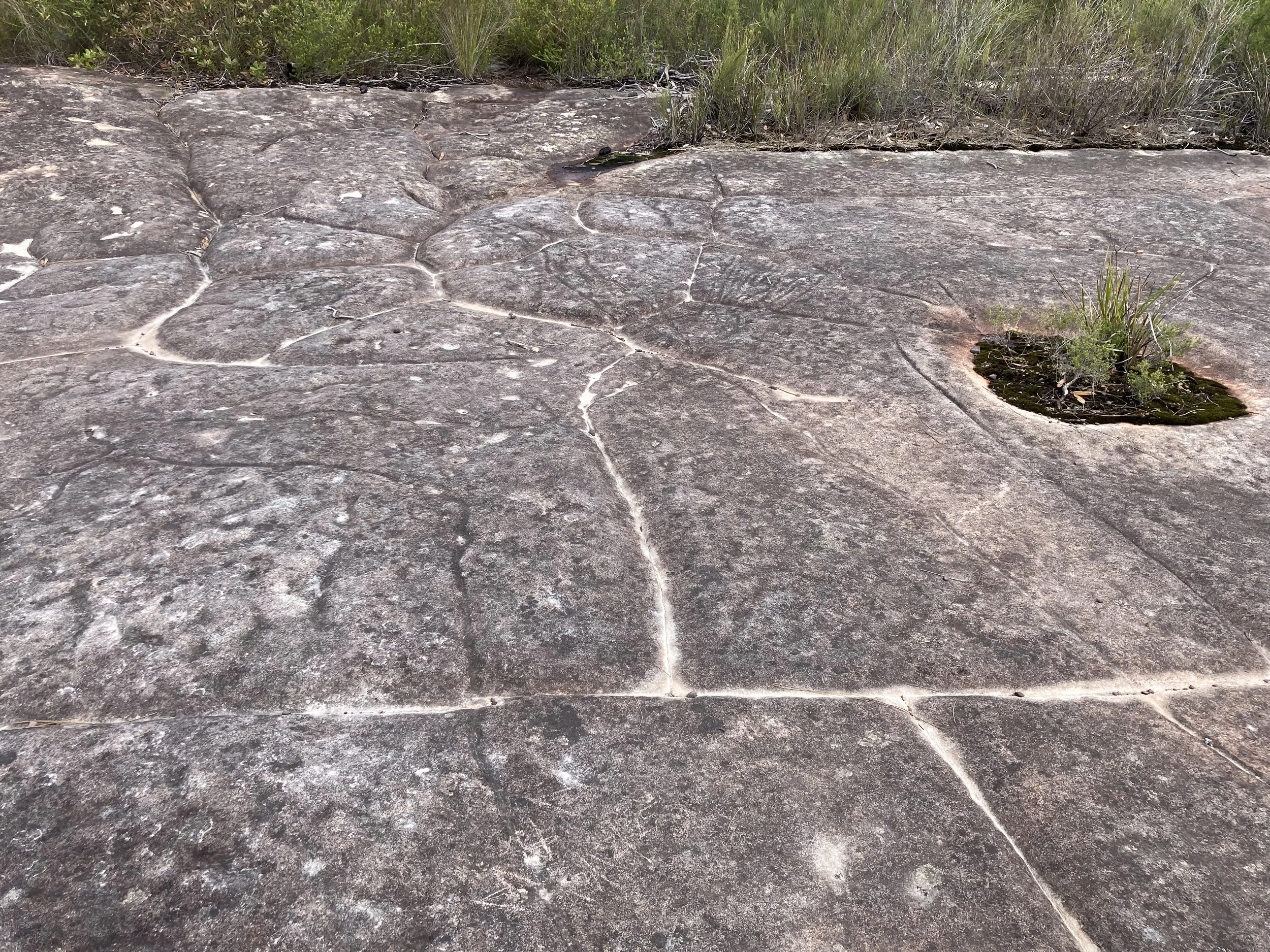
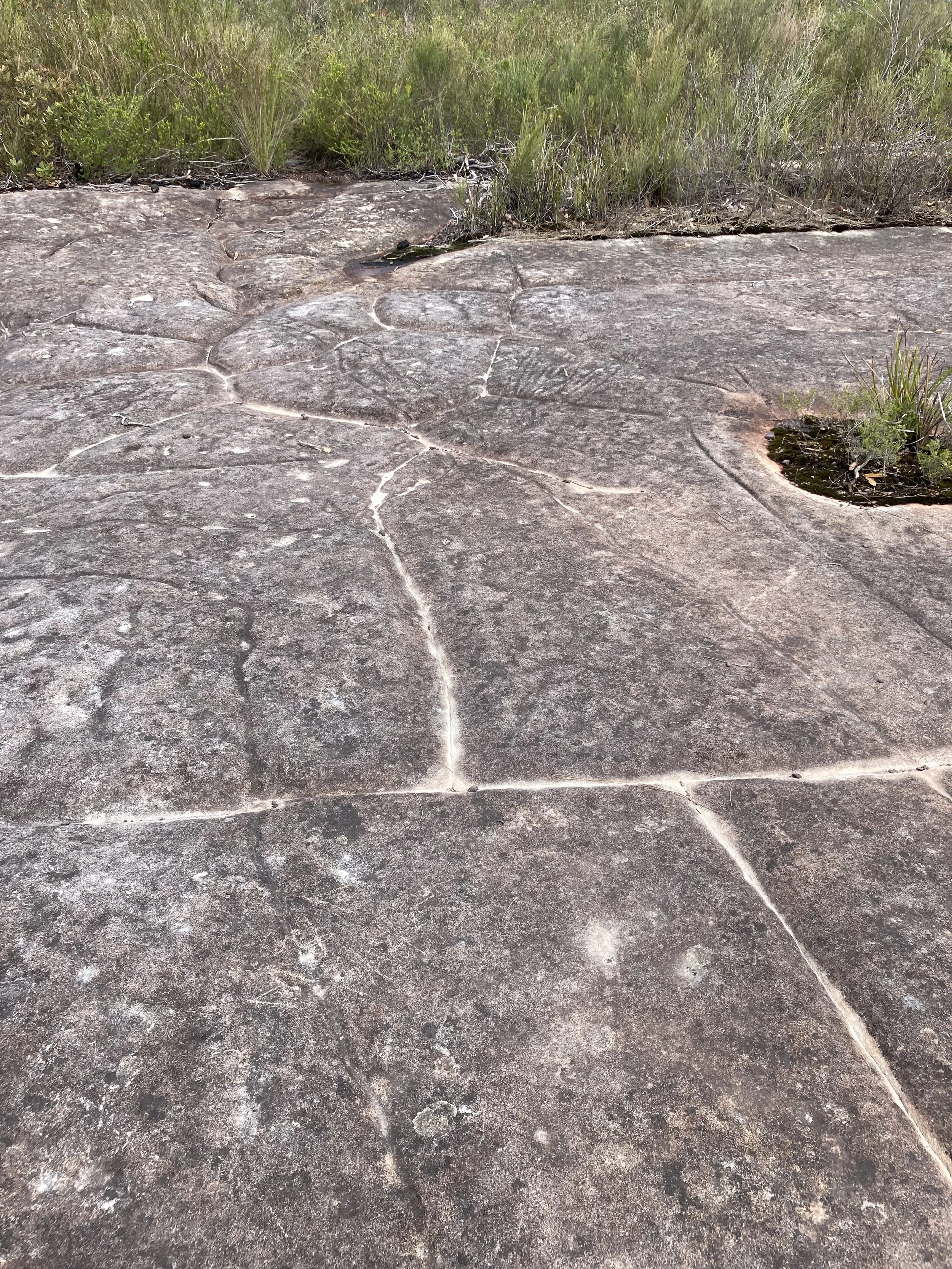
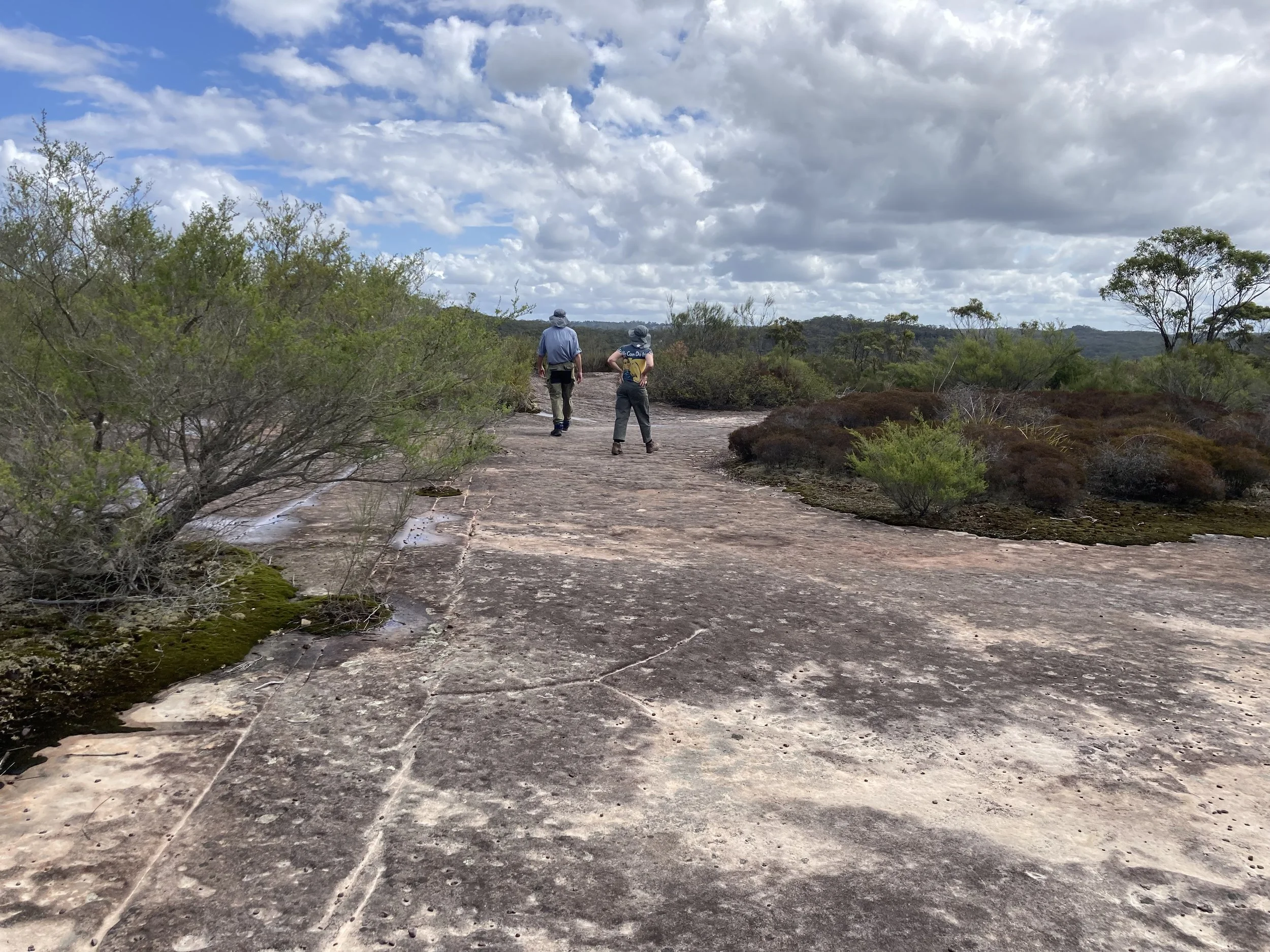
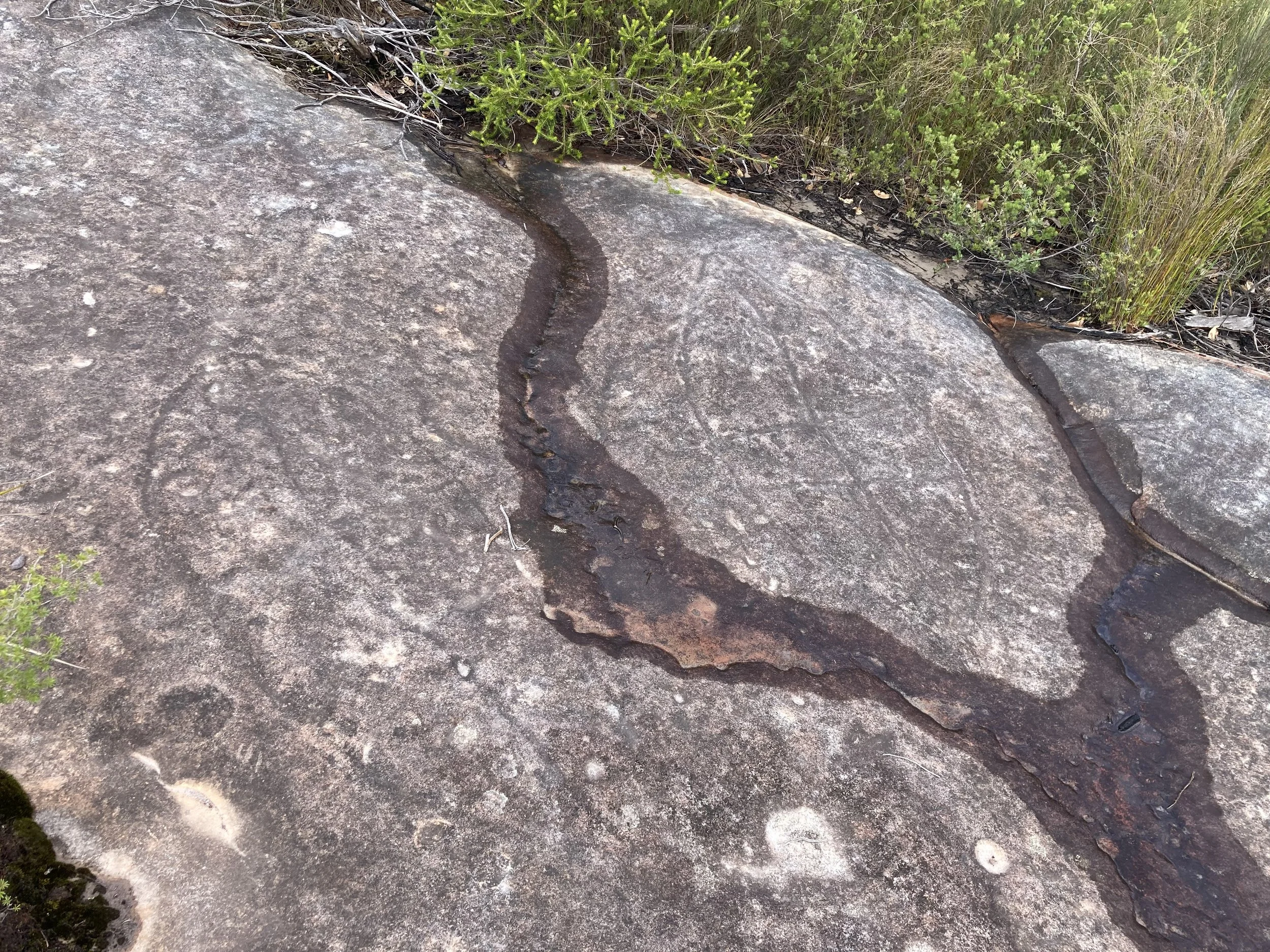

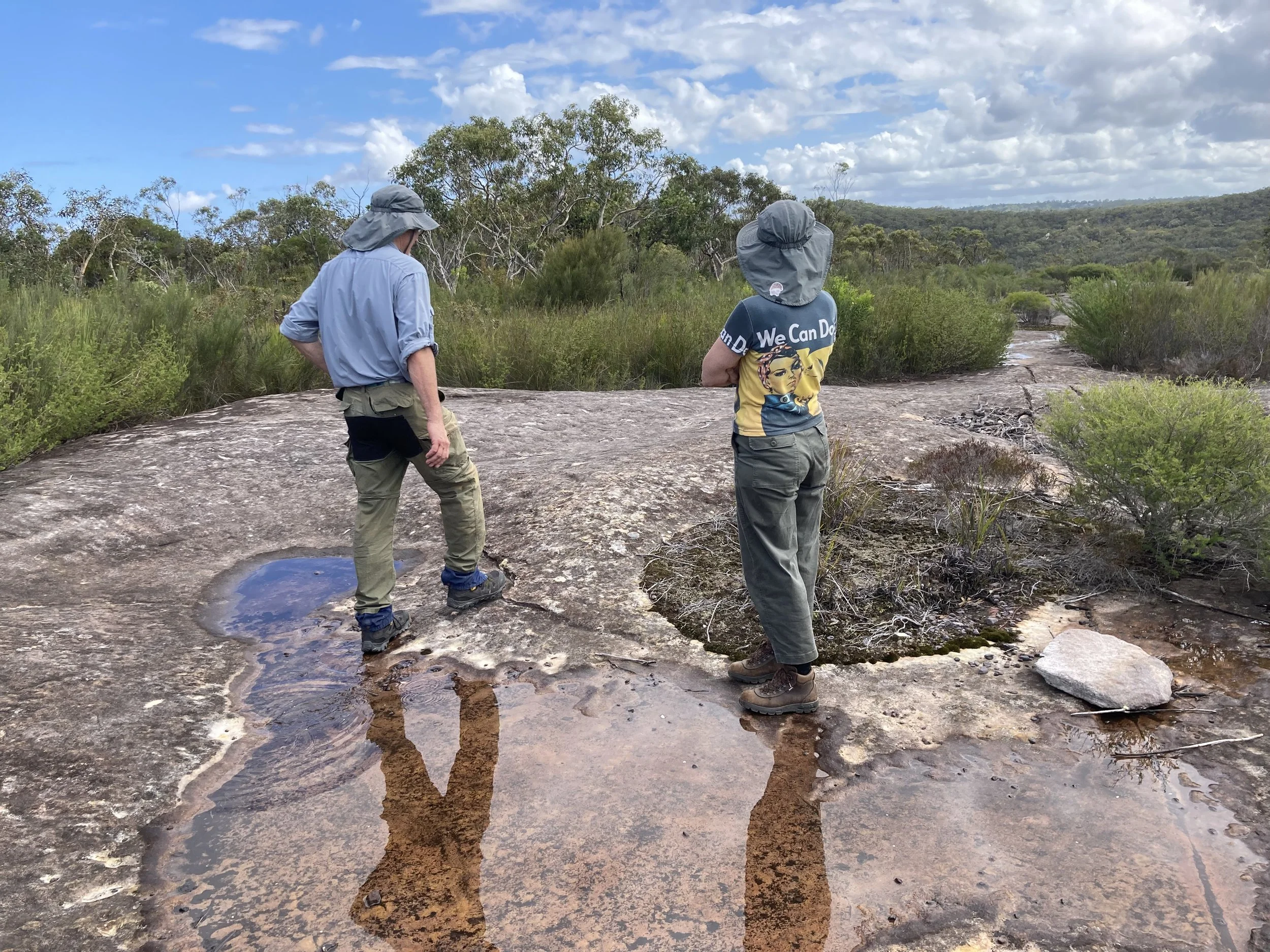
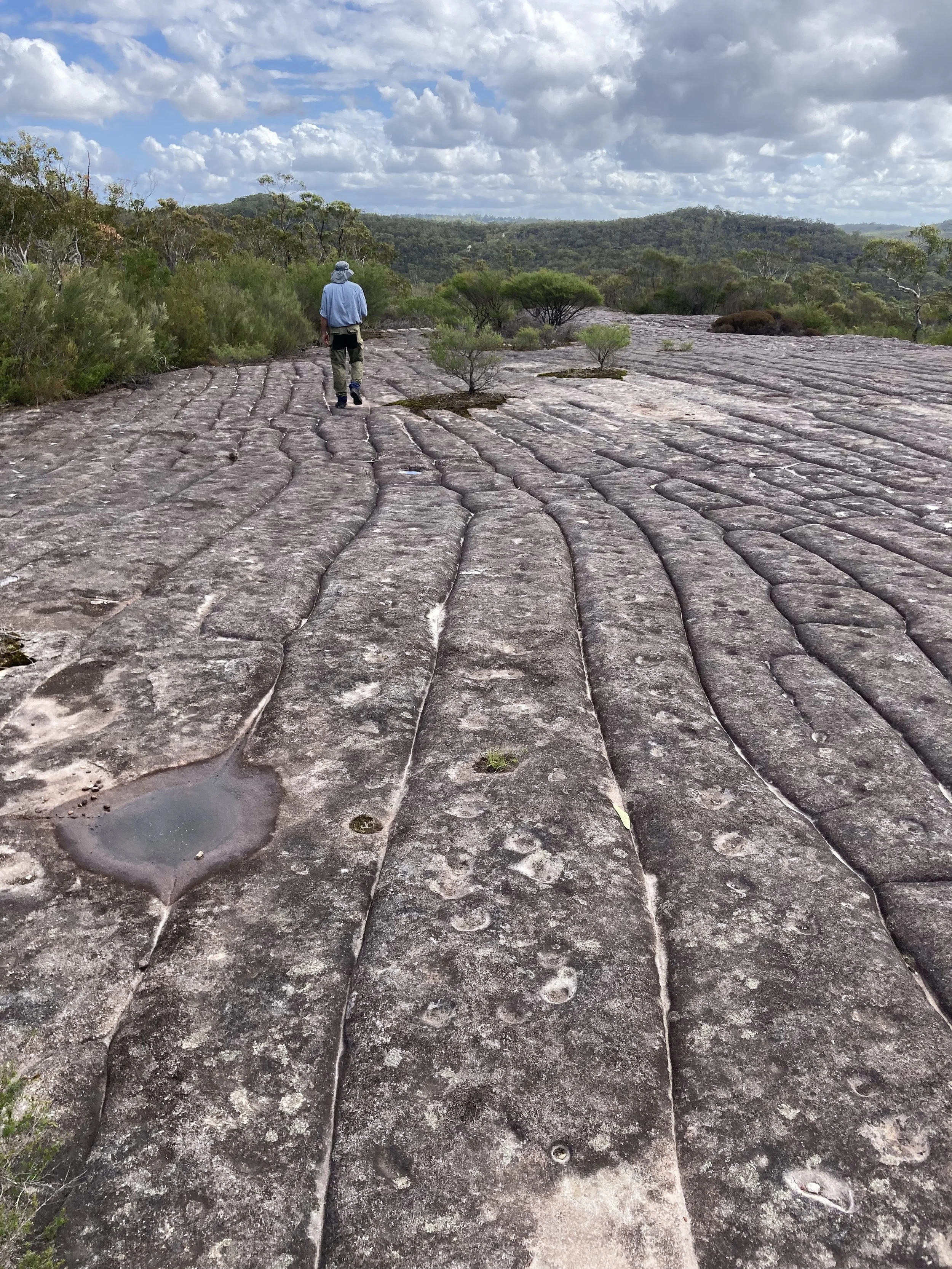
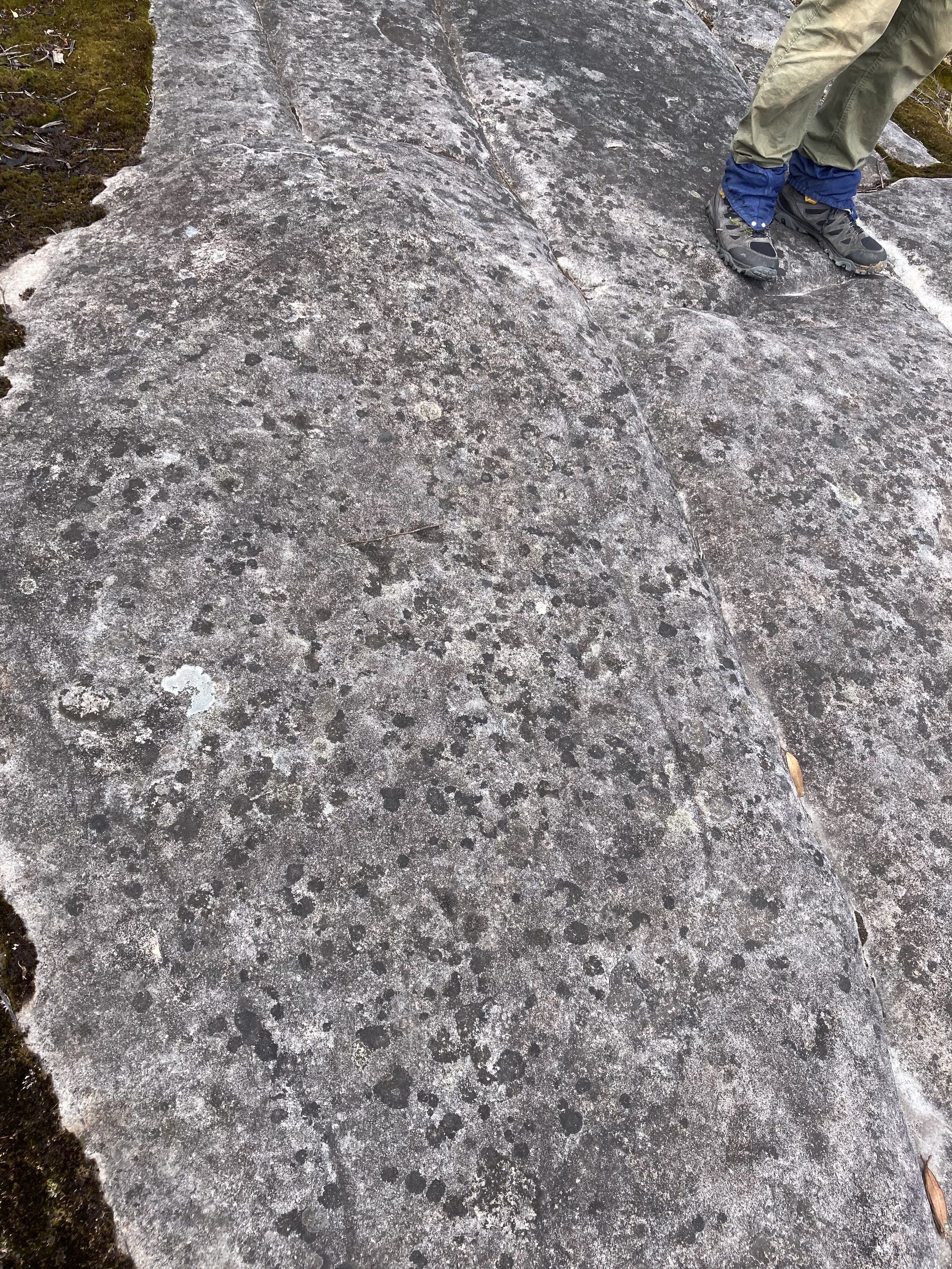
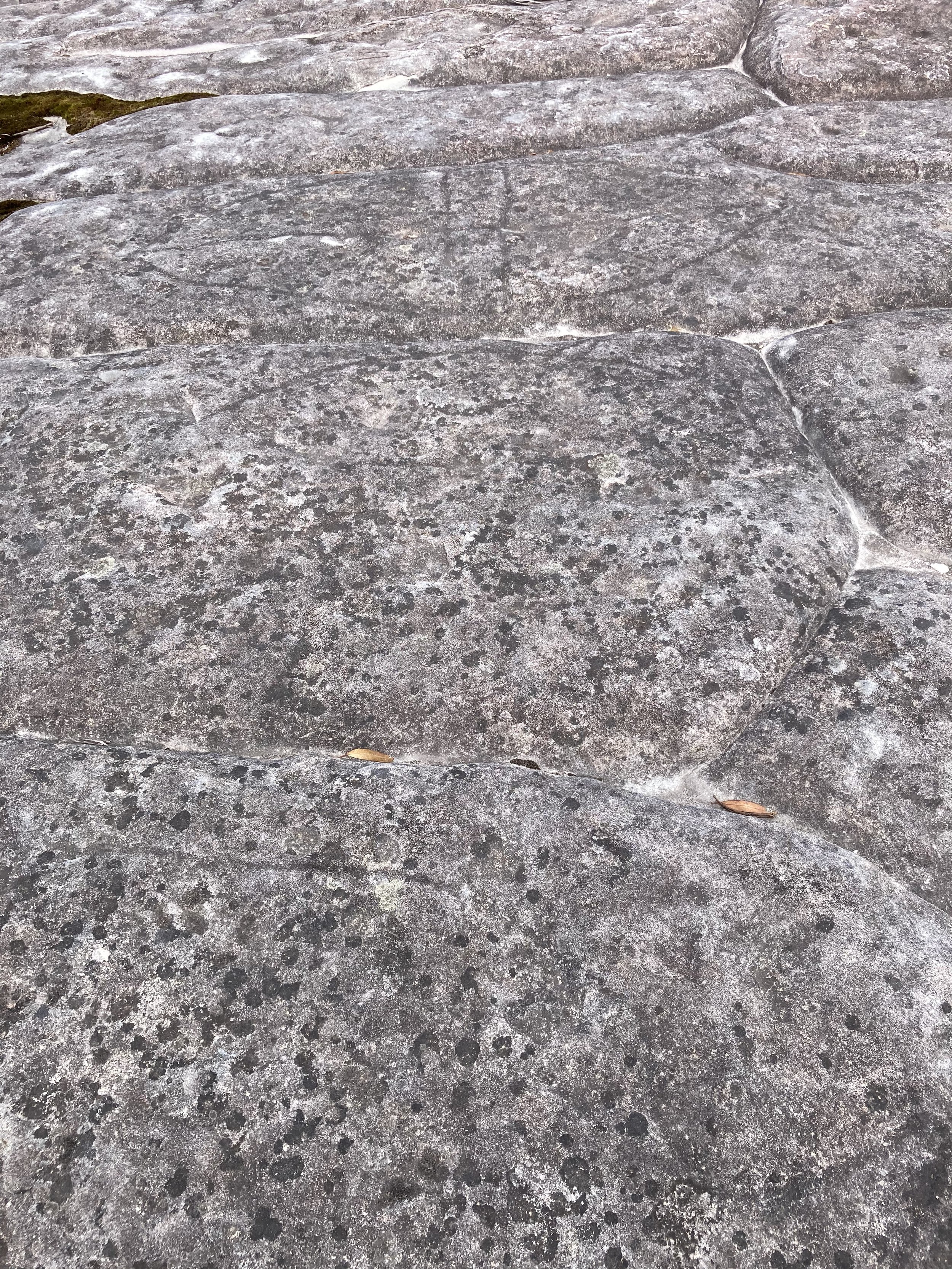
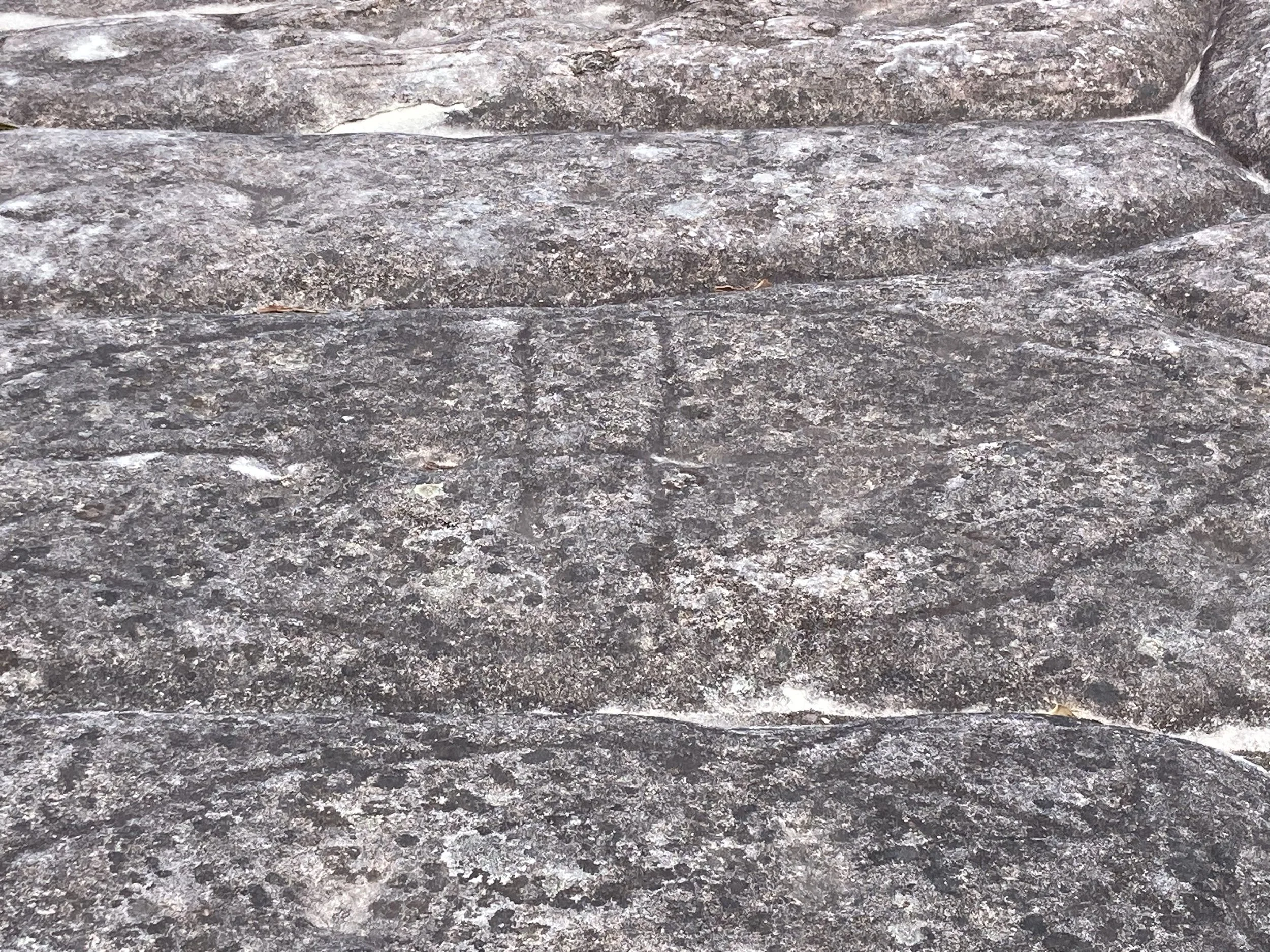

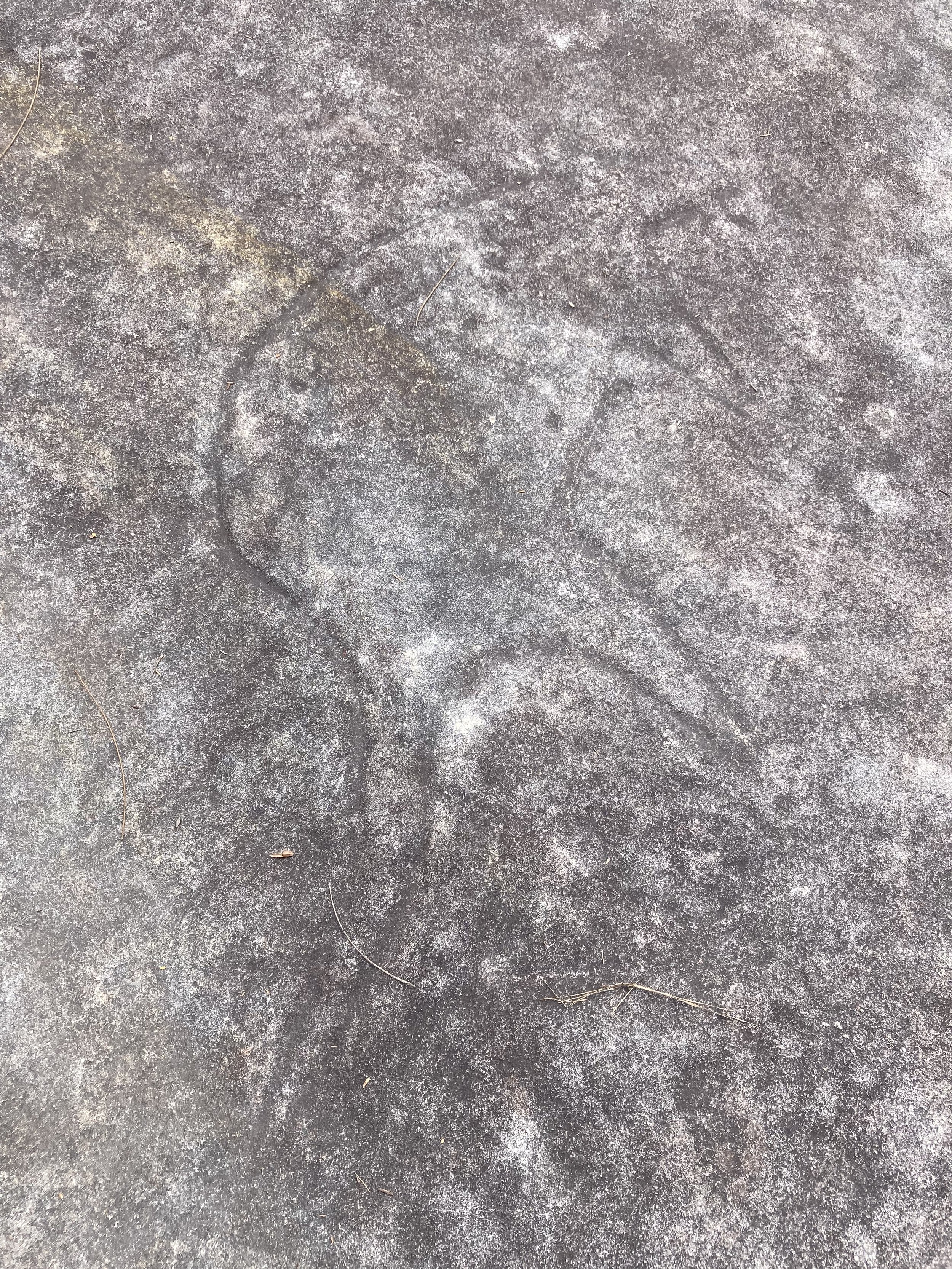
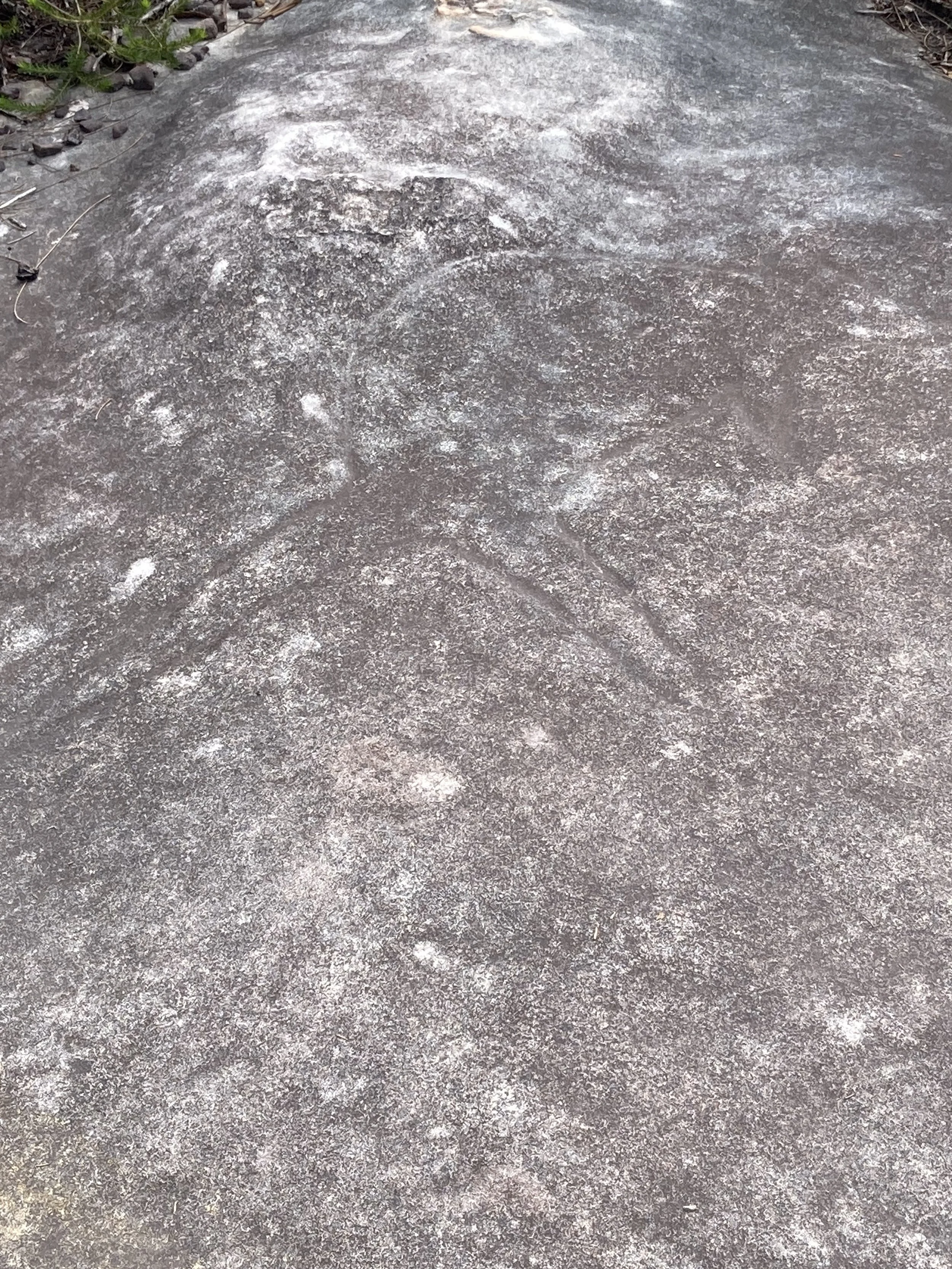
If you’re not looking closely, it’s easy to miss. The Aboriginal art carvings (pictured above) are very faint at this point. This is because they have not been preserved by any Aboriginal people and are often walked over by tourists (in part because they are not clearly marked or protected). The natural baking in the sun and the source material (i.e. sand stone) mean that the carvings will continue to disappear over time. So this is truly a unique experience to behold while it still exists and can be witnessed.
While we were admiring this artwork, I was informed of something I’d never heard of before. Wombats have square poo. I looked this up later just to confirm, and sure enough, this distinctive feature of wombats allows them to mark their territory more effectively and it’s incredibly unique and rare in the animal kingdom. I thought for sure this couldn’t be possible. Talk about learning something “new” today.
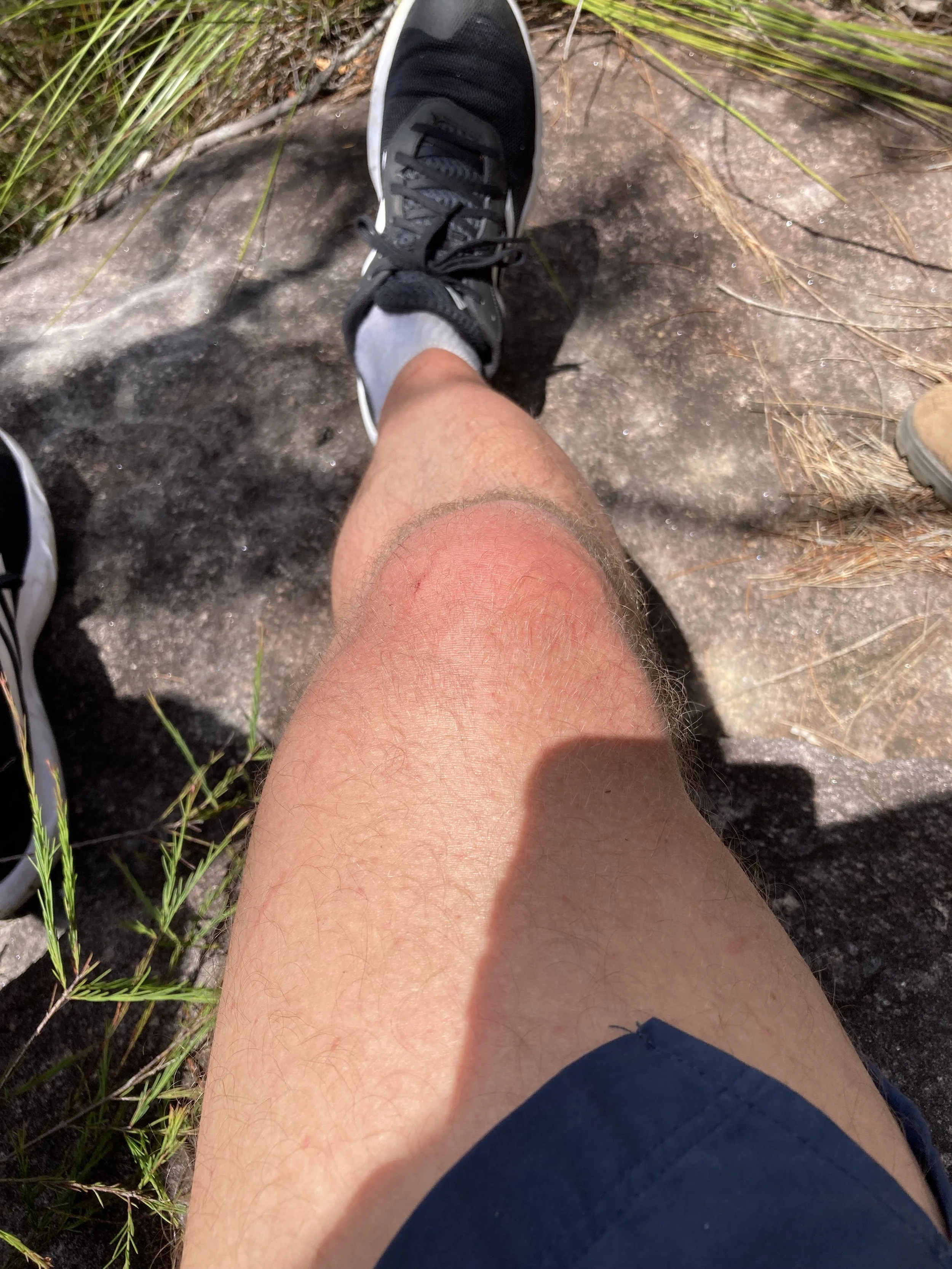
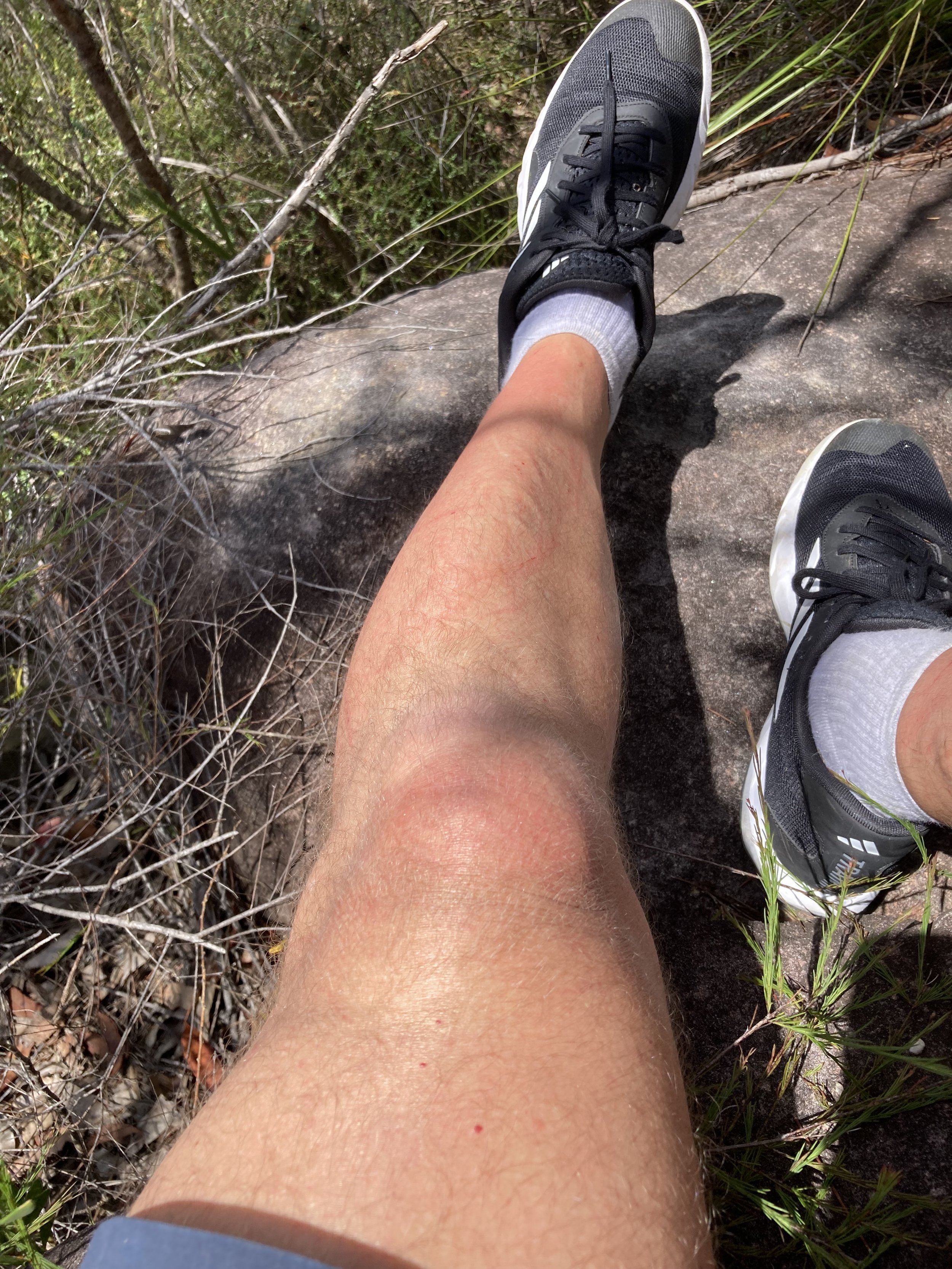
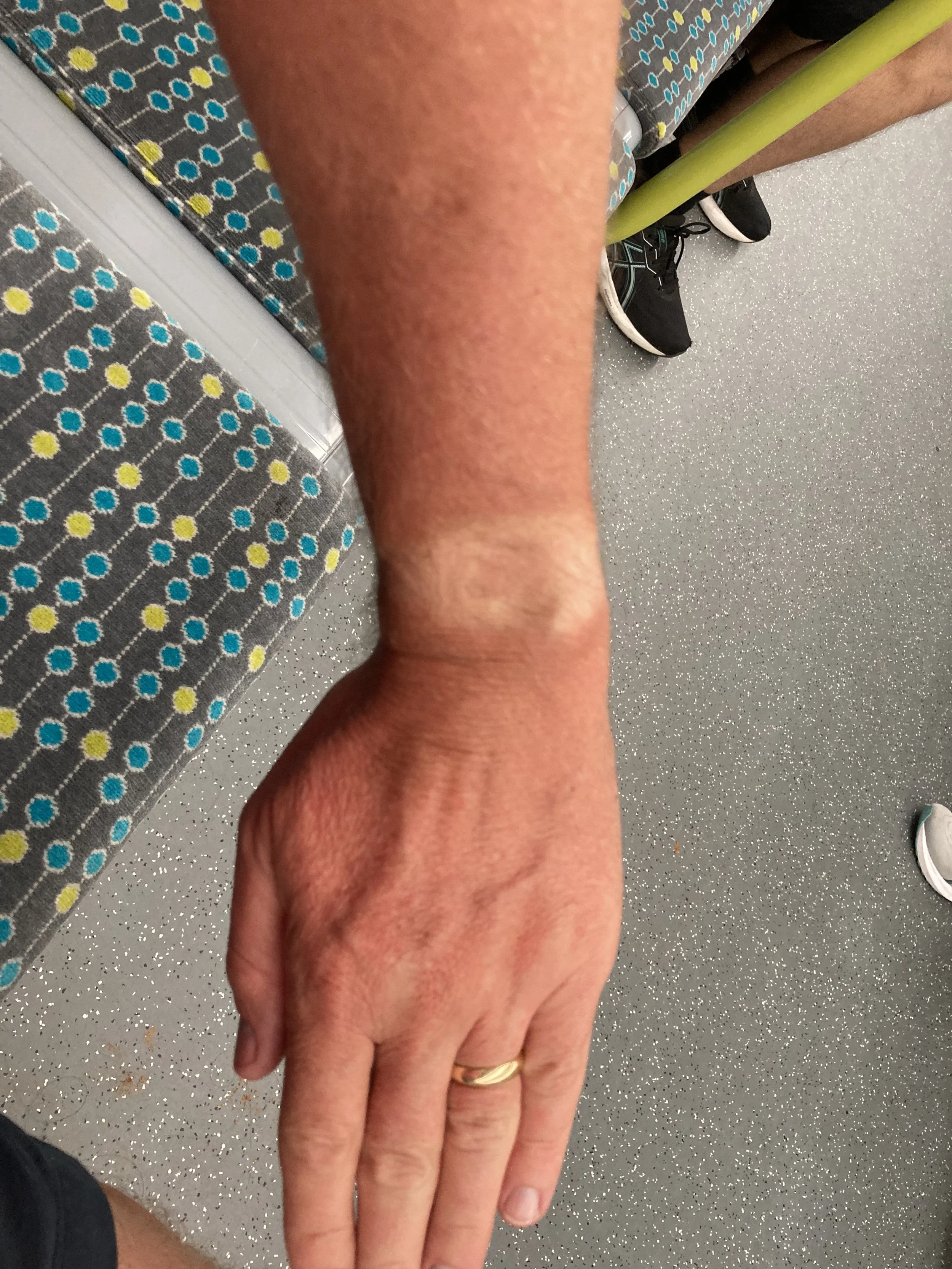
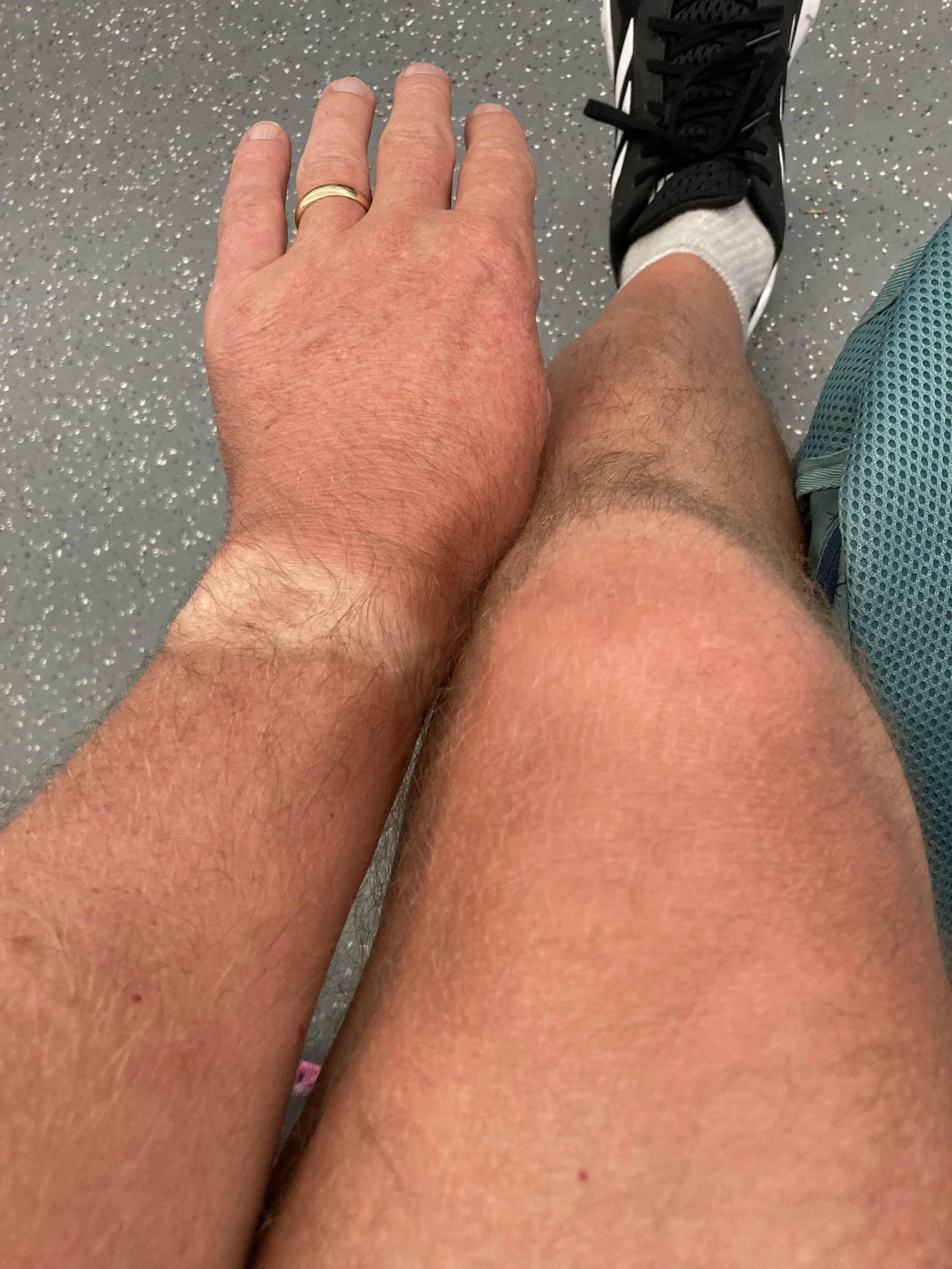
One rookie move was that I (incorrectly) assumed that the cloud cover was enough to protect my skin from a sunburn. The temperature was cool and the sky often overcast, so I didn’t put on any sunscreen until after lunch. Apparently, that was too late as my watch tan line will attest. But it was all worth it. The scratches and the slight sun burn were a small price to pay for my first walk in the bush. This truly was an incredibly unique experience and I’m grateful to Swantje Lorrimer and her husband Patrick for taking me on one hell of an adventure. I had no idea I’d have the opportunity to experience all this while visiting Sydney, Australia. Wonderful kick-off to this week stay here.