Caballos en La Pedrera, Uruguay (June 17, 2026)
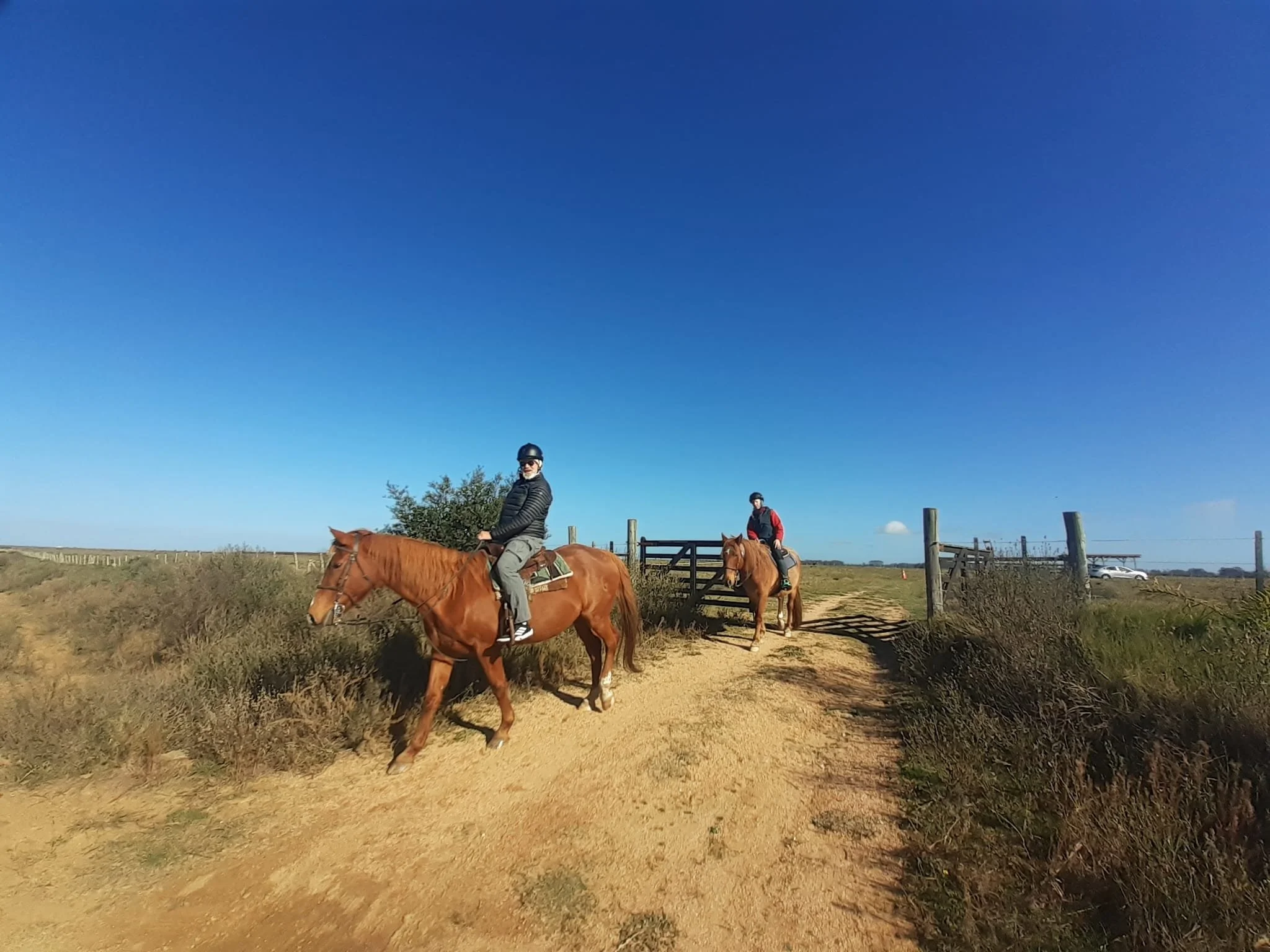
Galloping on gorgeous horses down the beaches of La Pedrera, Uruguay sounds amazing, doesn’t it? Just when I think my life can’t get any sweeter, I’m introduced to a new amazing experience in a part of the world I barely recognized less than a month ago. Wow. Today, I felt like my younger 12-year-old self (aka “Little Billy”) as I was guided through the back country and onto a pristine empty beach. Beautiful!
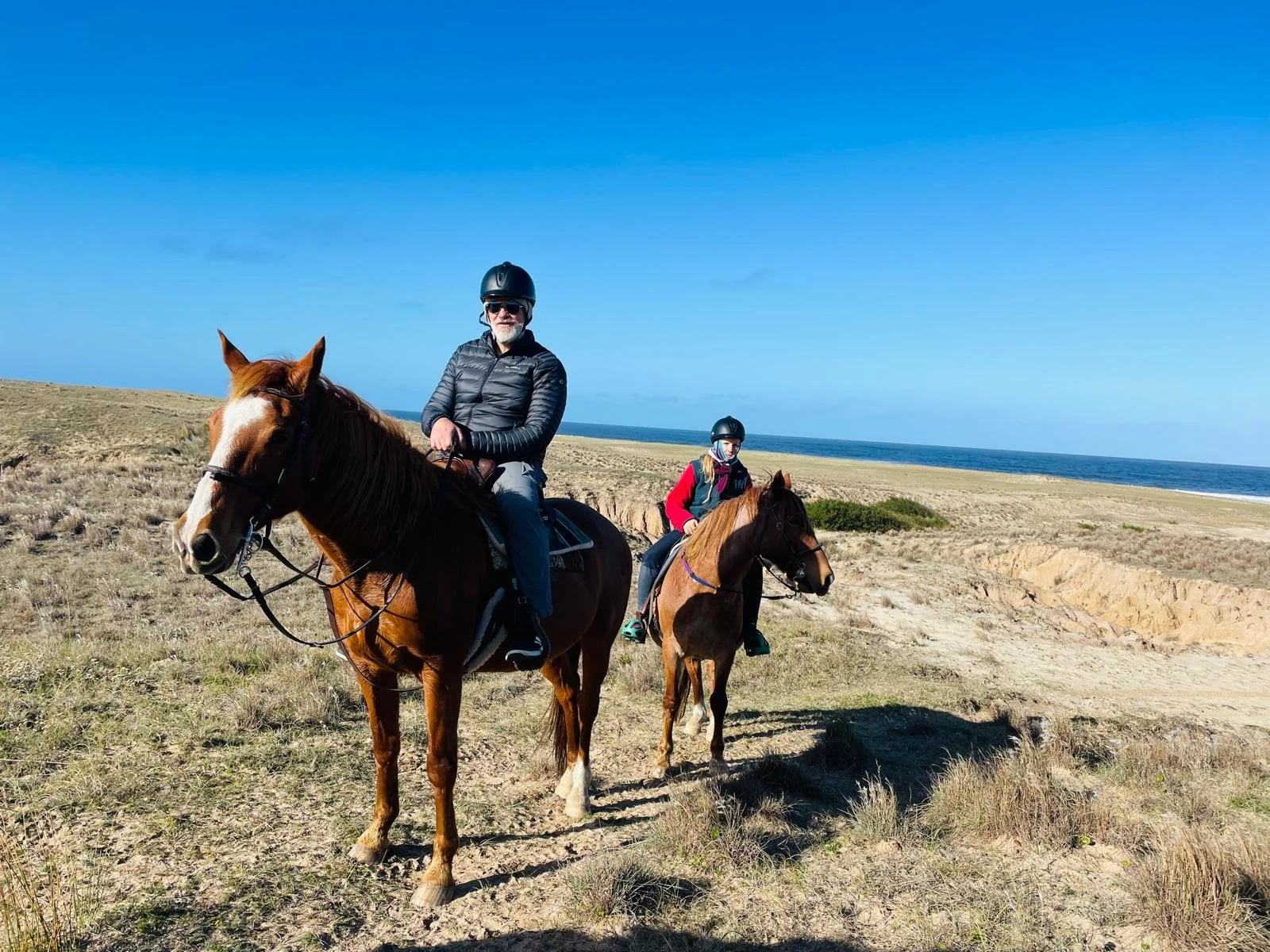
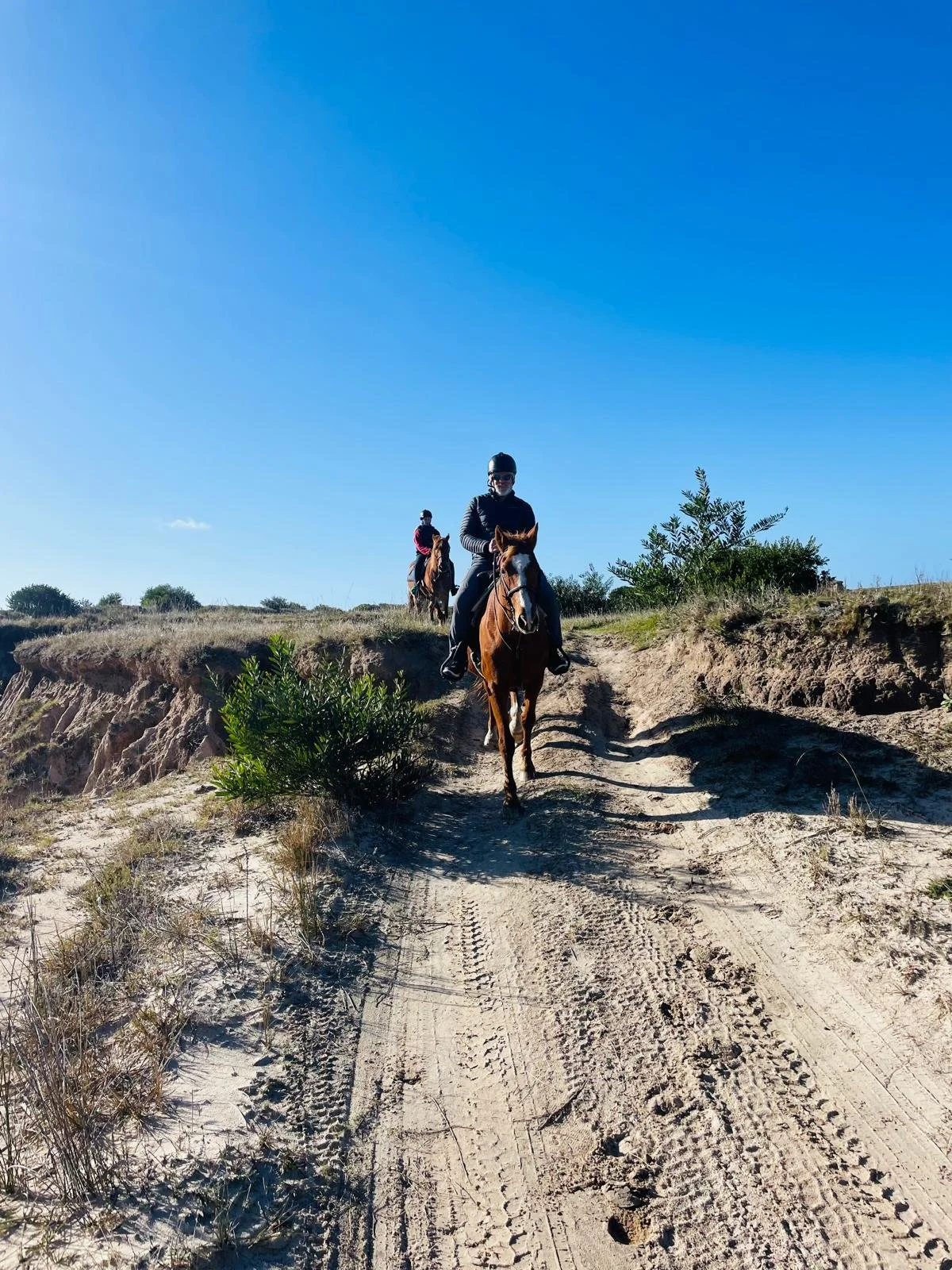
Riding on the beach and dunes near a canyon in La Pedrera, Uruguay
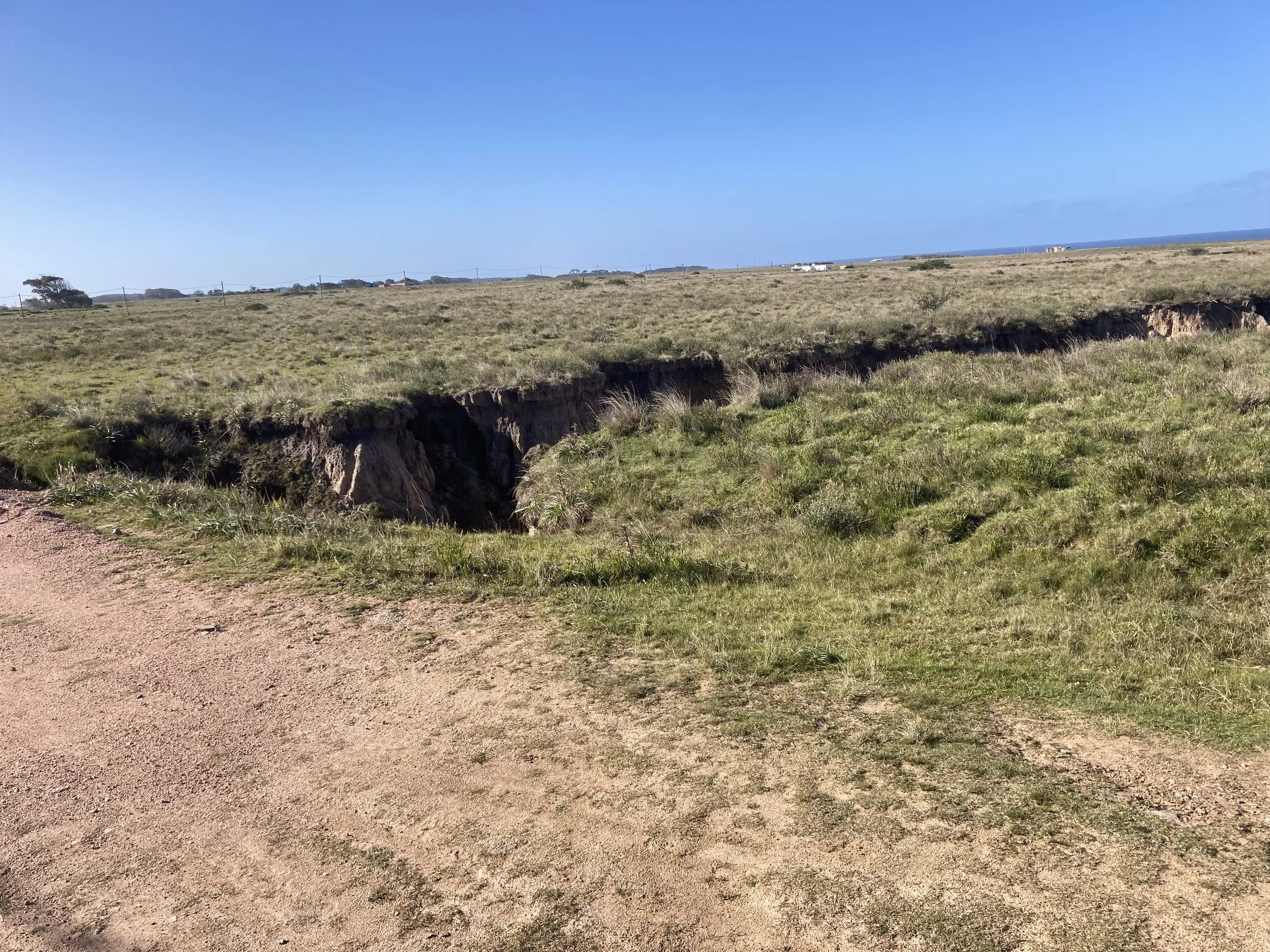
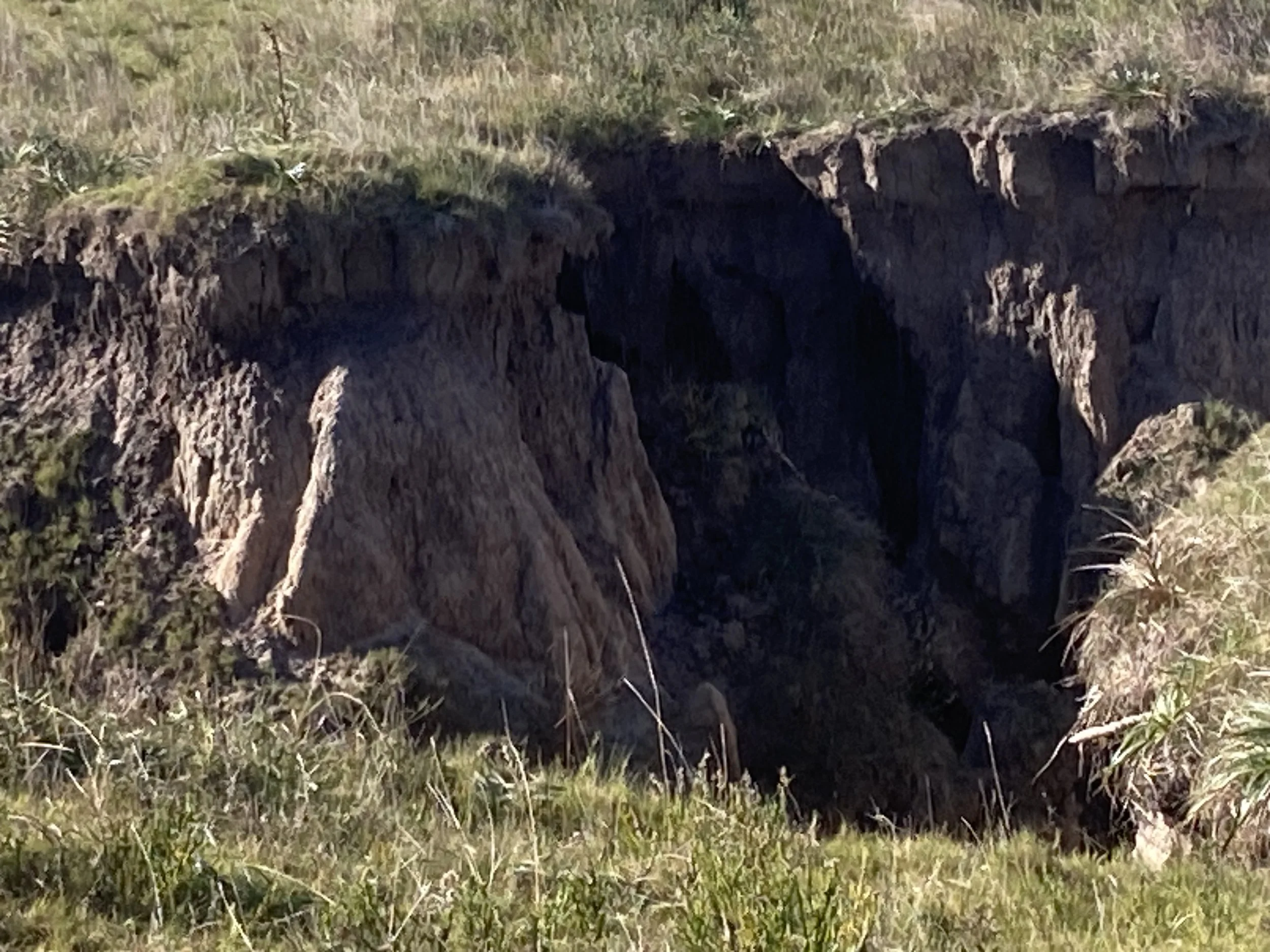
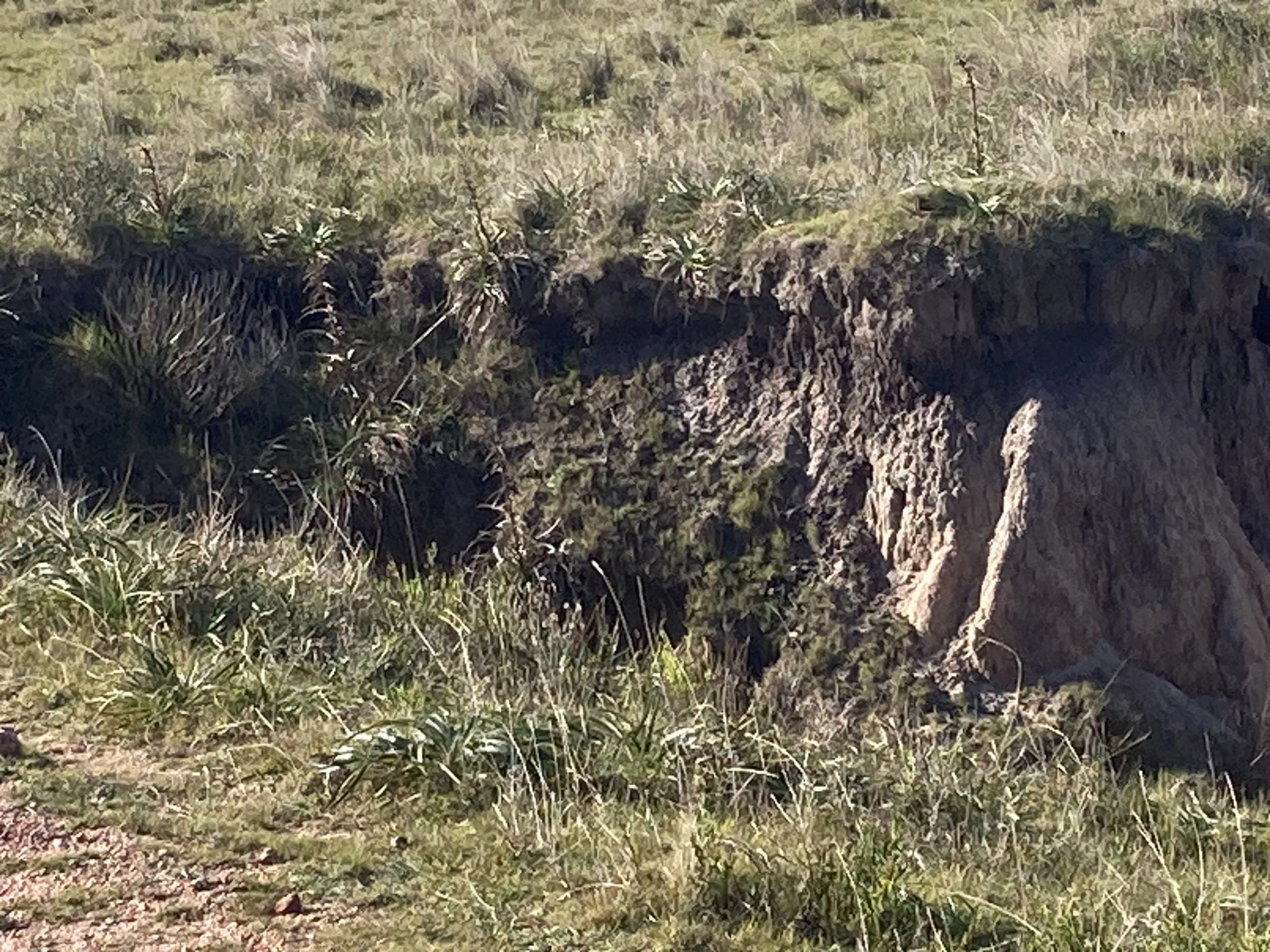
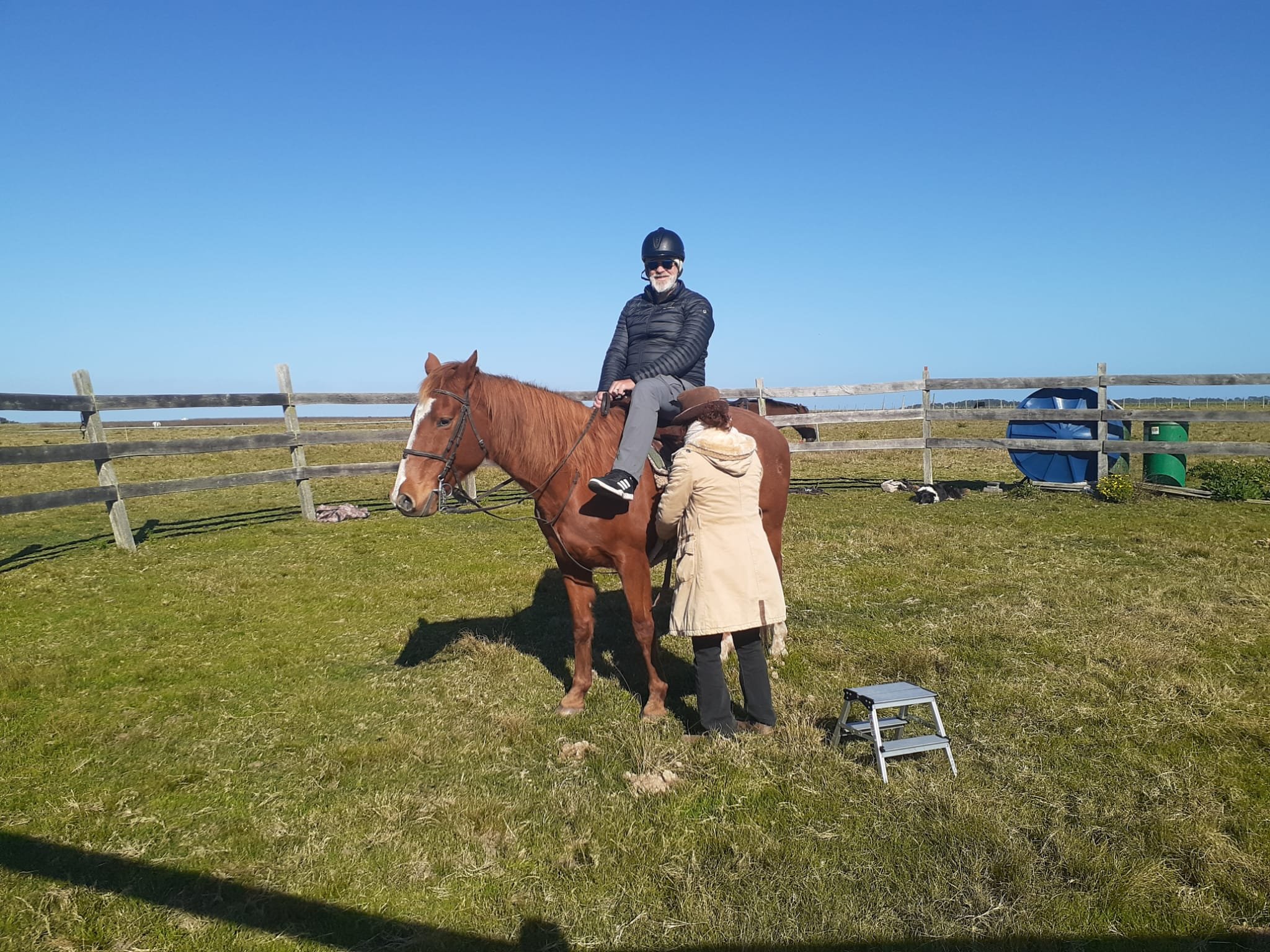
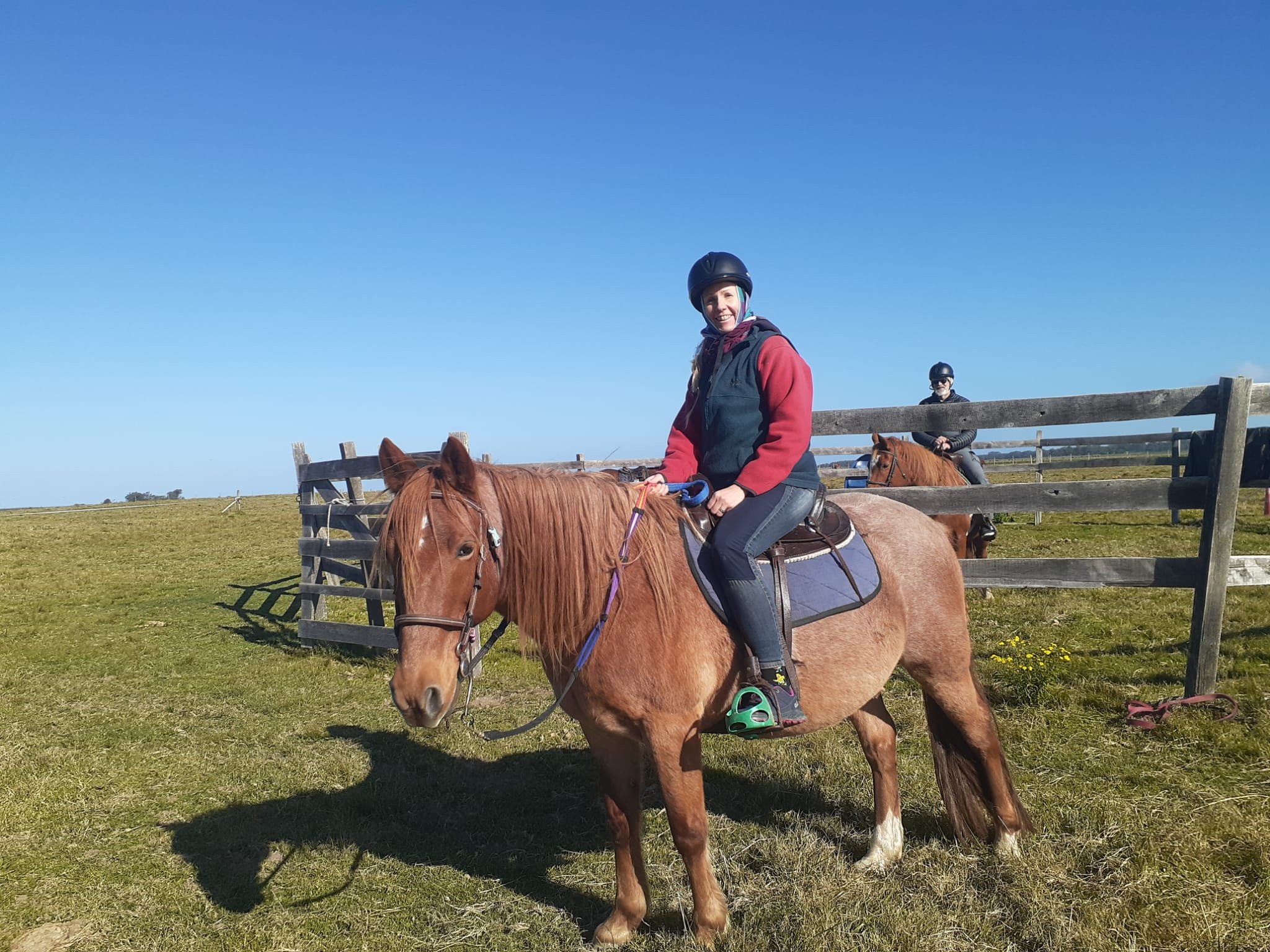
Behind me is my extended family member, Mechthild. She and her husband Danny have taken me in and treated me like a long-lost brother who has finally returned home. Never in my life have I received such incredible hospitality from someone I just met — friends of my friend Jill Medina Elizalde (see related post). And here we are together, riding horses through a canyon that looks a bit light Bryce Canyon (located in Utah). It was hard to truly capture while riding a horse, but I made an effort nonetheless:
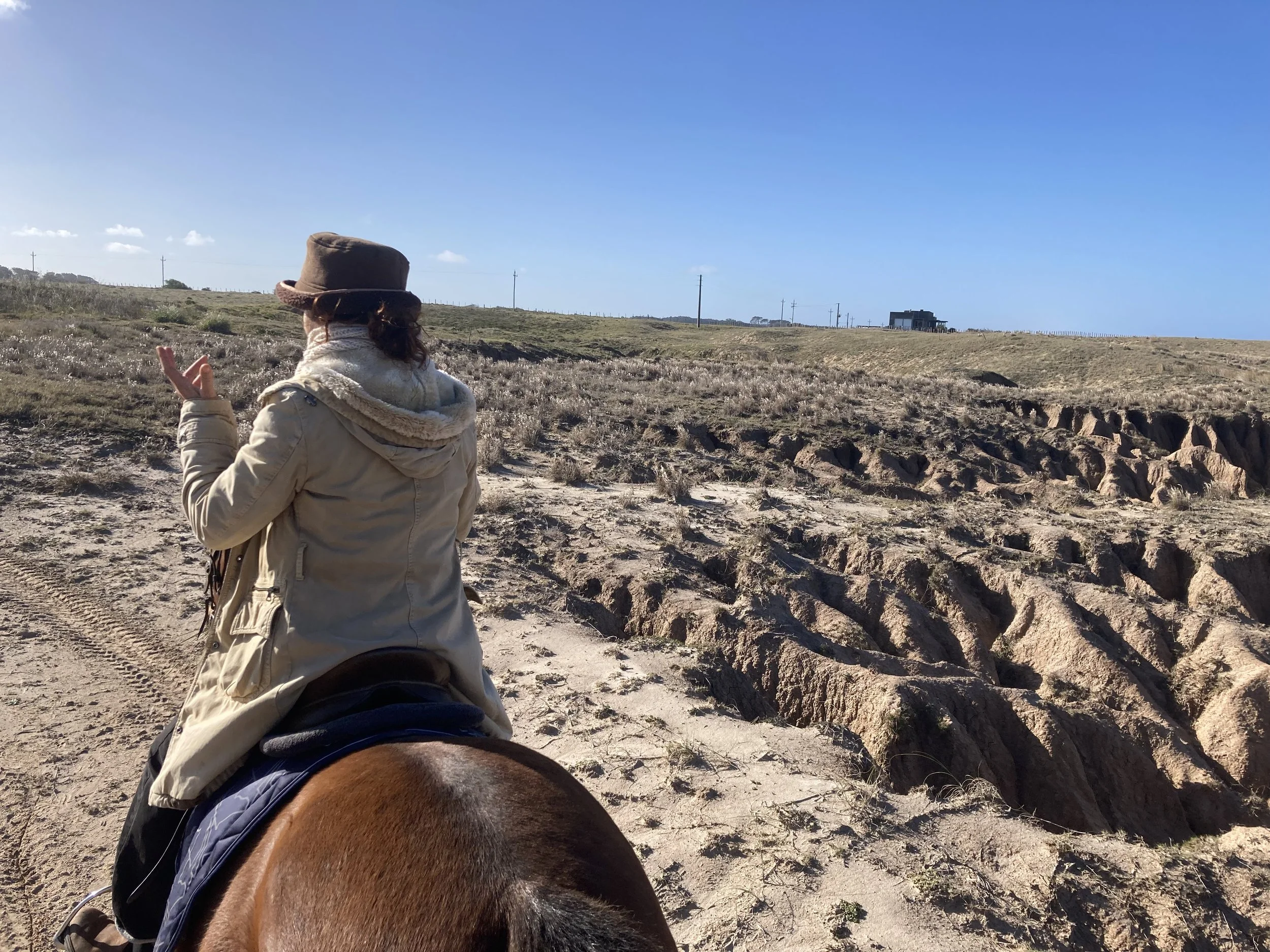
Sofia, our guide, shares her insights on the canyon to her right
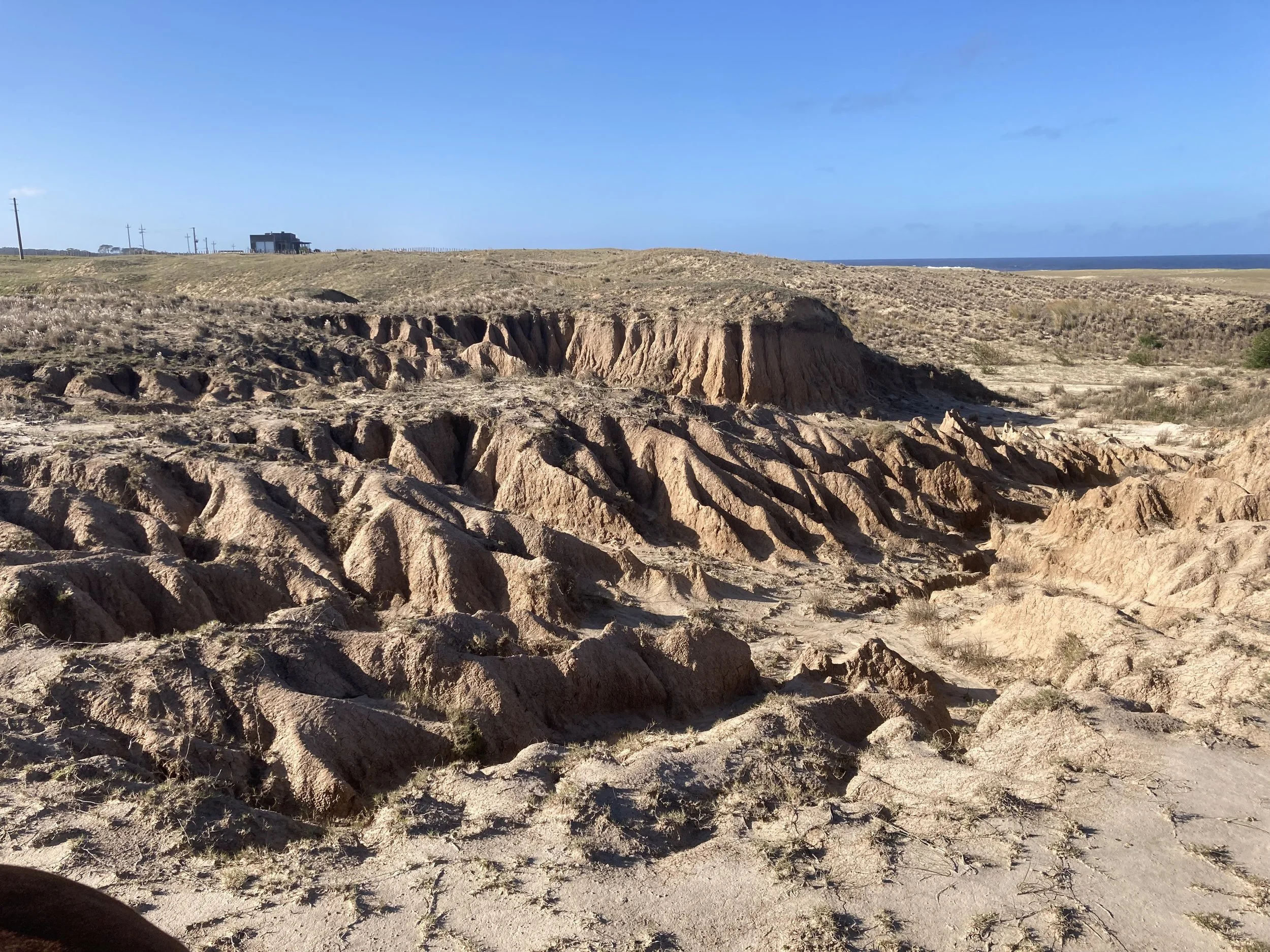
These wind-blown canyon sculpting go on for at least a mile
To be fair, I was holding my saddle with my left hand, as well as the reigns in case my horse wanted to speed up without my request, while attempting to navigate my iPhone, zoom in and take a picture. You can understand why what you see is not nearly as impressive as what you’d see in Bryce Canyon (even through when the light hits the red iron minerals, it looks more like this:
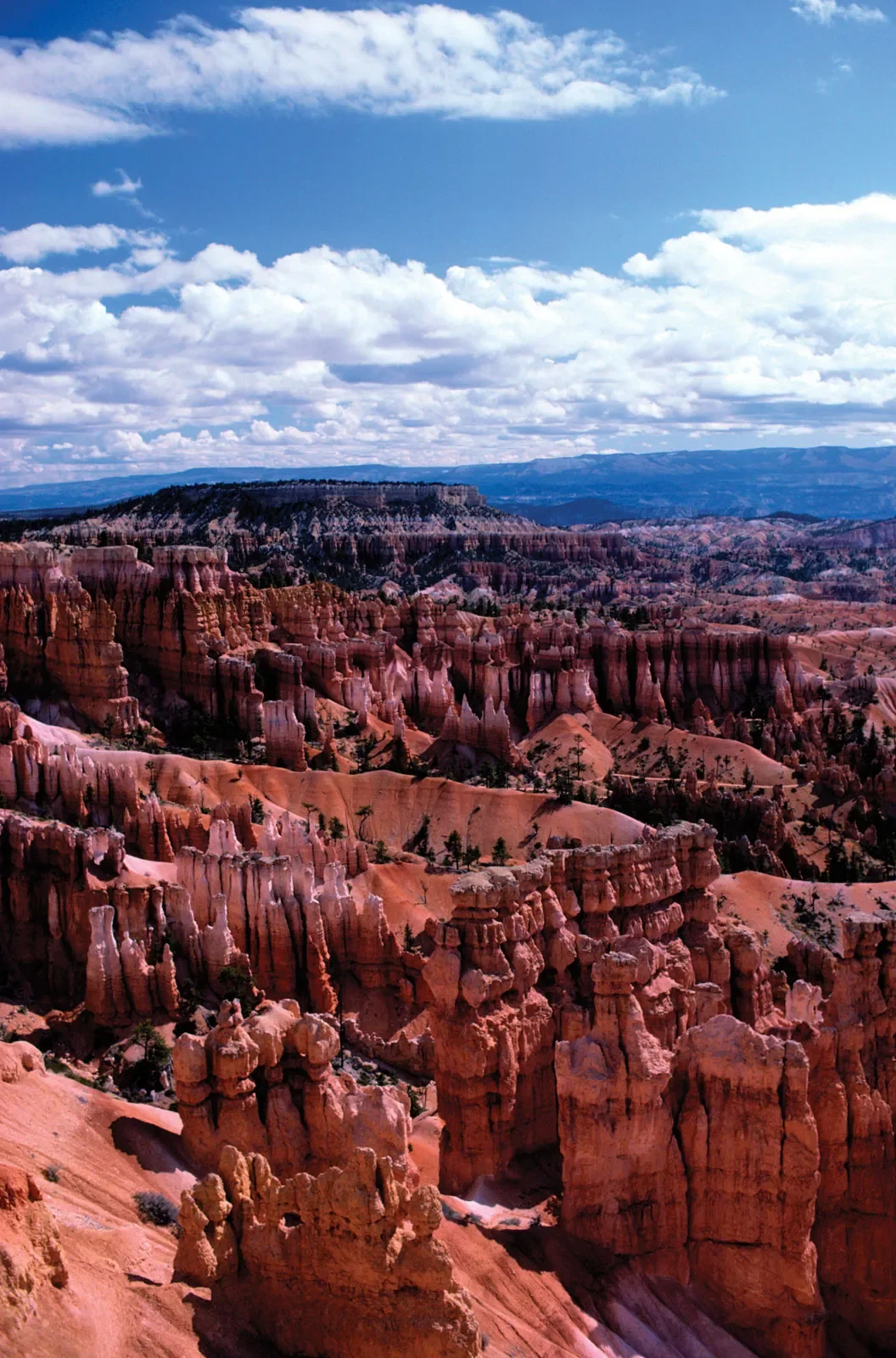
Actual photo of Bryce Canyon, Utah and what today reminded me of
Our guide, Sofia, is an expert rider of horses and cares deeply about them. When she takes people on this (and other) tours, she usually takes a relatively new(er) horse and is training the horse while guiding us. That’s really talented. She also loves the cycle of giving horse rides because, as you can imagine, there’s a peak season which is the summer here in Uruguay (January through March). After that, things slow down and she gives fewer rides less often — like today. And yet, she confessed that she really needed today’s ride. It had been too long and her body was craving the outdoor connection as well as her emotional connection to her horses.
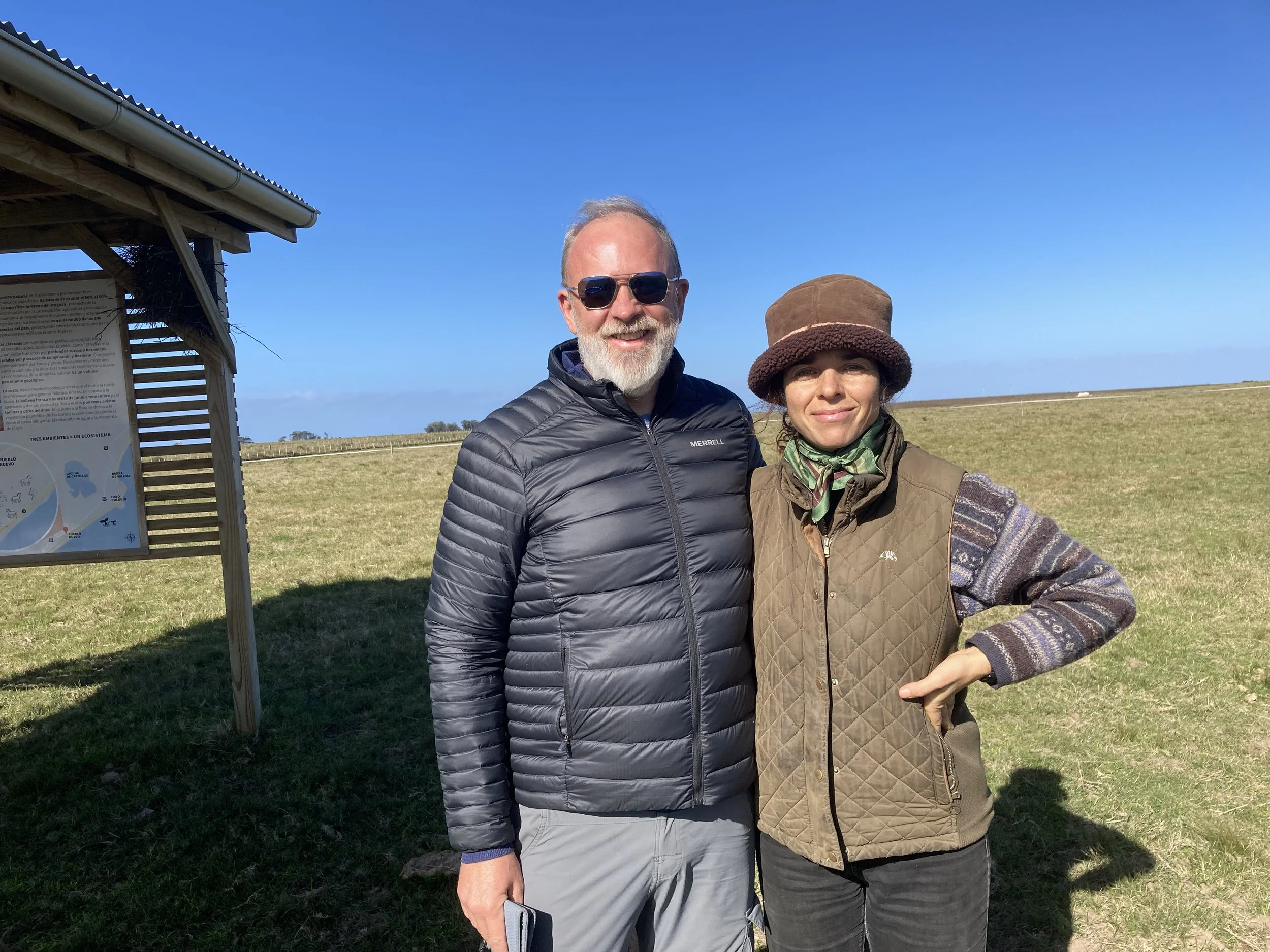
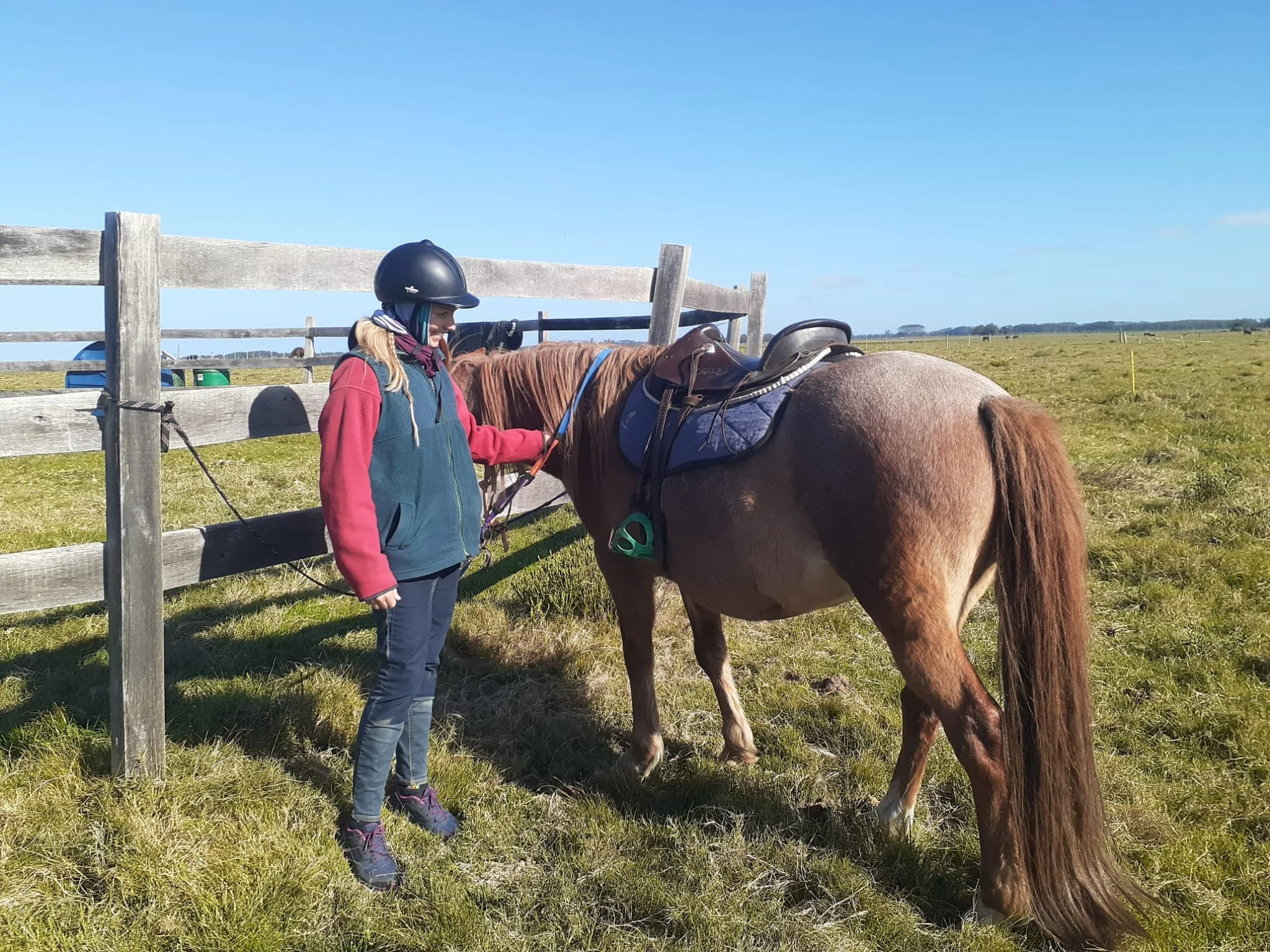
Sofia joins me for a picture before we begin our journey together
I need to keep emphasizing that none of this would have happened were it not for my friend Jill and her husband. Together, they took the time to introduce me to their dear friends, Mechthild and Danny as well as Sofia. Once I agreed to extend my time in Uruguay, rent a car and drive to La Paloma, Jill went to work sending me all the places she’d love for me to visit while I’m here. I consider it a bit like “Adventure Bingo”, in that she sent a blank card with all sorts of recommended options, and slowly I’ve been checking out and discovering each one while enjoying all the fulfillment as I do.
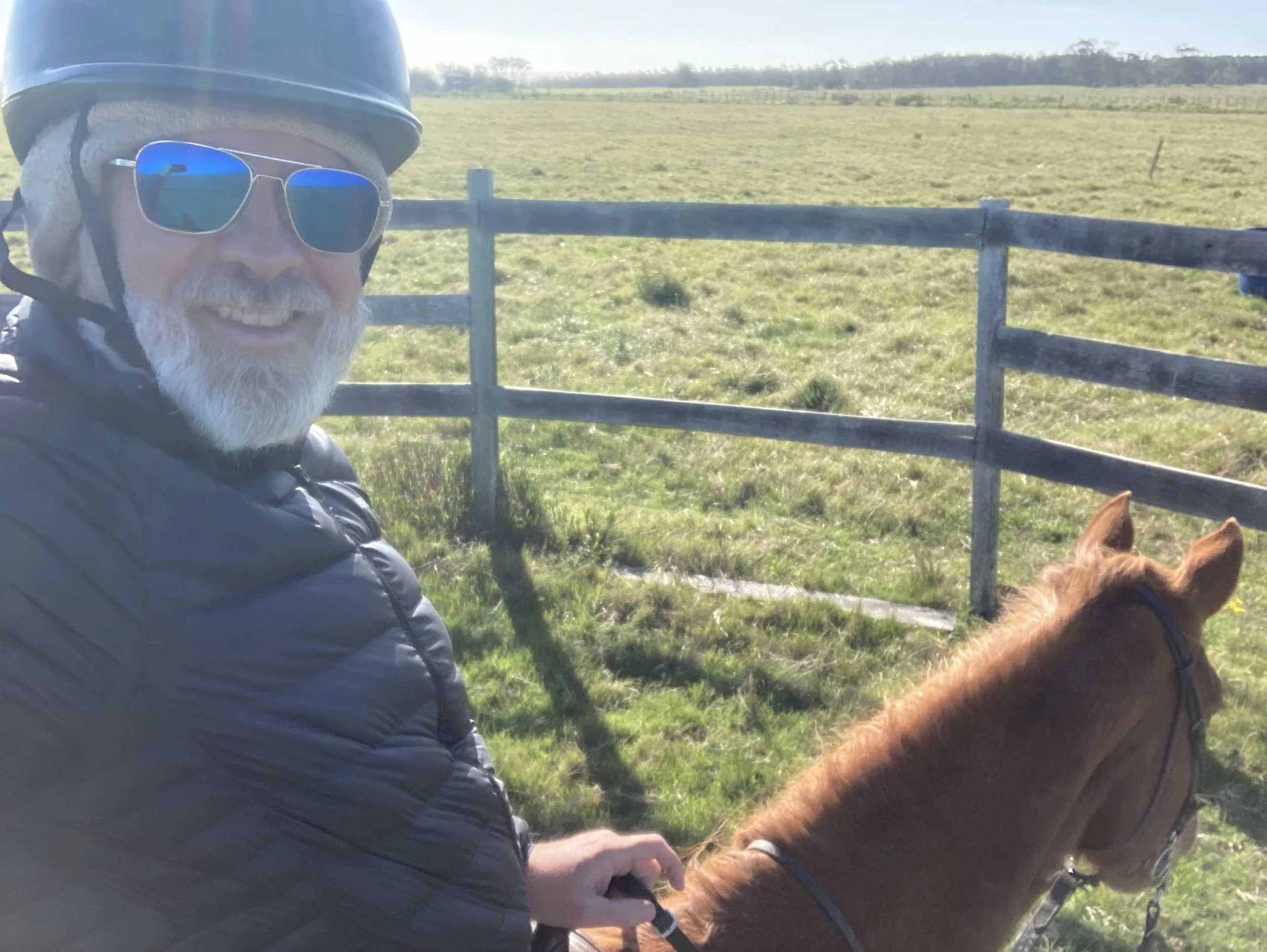
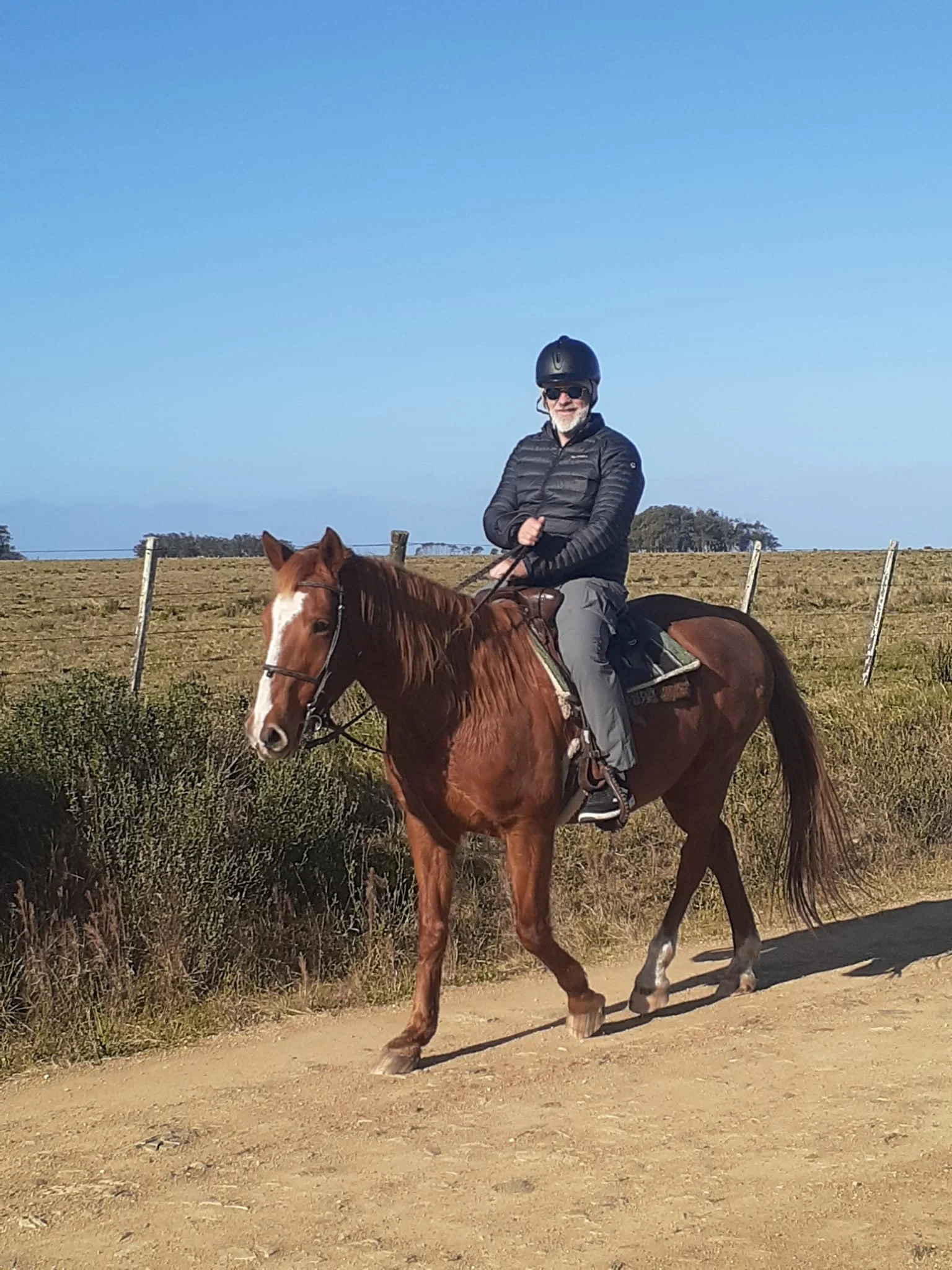
Taking a horse selfie is a lot harder than it looks ;-)
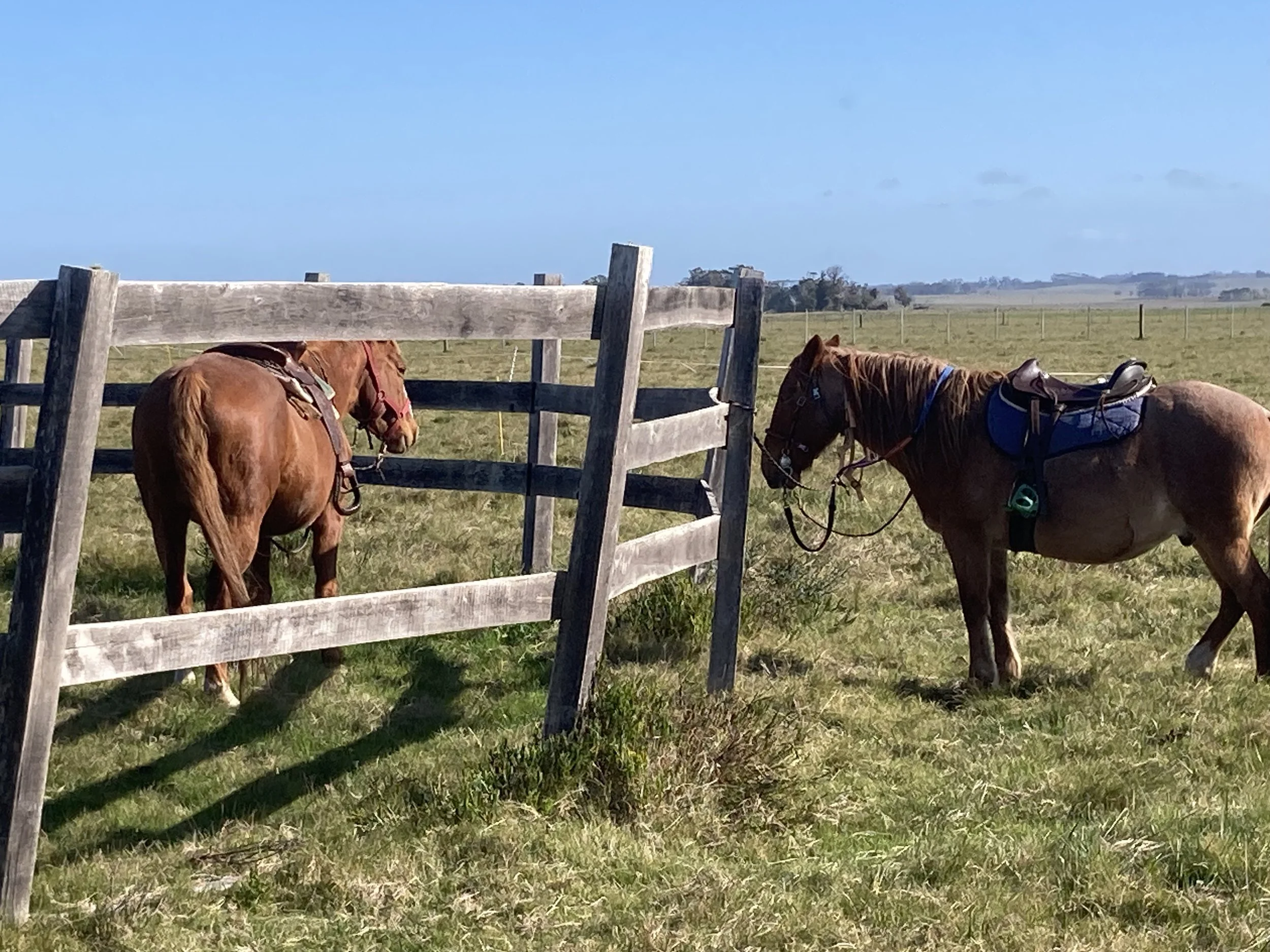
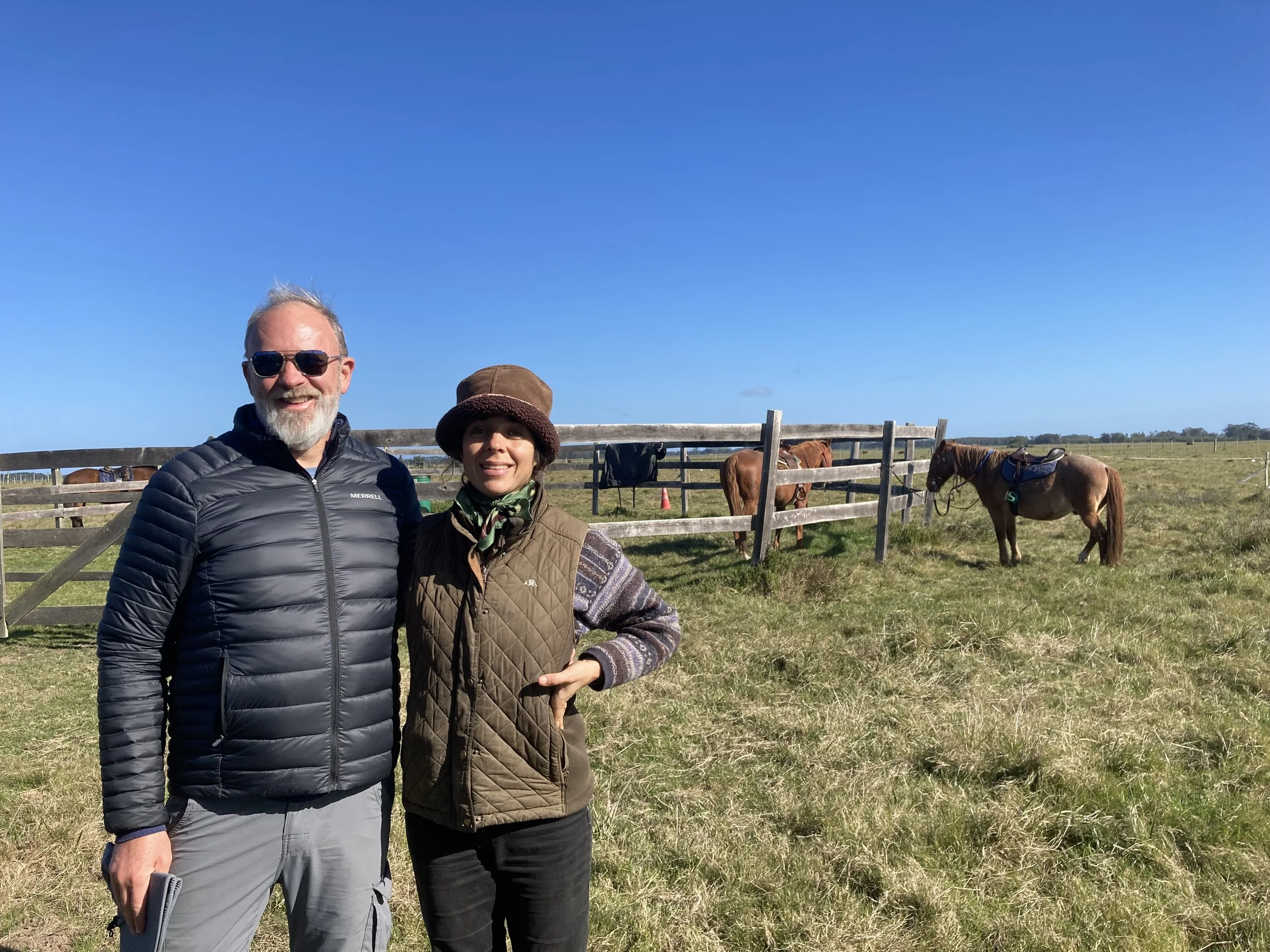
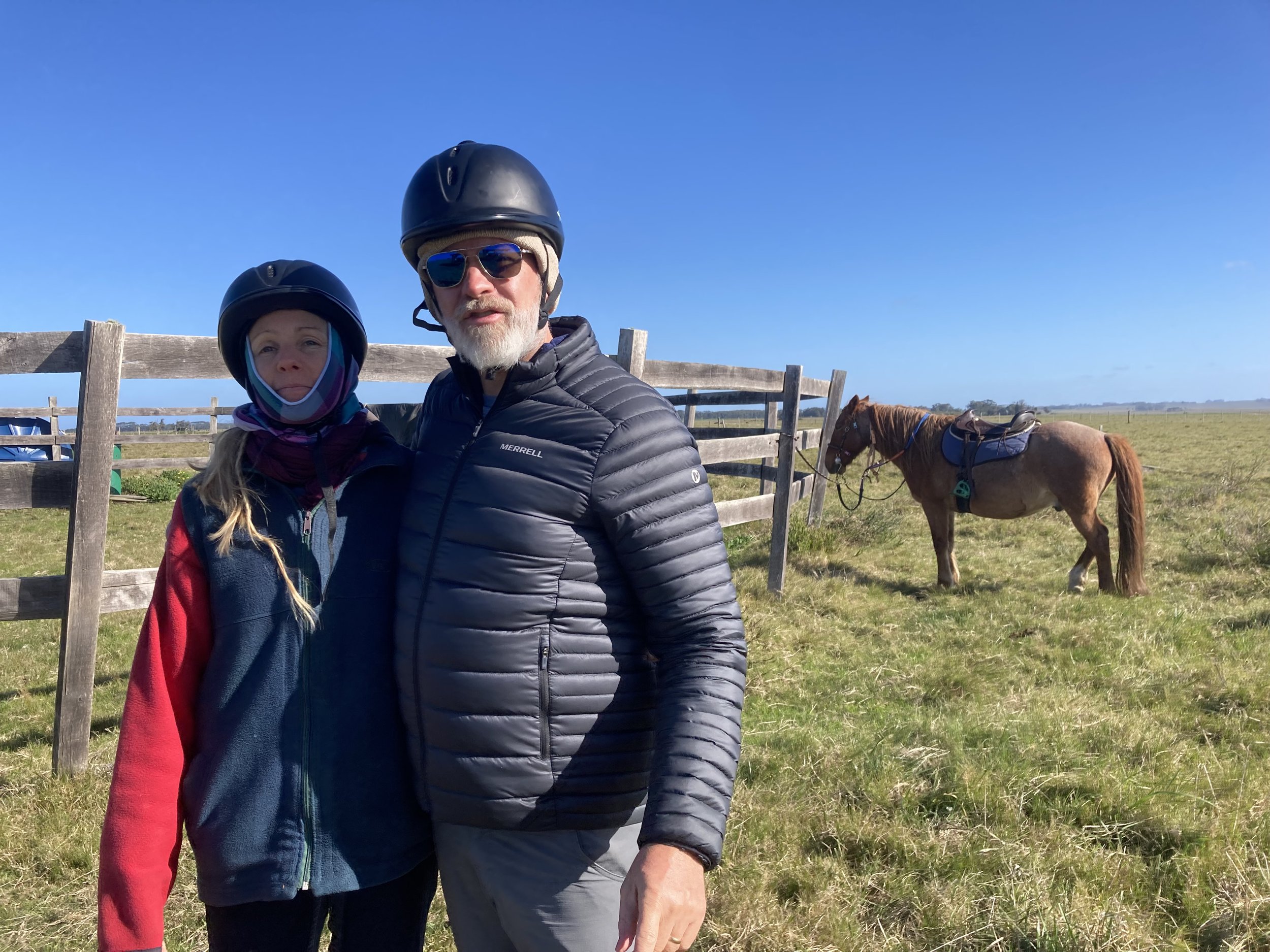
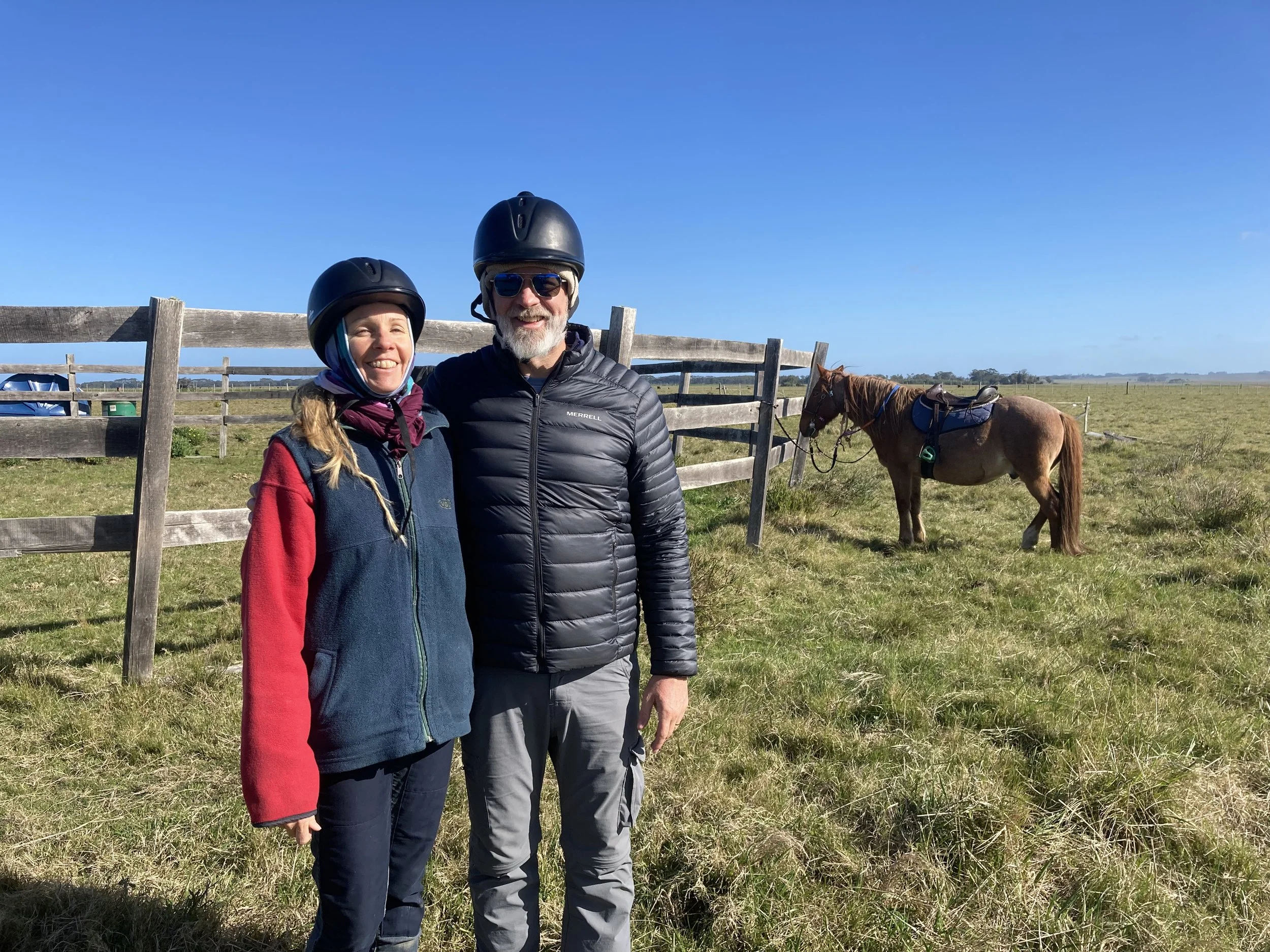
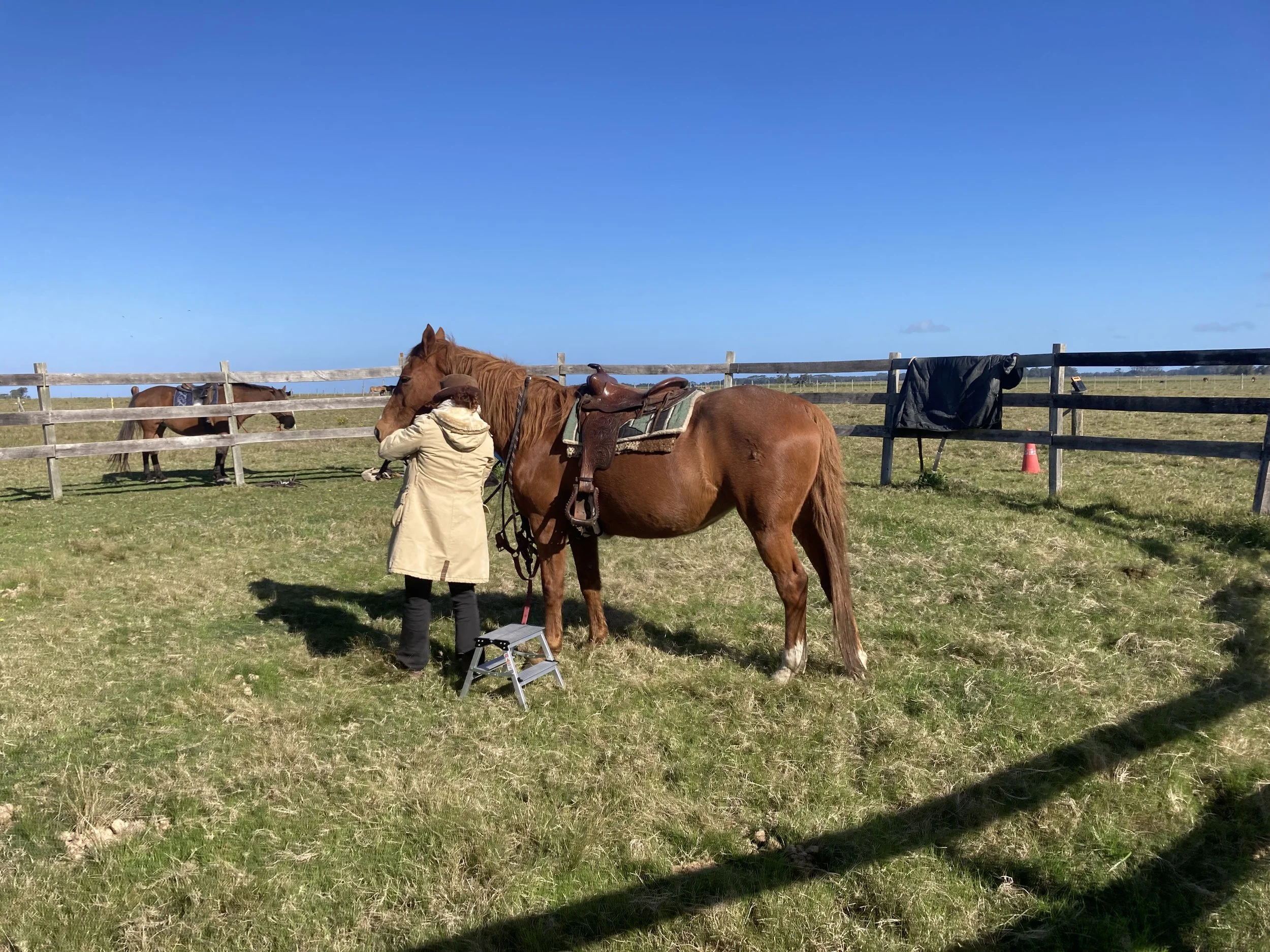
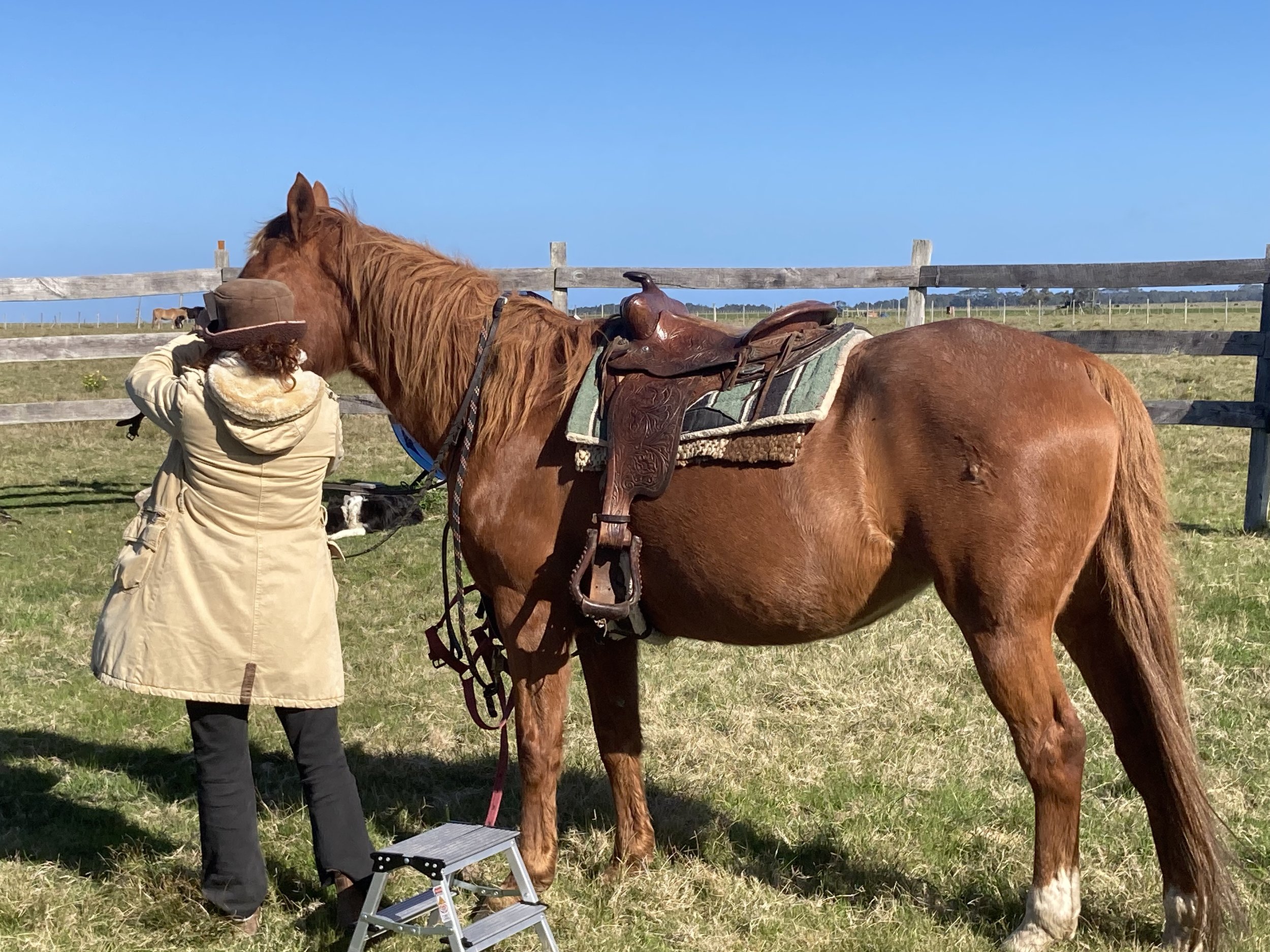
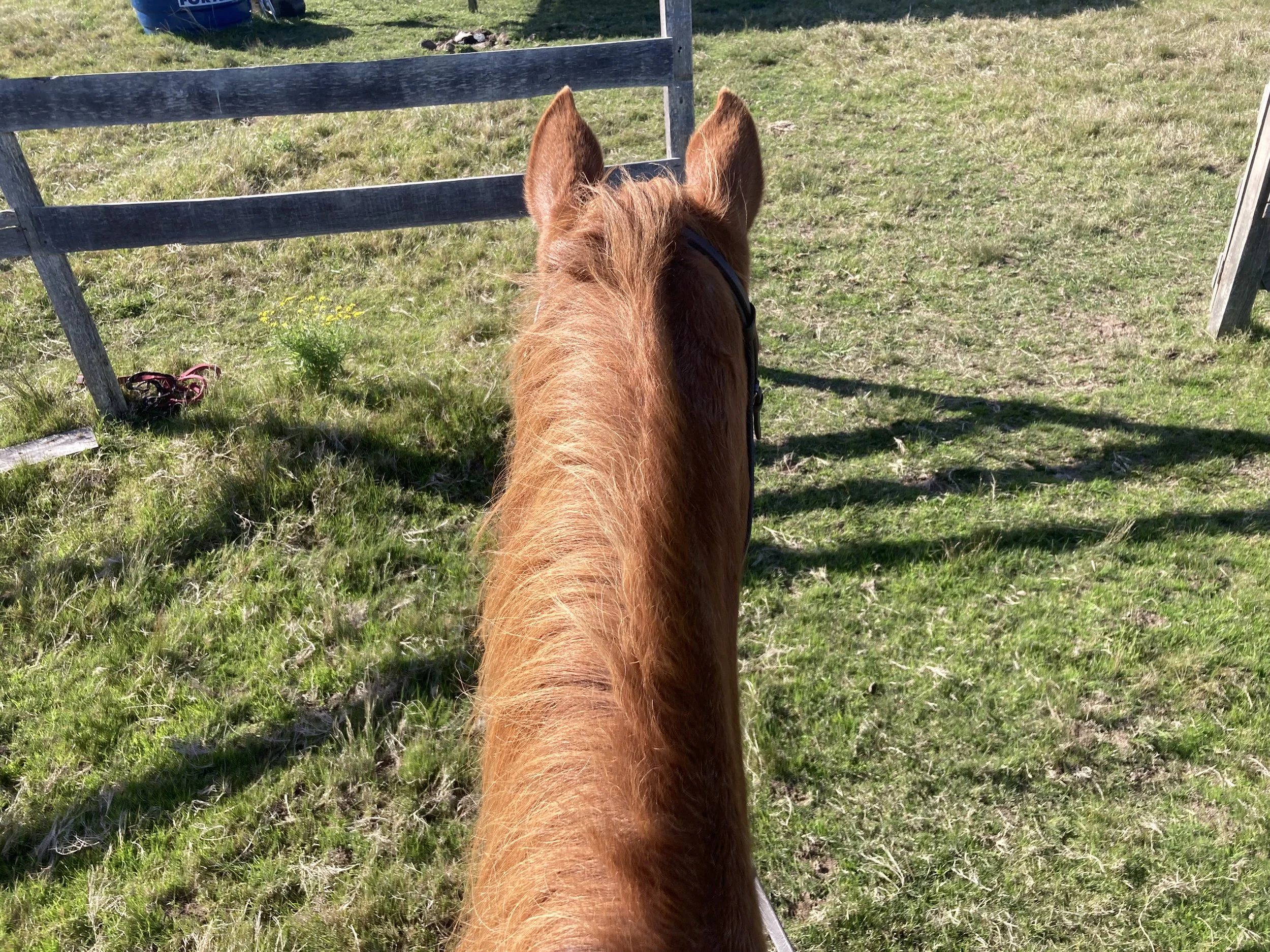
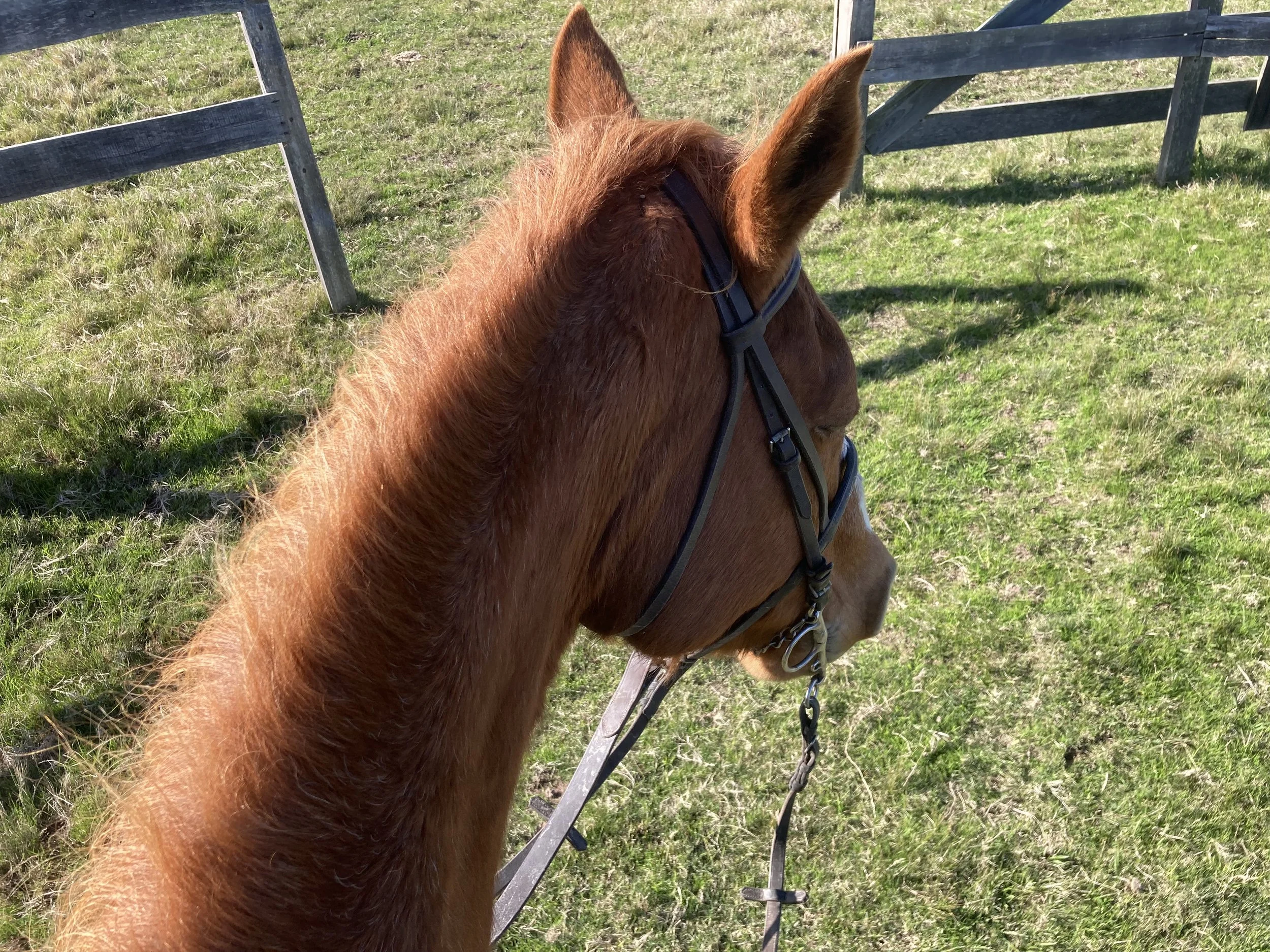
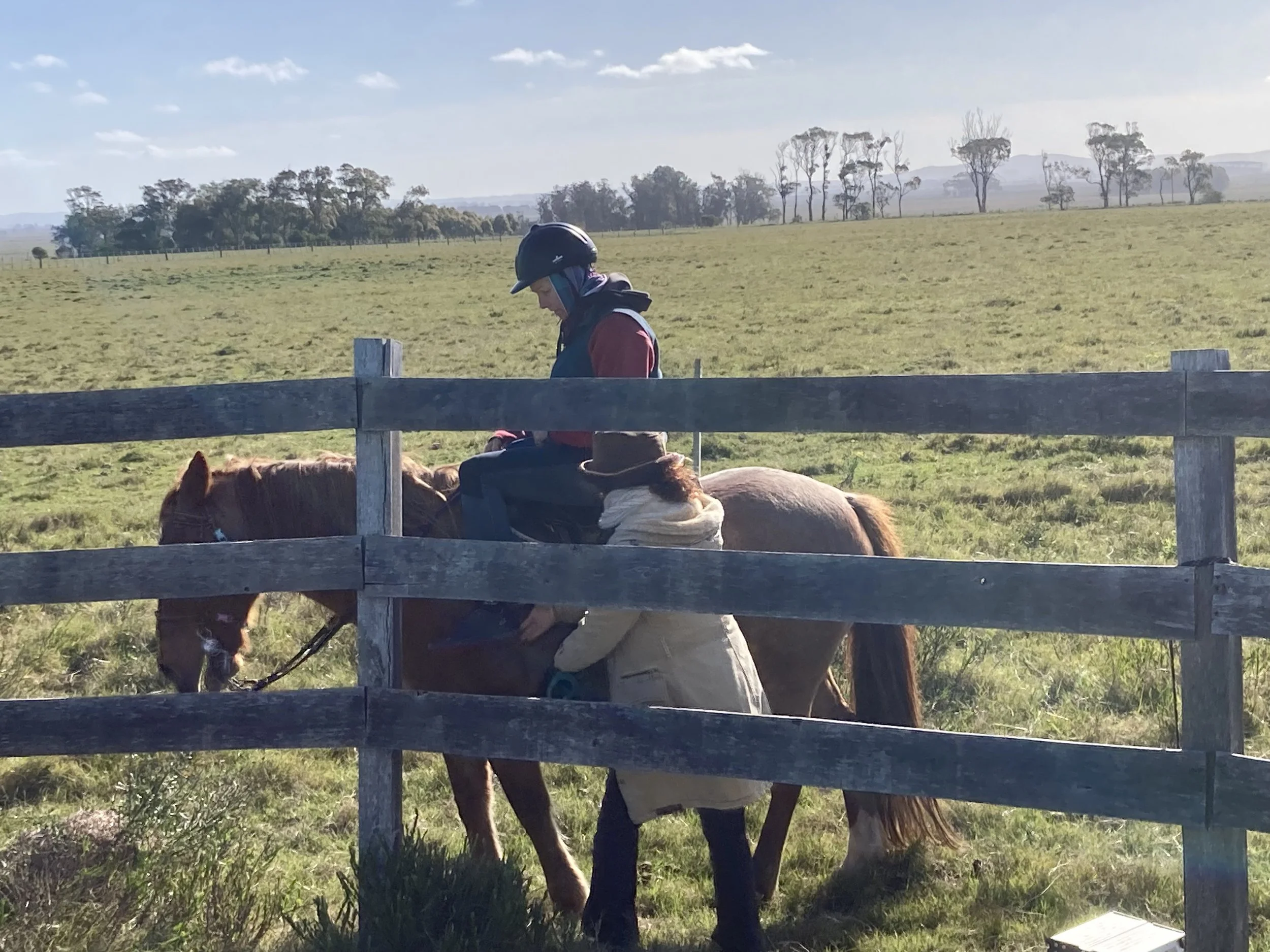
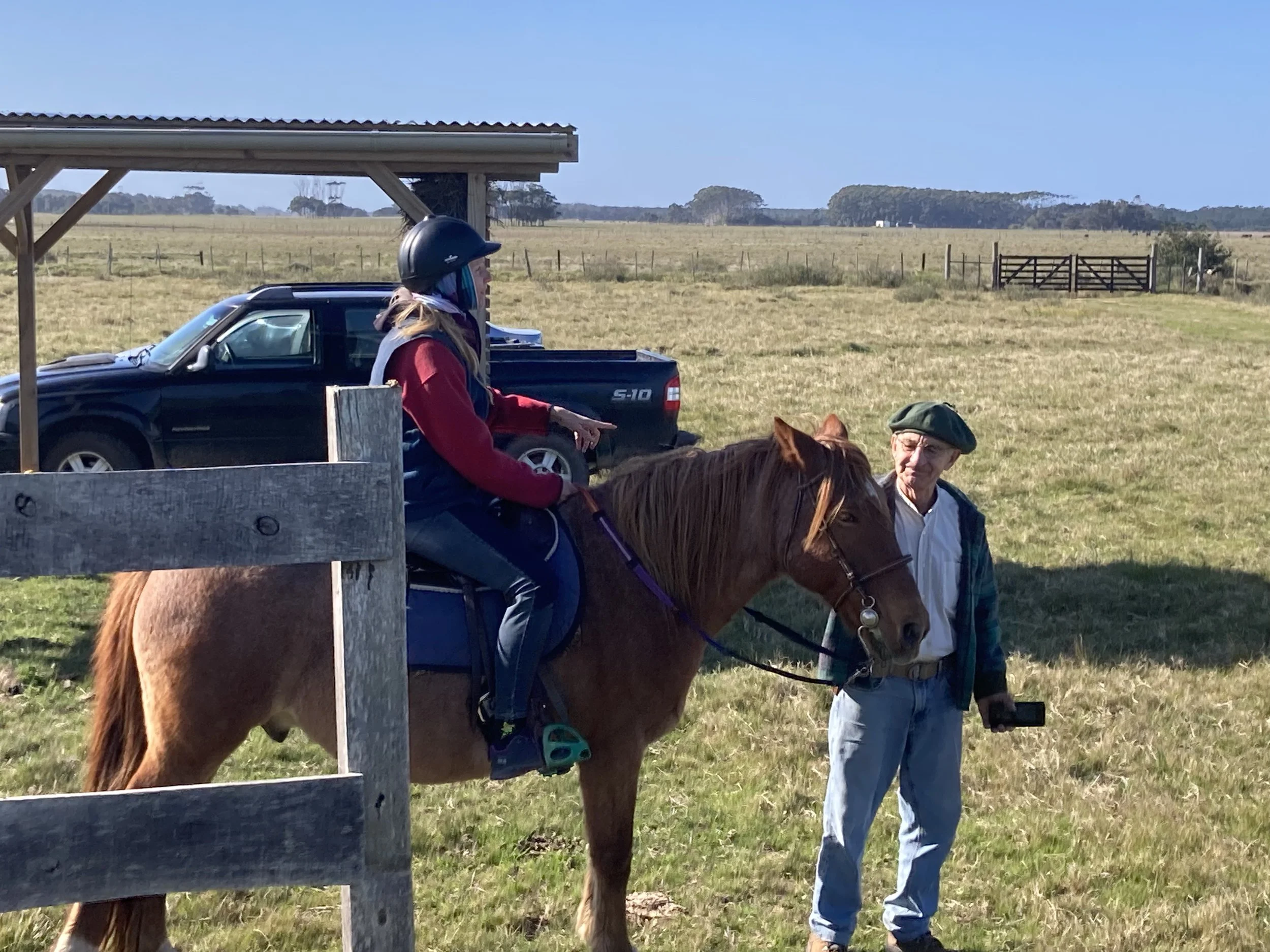
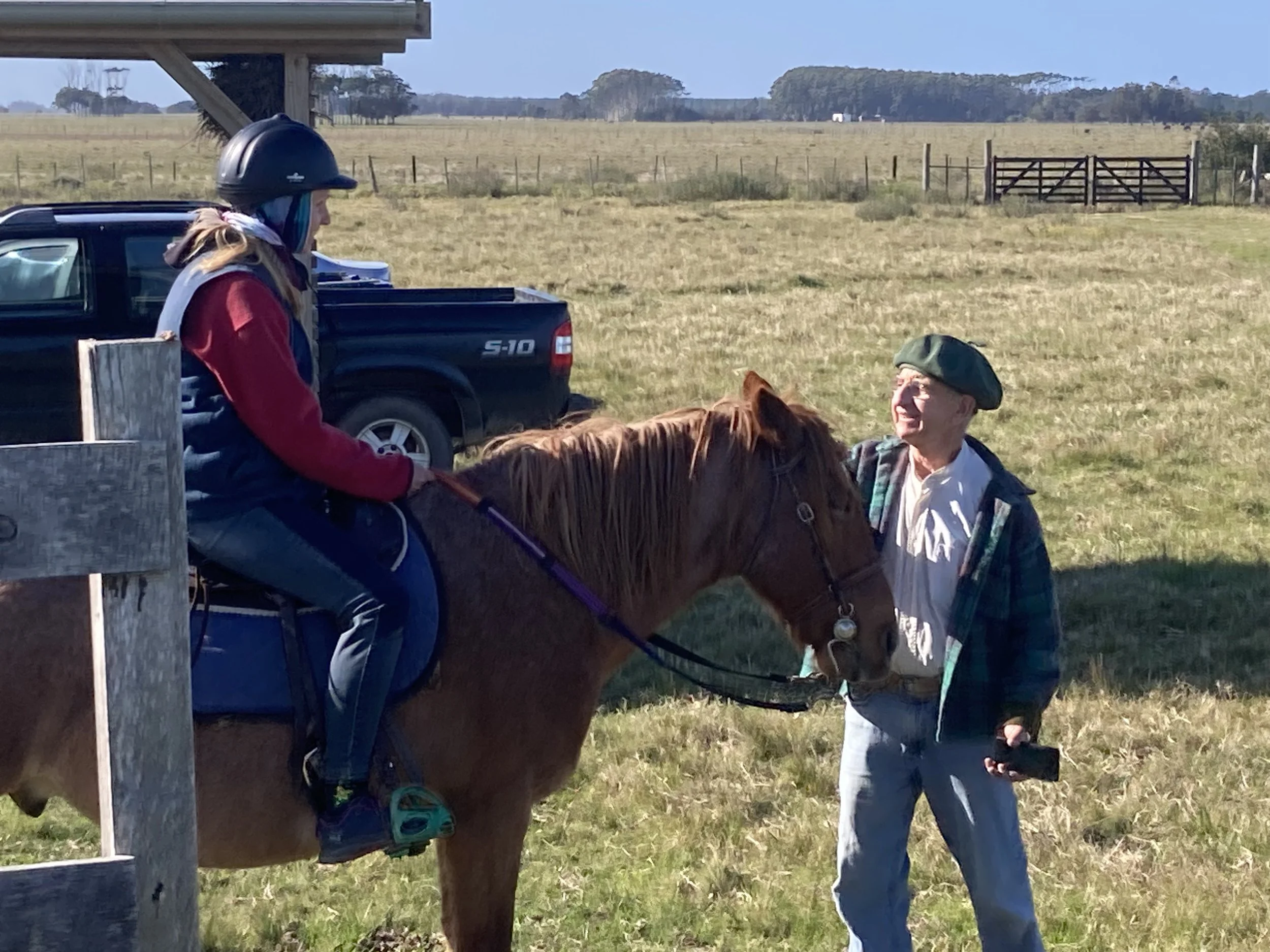
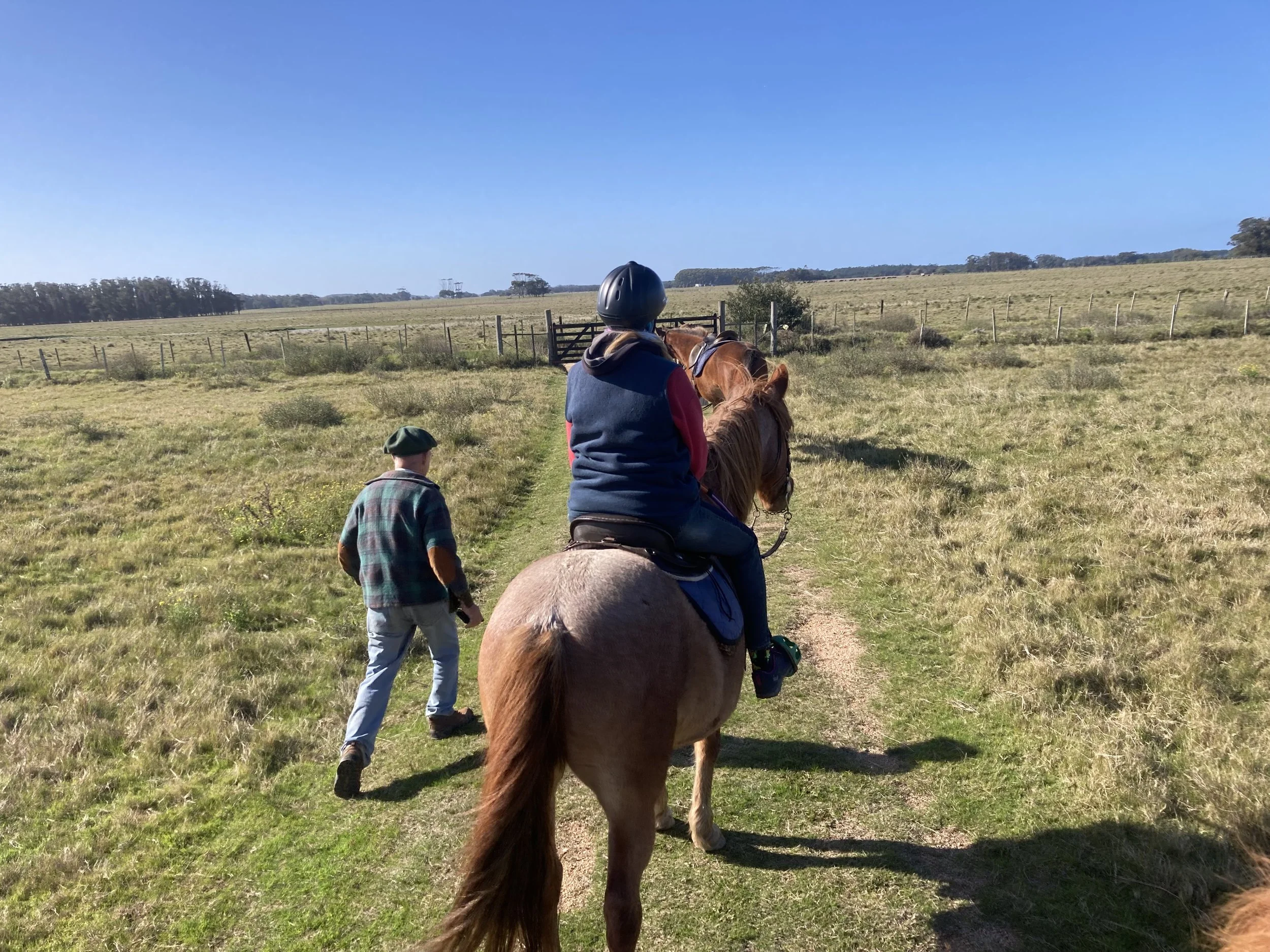
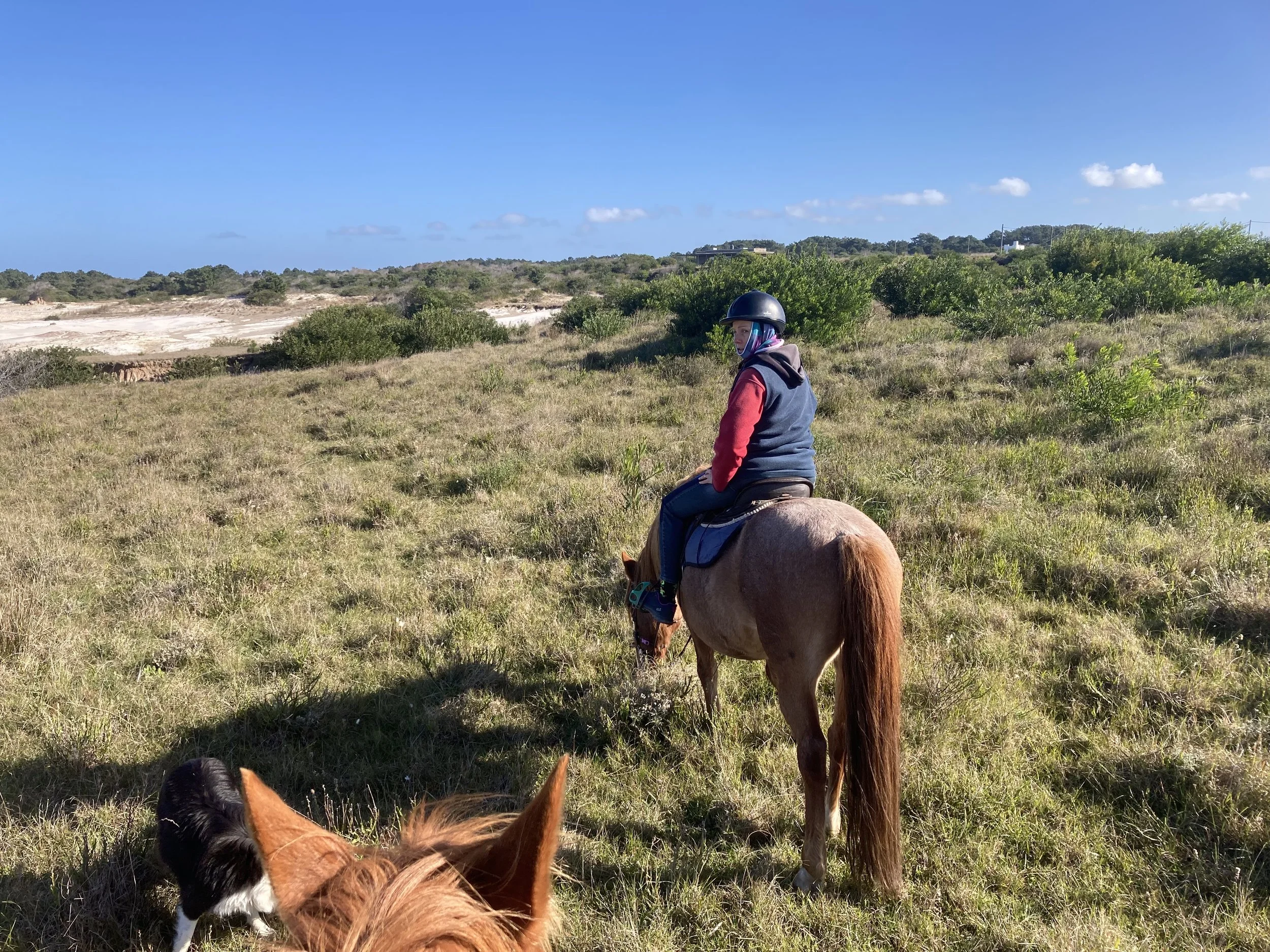
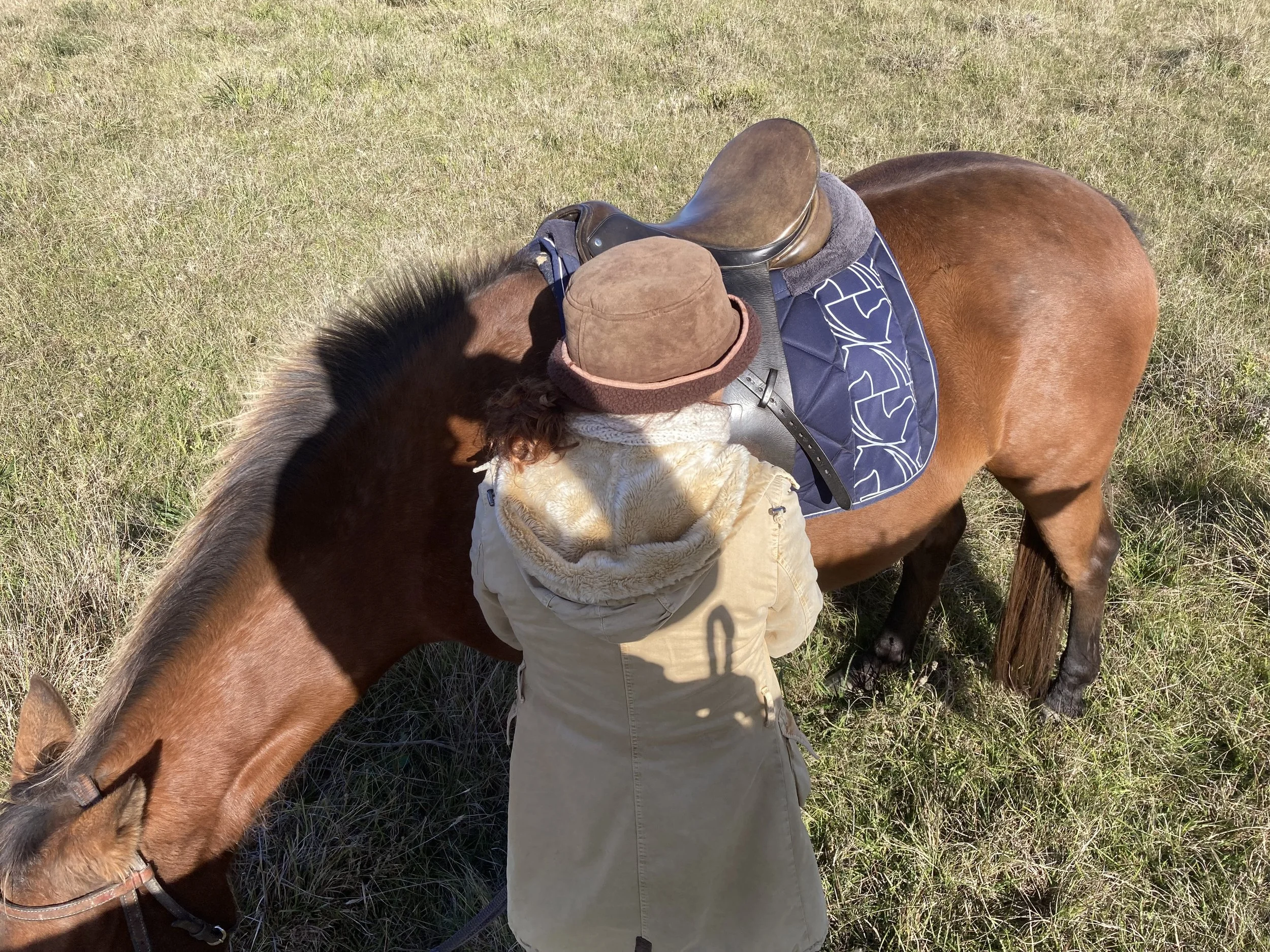
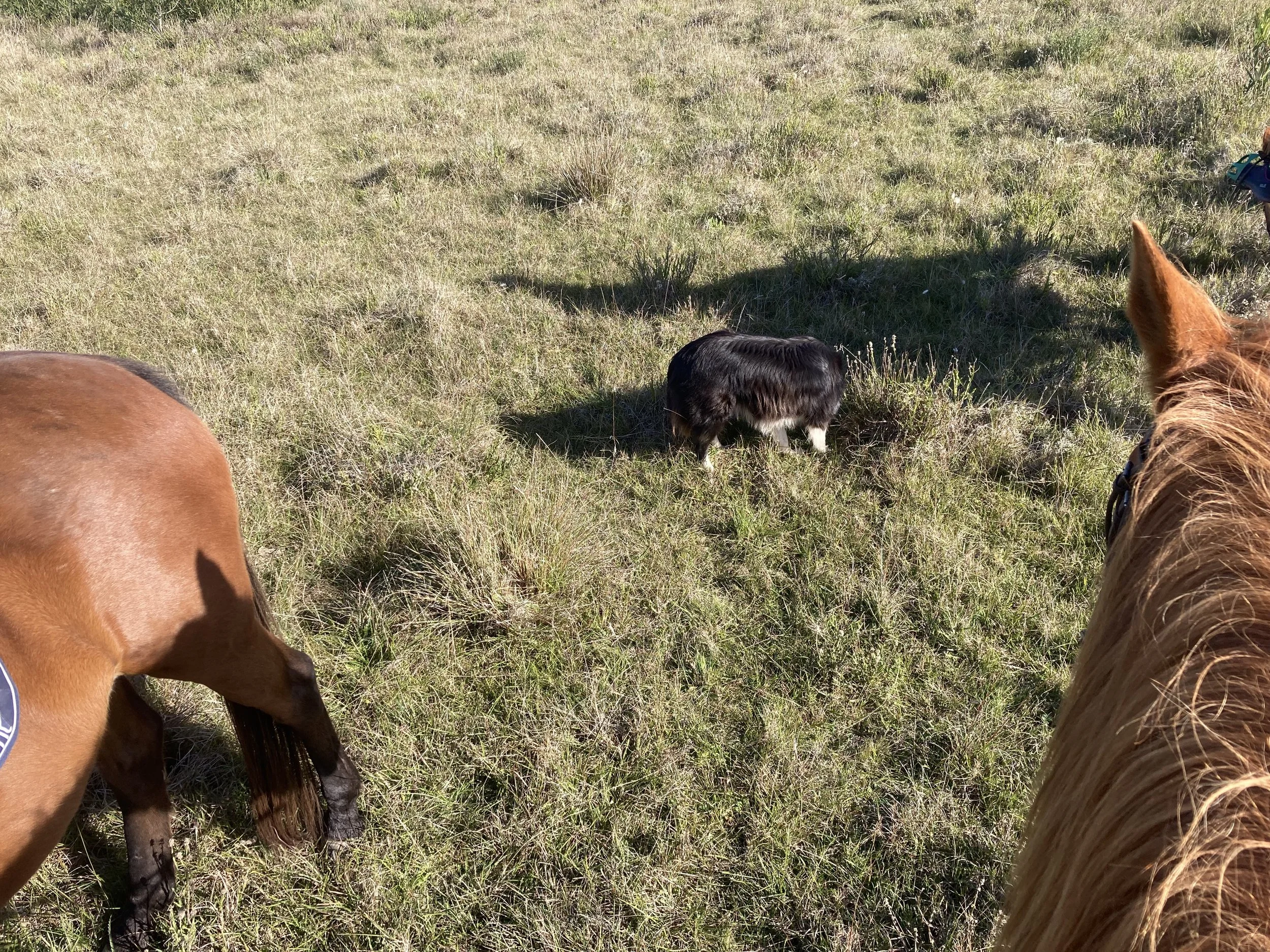
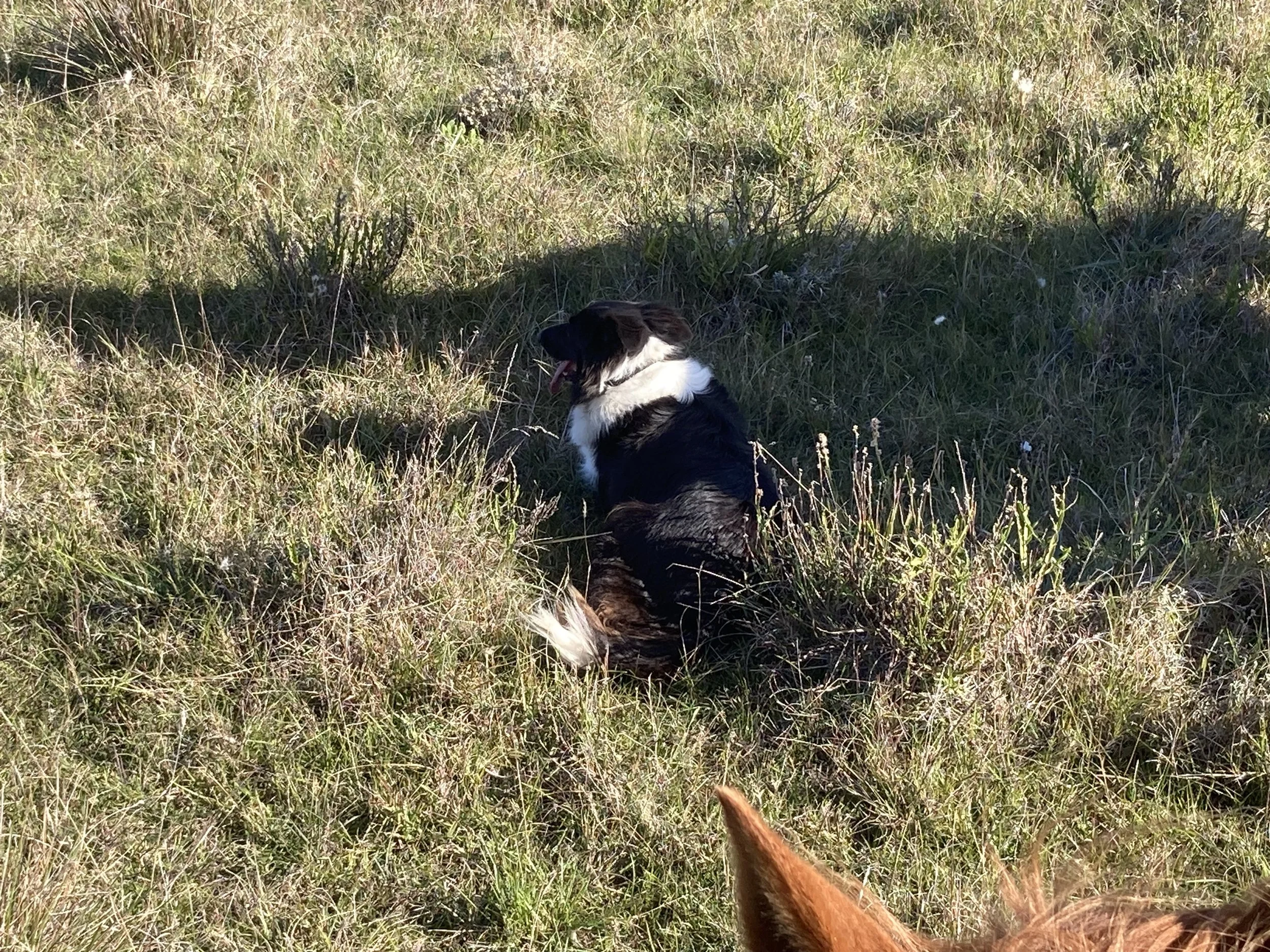
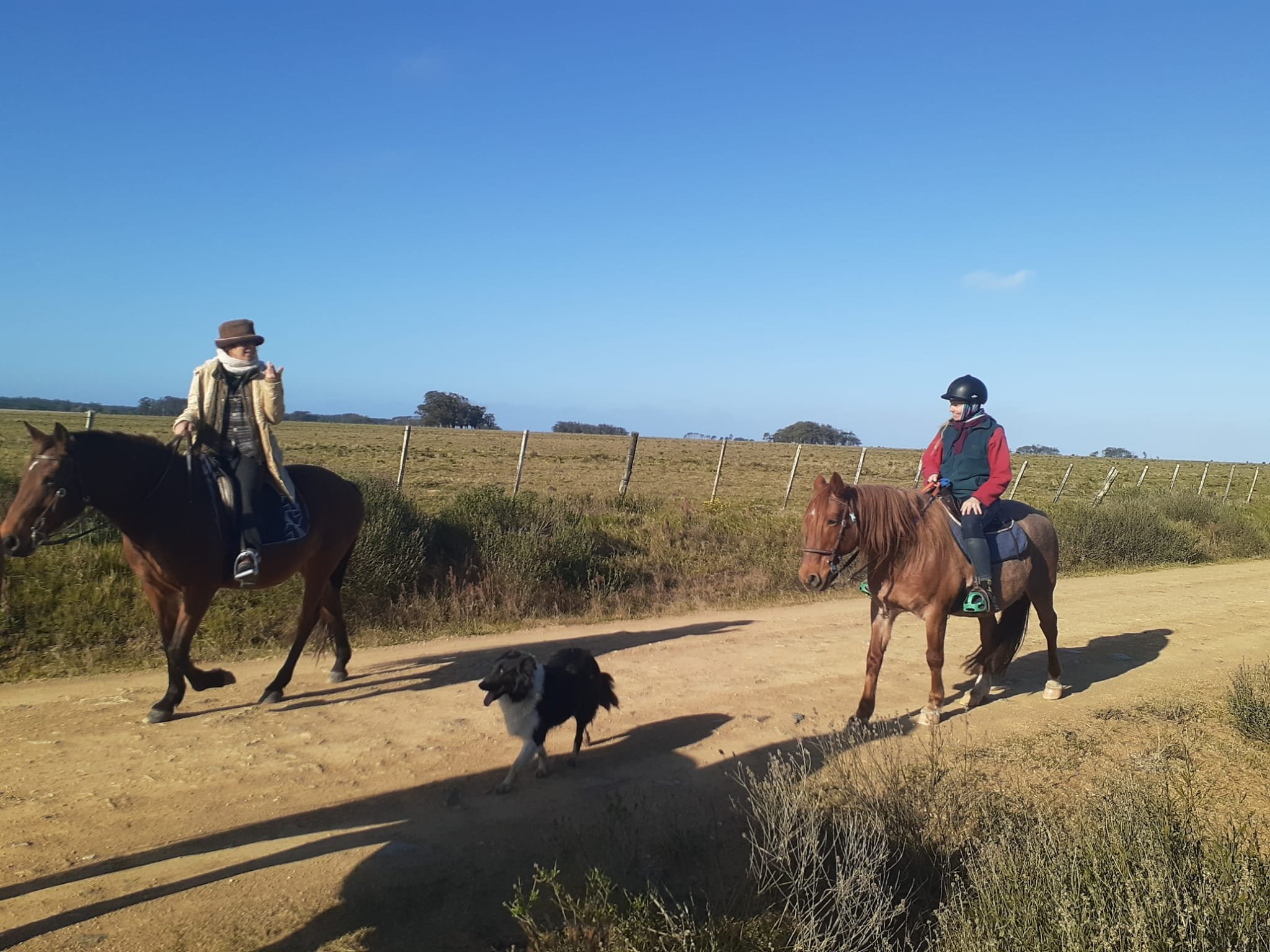
While I enjoyed the gentle mosey from the field to the canyon, my favorite part was the gallop on the beach. Sofia’s dog (a very smart border collie) joined us for the full experience. Sofia’s dog would run up ahead to make sure everything was “safe” for the horses trailing behind, and then when it was clear that it was, she would take a dip in a nearby stream or say hello to other friendly dogs. She even enjoyed playing with the sheep on the other side of the fence. It’s a joy to witness loving animals play with each other. Even the horses behind a fence joined in and ran up along side us.
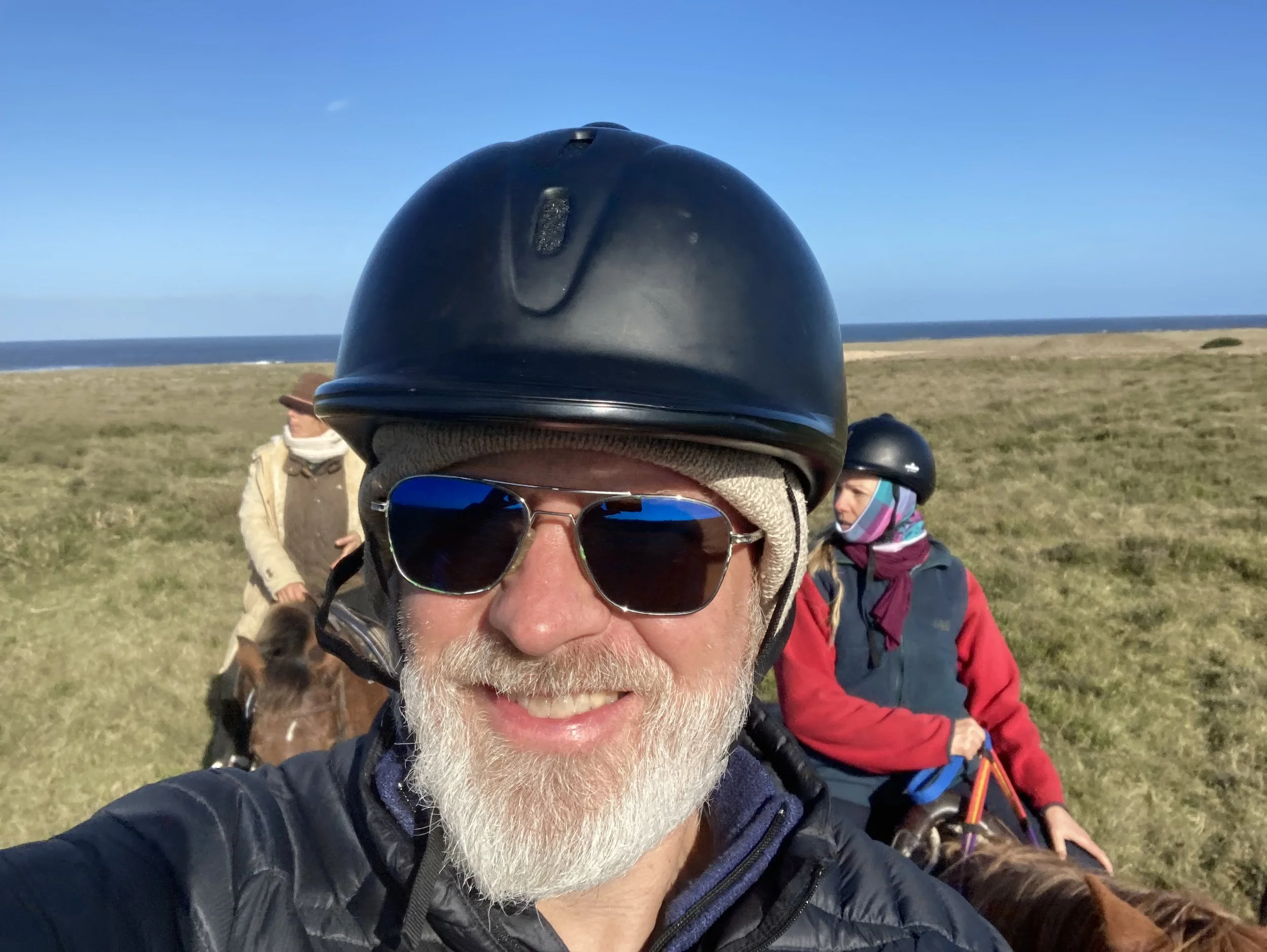
Once it’s clear I know how to ride, Sofia allows me to lead our group.
Both Sofia and Mechthild are watching the horses alongside us to make sure they don’t frighten ours. Shortly after this picture, I tightened my reins (per Sofia’s suggestion) “just in case” one of the other horses spooked mine. There were no problems, but it doesn’t hurt to be prepared and my taking another selfie wasn’t helping, so I put my phone away and focused on being in the moment. That’s harder to do than you might think when in the back of your mind, you’d love to document the experience if for no other reason than to remember it better and more clearly once some time has passed.
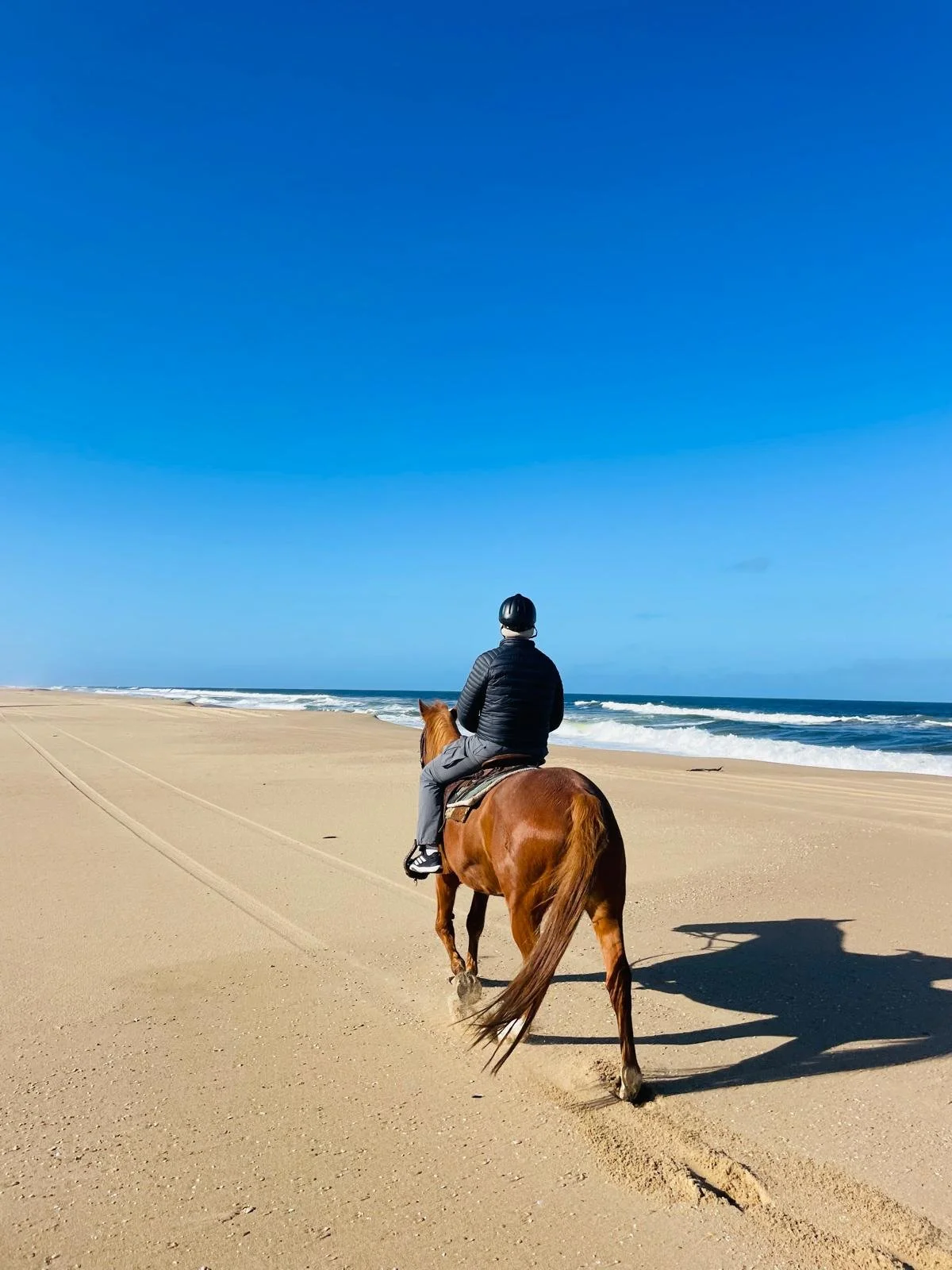
No way was I going to attempt galloping while taking a selfie. That’s being stupid and risking an injury (or worse). So when we finally got to the beach, I took one picture of what was in front of me (below) and then Sofia gave me permission to “go for it.” And I did.
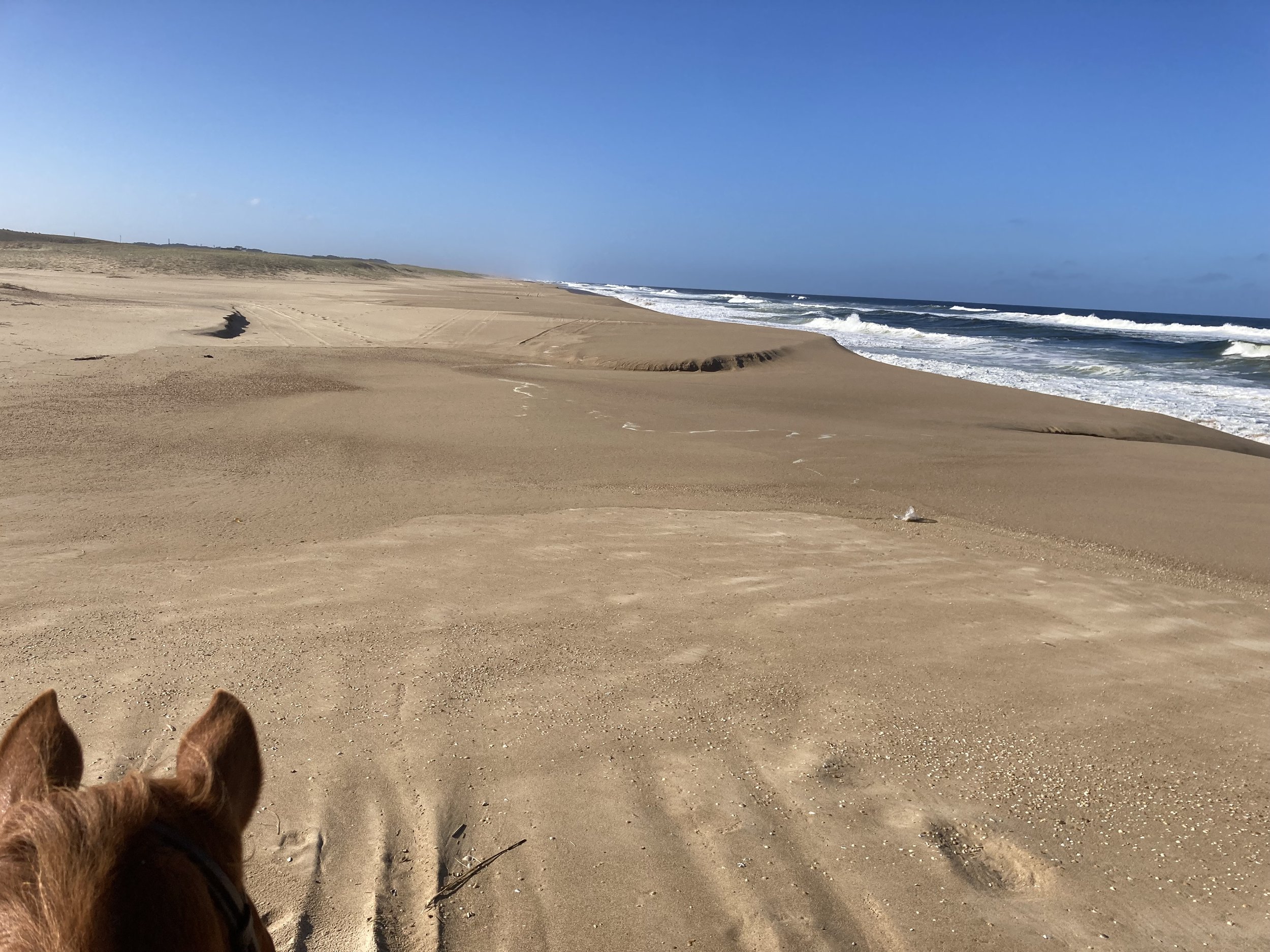
Spectacular! Open field with plenty of space to gallop. Let’s GO!
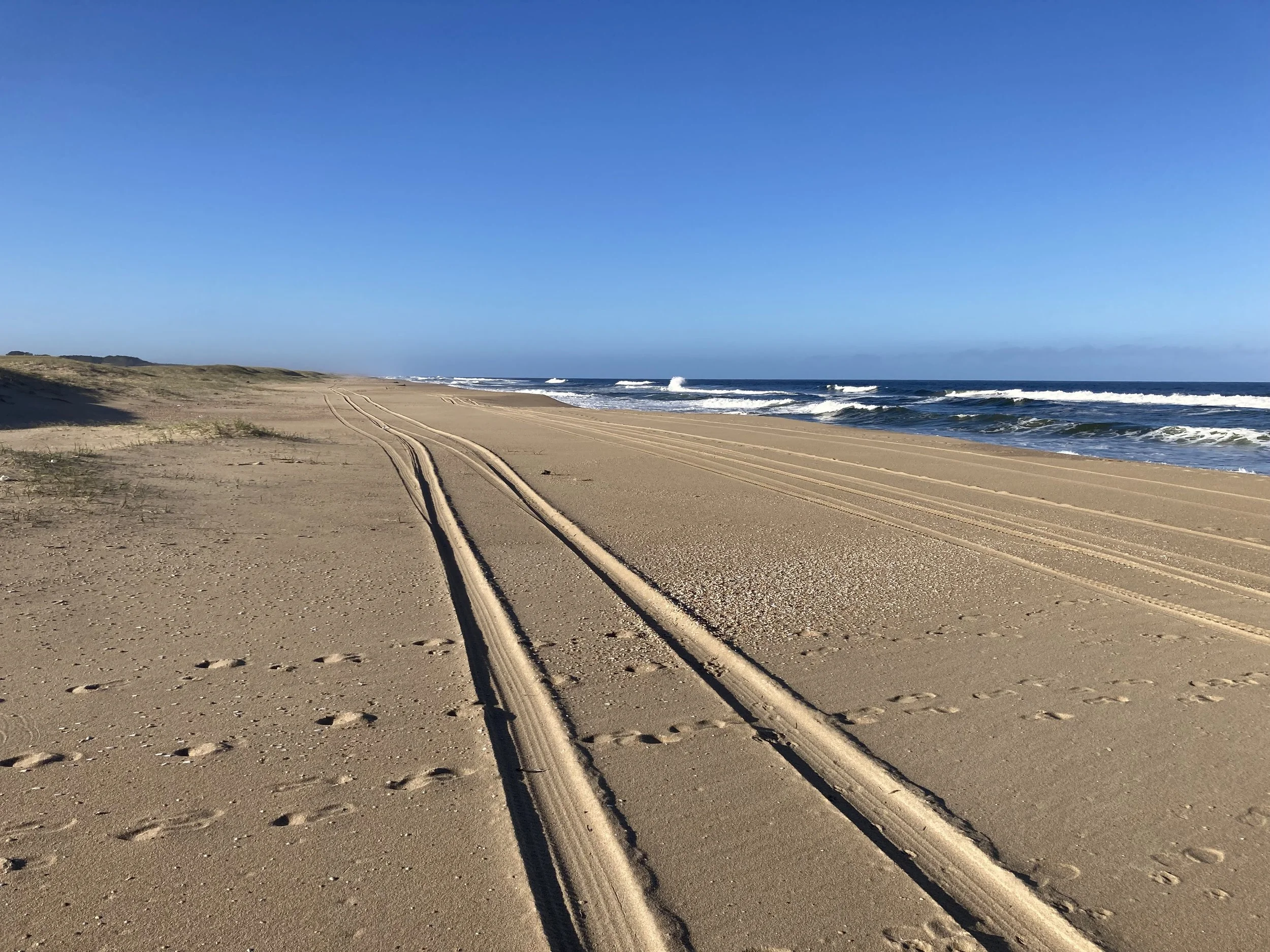
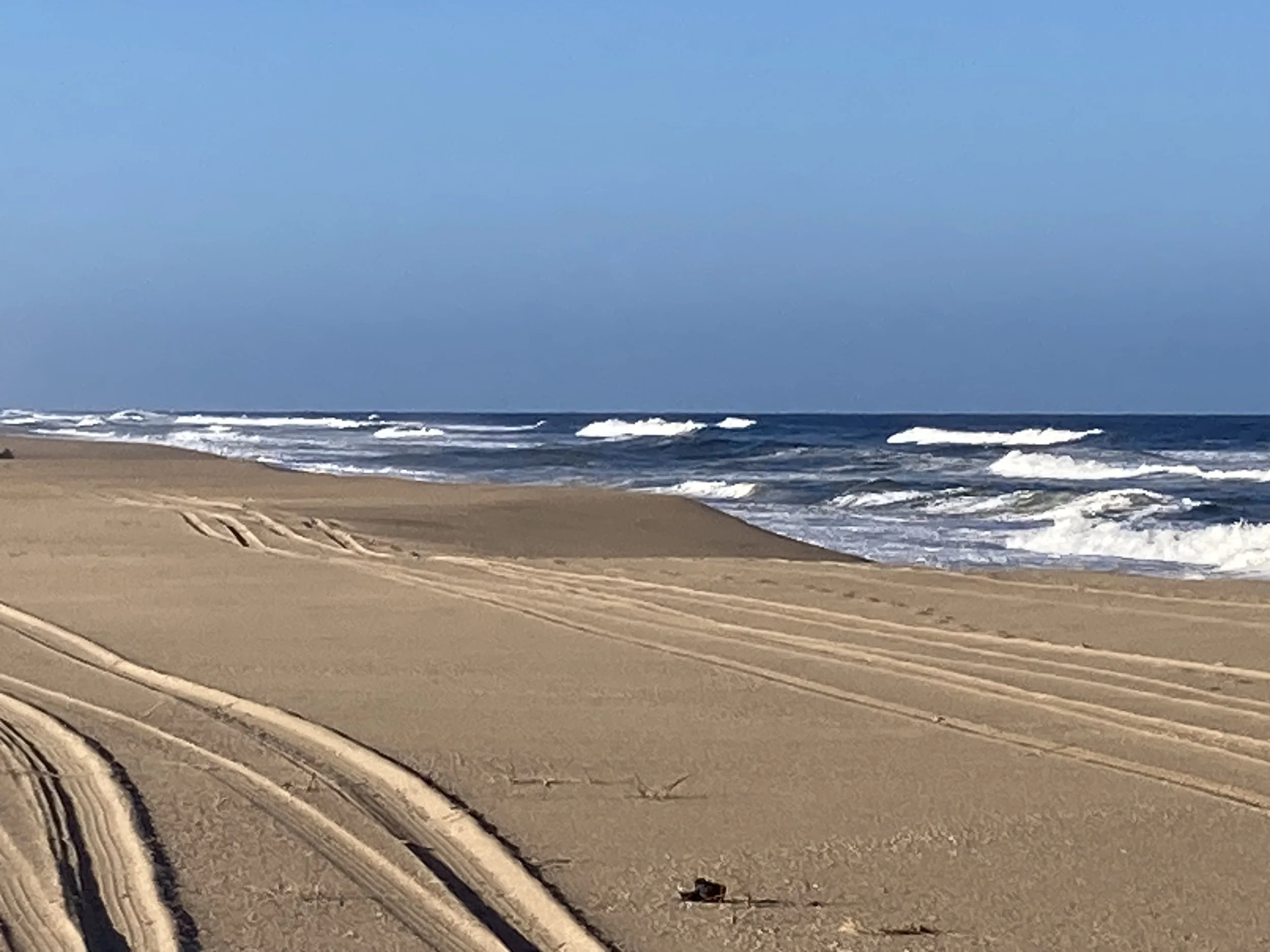
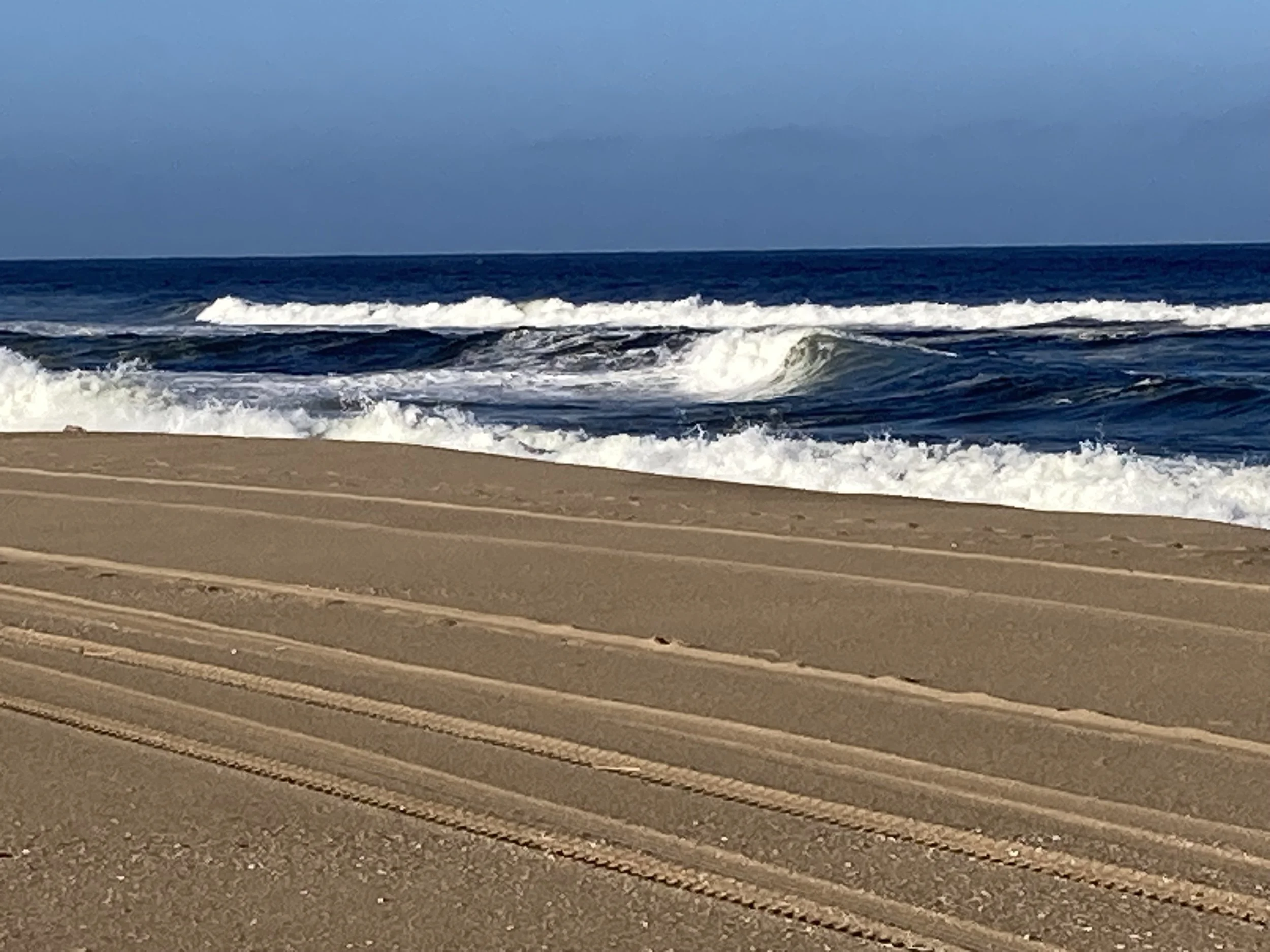
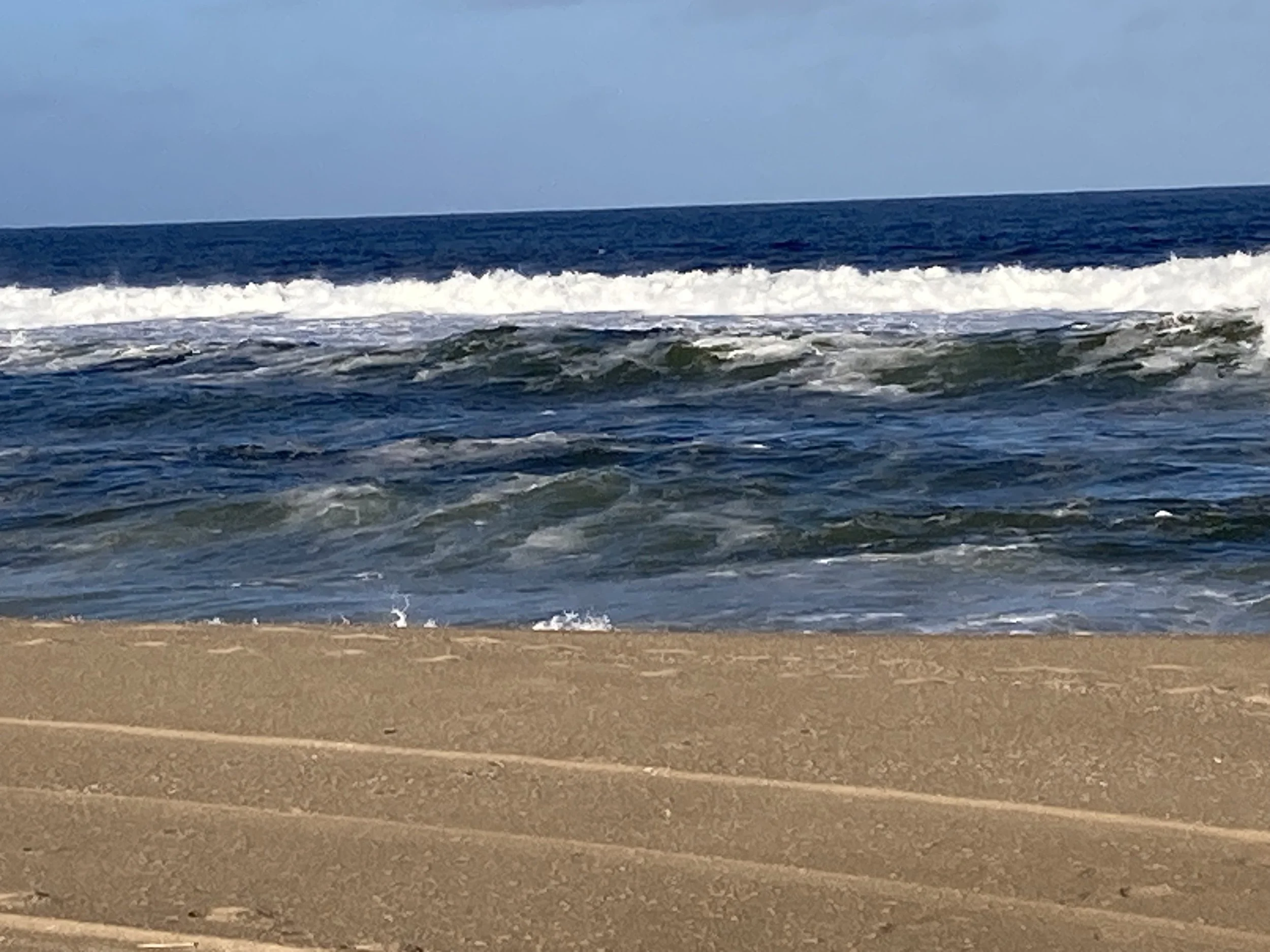
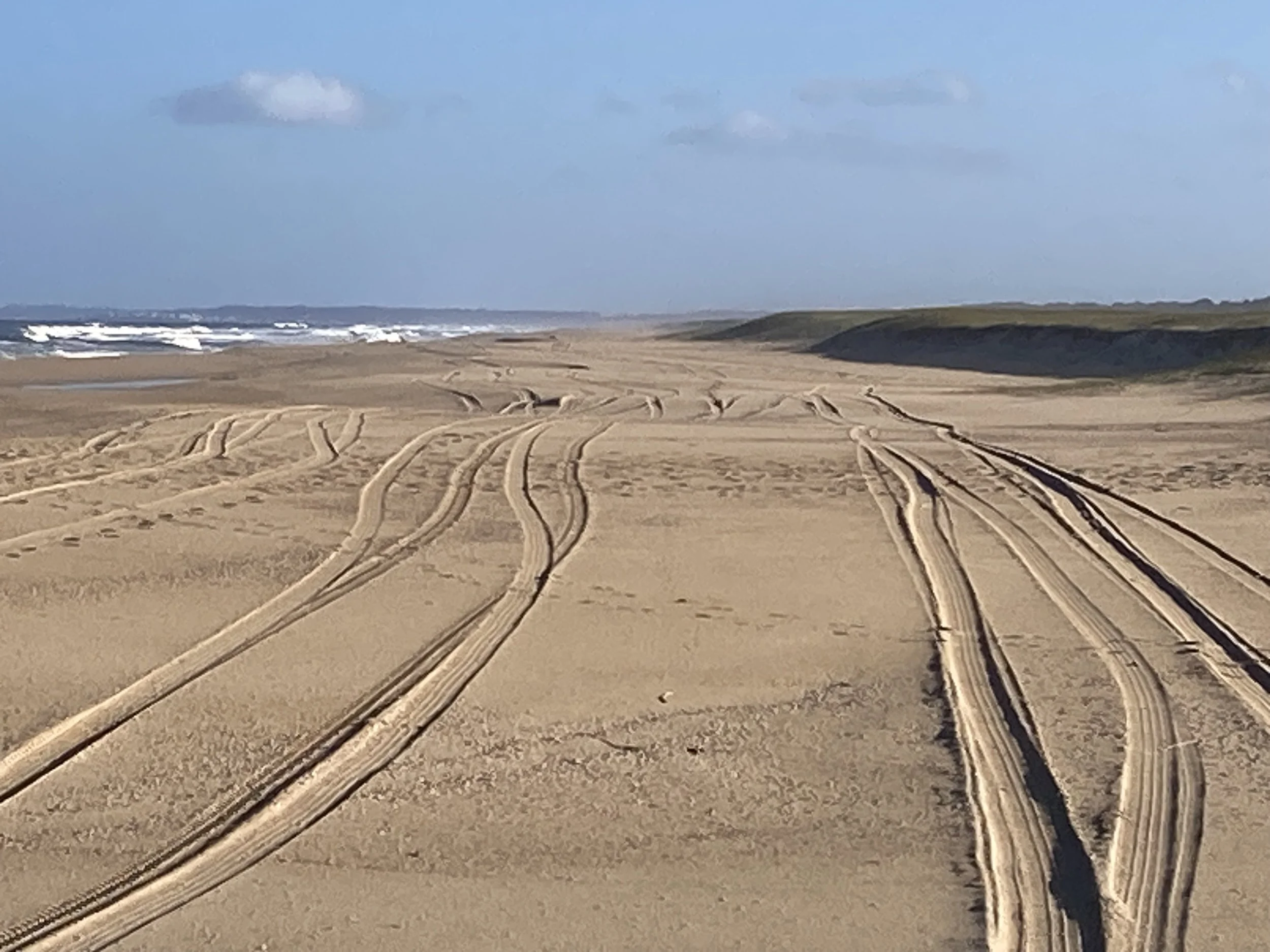
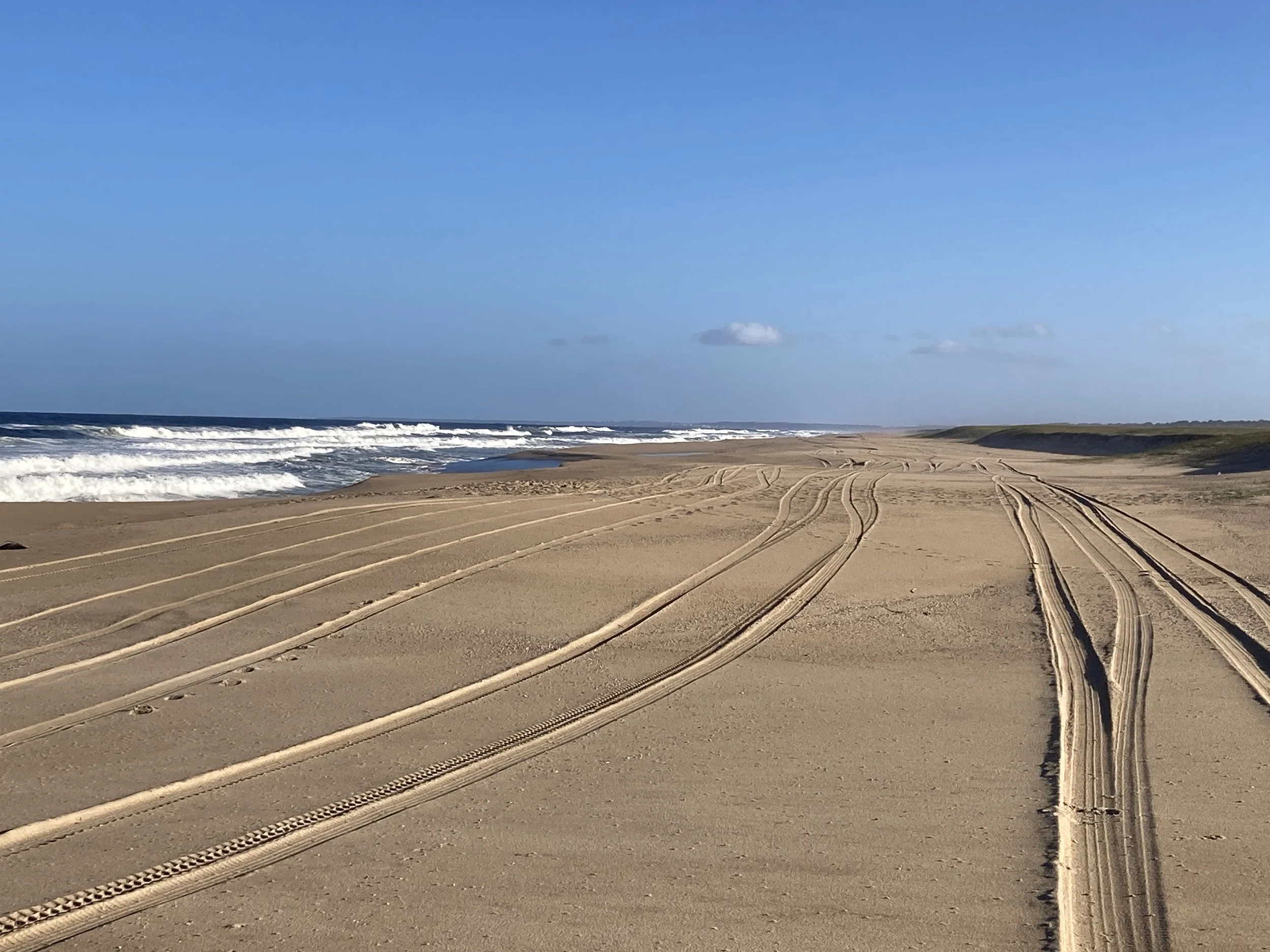
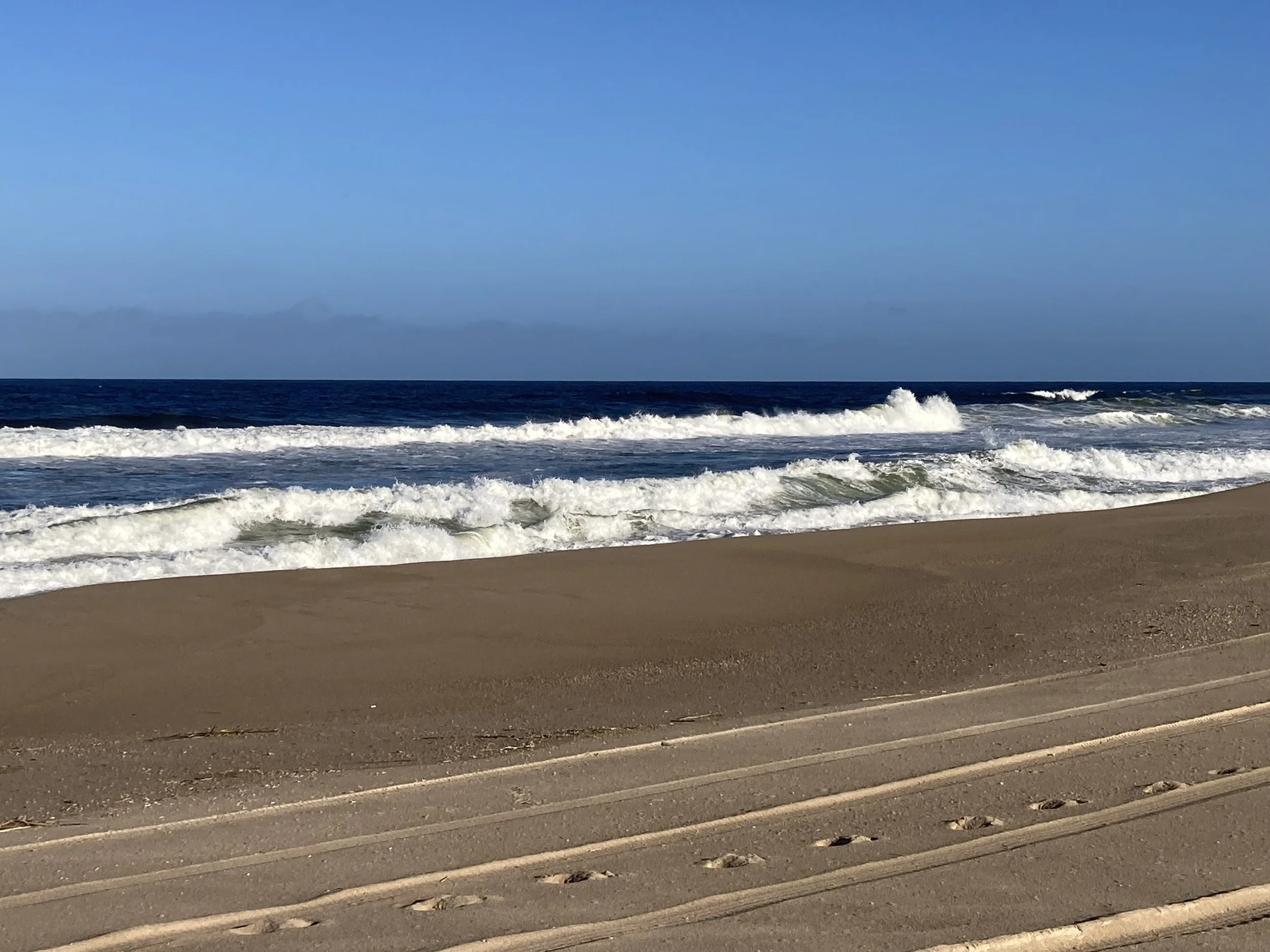
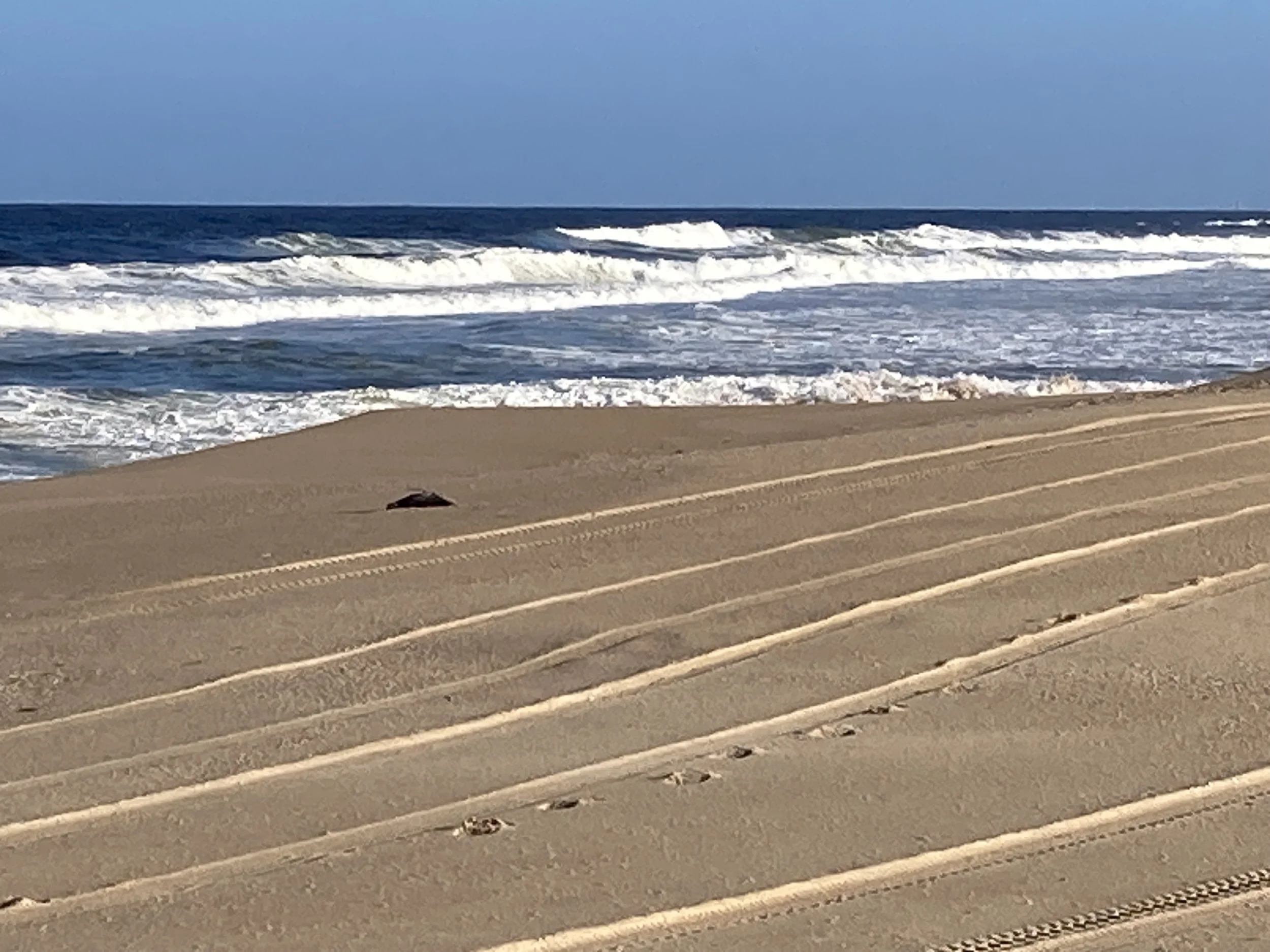
As soon as I was given permission, I let the horse know I was ready to go at a full gallop and off we went. It seemed like my horse was more excited that I was to do a full gallop. Running free appeared to be exhilarating for both of us. The freedom to ride at a full gallop is epic. Many horse trainers don’t let their riders do this for several reasons. In addition to tiring the horses, it can be dangerous for the rider — especially one that has more desire than skill.
If the rider panics, it can cause all sorts of problems and, in the worst case, the rider can be thrown from the horse who is confused by the sudden “start” and “stop” commands. Knowing all of this, I was fully present in the moment, savoring each second the horse and I were at a full gallop. This was special. This was unique. I savored each moment the horse was riding at top speed and I holding on and being with this special time. For those moments, the horse and I were fully trusting each other and letting a bit of our wild side out into the world. Exhilarating. Beautiful. Connected. Freedom. All of it together as one.
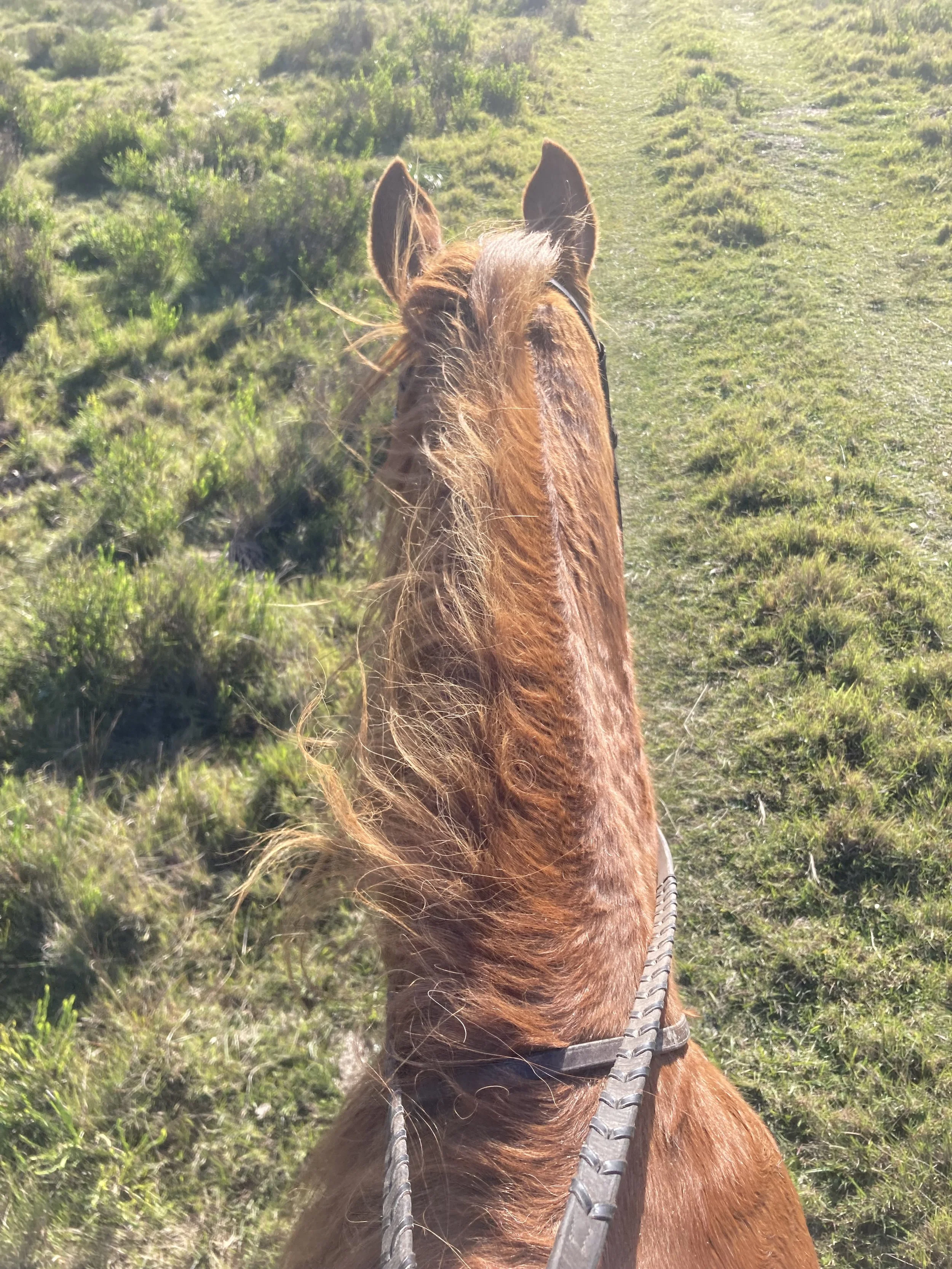
On the ride back, my horse led the way — happy to be heading “home”
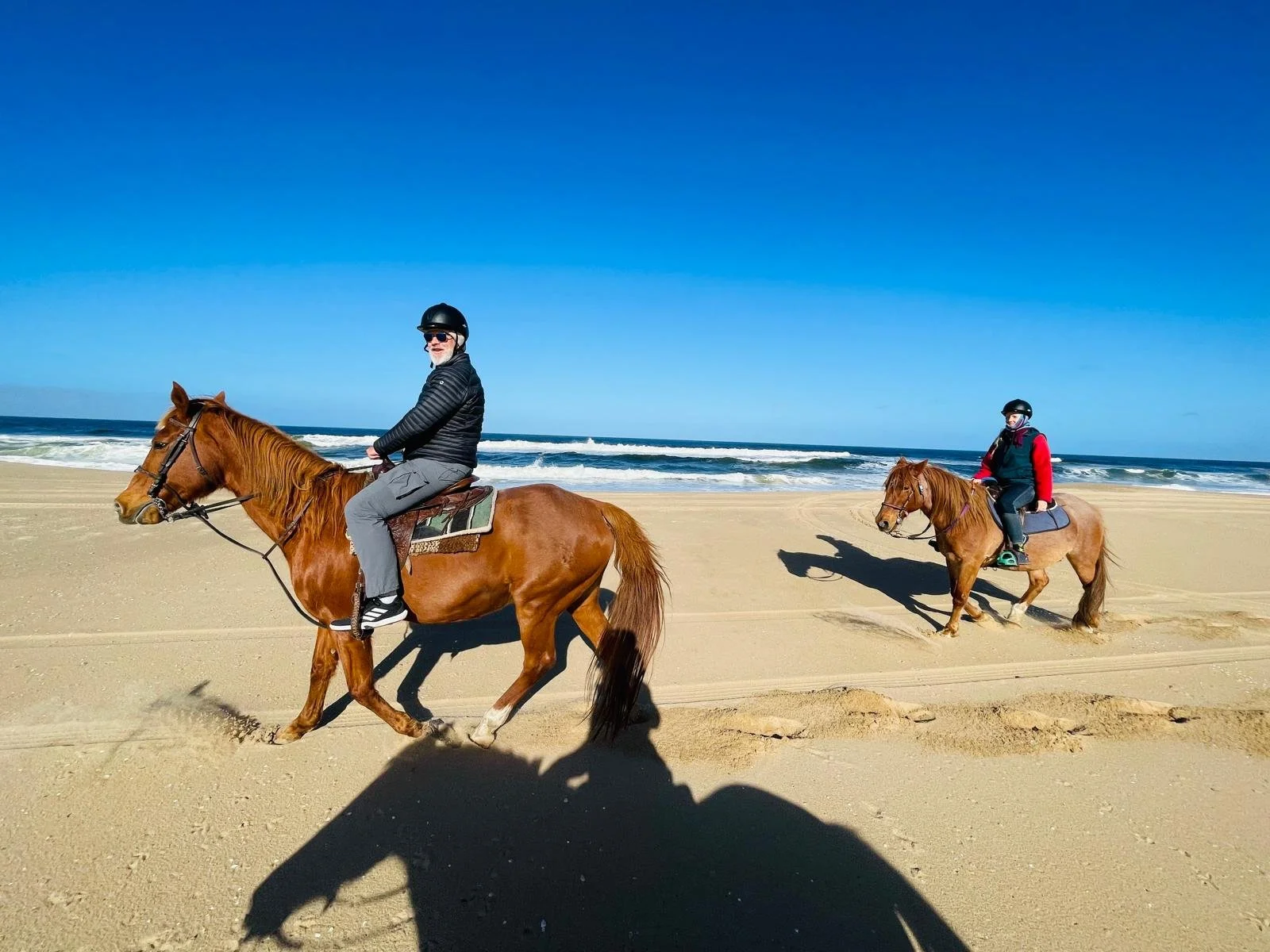
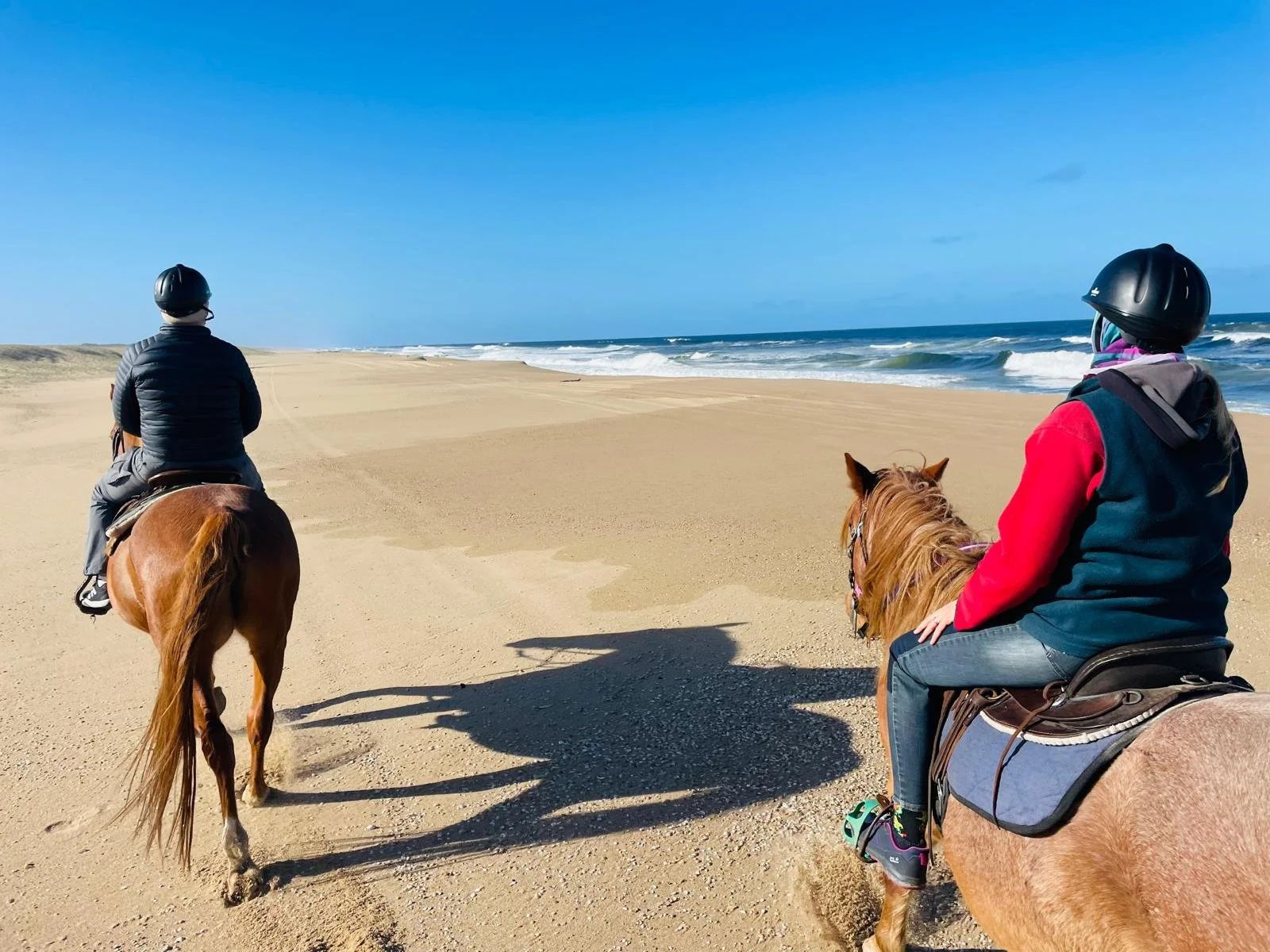
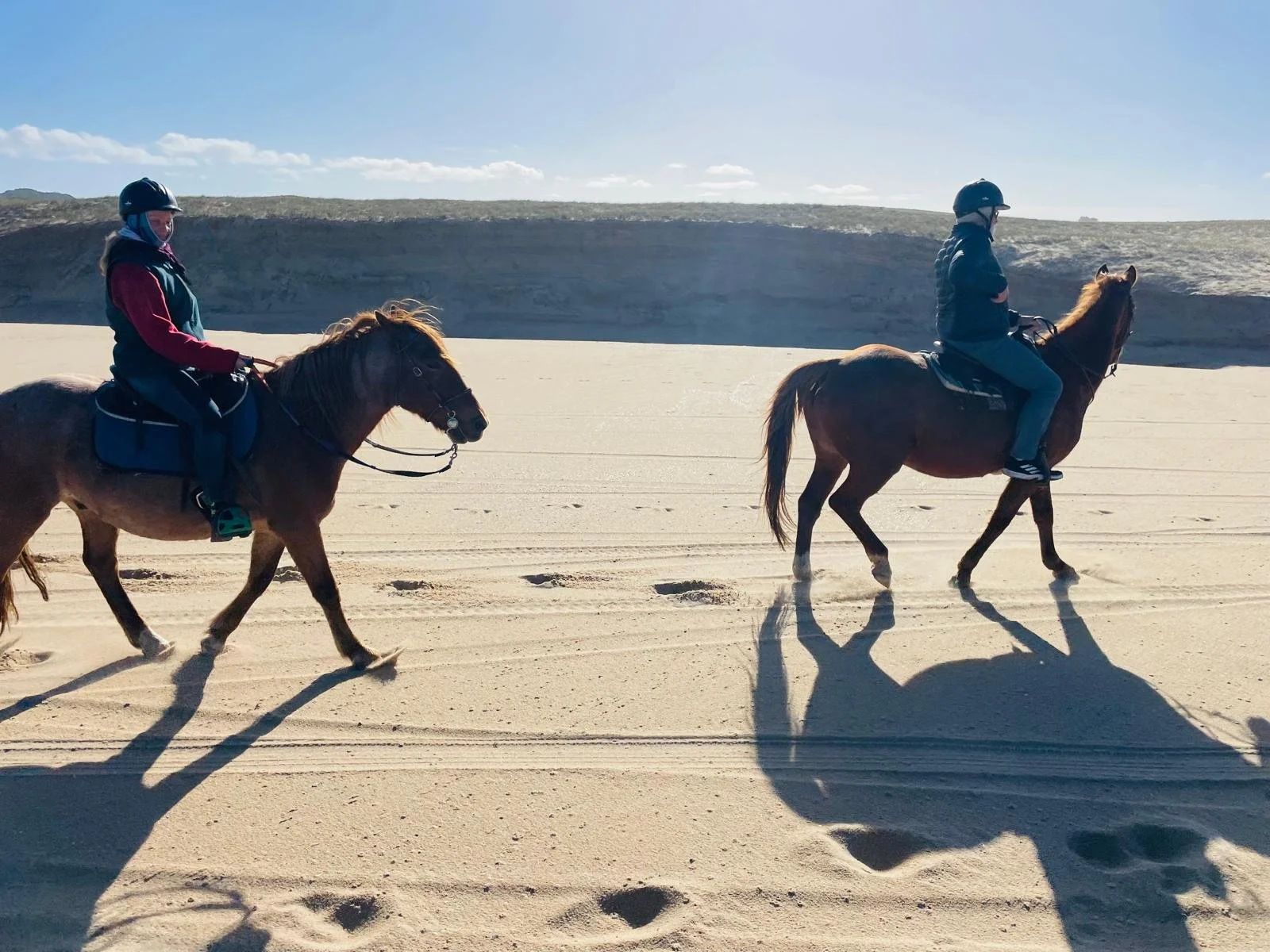
Back when I was training for my Ironman, I had the opportunity to visit my two amazing coaches, Siri Lindley and her wife Rebekah (Bek) Keat and their horse rescue, Believe Ranch and Rescue. There, I took a slight detour from my physically intense training and dove into the equally important mental game of completing an Ironman — by listening to the different personalities of each horse.
Until that day, I believed “a horse is a horse, of course, of course, and no one can talk to a horse, of course, unless of course your talking horse is the famous Mister Ed.” Turns out, I was dead wrong. Horses are always talking to people. I simply wasn’t listening … until that day. Siri and Bek taught me to listen with my eyes and heart, not just my ears. I could tell when a horse was nervous or anxious or frustrated. It was always there for me to hear, I just wasn’t listening.
In just a few short days, I learned to listen to horses. They were asking me questions like, “Are you safe? Are you a good person? Will you help or harm me?” My body language and tone of voice helped or hindered in my connection. If I was totally calm and at peace, we could truly connect and build an authentic relationship. When I was distracted and thinking of the past or future, I wasn’t present and the horse could tell.
I was blown away just how much my being present mattered. The more I dropped into the moment, the deeper I could connect and the more each horse was encouraged to trust me. And, just like me, a particular horse could be having a difficult time (aka “a bad day”) and not want any of this. And yet, I discovered I had the power to change the mood of the horse — regardless of what it was going through. Enlightening.
That’s what I recalled today as I was connected with the horse I was riding. Calming voice. Gentle pats on the neck. Reassuring tone that everything is just right. And the more I focused on my own peach and serenity, the more I could share it with my horse. So grateful for this experience out here in Uruguay. My blessings continue to overflow.
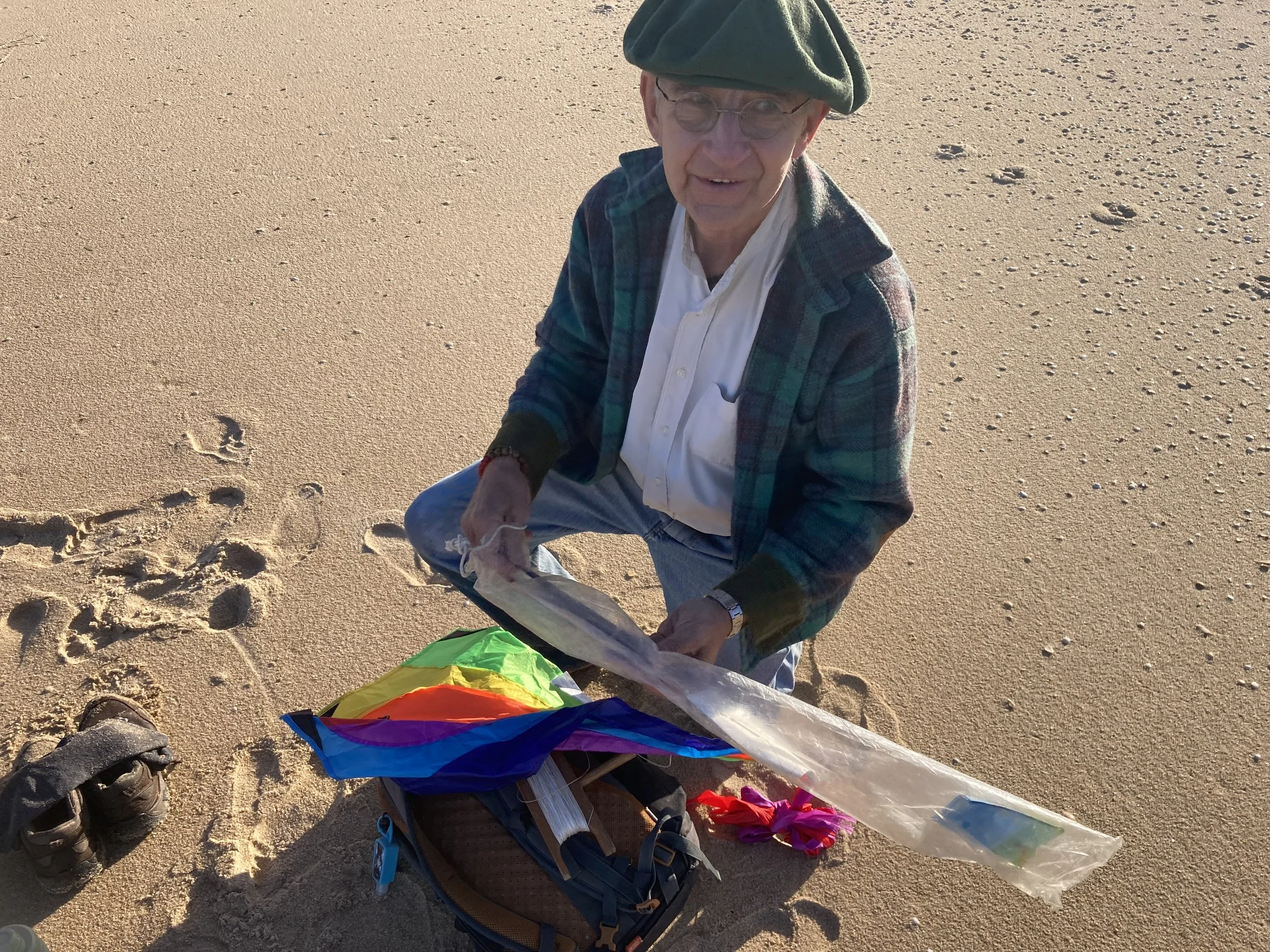
Daniel had another surprise waiting for me after the horseback ride
Daniel recently had a health challenge that prevented him from riding with us today, but he still wanted to be there with us. I was touched. After his wife, Mechthild and I completed our journey with Sofia, he suggested we go for a walk on the beach. Yes, I love that. Still in my 12-year-old “Little Billy” mode, I recalled the number of times my grandfather would take our family to Salmon Creek (in Sonoma County, California). There he would go for a walk on the beach and I would follow him like a curious puppy. All the while picking up seashells and asking “What’s that?” while pointing to a seal playing in the waves. I loved that time in my life and Daniel was taking me back there — with his extremely cool kite!
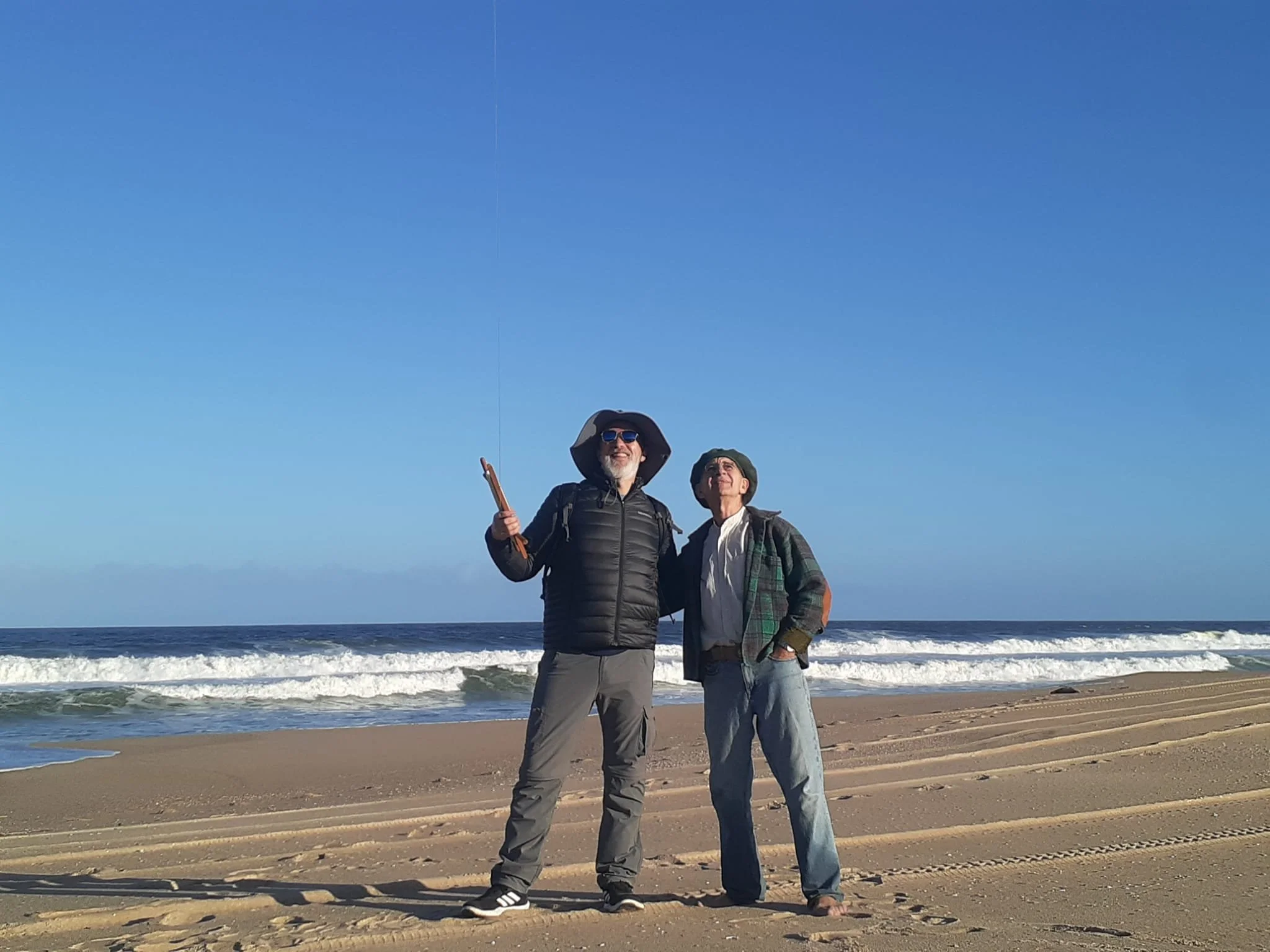
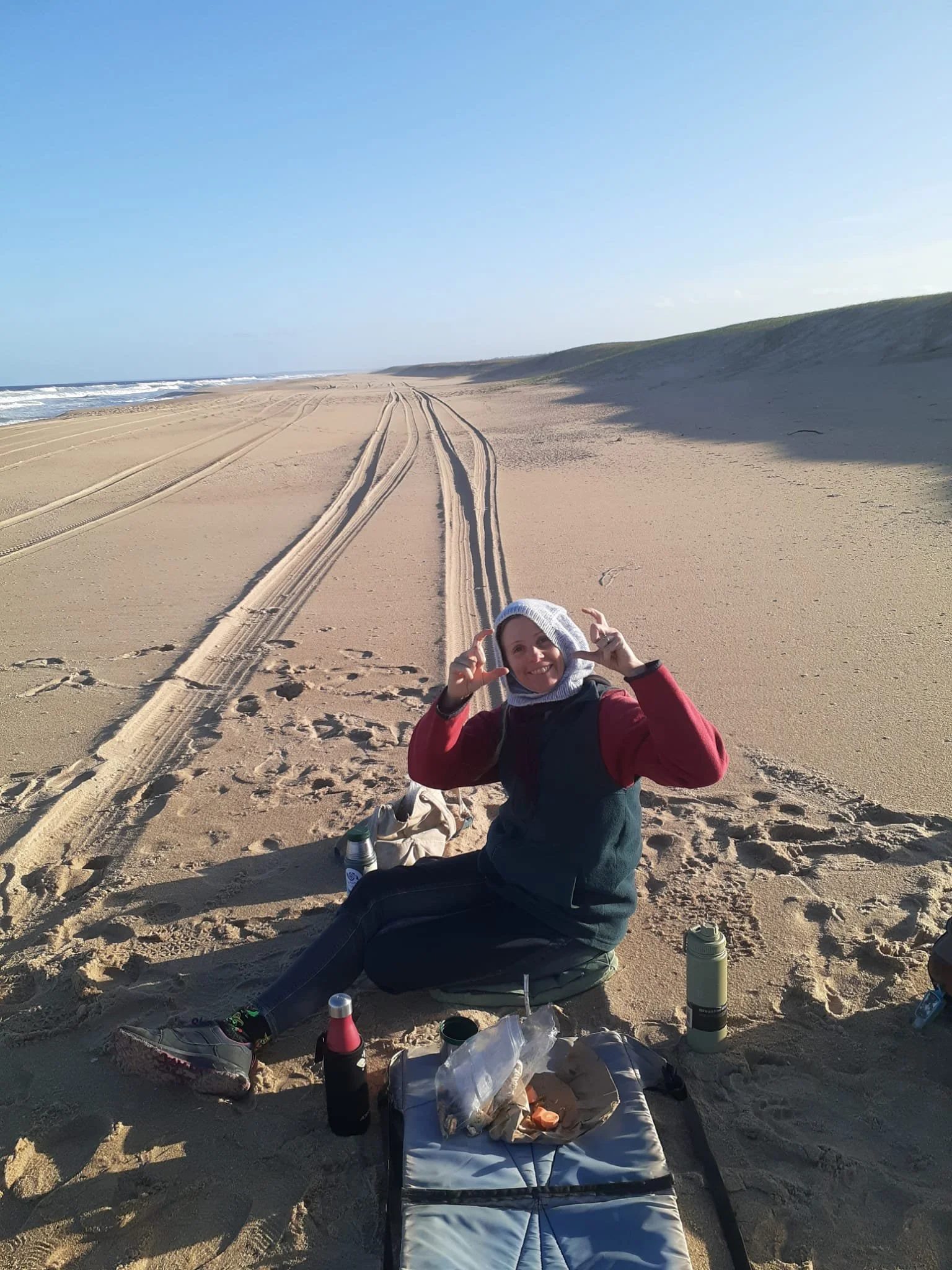
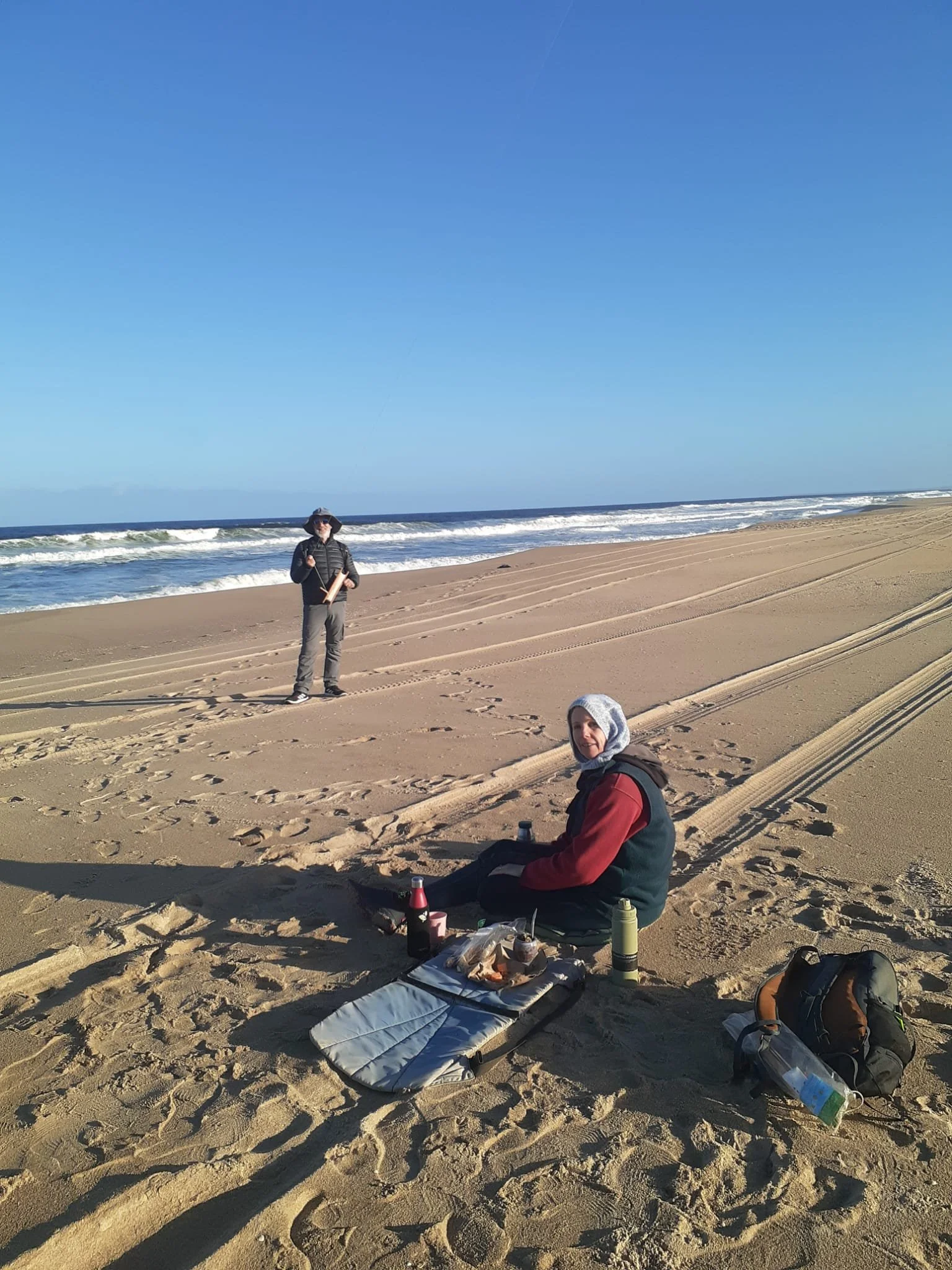
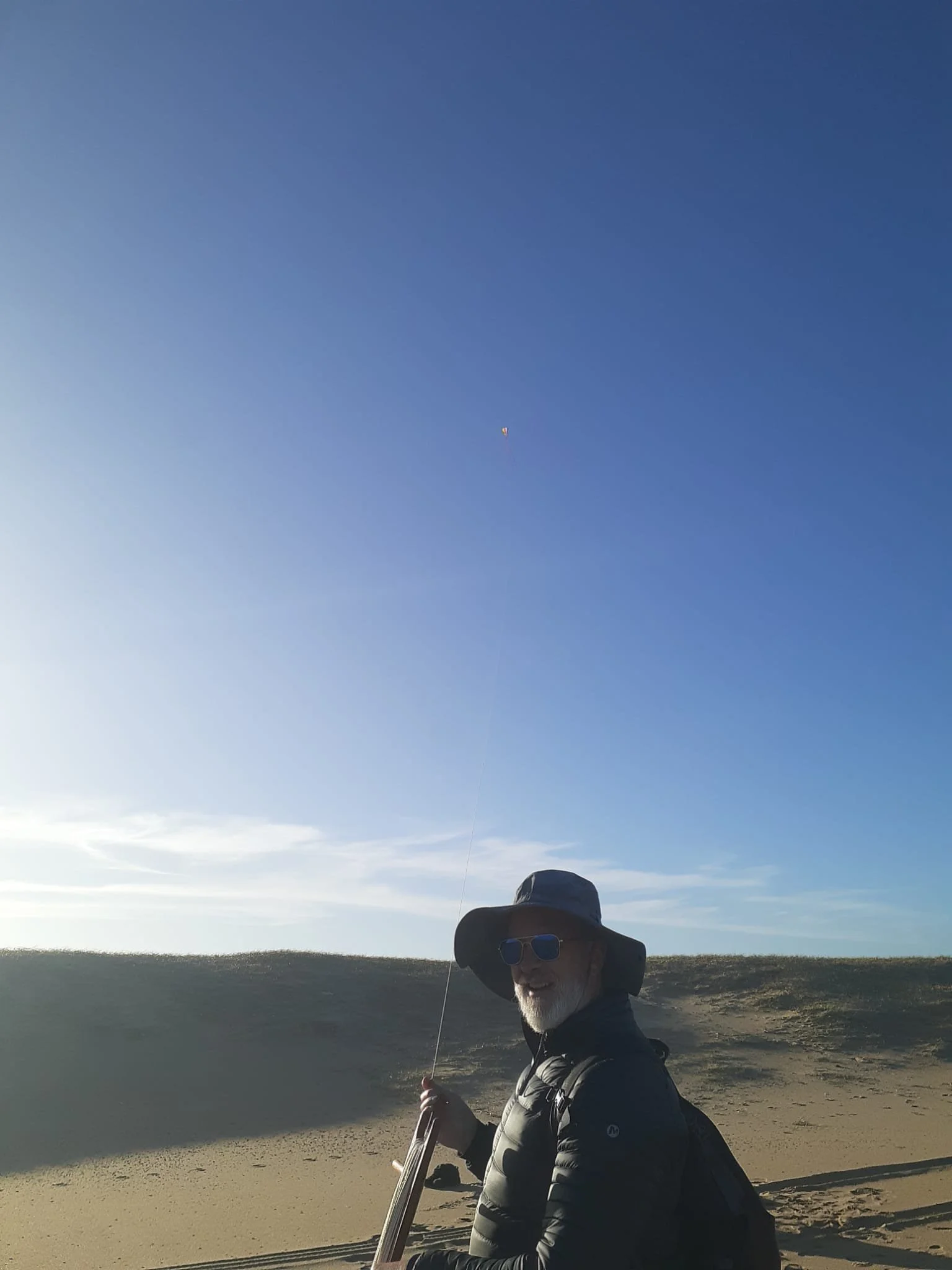
Danny, like me, is a kid at heart. Neither one of us ever lost our joy and awe of flying a kite. It’s magical. With a bit of wind, string and a well-designed kite, you can launch it into the air and have it go a quarter mile into the air (400 meters)! And that’s exactly what we did together. There’s something so magical about playing with a kite. The wind has strong influence, and so do you.
When the kite flyer and wind are in alignment, the kite can soar to incredible heights. Out of alignment, the kite is pulled by two opposing forces and ultimately lands on the ground. It’s a delicate game of give and take. Listening and talking. Hearing what the wind is saying, and gently encouraging the kite to navigate to higher and higher spots in the sky. I love it and I never tire of flying a kite. It’s such a simply joy and acessable to nearly everyone.
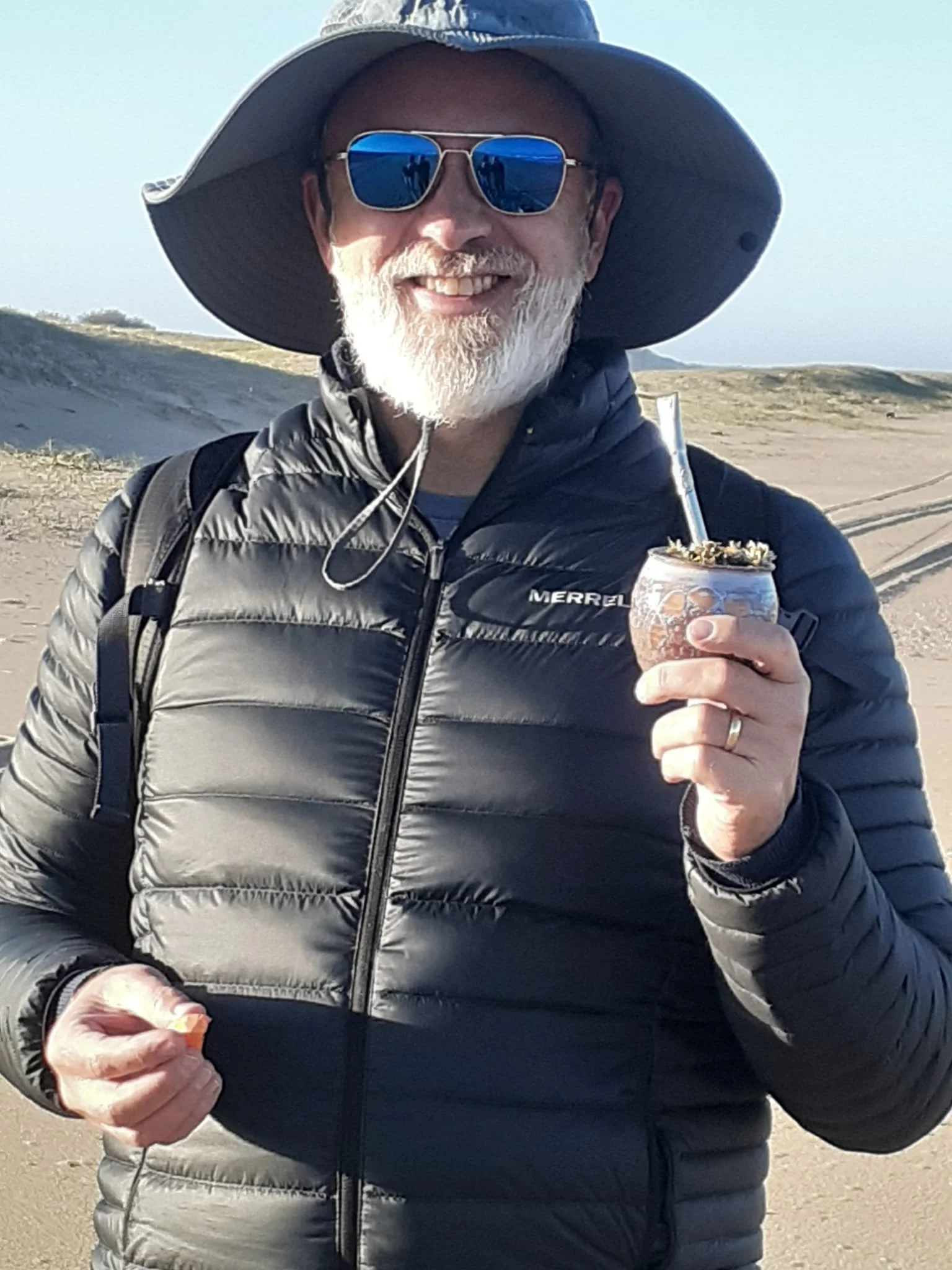
Drinking mate (pronounced mah-tay) courtesy of Mechthild & Danny
Mate is one of hidden gems of South America. Please allow Google via Wikipedia to summarize:
Mate (pronounced mah-tay) is a traditional, caffeine-rich herbal beverage from South America. Made from the dried leaves of the Ilex paraguariensis tree, it offers an earthy, slightly bitter taste. It is globally celebrated for providing a smooth, sustained energy boost through a natural combination of caffeine, theobromine, and antioxidants.
The Traditional Method
In South America, mate is much more than a hot drink; it's a deeply rooted social ritual.
The Gourd (Mate): The loose leaves are packed into a hollowed-out calabash gourd (which is also called a mate).
The Straw (Bombilla): Hot water (around 70°C - 75°C) is poured over the leaves and the beverage is sipped through a metal filtered straw called a bombilla.
Different Ways to Drink It
While the gourd method is the most iconic, mate is enjoyed in several other forms:
Mate Cocido: The leaves are packaged into standard tea bags or loose-leaf strainers for a quick, mess-free cup.
Tereré: In Paraguay and parts of Argentina and Brazil, the dried leaves are infused with cold water, ice, and citrus fruit for a highly refreshing, iced version.
Ready-to-Drink: You can increasingly find bottled or canned yerba mate, often blended with fruit juices or sweeteners.
Health & Wellness Benefits
Like black or green tea, yerba mate contains polyphenols, giving it strong antioxidant properties. Many drinkers use it as an alternative to coffee to improve mental focus and alertness without the common "jitters". However, as with other caffeinated drinks, individuals sensitive to caffeine might experience upset stomach or trouble sleeping.
I first discovered mate in Colombia, then tried my first cup in Peru, and became more versed in Urugauy. For example, when you no longer want any more mate, you say, “Thank you.” That’s the signal that you’re full and complete. Polite beginners (like me), often confuse hosts when thanking them on the first cup given. With the help of Mechthild, I’ve learned to smile, nod and use my eyes and body language to thank my host without actually saying the words, thereby increasing the number of cups I can (and would like) to consume.
I love this. At 53 I’m still a student of life and ever learning. My joy and happiness grow daily and this day in particular was incredible — one I will not soon forget.