Cu Chi Tunnel, Vietnam (December 6, 2025)
Imagine for a moment you are living peacefully in harmony with nature. You grow most of your own food, cook your meals over a wood fire and generally get along with your neighbors. And then you’re told that soon bombs will be dropping out of the sky and your only defense is to dig a tunnel underground and hope that the bombs don’t bury you and your family alive — or worse.
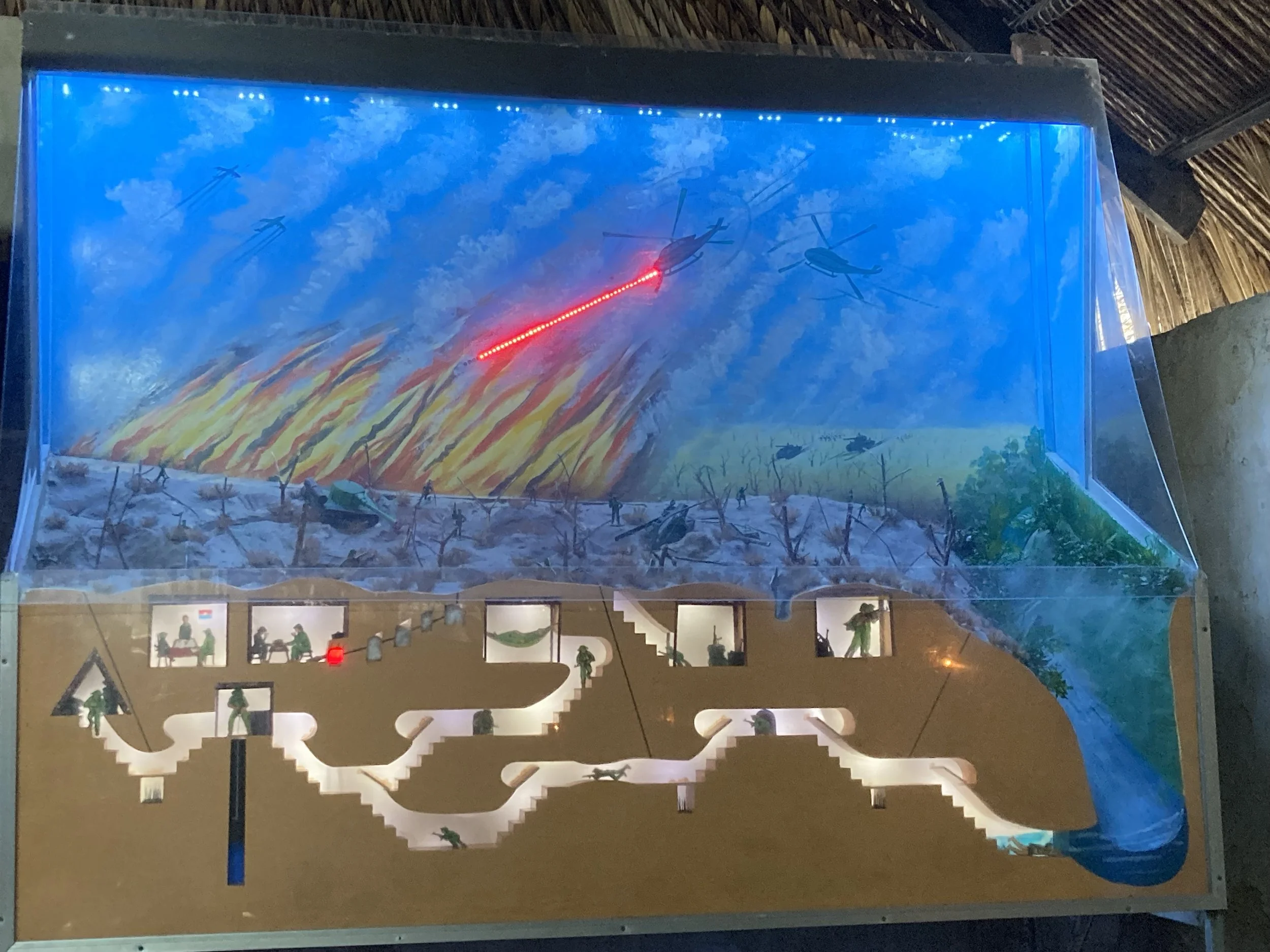
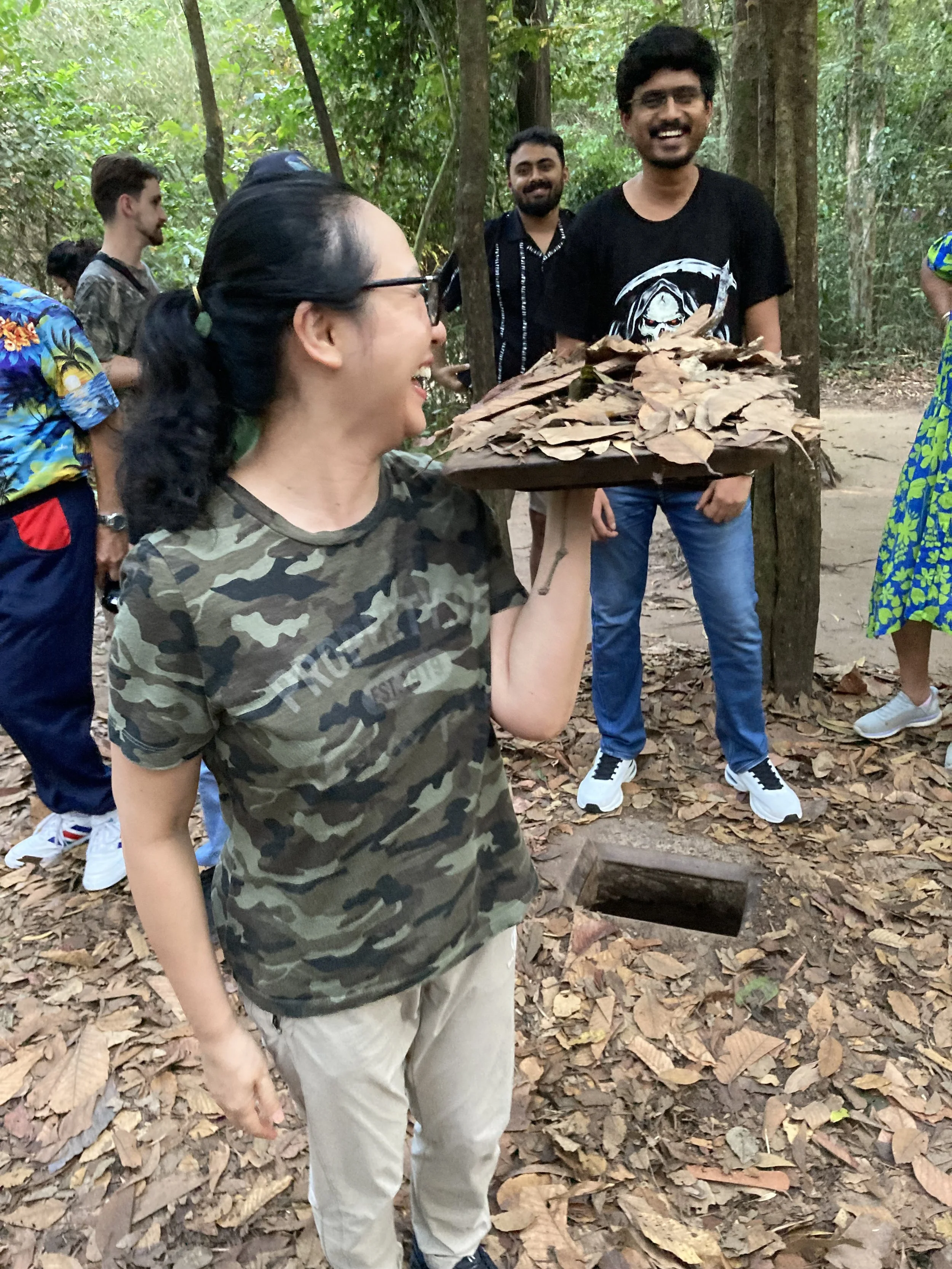
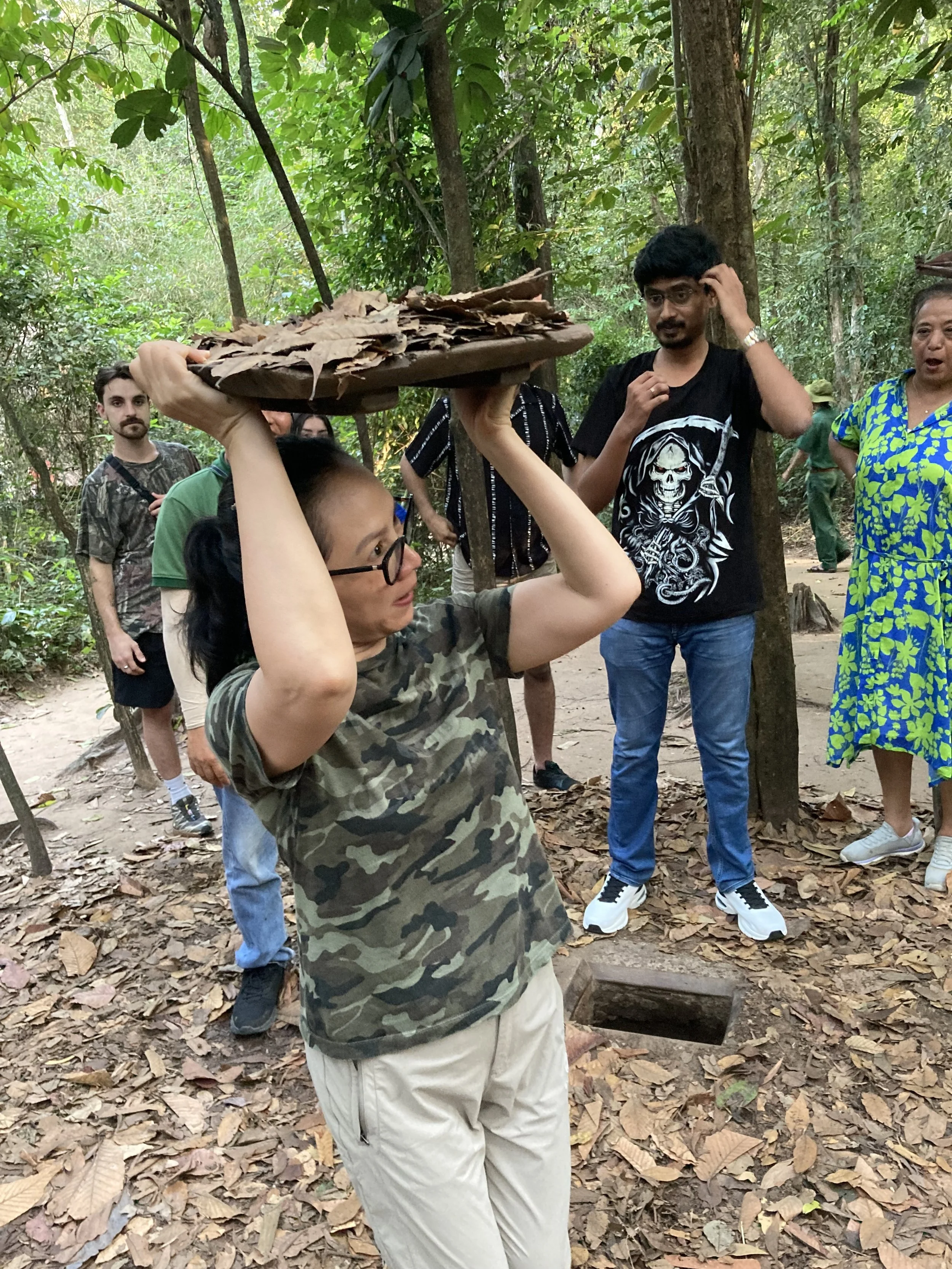
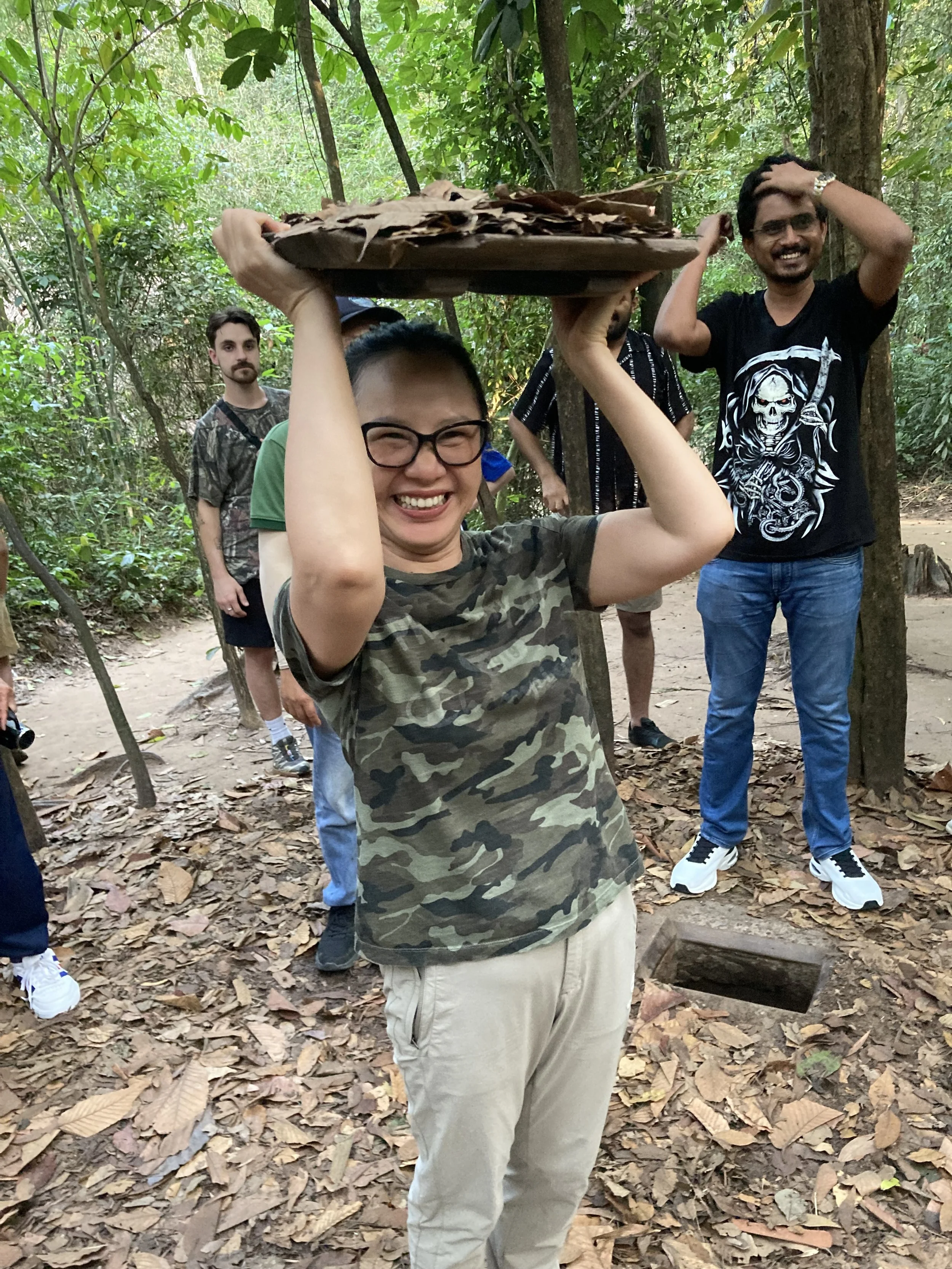
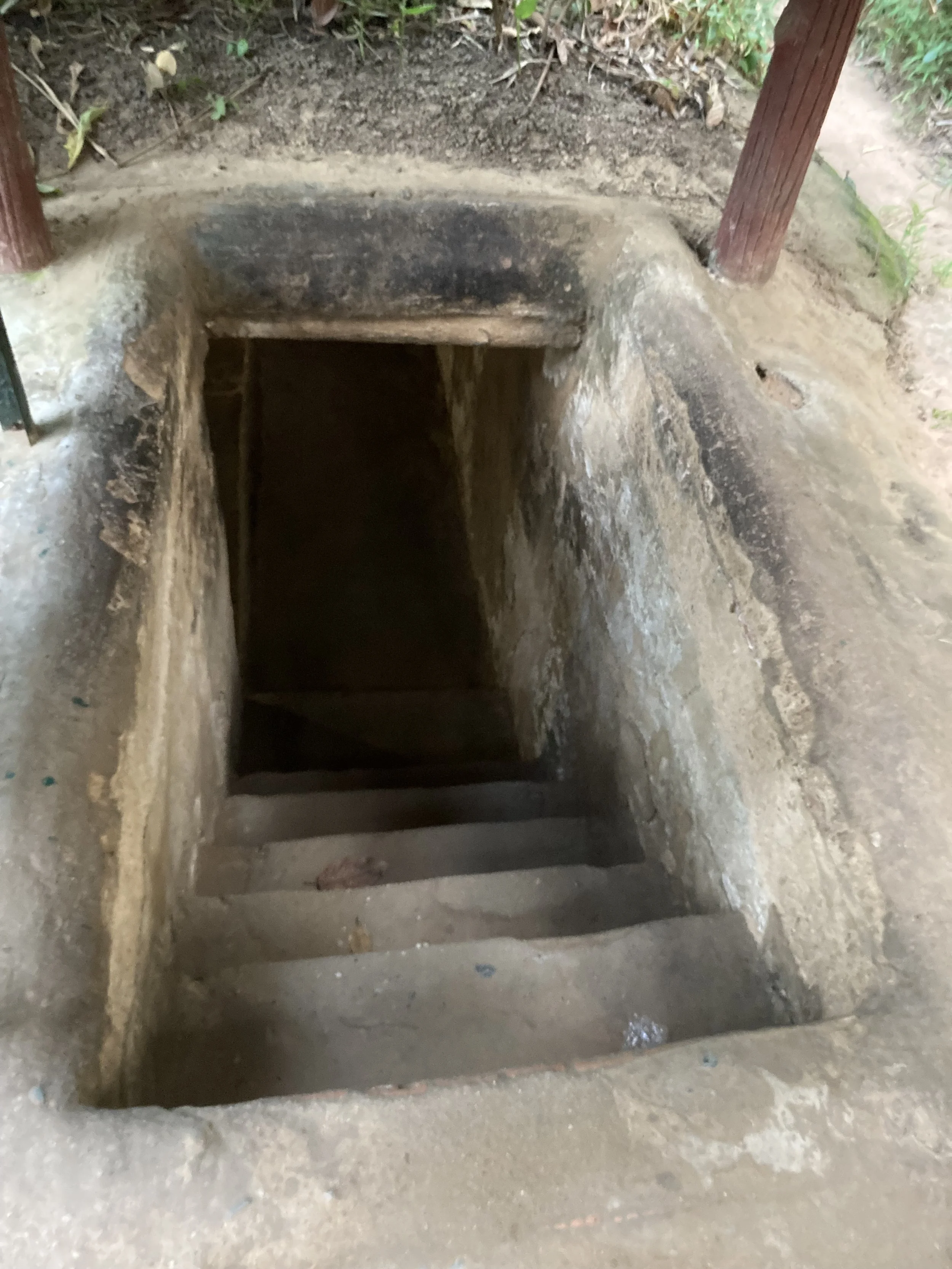
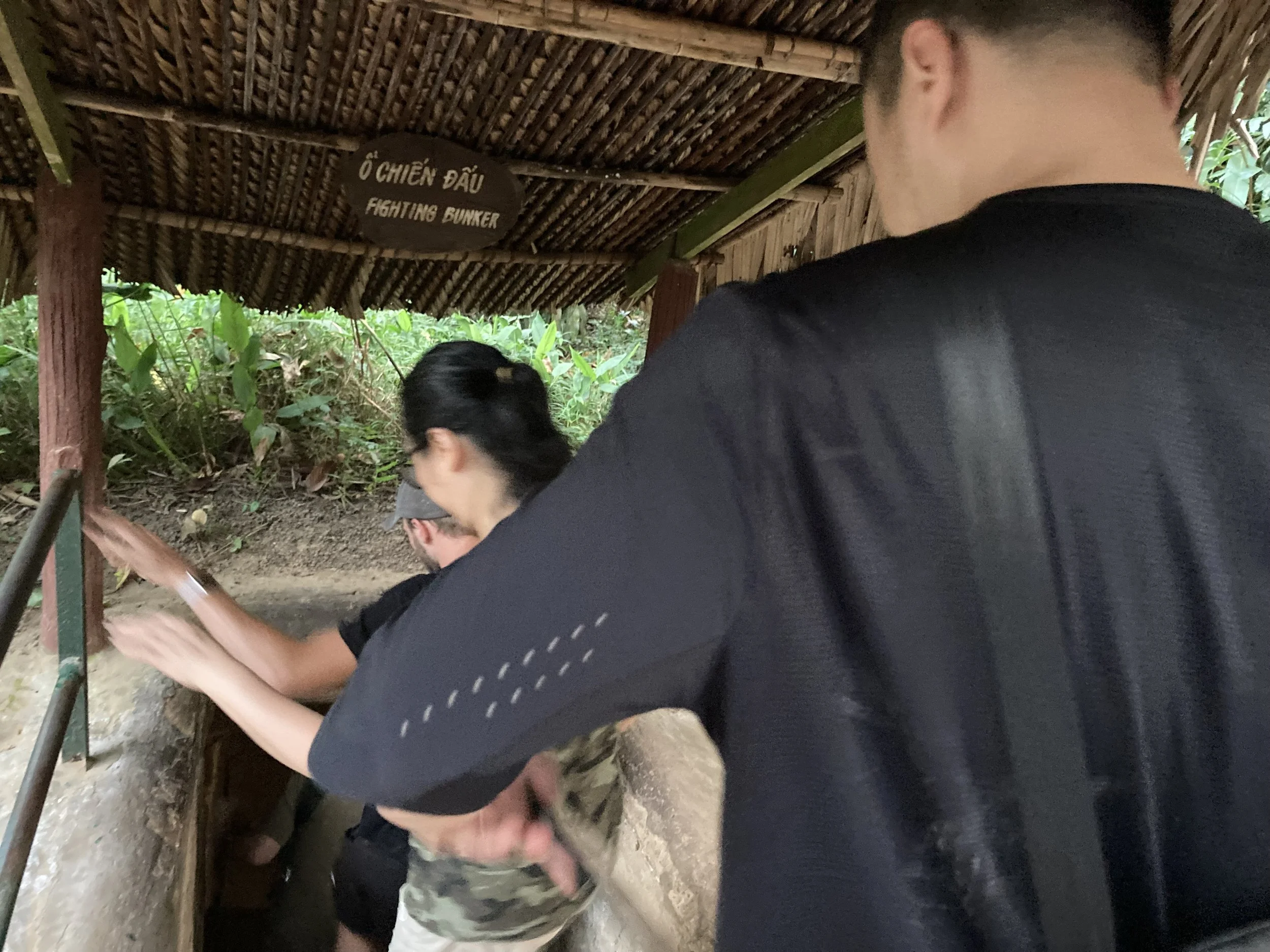
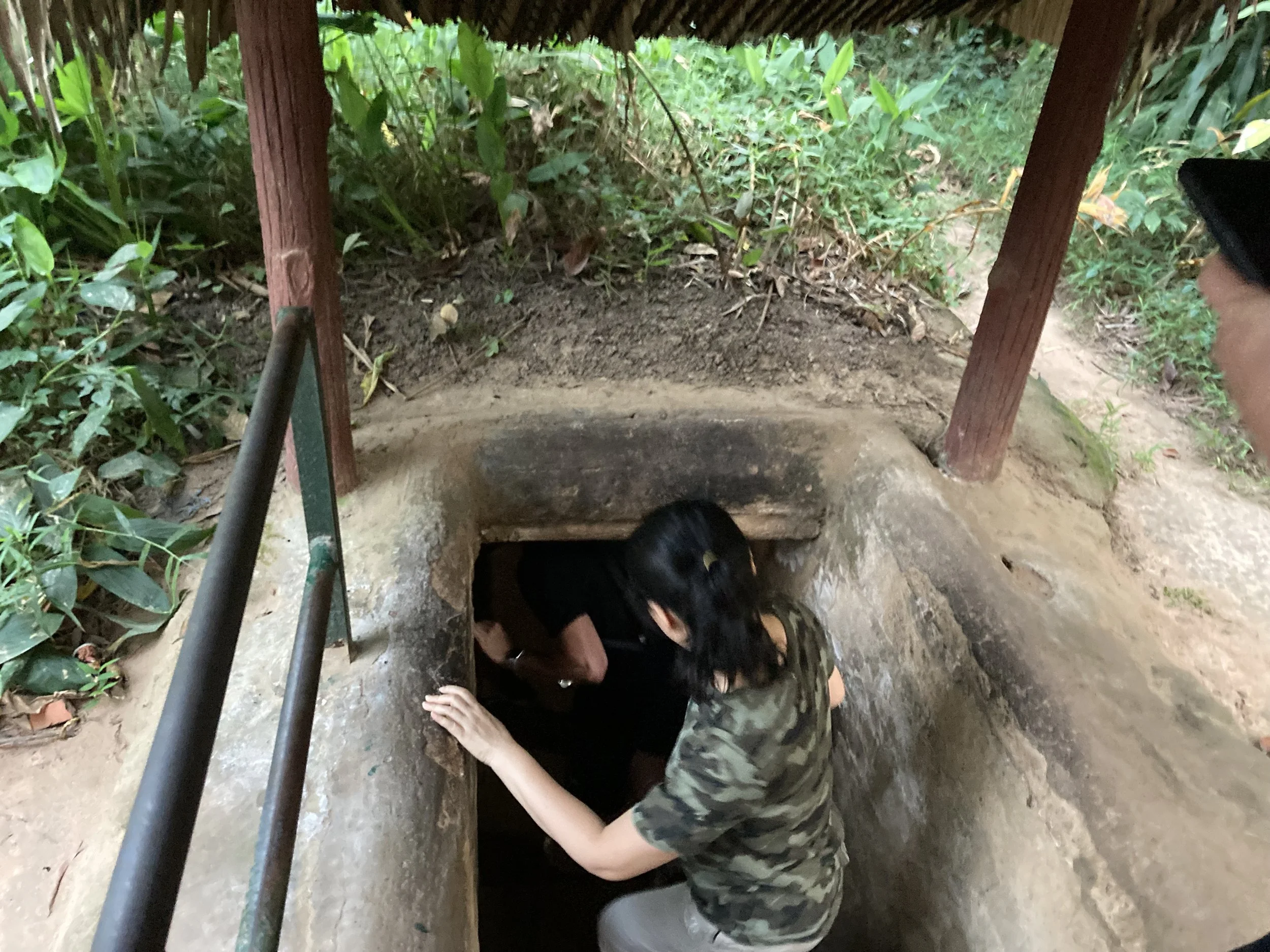
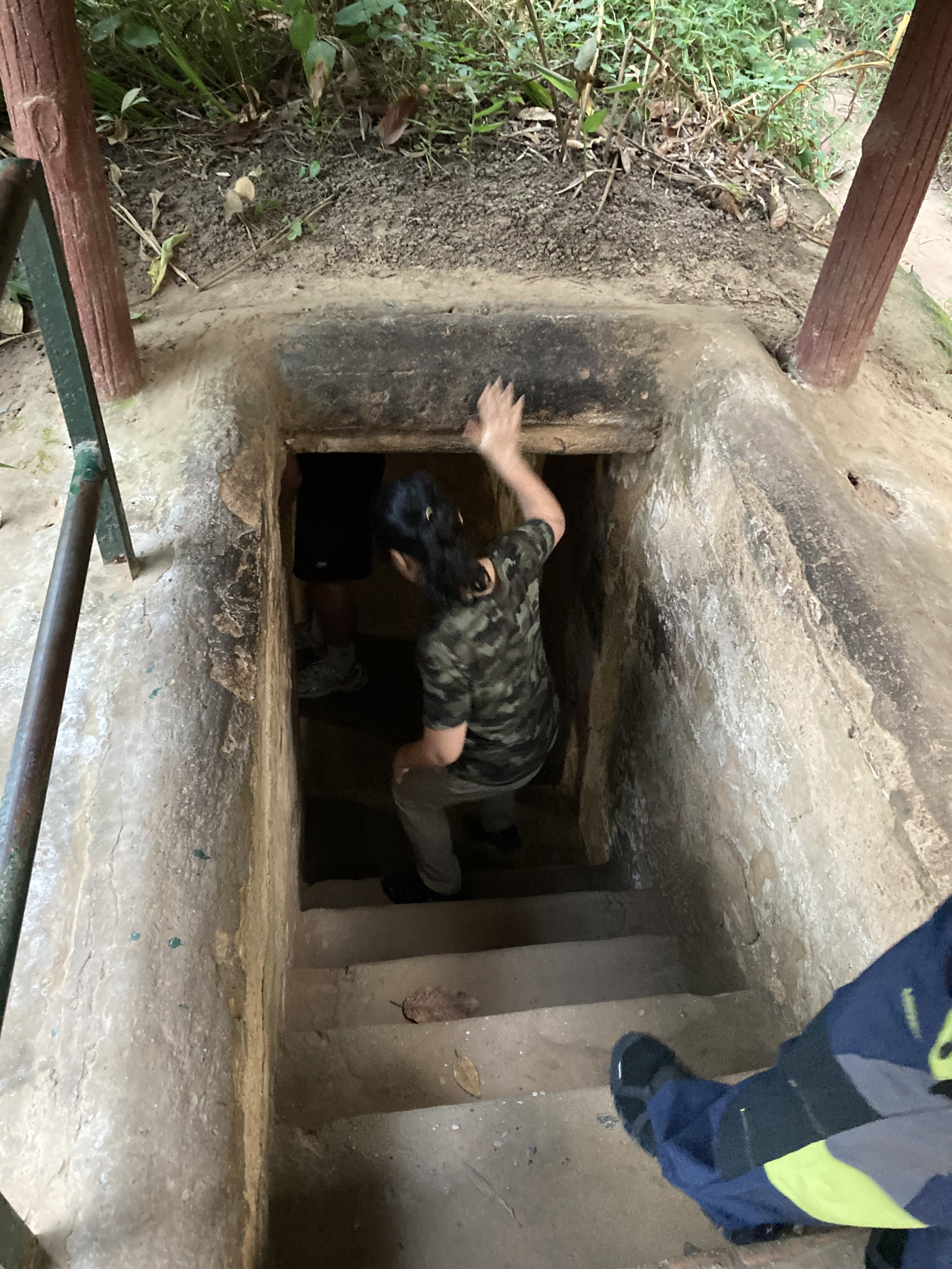
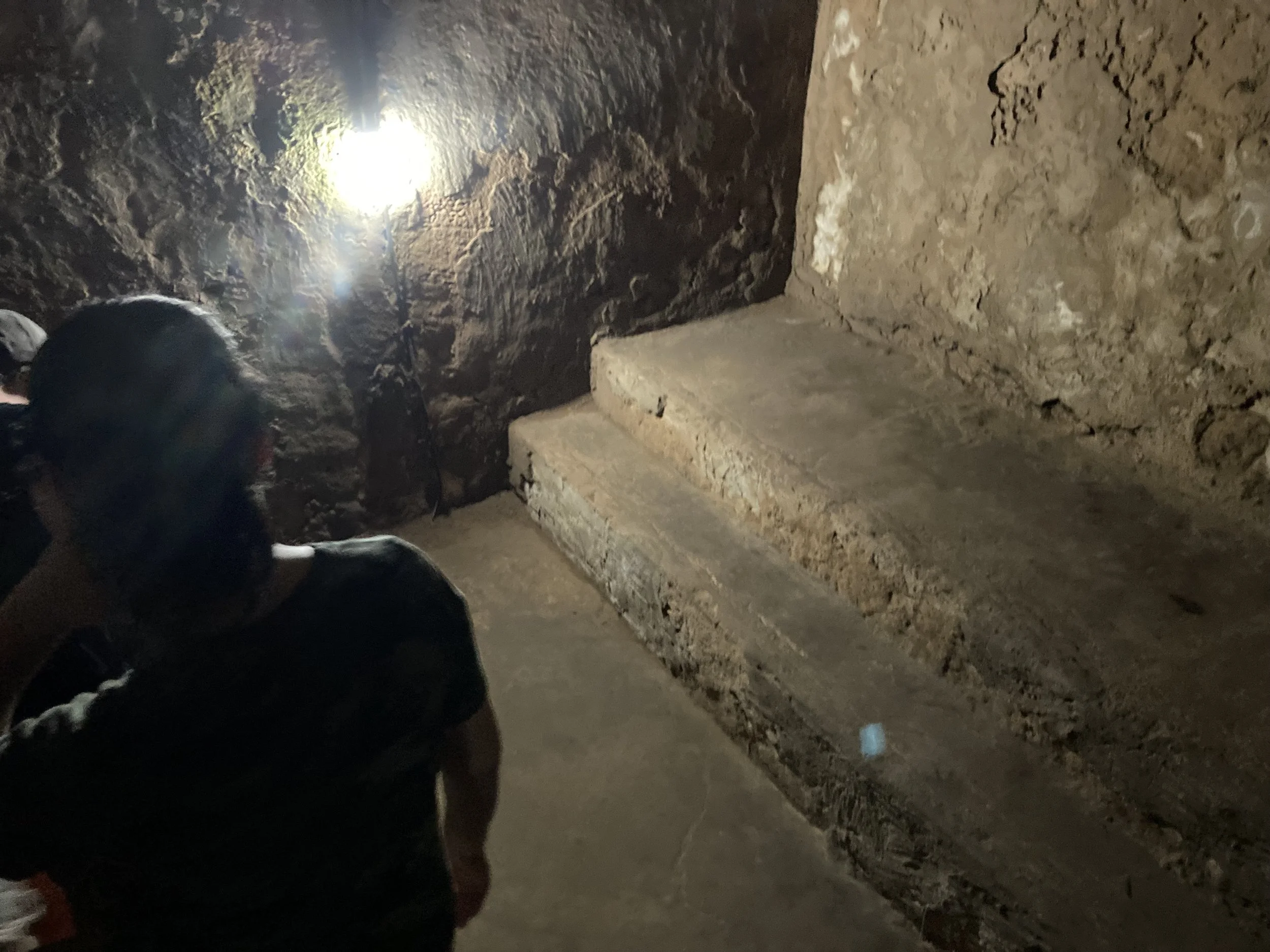
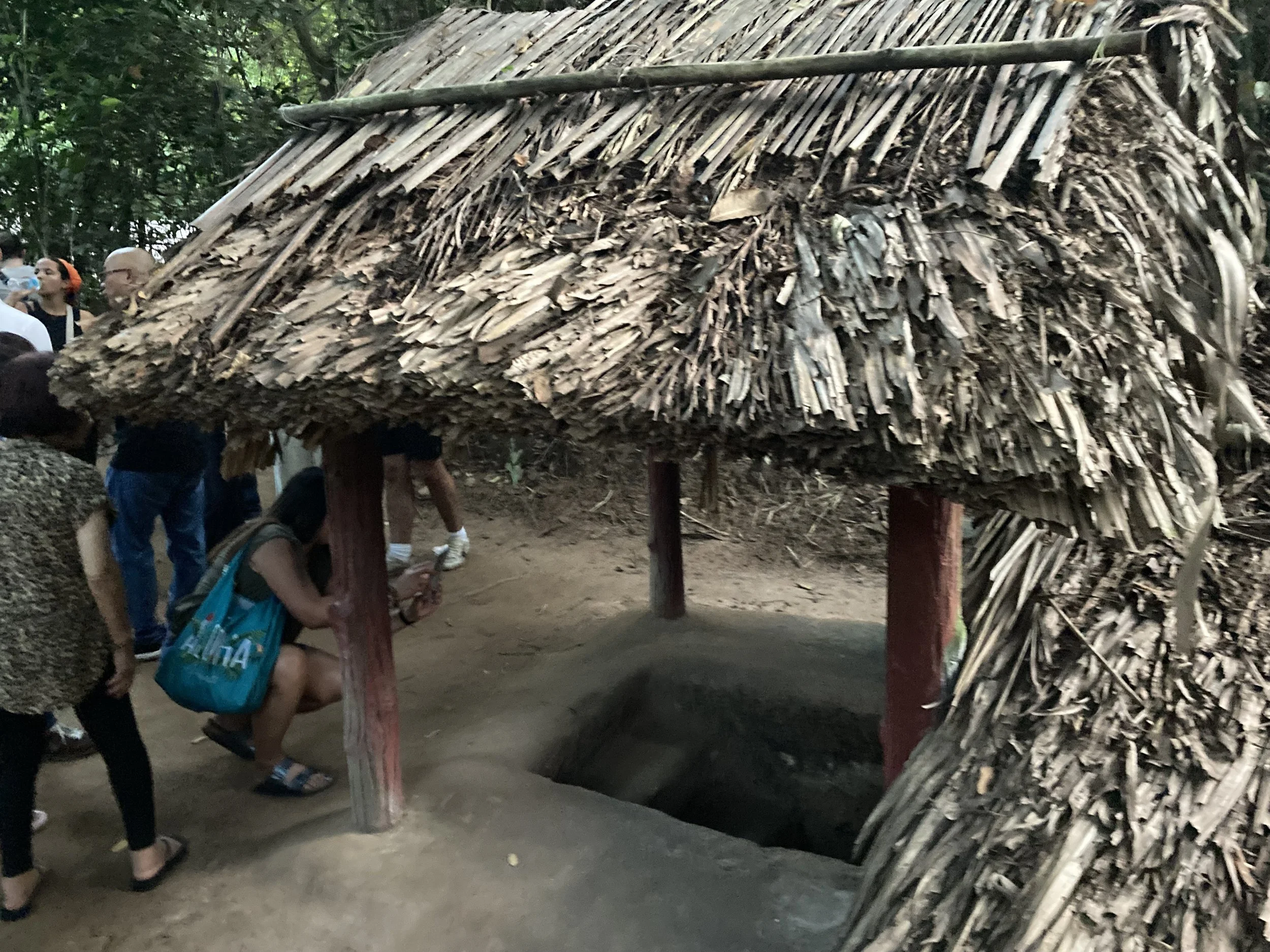
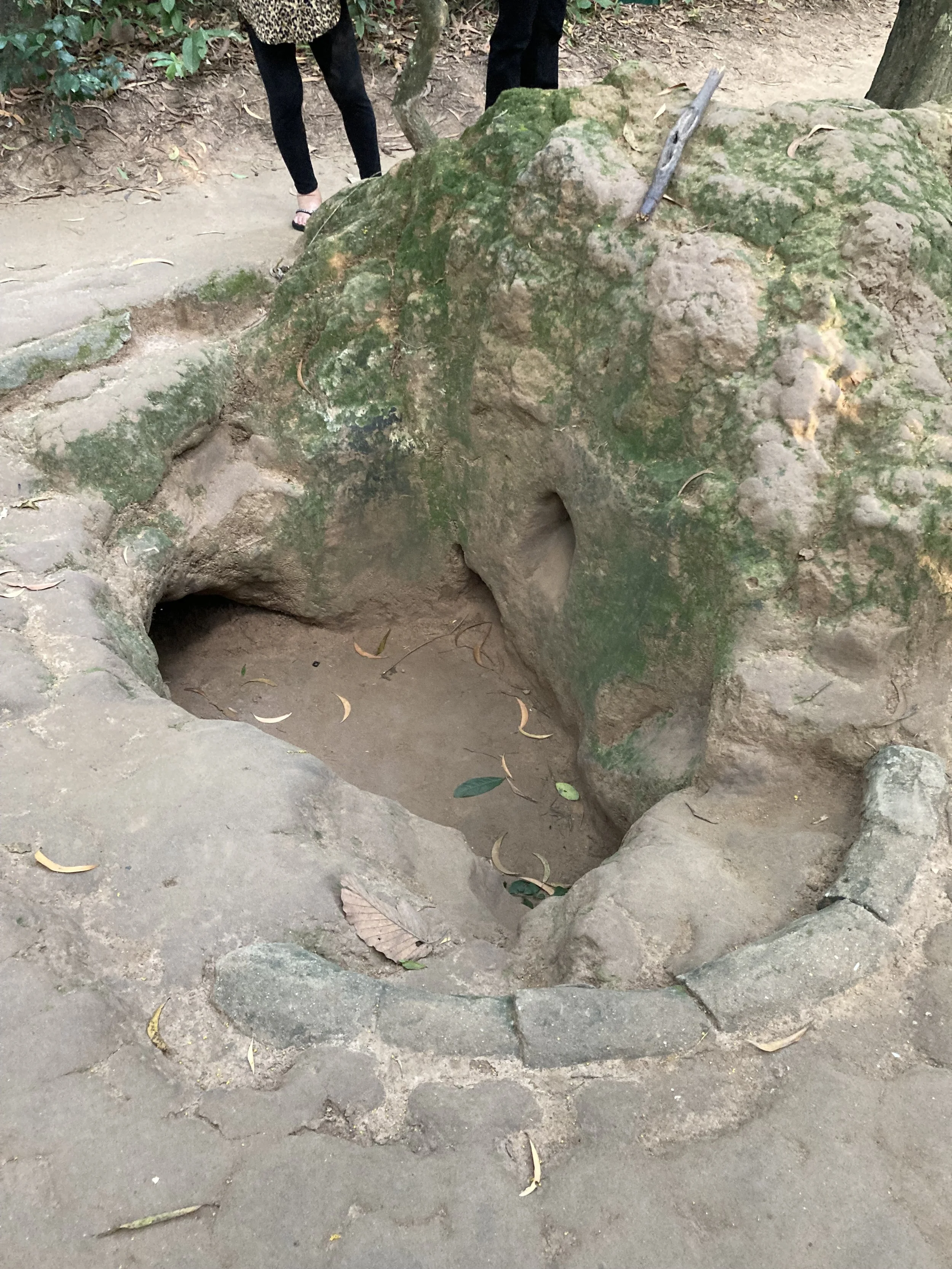
Cu Chi Tunnel with quarters for eating, sleeping and defense
Today was a somber day, but one that I very much wanted to experience while I’m here in Saigon (now called Ho Chi Minh City). Why? Because it’s part of my nation’s dark history — the dark reality that is not told in school growing up when talking about what American’s call the Vietnam war. The Vietnamese rightly call it “The American War” as Vietnam was the country being attacked and invaded by America.
Regardless of the politics, this is the ugly side of war that is often swept under the proverbial carpet. To downplay or ignore the brutality of war leads to a continued cycle of violence. Fortunately, the average person is unlikely to experience this first-hand. But ignoring it doesn’t make it disappear (see related post on Hiroshima and the atomic bomb).
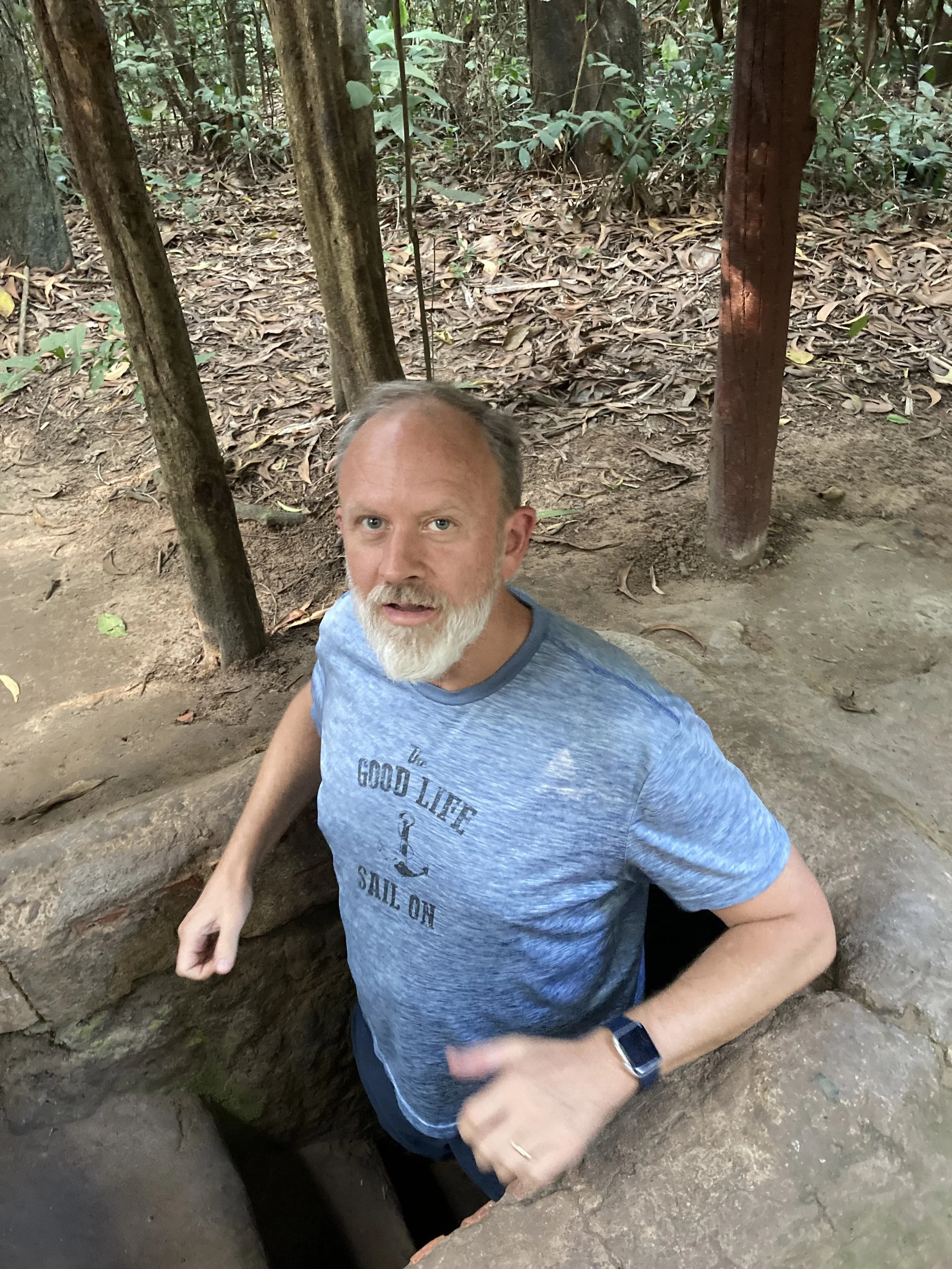
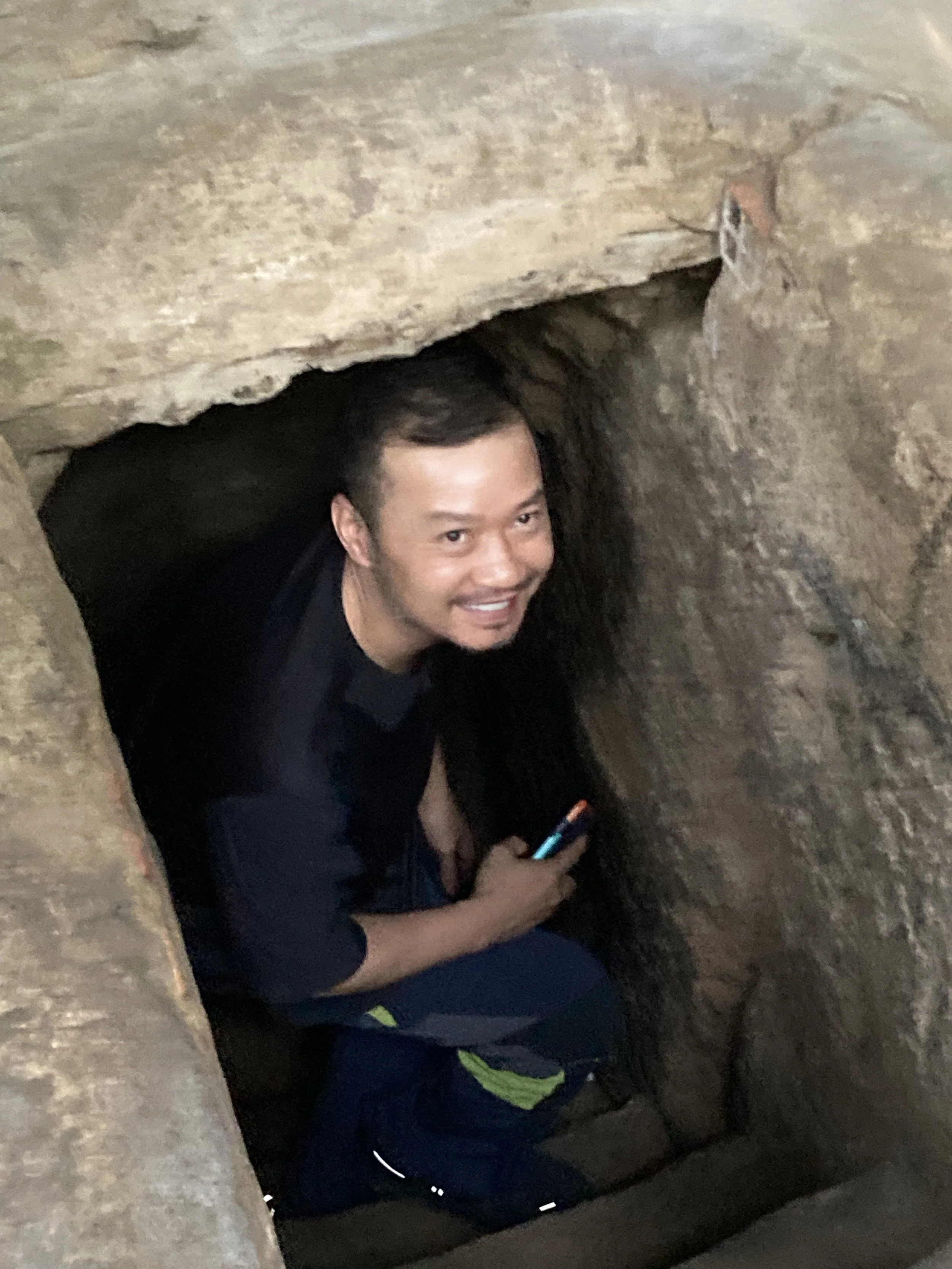
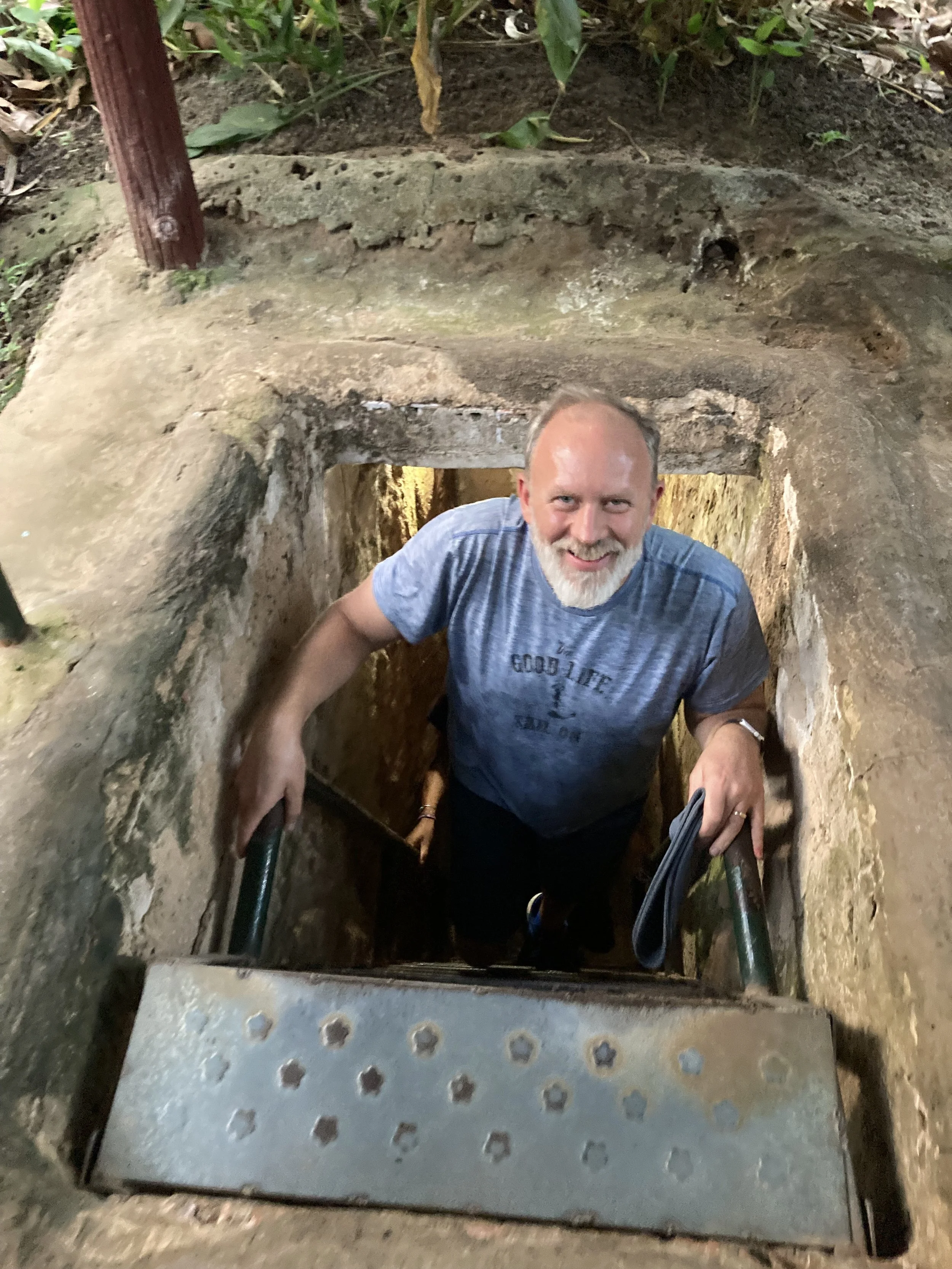
Spending time in these cramped, dark tunnels to feel what it was like
What It’s Like Inside the Cu Chi Tunnels
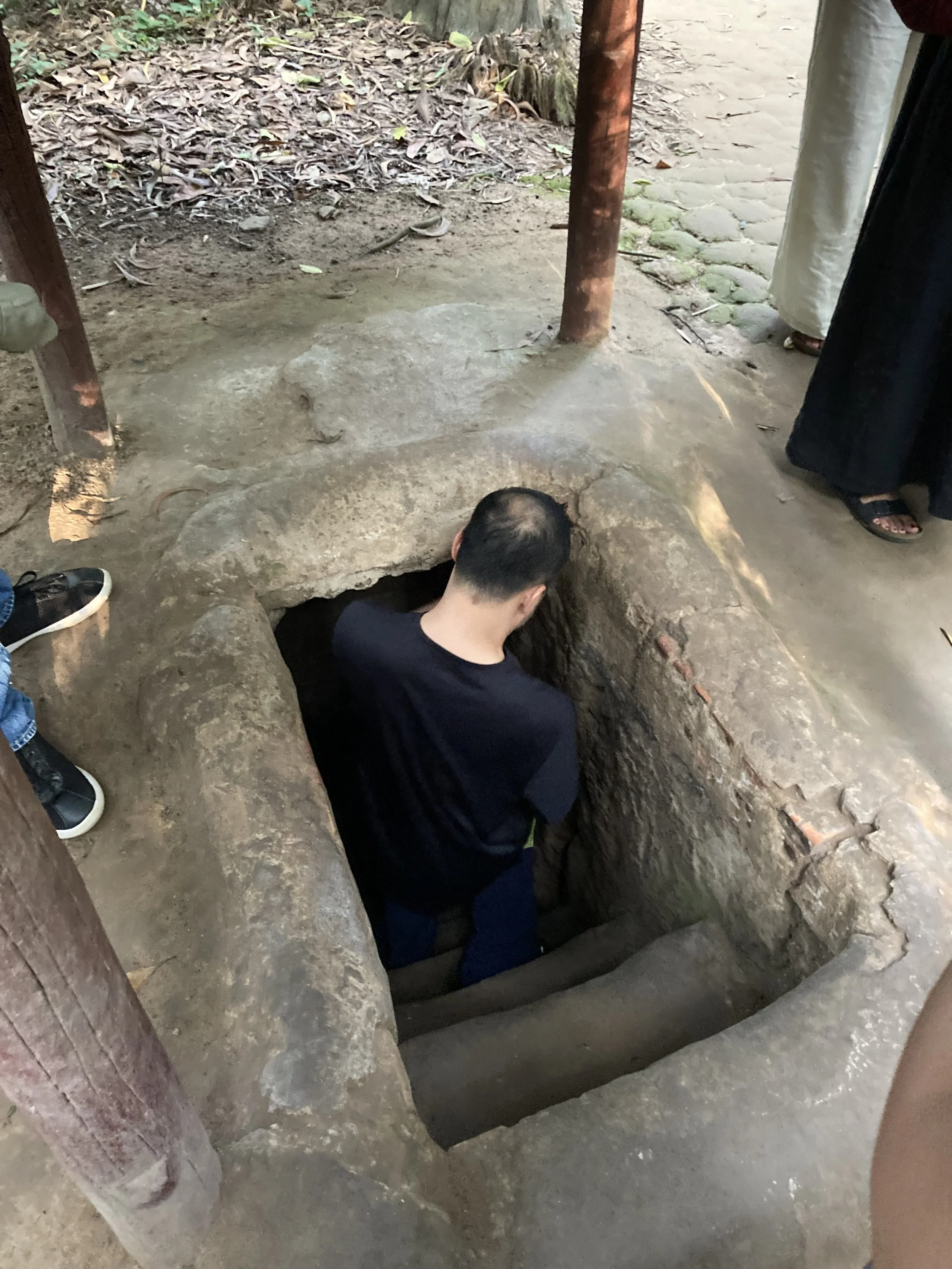
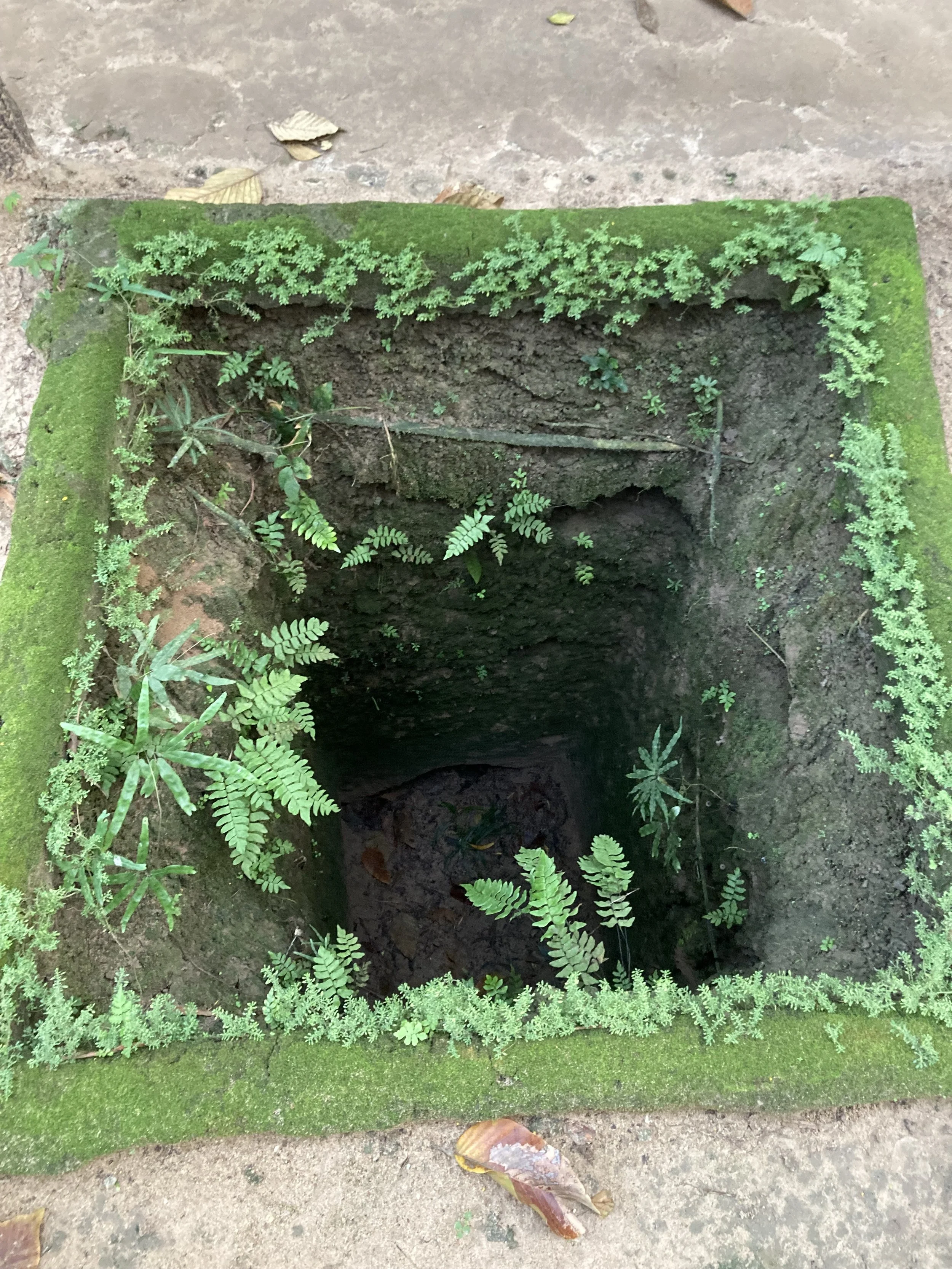
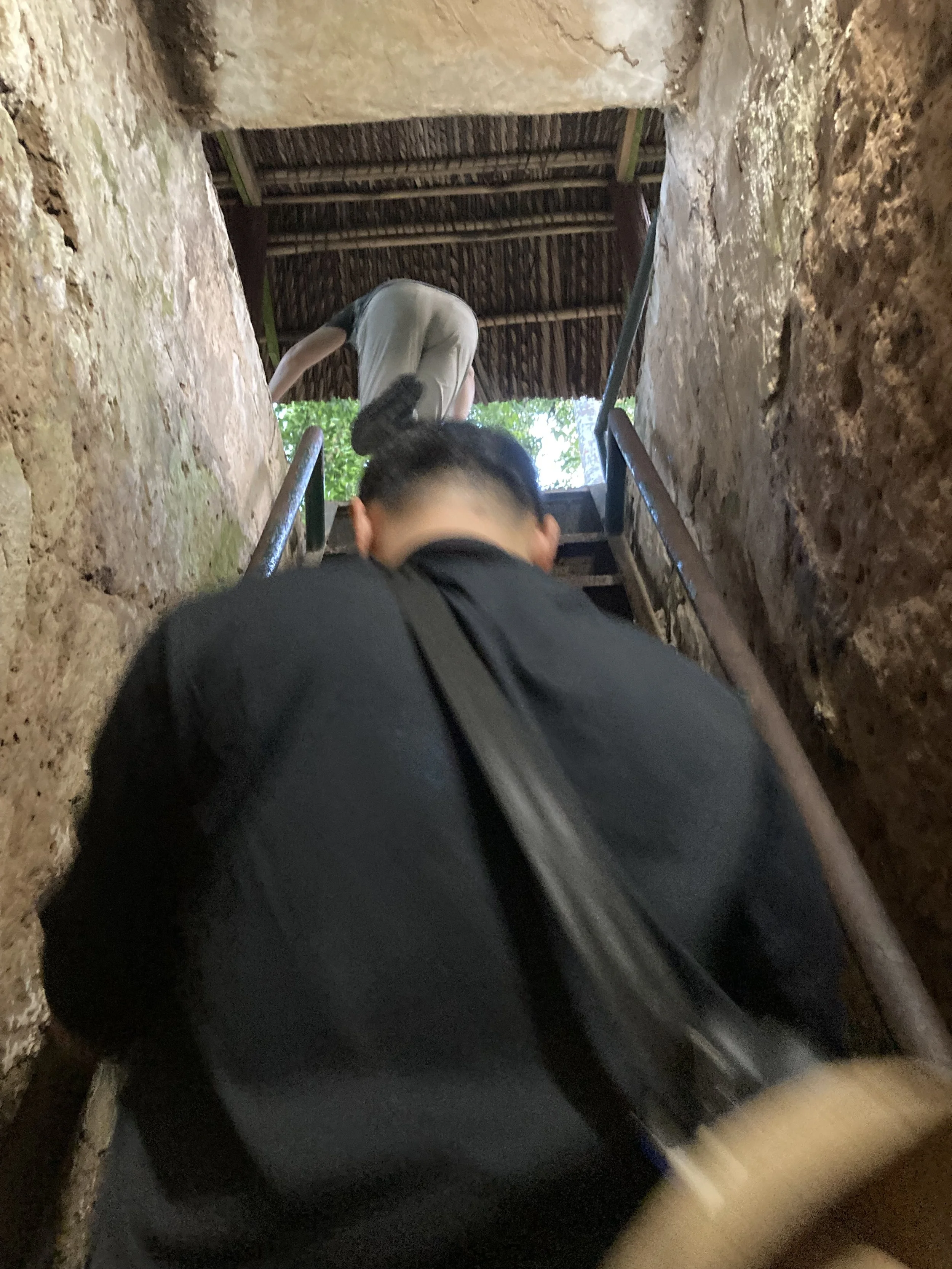
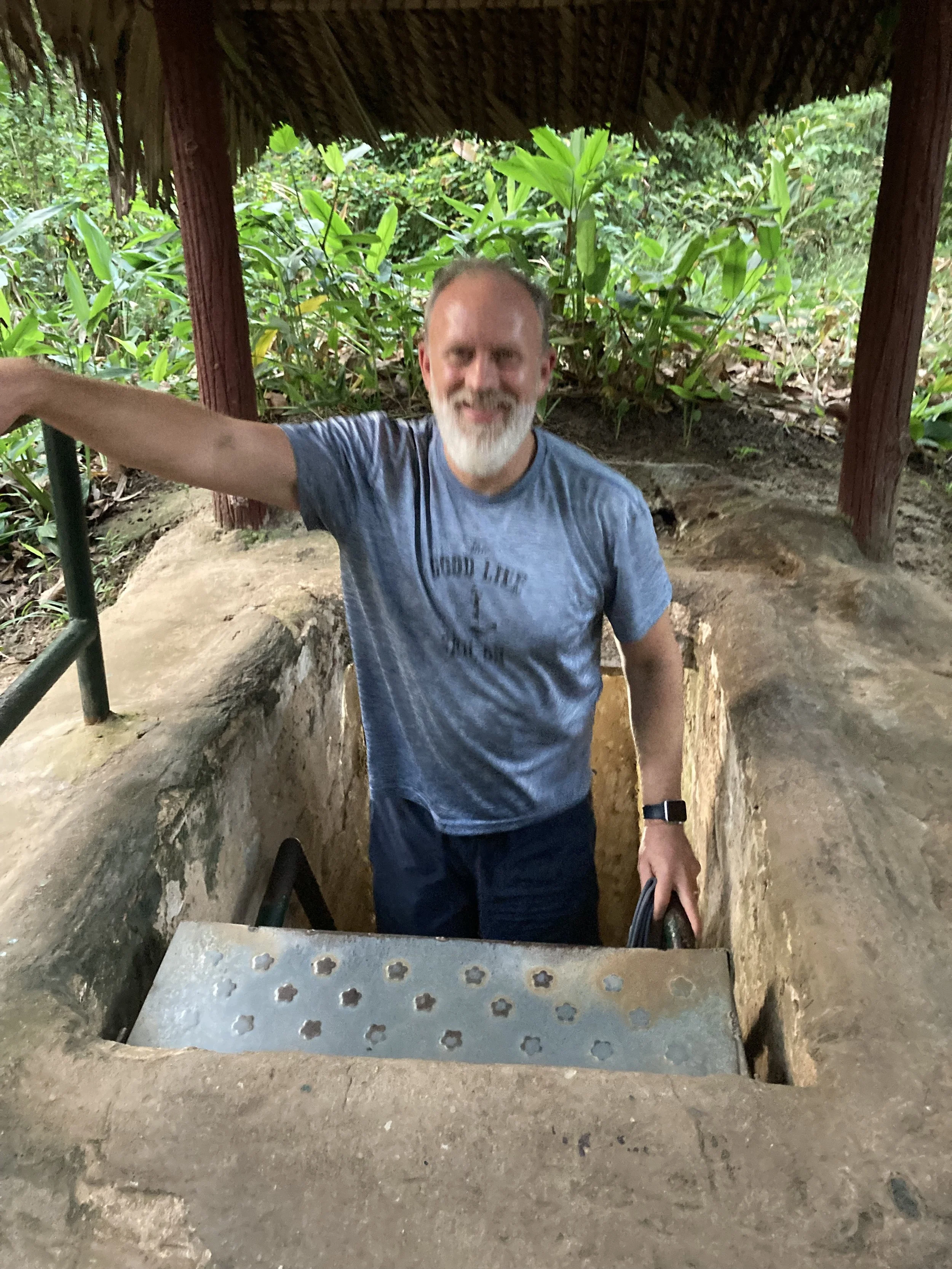
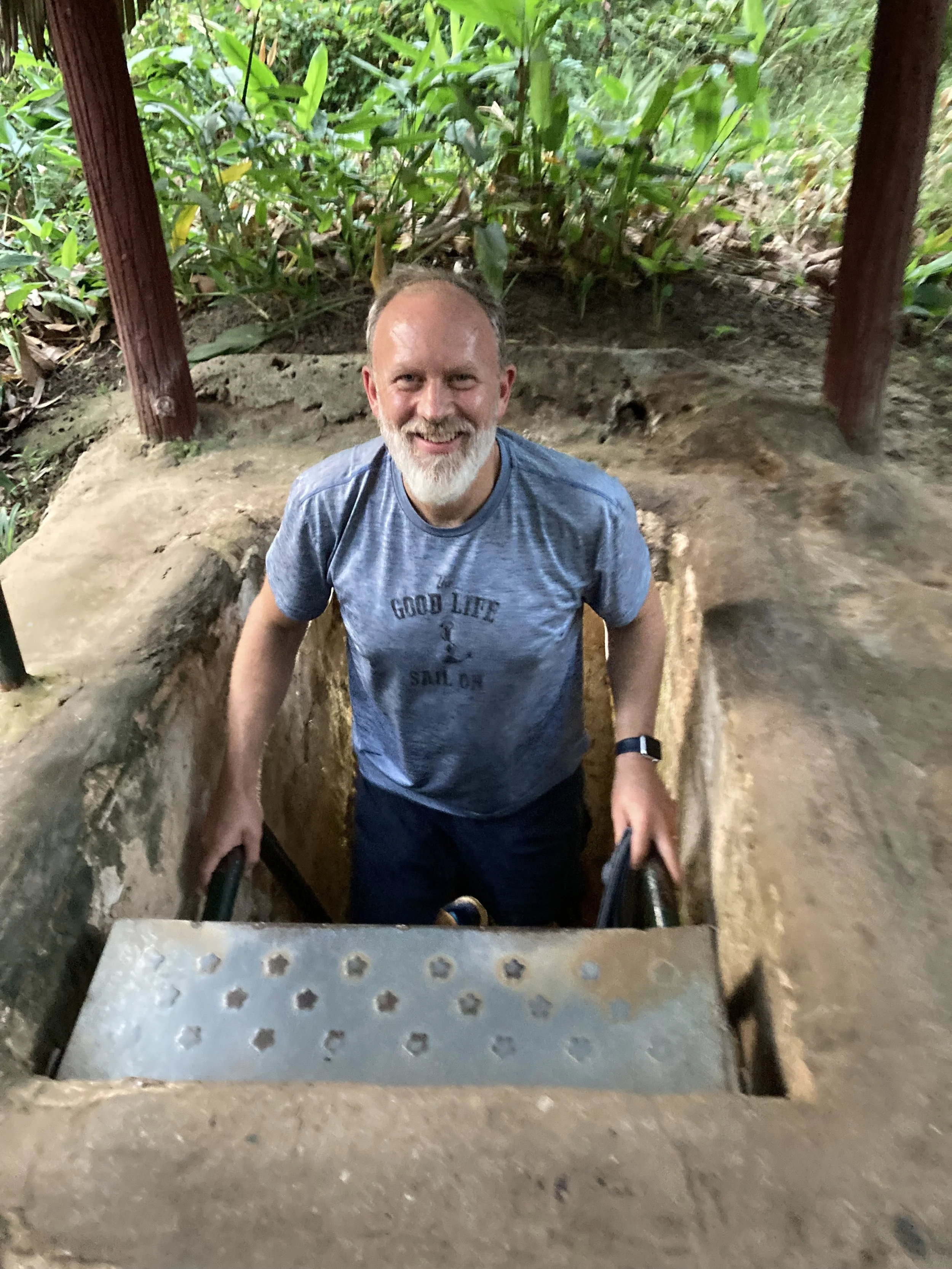
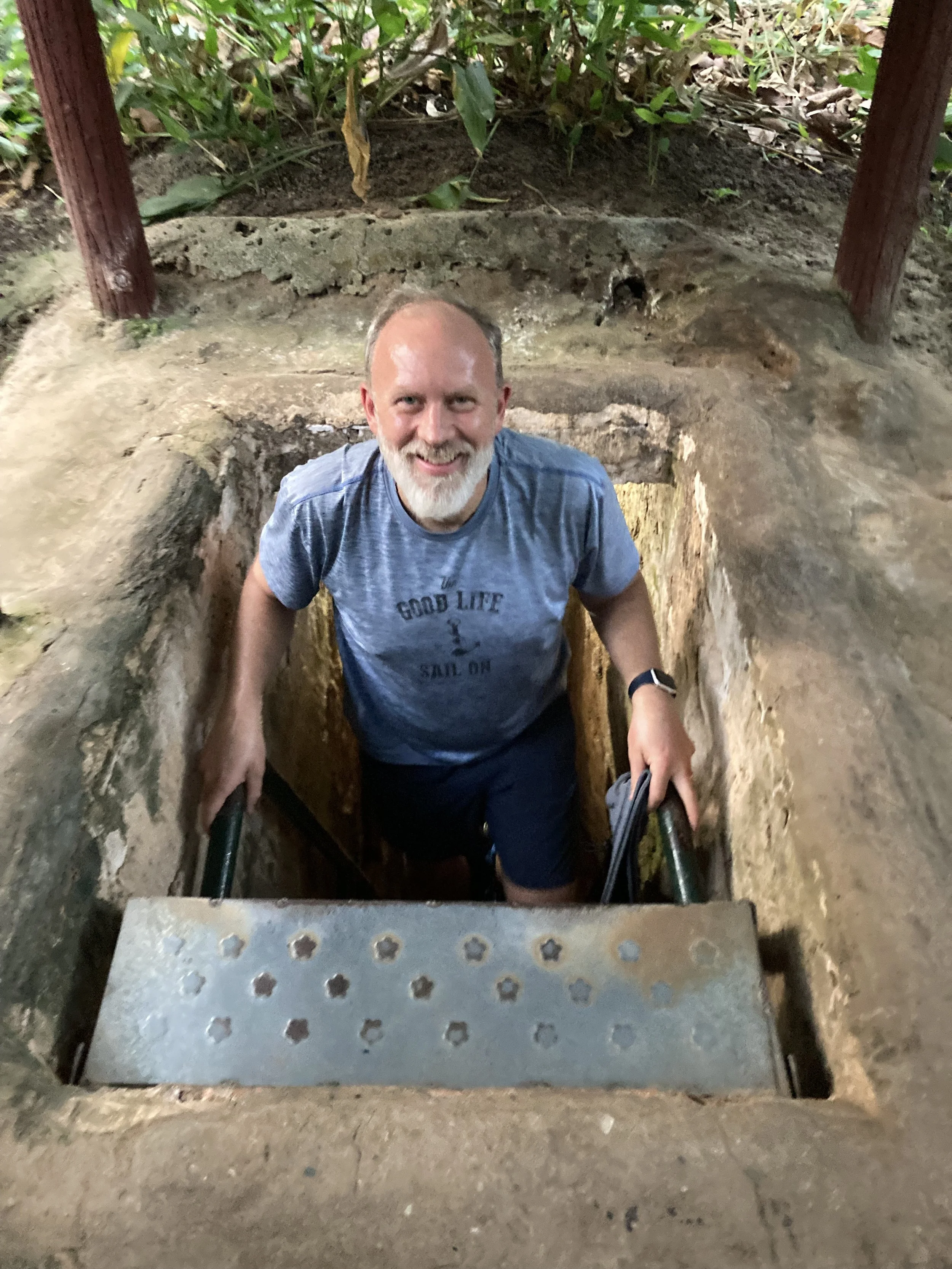
Climbing down into these tunnels was terrifying — and that’s without the bombs exploding and constant machine gun firing in the background. I’m neither claustrophobic nor afraid of the dark, but there’s no doubt I’d be both after living inside these tunnels for years.
In fact, some Vietnamese people got married and had children while living inside these tunnels. The babies grew up here for the first 3 years of their lives and most of them became blind when they were introduced to daylight — which their eyes were simply not ready to experience after so many years underground.
The tunnels were just barely big enough for me to fit into. Granted, I’m bigger than the average Vietnamese person, but it would have been small for any person down there. The darkness is disorientating and I was immediately aware how little oxygen was around me. Despite having ventilation holes, the air sits heavy without the wind to move it around. As soon as I was in this tunnel, I wanted to get out.
More Than 3 Million Vietnamese Died
While about 5,000 Vietnamese survived because of these tunnels, more than 3 million (and some say as many as 5 million) Vietnamese people died in the American War (compared to the 58,220 casualties of American soldiers). The Vietnamese were outgunned and unprepared for this war in that they had very little weaponry compared to the air strikes, tanks and machine guns from the US.
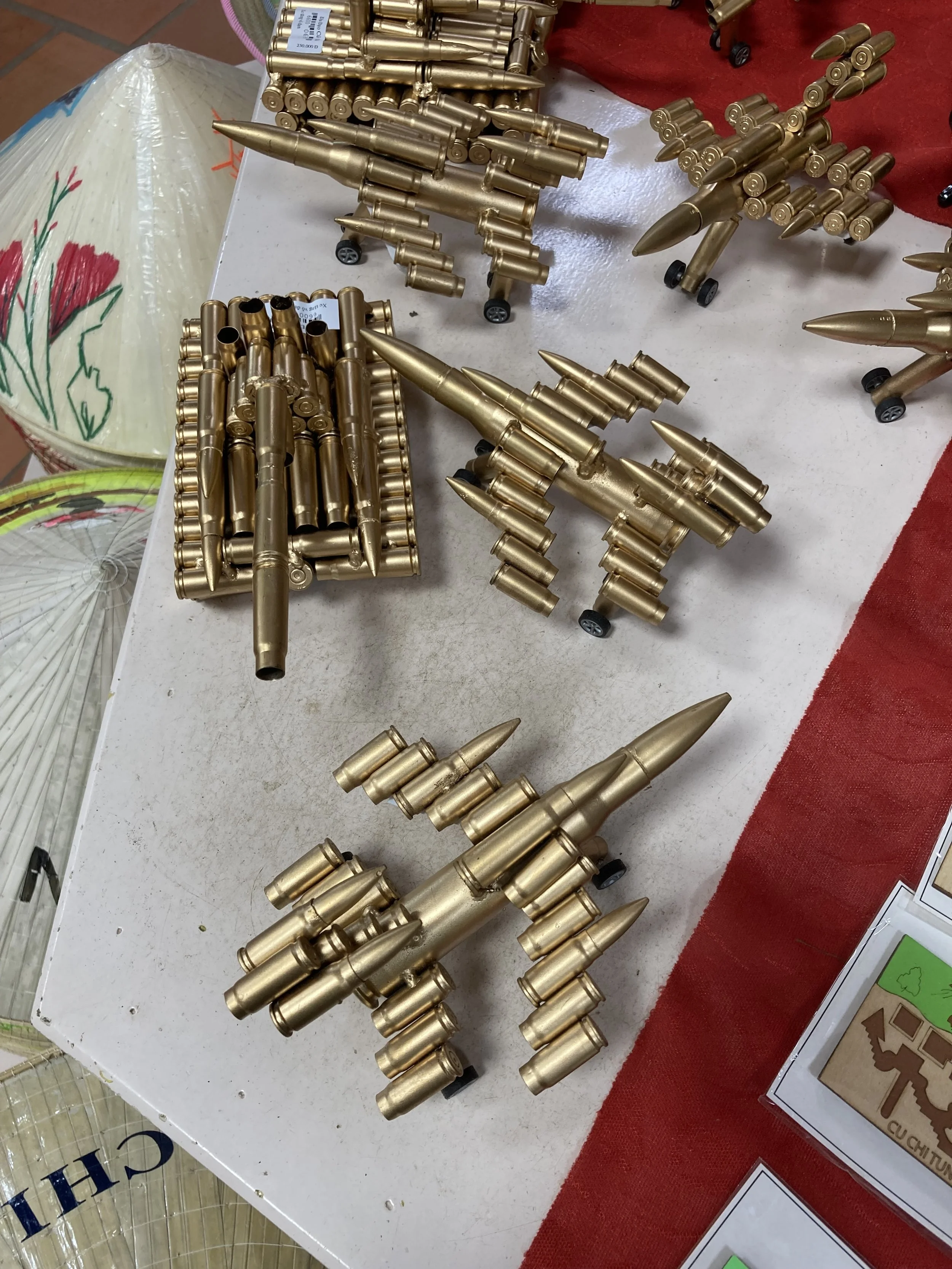
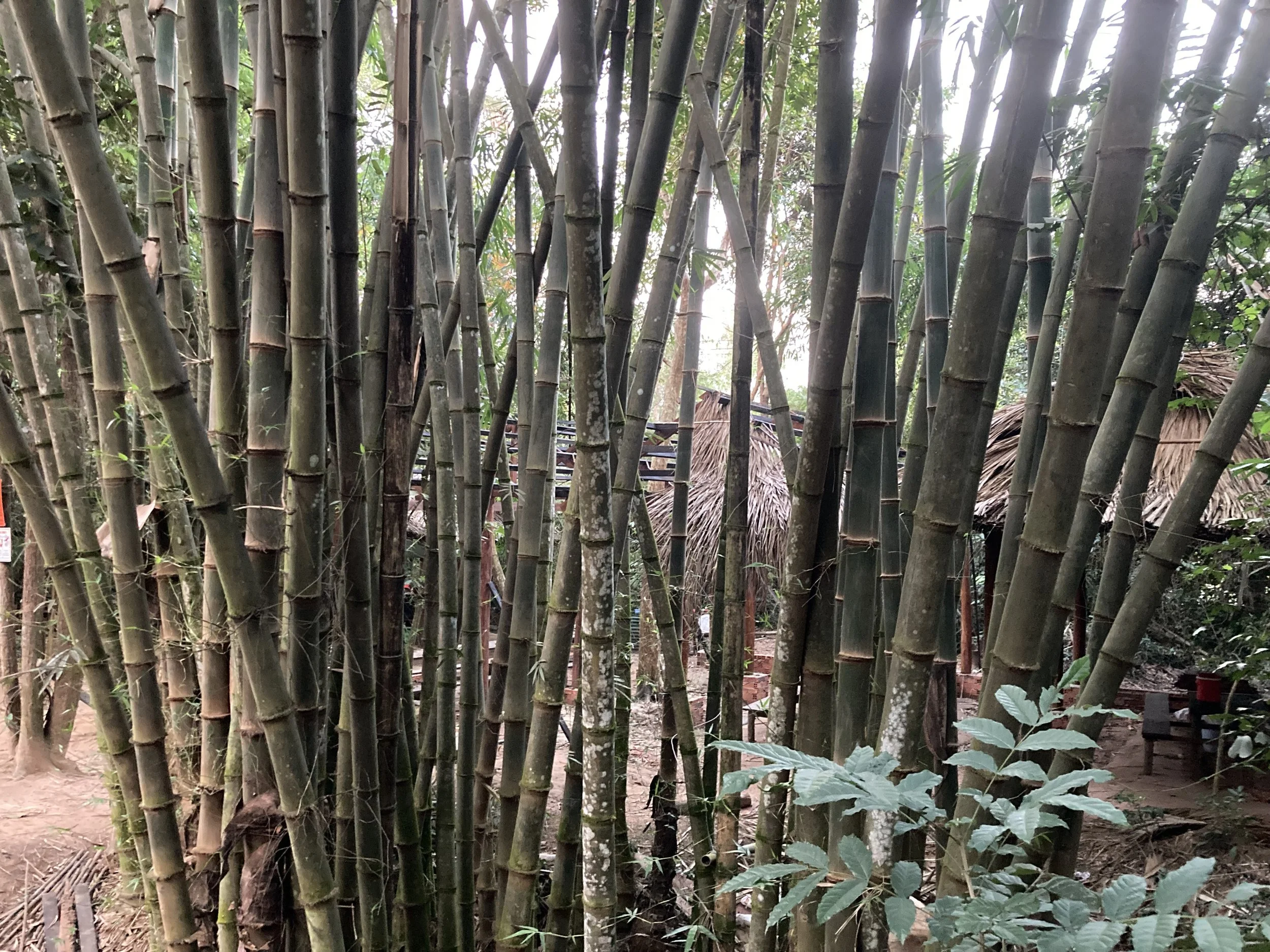
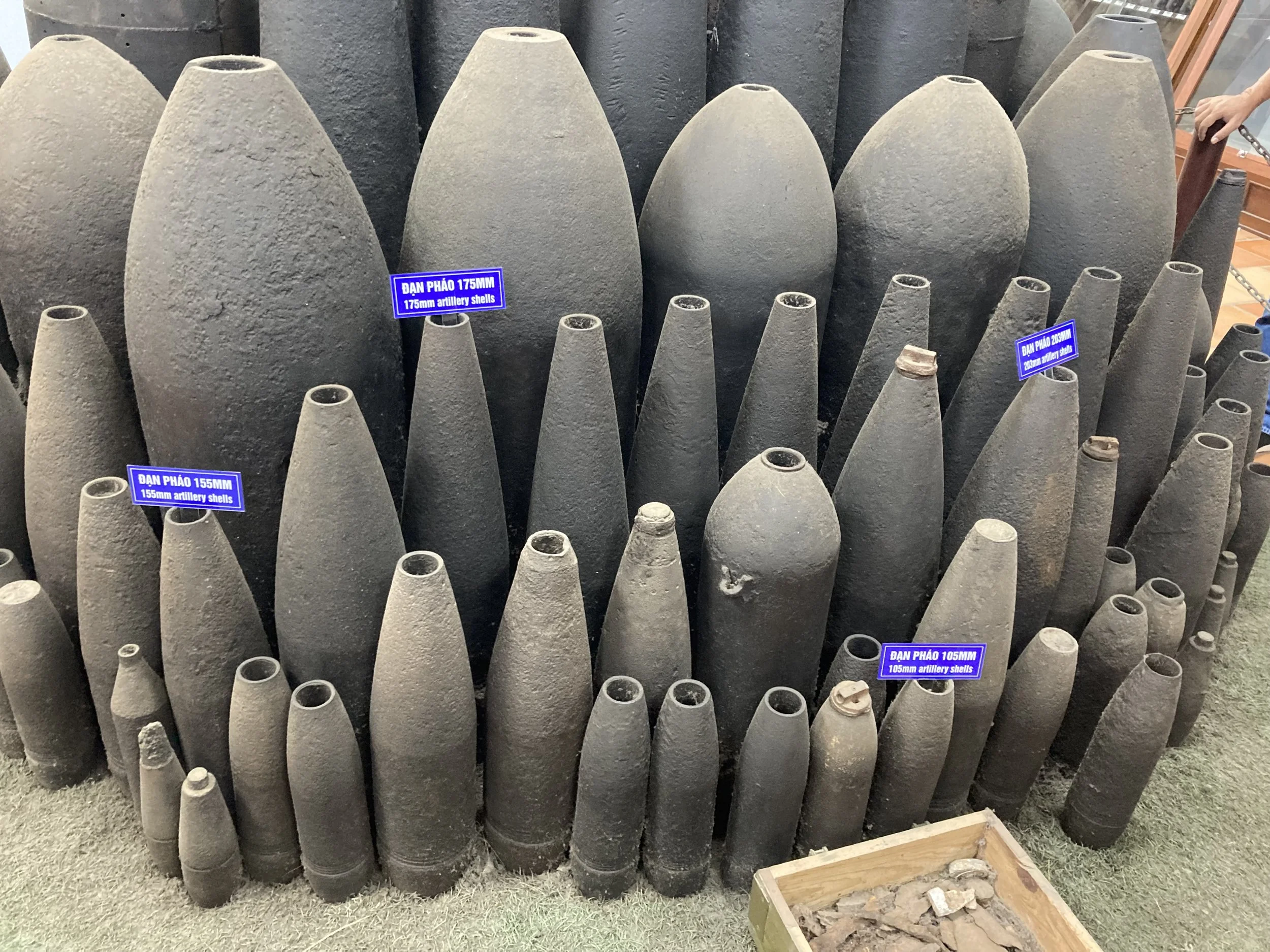
Much of the defense was made up of sharpened bamboo sticks or reused metal made from unexploded bombs.
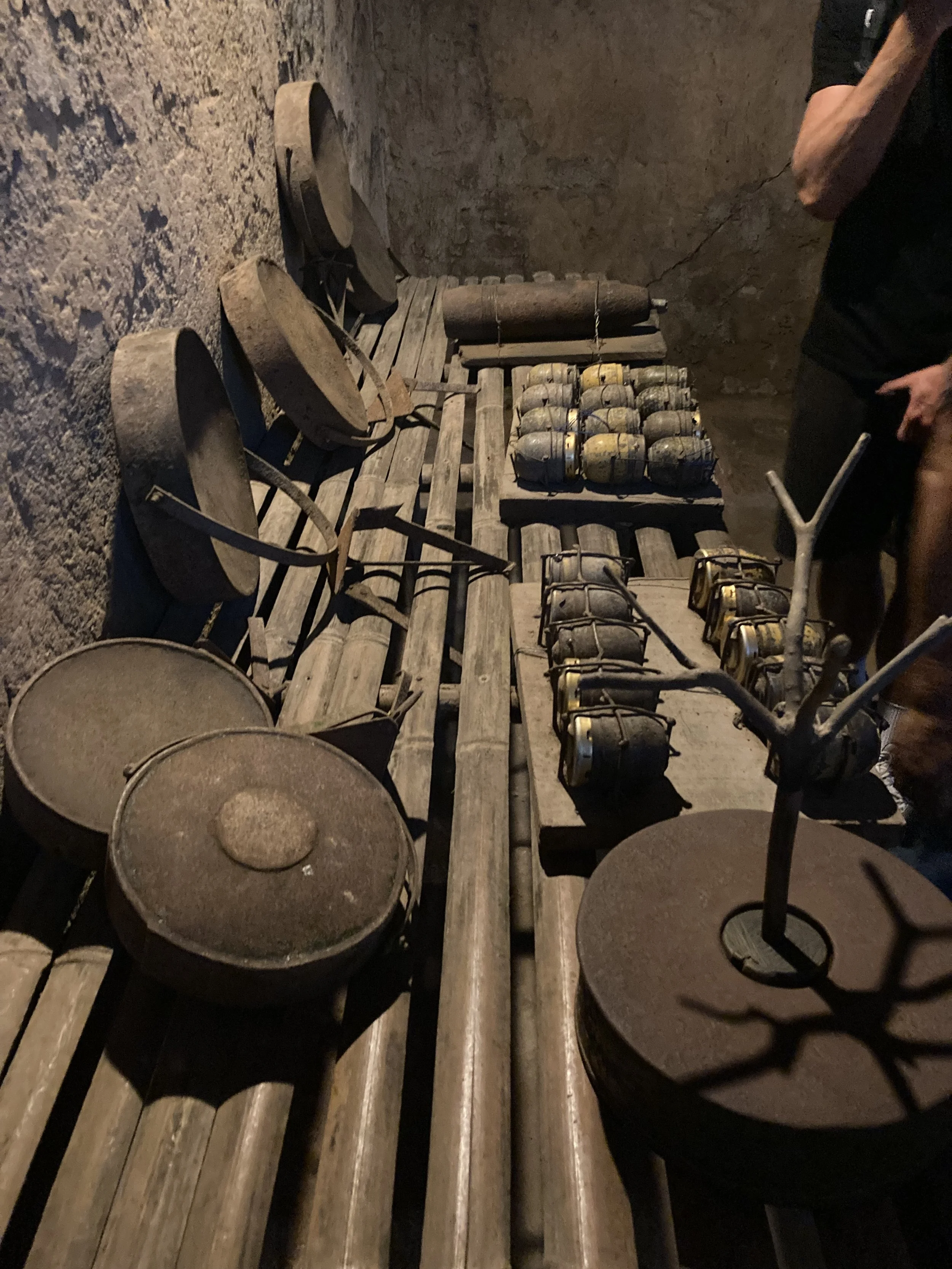
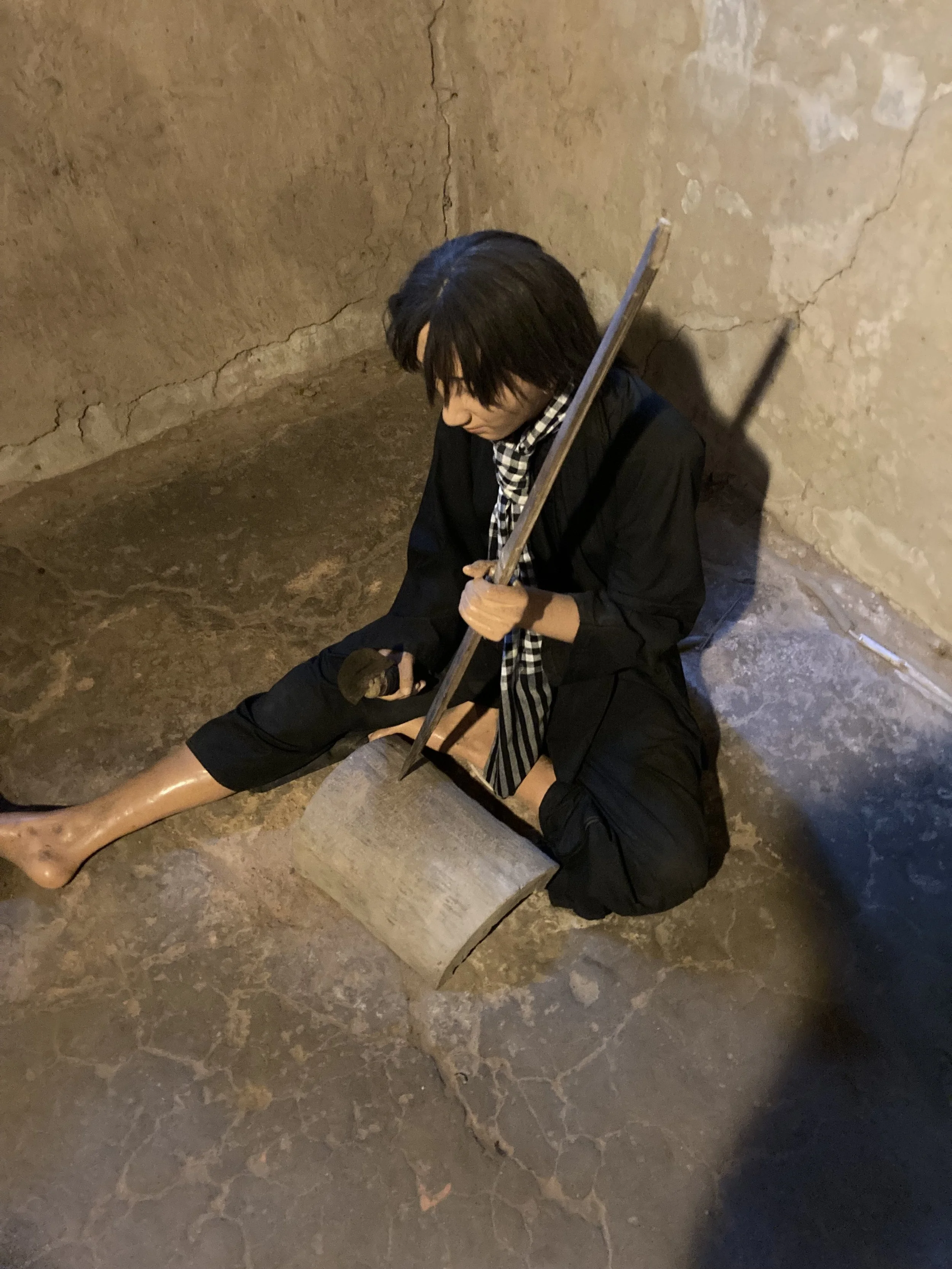
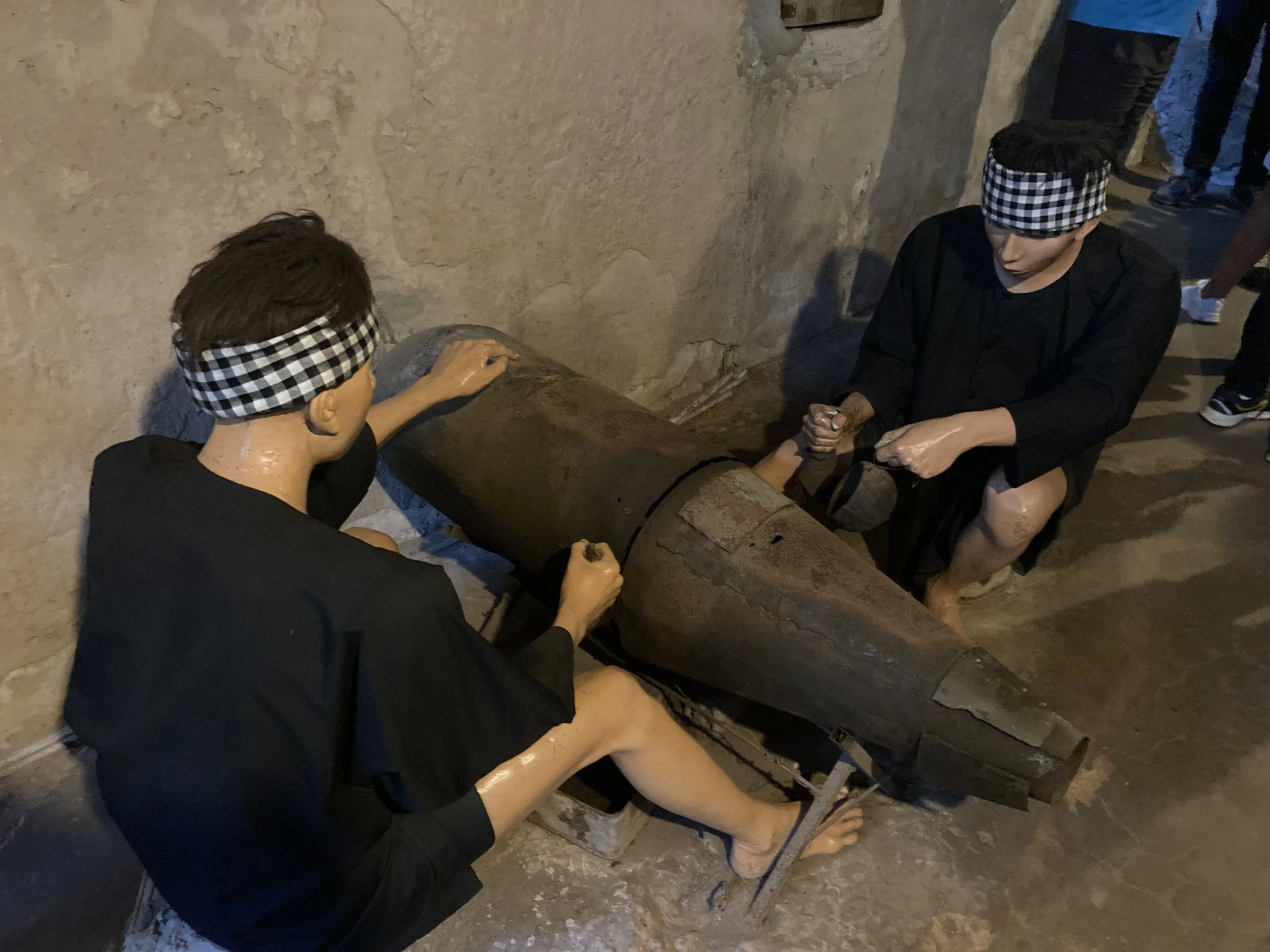
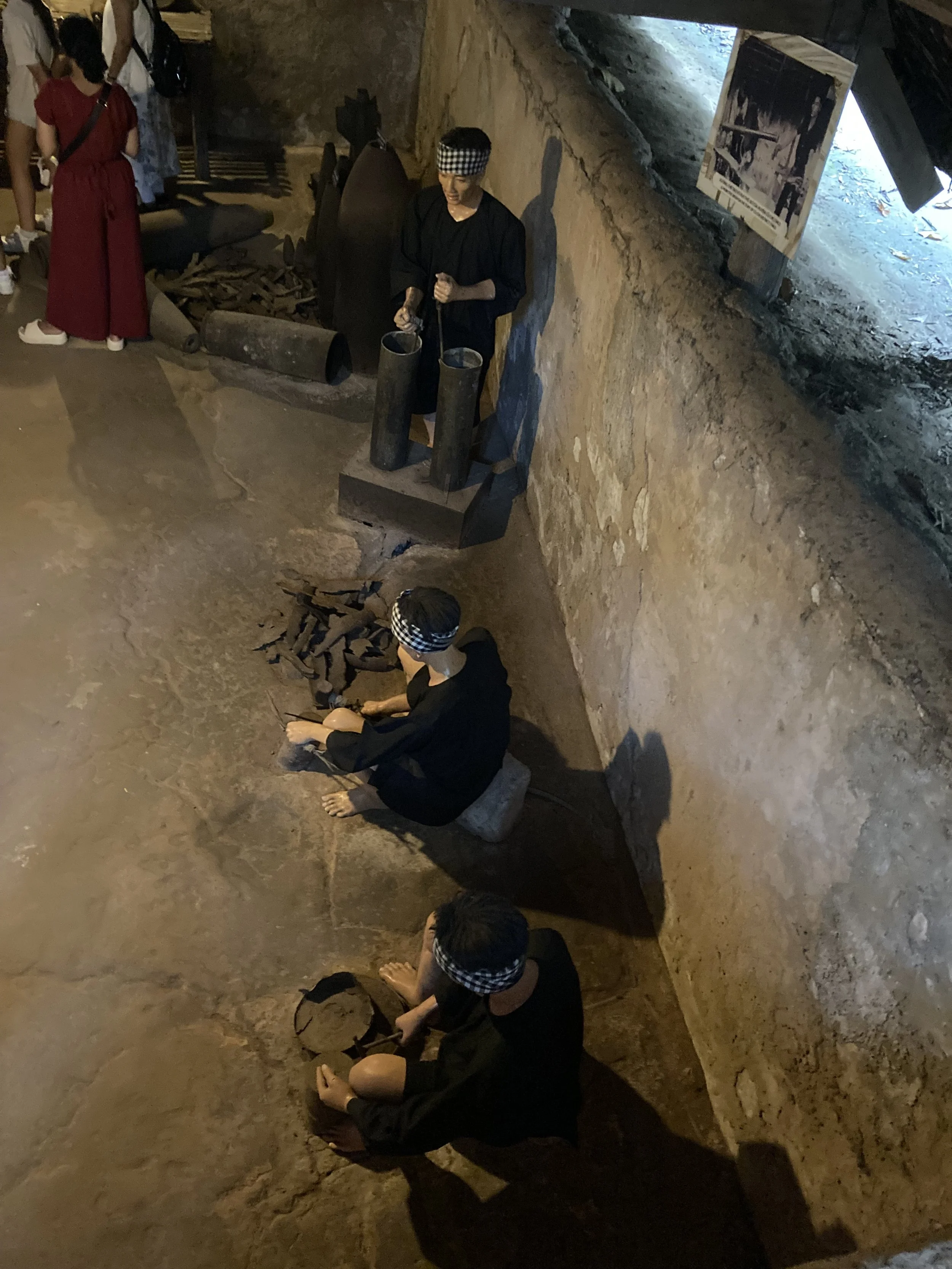
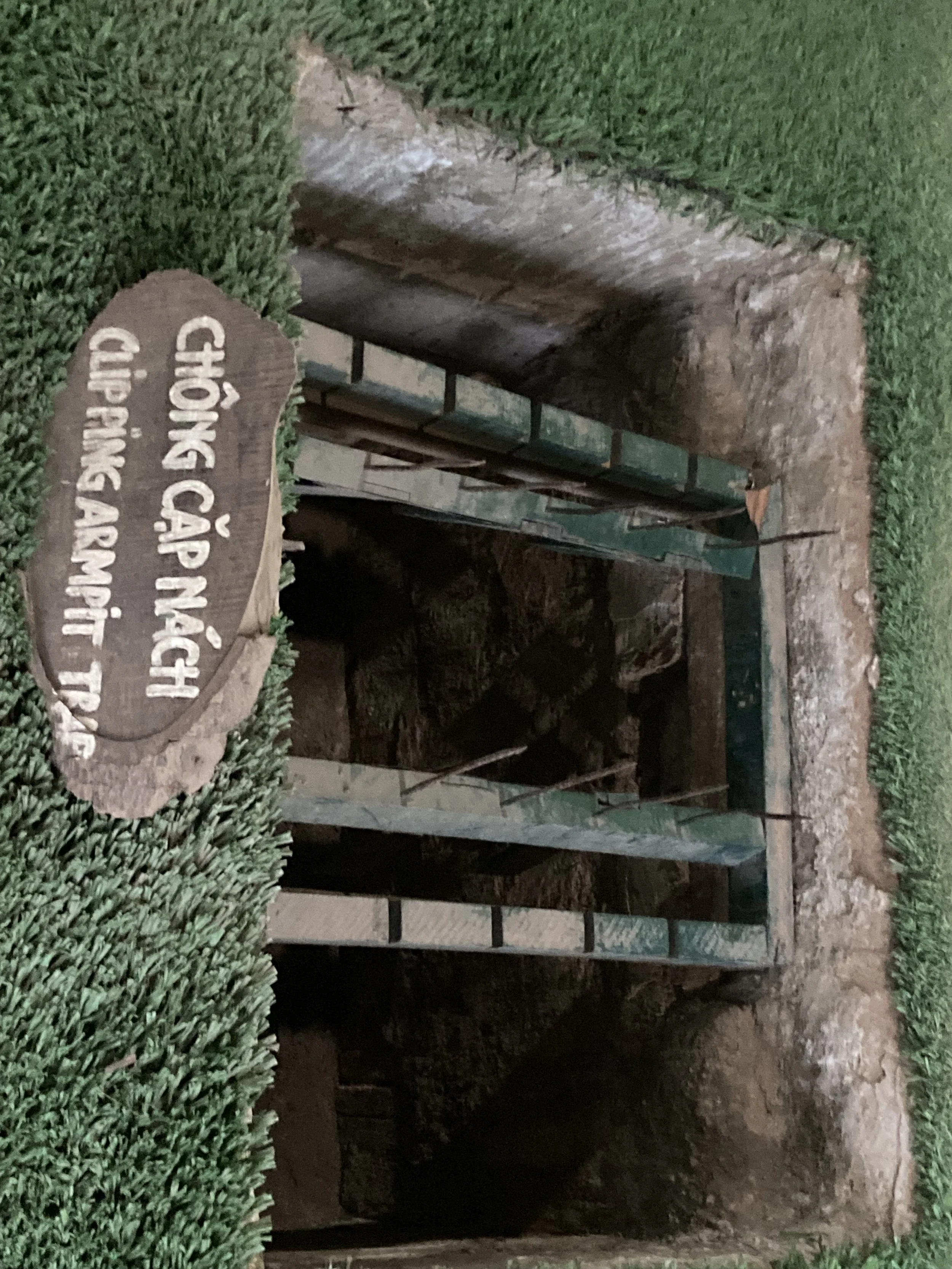
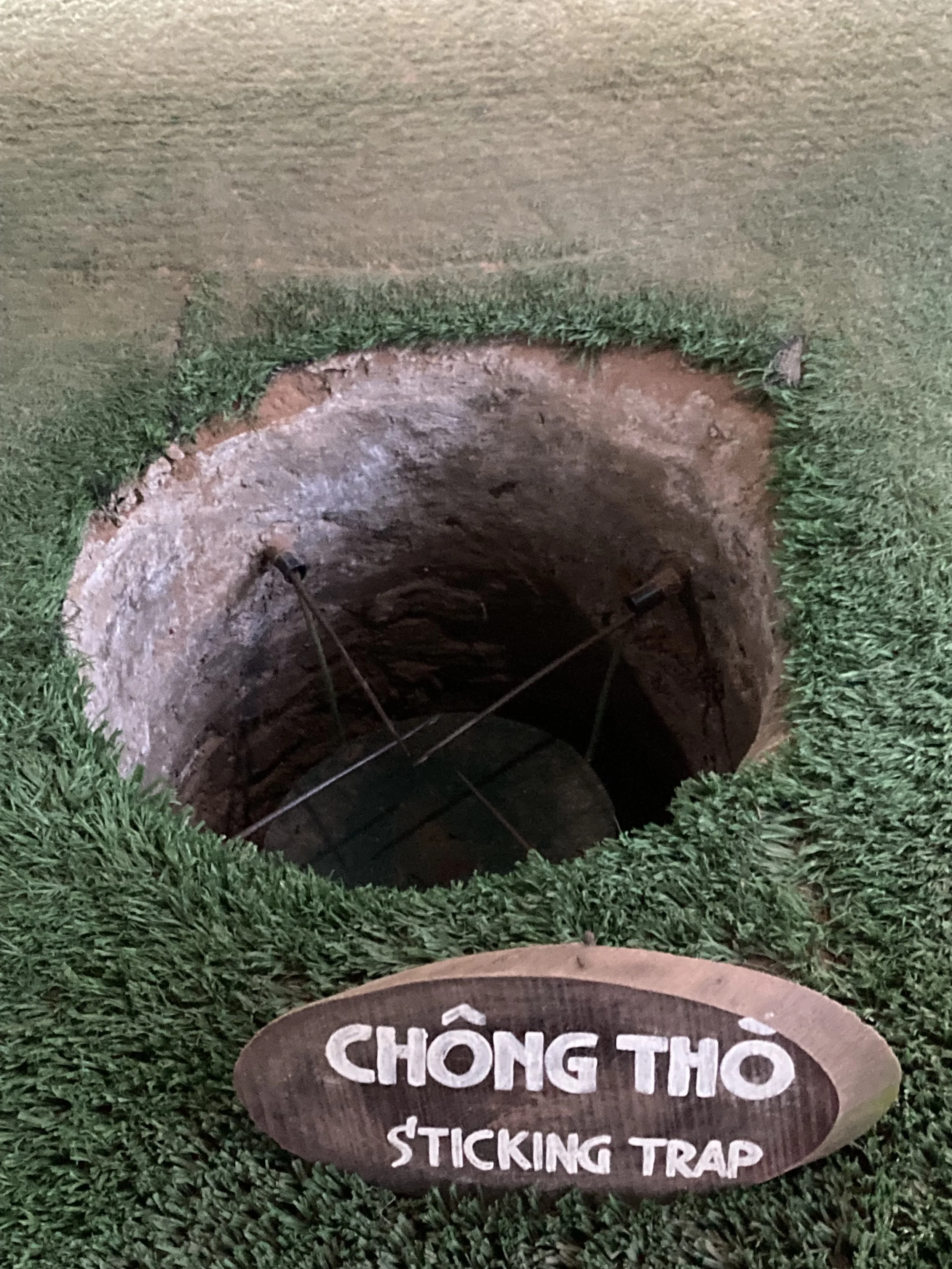
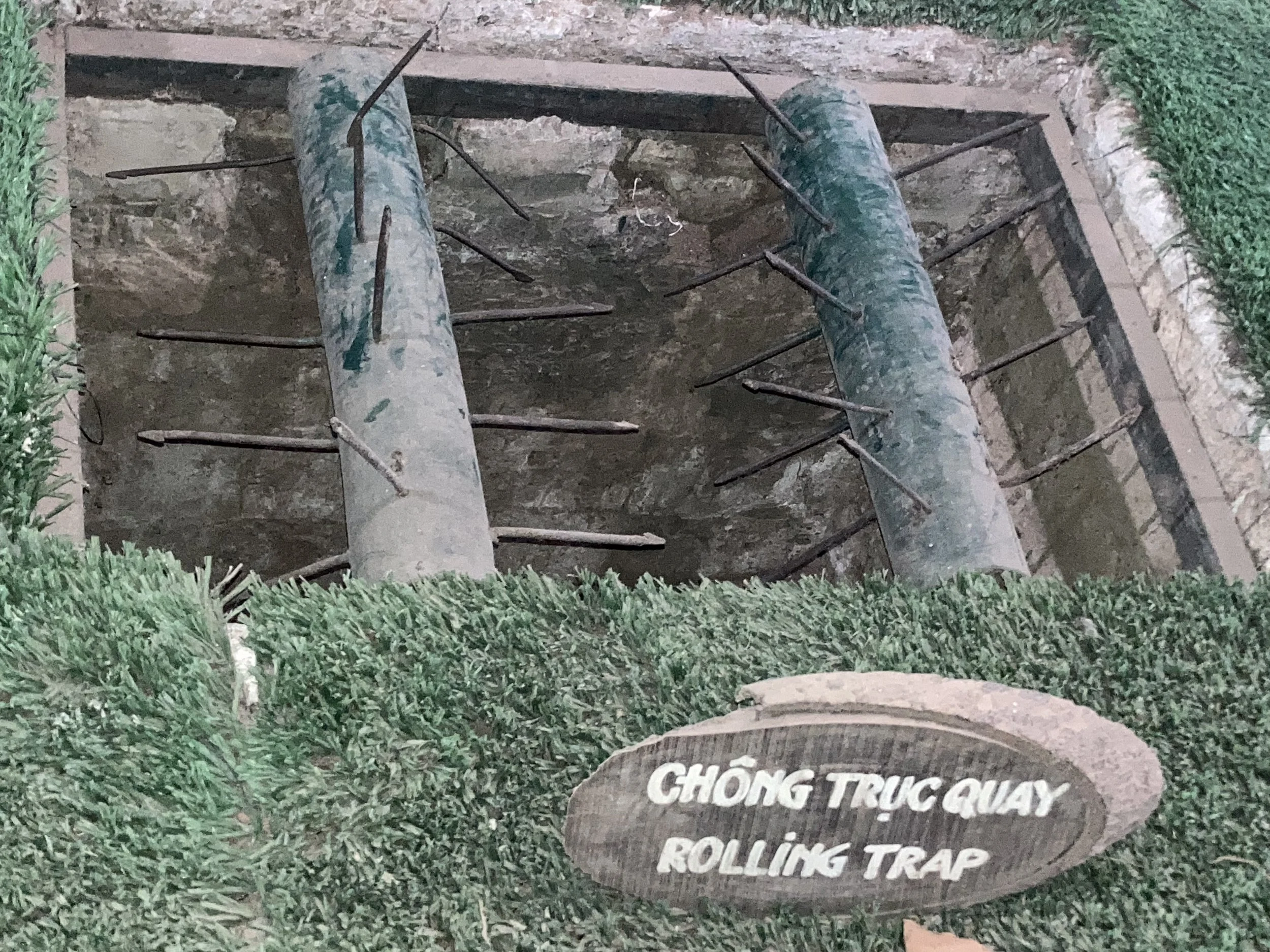
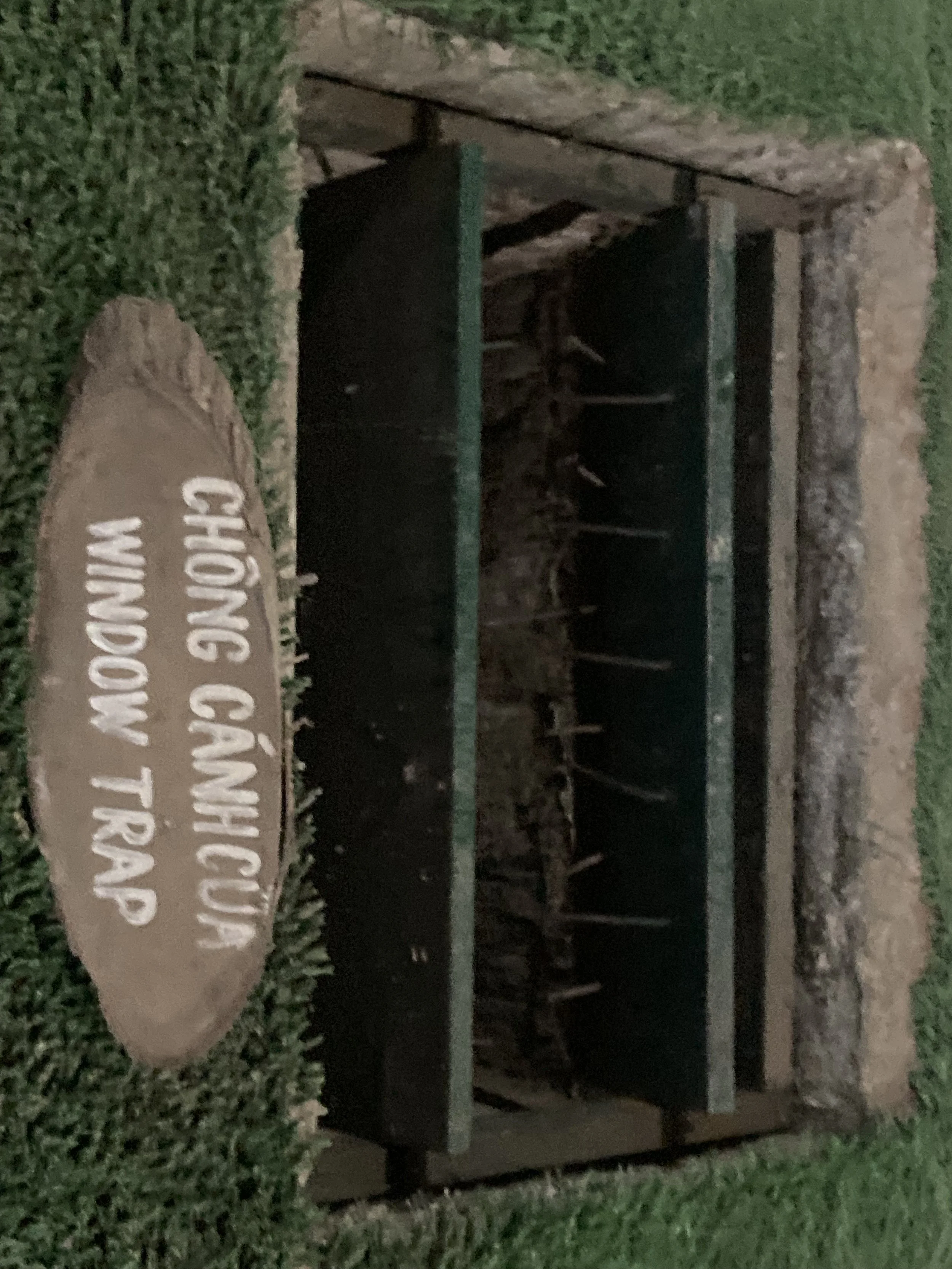
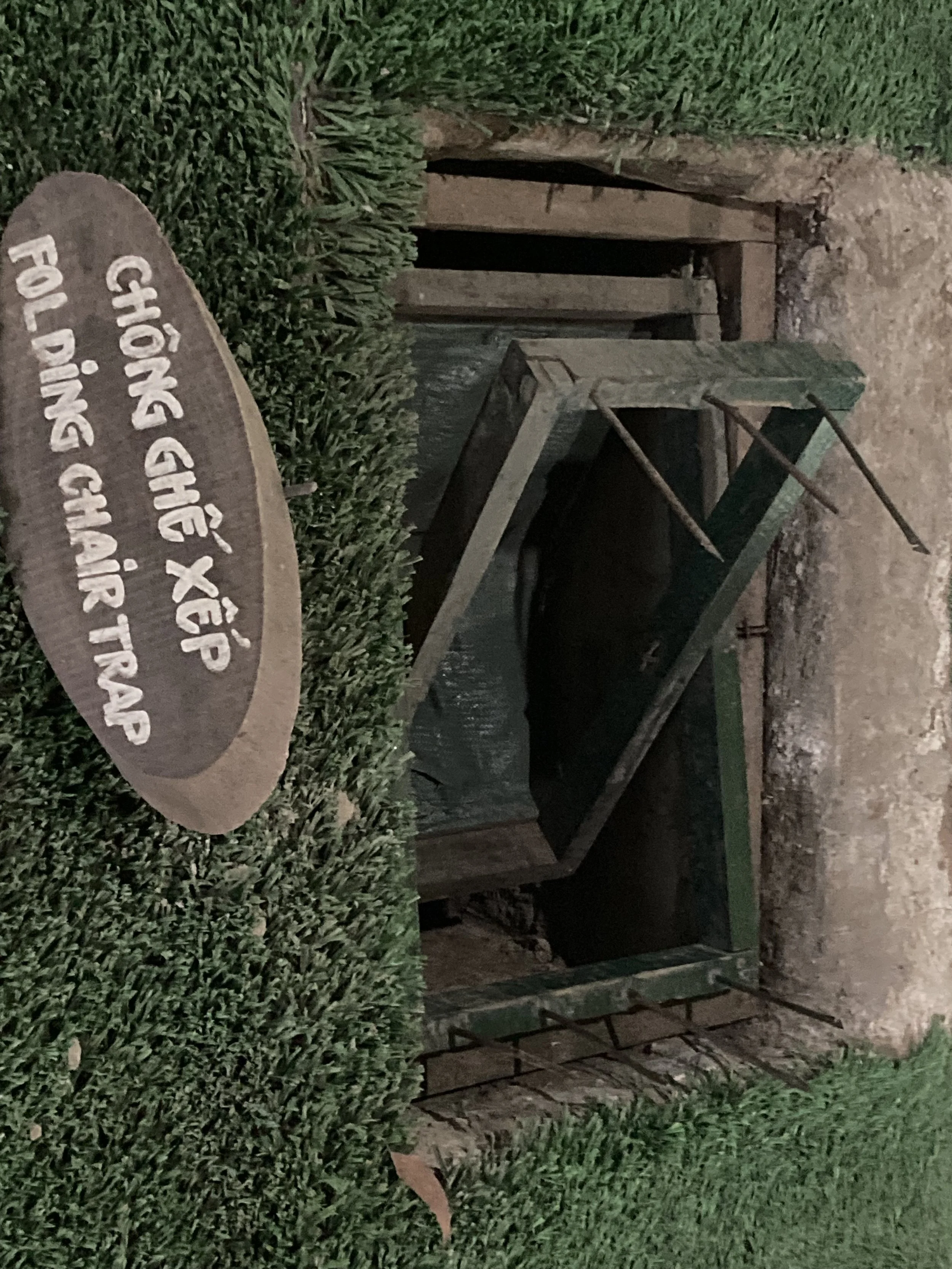
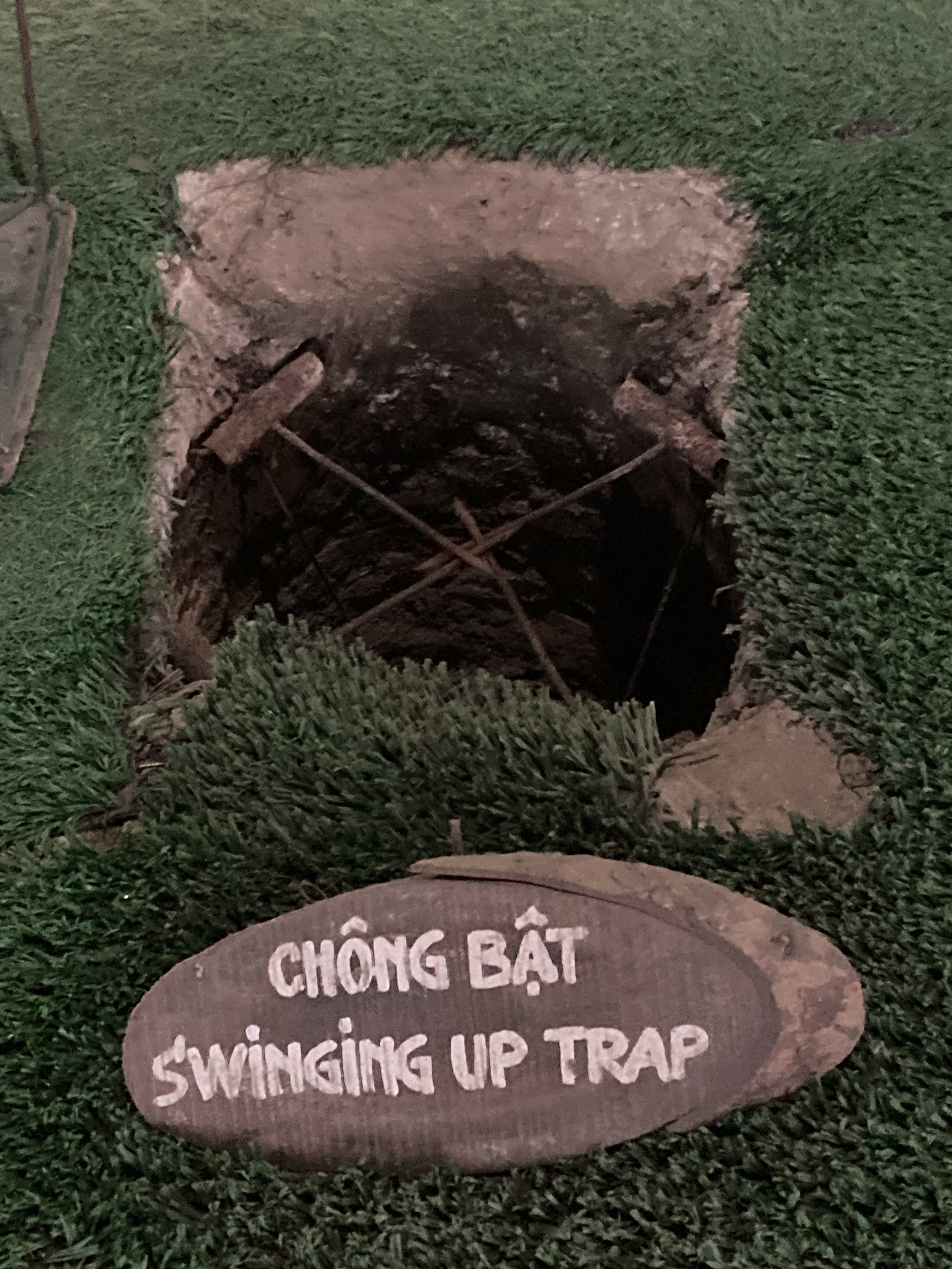
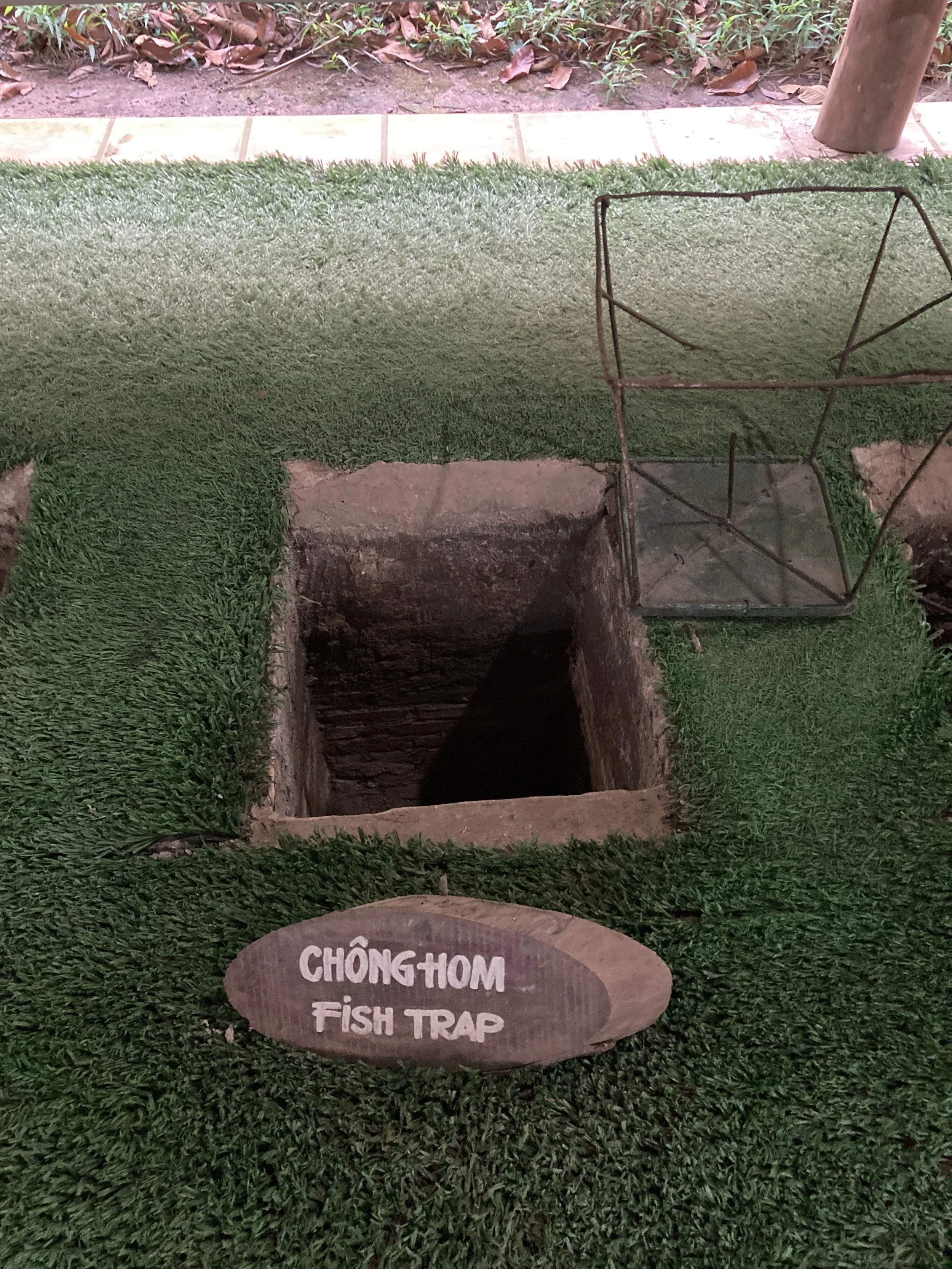
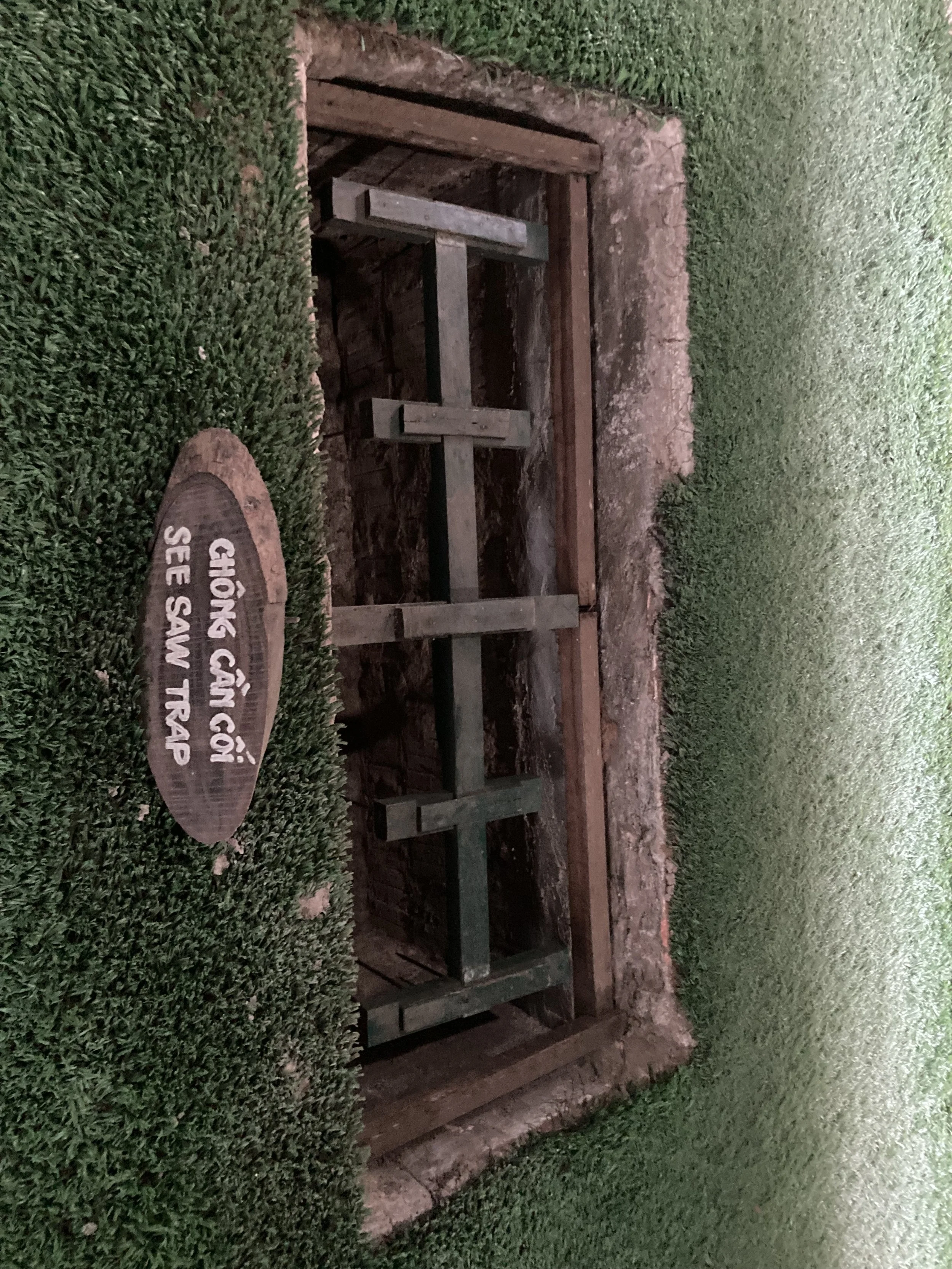
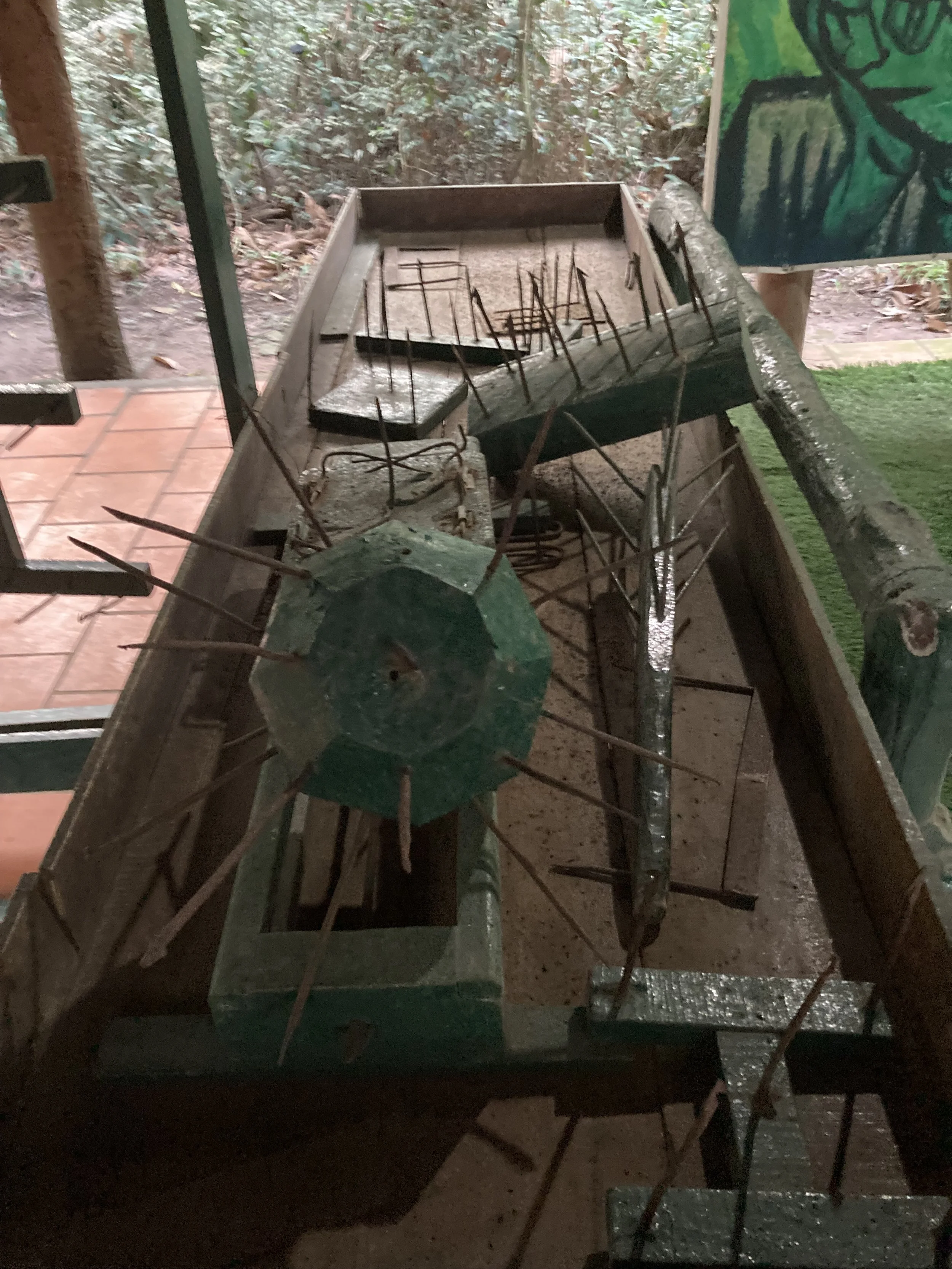
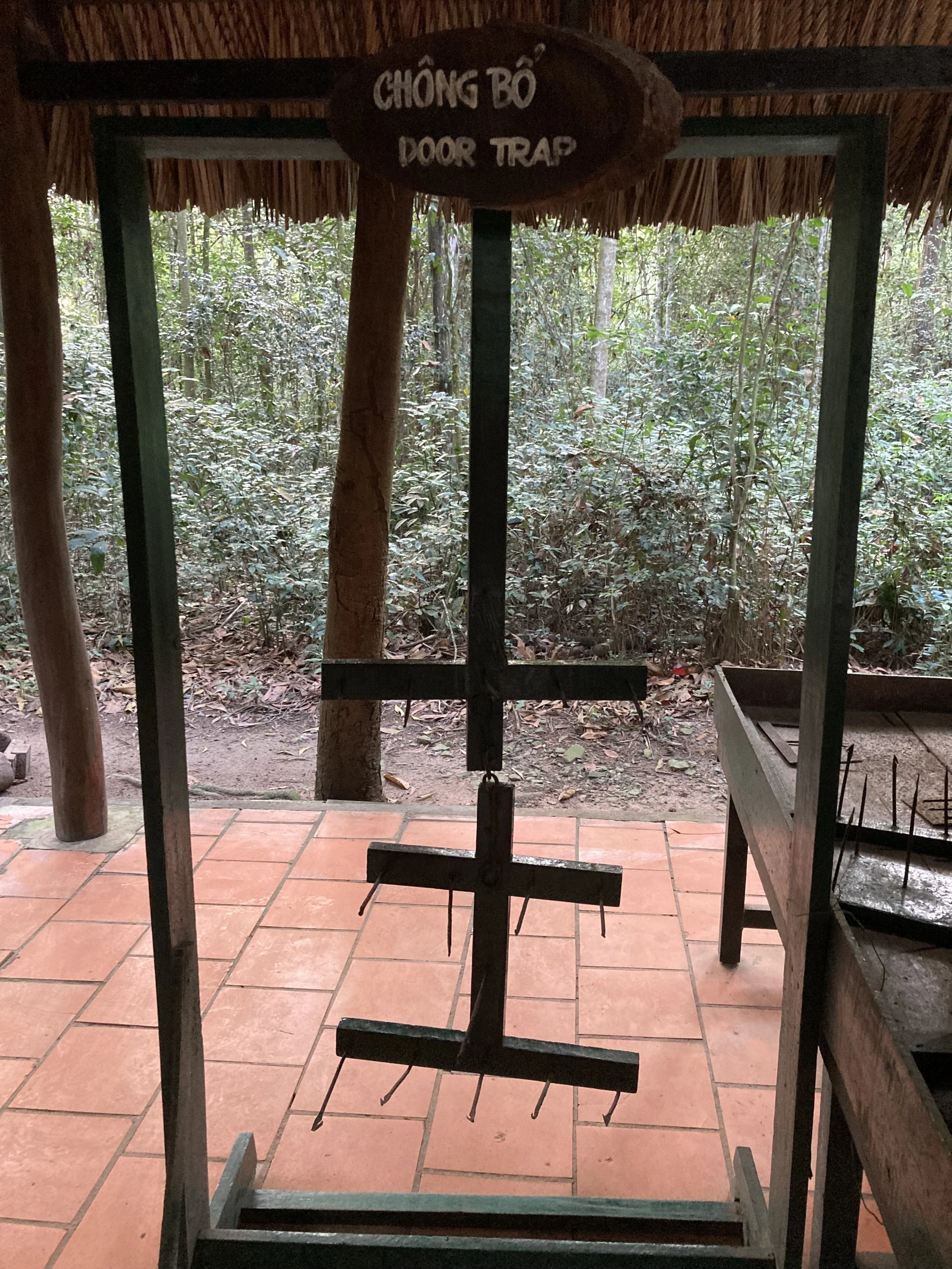
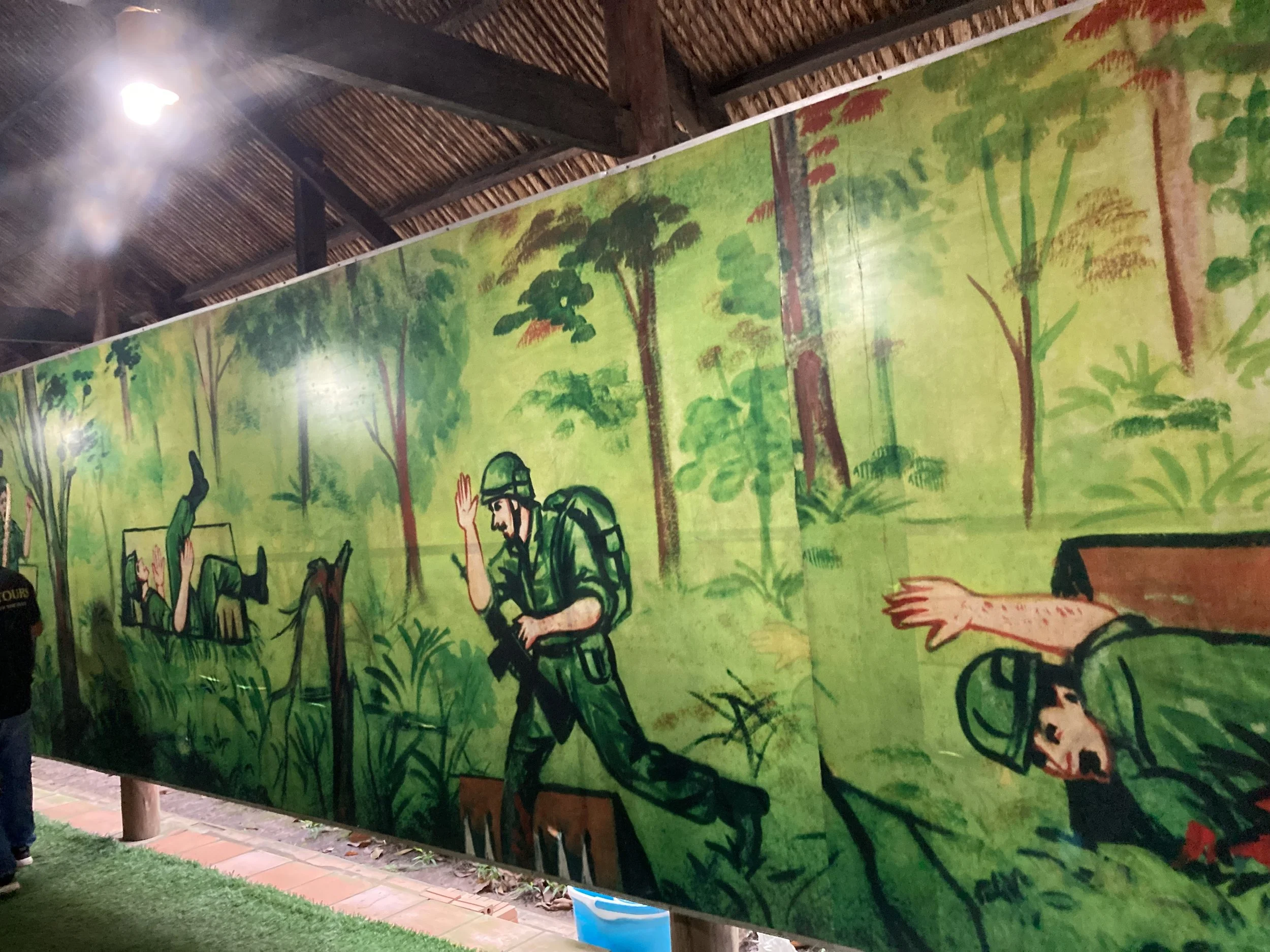
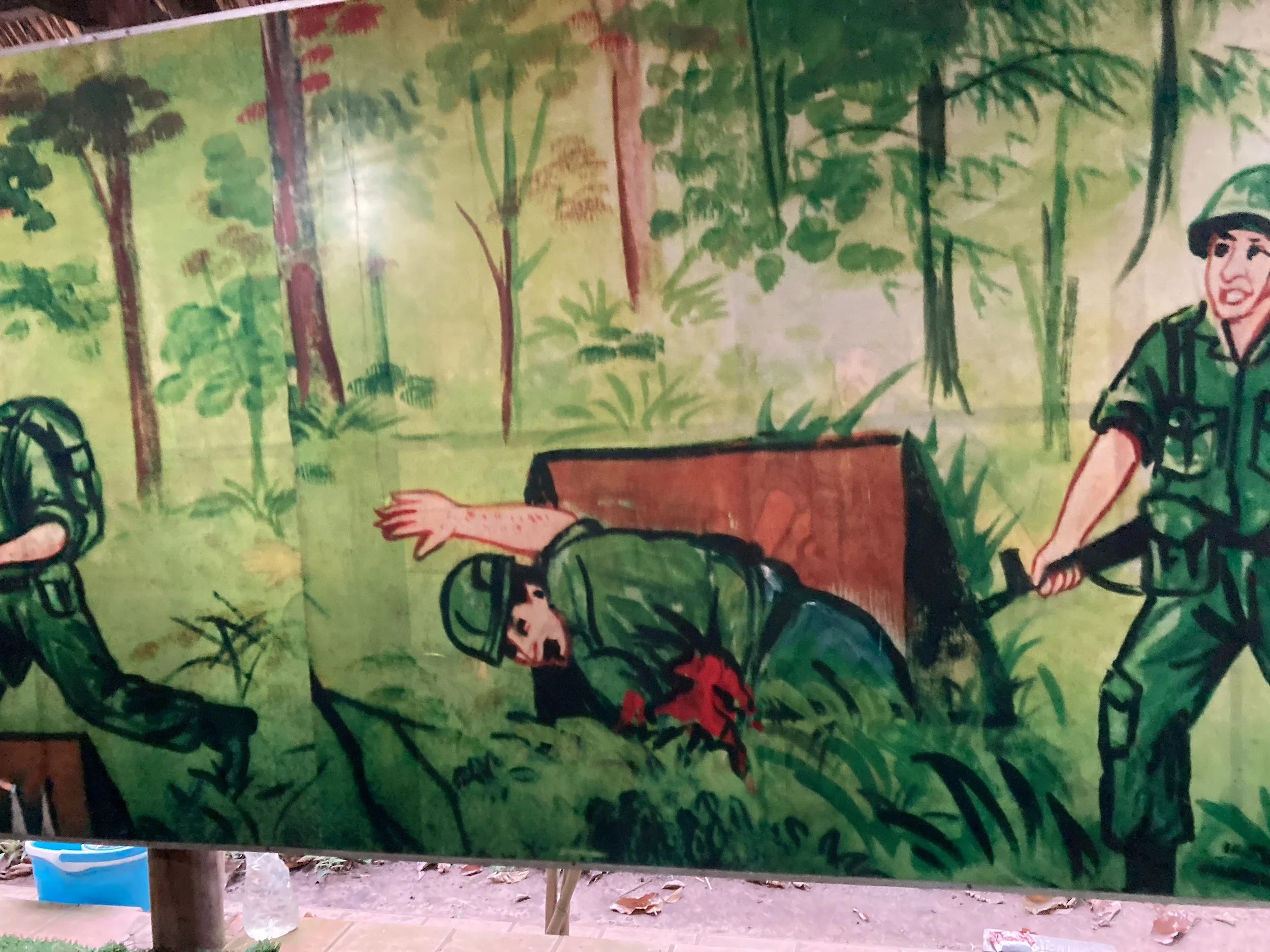
This was heavy to absorb, but again, I wanted to see the whole picture for myself — not just the limited narrative I was taught in school growing up.
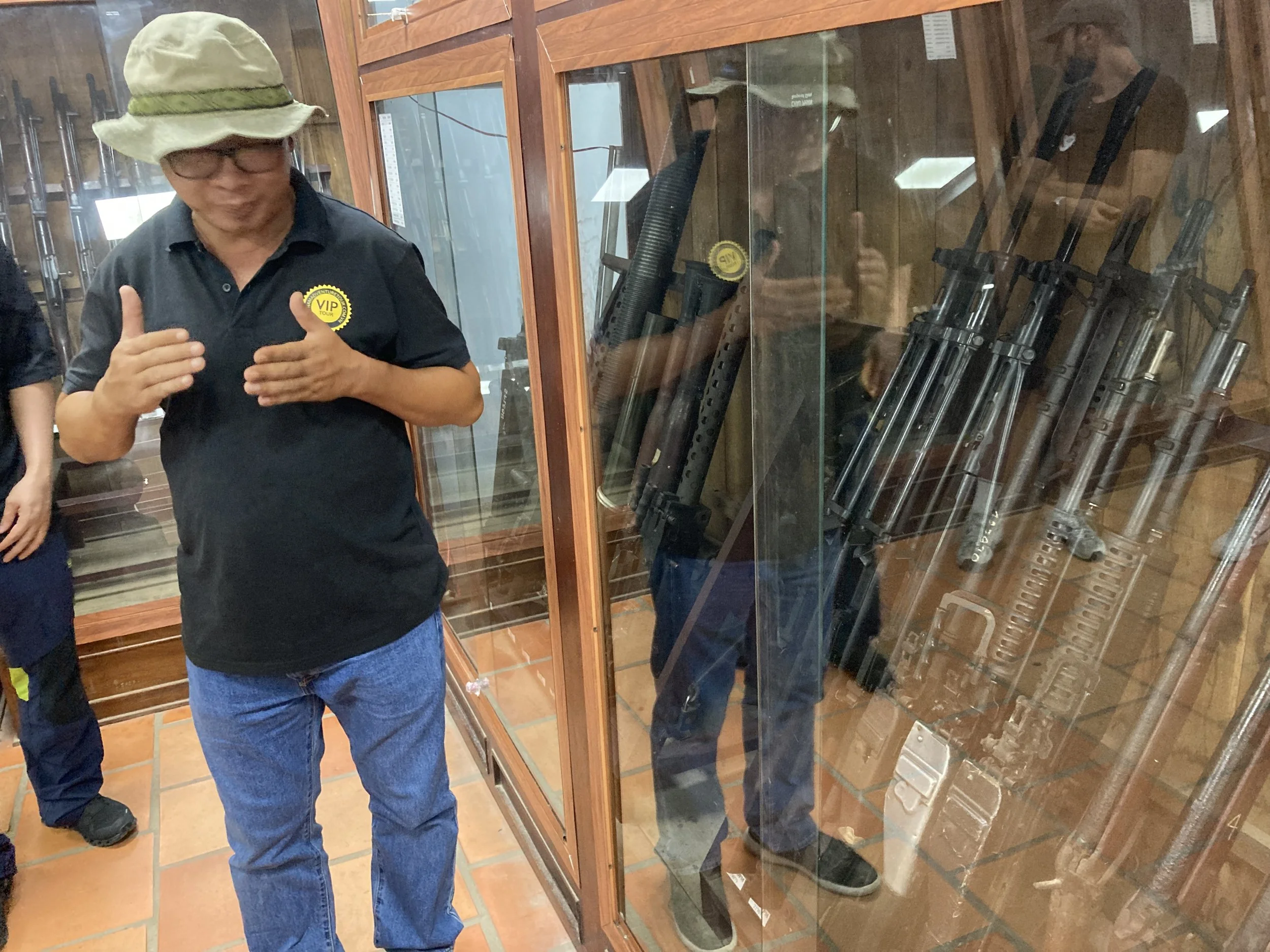
As we continued the tour, I heard machine gun fire. This added another level of unanticipated realism. Turns out many tourists will pay good money to fire off an AK-47 or similar machine gun. As a way to raise money for this historic sight that in 1979 was classified as a National Monument, a shooting range was created and bullets sold to anyone who wanted to fire off the guns. I skipped this part of the tour.
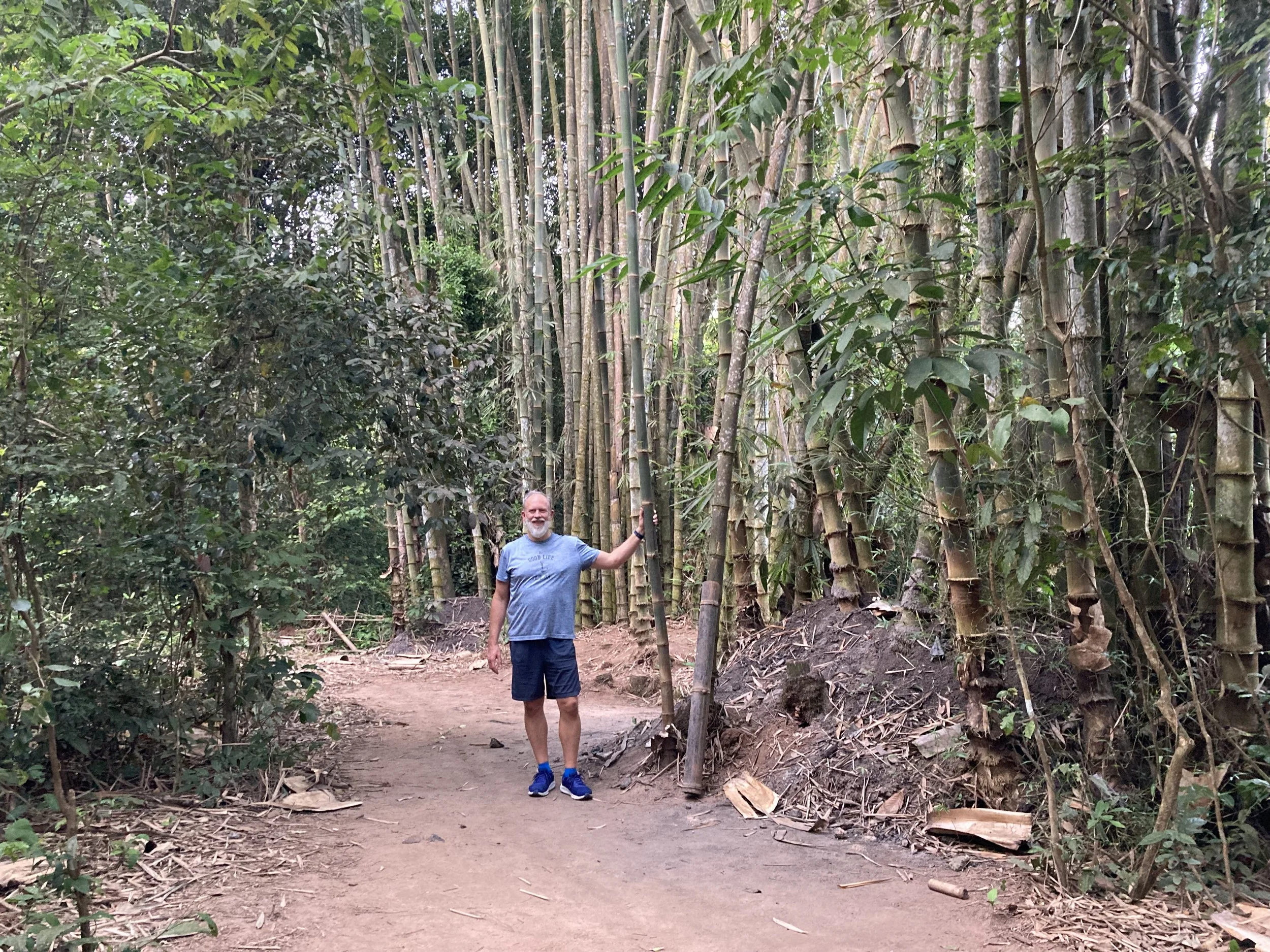
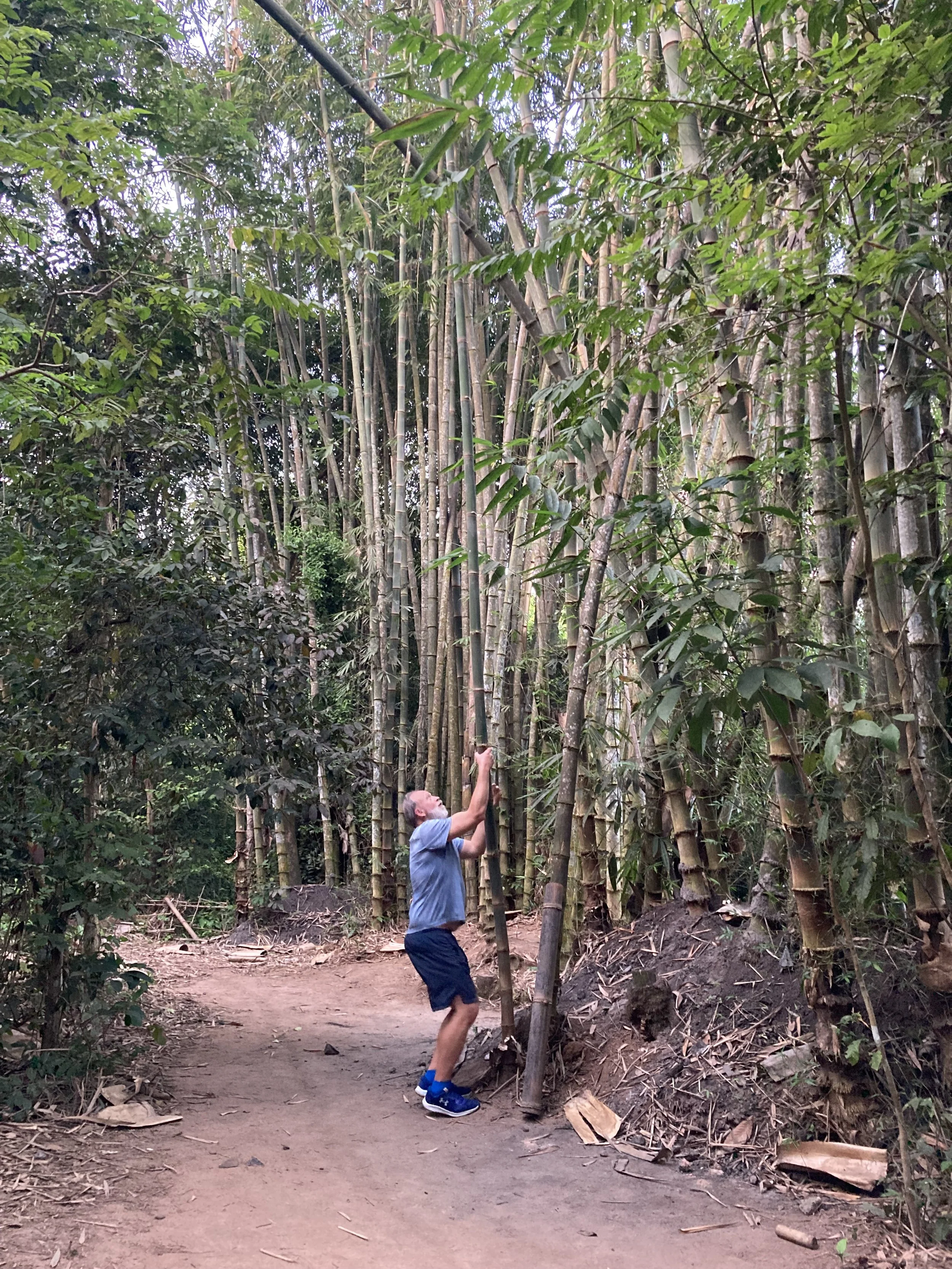
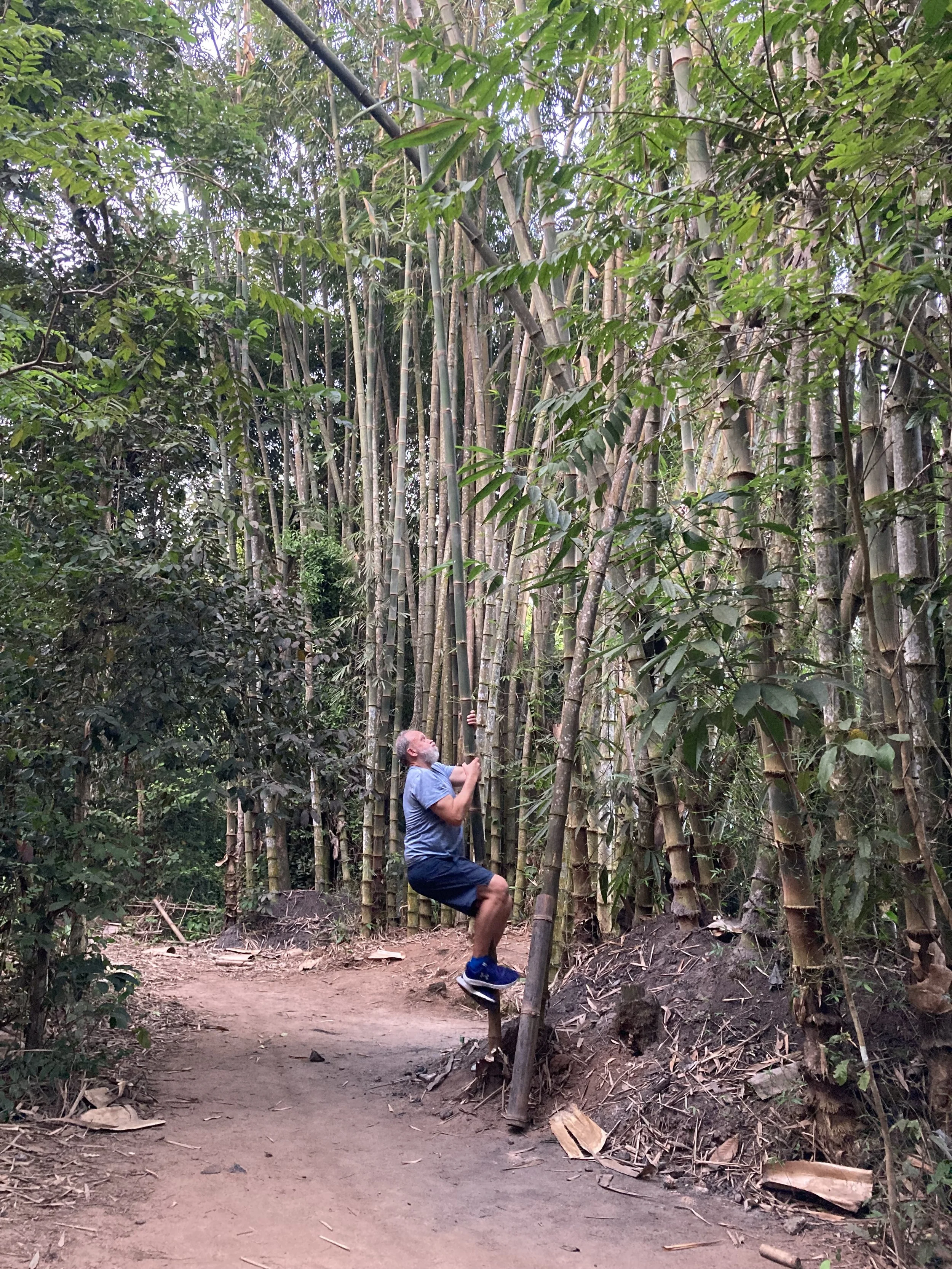
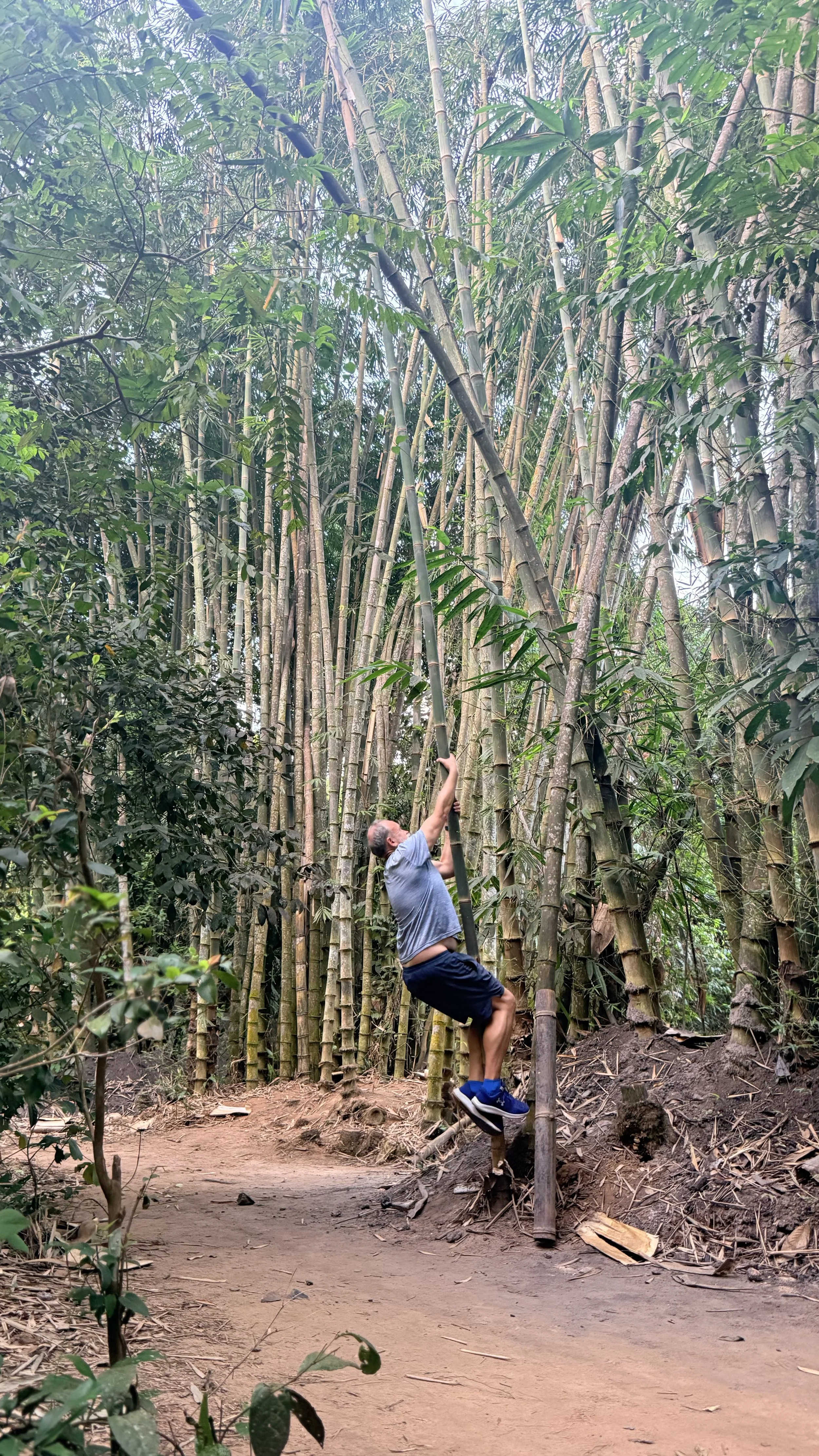
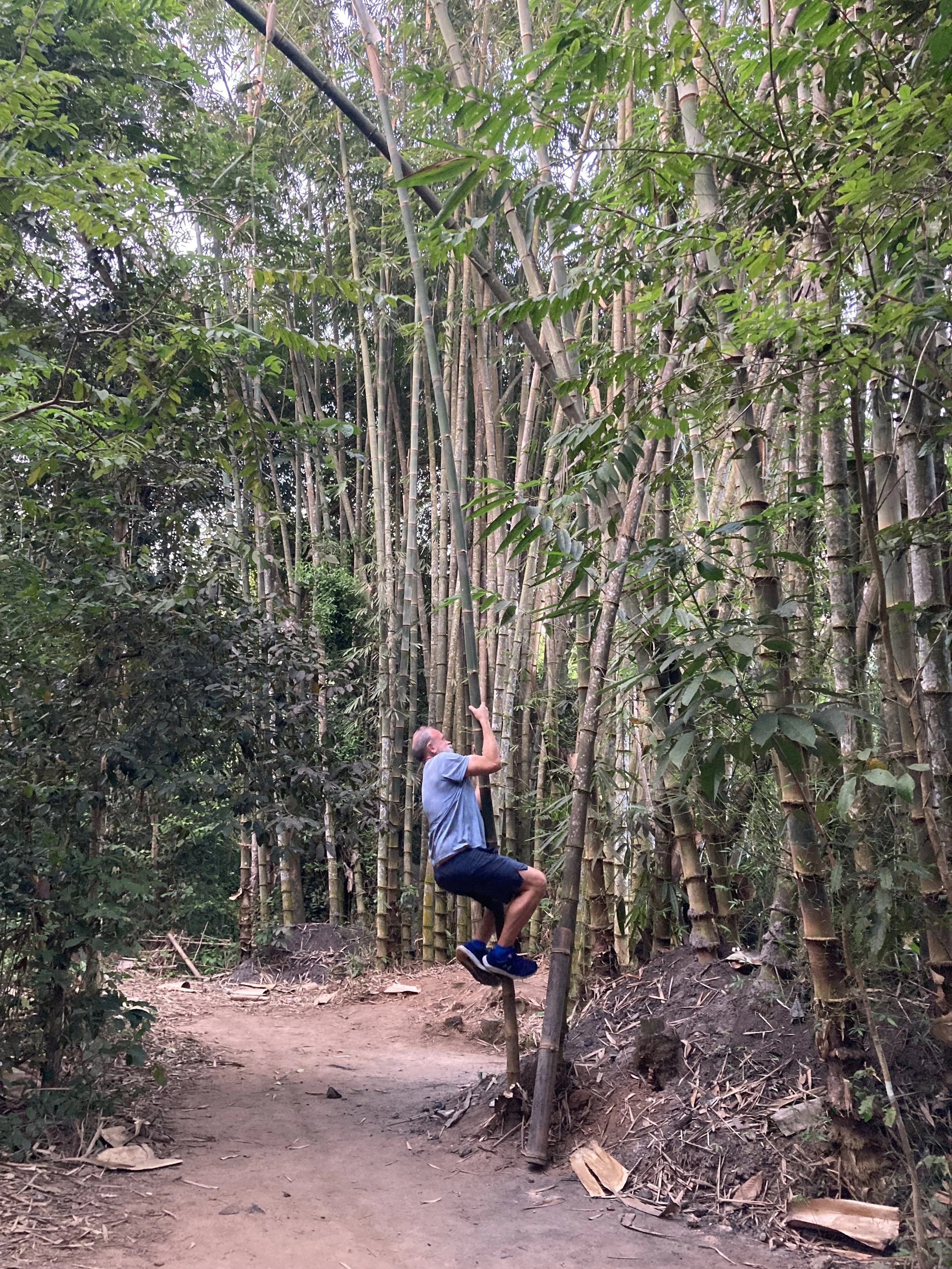
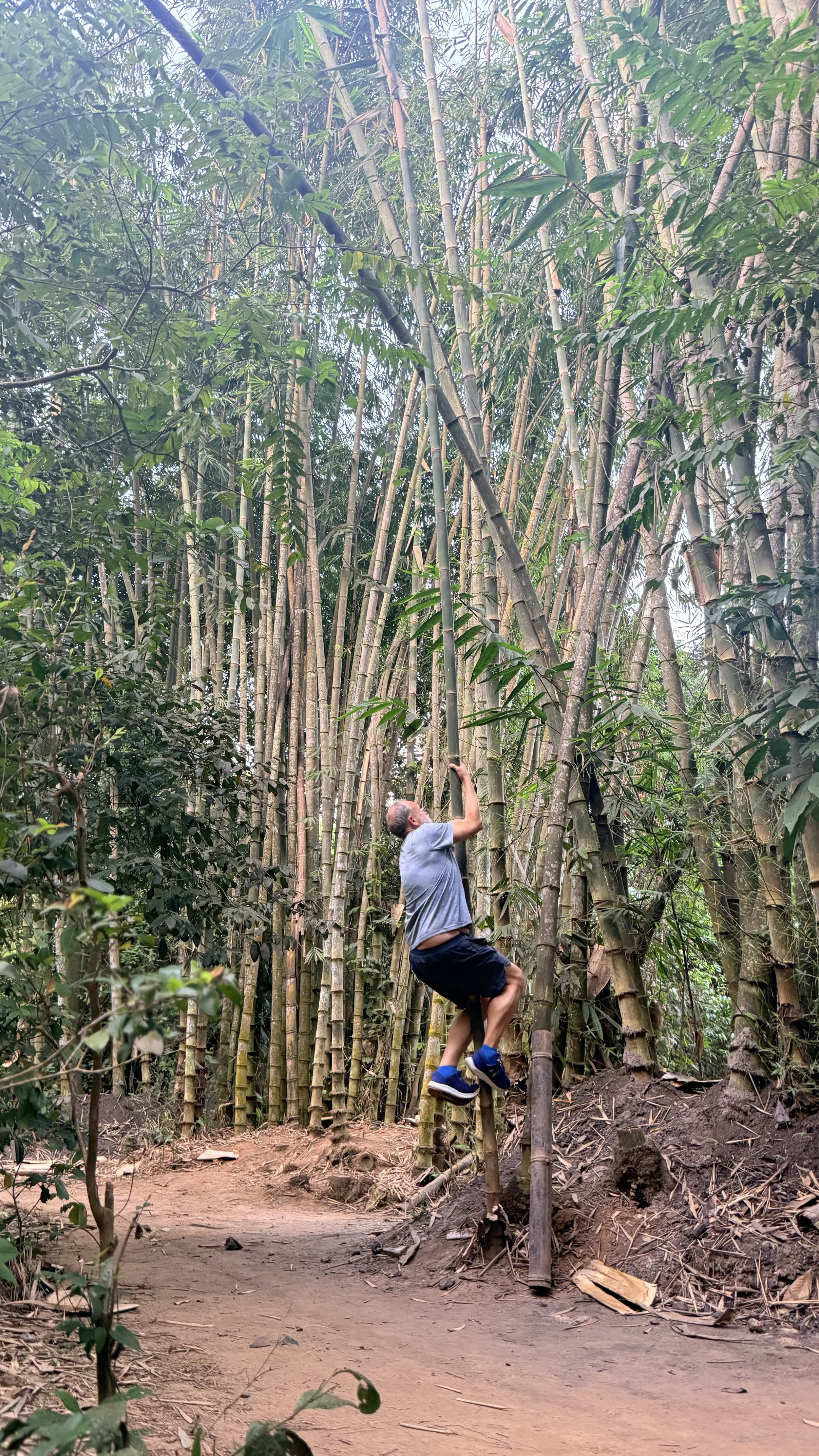
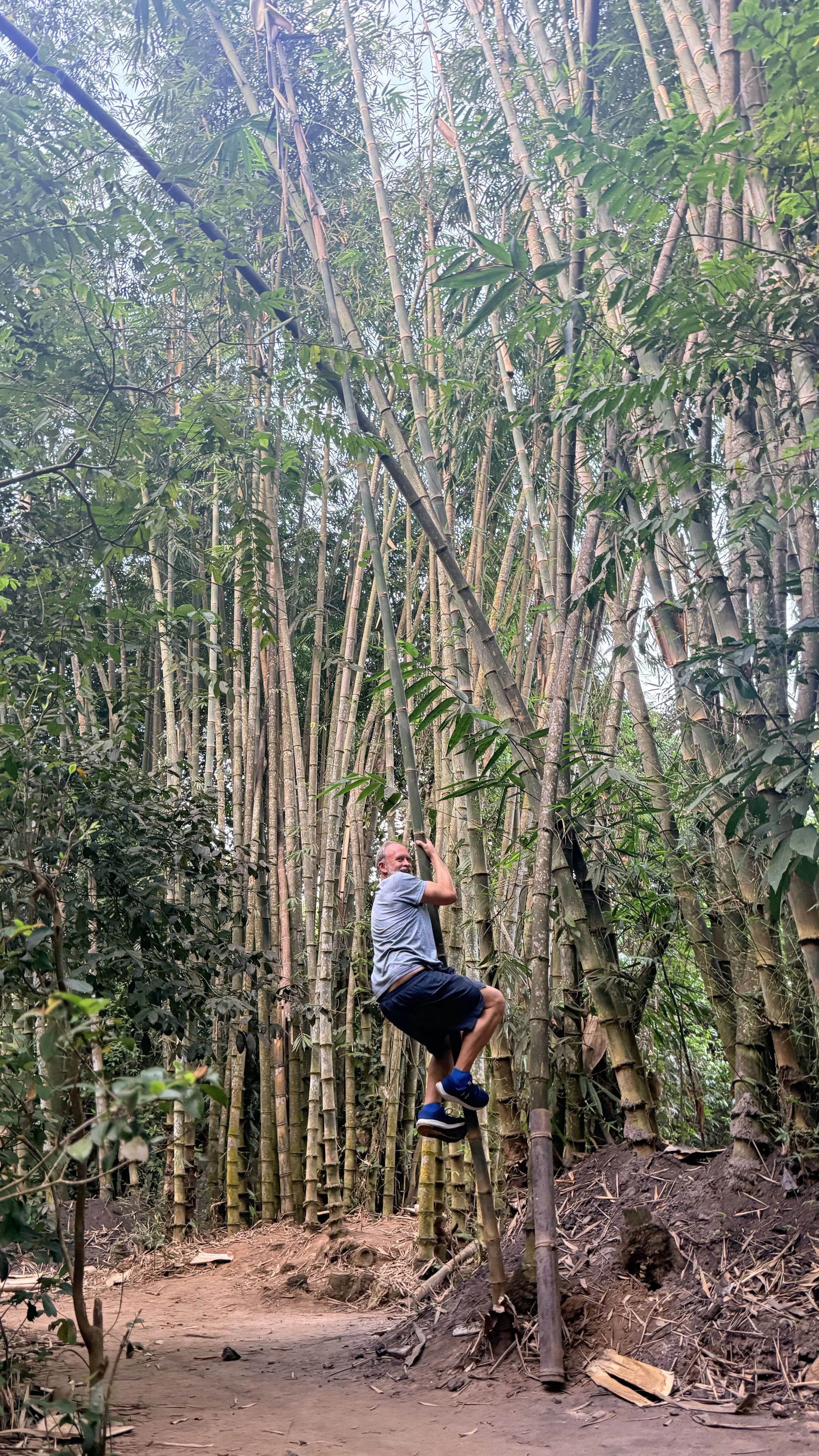
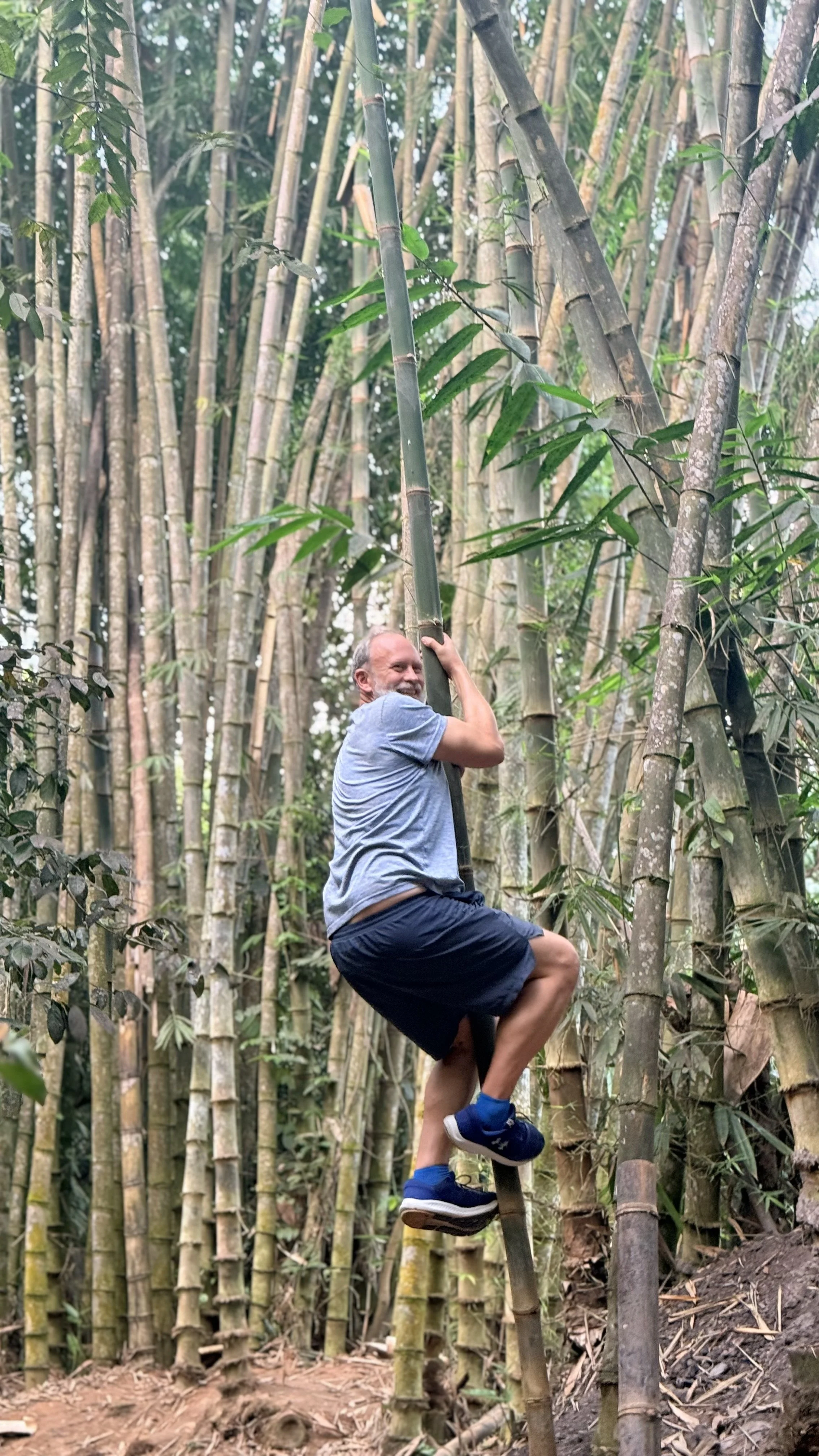
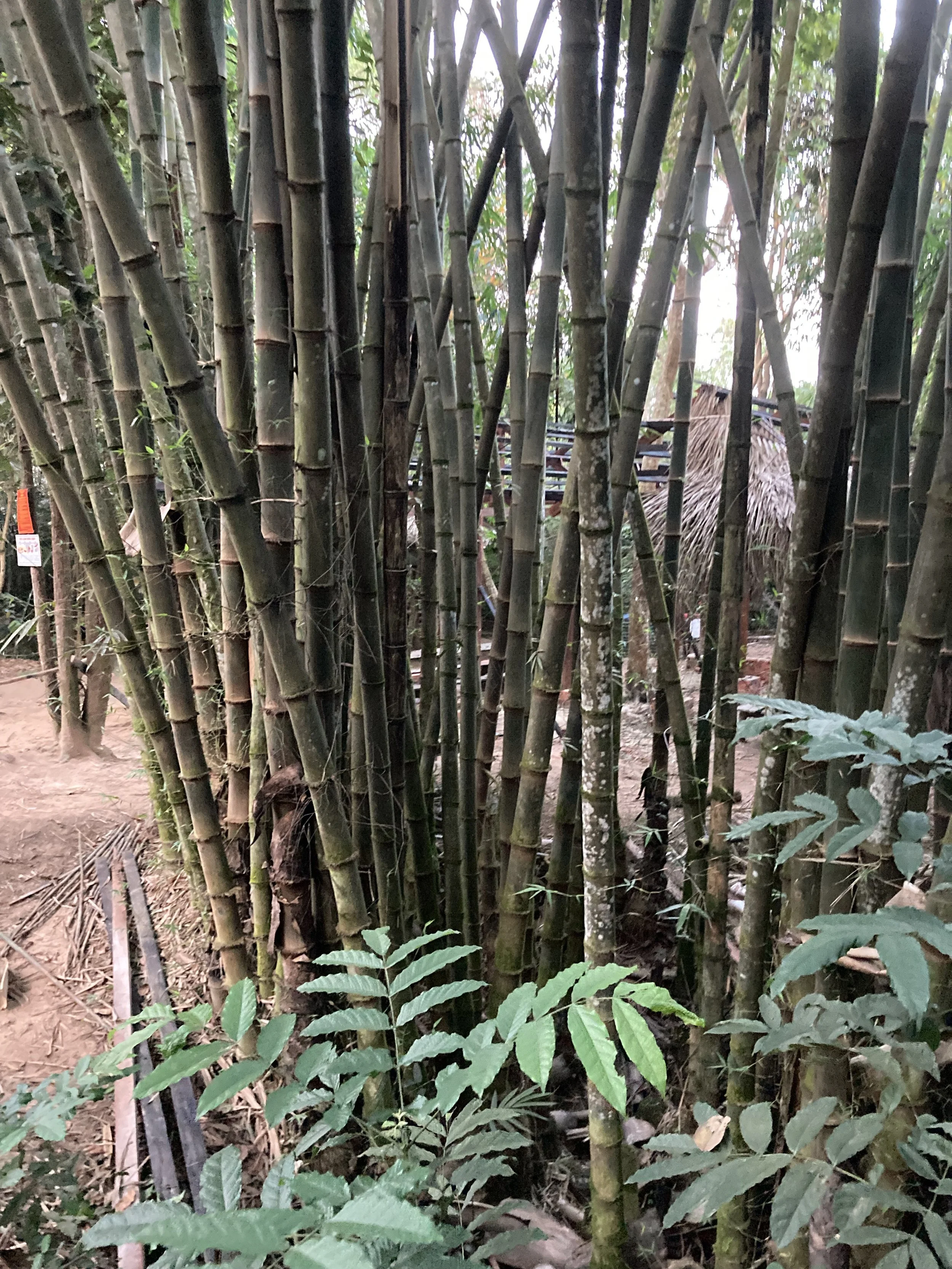
Instead, I needed to clear my head, so I found some old bamboo and went for a climb.
Story of Asking & Receiving Forgiveness
Our guide (who goes by “Joe” for ease of remembering his name) told a moving story of a soldier who was charged with finding out information about the Vietcong and brutally torchered and murdered a number of civilians. As you can imagine, he suffered a great deal of PTSD as a result of his actions and several years after the war ended, he returned to seek out survivors from the village he attacked.
Only six women remained. This soldier asked Joe if he would be his translator and help him to make amends for his actions. Joe agreed to help and suggested that he go to the village alone to look for survivors, explain the situation and ensure there was interest in speaking.
When Joe found these six remaining women and explained that the soldier was here to apologize for his actions and seek forgiveness, they didn’t hesitate and asked to see the soldier. They explained to both Joe and the soldier that holding hate in their hearts would only add to their suffering. They had already forgiven the soldier long ago and wanted him to know they harbored no resentment against him despite the atrocities committed.
The soldier broke down and cried — as did the women who were with him. The soldier wanted to do something and so the women suggested that he help build a school building for the village, which the soldier did by recruiting some of his platoon who also suffered PTSD from their actions. It was very healing for all involved — despite the ugly truth of how it all came to be.
I thanked Joe for sharing this story. While I’ve left out a number of the gory parts (such as the specific acts of torture) and the physical mutilation of these six survivors, I was truly moved by this forgiveness. I think about all the resentments I’ve held onto throughout my life for such petty crap and meanwhile this story helped reframe the depths that forgiveness can take and the good that can come from evil acts.
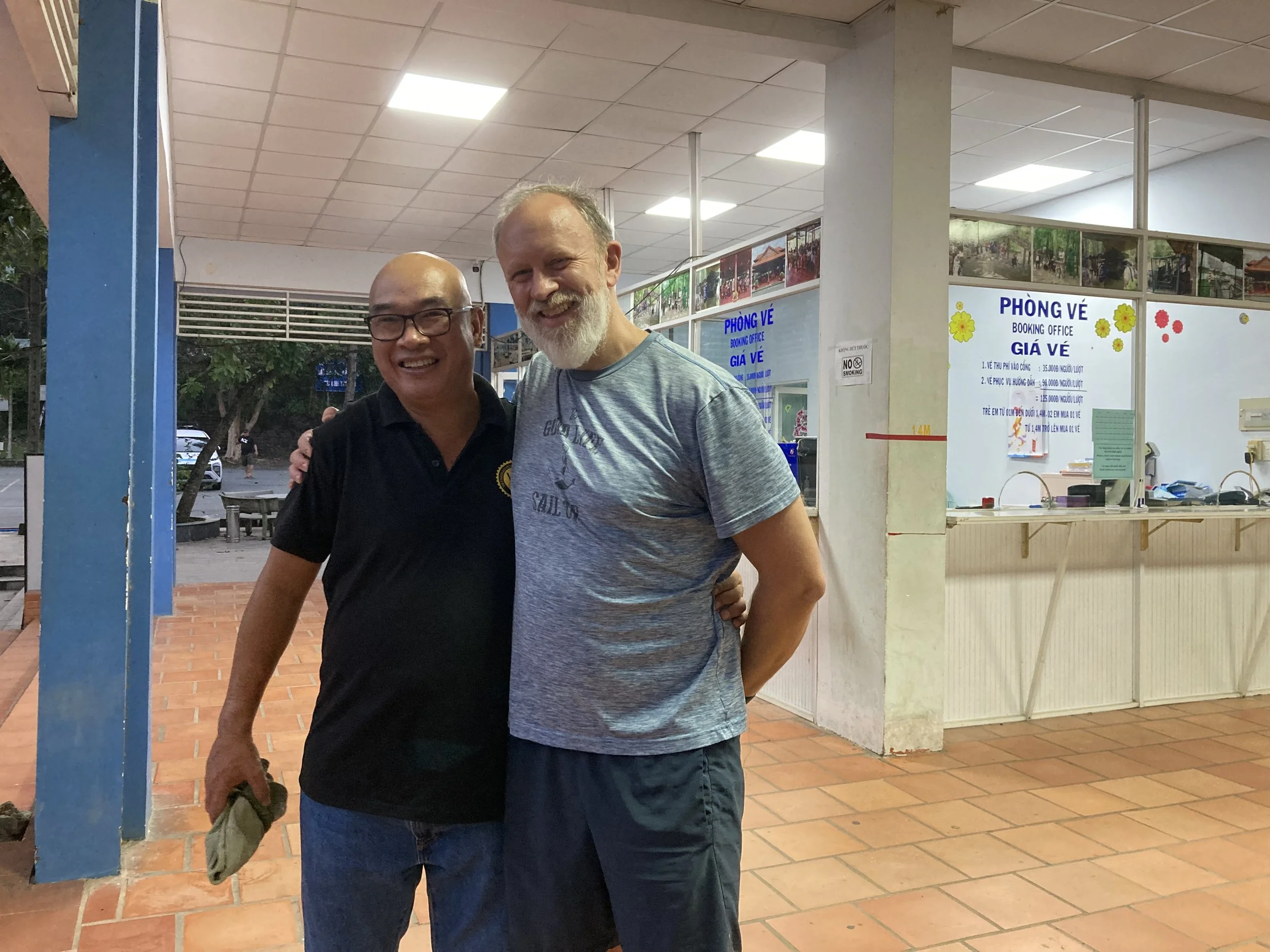
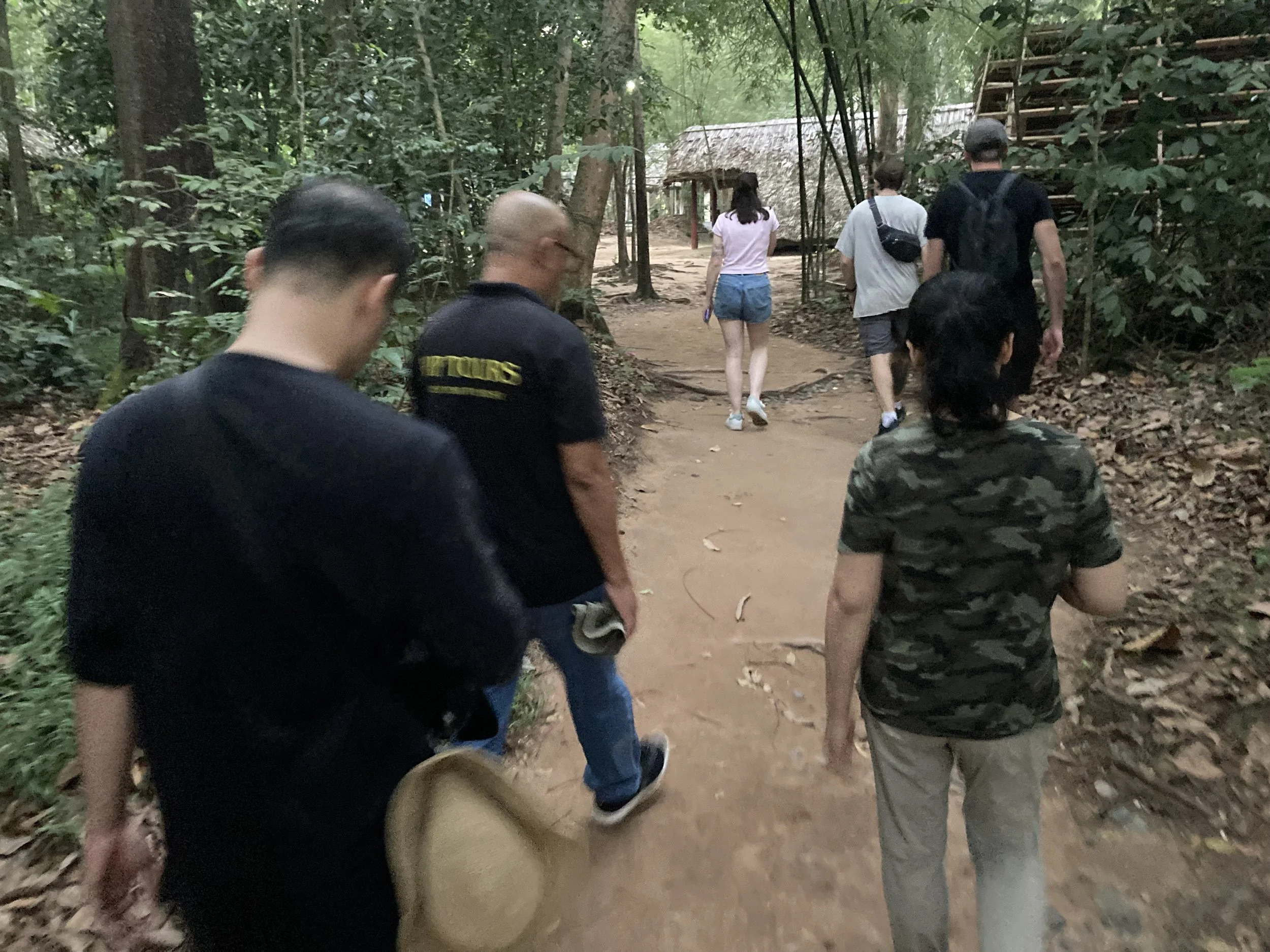
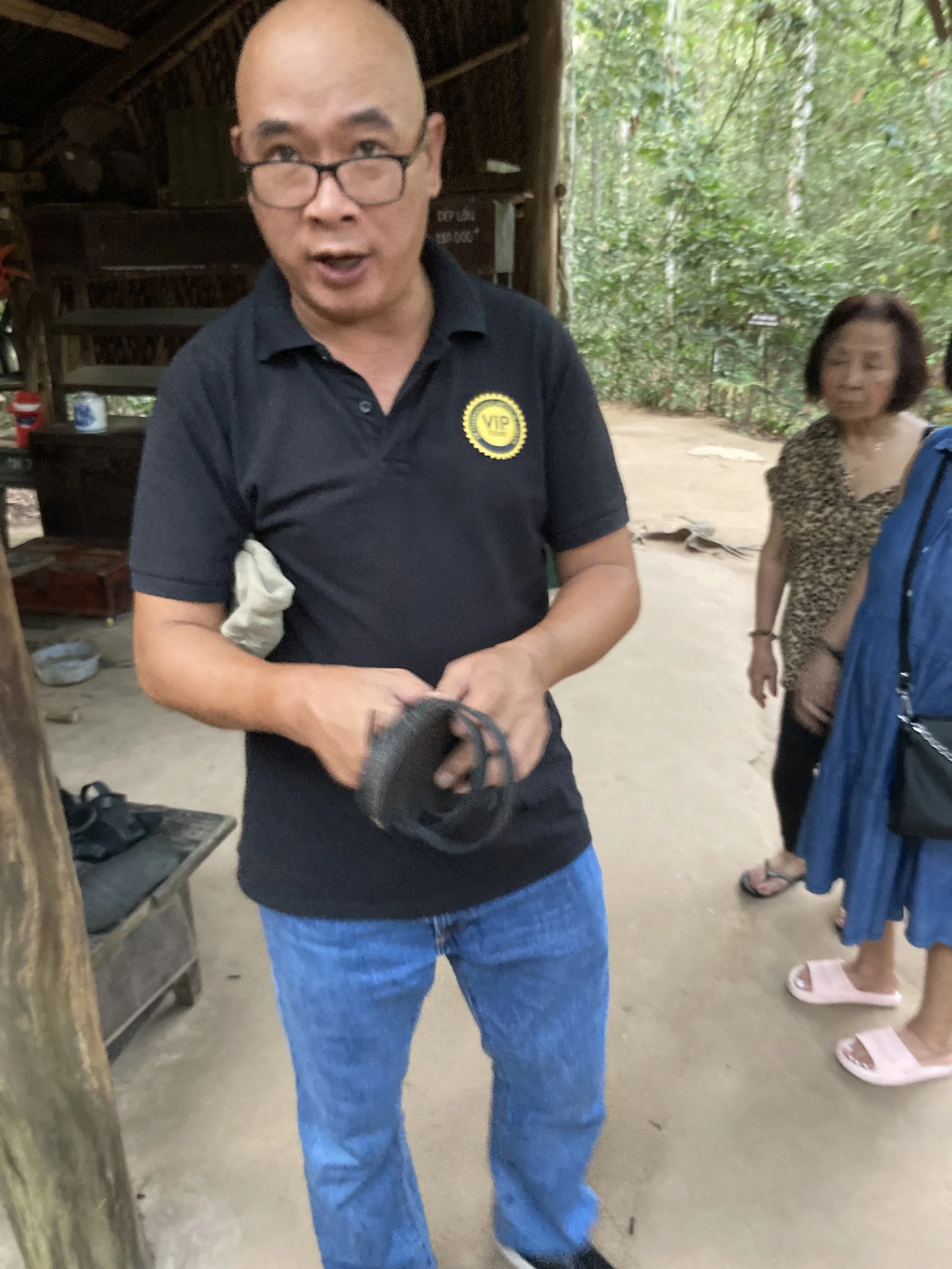
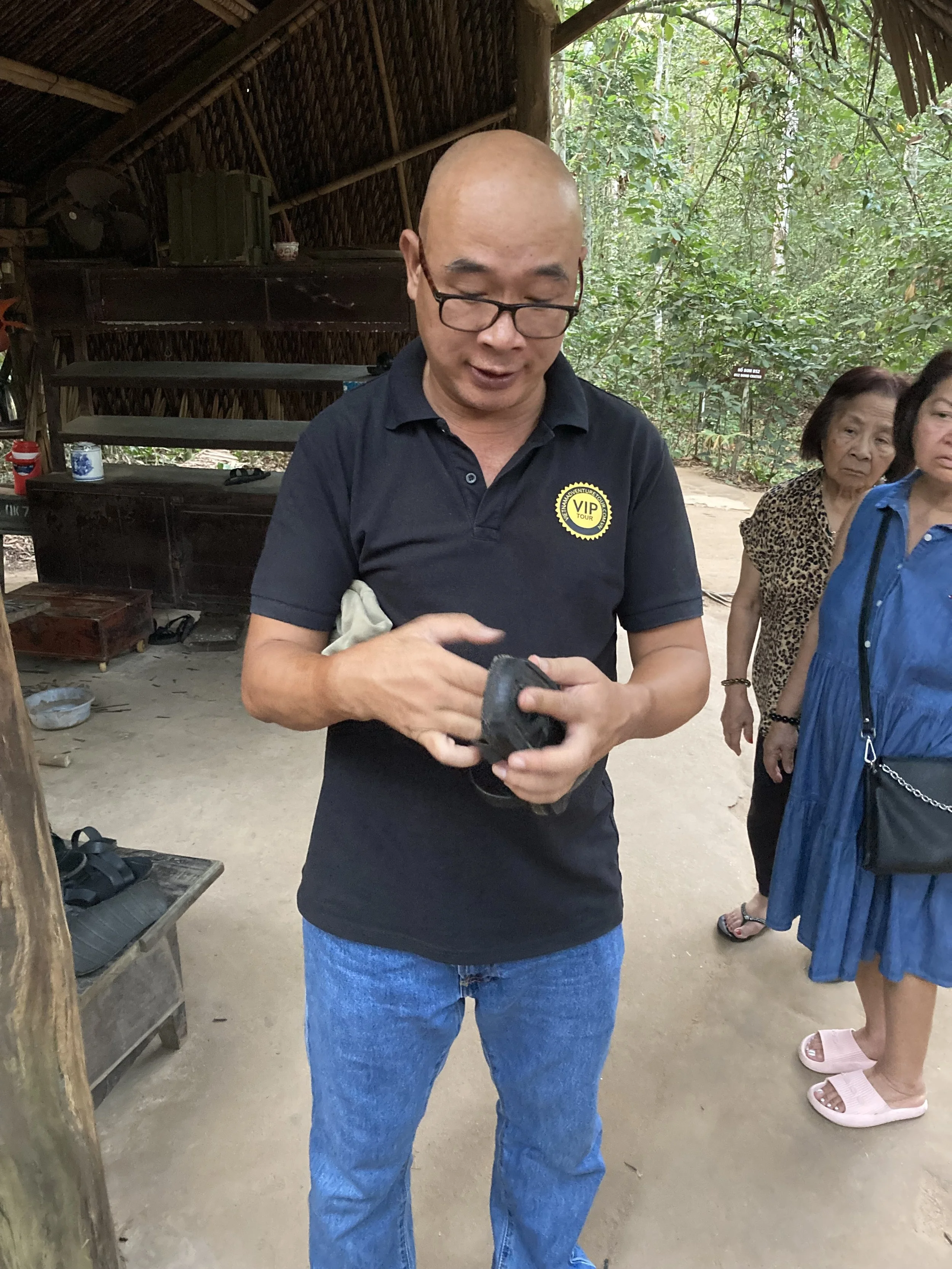
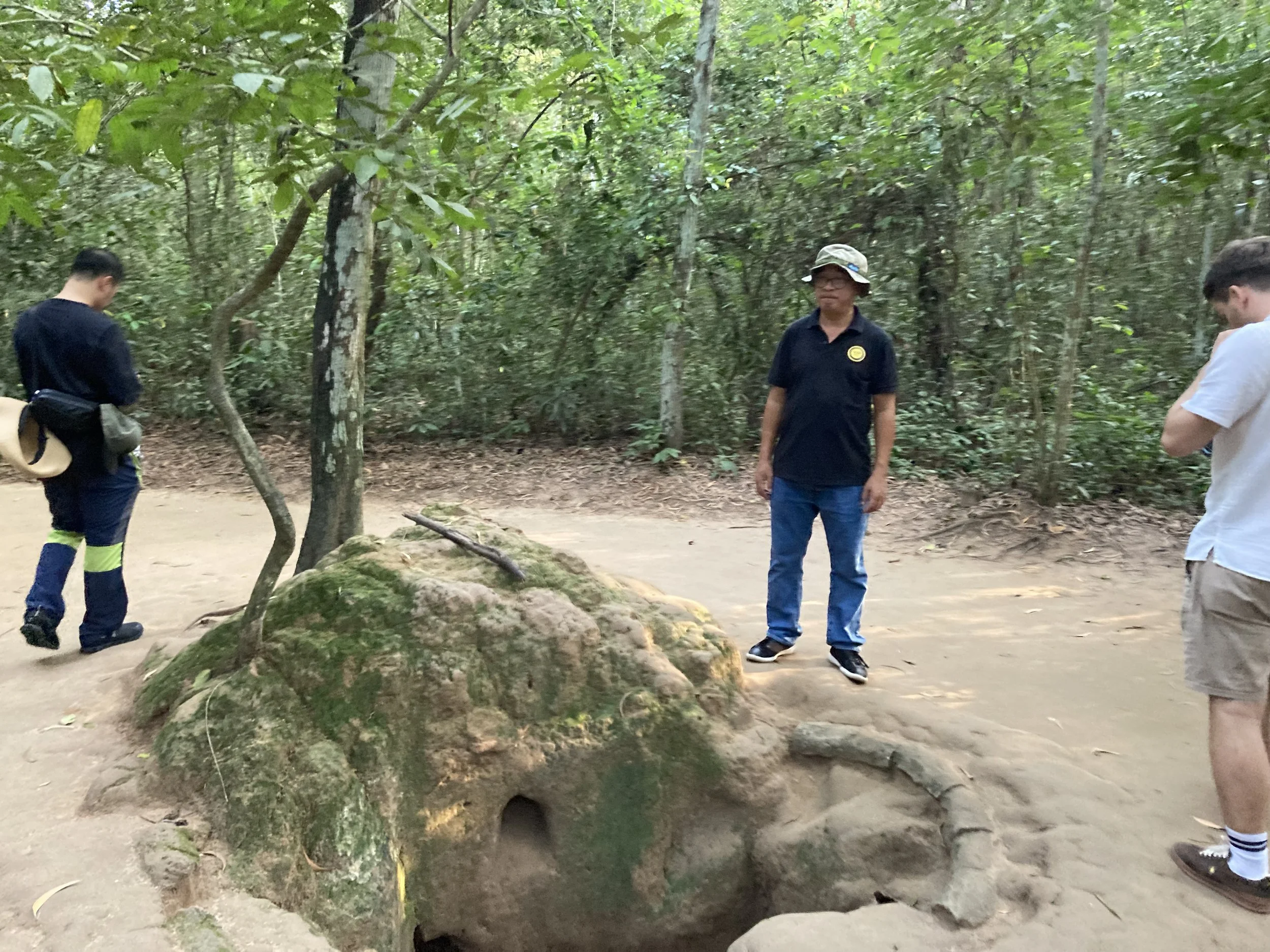
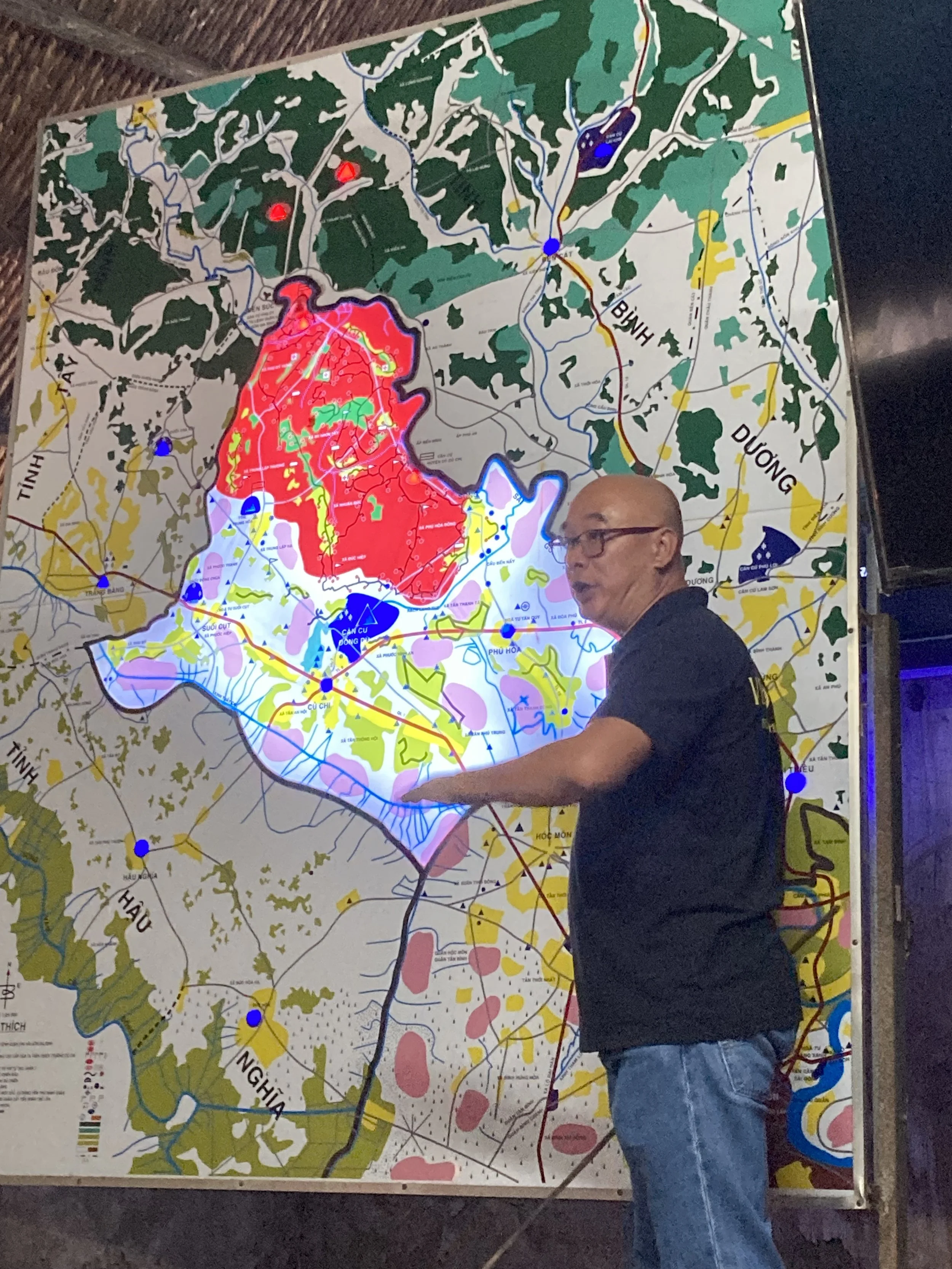
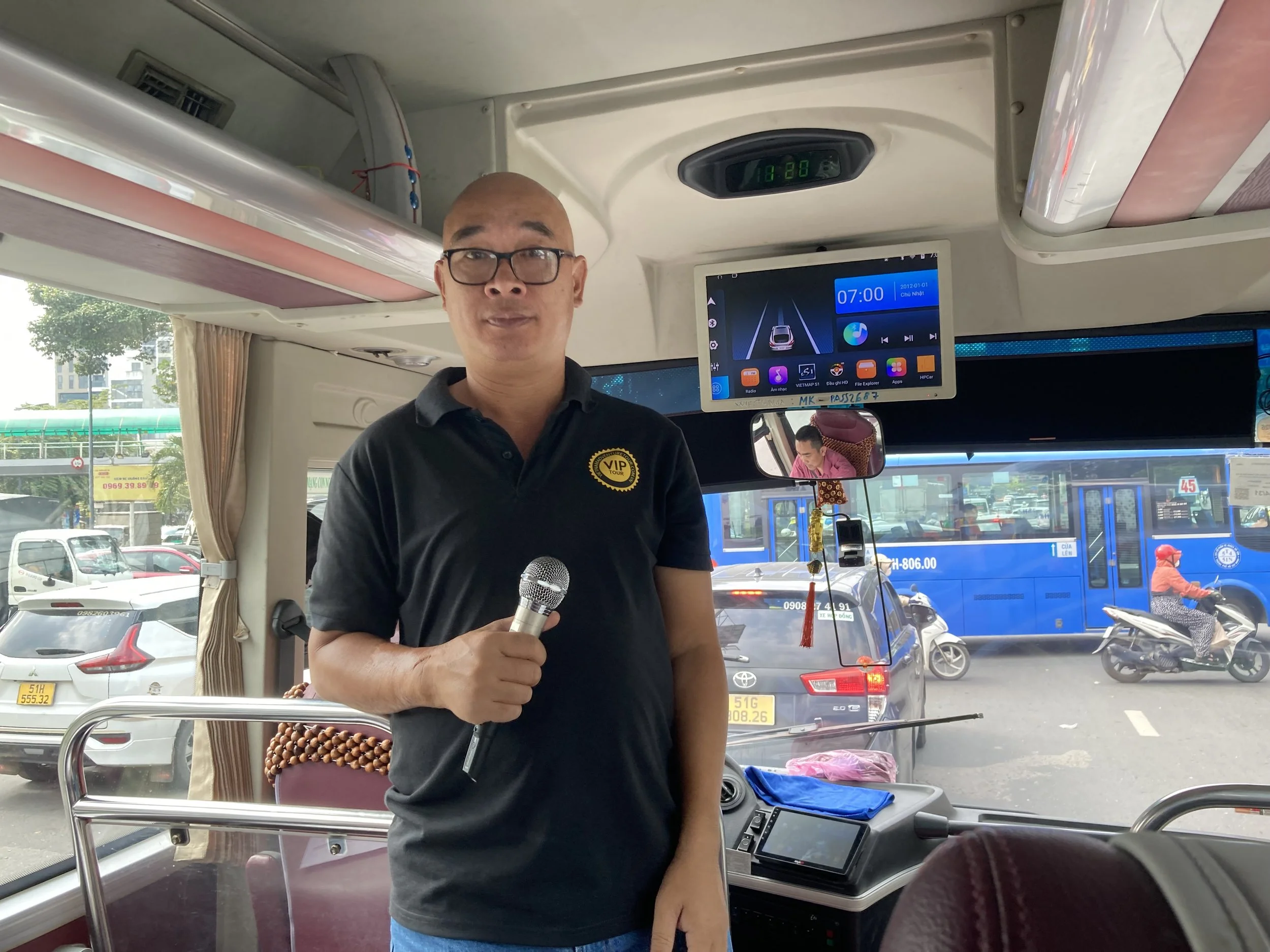
Joe, our tour guide, who shared this story of forgiveness
After his story, Joe made a point to speak to me directly. He had seen that I was moved by his story (including my own tears) and he thanked me both for listening and for being here — not just in Vietnam, but specifically here to witness and experience the Cu Chi Tunnel.
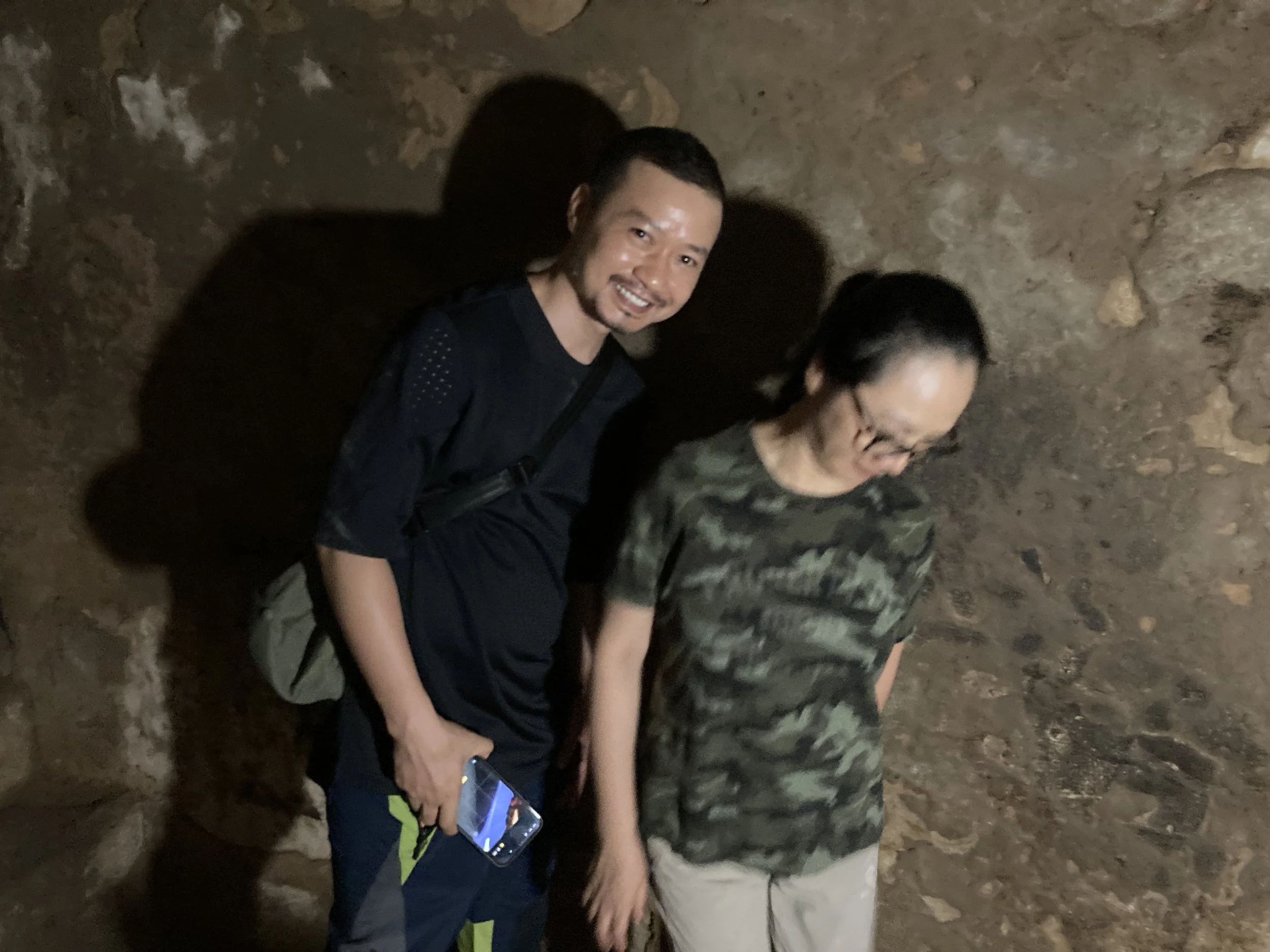
Meanwhile, I have Violet (Thuc Anh Phan) and Cuong to thank for their willingness to join me on this journey. Violet shared she’s never been and I know what she means. Sometimes it takes out of town guests to visit even National Monuments (i.e. like me living in New York for years before going to see the Statue of Liberty or Empire State Building with my out of town guests).

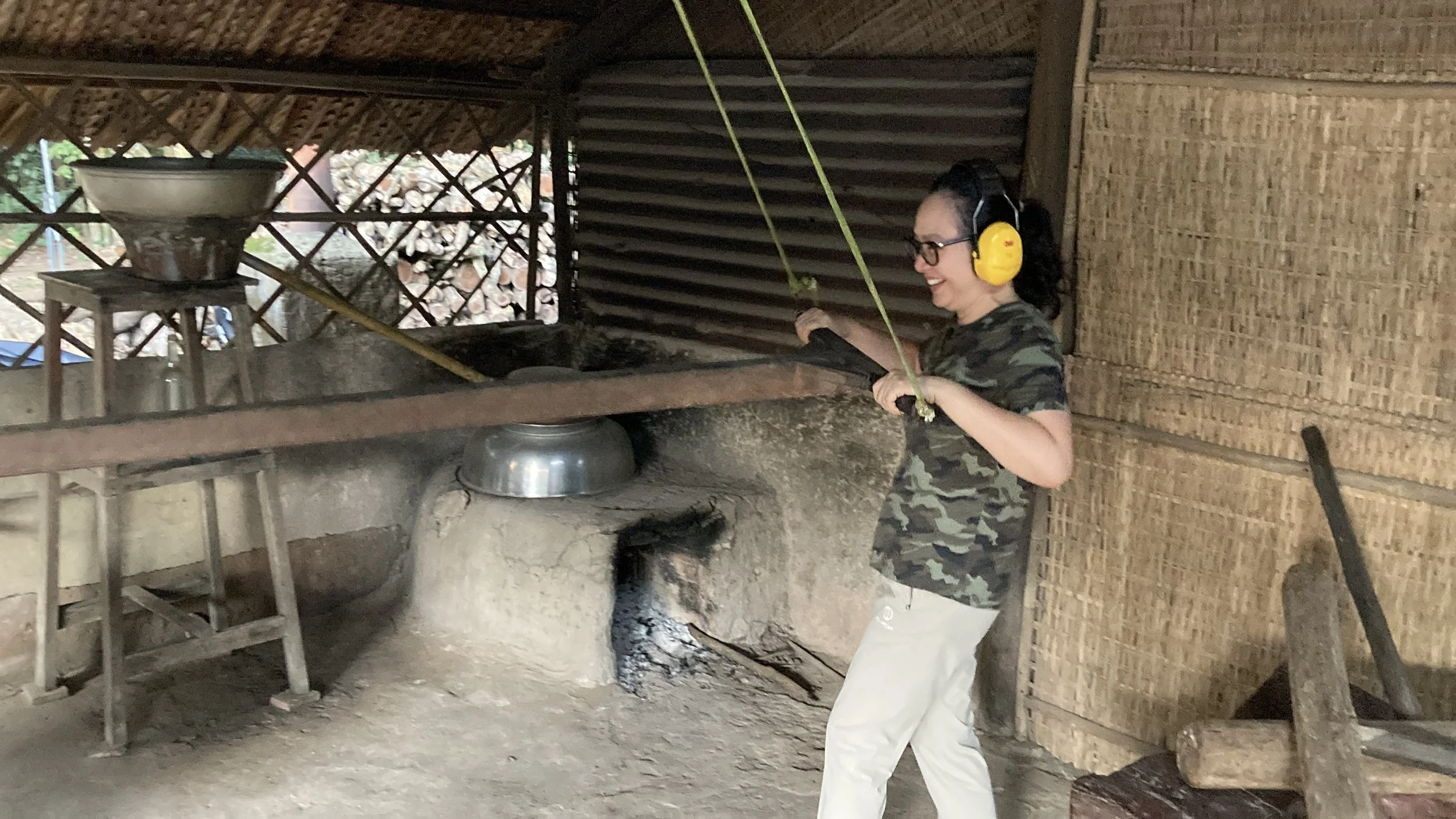
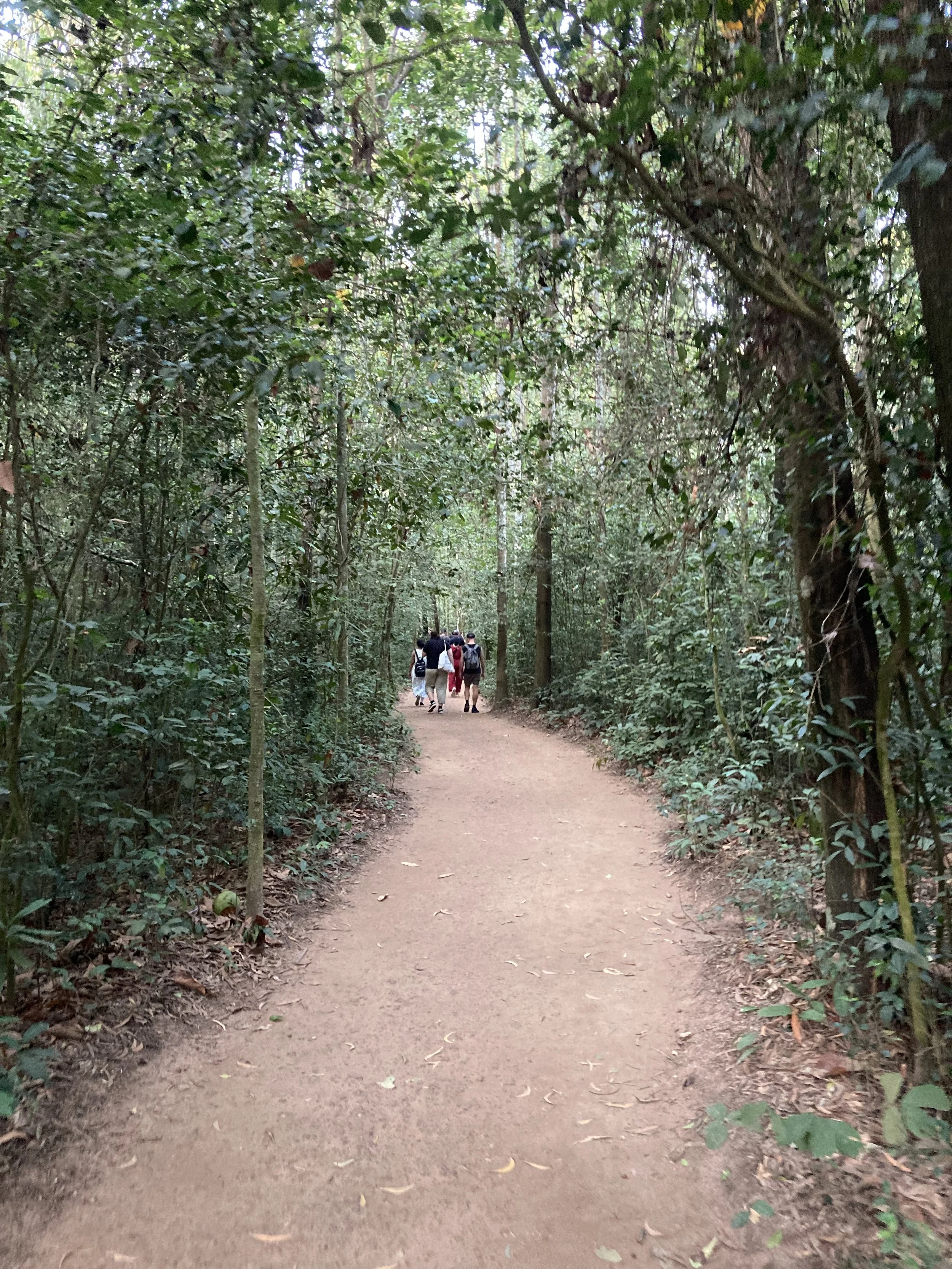
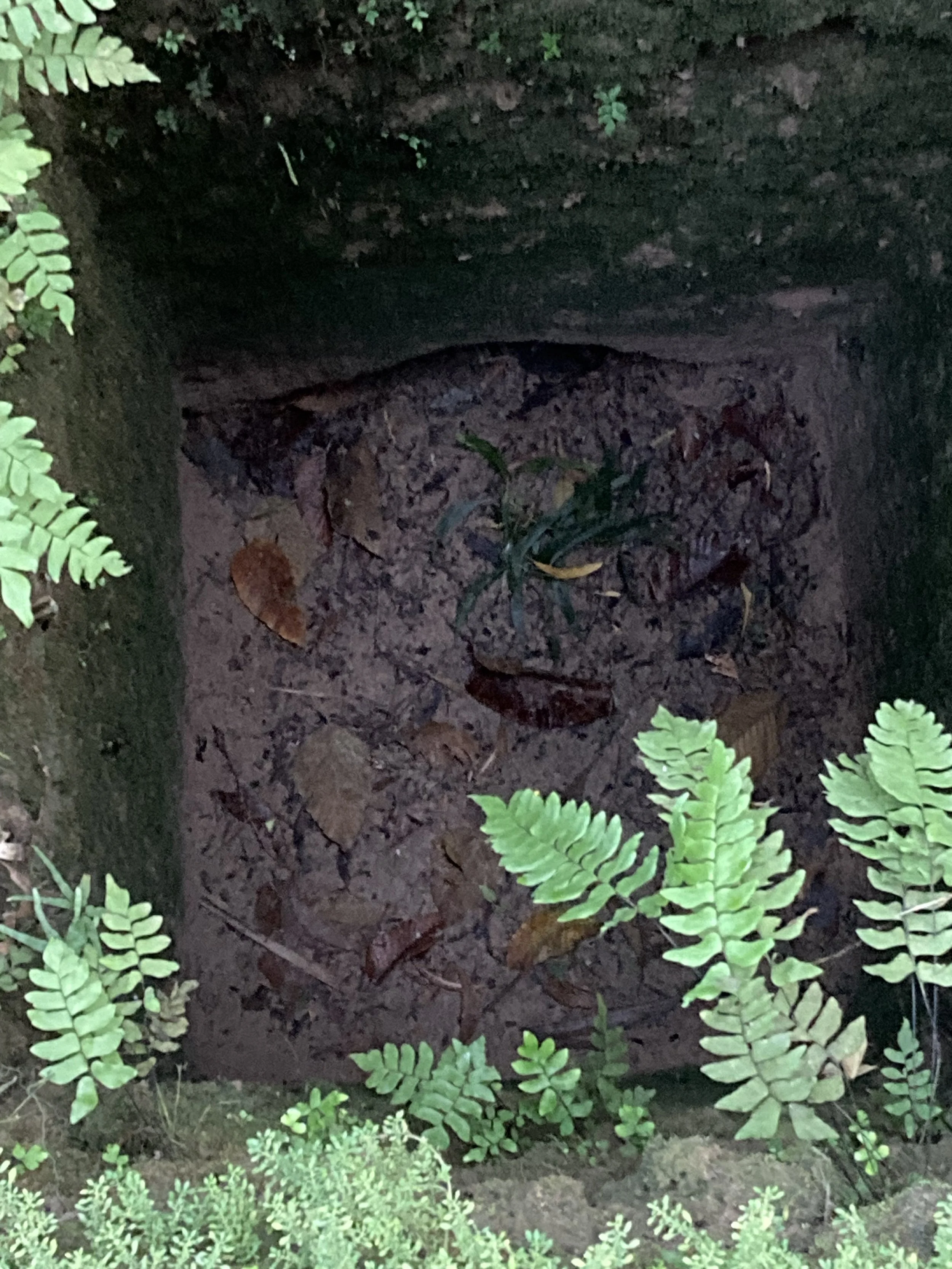

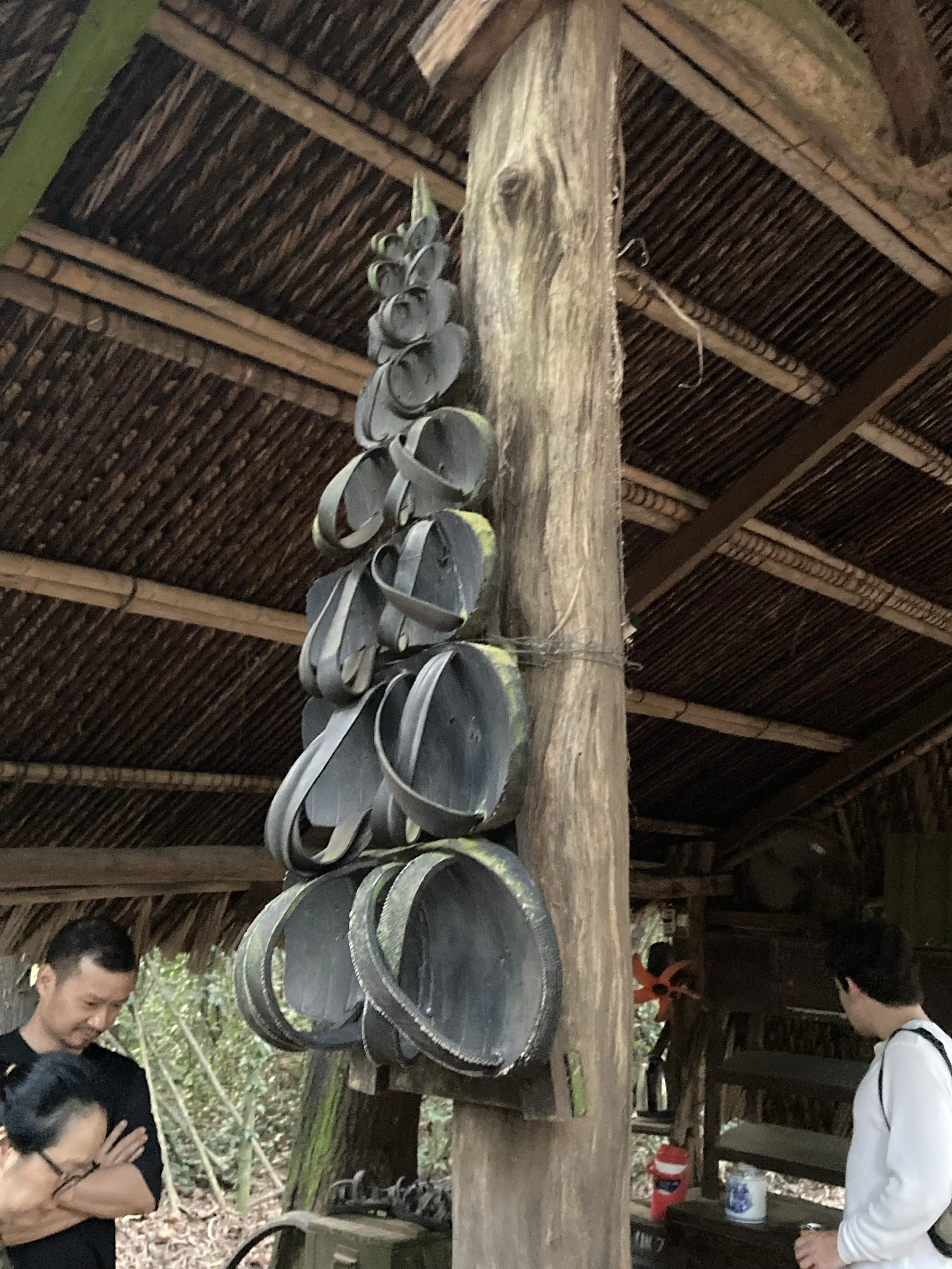
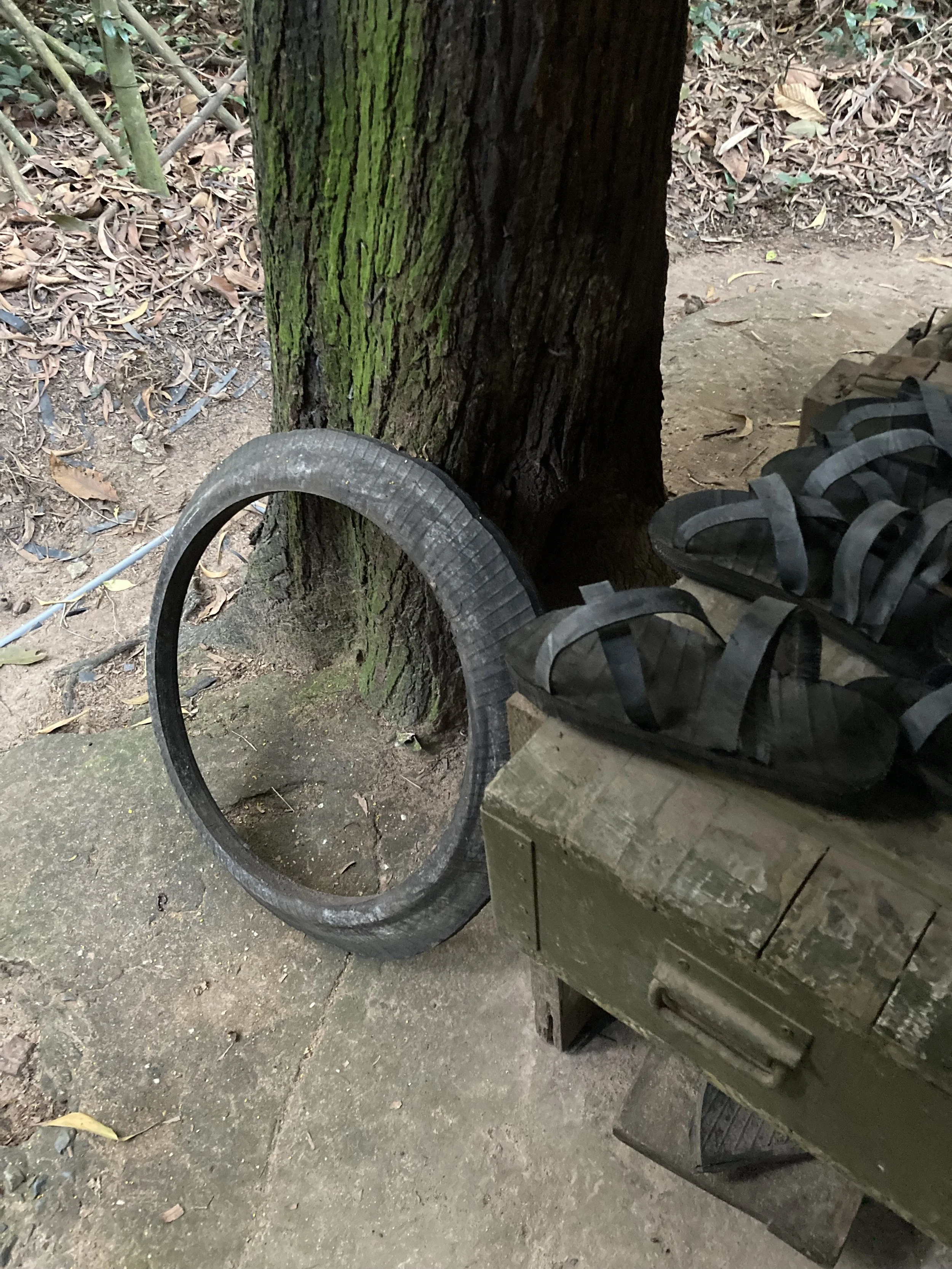
In looking through my pictures for the day, the only thing I forgot to share was how well the Vietnamese recycled — especially during the war. Rubber tires would be cut up to make shoes fo all sizes — from kids to the biggest feet imaginable.
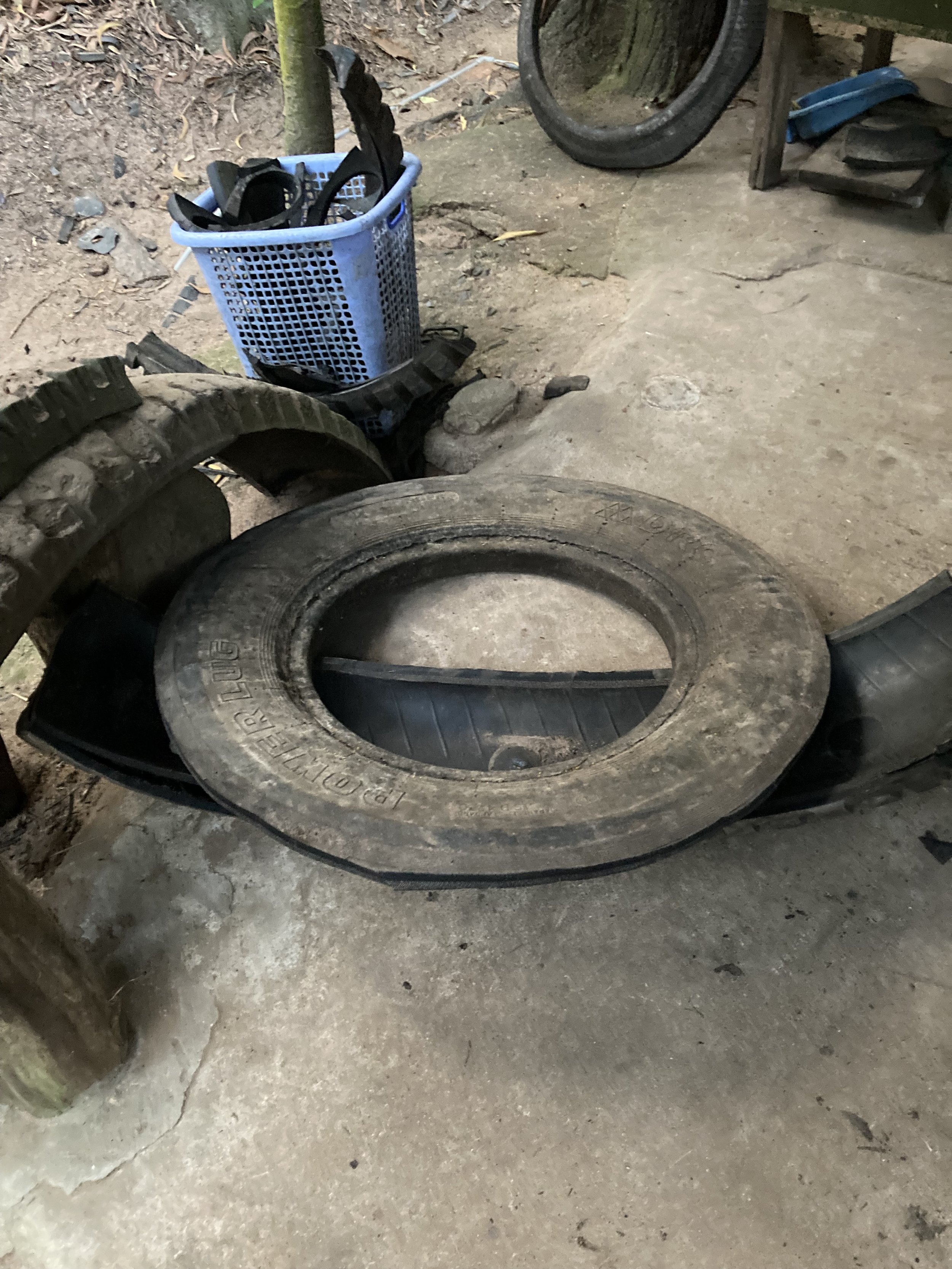
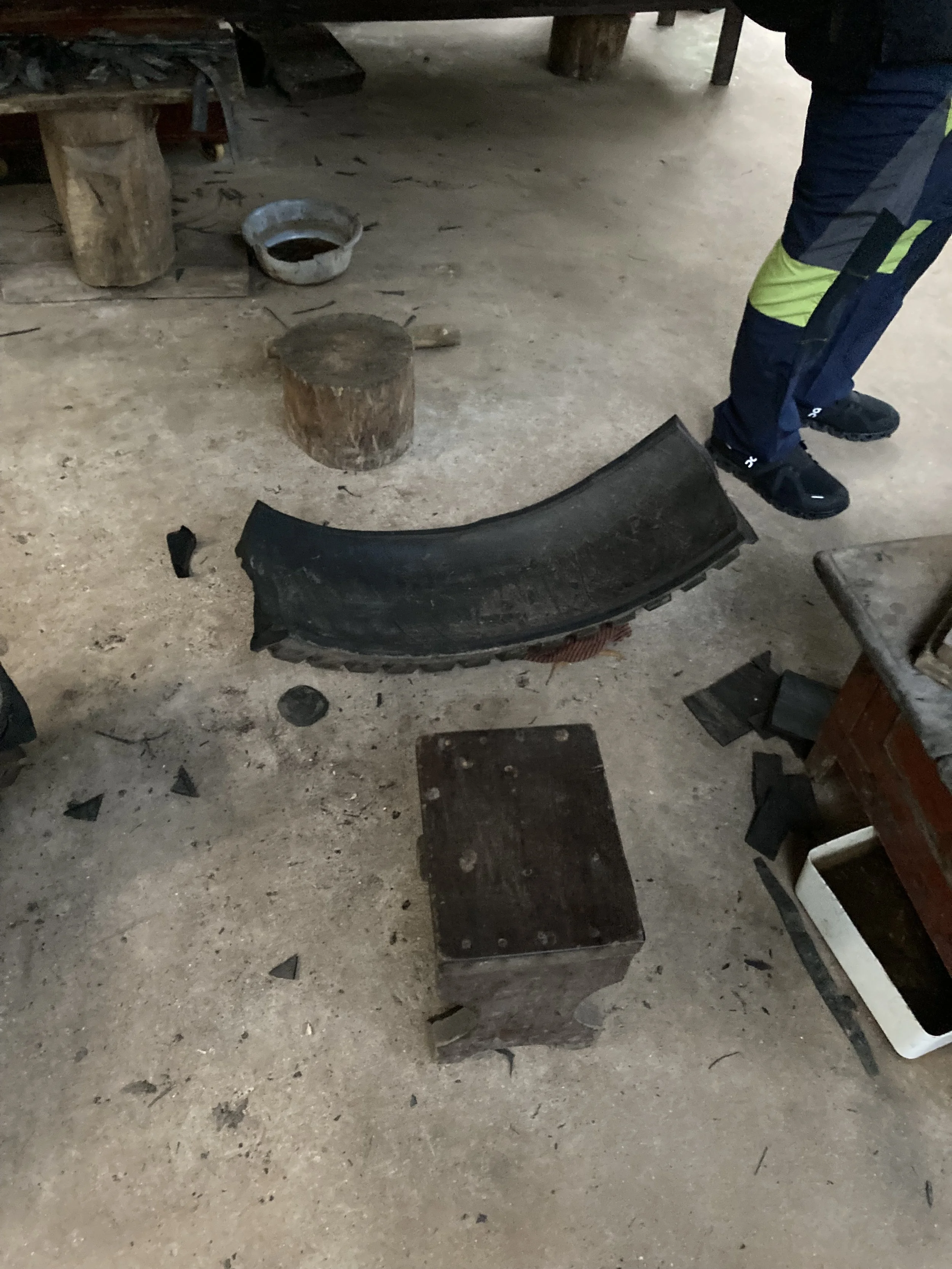
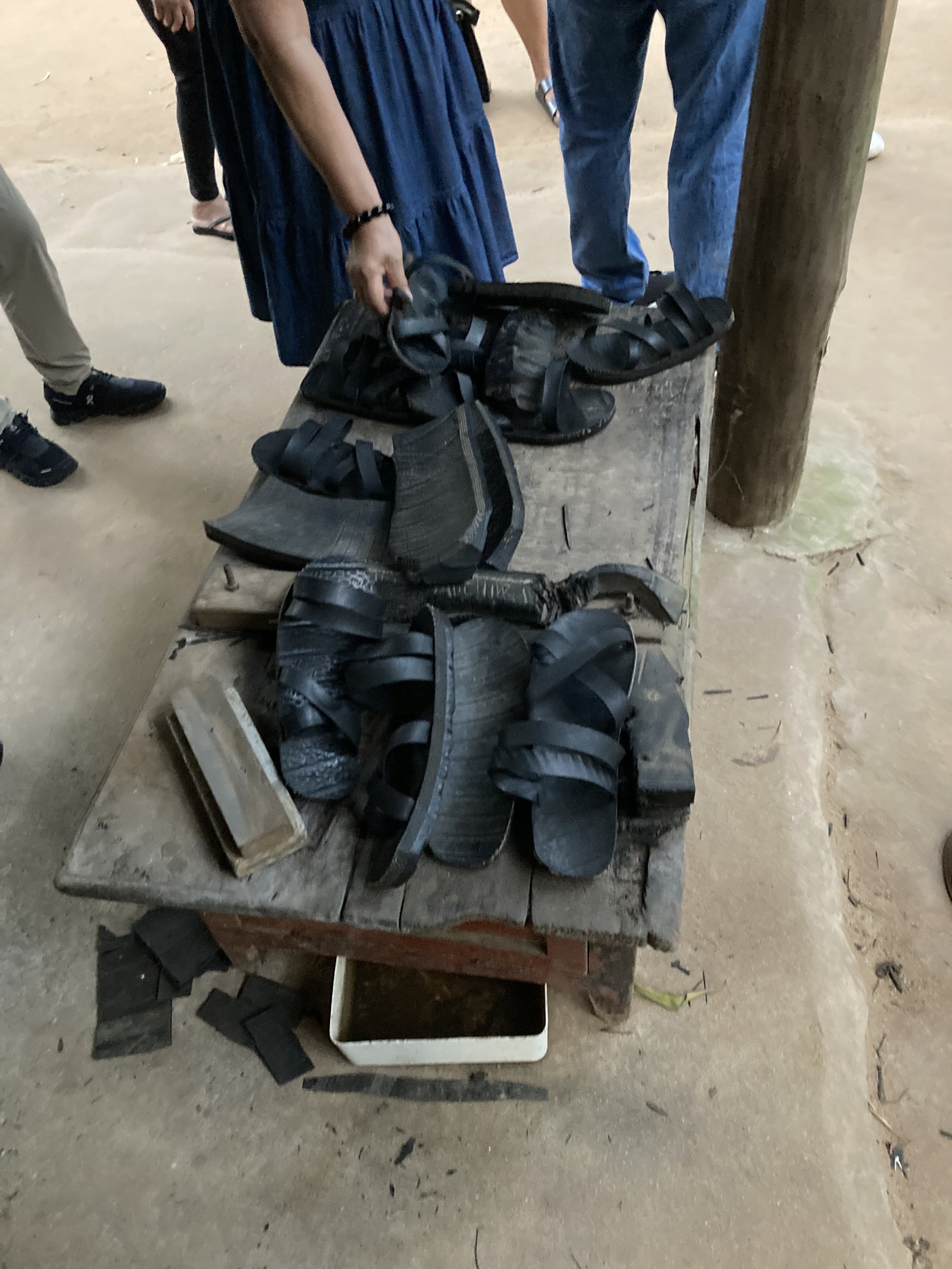
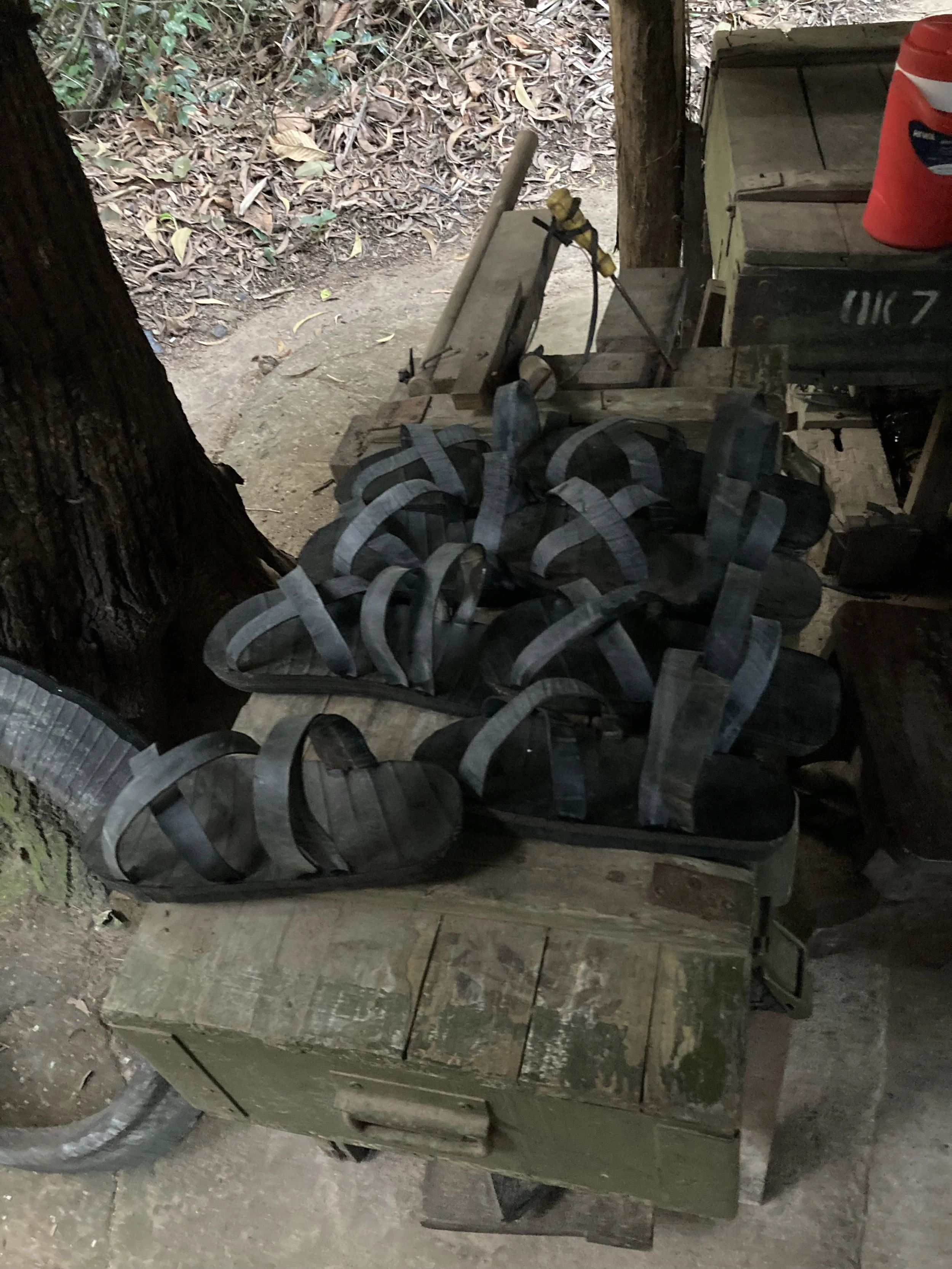
And did I mention the Christmas decorations are in full swing .. even here? As we exited the park, Violet urged me to get in a quick picture just in case I needed something for a Christmas card ;-)
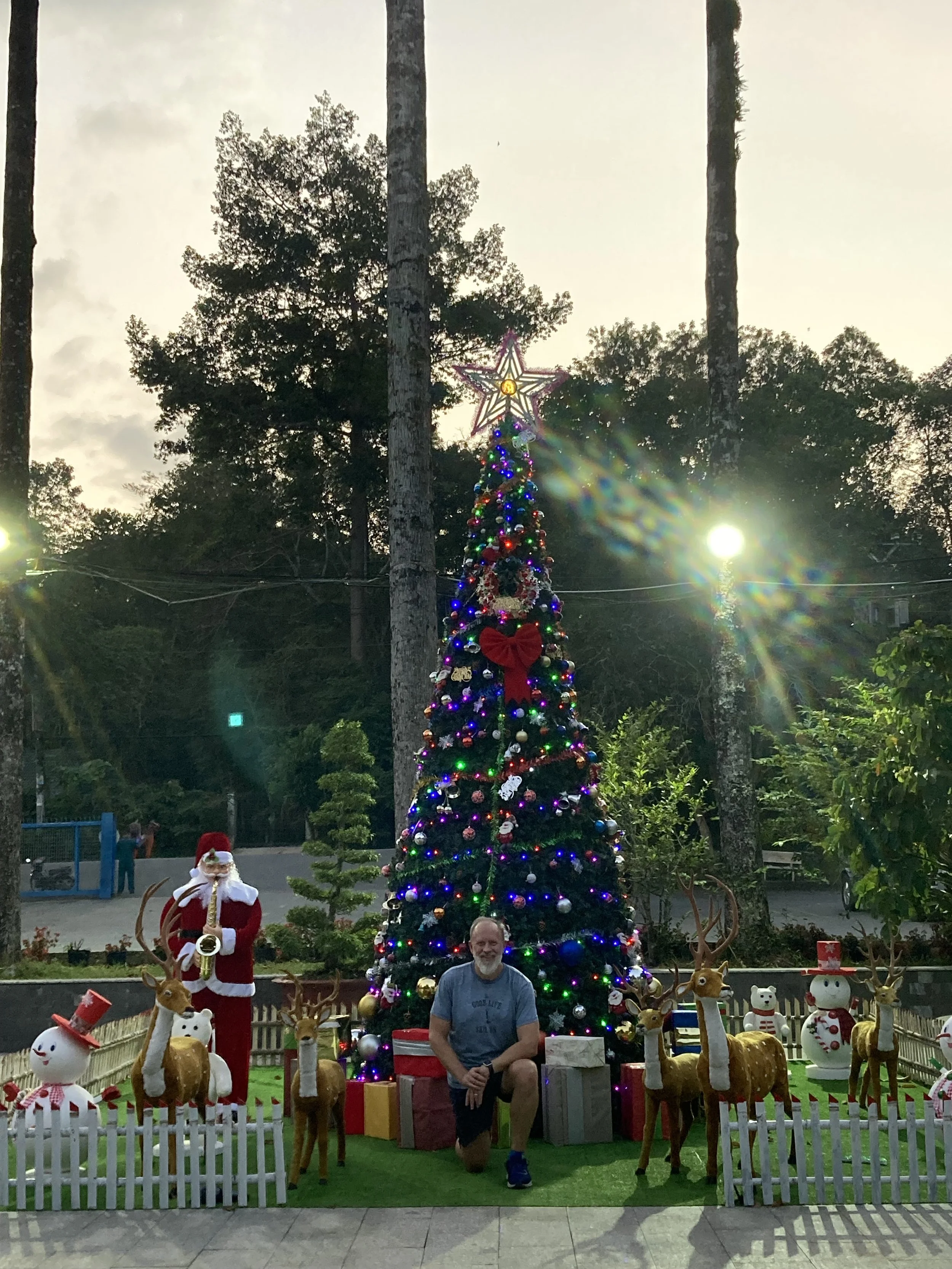
Santa playing the saxophone while the deers seek to take off

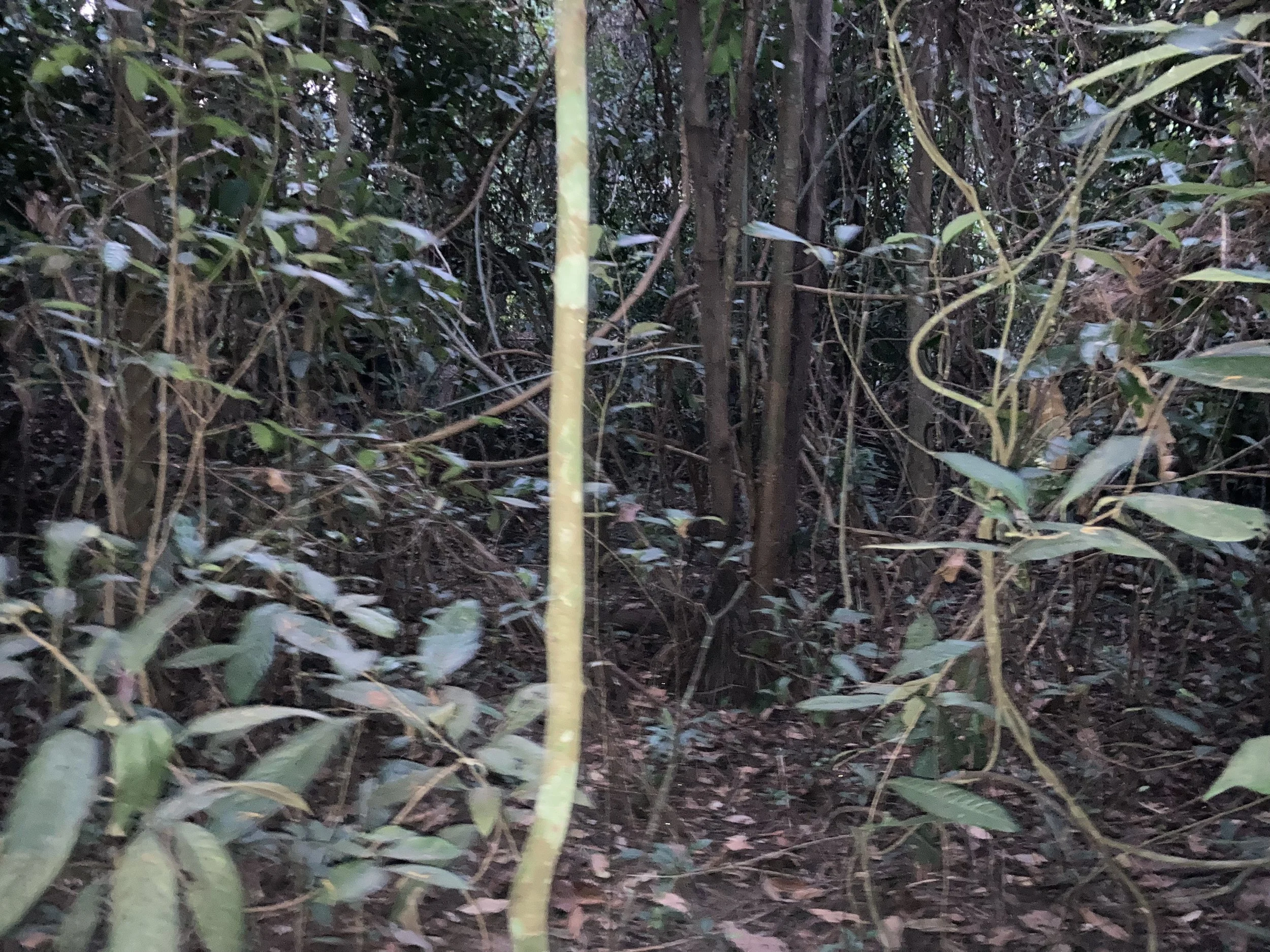
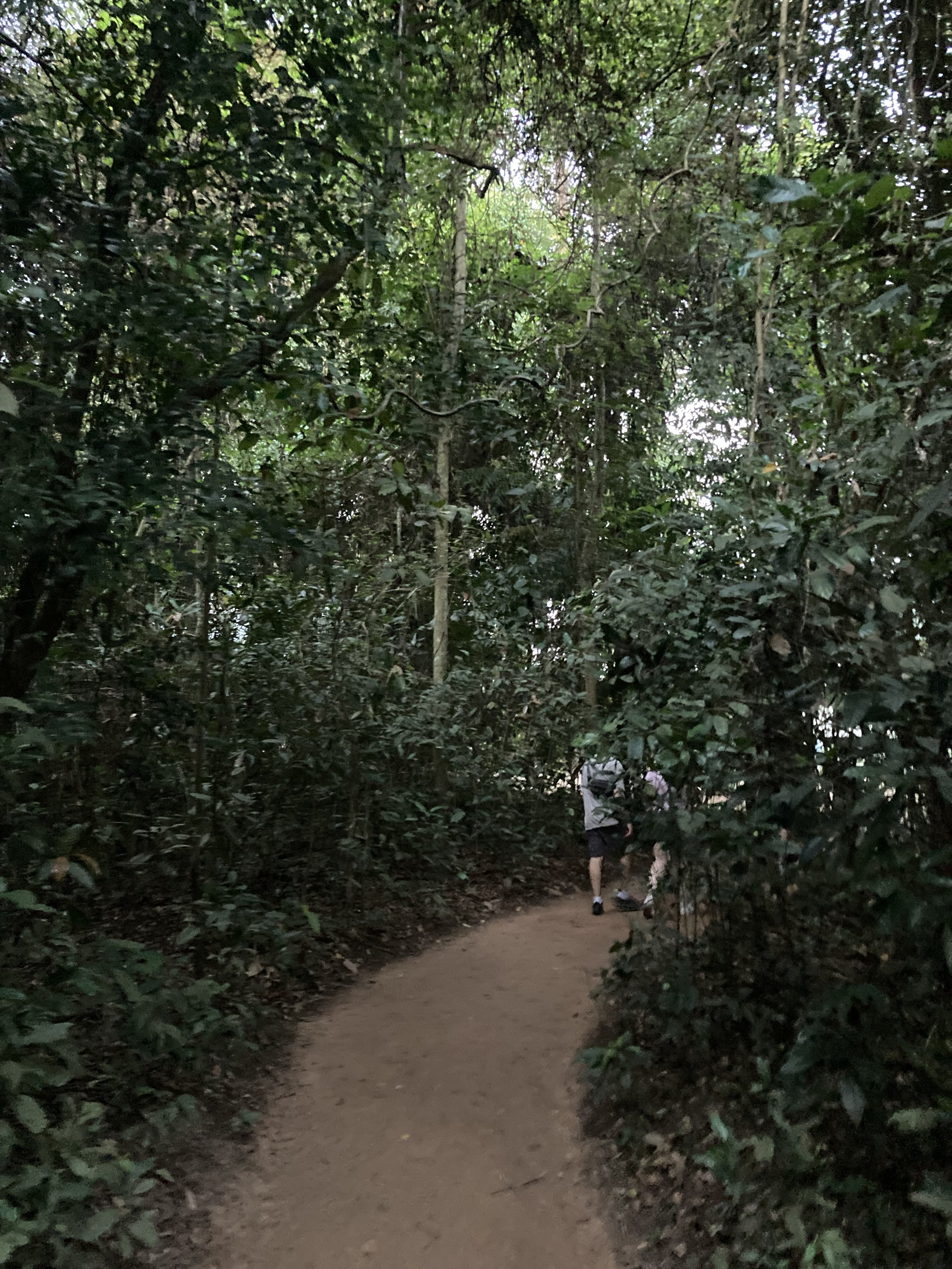
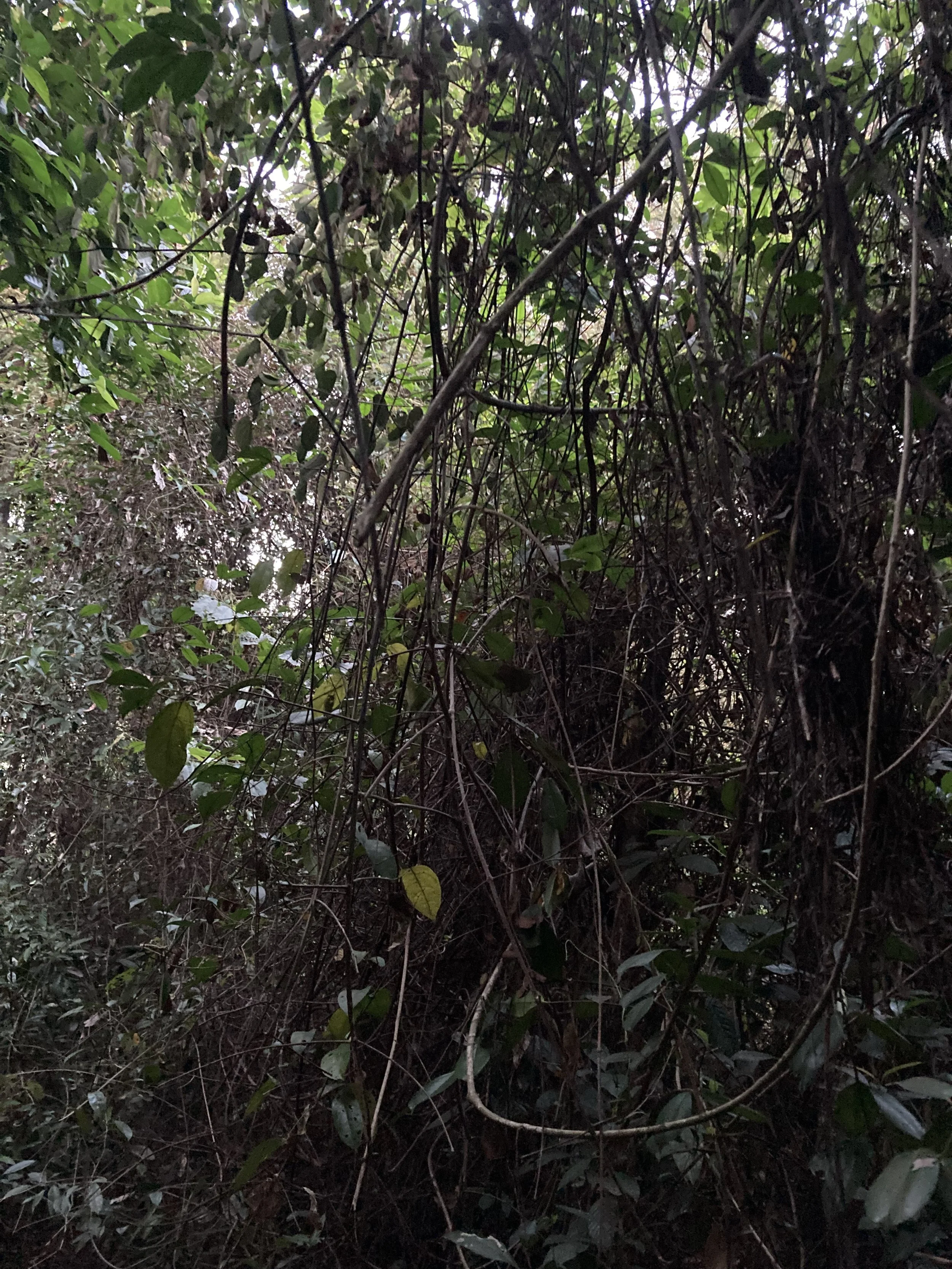
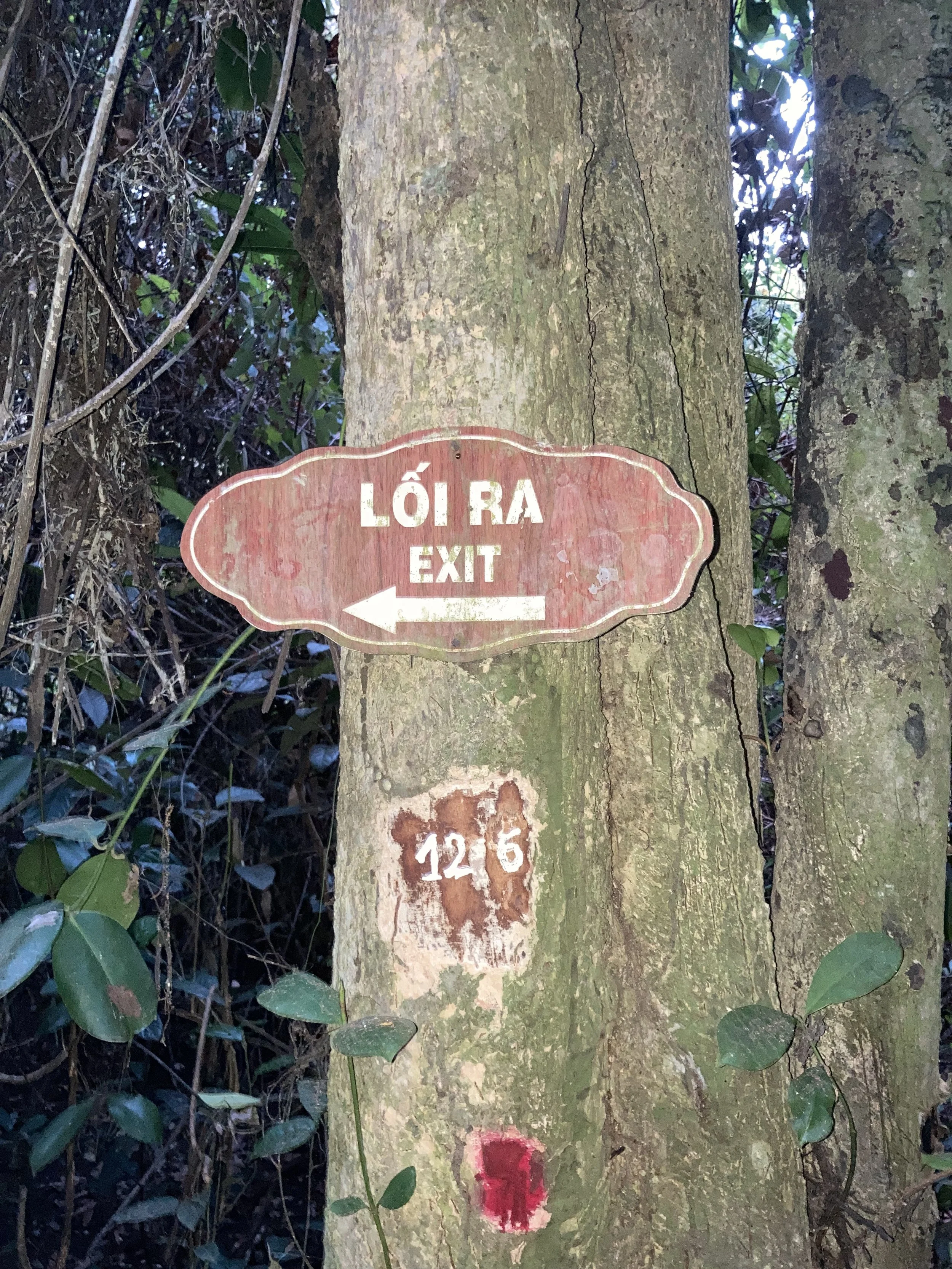
And so, on the ride back I reflected on the Cu Chi Tunnel experience and what it must have been like for so many living underground. Before coming here, I knew “War is hell” but I had never gone down into the depths of hell itself to experience what it was like for so many. It truly was a sobering day and one that I won’t forget.