V-Day in Wellington, NZ (February 14, 2026)
Chicago, Illinois was dubbed “The Windy City” because of the the amount of political rhetoric (i.e. politicians who are “full of hot air”) rather than its weather. According to History.com, “The term was popularized by rival newspapers, particularly in New York, during Chicago’s aggressive, successful bid to host the 1893 World’s Columbian Exposition.”
Wellington, New Zealand, it turns out, is widely considered the windiest city in the world with average wind speeds of 27 km/h (17 mph). This Valentine’s Day, this is precisely where Elena and I spent quality time together oudoors.
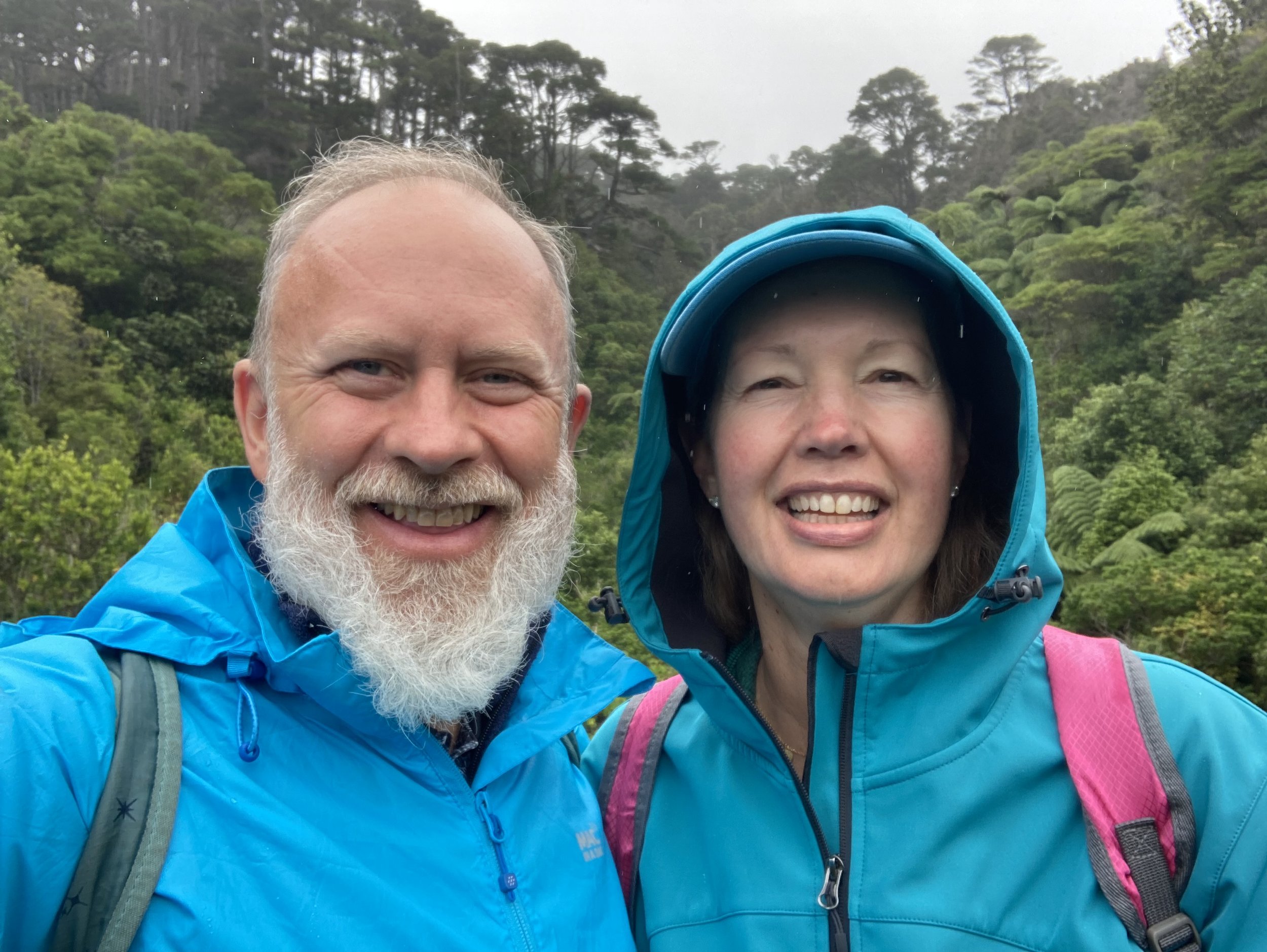
Quality time together outdoors in Wellington, New Zealand (V-Day)
It just so happens that Wellington is both the capital of New Zealand and home to one of the largest outdoor bird sanctuaries in the world:
Zealandia Te Māra a Tāne in Wellington is world-famous as the first fully fenced, "pest-free" urban ecosanctuary. Covering 225 hectares, it is renowned for restoring native biodiversity, offering a sanctuary for rare species like the tuatara and kaka, and providing a, "pre-human" wilderness experience just minutes from the city center.
Time magazine has recognized Zelandia as one of the 100 greatest places in the world. Elena, Violet and I can attest to this as we spent the majority of our day here exploring as many of the 225 hectares as we were able to hike in a single day. For me, that added up to nearly 10 miles of walking or more than 22 thousands steps!
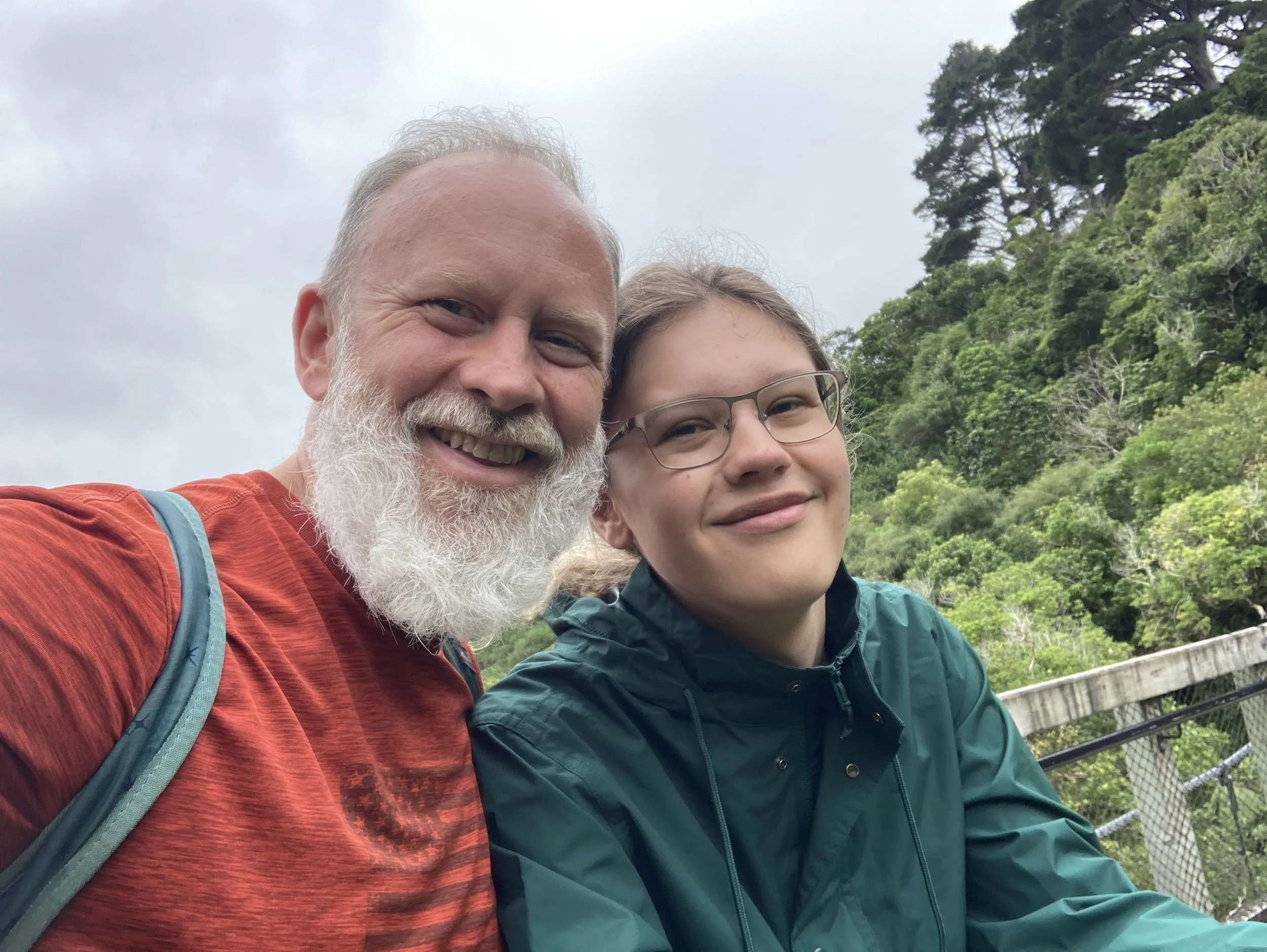
Violet concurs that this is one of the greatest outdoor adventures yet!
While I’m happy to share pictures (probably more than you care to flip through), the most amazing part for all three of us was the specially weighted bird feeders that have, along with other conservation efforts, brought back birds on the brink of extinction, such as these parrots:
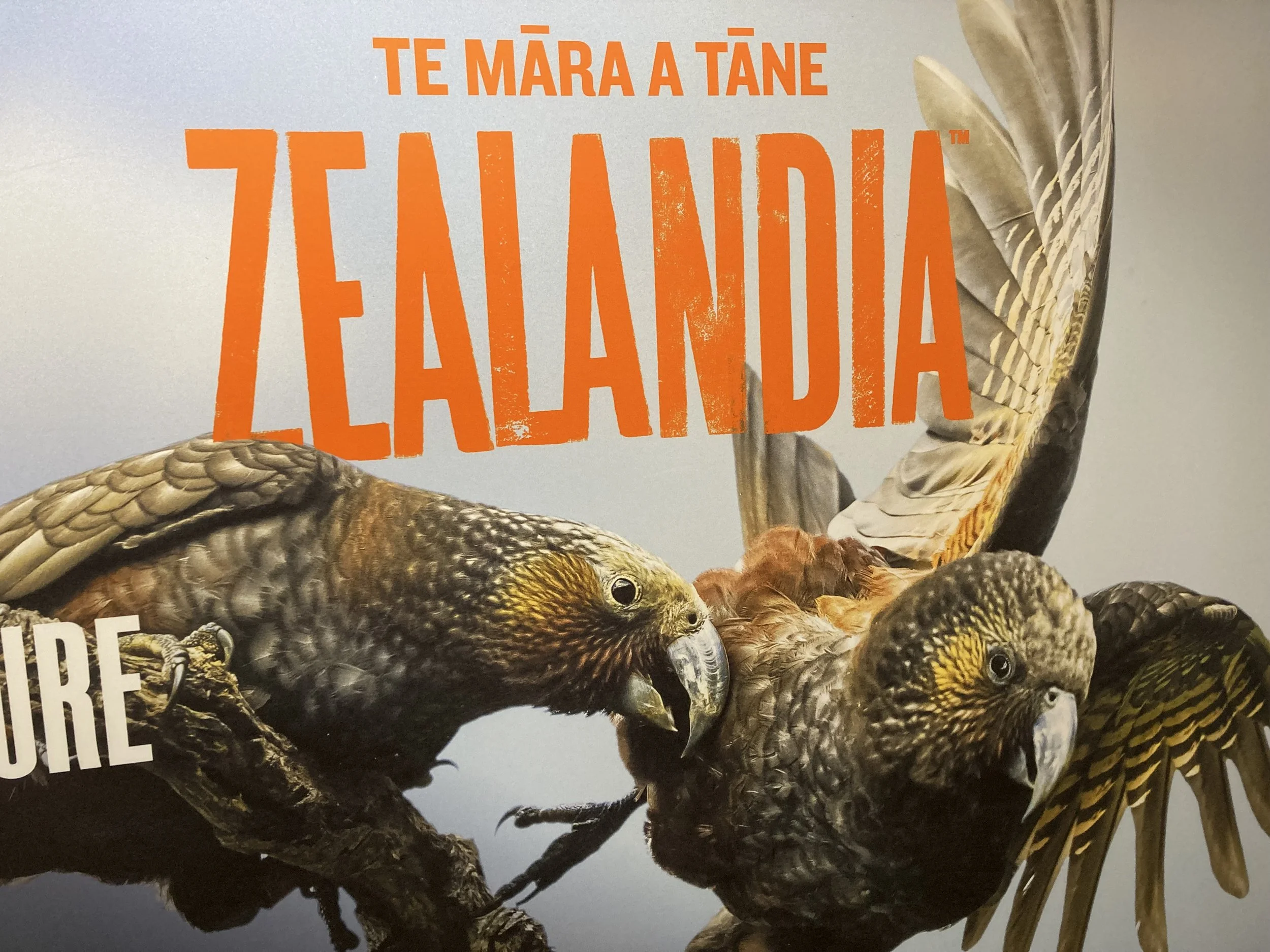
Giant Zelandia poster cross-promoting the Kaka parrots
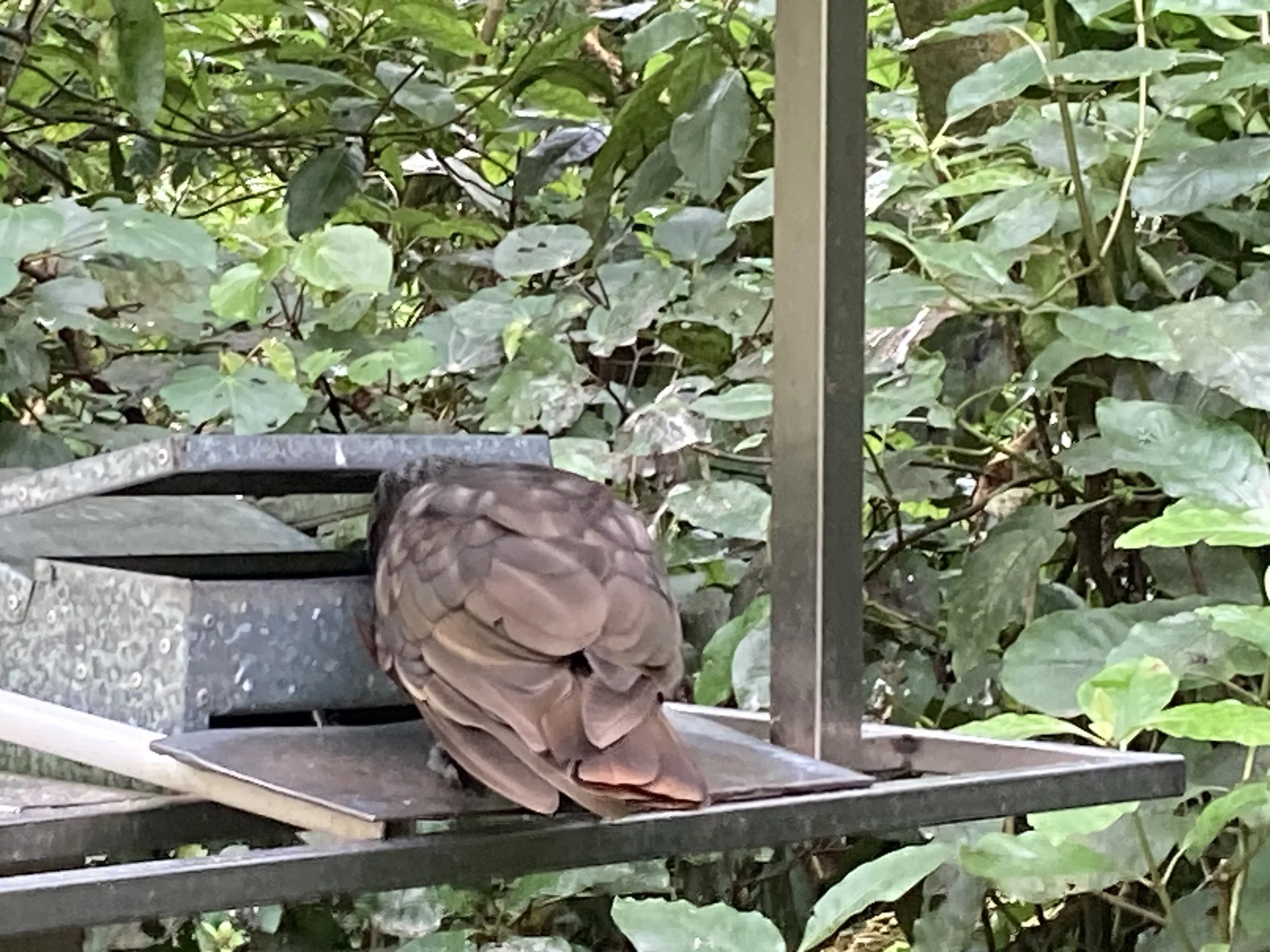
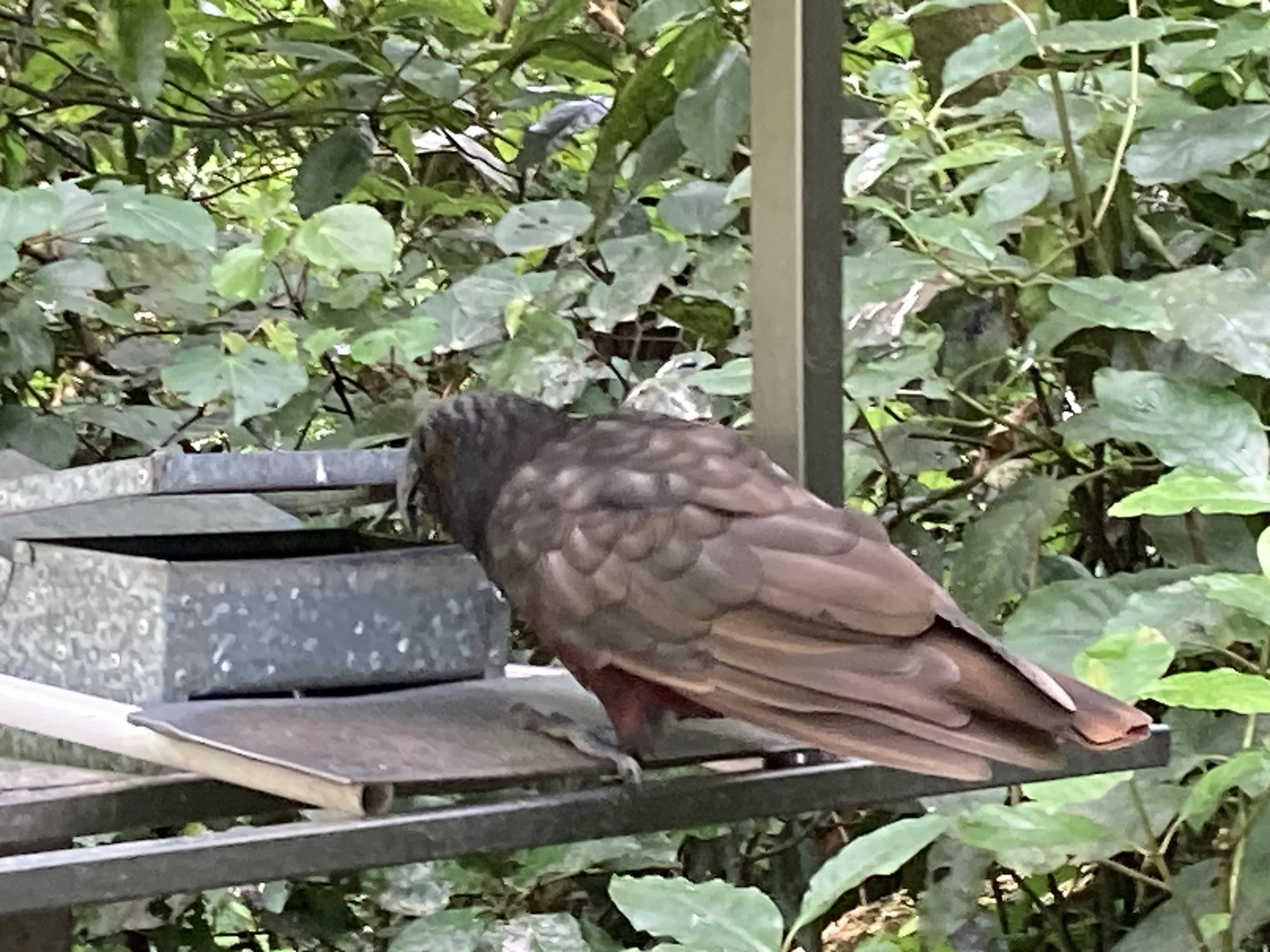
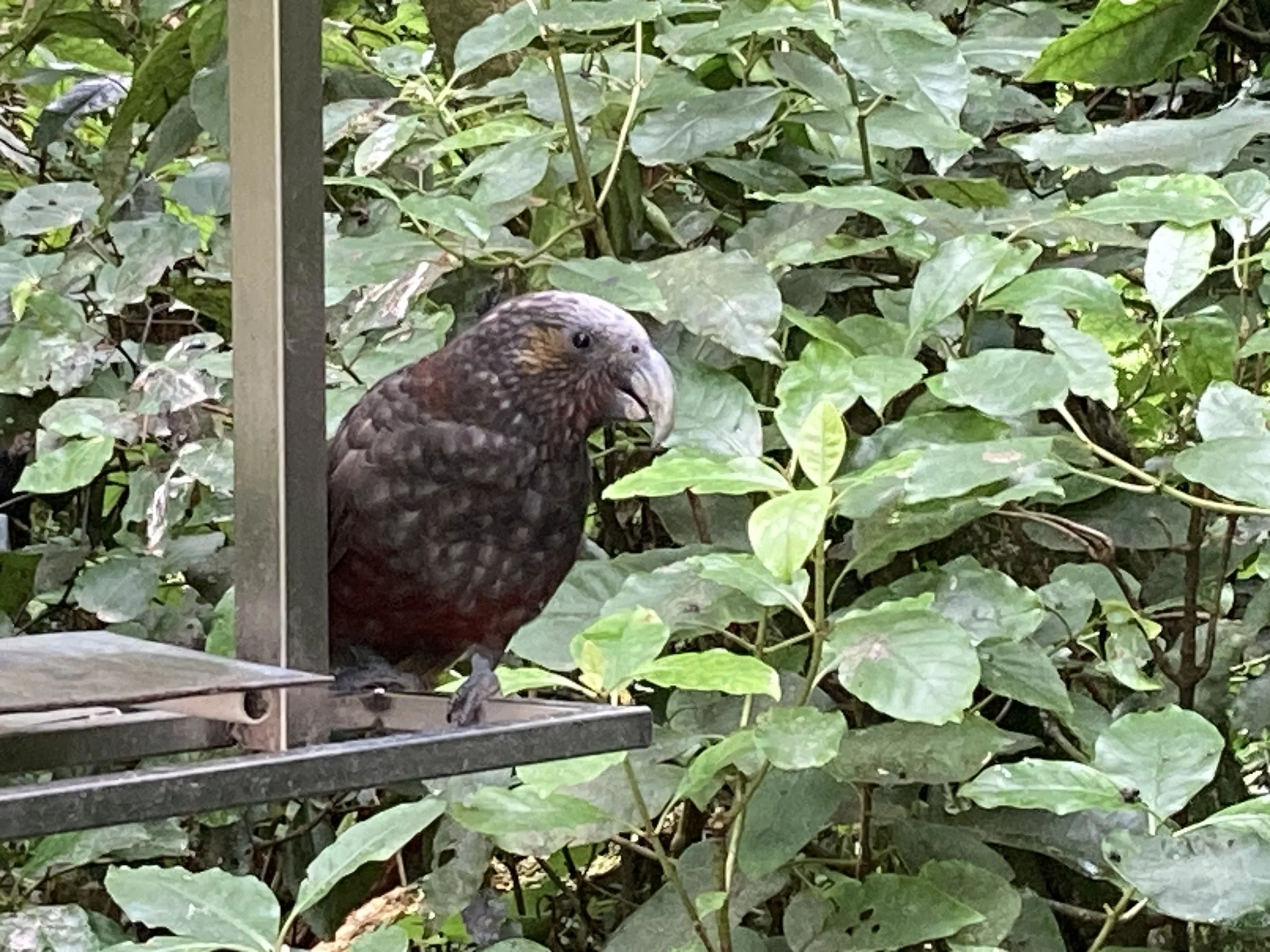
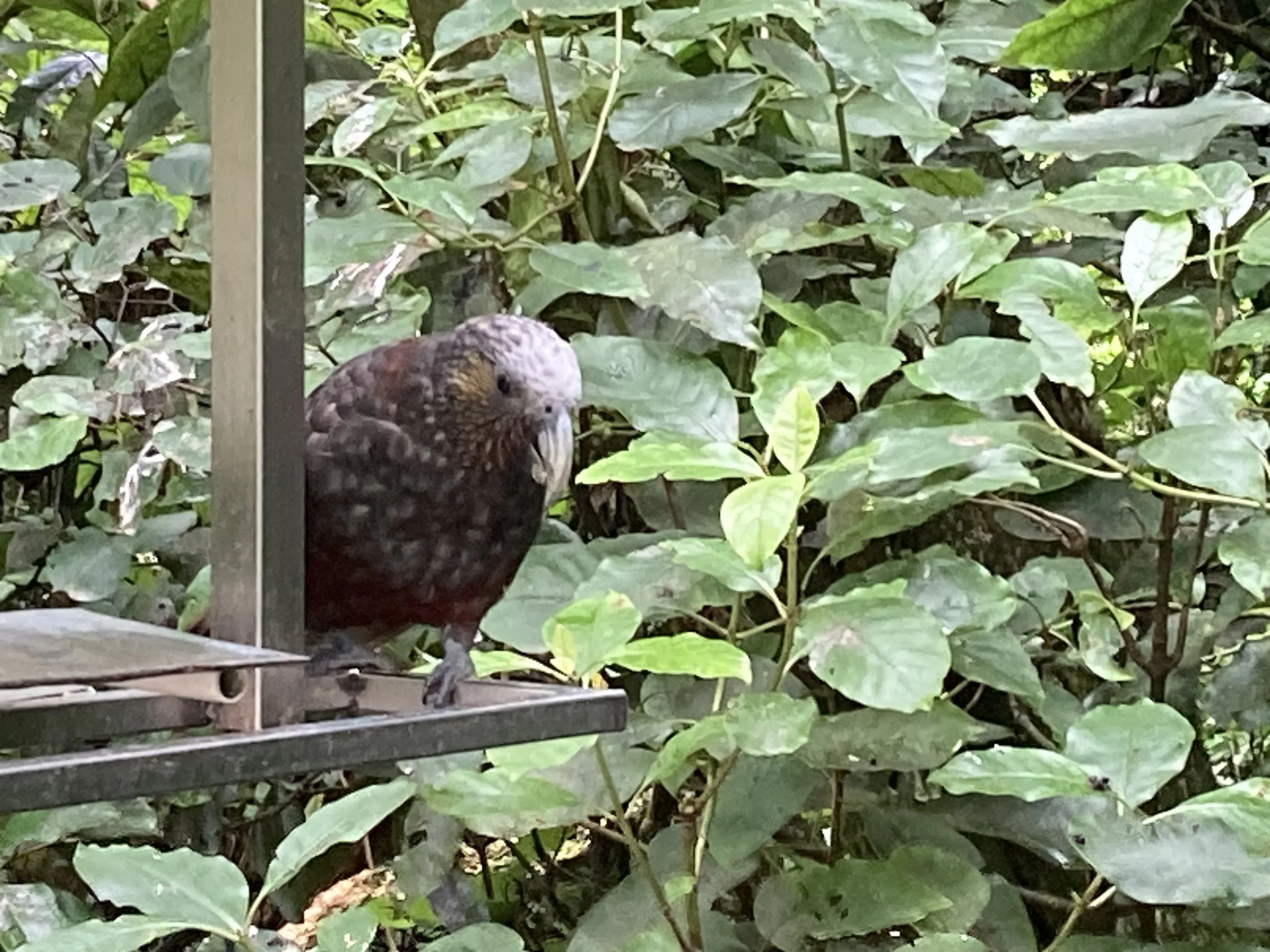
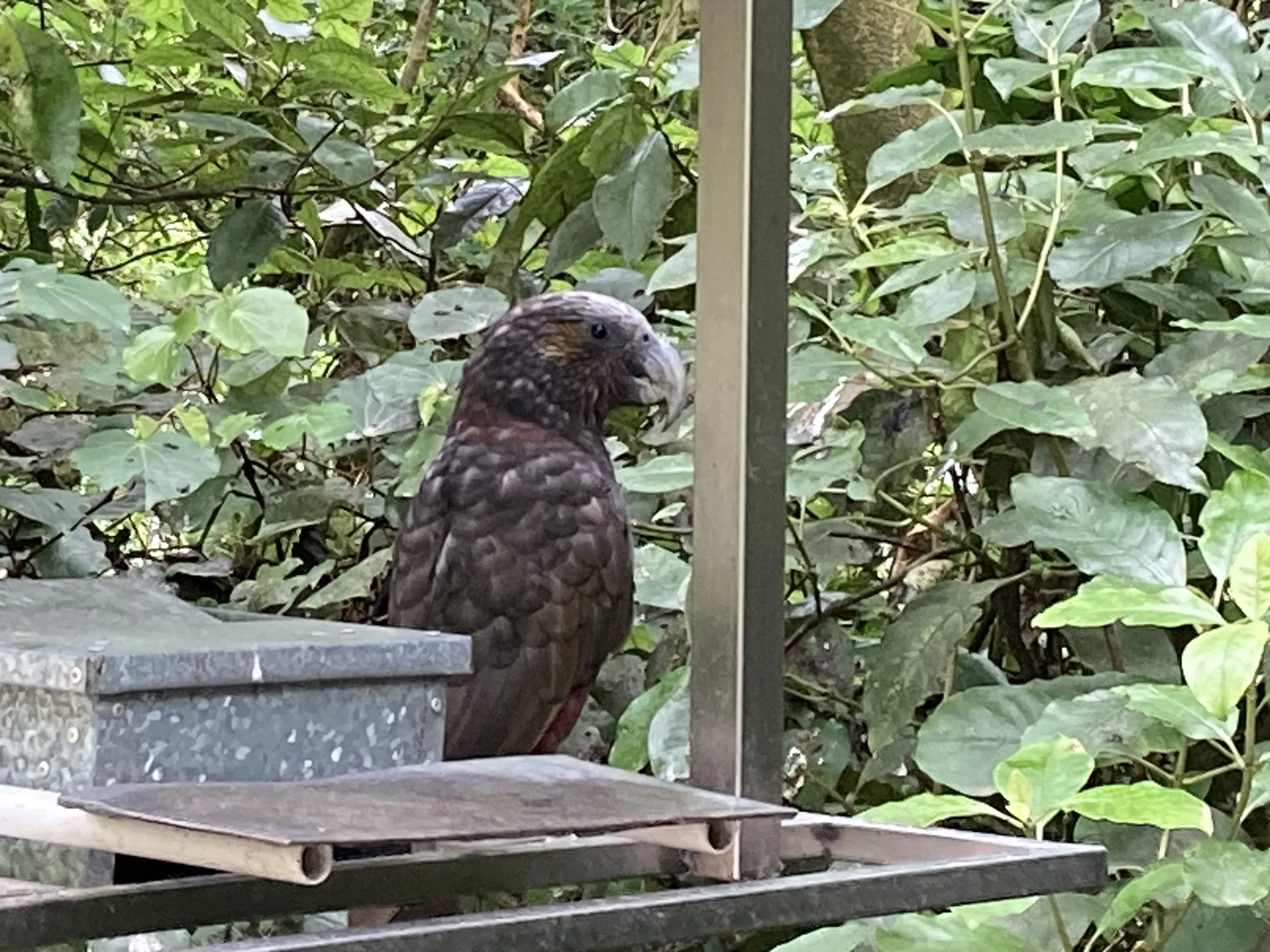
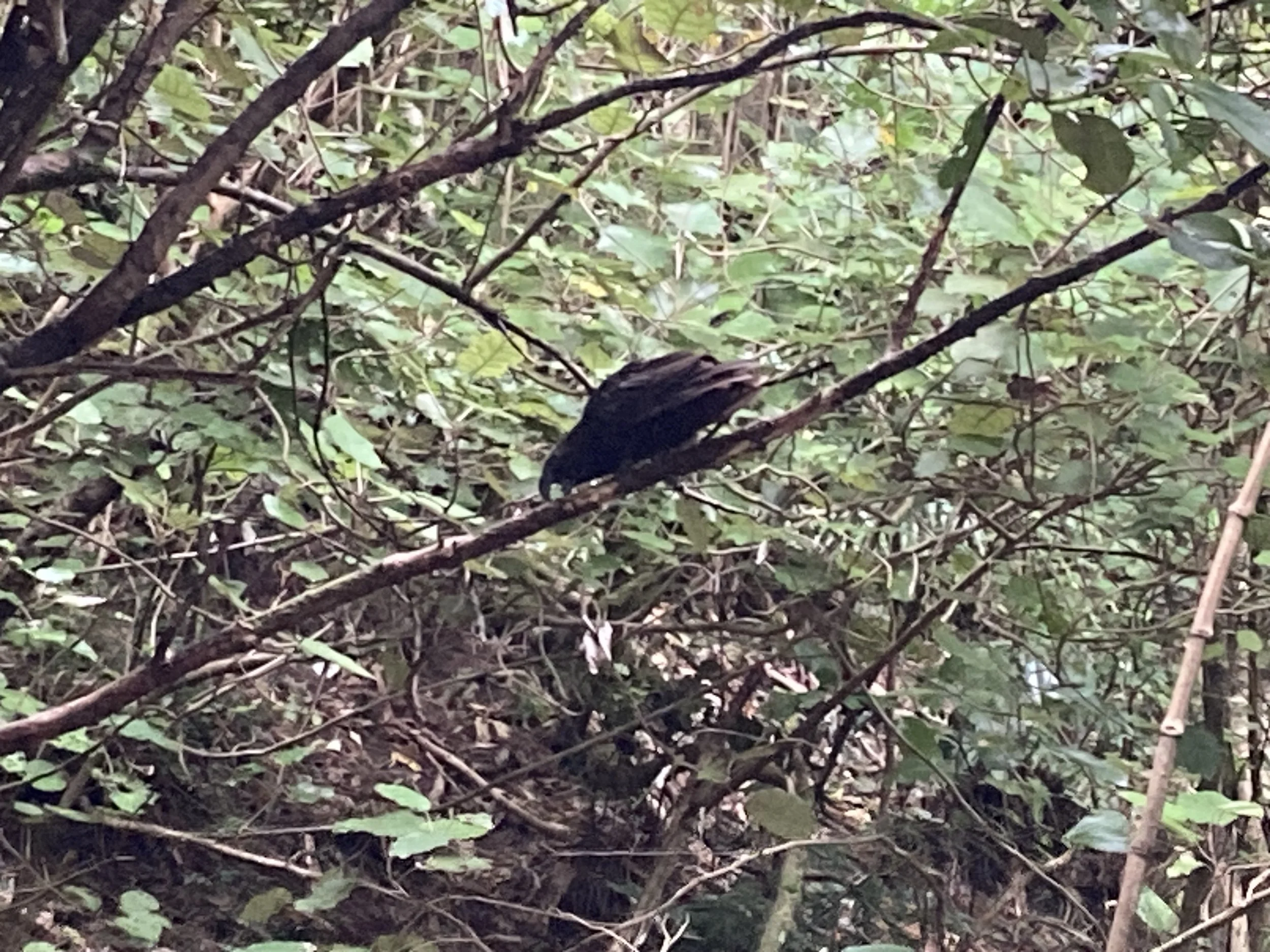
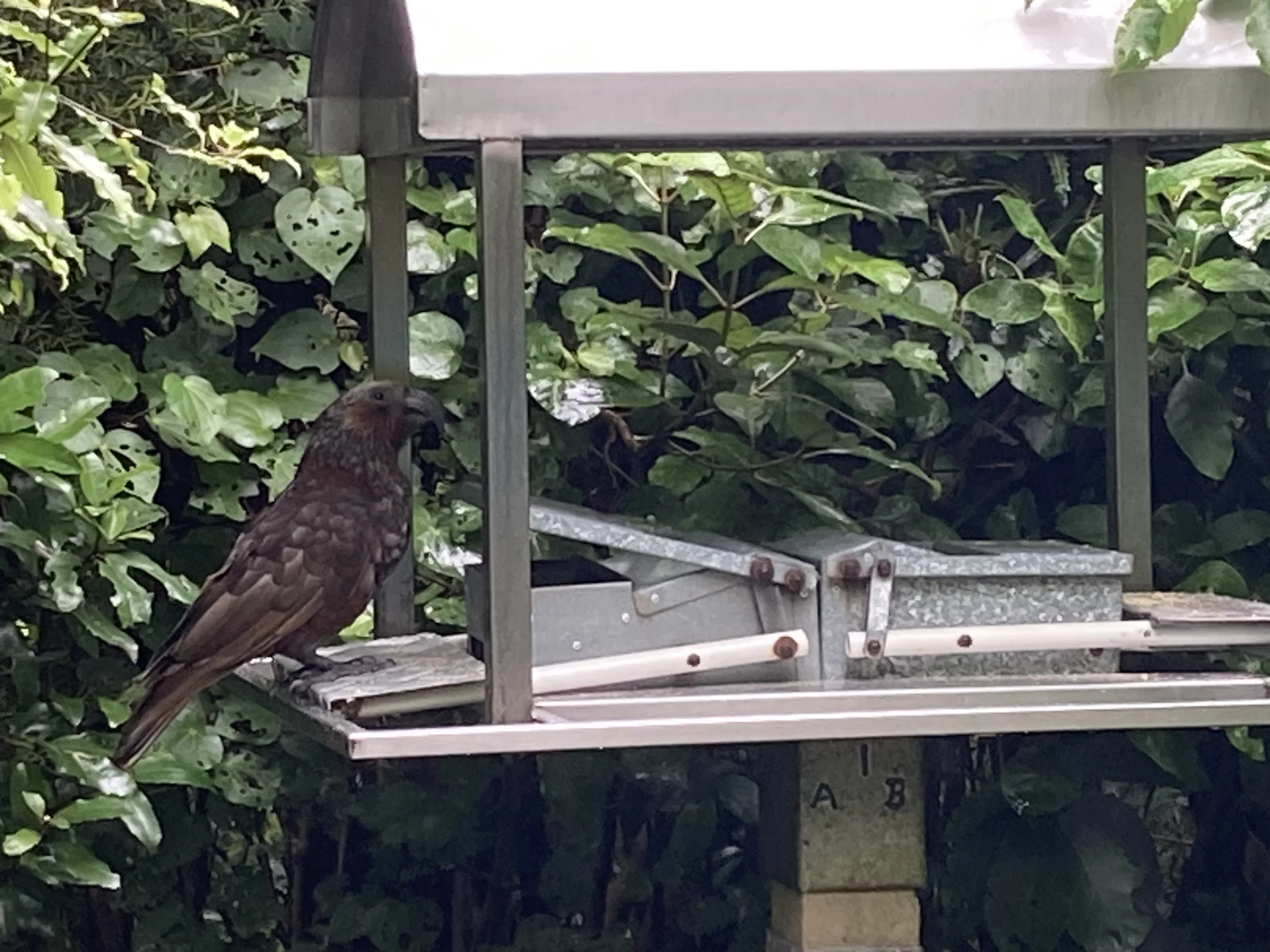
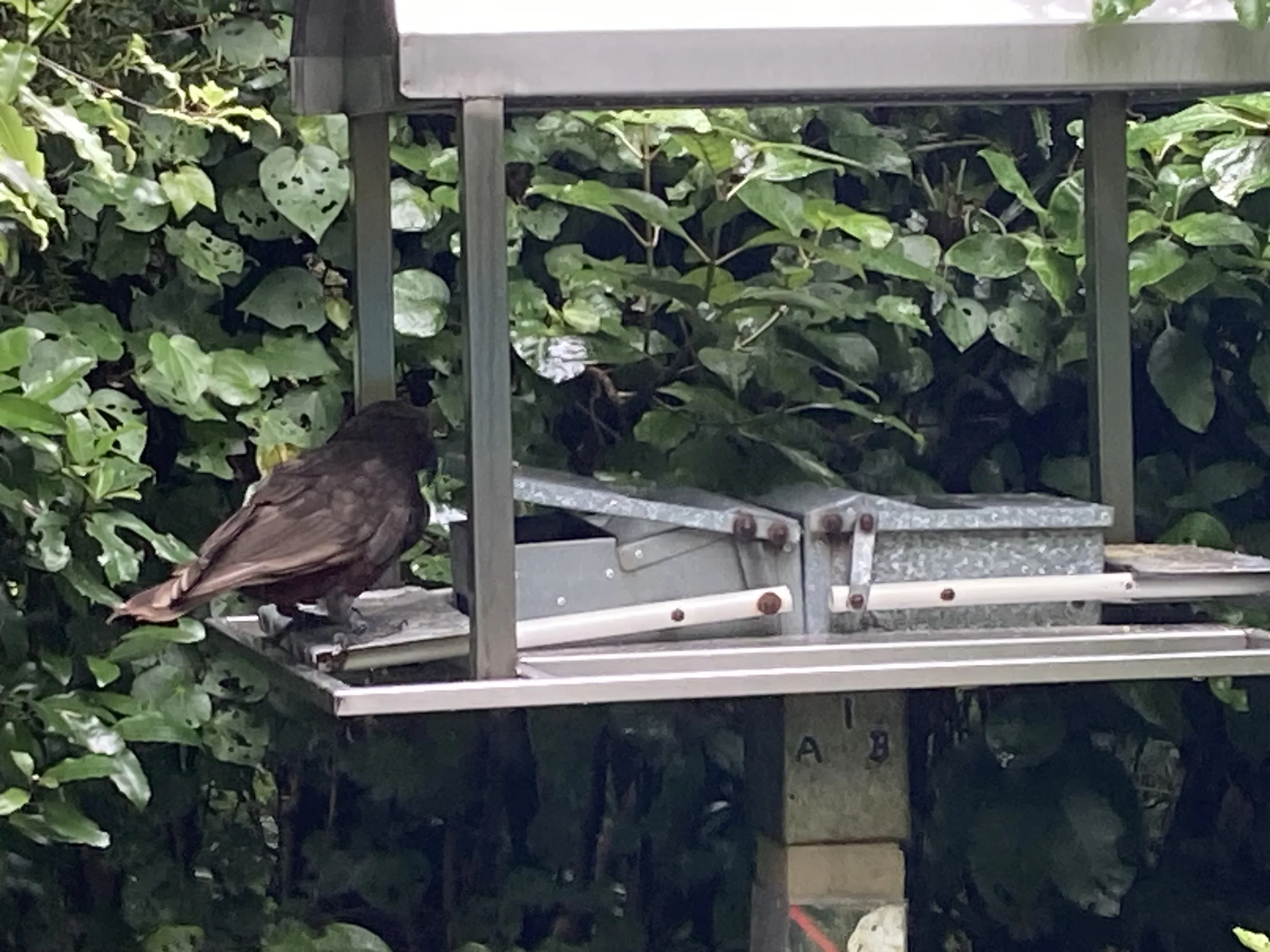
Here’s the thing. When Elena and I first began our journey hiking, we had no idea we’d get about a foot away from these large parrots. When I brought Violet back in the afternoon (she had slept through the first part of my trip with Elena) I made sure we found this part again. There were multiple stations set-up like this all over the park. All of us got to spend some quality time with the unique birds of New Zealand.
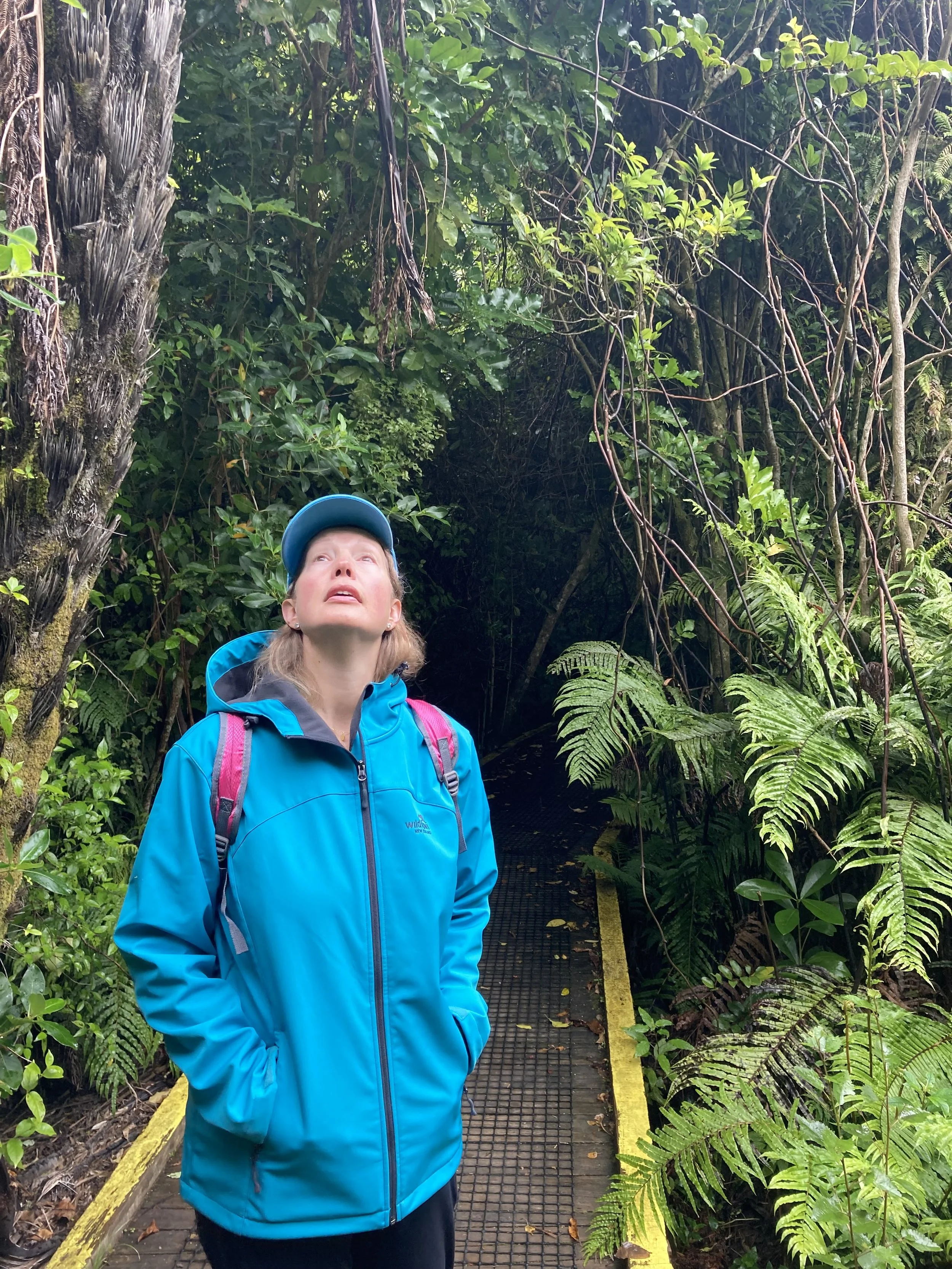
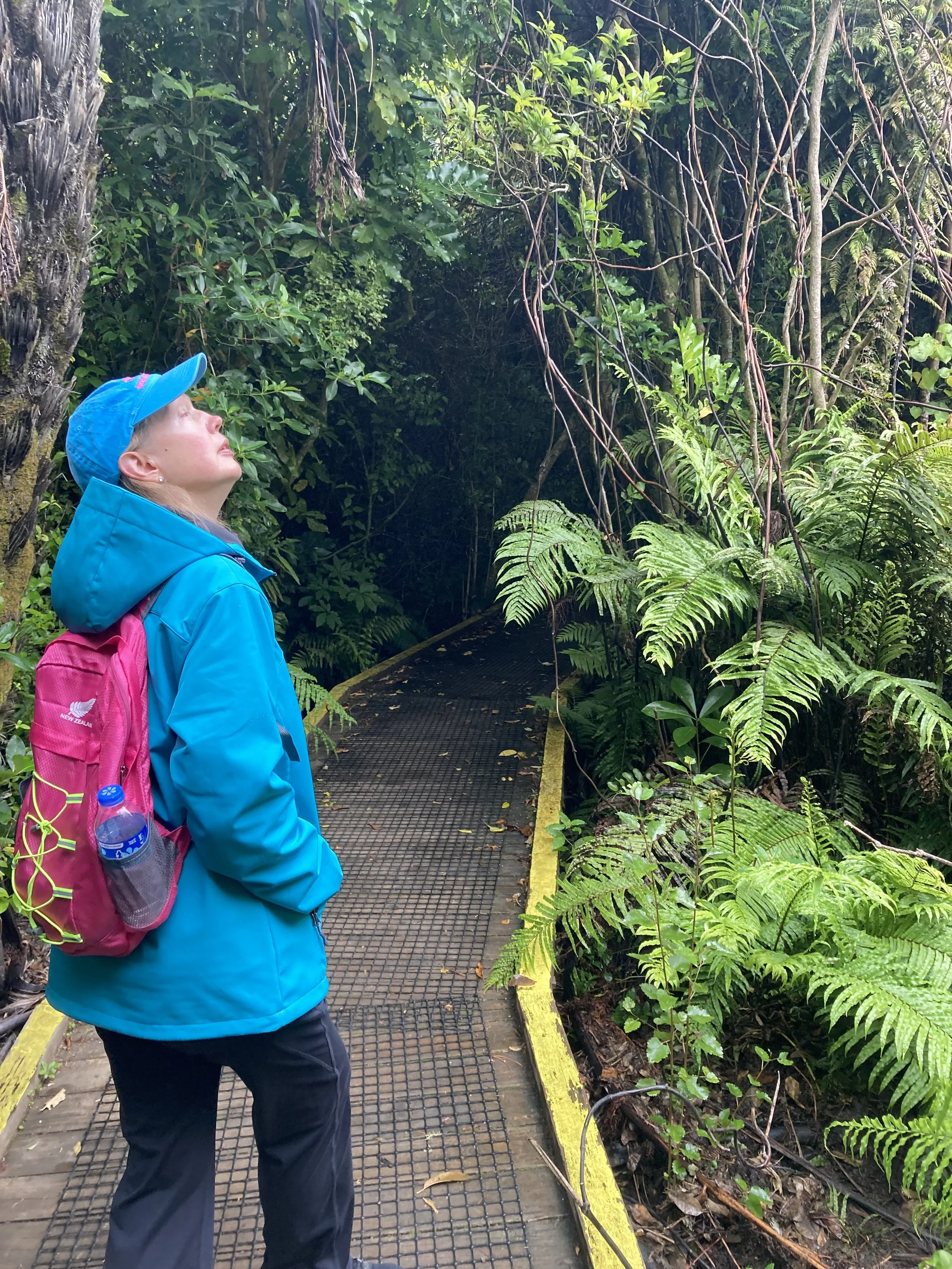
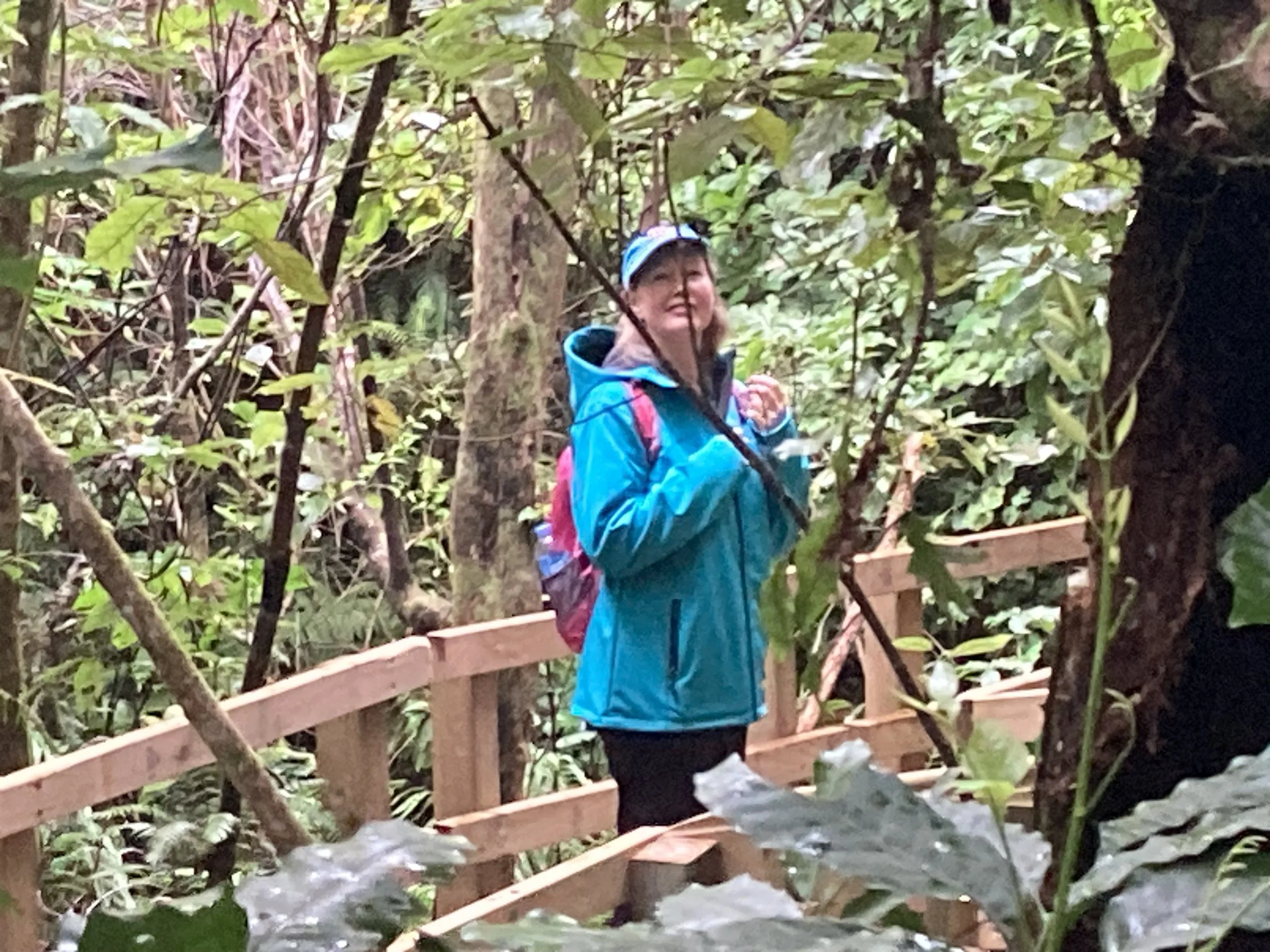
Elena looking up at birds right overhead
The paths were well marked with some of the easiest paths being flat and even paved. Anyone — even people with mobility challenges — can easily experience the awesomeness that is this nature park. And while there is no netting, the environment is extremely friendly to birds which attracts them from all over New Zealand. They stay not because they are “trapped” but rather, they thrive because this space is free from pests, disease and predators while providing supplemental food.
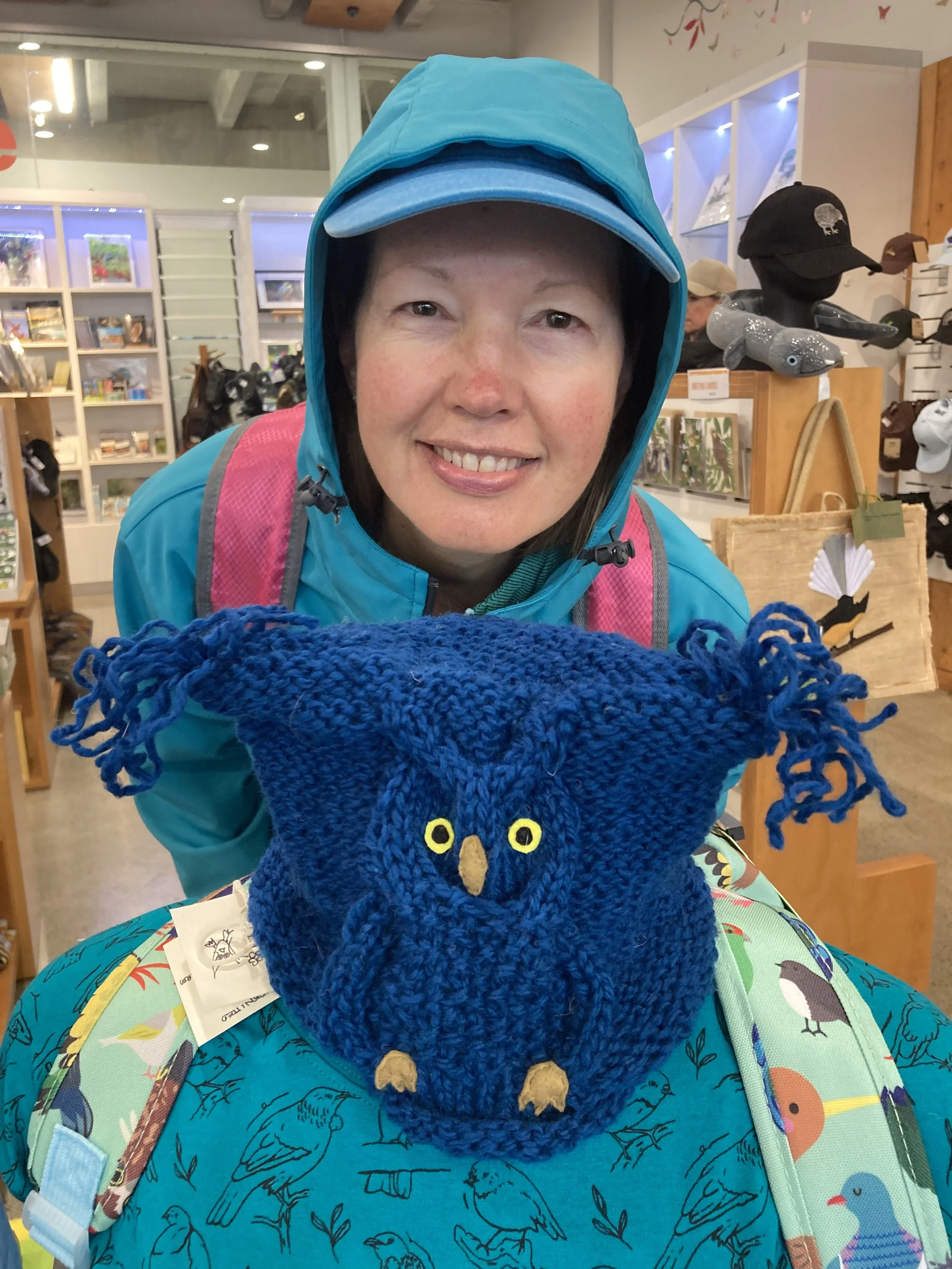
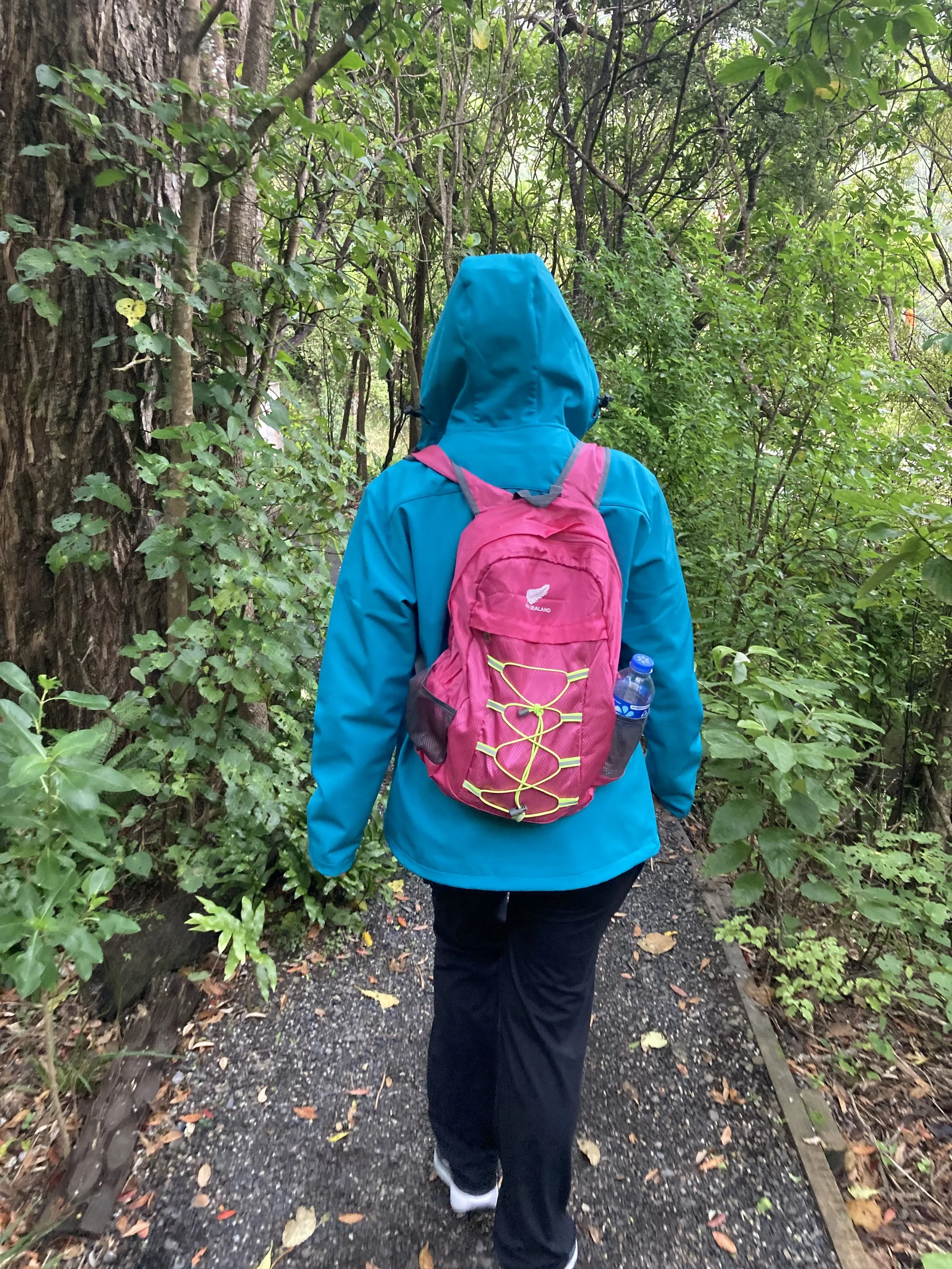
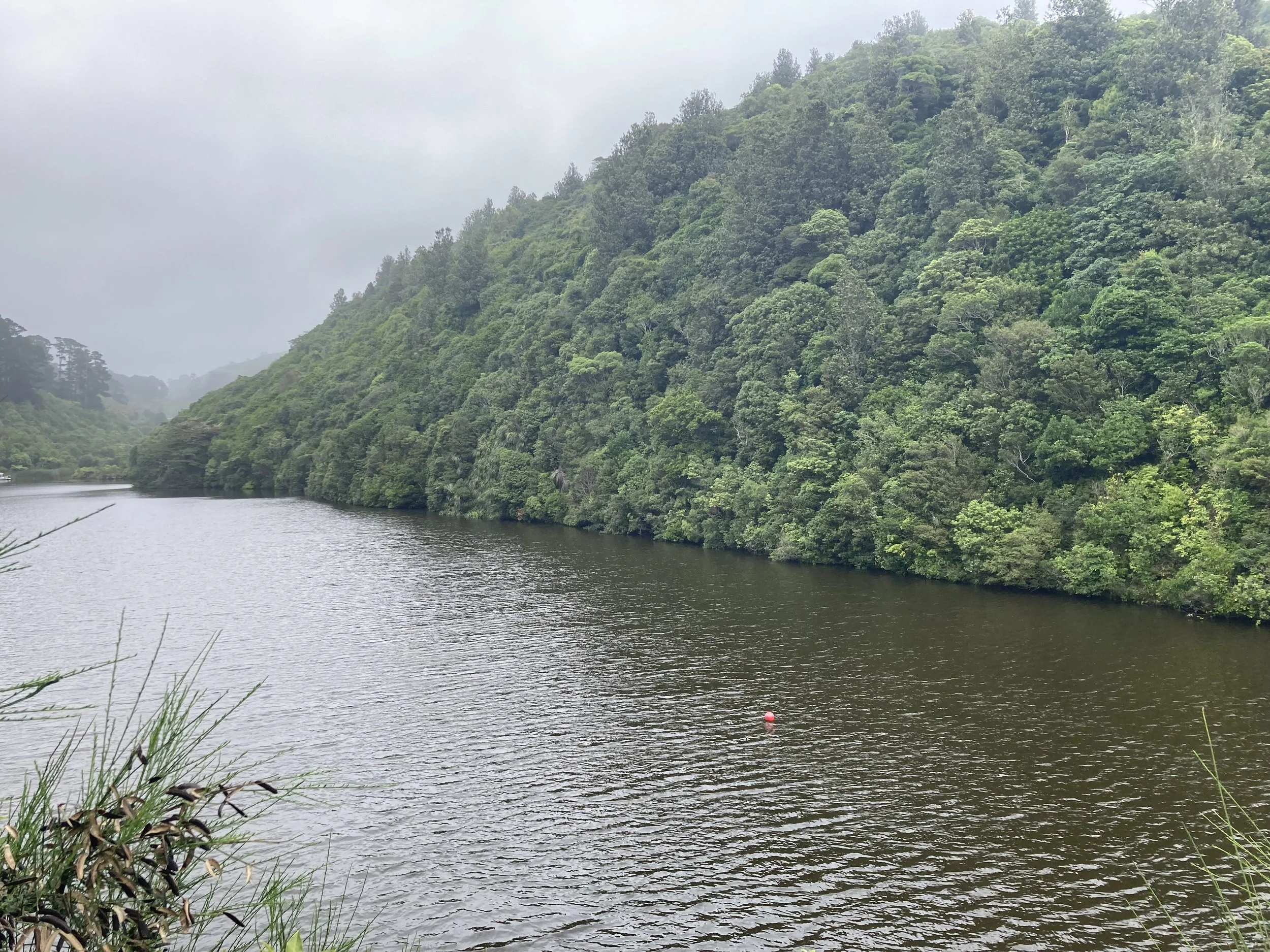
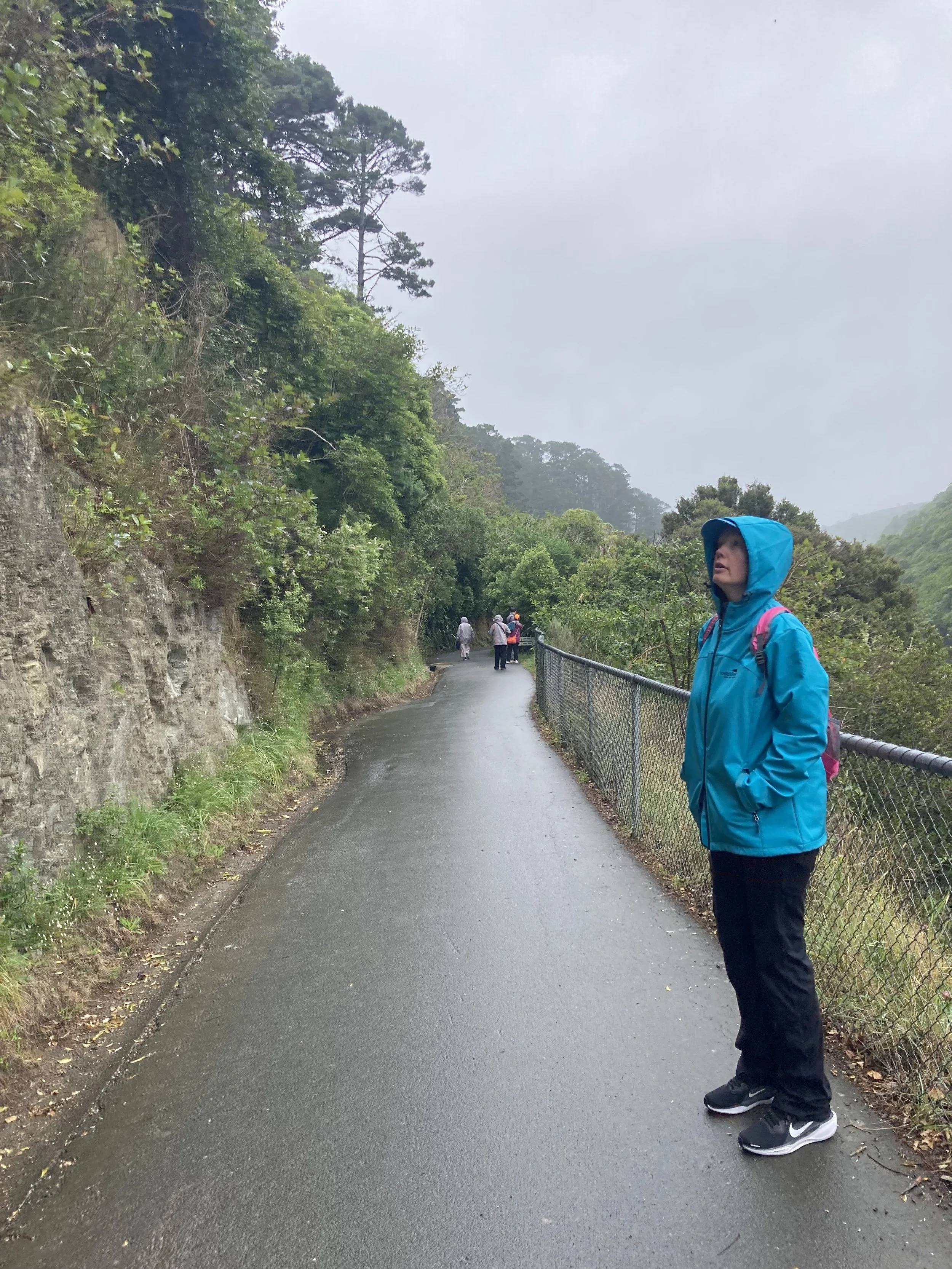
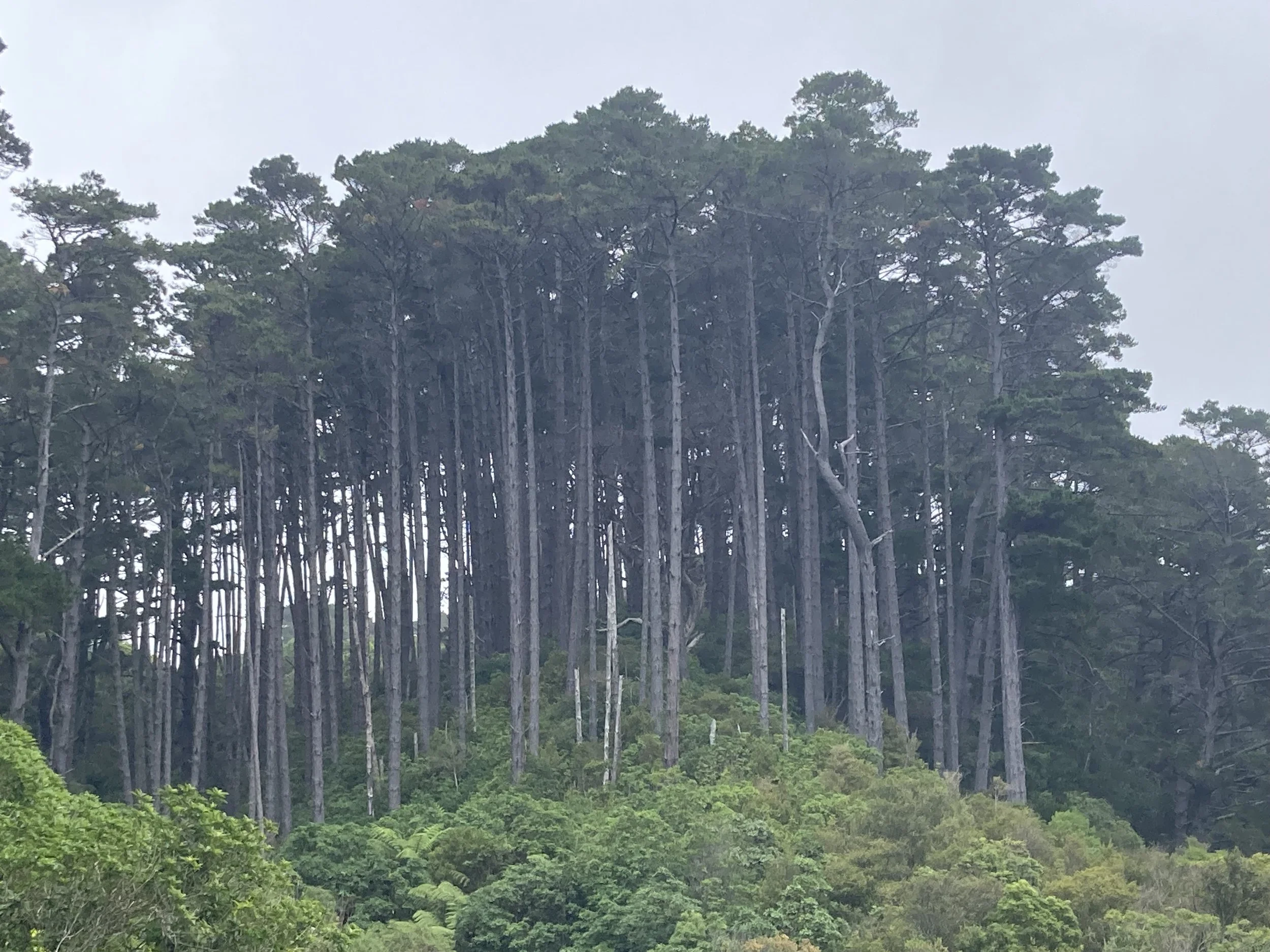
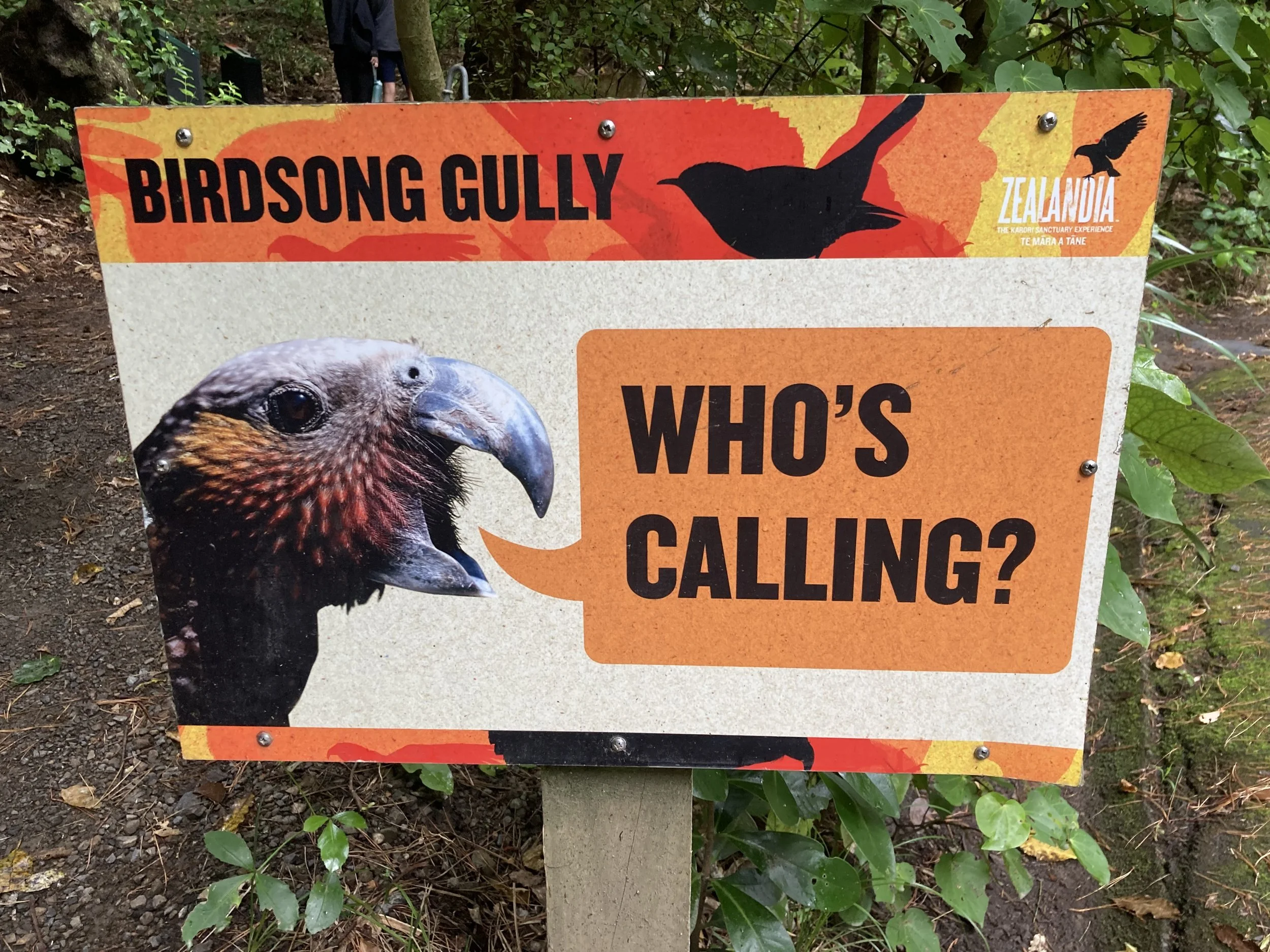
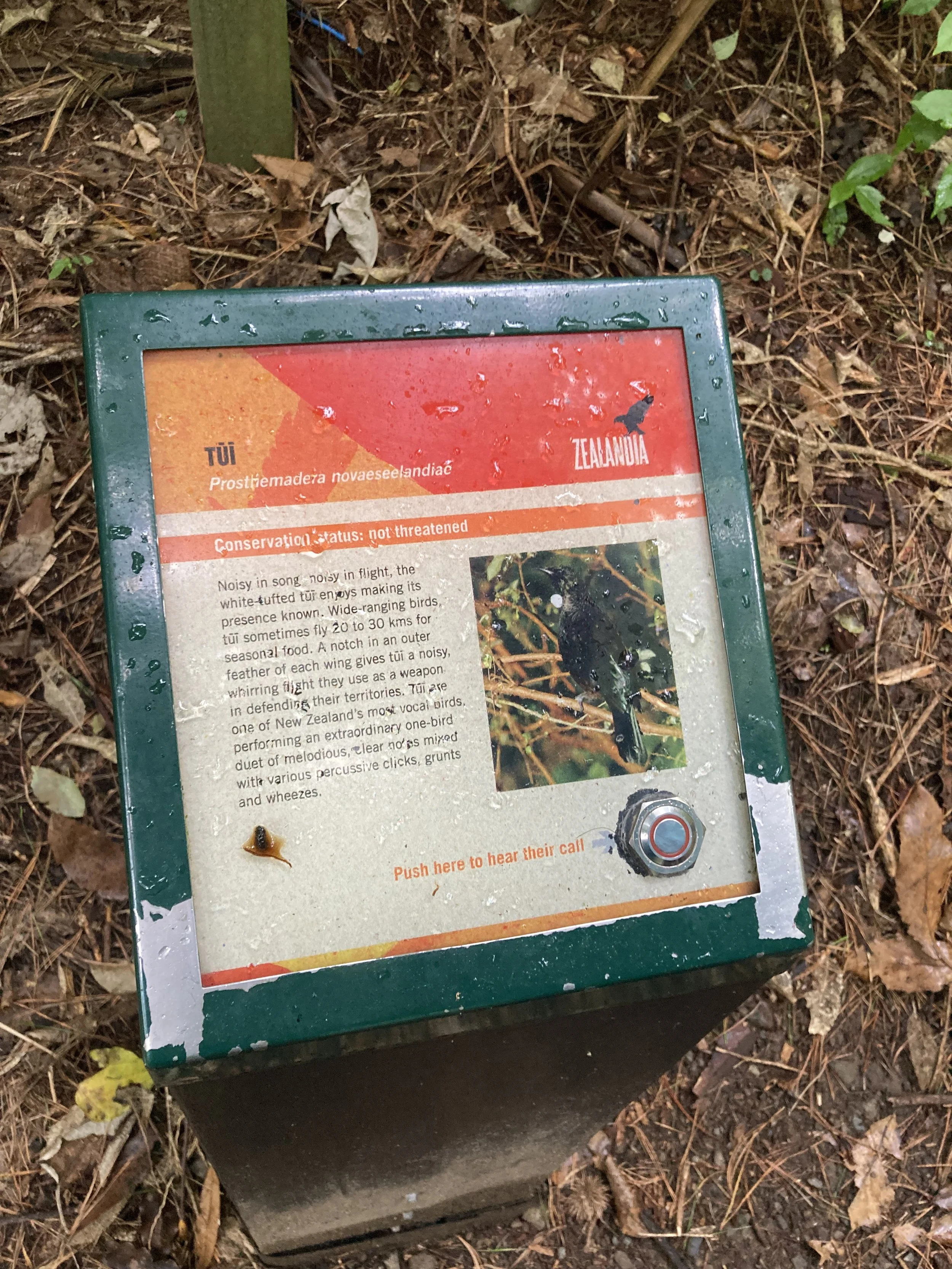
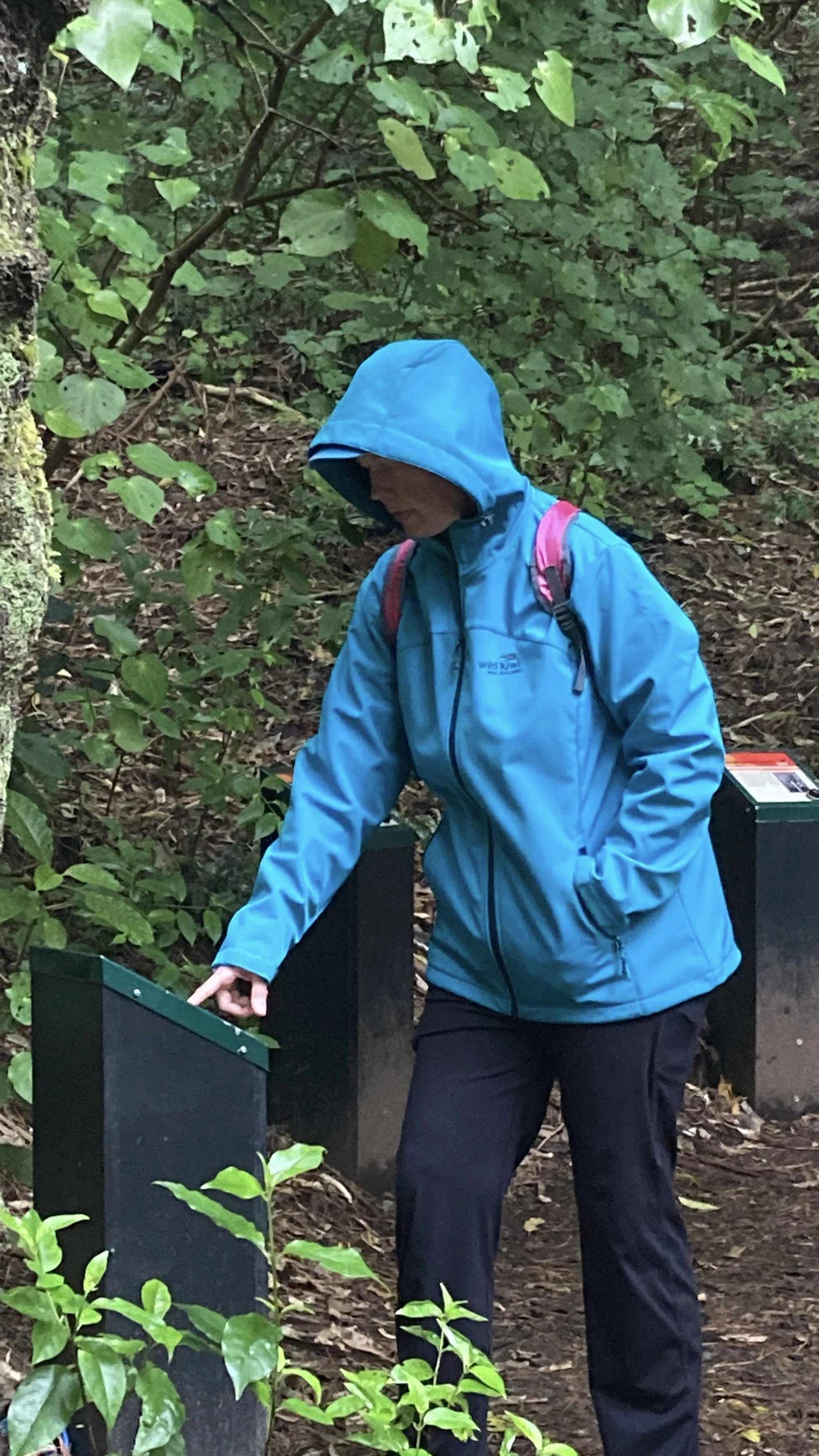
For novice birders like Elena and me, it was so cool to have pictures of birds in the area with a button you could press to make the bird call sounds. Sometimes, the birds would answer in response. Either way, it was helpful just knowing “Oh, THAT is what the bird making this sound looks like!” I’m kicking myself that I didn’t update my Merlyn Bird Id App before visiting.
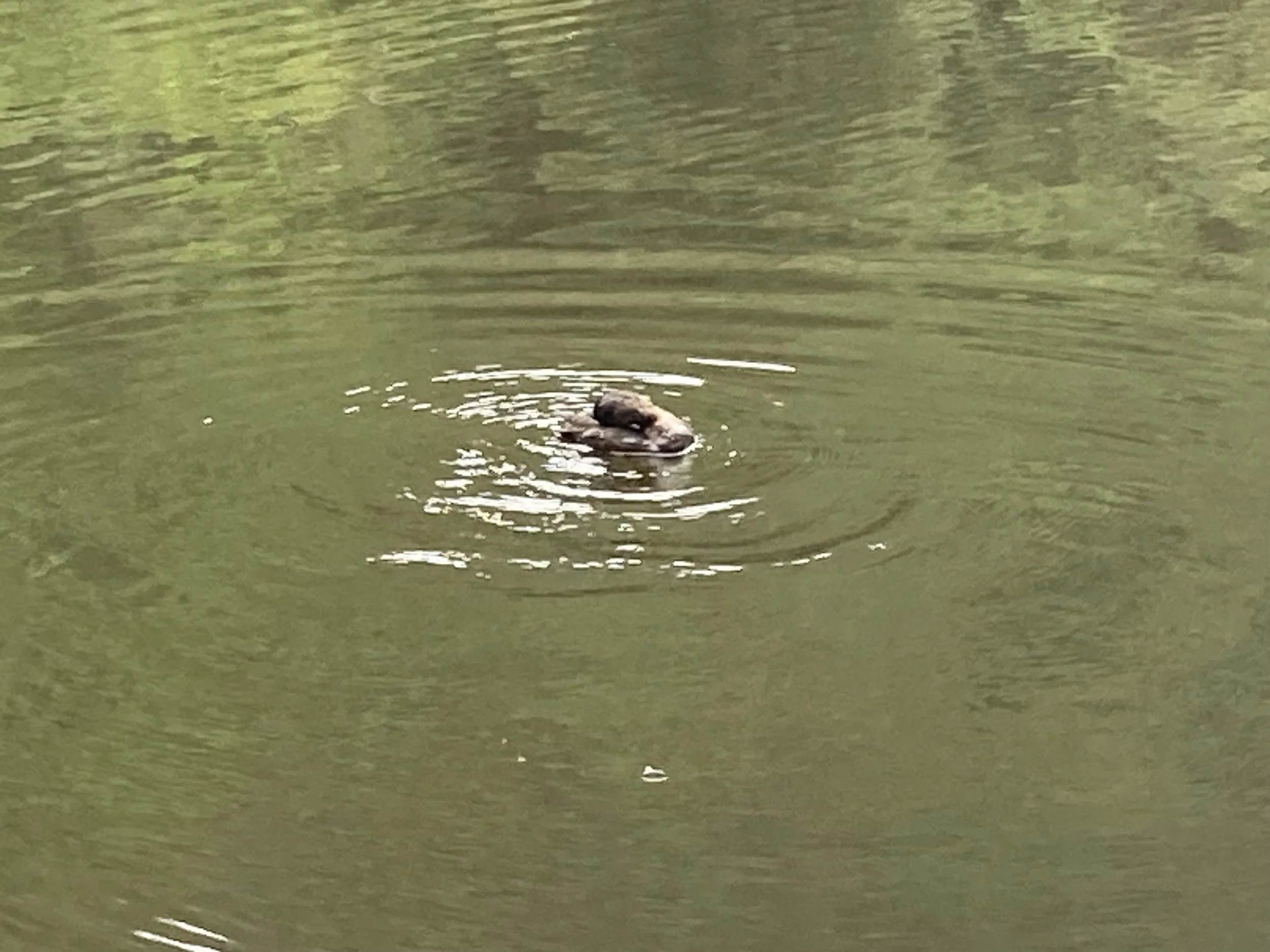
Duck about to fully submerge underwater like a submarine!
There were a few notable “wow” moments. The first was experiencing a fully submergible submarine duck. For the first time in our lives, Elena and I witnessed ducks that would bend down, then disappear all the way into the lake. You’d see a few bubbles, then nothing … for a very long time. The duck would invariably pop up 15 to 20 feet away from the point where it began to submerge itself. It was wild. I tried taking a video, but all I could do is show the duck disappear underwater. I never knew where it would pop-up some 60 or so seconds later.
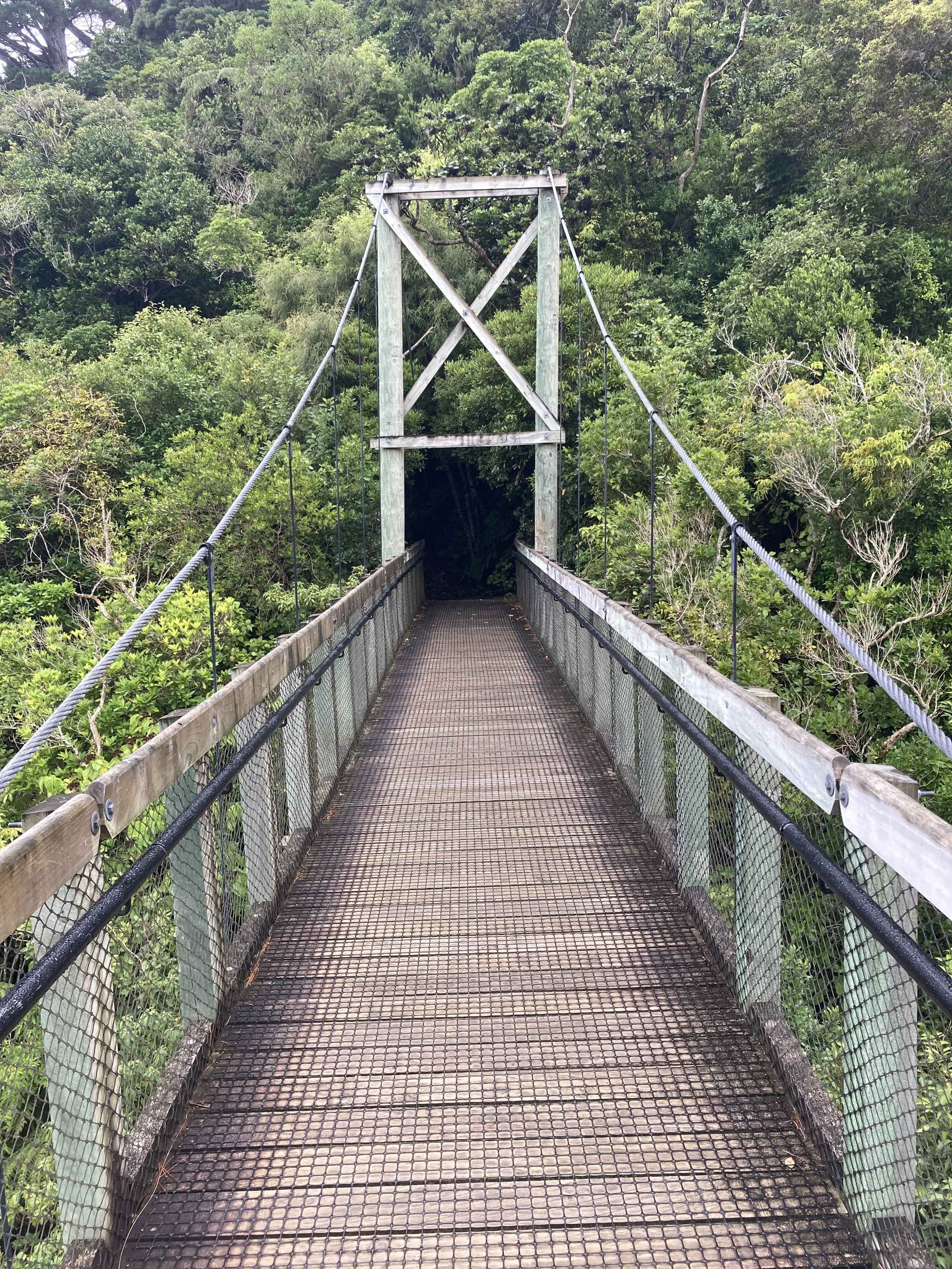
Giant suspension bridge above the canopy of the park
Next was the suspension bridge. This was near the top so that you could see the canopy where all the birds were flying from one side of one mountain to the other side of another mountain.
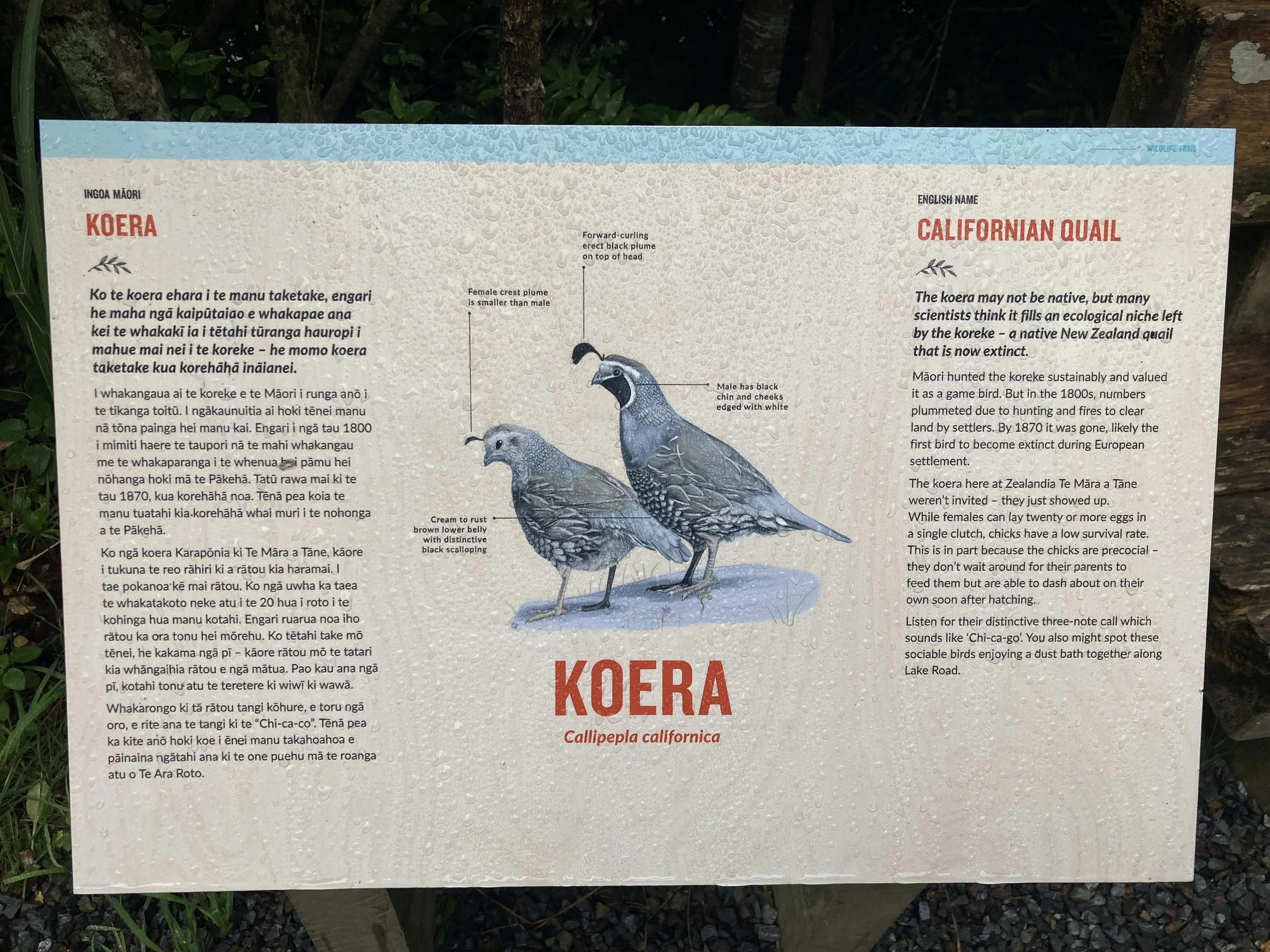
The Northern California Quail is considered an invasive species
My father and step-mother live in Granite Bay on “Quail Oaks Drive” named after the very bird pictured above. I thought that was cool – even if this particular bird was considered an invasive species as it’s not native to New Zealand (just Northern California).
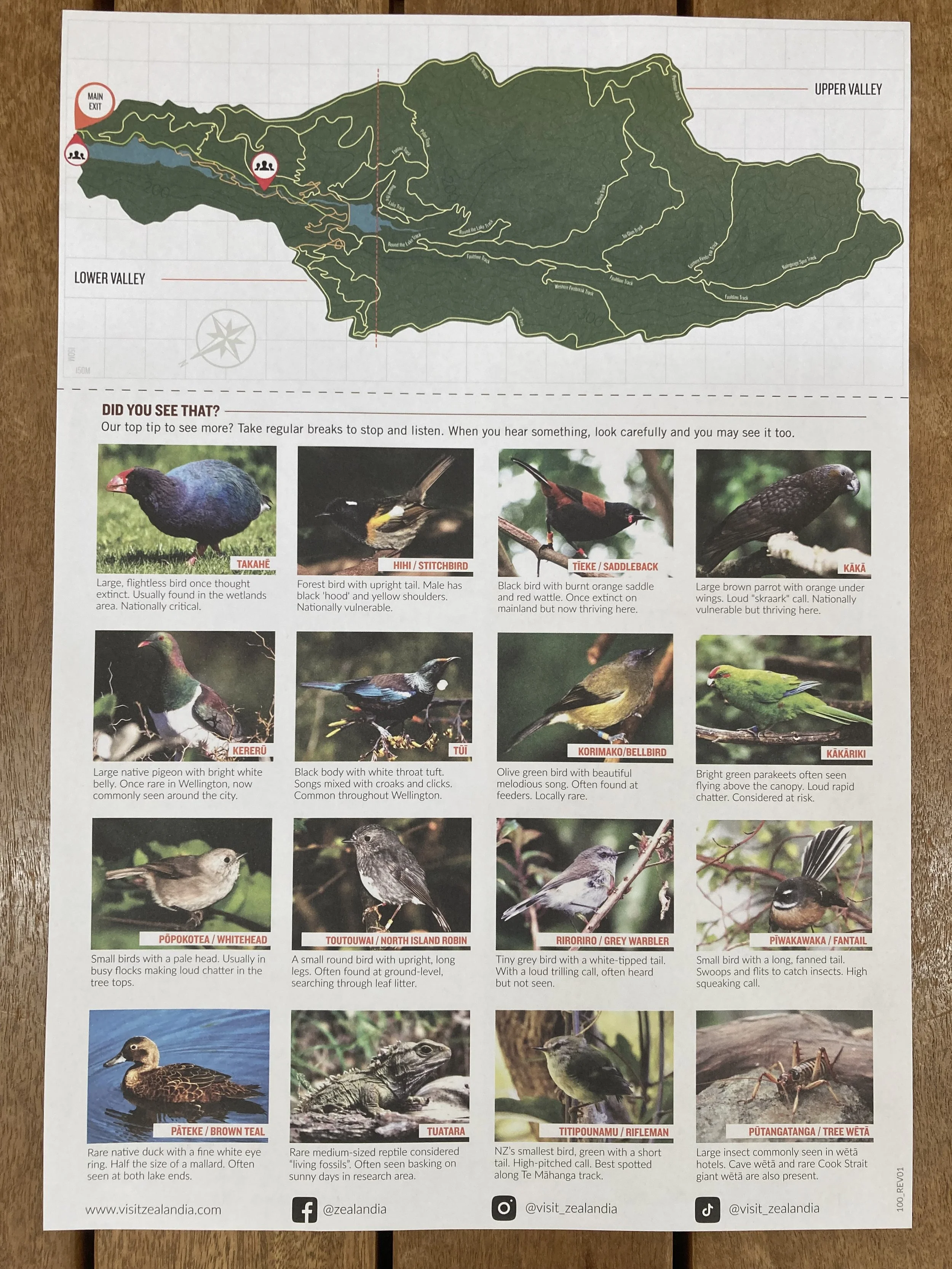
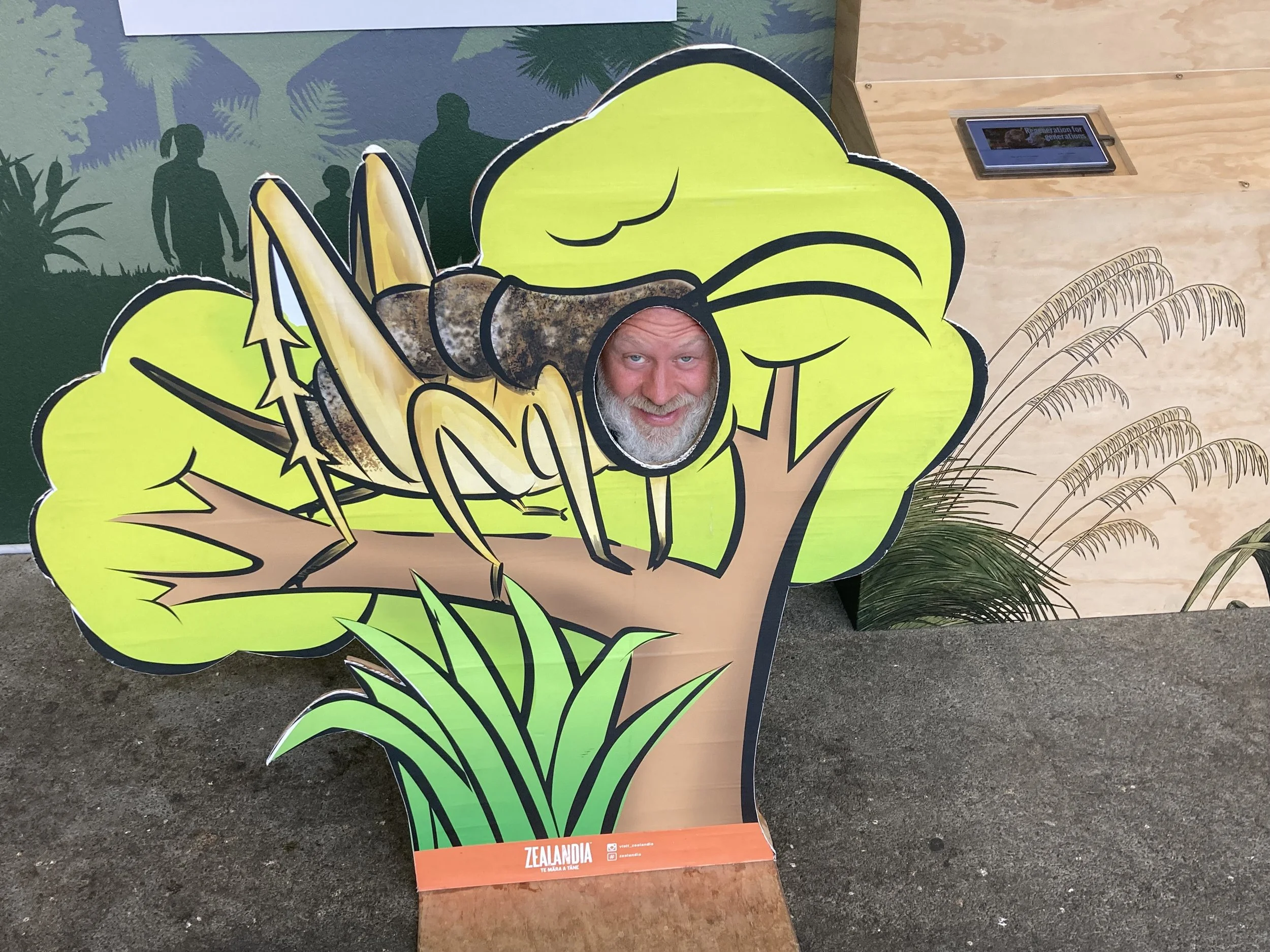
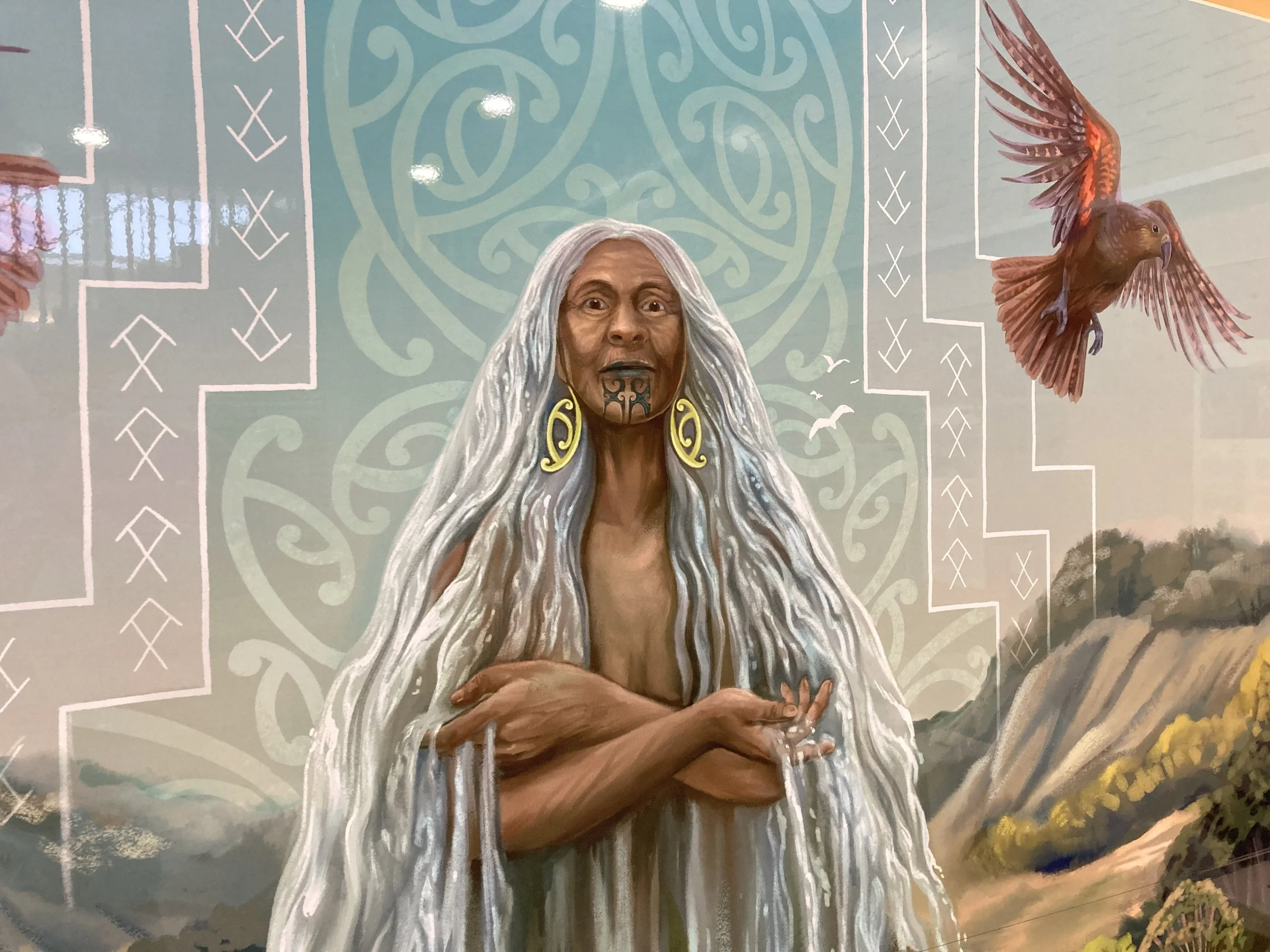
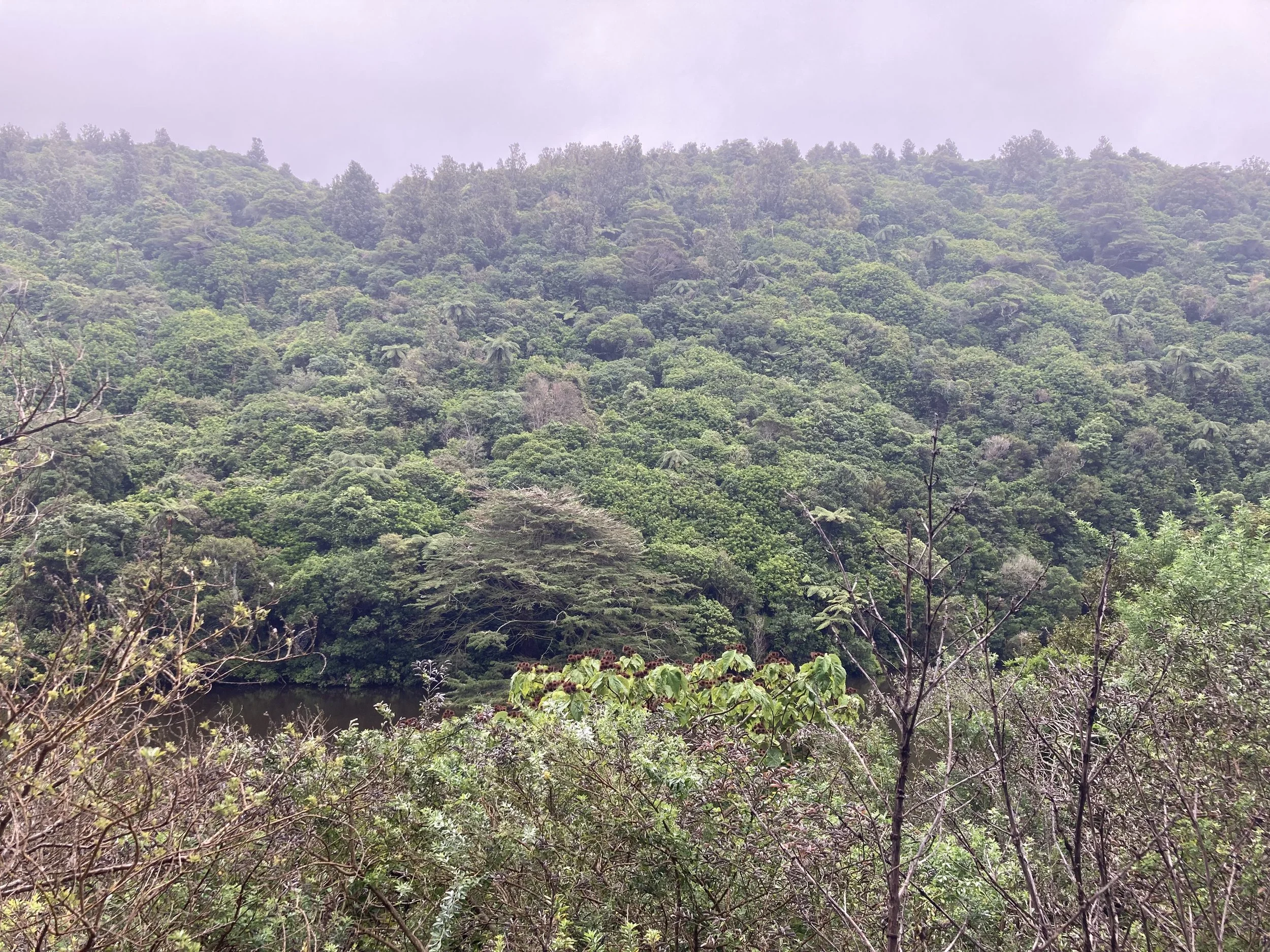
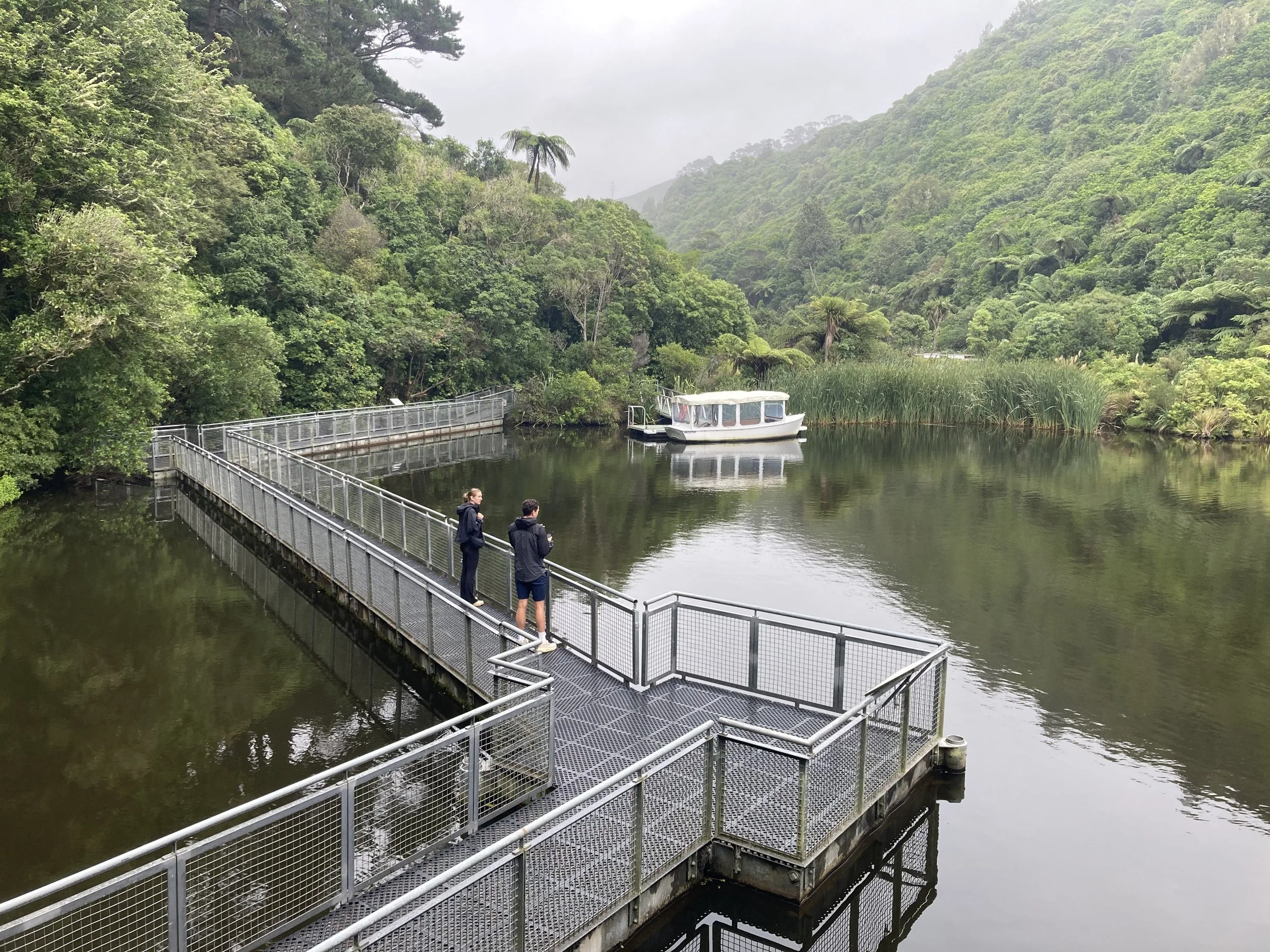
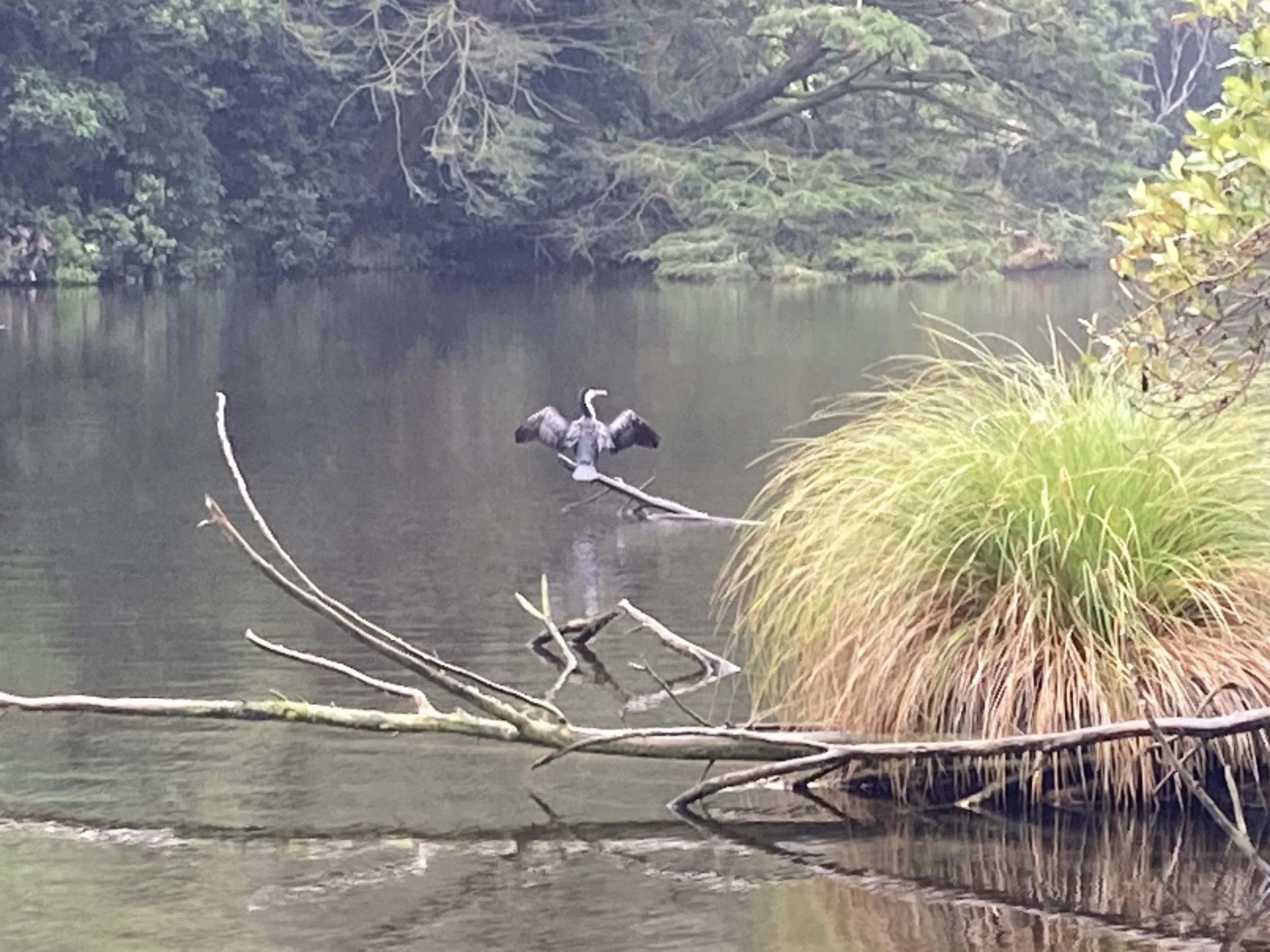
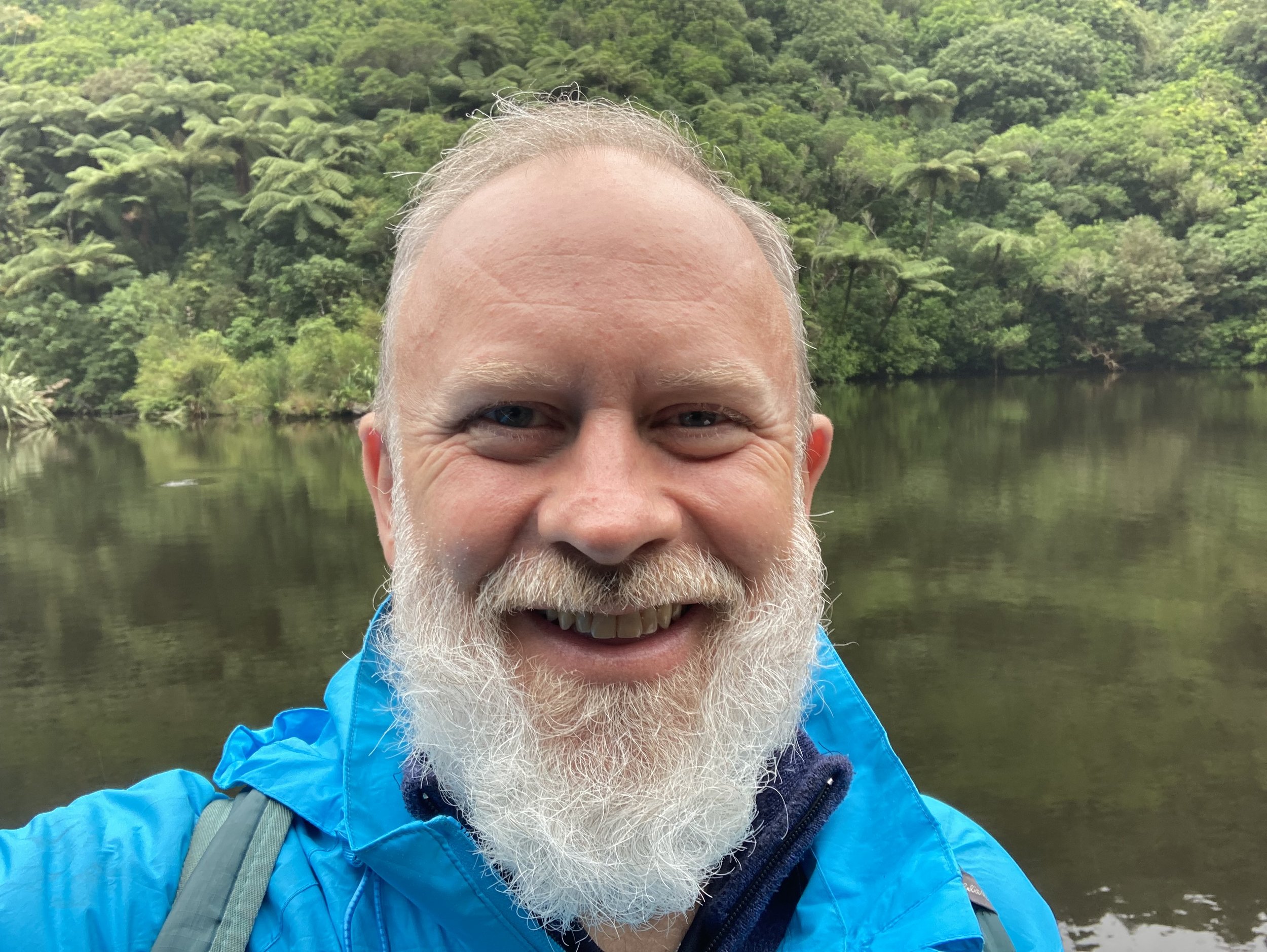
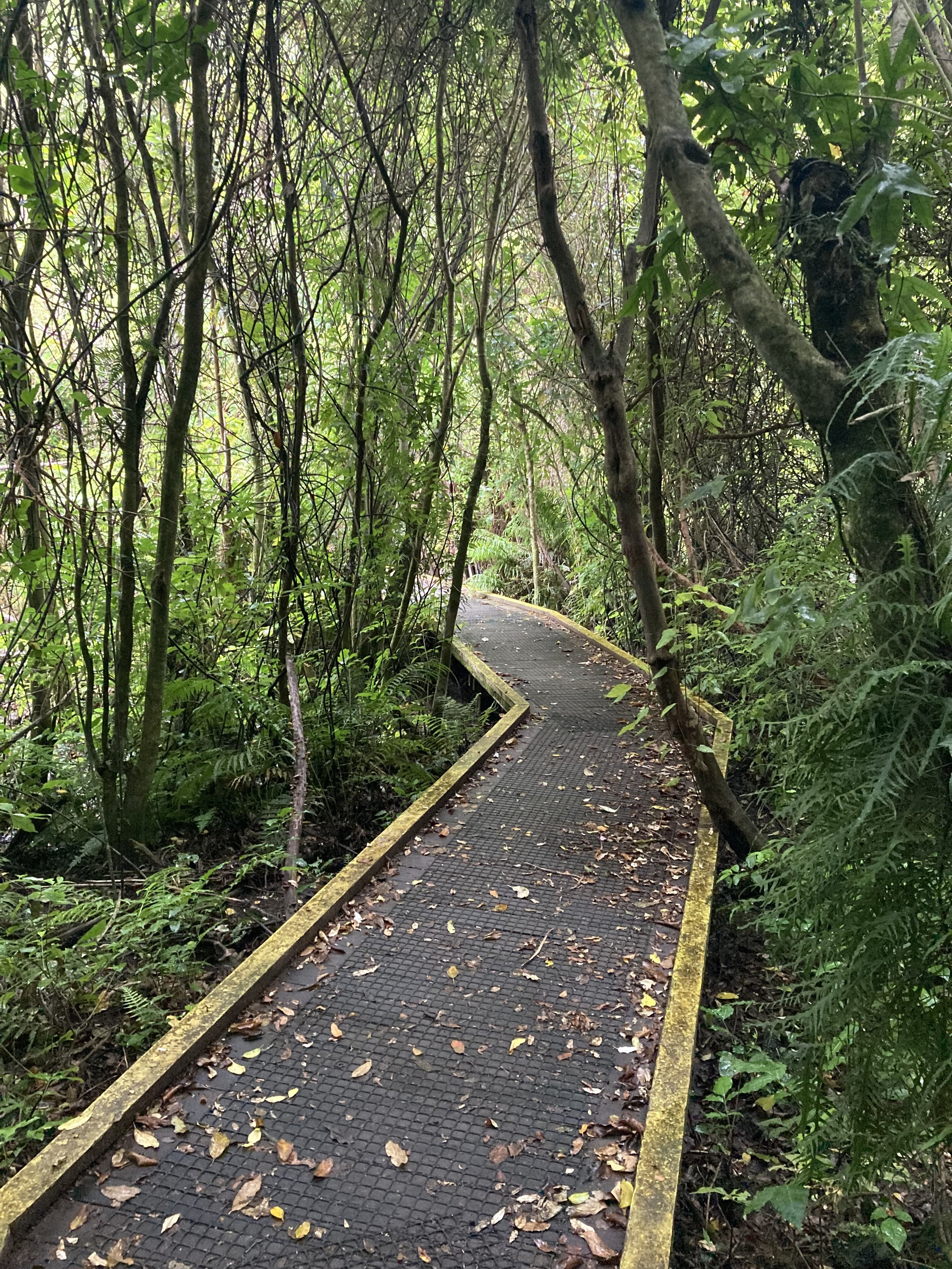
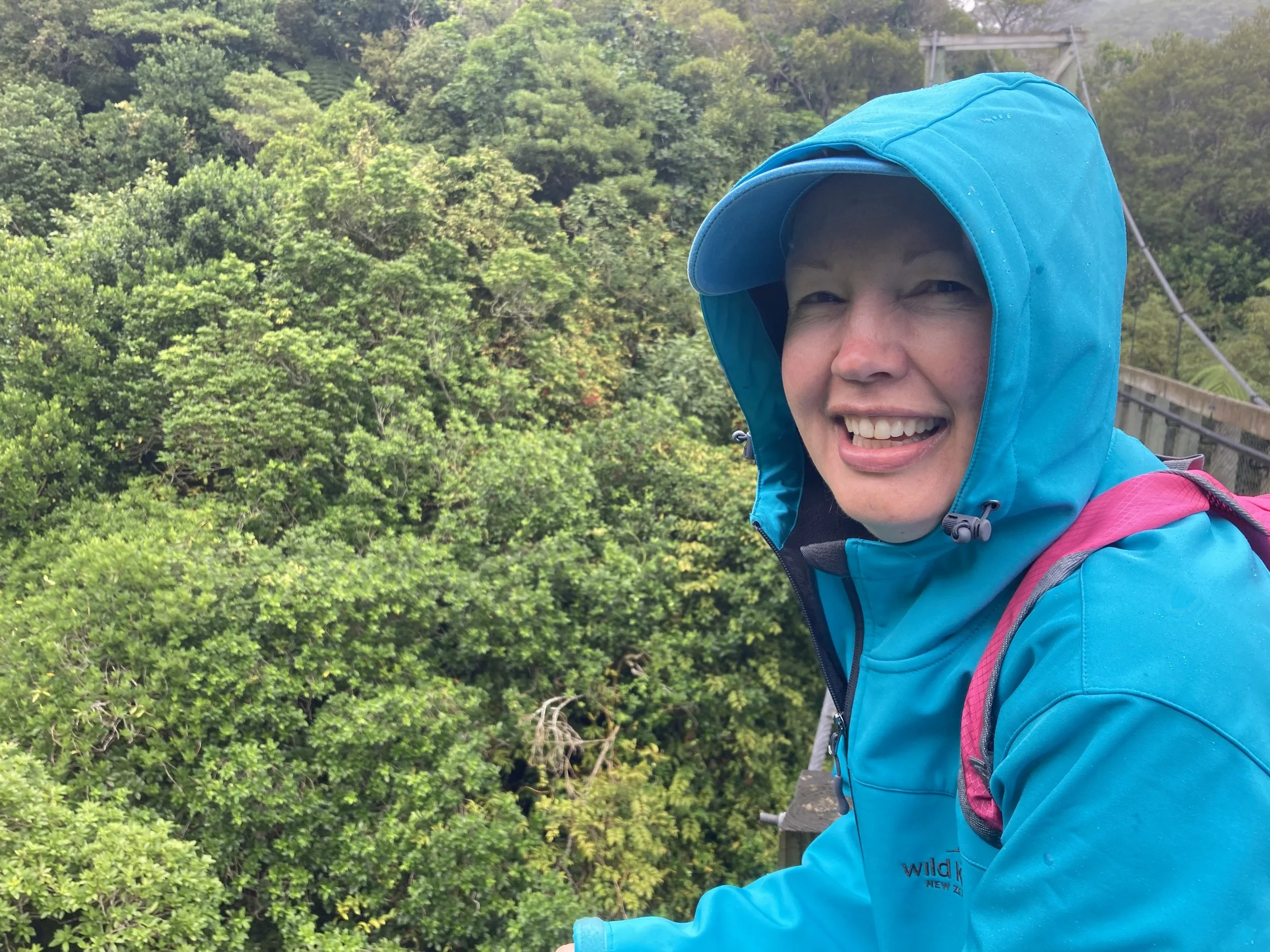
My adventure with Violet was about taking the off-the-beaten-path trails that would have us end up several miles away from where Elena and I began our journey together. There was a wind turbine as our outer edge destination and it didn’t disappoint. Along the way we saw various exotic birds as well as colorful mushrooms and many, many cicadas. We also picked some wild blackberries by the fence line.
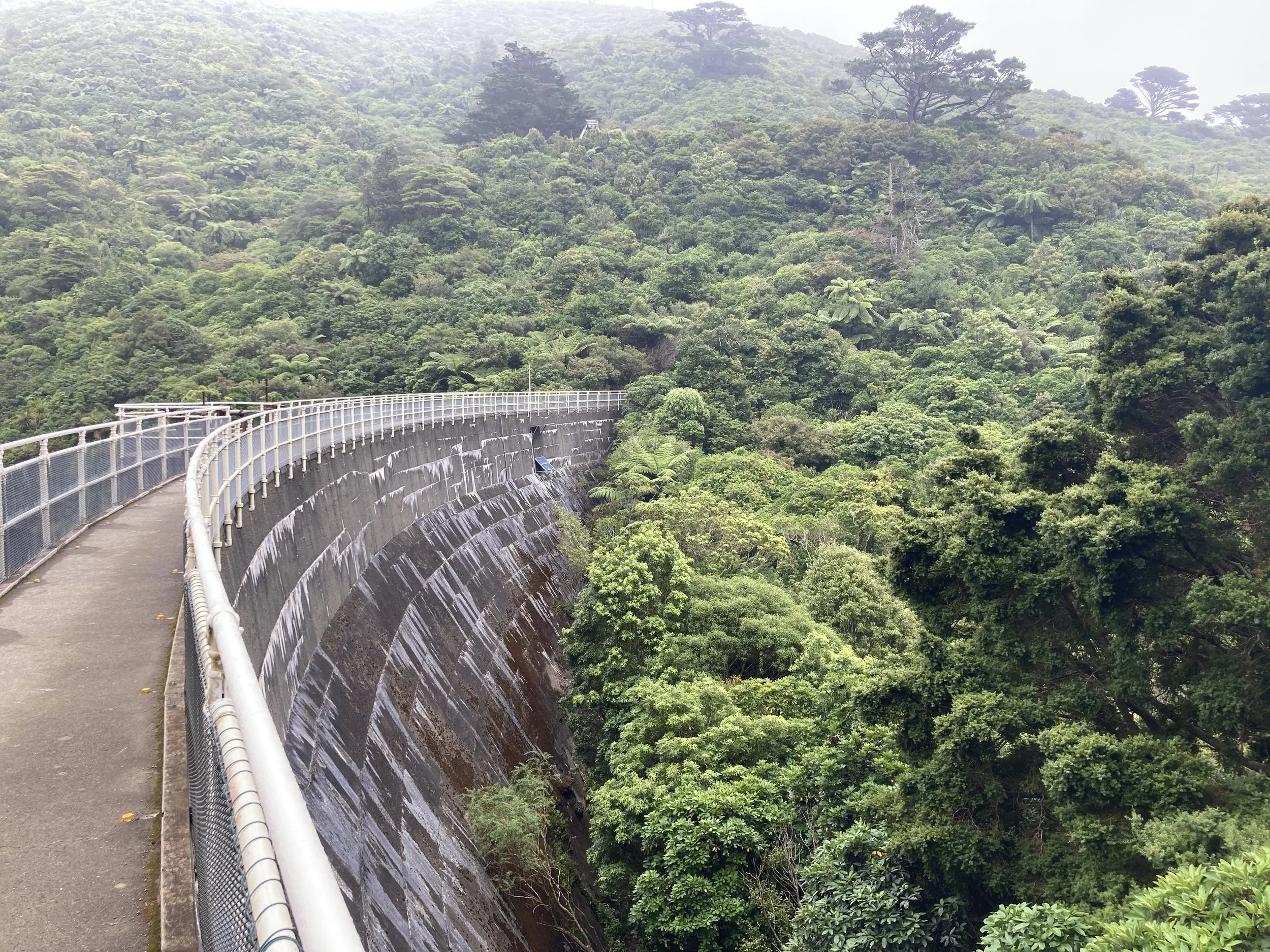
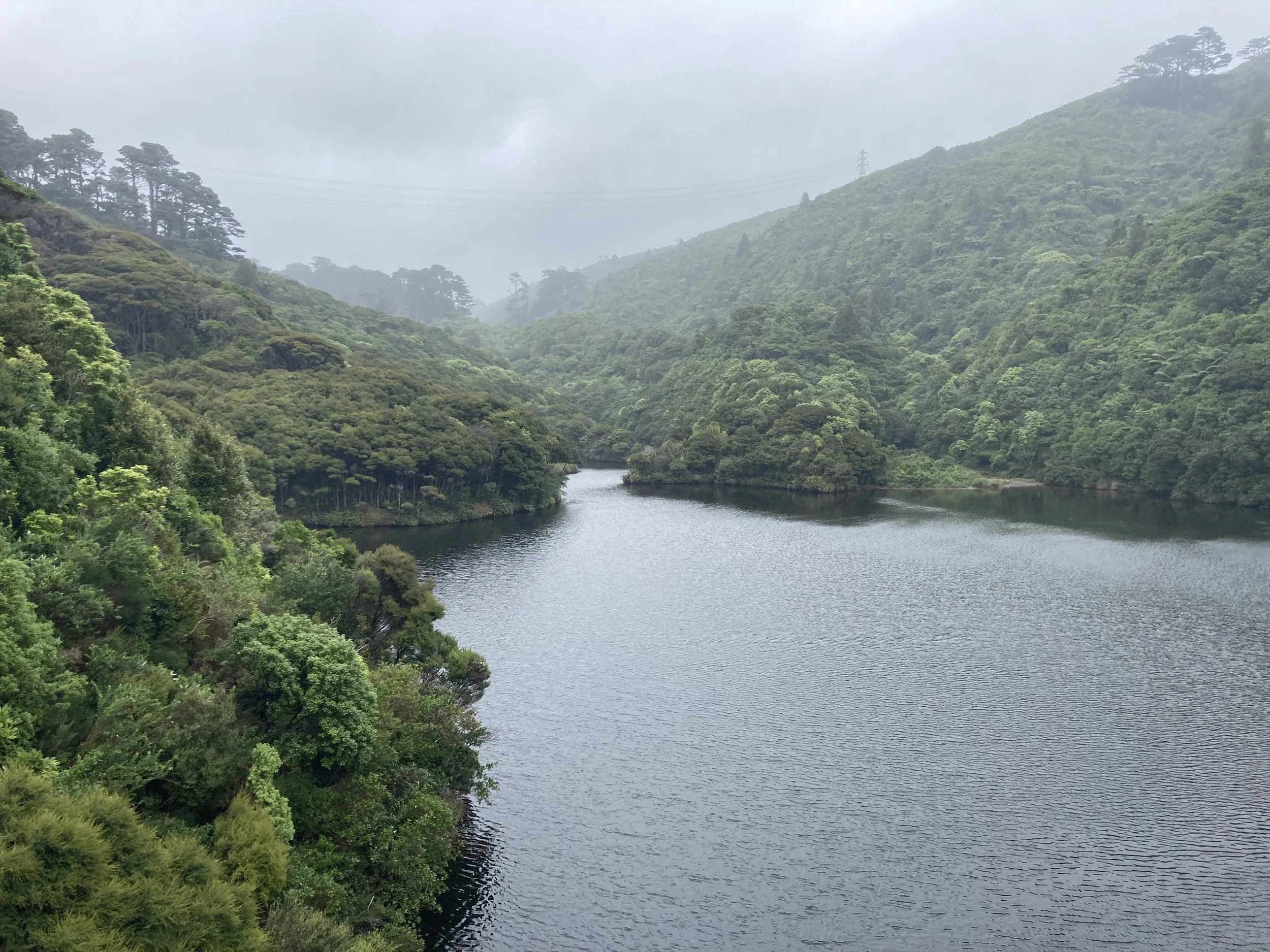
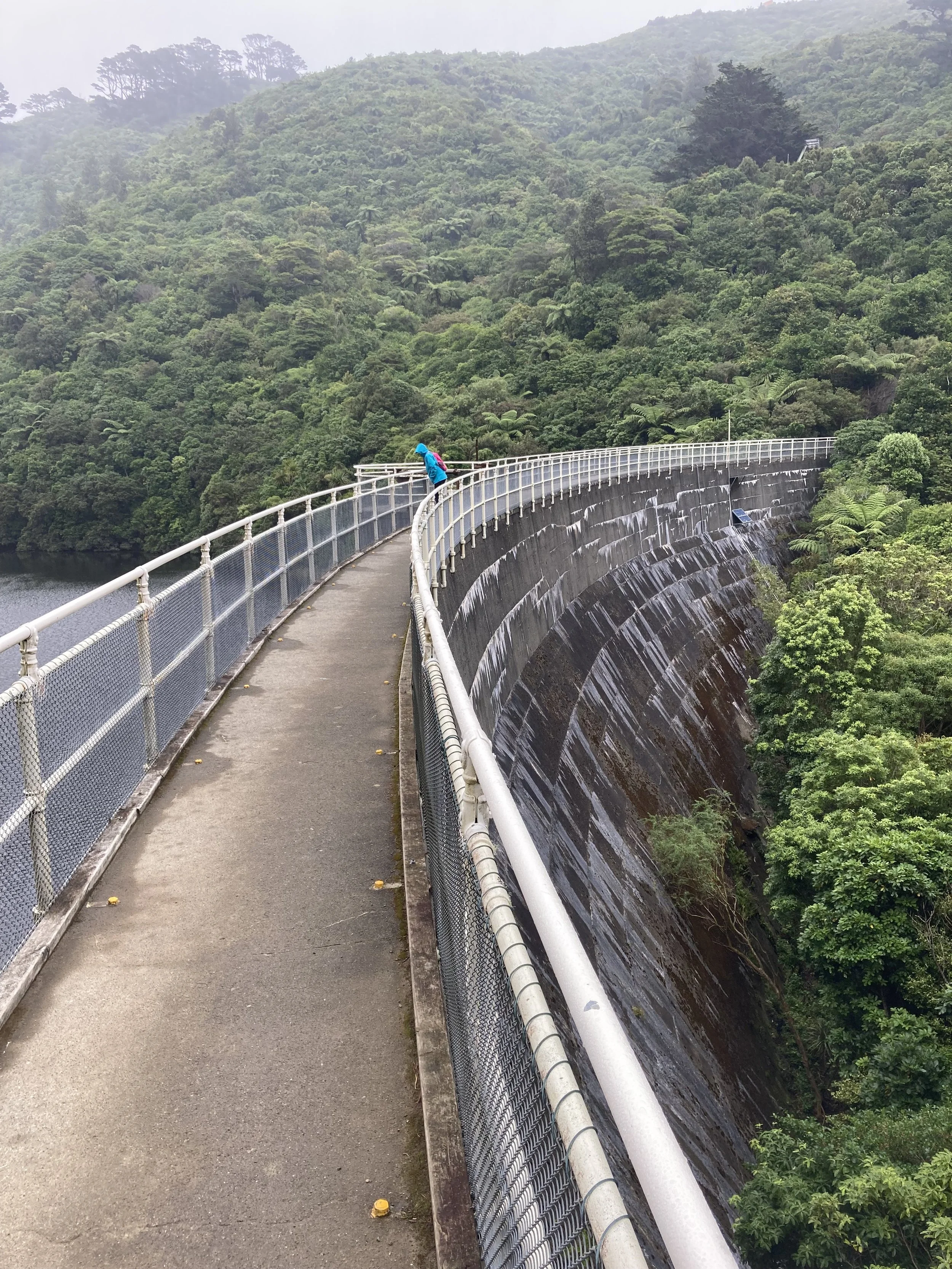
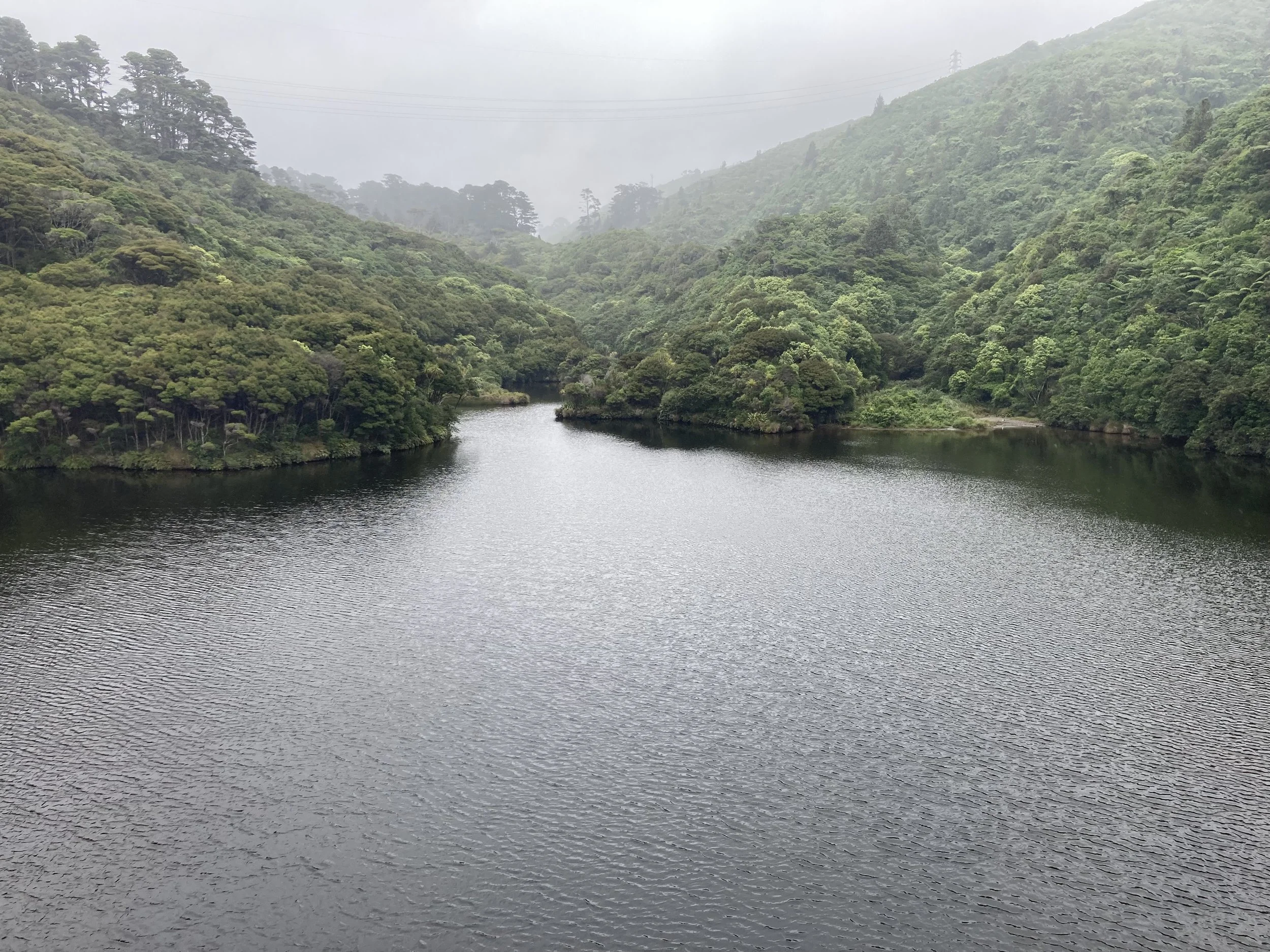
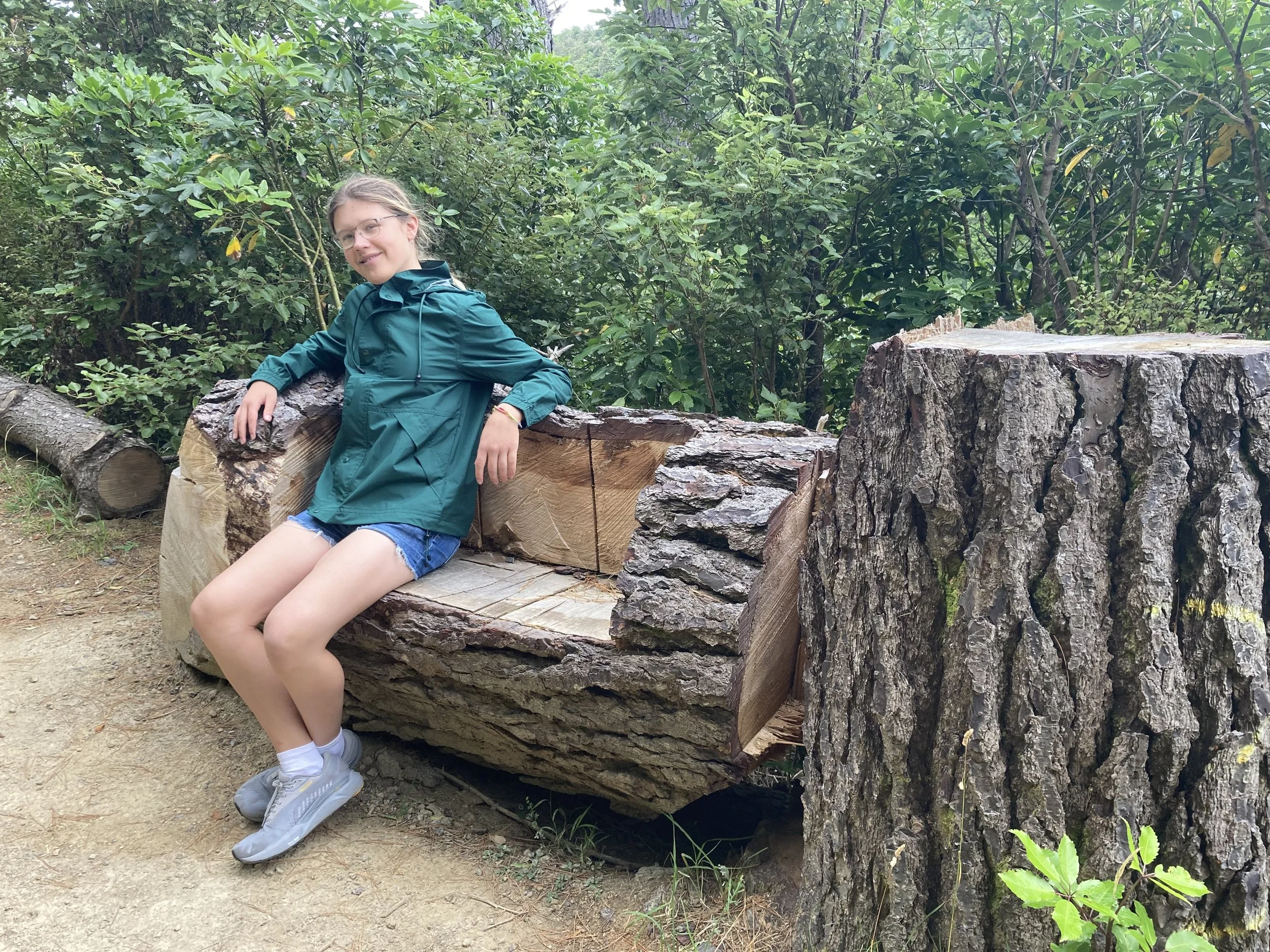
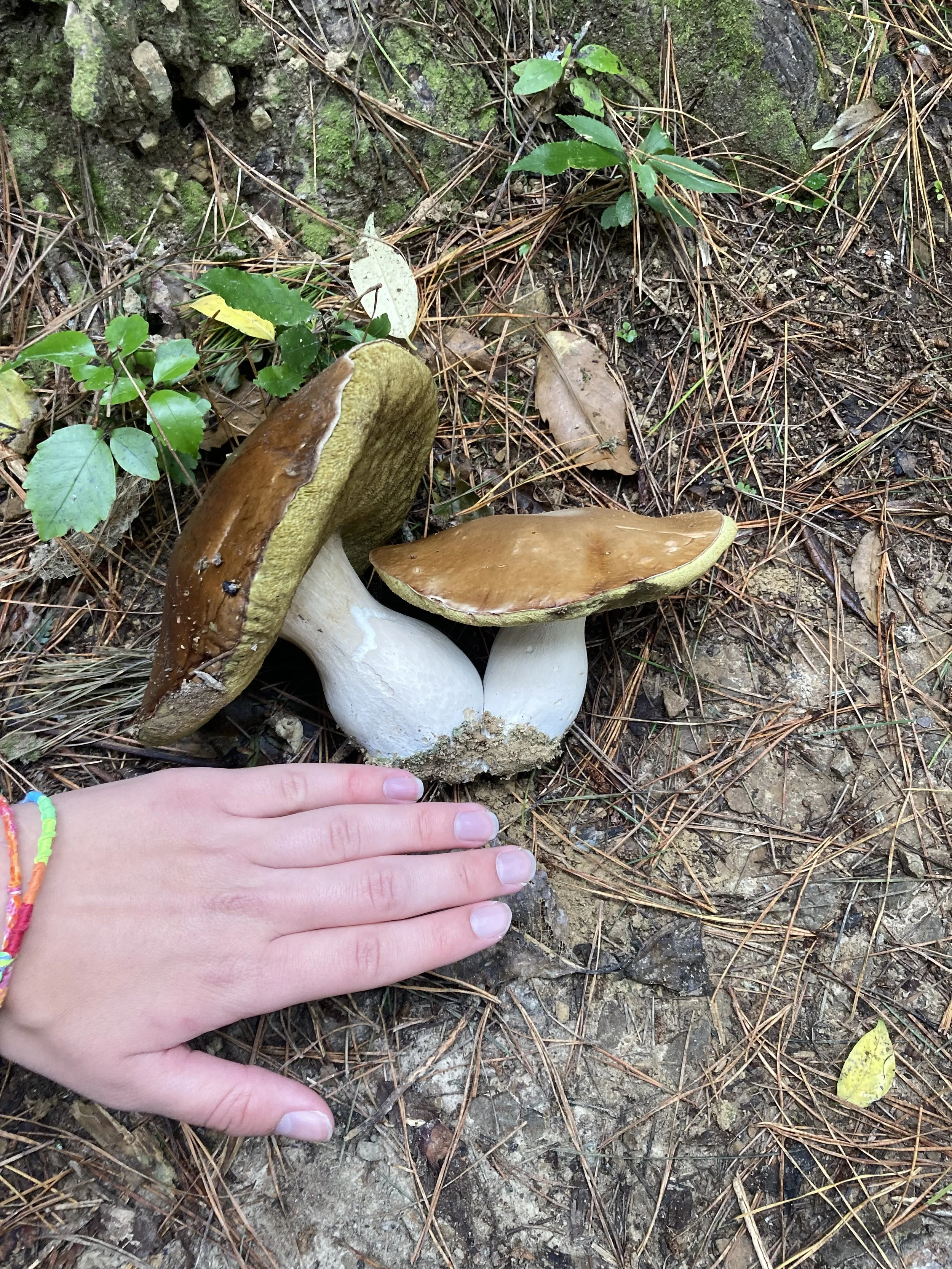
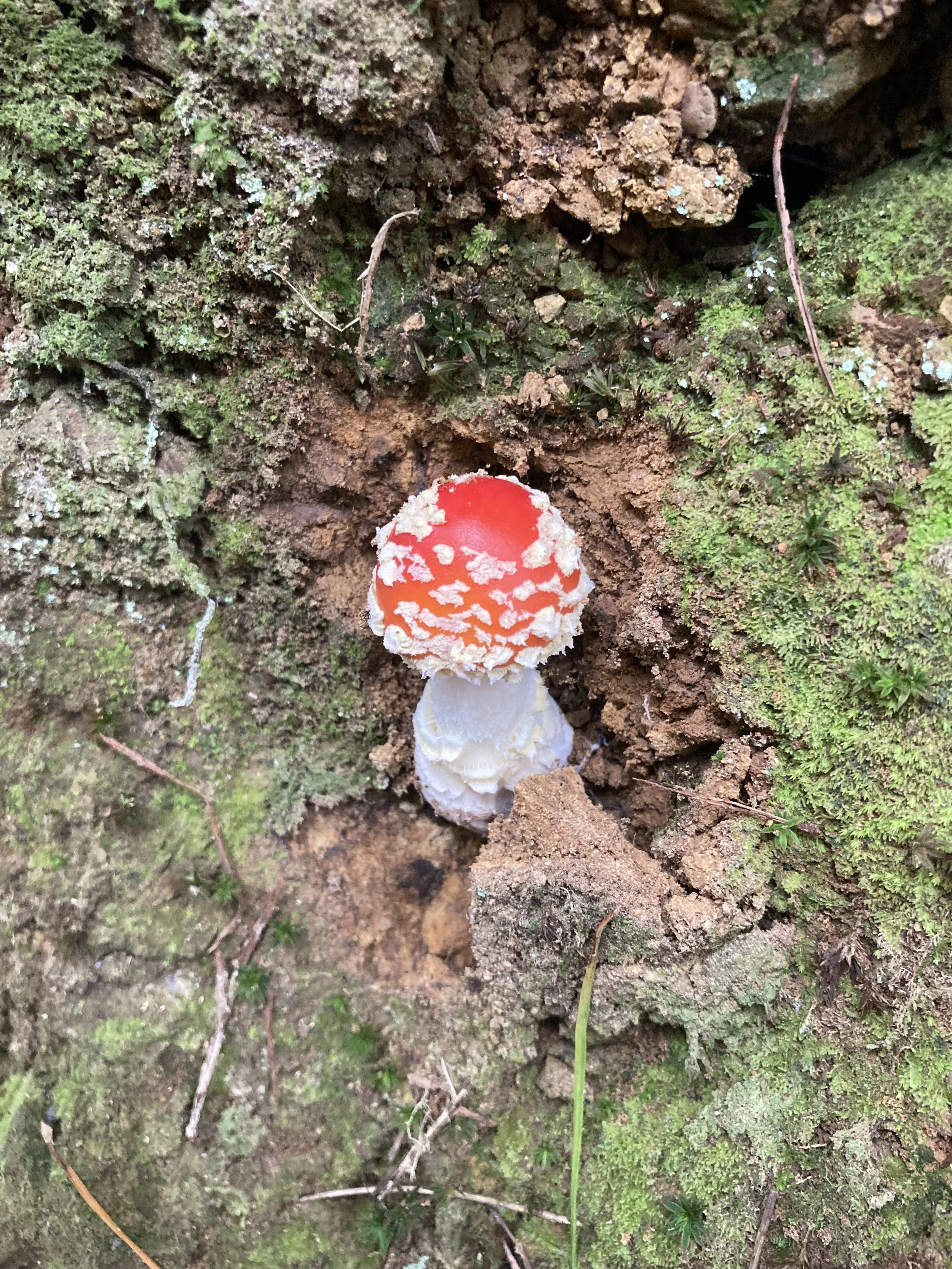
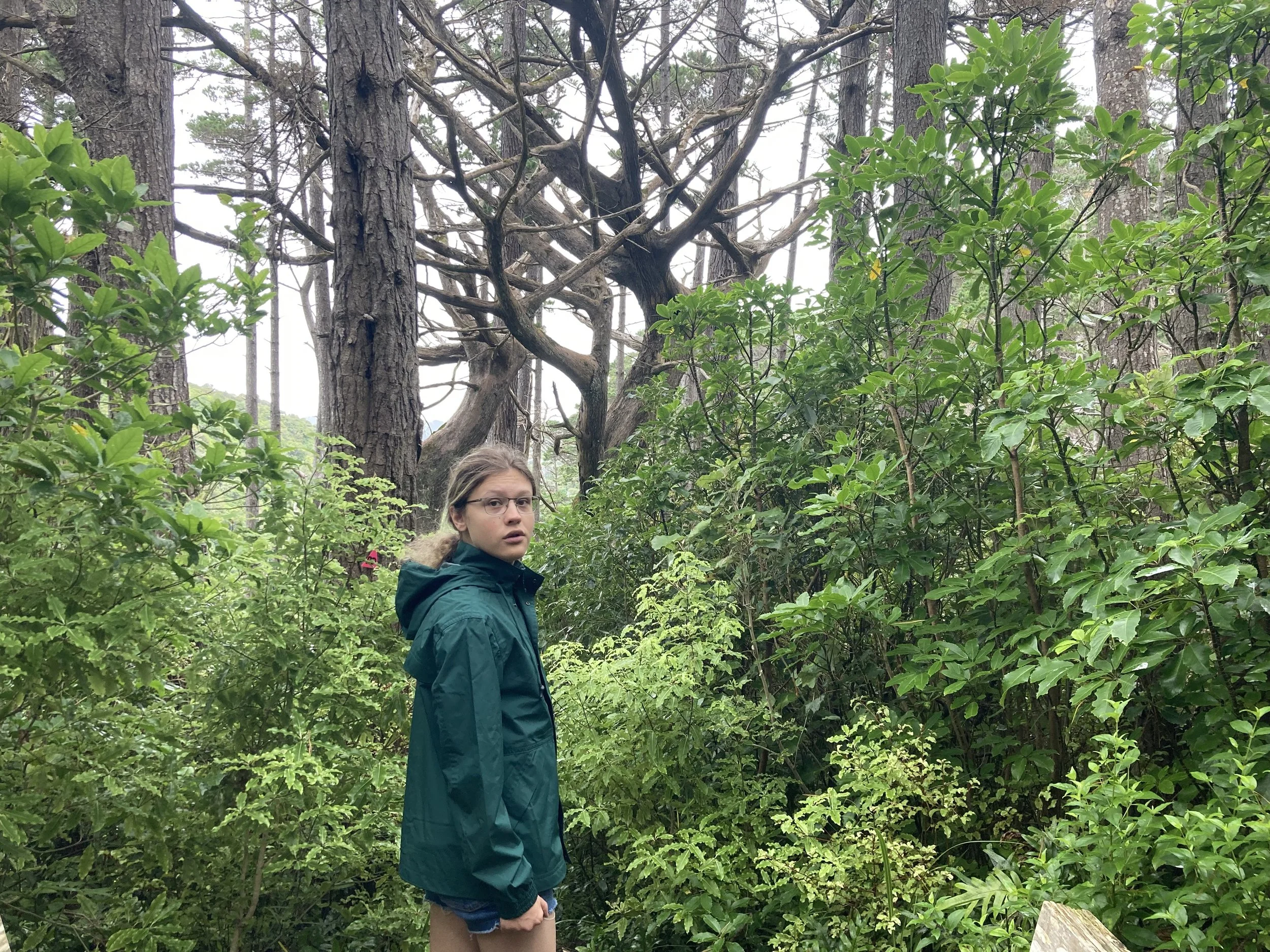
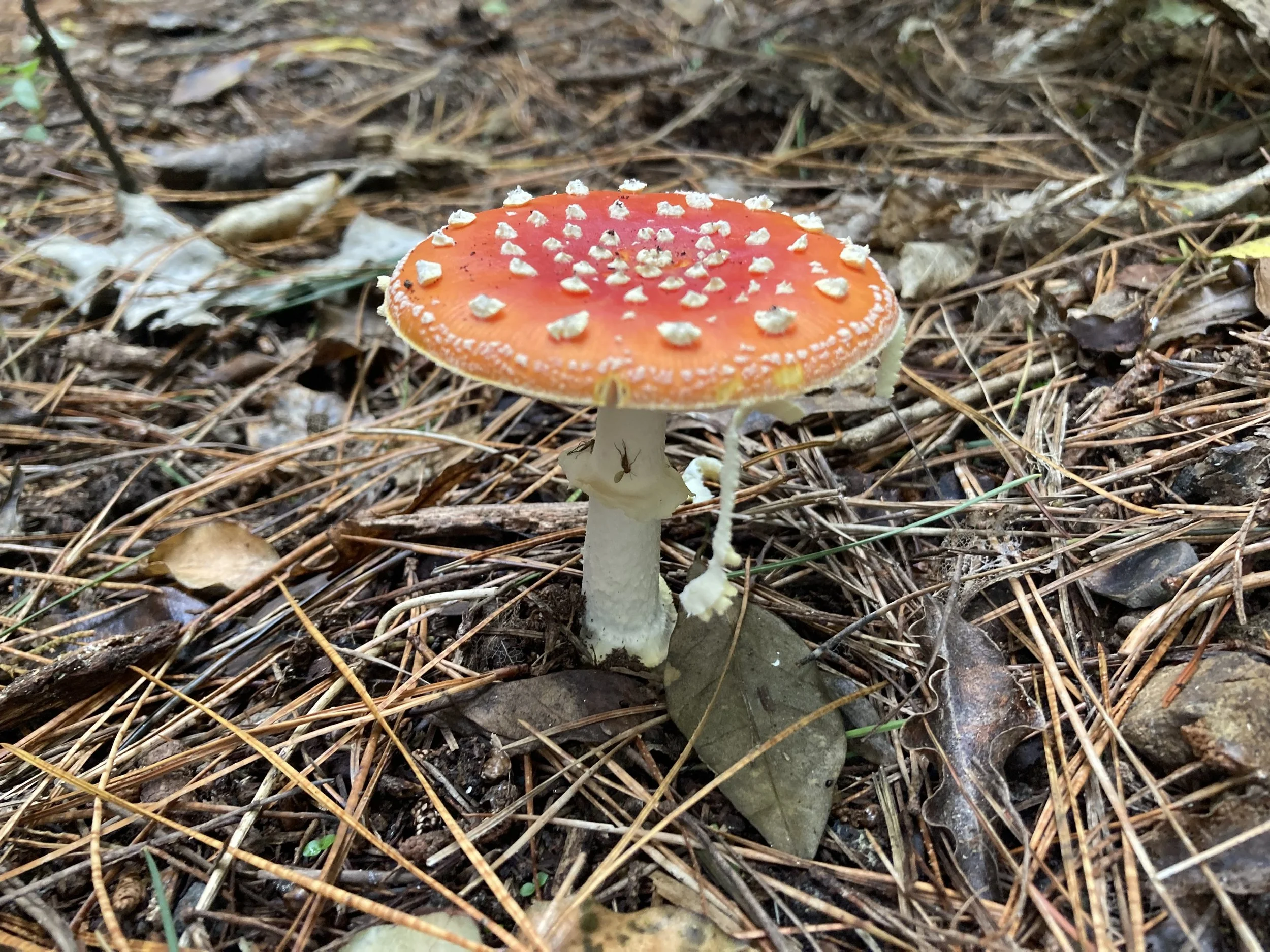
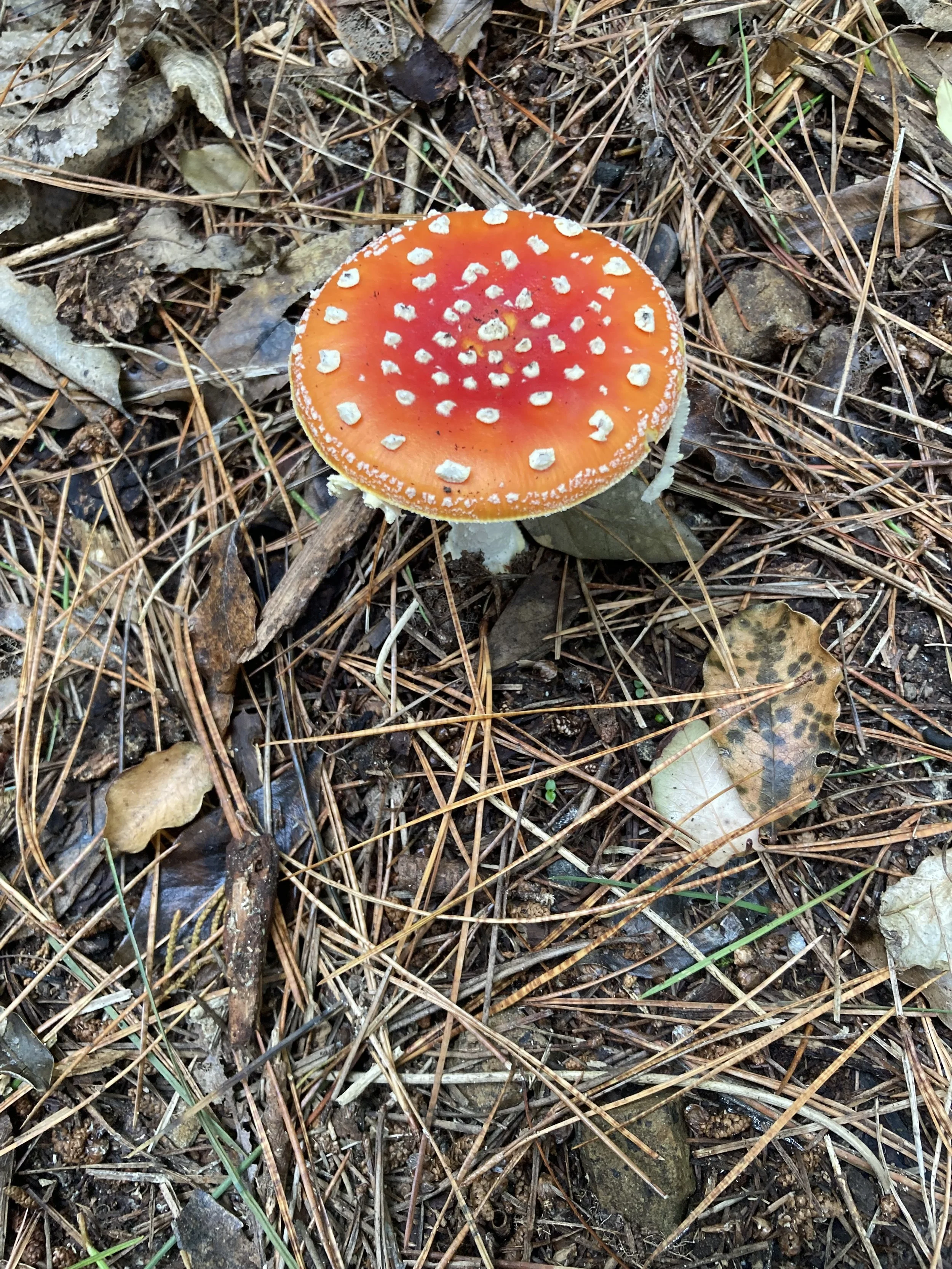
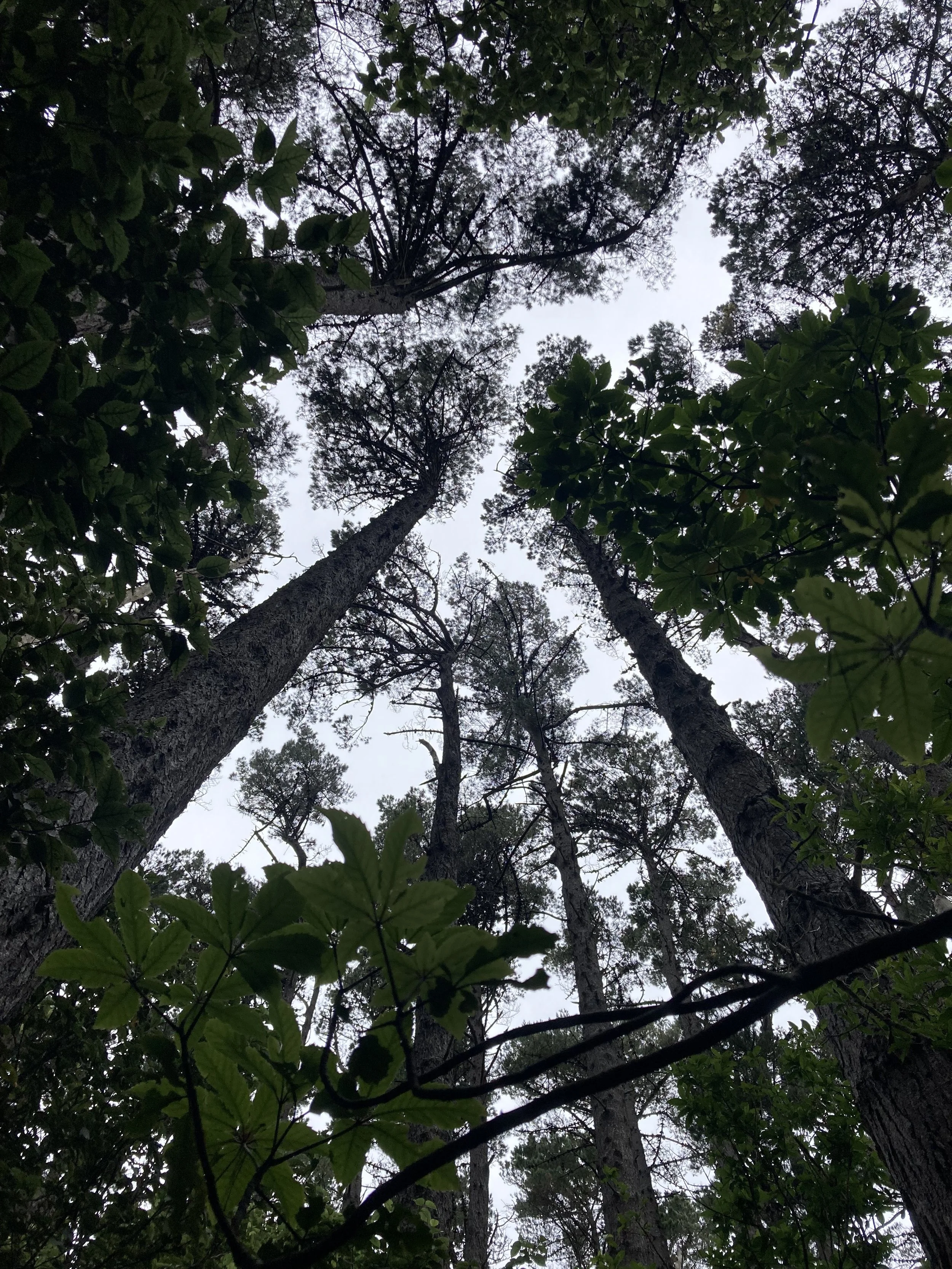
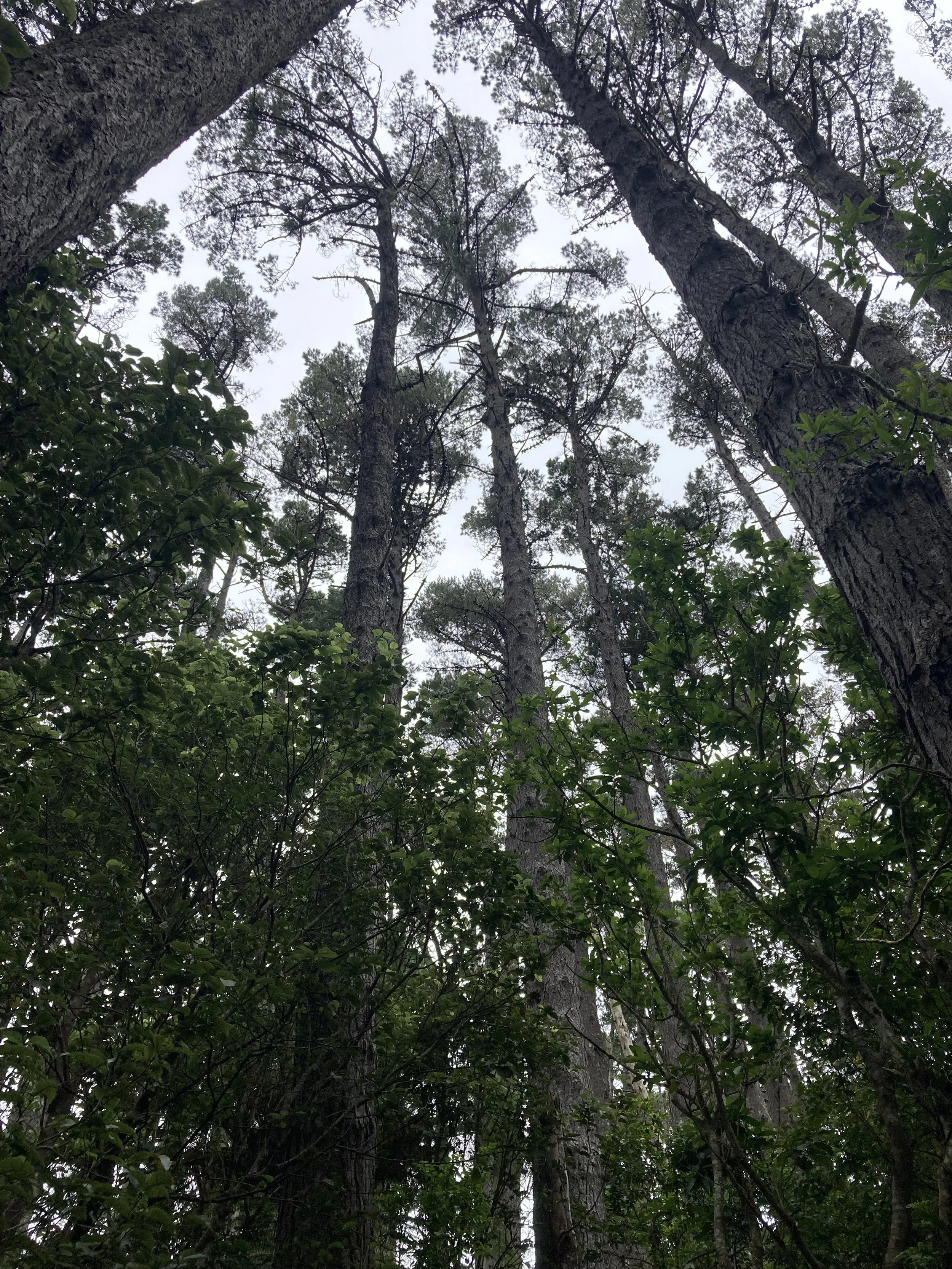
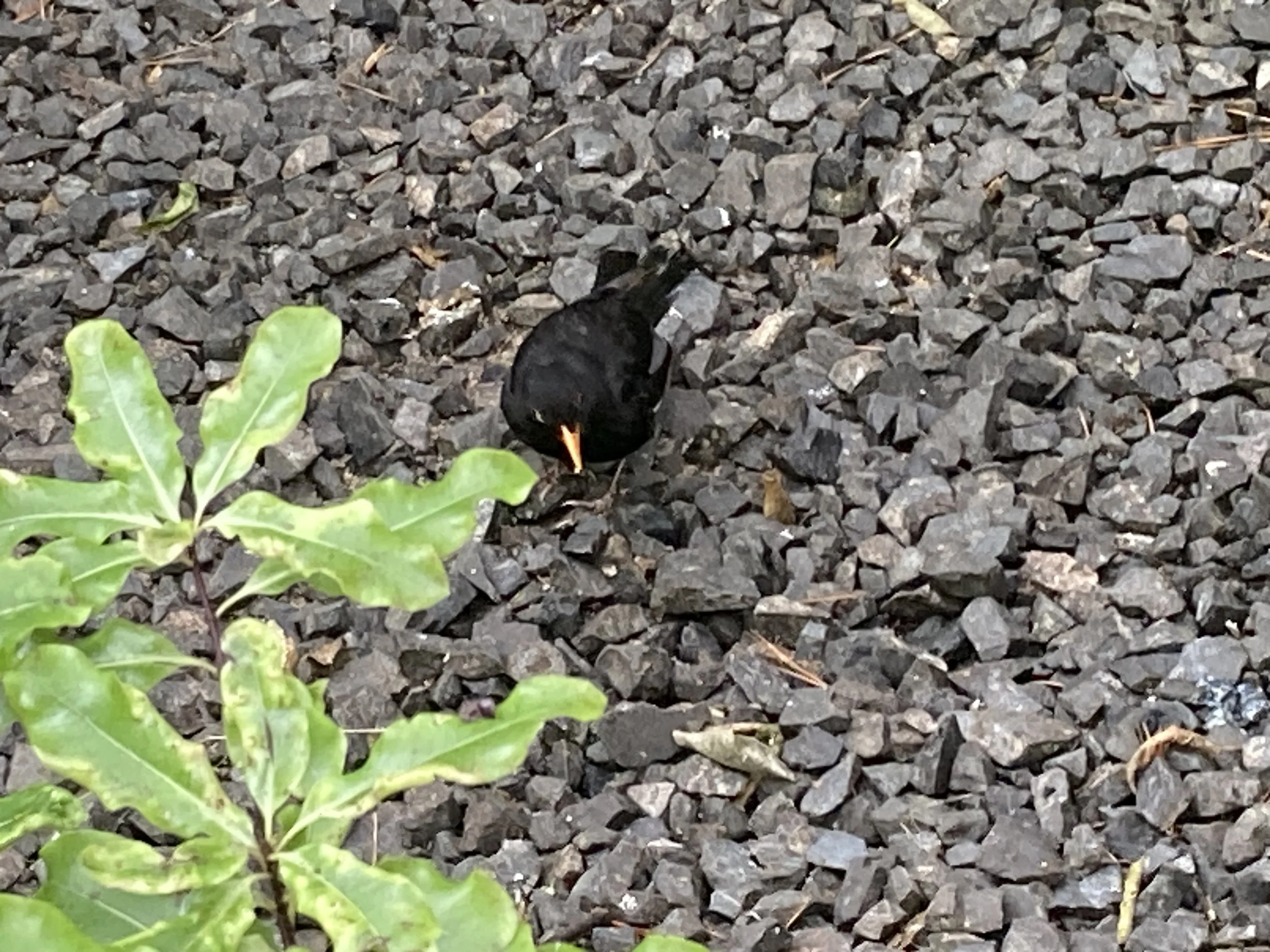
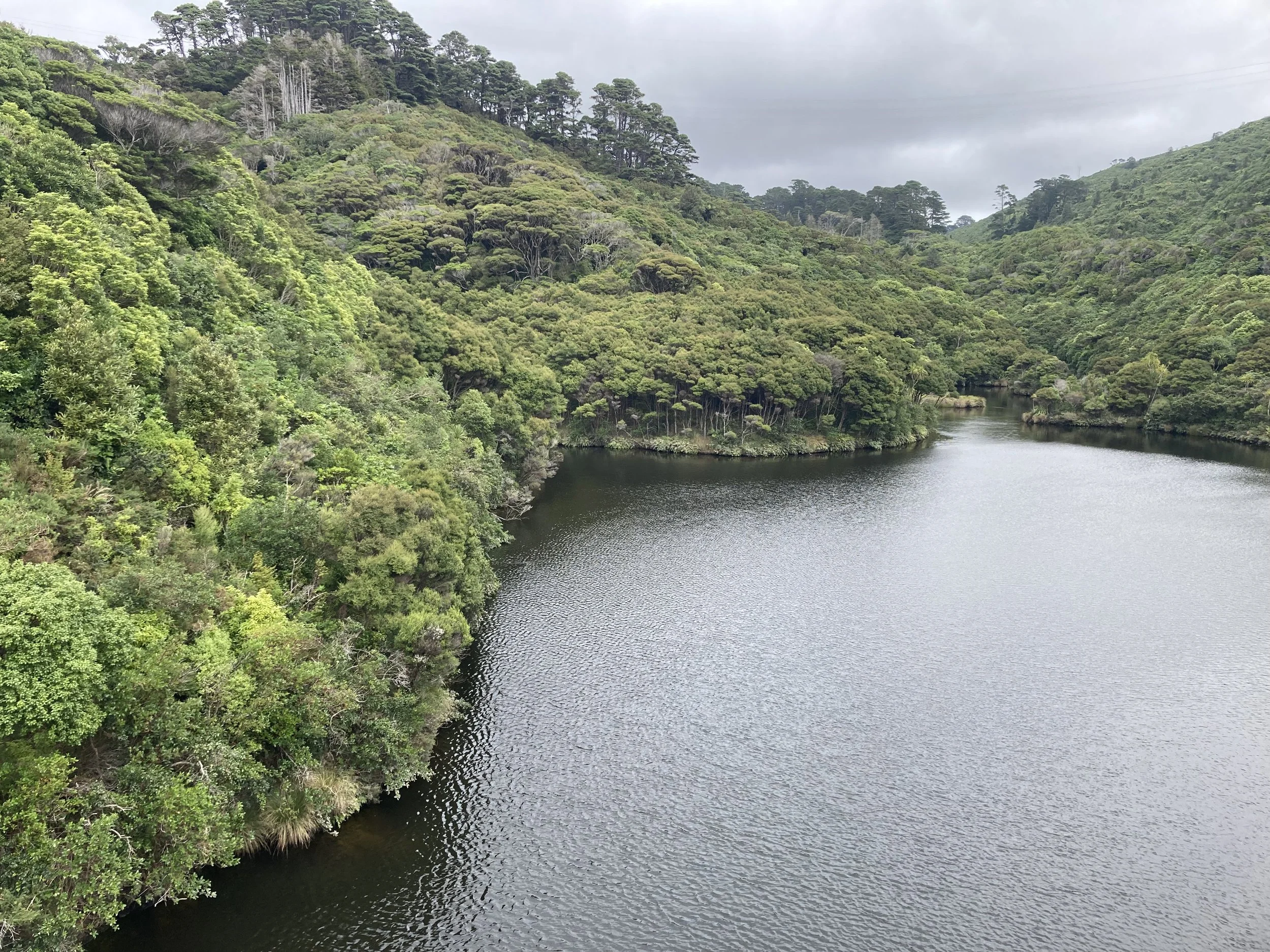
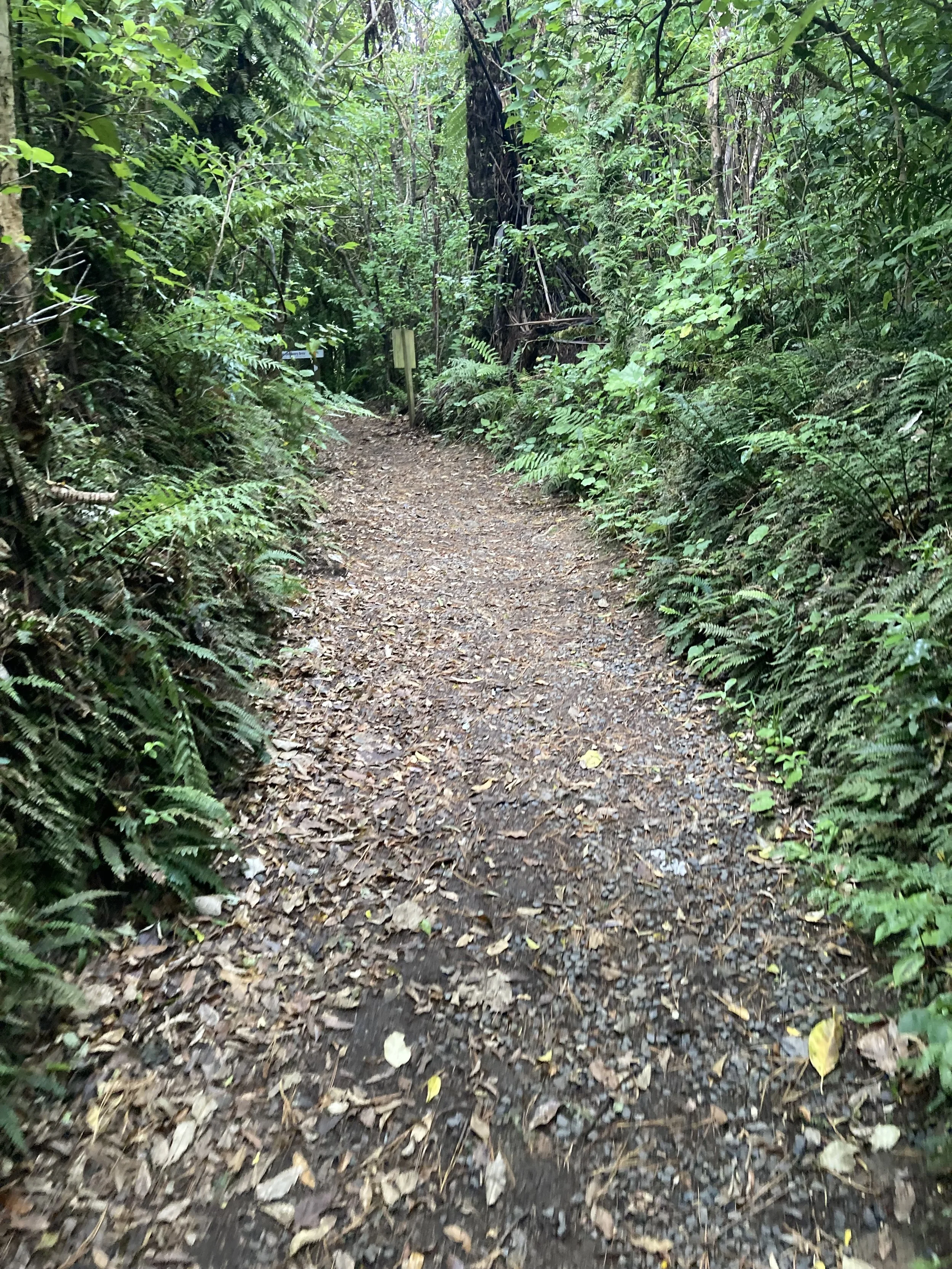
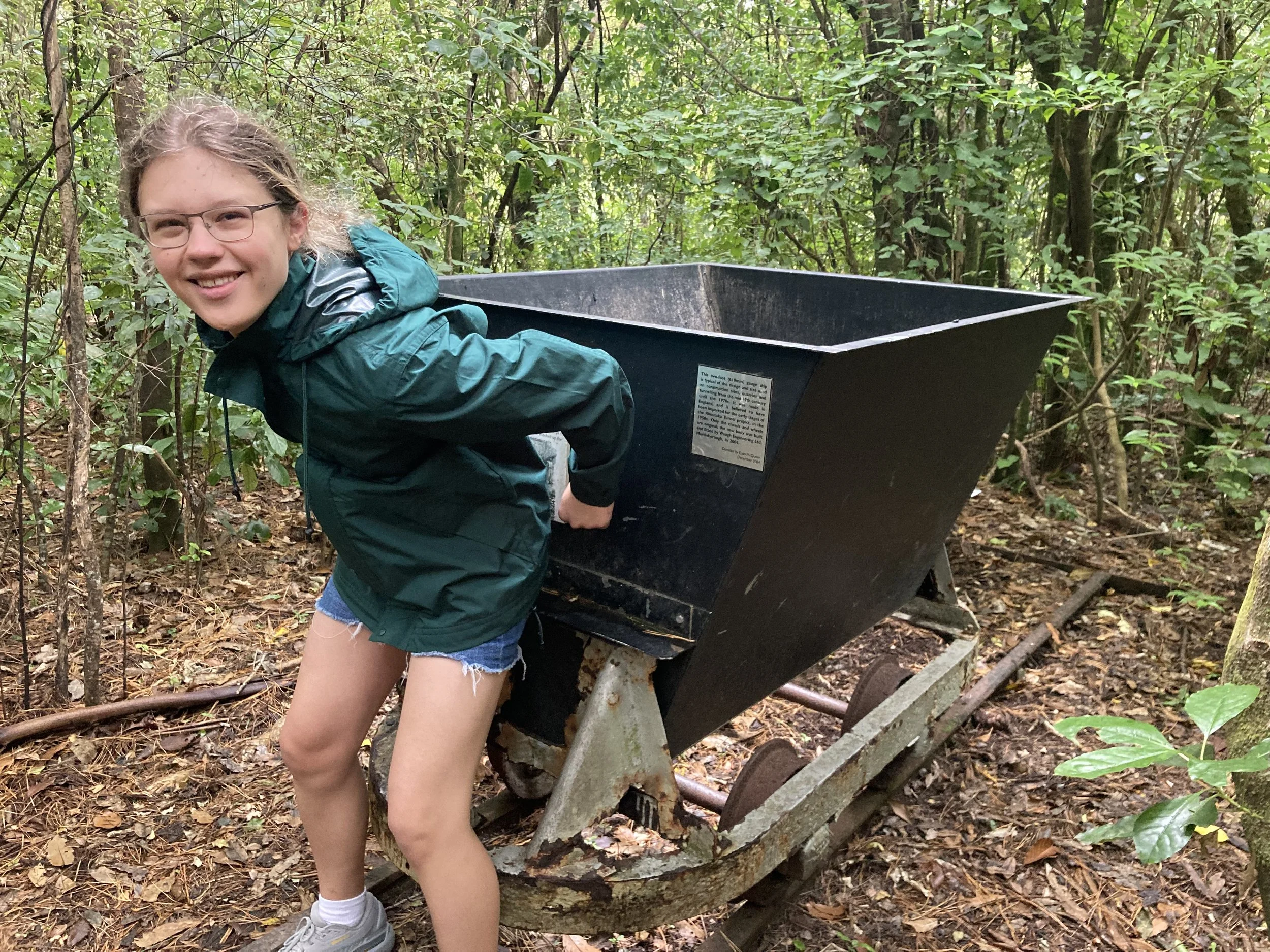
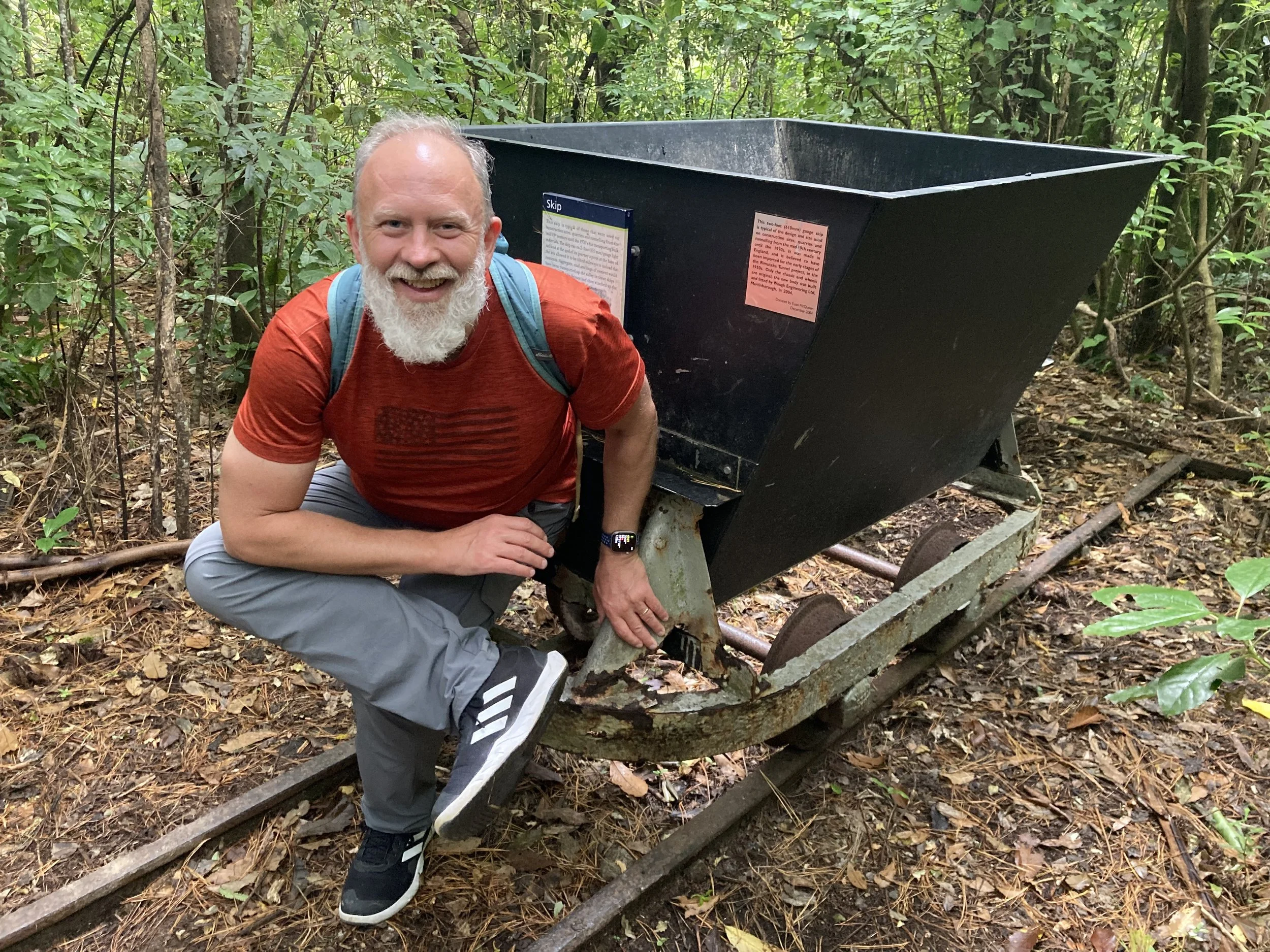
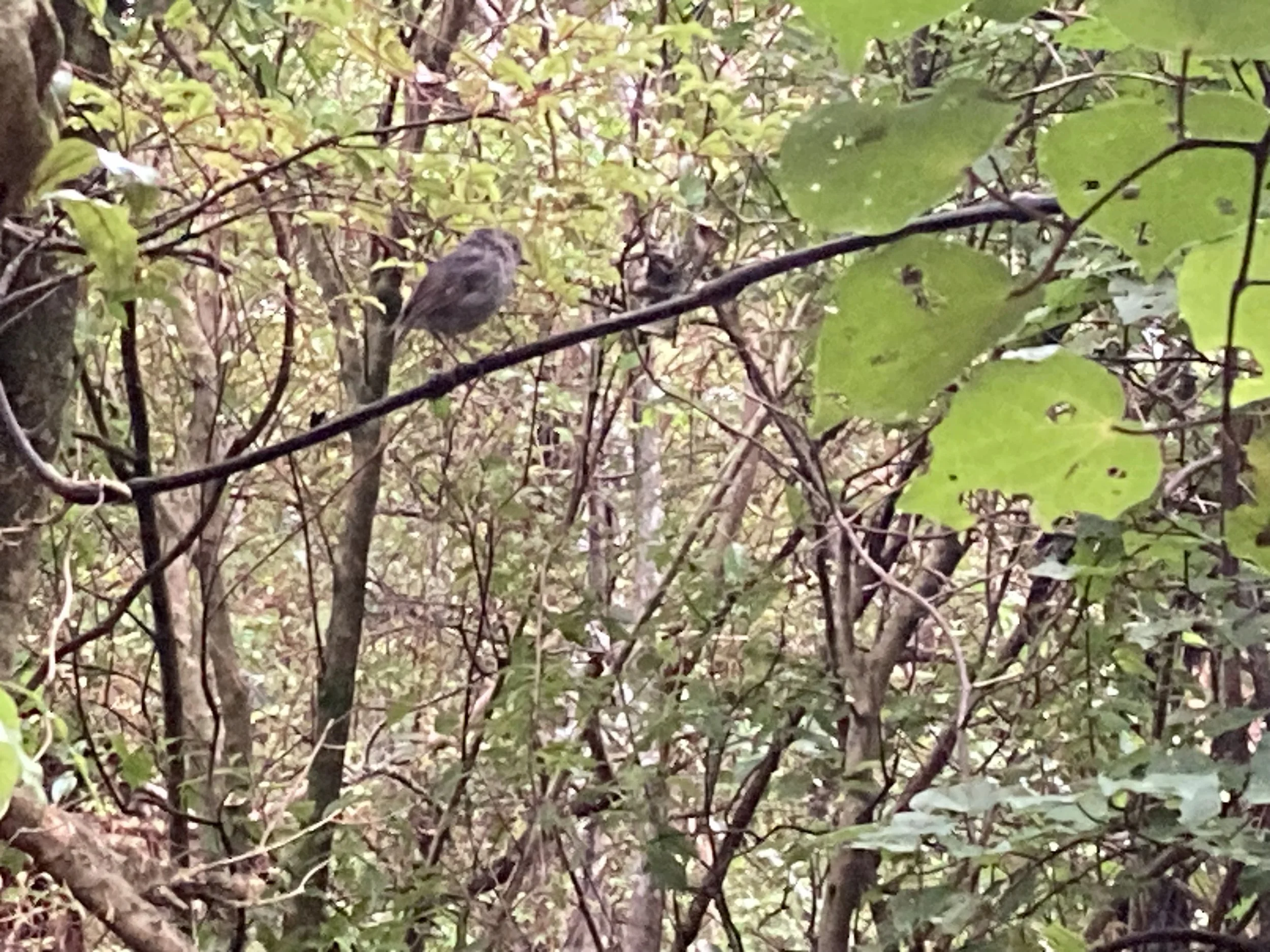
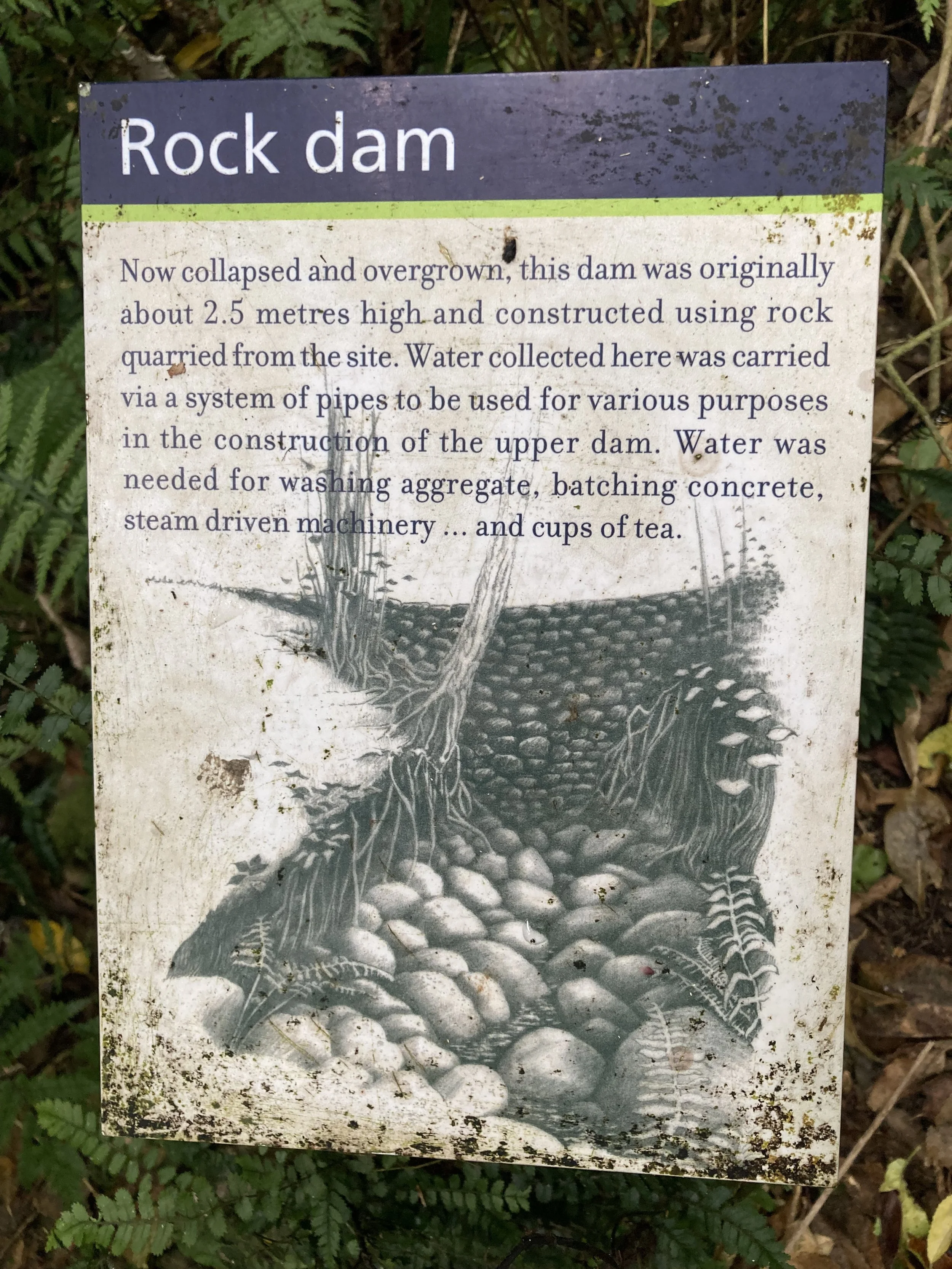
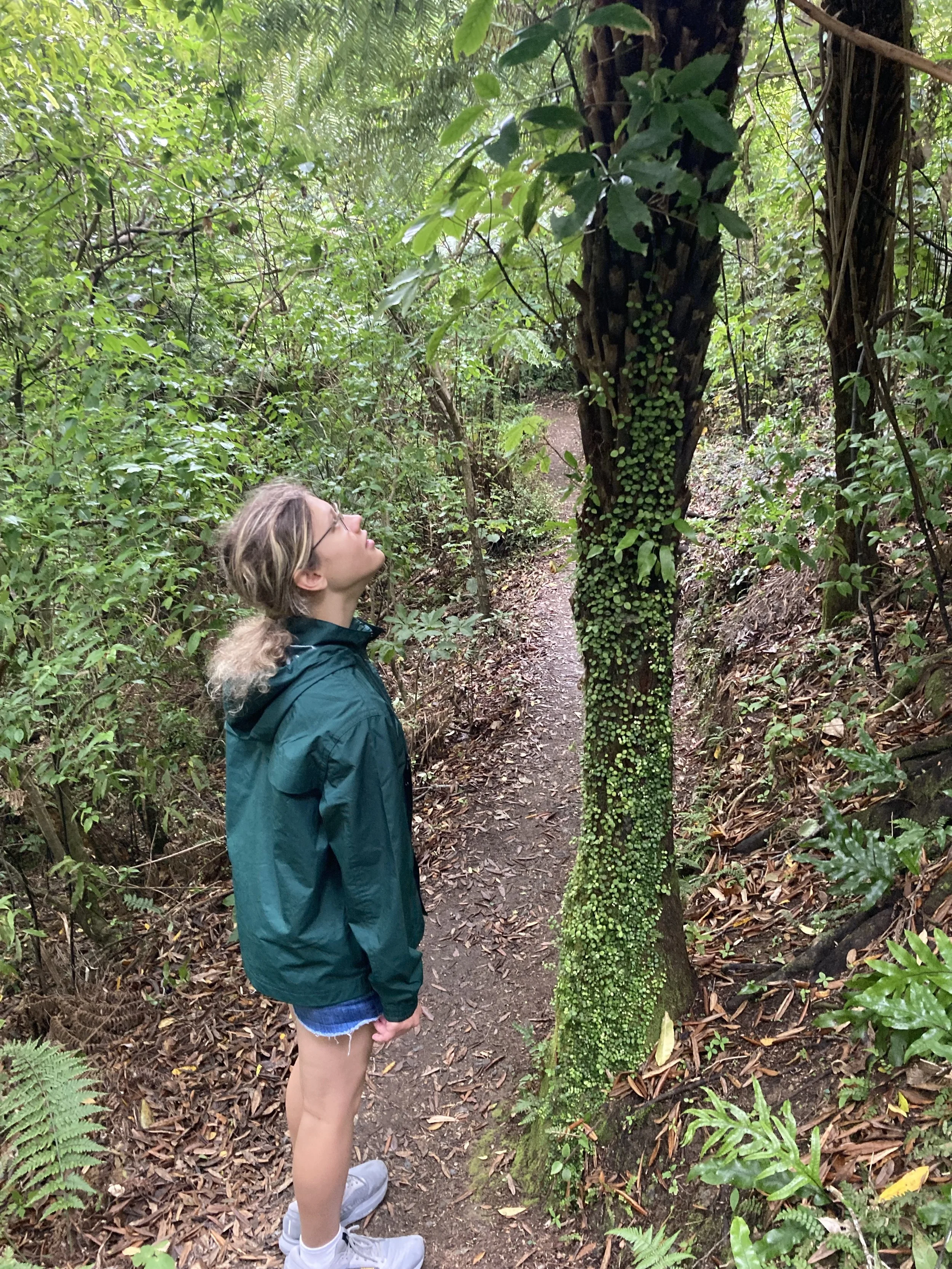
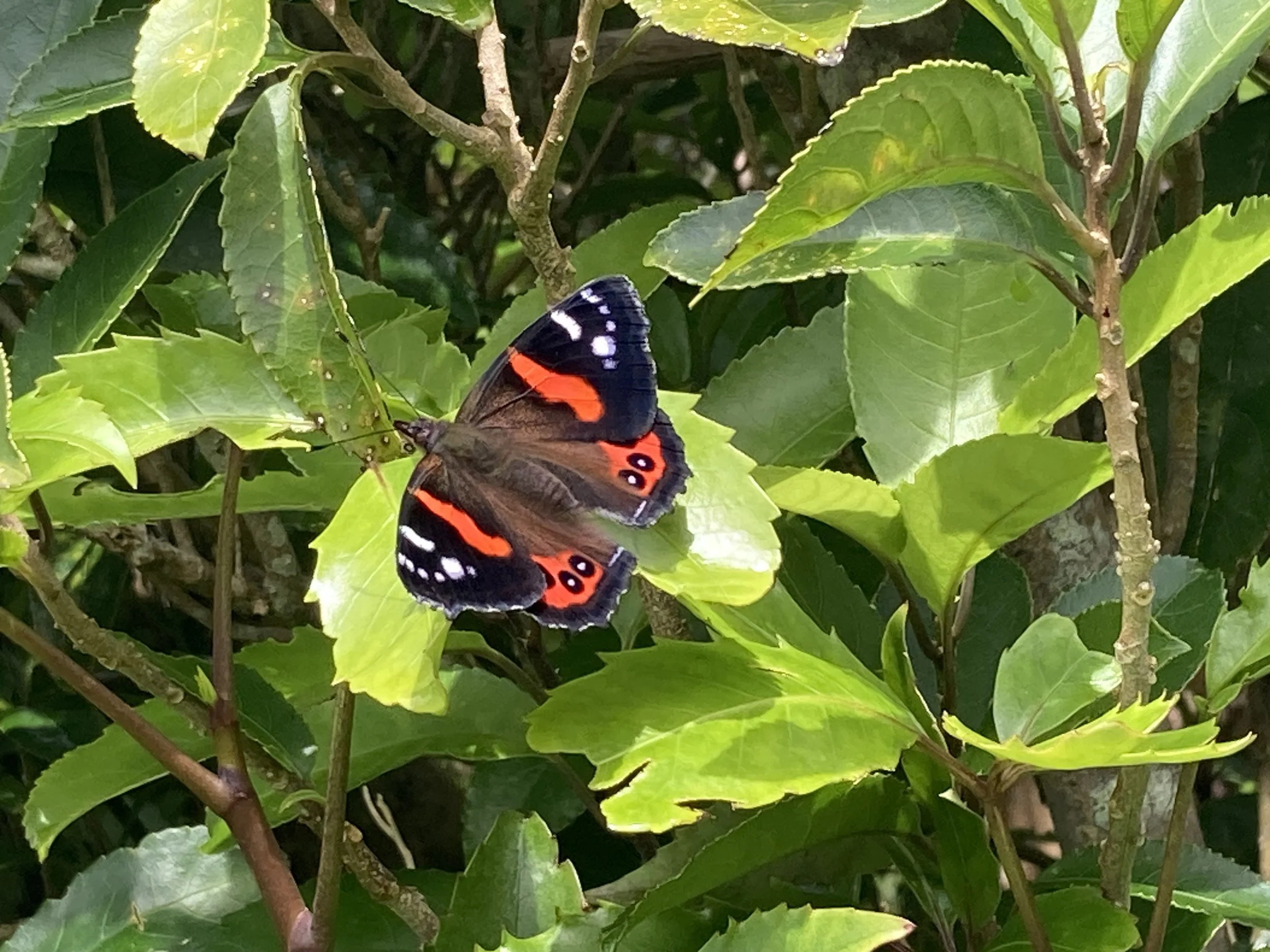
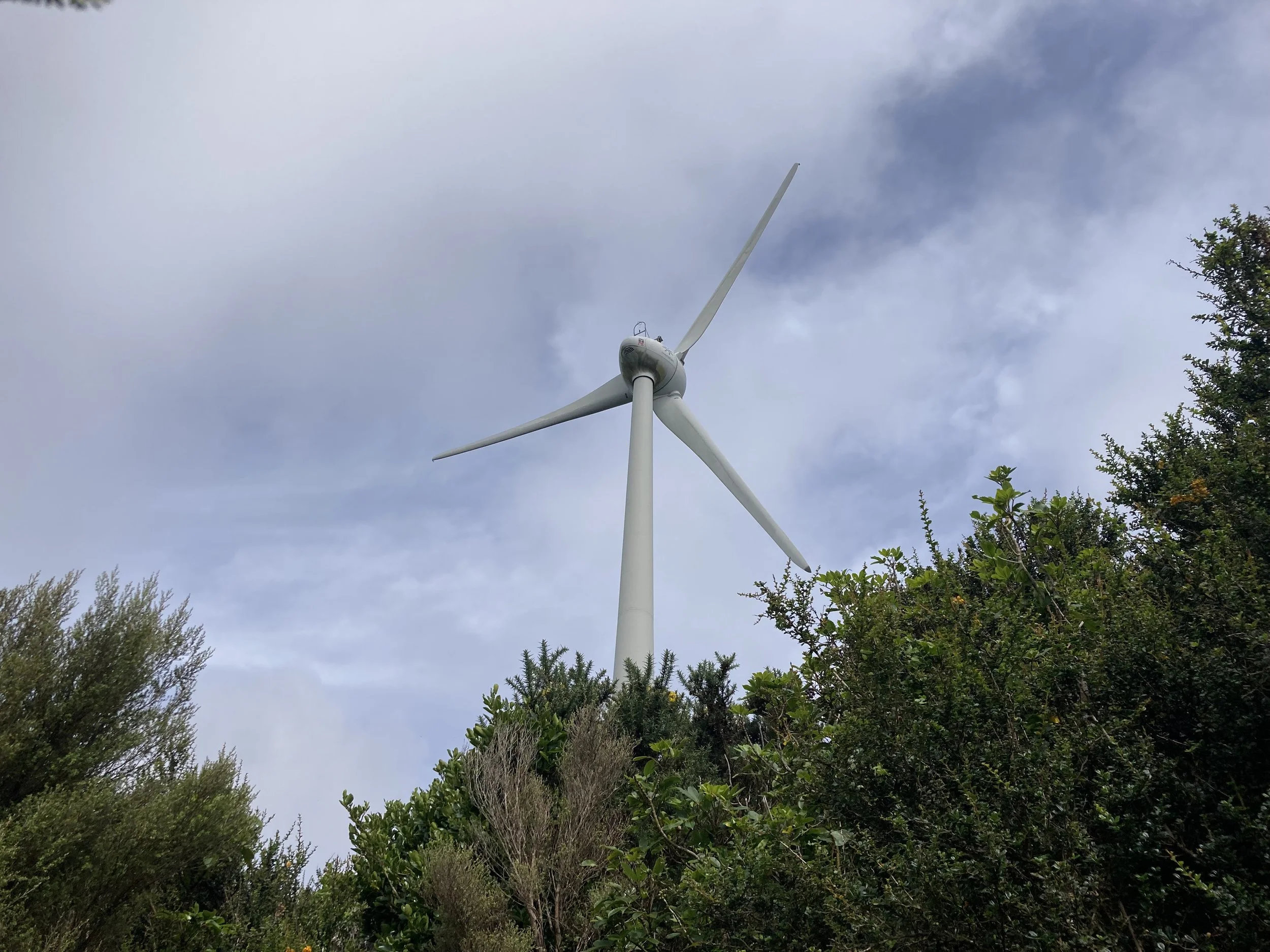
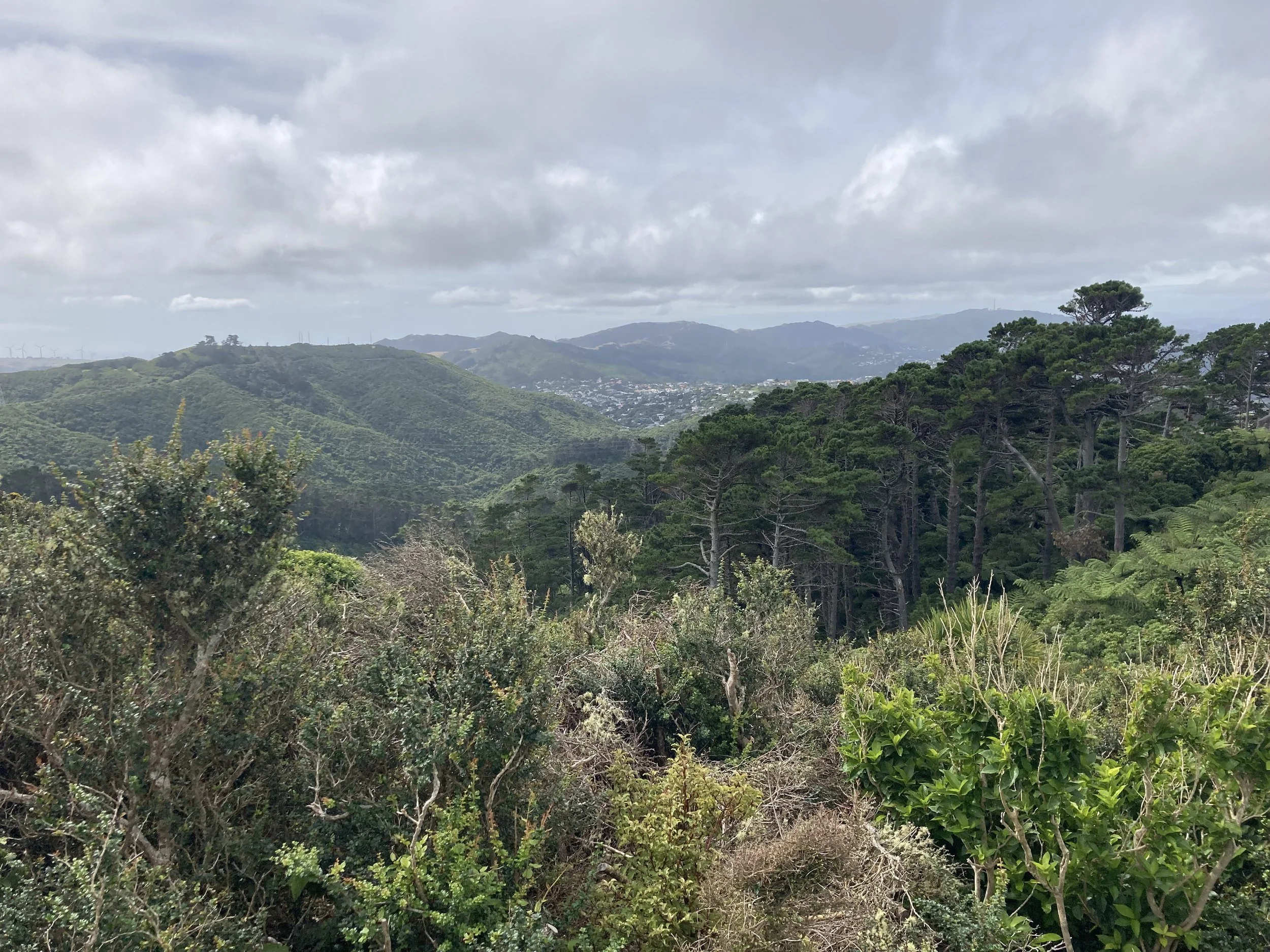
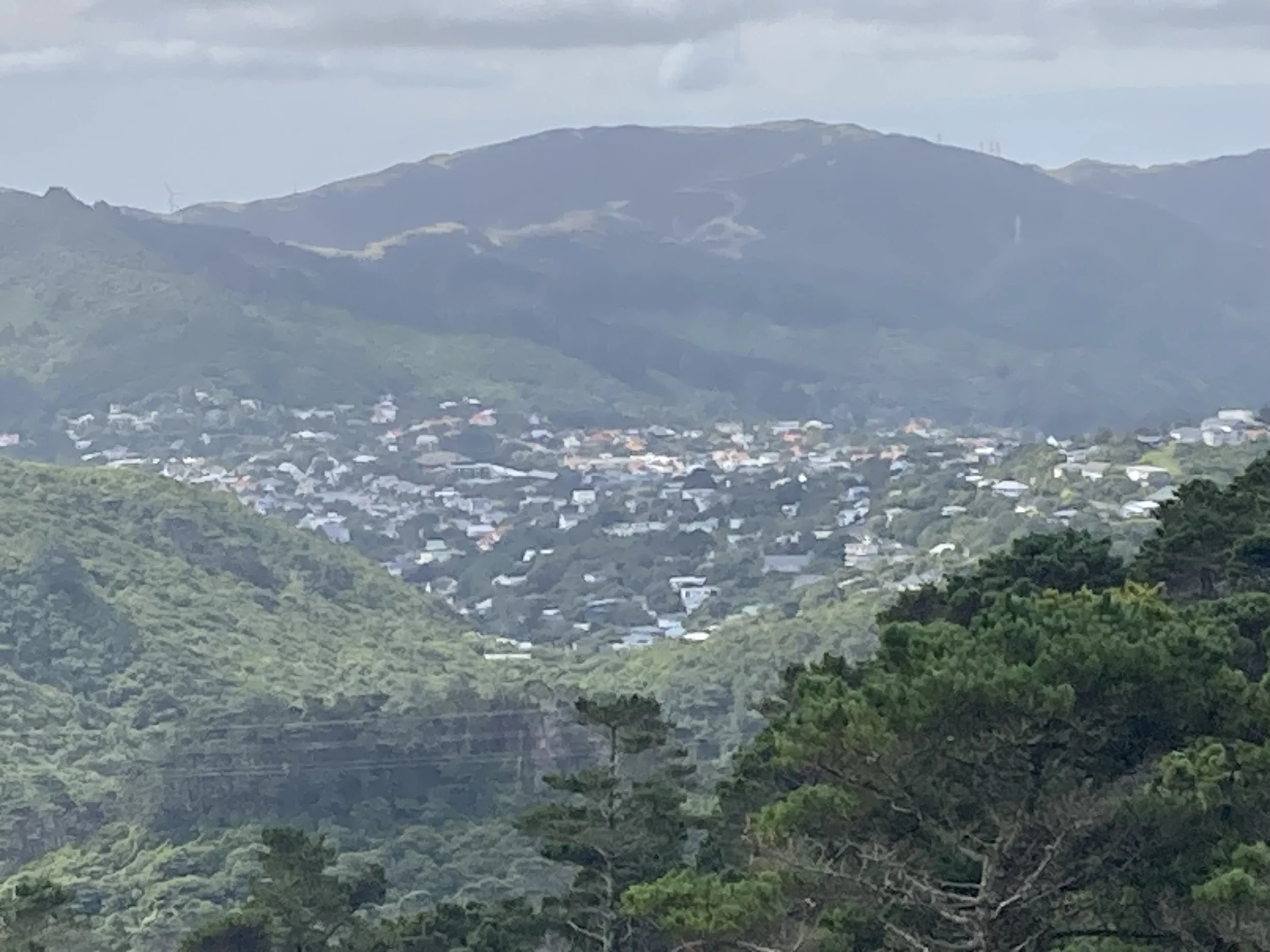
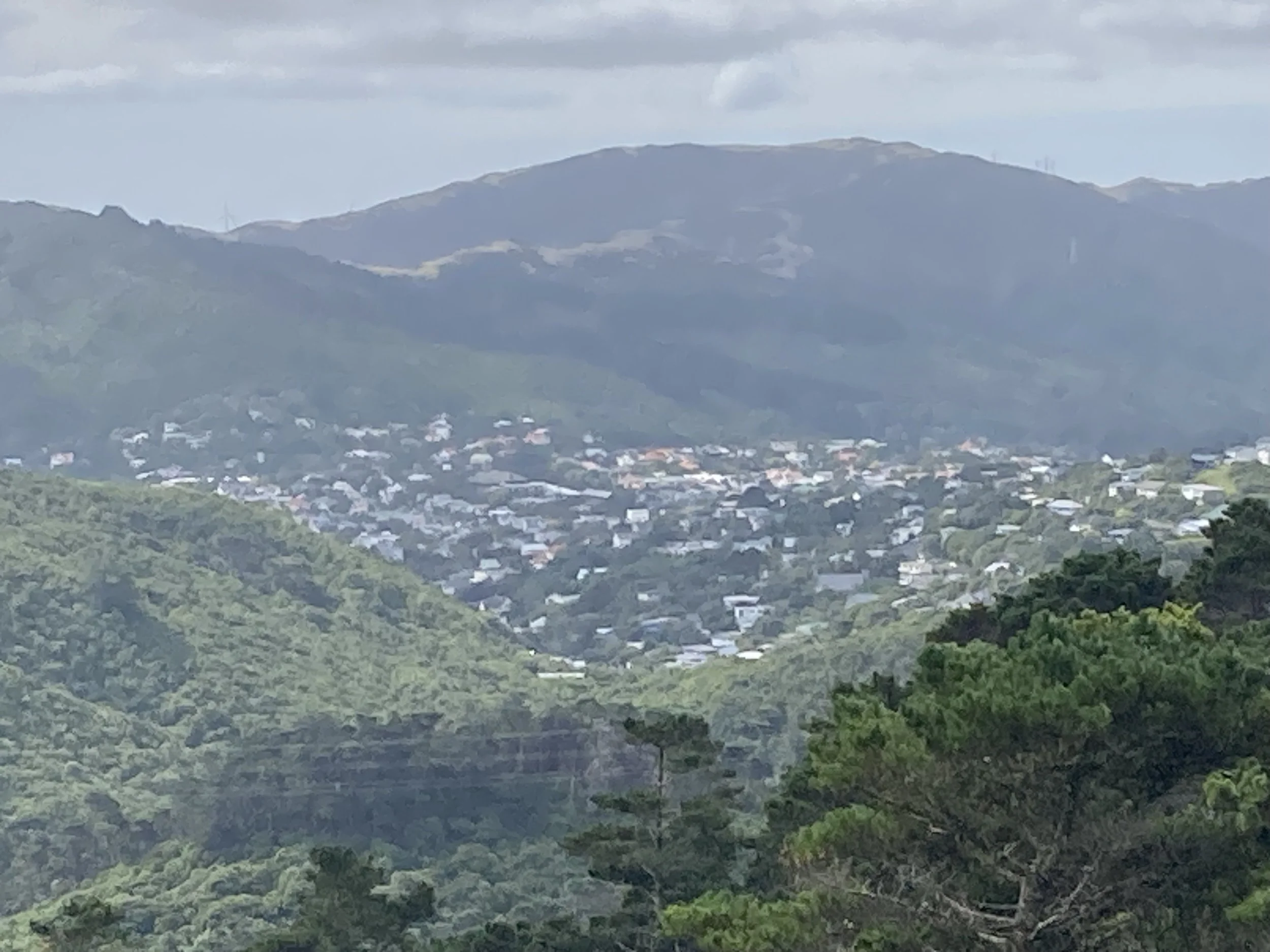
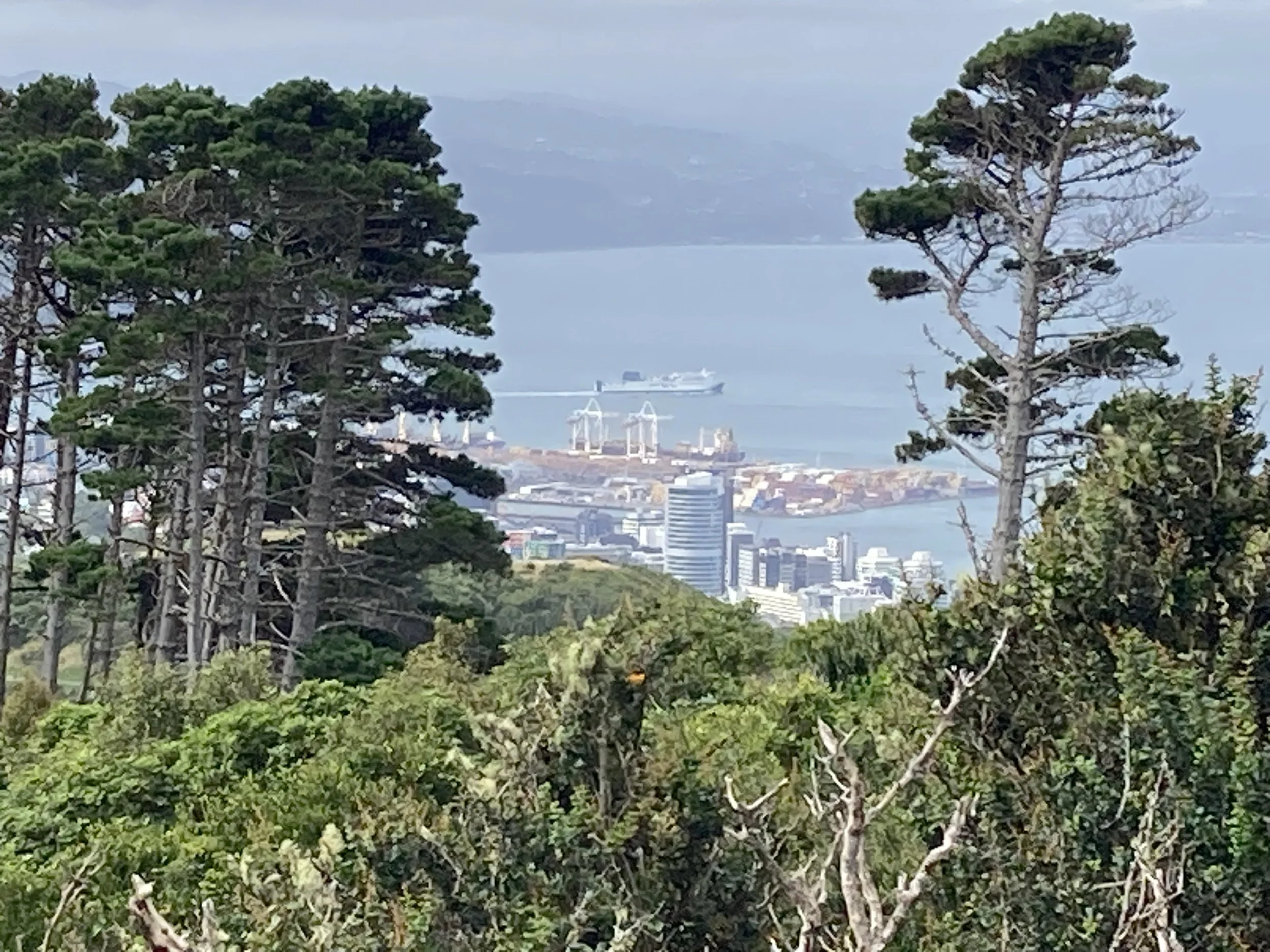
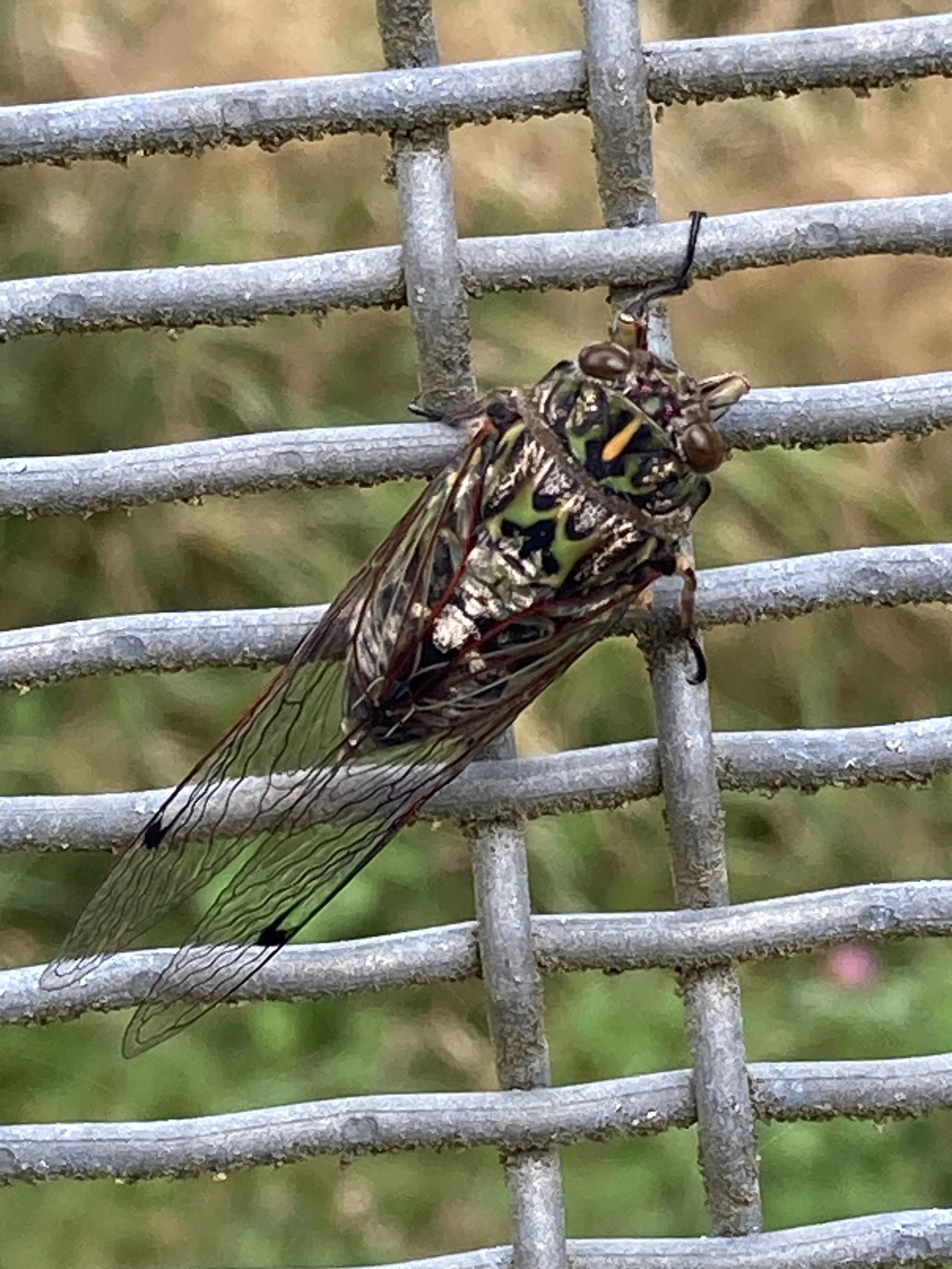
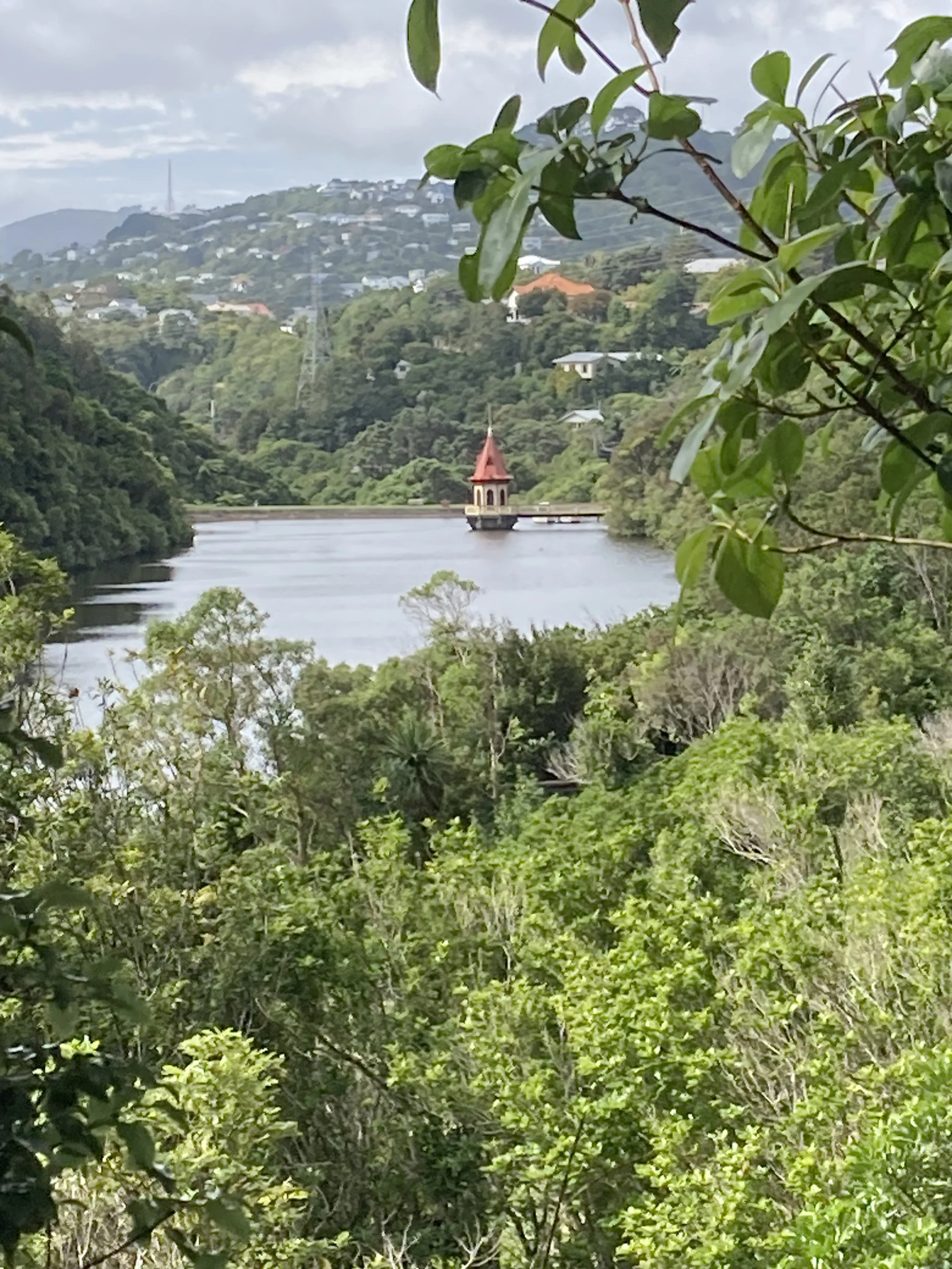
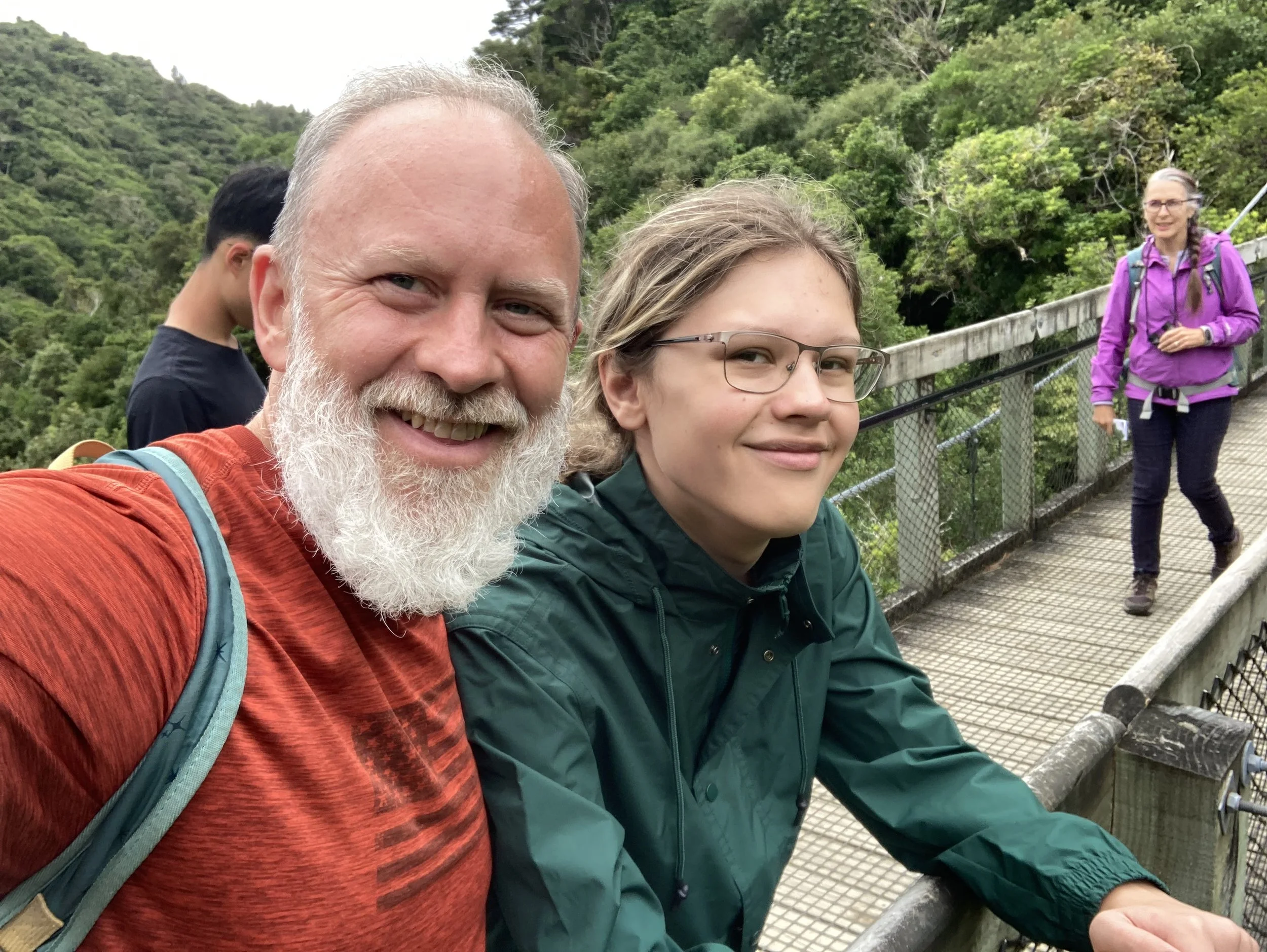
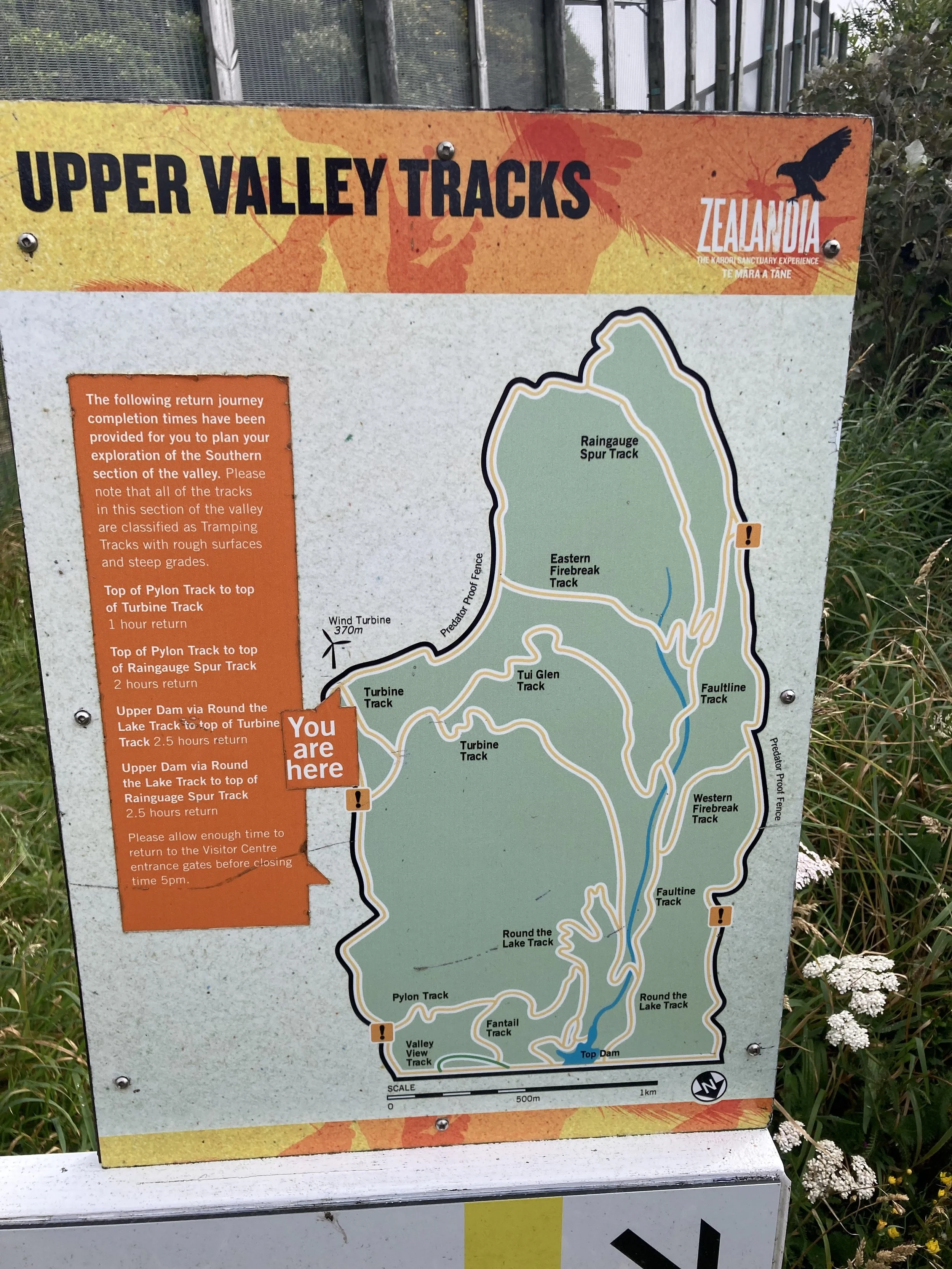
While there was a lot of walking uphill during our adventure together, there were fewer people on the “harder” trails which meant more silence to hear all the calls of the birds nearby. The few visitors we ran into often were sitting quietly next to food set out for specific types of birds watching them fly in, eat, and return to their designated tree branch (for safety it would seem).
The other part that was interesting was the historical mining aspects of this area. There were old fashioned mine carts as well as abandoned mines (clearly marked out of bounds) and the original water traps set up to help pan for gold.
Elena, Violet and I were truly amazed that all of this nature was just a few miles from city center in Wellington, where all the government offices for New Zealand reside. Violet and I tried to imagine what this would be like near Washington, D.C. with our nation’s capital, and we could not. Sure there are botanical gardens and the Smithsonian – beautiful in their own right – but nothing like Zelandia doing its part to bring animals back from extinction.
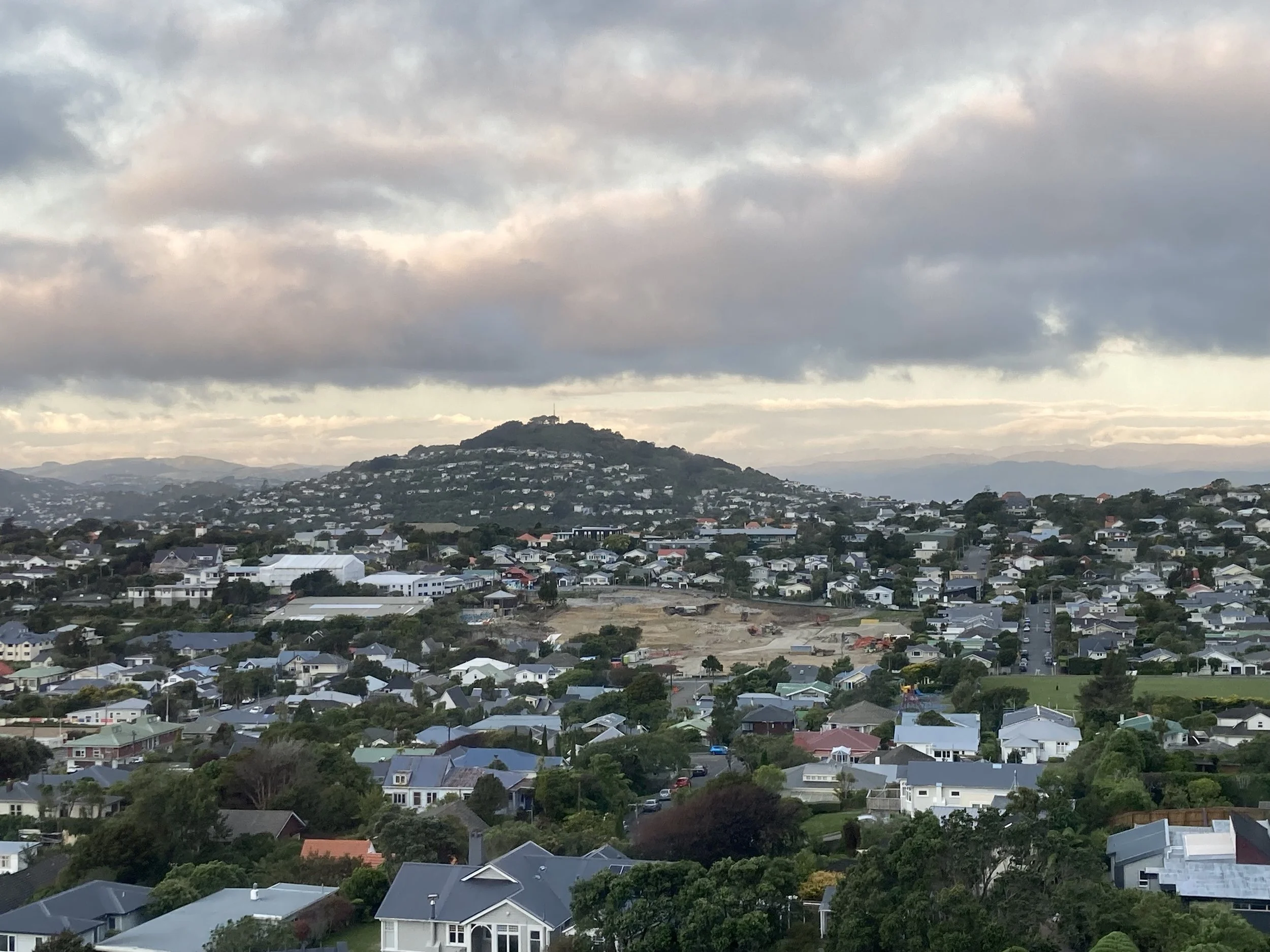
Wellington at sunset. Beautiful end to an incredible day together.